
 My Inquiry
 My Account


Monolithic Power Systems Inc. MP1531DM-LF-Z
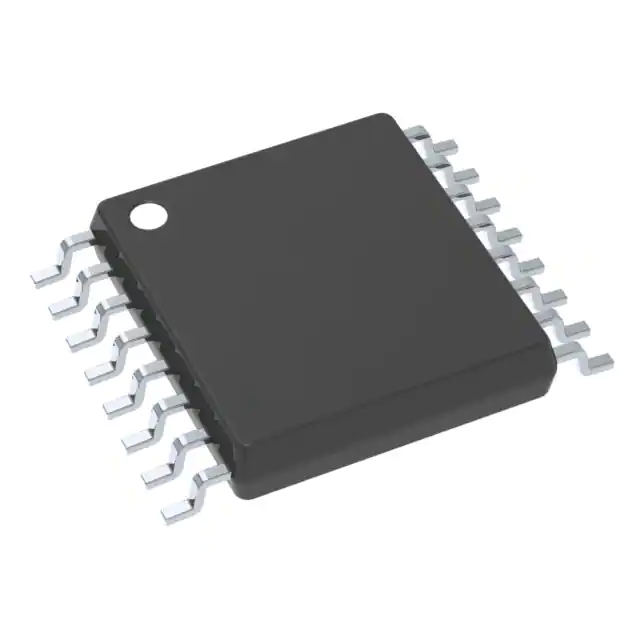
- Part No.:
- MP1531DM-LF-Z
- Manufacturer:
- Monolithic Power Systems Inc.
- Category:
- Special Purpose Regulators
- Package:
- 16-TSSOP (0.173", 4.40mm Width)
- Datasheet:
-
 MP1531DM-LF-Z.pdf
- Description:
- IC REG CONV TFT LCD 3OUT 16TSSOP
- Quantity:
- Payment:

- Shipping:

Inventory:4,073
Please send an inquiry. Send us your inquiry, and we will respond immediately.
Product details
Overview
MP1531DM-LF-Z from Monolithic Power Systems is a triple-output DC/DC converter IC for TFT LCD bias generation, integrating a 250kHz fixed-frequency step-up converter (up to 22V), a ±10mA linear regulator pair (GH up to +38V, GL down to –20V), and internal power-on sequencing. It operates from 2.7V–5.5V input and delivers coordinated VGH/VGL/VMAIN in portable display systems.
For engineers reviewing the MP1531DM-LF-Z datasheet, MP1531DM-LF-Z pinout, MP1531DM-LF-Z application, or MP1531DM-LF-Z equivalent, key selection criteria include its integrated charge-pump–driven linear regulators, 1μA shutdown current, internal soft-start timing control via CT pin, and TSSOP-16 package compatibility with space-constrained display power designs.
Technical Context
The MP1531DM-LF-Z implements current-mode control in its 250kHz step-up converter for fast transient response and stable regulation under dynamic TFT gate drive loads. Its GH and GL linear regulators are powered by external diode-based charge pumps driven from the SW node-positive pump configurable as doubler/tripler/quadrupler, negative pump as inverter-enabling wide output voltage ranges while maintaining tight feedback thresholds (FB3 = 1.25V, FB2 referenced to GND).
Power-on sequencing is fully internal: step-up converter enables first, followed by GL (negative regulator), then GH (positive regulator), each with independent soft-start ramp controlled by a single CT capacitor. Fault detection monitors all three FB inputs; if any falls below 80% of regulation threshold for >6ms (CT = 10nF), RDY goes high-impedance and full shutdown occurs.
Key Specifications
| Parameter | Value and Actual Design Meaning |
|---|---|
| Input Voltage Range | 2.7V to 5.5V - supports single-cell Li-ion (2.7–4.2V) and regulated 3.3V/5V rails without external LDO pre-regulation. |
| Step-Up Output (VMAIN) | Up to 22V - sufficient for main TFT supply in mid-size panels; regulated via FB1 with 1.25V reference and ±3% accuracy. |
| Positive Regulator (GH) | Up to +38V at 10mA - powers TFT VGH gate driver; input sourced from charge pump driven by SW node. |
| Negative Regulator (GL) | Down to –20V at 10mA - powers TFT VGL gate driver; input sourced from inverting charge pump tied to IN2. |
| Switch Current Limit | 500mA - limits peak inductor current during startup and overload, preventing MOSFET stress and ensuring reliable boost operation. |
| Shutdown Current | 1μA - enables ultra-low-power display sleep modes without compromising system-level battery life. |
| Thermal Shutdown | 160°C - protects die during sustained high-load or poor PCB thermal design; auto-recovery after cooldown and EN reassertion. |
Pinout & Package
MP1531DM-LF-Z is housed in a RoHS-compliant 16-pin TSSOP package (4.4mm × 5.0mm, 1.2mm height) with exposed pad not electrically connected; thermal pad must be soldered to IN2 net for optimal heat dissipation.
| Pin/Terminal | Circuit Role | Design Meaning |
|---|---|---|
| EN (Pin 9) | Enable Control Input | Active-high logic input; ties all three outputs together-no separate enable lines required for sequenced power delivery. |
| RDY (Pin 3) | Open-Drain Ready Flag | Signals full regulation across all outputs; pulled low only when FB1, FB2, and FB3 all exceed 80% of target thresholds. |
| CT (Pin 2) | Soft-Start & Sequencing Timer | Connects to GND via capacitor (e.g., 10nF = 6ms ramp); controls both startup timing and fault timeout duration. |
| SW (Pin 1) | Internal Switch Node | Drain of 250mΩ N-MOSFET; drives external inductor and charge-pump diodes-critical for EMI and efficiency layout. |
| IN2 (Pin 11) | Negative Regulator Input | Accepts –20V input; connects directly to exposed thermal pad; supplies GL regulator and sets lowest potential reference plane. |
| IN3 (Pin 13) | Positive Regulator Input | Accepts up to +38V input; driven by positive charge pump; difference between IN3 and IN2 ≤ 60V absolute. |
| REF (Pin 8) | 1.25V Reference Output | Stable bandgap reference; used as feedback reference for GL regulator (via FB2) and as precision divider node. |
Key Features
| Feature | Design Value |
|---|---|
| Integrated Triple-Output Architecture | Eliminates need for three discrete DC/DC converters-reduces BOM count, PCB area, and layout complexity in TFT bias rails. |
| Internal Power-On Sequencing | Guarantees safe VGH/VGL ramp order (VMAIN → GL → GH) without external timers or microcontroller intervention. |
| Adjustable Soft-Start via CT Pin | Single capacitor sets both startup ramp time and fault timeout-simplifies design validation and improves inrush current control. |
| Charge-Pump–Driven Linear Regulators | Enables high-voltage GL/GH outputs from low VIN without transformer or flying-capacitor ICs-reduces component count and cost. |
| Ready Flag with Fault Detection | RDY pin provides system-level status and fault indication-supports automatic display initialization and error recovery protocols. |
Applications
| TFT LCD Panel Bias Supply | Portable DVD Player Display Power |
|---|---|
Use Scenario: Generating VGH (+15V), VGL (–10V), and VMAIN (+5V) for a 7-inch active-matrix TFT panel in a handheld media device. IC Role / Device Role / Timing Role: Single-chip TFT bias generator providing synchronized, sequenced, and fault-monitored DC rails. Use Value: Reduces solution size by >40% vs. discrete boost + dual LDO approach; eliminates external sequencing logic and reduces startup timing uncertainty. | Use Scenario: Powering segmented LCD backlight and gate drivers in a battery-operated portable DVD player with variable input (3.0–4.2V). IC Role / Device Role / Timing Role: Primary DC/DC controller managing all display-related voltages under dynamic load conditions. Use Value: Maintains stable VGH/VGL during video playback transients; 1μA shutdown extends battery runtime during pause mode. |
| Tablet PC Display Subsystem | Car Navigation System TFT Interface |
Use Scenario: Delivering bias rails for a 10.1-inch IPS TFT module in an Android tablet with USB-C PD input (5V). IC Role / Device Role / Timing Role: Integrated TFT power manager coordinating with system PMIC and display controller via RDY handshake. Use Value: Internal soft-start prevents input rail droop during boot; thermal shutdown protects against enclosure overheating in sealed tablet chassis. | Use Scenario: Supplying VGH/VGL for a sunlight-readable automotive TFT cluster operating across –40°C to +85°C ambient. IC Role / Device Role / Timing Role: Automotive-grade display power IC meeting AEC-Q200 temperature and reliability requirements. Use Value: Guaranteed operation over full industrial temp range; UVLO (2.65V) prevents malfunction during cold-cranking events. |
Equivalent & Alternatives
The following parts are listed as comparable options for similar TFT LCD bias generator applications.
| Alternative Part | Technical Difference | Application Difference | Selection Advice |
|---|---|---|---|
| MP1531DQ-LF-Z | Same silicon, QFN-16 (3×3mm) package; 2.1W θJA vs. TSSOP's 1.4W; exposed pad tied to IN2. | Better thermal performance in compact layouts; requires different PCB footprint and reflow profile. | Select for space-constrained designs needing higher power handling; avoid if legacy TSSOP footprint is fixed. |
| TPS65105RGTR | Dual-output (VPOS/VNEG) only; no integrated main boost; requires external step-up stage for VMAIN. | Lacks triple-output integration-increases BOM and board area; no internal sequencing or RDY flag. | Choose only if VMAIN is already available; otherwise adds design overhead and reduces system-level reliability. |
Compared with MP1531DQ-LF-Z, the MP1531DM-LF-Z trades thermal margin for standard TSSOP manufacturability and legacy compatibility; versus TPS65105RGTR, it delivers true single-chip triple-rail integration with sequencing, fault monitoring, and lower total solution cost.
Availability
MP1531DM-LF-Z is available at Aetrix Electronics and suitable for TFT LCD displays, portable DVD players, tablet PCs, and car navigation displays requiring stable component supply across industrial temperature ranges and long production lifecycles.
Supply support for MP1531DM-LF-Z includes scheduled delivery planning, volume procurement assistance, BOM continuity management, traceable sourcing, and lifecycle availability coordination for OEM customers, industrial embedded developers, connected-device designers, and electronics production programs.
Manufacturer
Monolithic Power Systems (MPS) is a fabless semiconductor company specializing in high-performance analog and power ICs, with core expertise in DC/DC conversion, motor drivers, and display power solutions.
The MP1531 product line targets compact, low-noise TFT LCD bias generation-designed specifically for portable and automotive displays where integration, sequencing, and fault resilience are critical.
FAQ
What is the maximum allowable voltage difference between IN3 and IN2 pins?
The absolute maximum voltage difference between IN3 and IN2 is 60V, as specified in Absolute Maximum Ratings. Exceeding this risks permanent damage to internal circuitry. This limit constrains charge-pump stage selection-for example, using a quadrupler on IN3 with a 2x inverter on IN2 requires VIN < 10V to stay within the 60V differential.
Can the MP1531DM-LF-Z operate without external charge-pump diodes?
No. The MP1531DM-LF-Z requires external Schottky diodes (e.g., BAS40-04-7) to construct the positive and negative charge-pump stages that feed IN3 and IN2. The IC contains no internal diodes for these paths-omitting them prevents GL and GH regulation entirely.
How does the RDY pin behave during normal startup versus fault condition?
During normal startup, RDY remains high-impedance until all three outputs reach >80% of regulation; then it pulls low. During a fault (e.g., open FB2 resistor), RDY goes high-impedance after ~15µs and stays there-if the fault persists >6ms (CT = 10nF), the IC shuts down completely and RDY remains floating until EN or VIN is cycled.
Is the REF pin intended for external use beyond GL regulator feedback?
Yes. While REF is primarily used as the reference for the GL regulator's FB2 feedback string, it is a buffered 1.25V output capable of sourcing/sinking ±100µA. It may serve as a precision reference for external circuits-but loading beyond 200µA degrades regulation accuracy per datasheet load regulation spec (1.2% max).
What is the purpose of the exposed pad on the TSSOP-16 package?
The exposed pad on MP1531DM-LF-Z has no internal electrical connection. It is a thermal pad designed to be soldered to the PCB's IN2 net (–20V plane) to improve heat conduction. Doing so lowers θJA from 90°C/W to ~75°C/W in typical layouts, enhancing thermal reliability under continuous 10mA GL/GH loads.
Does the MP1531DM-LF-Z support adjustable switching frequency?
No. The MP1531DM-LF-Z uses a fixed 250kHz oscillator (±20% tolerance). Frequency cannot be adjusted externally-the CT pin controls soft-start and fault timing only. This simplifies EMI filtering but limits optimization for ultra-low-noise or high-efficiency trade-offs at other frequencies.
MP1531DM-LF-Z Specifications
- Product attributes
- Attribute value
- Manufacturer:
- Monolithic Power Systems Inc.
- Series:
- -
- Package/Case:
- 16-TSSOP (0.173", 4.40mm Width)
- Packaging:
- Tape & Reel (TR)
- Product Status:
- Active
- Applications:
- Converter, TFT LCD
- Voltage - Input:
- 2.7V ~ 5.5V
- Number of Outputs:
- 3
- Voltage - Output:
- Multiple
- Operating Temperature:
- -40°C ~ 85°C
- Grade:
- -
- Qualification:
- -
- Mounting Type:
- Surface Mount
- Supplier Device Package:
- 16-TSSOP
MP1531DM-LF-Z FAQ
1.How can I place an order for MP1531DM-LF-Z through Aetrix?
Please submit a Request for Quotation (RFQ) for MP1531DM-LF-Z on Aetrix. Our sales agent will provide a competitive quotation and guide you through the order confirmation once you accept the terms.
2.Are the price and stock information for MP1531DM-LF-Z reliable?
The price and inventory of MP1531DM-LF-Z are updated periodically and may fluctuate due to market conditions. Stock and pricing data are typically refreshed every 24 hours. Quotation validity for MP1531DM-LF-Z is usually 5 days.
3.What payment methods are accepted for MP1531DM-LF-Z?
We accept Wire Transfer, PayPal, Credit Card, Western Union, MoneyGram, and Escrow for MP1531DM-LF-Z transactions.
Note: Certain payment methods may incur a processing fee.
4.How is shipping managed for MP1531DM-LF-Z?
MP1531DM-LF-Z orders can be shipped via leading logistics carriers, including DHL, UPS, FedEx, TNT, or Registered Mail.
Once your MP1531DM-LF-Z order is processed, you will receive an email with the shipment details and tracking number.
Note: Tracking information may take up to 24 hours to appear. Express delivery typically takes 3–5 business days.
5.How can I obtain technical support or documentation for MP1531DM-LF-Z?
For technical support, including MP1531DM-LF-Z datasheets, pinout diagrams, or application guidance, please contact our engineering support team. They can provide detailed documentation and assistance for your MP1531DM-LF-Z requirements.
6.How does Aetrix verify that MP1531DM-LF-Z is sourced from the original manufacturer or authorized distributors?
All MP1531DM-LF-Z products on Aetrix are procured from qualified distributors and authorized channels. Our dedicated quality assurance team conducts strict verification, including traceability checks and, if necessary, third-party testing. This ensures that MP1531DM-LF-Z meets industry standards.
7.What is the process for return or replacement of MP1531DM-LF-Z?
All MP1531DM-LF-Z units undergo pre-shipment inspection (PSI). If there is an issue with MP1531DM-LF-Z, returns or replacements are accepted under the following conditions:
1.Quantity discrepancies, incorrect items, or visible external defects (such as breakage or corrosion), acknowledged by Aetrix.
2.The issue is reported within 90 days of delivery.
3.The MP1531DM-LF-Z part is unused and in its original packaging.
Return procedure for MP1531DM-LF-Z:
1.Submit a request within 90 days.
2.Obtain a Return Material Authorization (RMA) from Aetrix.
MP1531DM-LF-Z Tags
-
TPS51206DSQR
Texas Instruments
-
TPS51200DRCR
Texas Instruments
-
TPS51200DRCT
Texas Instruments
-
TPS62740DSSR
Texas Instruments
-
TPS51100DGQR
Texas Instruments
-
NCP51200MNTXG
onsemi
-
NCP51400MNTXG
onsemi
-
RT9026GSP
Richtek USA Inc.
-
LP2998MRX/NOPB
Texas Instruments
-
TPS51200QDRCRQ1
Texas Instruments
-
DPA423GN-TL
Power Integrations
-
LM10011SD/NOPB
Texas Instruments
Tech Hub

Operational amplifier guide covering op amp basics, feedback, ideal vs real op amps, common configurations, buffer circuits, offset, bias current, gain-bandwidth, slew rate, rail-to-rail limits and sel…

Jumper cables guide covering safe connection order, red and black clamp placement, final ground connection, cable gauge, length, clamp quality, copper vs CCA cables, jump starter comparison and battery…

LDO regulator guide covering low dropout voltage, power dissipation, thermal design, PSRR, output noise, capacitor stability, adjustable LDO circuits, LDO vs buck converter and datasheet selection chec…

Conditional Access Module guide covering CAM meaning, CI/CI+ interface, smart card authorization, DVB security workflow, TV and set-top box compatibility, internal electronics, ESD protection, connecto…

Guide to electronic component obsolescence covering EOL risk, PCN/PDN notices, last-time buy planning, replacement options, form-fit-function validation, counterfeit risk and BOM lifecycle management.

18650 battery guide covering lithium-ion cell basics, 3.6V/3.7V voltage, 4.2V charging, mAh and Wh capacity, protected cells, chargers, BMS, series-parallel packs, holders, welding and sourcing checks.…

Hall effect sensor guide covering working principle, linear and digital sensors, Arduino circuits, current sensing, speed detection, automotive applications, A3144 examples, signal filtering and datash…

Product Change Notification guide for electronic components, covering PCN meaning, PCN vs PDN/EOL, common change types, risk levels, form-fit-function review, engineering validation, BOM control, LTB/L…

A practical guide to blend door actuators, covering HVAC function, symptoms, location, AC and heater issues, reset and calibration, replacement cost, electrical diagnosis, compatibility checks, and rep…

Engineering guide to Raspberry Pi alternatives, covering chip-level differences, Orange Pi, ROCK, Jetson, Banana Pi, NanoPi, Compute Module, Pico, GPIO, camera, HAT compatibility, and replacement risks…


