
 My Inquiry
 My Account


Monolithic Power Systems Inc. MP156GJ-Z
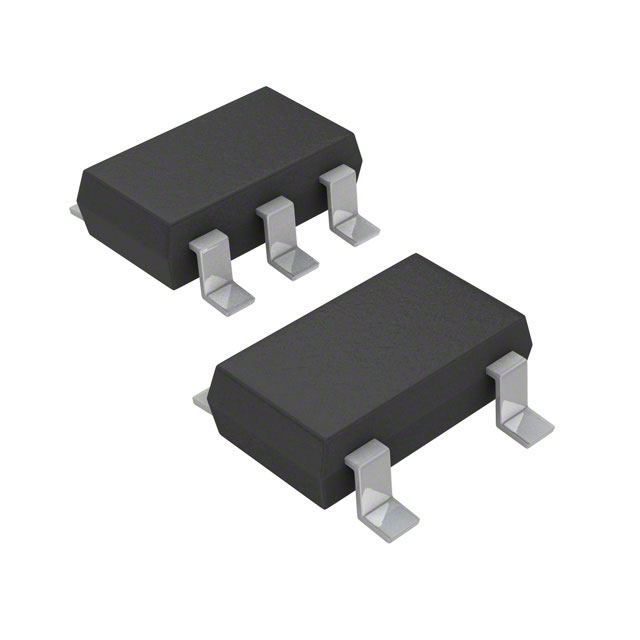
- Part No.:
- MP156GJ-Z
- Manufacturer:
- Monolithic Power Systems Inc.
- Category:
- AC DC Converters, Offline Switches
- Package:
- SOT-23-5 Thin, TSOT-23-5
- Datasheet:
-
 MP156GJ-Z.pdf
- Description:
- IC OFFLIN CONV MULT TOP TSOT23-5
- Quantity:
- Payment:

- Shipping:

Inventory:1,928
Please send an inquiry. Send us your inquiry, and we will respond immediately.
Product details
Overview
MP156GJ-Z from Monolithic Power Systems is a primary-side constant-voltage (CV) off-line regulator with integrated 500V/20Ω MOSFET, supporting Buck, Buck-Boost, Boost, and Flyback topologies. It delivers up to 4W output power, achieves <30mW no-load consumption, and features green-mode operation with frequency foldback and peak-current compression for high light-load efficiency - ideal for standby power in home appliances and white goods.
For engineers reviewing the MP156GJ-Z datasheet, MP156GJ-Z pinout, MP156GJ-Z application, or MP156GJ-Z equivalent, key selection criteria include its TSOT23-5 package, 5.3–5.6V VCC operating range, 2.55V feedback reference, 150°C thermal shutdown threshold, and support for non-isolated/isolated topologies without optocoupler.
Technical Context
The MP156GJ-Z implements primary-side regulation using internal error amplifier compensation and ramp-based feedback control that samples FB voltage 6µs after MOSFET turn-off. Its green-mode architecture dynamically reduces switching frequency and peak current under light load to maintain >75% efficiency at 10% load.
It integrates a 500V high-voltage start-up current source on the DRAIN pin, self-supplies via internal VCC regulation with 250mV hysteresis, and employs 350ns leading-edge blanking to suppress current-sense noise. Protection logic includes timer-based OLP (170ms delay at 37kHz), SCP at 450mA, and open-loop detection at 60mV FB voltage.
Key Specifications
| Parameter | Value and Actual Design Meaning |
|---|---|
| VBR(DSS) | 500V - Enables direct connection to universal AC input (85–265VAC) after rectification without external HV transistor. |
| RDS(on) | 20Ω - Limits conduction loss in integrated MOSFET; supports ≤4W output with appropriate inductor selection. |
| VFB | 2.55V (typ) - Precise internal reference for CV regulation; sets output via R1/R2 divider (e.g., 12V = 2.55 × (R1/R2 + 1)). |
| ISC (SCP) | 450mA - Hard current limit triggers immediate shutdown during short-circuit; enables robust fault recovery. |
| τminoff | 18µs (normal), down to 72µs at startup - Enforces minimum off-time to stabilize CCM/DCM boundary and enable soft-start. |
| Pno-load | <30mW - Meets stringent Energy Star and EU CoC Tier 2 standby power requirements without auxiliary winding. |
| TSD | 150°C - Thermal shutdown with auto-restart prevents permanent damage during sustained overload or poor heatsinking. |
Pinout & Package
MP156GJ-Z is packaged in TSOT23-5 - a 2.9mm × 1.6mm surface-mount package with exposed drain pad for thermal enhancement. Pin 1 is VCC, Pin 2 is FB, Pins 3 and 4 are SOURCE (internally tied), and Pin 5 is DRAIN.
| Pin/Terminal | Circuit Role | Design Meaning |
|---|---|---|
| VCC (Pin 1) | Internal bias supply rail | Regulated 5.3–5.6V input; powers control circuitry; UVLO activates below 5.3V and shuts down below 3.4V. |
| FB (Pin 2) | Primary-side feedback node | Monitors sampled output voltage; 2.55V reference triggers cycle initiation when below threshold; OLP triggers at 1.7V. |
| SOURCE (Pins 3 & 4) | MOSFET source and ground reference | Common return for VCC and FB; must be low-inductance connection to minimize noise coupling into feedback path. |
| DRAIN (Pin 5) | Integrated MOSFET drain terminal | Connects to rectified AC line; hosts internal 500V start-up current source; requires proper snubber and layout isolation. |
Key Features
| Feature | Design Value |
|---|---|
| Primary-side CV regulation | Eliminates optocoupler and secondary-side TL431, reducing BOM count and cost while maintaining ±5% output accuracy across line/load/temperature. |
| Green-mode frequency foldback | Switching frequency drops from ~37kHz (full load) to <10kHz (light load), cutting switching losses and enabling <30mW no-load consumption. |
| Integrated 500V MOSFET | Reduces external component count by one active device; eliminates gate driver and level-shifter; simplifies PCB layout for compact designs. |
| Timer-based overload protection | 170ms delay (at 37kHz) prevents false triggering during startup or transient overloads while ensuring safe shutdown under sustained overload. |
| Internal leading-edge blanking | 350ns blanking window suppresses current-sense spikes from parasitic ringing, improving reliability in noisy flyback or boost configurations. |
Applications
| Smart Home Appliance Power Supply | Industrial Sensor Node Standby Rail |
|---|---|
Use Scenario: Low-power auxiliary supply for microcontroller, display, and Wi-Fi module in washing machine control board. IC Role / Device Role / Timing Role: Primary-side CV regulator providing isolated 5V/100mA output via flyback topology with no optocoupler. Use Value: Reduces bill-of-materials by eliminating optocoupler and secondary-side shunt regulator; meets IEC 62368-1 creepage requirements with simplified transformer design. | Use Scenario: Always-on 3.3V rail powering ultra-low-power MCU and environmental sensors in factory-floor wireless node. IC Role / Device Role / Timing Role: Non-isolated buck converter delivering regulated 3.3V from 24V DC bus, leveraging MP156GJ-Z's green-mode efficiency. Use Value: Achieves <30mW no-load draw to extend battery backup runtime; enables 10-year maintenance-free operation in energy-harvesting deployments. |
| White Goods Display Backlight Driver | USB-C Adapter Auxiliary Supply |
Use Scenario: Constant-voltage source for LED backlight in refrigerator LCD panel, powered from rectified mains. IC Role / Device Role / Timing Role: Buck-boost regulator generating stable 12V from variable DC bus (70–375V) derived from half-wave rectifier. Use Value: Maintains consistent brightness across wide input range without complex PFC stage; supports surge immunity up to 2kV via optimized input capacitor selection. | Use Scenario: Standby power supply for USB-C PD controller and communication ICs in multi-port wall charger. IC Role / Device Role / Timing Role: Flyback-derived 5V/50mA rail activated before main GaN-based power stage engages. Use Value: Enables zero-voltage startup and fast wake-up response (<500ms); meets DOE Level VI and EU ErP Lot 6 standby efficiency mandates. |
Equivalent & Alternatives
The following parts are listed as comparable options for similar primary-side CV regulator applications.
| Alternative Part | Technical Difference | Application Difference | Selection Advice |
|---|---|---|---|
| MP157GJ-Z | Higher 600V MOSFET rating; identical pinout and FB reference; adds programmable OVP via external resistor. | Better suited for 305VAC industrial inputs or surge-heavy environments; same topology support and no-load performance. | Select when input surge immunity >2kV is required or OVP coordination with system-level monitoring is needed. |
| LNK3206G | Lower 725V MOSFET but fixed 66kHz frequency; no frequency foldback; higher no-load consumption (~75mW). | Lacks green-mode optimization; requires optocoupler for tighter regulation; targets cost-sensitive consumer adapters. | Choose only if legacy LNK3xxx design reuse is mandatory; avoid where <30mW standby is specified. |
Compared with MP156GJ-Z, MP157GJ-Z extends input ruggedness without changing footprint or control behavior, while LNK3206G trades efficiency and integration for broader legacy compatibility - making MP156GJ-Z optimal for new designs prioritizing ultra-low standby power and topology flexibility.
Availability
MP156GJ-Z is available at Aetrix Electronics and suitable for home appliance control boards, industrial sensor nodes, white goods displays, and USB-C adapter auxiliary rails requiring stable component supply, long-term lifecycle support, and RoHS-compliant packaging.
Supply support for MP156GJ-Z includes scheduled delivery planning, volume procurement assistance, BOM continuity management, traceable sourcing, and lifecycle availability coordination for OEM customers, industrial embedded developers, connected-device designers, and electronics production programs.
Manufacturer
Monolithic Power Systems (MPS) is a fabless semiconductor company specializing in high-performance analog and power ICs, with design centers in the US, China, and Taiwan, and global manufacturing partnerships.
The MP156 product line targets cost-sensitive, space-constrained off-line power conversion applications requiring high integration, ultra-low standby power, and primary-side regulation - specifically addressing demands in smart home, industrial IoT, and energy-efficient consumer electronics.
FAQ
What is the maximum recommended output power for MP156GJ-Z in TSOT23-5 package?
The MP156GJ-Z in TSOT23-5 is rated for up to 4W output power under proper thermal conditions. Derating is required above +85°C ambient due to its 1W continuous power dissipation limit and 100°C/W θJA; for sustained 4W operation, use forced airflow or copper pour under the exposed drain pad.
Does MP156GJ-Z require an external VCC capacitor, and what value is recommended?
Yes - a 1–4.7μF ceramic capacitor is required between VCC and SOURCE pins. This capacitor sustains control circuitry during light-load periods when the internal HV current source is inactive; values below 1μF risk UVLO cycling, while >10μF delays startup and increases inrush stress.
How does MP156GJ-Z achieve <30mW no-load power consumption without an auxiliary winding?
It uses an internal high-voltage current source on the DRAIN pin to charge the VCC capacitor during each switching cycle, combined with green-mode frequency foldback and peak-current compression. At no-load, frequency drops below 10kHz and peak current falls to ~100mA, minimizing both switching and conduction losses.
Can MP156GJ-Z be used in isolated flyback topologies without optocoupler feedback?
Yes - it supports indirect primary-side sensing in flyback mode using a third-winding or auxiliary winding to sample reflected output voltage. The FB pin monitors this sampled signal, enabling ±5% regulation without optocoupler or secondary-side references, as verified in MPS Application Note AN109.
What is the purpose of the dual leading-edge blanking times (350ns and 180ns)?
The 350ns blanking applies during normal switching to suppress gate-drive-induced current-sense noise; the shorter 180ns blanking activates specifically during short-circuit protection to allow faster fault detection while still rejecting initial turn-on transients - ensuring reliable SCP without nuisance tripping.
Is MP156GJ-Z compatible with both CCM and DCM operation, and how does it manage mode transition?
Yes - it operates in both modes. Minimum off-time (18µs) and peak-current limit (290mA typ) define the CCM/DCM boundary. As load decreases, frequency foldback and peak-current compression automatically shift operation toward DCM, maintaining regulation while reducing losses - no external mode-select components are needed.
MP156GJ-Z Specifications
- Product attributes
- Attribute value
- Manufacturer:
- Monolithic Power Systems Inc.
- Series:
- -
- Package/Case:
- SOT-23-5 Thin, TSOT-23-5
- Packaging:
- Tape & Reel (TR)
- Product Status:
- Active
- Output Isolation:
- Non-Isolated
- Internal Switch(s):
- Yes
- Voltage - Breakdown:
- 500V
- Topology:
- Boost, Buck, Buck-Boost, Flyback
- Voltage - Start Up:
- -
- Voltage - Supply (Vcc/Vdd):
- 5.3V ~ 5.6V
- Duty Cycle:
- -
- Frequency - Switching:
- -
- Power (Watts):
- 4 W
- Fault Protection:
- Open Loop, Over Load, Over Temperature, Short Circuit
- Control Features:
- -
- Operating Temperature:
- -40°C ~ 125°C (TJ)
- Grade:
- -
- Qualification:
- -
- Supplier Device Package:
- TSOT-23-5
- Mounting Type:
- Surface Mount
MP156GJ-Z FAQ
1.How can I place an order for MP156GJ-Z through Aetrix?
Please submit a Request for Quotation (RFQ) for MP156GJ-Z on Aetrix. Our sales agent will provide a competitive quotation and guide you through the order confirmation once you accept the terms.
2.Are the price and stock information for MP156GJ-Z reliable?
The price and inventory of MP156GJ-Z are updated periodically and may fluctuate due to market conditions. Stock and pricing data are typically refreshed every 24 hours. Quotation validity for MP156GJ-Z is usually 5 days.
3.What payment methods are accepted for MP156GJ-Z?
We accept Wire Transfer, PayPal, Credit Card, Western Union, MoneyGram, and Escrow for MP156GJ-Z transactions.
Note: Certain payment methods may incur a processing fee.
4.How is shipping managed for MP156GJ-Z?
MP156GJ-Z orders can be shipped via leading logistics carriers, including DHL, UPS, FedEx, TNT, or Registered Mail.
Once your MP156GJ-Z order is processed, you will receive an email with the shipment details and tracking number.
Note: Tracking information may take up to 24 hours to appear. Express delivery typically takes 3–5 business days.
5.How can I obtain technical support or documentation for MP156GJ-Z?
For technical support, including MP156GJ-Z datasheets, pinout diagrams, or application guidance, please contact our engineering support team. They can provide detailed documentation and assistance for your MP156GJ-Z requirements.
6.How does Aetrix verify that MP156GJ-Z is sourced from the original manufacturer or authorized distributors?
All MP156GJ-Z products on Aetrix are procured from qualified distributors and authorized channels. Our dedicated quality assurance team conducts strict verification, including traceability checks and, if necessary, third-party testing. This ensures that MP156GJ-Z meets industry standards.
7.What is the process for return or replacement of MP156GJ-Z?
All MP156GJ-Z units undergo pre-shipment inspection (PSI). If there is an issue with MP156GJ-Z, returns or replacements are accepted under the following conditions:
1.Quantity discrepancies, incorrect items, or visible external defects (such as breakage or corrosion), acknowledged by Aetrix.
2.The issue is reported within 90 days of delivery.
3.The MP156GJ-Z part is unused and in its original packaging.
Return procedure for MP156GJ-Z:
1.Submit a request within 90 days.
2.Obtain a Return Material Authorization (RMA) from Aetrix.
MP156GJ-Z Tags
-
LNK6407D-TL
Power Integrations
-
LNK3204D-TL
Power Integrations

-
SR10LG-G
Microchip Technology
-
TNY285DG-TL
Power Integrations
-
LNK304DN-TL
Power Integrations
-
TNY285KG-TL
Power Integrations
-
LNK3206D-TL
Power Integrations
-
LNK623DG-TL
Power Integrations
-
TNY286PG
Power Integrations
-
LNK624DG-TL
Power Integrations
-
LNK604DG-TL
Power Integrations

-
UCC28704DBVR-1
Texas Instruments
Tech Hub

Operational amplifier guide covering op amp basics, feedback, ideal vs real op amps, common configurations, buffer circuits, offset, bias current, gain-bandwidth, slew rate, rail-to-rail limits and sel…

Jumper cables guide covering safe connection order, red and black clamp placement, final ground connection, cable gauge, length, clamp quality, copper vs CCA cables, jump starter comparison and battery…

LDO regulator guide covering low dropout voltage, power dissipation, thermal design, PSRR, output noise, capacitor stability, adjustable LDO circuits, LDO vs buck converter and datasheet selection chec…

Conditional Access Module guide covering CAM meaning, CI/CI+ interface, smart card authorization, DVB security workflow, TV and set-top box compatibility, internal electronics, ESD protection, connecto…

Guide to electronic component obsolescence covering EOL risk, PCN/PDN notices, last-time buy planning, replacement options, form-fit-function validation, counterfeit risk and BOM lifecycle management.

18650 battery guide covering lithium-ion cell basics, 3.6V/3.7V voltage, 4.2V charging, mAh and Wh capacity, protected cells, chargers, BMS, series-parallel packs, holders, welding and sourcing checks.…

Hall effect sensor guide covering working principle, linear and digital sensors, Arduino circuits, current sensing, speed detection, automotive applications, A3144 examples, signal filtering and datash…

Product Change Notification guide for electronic components, covering PCN meaning, PCN vs PDN/EOL, common change types, risk levels, form-fit-function review, engineering validation, BOM control, LTB/L…

A practical guide to blend door actuators, covering HVAC function, symptoms, location, AC and heater issues, reset and calibration, replacement cost, electrical diagnosis, compatibility checks, and rep…

Engineering guide to Raspberry Pi alternatives, covering chip-level differences, Orange Pi, ROCK, Jetson, Banana Pi, NanoPi, Compute Module, Pico, GPIO, camera, HAT compatibility, and replacement risks…


