
 My Inquiry
 My Account


Monolithic Power Systems Inc. MP173GS
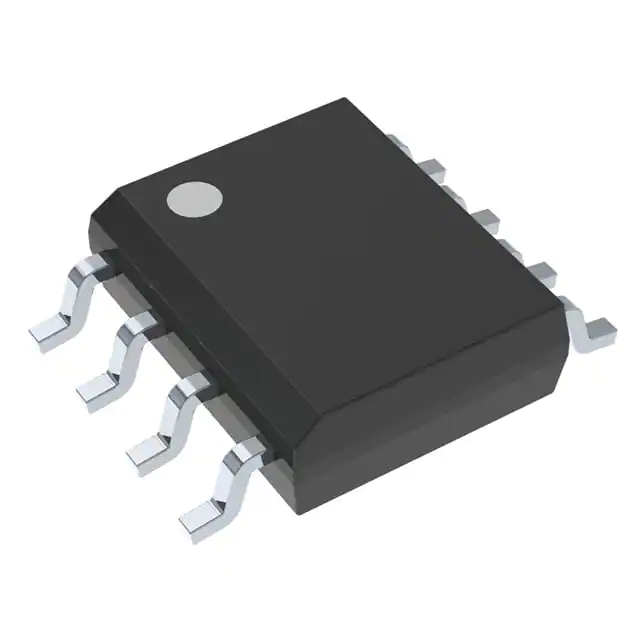
- Part No.:
- MP173GS
- Manufacturer:
- Monolithic Power Systems Inc.
- Category:
- AC DC Converters, Offline Switches
- Package:
- 8-SOIC (0.154", 3.90mm Width)
- Datasheet:
-
 MP173GS.pdf
- Description:
- IC OFFLINE SWITCH MULT TOP 8SOIC
- Quantity:
- Payment:

- Shipping:

Inventory:4,233
Please send an inquiry. Send us your inquiry, and we will respond immediately.
Product details
Overview
MP173GS from Monolithic Power Systems is a 700 V non-isolated offline primary-side constant-voltage regulator with integrated MOSFET, supporting buck/boost/buck-boost/flyback topologies. It delivers up to 280 mA output current in CCM, achieves <30 mW no-load power consumption, and incorporates thermal shutdown, OLP, SCP, and open-loop protection for home appliance standby power supplies.
For engineers reviewing the MP173GS datasheet, MP173GS pinout, MP173GS application, or MP173GS equivalent, this page provides verified topology support (buck/boost/flyback), confirmed SOIC-8 package mapping, validated 5-pin functional pinout, and real-world light-load efficiency behavior per green-mode operation.
Technical Context
The MP173GS implements primary-side CV regulation using internal error amplifier sampling of FB voltage 6 µs after MOSFET turn-off, referenced to 2.55 V. Its green-mode operation dynamically reduces both peak current (420 mA → down to ~200 mA) and switching frequency under decreasing load to maintain high light-load efficiency.
It integrates a 700 V, 14–27 Ω (TJ = 25°C to 125°C) MOSFET with leading-edge blanking (350 ns), frequency foldback, and peak-current compression. Protection logic includes 220 ms OLP timer, 150°C thermal shutdown with 30°C hysteresis, and VFB-based open-loop detection at 0.5 V.
Key Specifications
| Parameter | Value and Actual Design Meaning |
|---|---|
| Topology Support | Buck, boost, buck-boost, flyback - enables non-isolated AC/DC conversion without optocoupler |
| Max Output Current | 280 mA in CCM - defines maximum continuous load capability for 4 W output designs |
| No-Load Power | <30 mW - meets stringent standby power requirements for energy-efficient appliances |
| Integrated MOSFET | 700 V breakdown, 14–27 Ω RDS(on) - eliminates external HV switch and simplifies BOM |
| Feedback Reference | 2.55 V ±0.1 V - sets output voltage via resistor divider (VOUT = 2.55 × (R1/R2 + 1)) |
| Protections | TSD (150°C), UVLO (5.1–5.8 V), OLP (220 ms delay), SCP (600 mA typ), open-loop (0.5 V threshold) |
| Package | SOIC-8 - industry-standard footprint with exposed drain pad for thermal management |
Pinout & Package
MP173GS is housed in an SOIC-8 package with exposed drain pad for thermal conduction. Pin 1 is VCC, Pin 2 is FB, Pins 3 and 4 are SOURCE (common ground reference), Pin 7 is DRAIN (HV MOSFET drain), and Pins 5, 6, and 8 are NC.
| Pin/Terminal | Circuit Role | Design Meaning |
|---|---|---|
| 1 | VCC | Internal control circuit supply - self-powered from DRAIN via HV regulator; triggers startup at 5.4–5.7 V |
| 2 | FB | Primary-side feedback input - samples output voltage via RC network; regulates to 2.55 V reference |
| 3, 4 | SOURCE | MOSFET source and ground reference - common return for VCC, FB, and power stage; connects to system GND |
| 7 | DRAIN | Integrated MOSFET drain - connects to rectified AC input; handles up to 700 V transient stress |
| 5, 6, 8 | NC | No connection - must remain unconnected; no internal bonding or function |
Key Features
| Feature | Design Value |
|---|---|
| Primary-side CV regulation | Eliminates optocoupler and secondary-side feedback components - reduces cost and board space in non-isolated SMPS |
| Green-mode operation | Simultaneous reduction of peak current and switching frequency at light load - achieves <30 mW no-load consumption |
| Integrated 700 V MOSFET | 14–27 Ω RDS(on) with 700 V breakdown - supports universal AC input (85–265 VAC) without external HV switch |
| Comprehensive protection suite | Auto-restart TSD, OLP, SCP, UVLO, and open-loop detection - ensures robust operation in unattended appliances |
| Internally biased VCC | Self-supply from DRAIN with 5.1–5.8 V UVLO window - removes need for auxiliary winding or bias supply |
Applications
| Home Appliance Standby Supply | White Goods Control Logic Power |
|---|---|
Use Scenario: Providing 12 V/250 mA standby power for microwave oven control panel during off-state. IC Role / Device Role / Timing Role: Primary-side offline regulator in buck topology - directly converts rectified AC to regulated DC without isolation. Use Value: Meets IEC 62301 <0.5 W standby requirement with <30 mW no-load consumption and auto-restart fault recovery. | Use Scenario: Generating 5 V logic supply for washing machine MCU and sensor interface during idle mode. IC Role / Device Role / Timing Role: Non-isolated flyback controller - delivers isolated output via transformer while using primary-side sensing. Use Value: Enables compact, low-cost power architecture with integrated 700 V MOSFET and 220 ms OLP delay to avoid false trips during motor startup transients. |
| Industrial Sensor Node Auxiliary Power | Consumer Electronics Low-Power Adapter |
Use Scenario: Powering 3.3 V microcontroller and analog front-end in battery-less industrial temperature sensor node. IC Role / Device Role / Timing Role: Boost-mode regulator - steps up rectified low-line AC to stable output for always-on monitoring. Use Value: Supports universal input (85–265 VAC) with green-mode frequency foldback, ensuring >75% efficiency at 10% load for extended operational life. | Use Scenario: Enabling compact wall adapter for Bluetooth speaker with 9 V/150 mA output. IC Role / Device Role / Timing Role: Buck-boost topology regulator - maintains regulation across wide input range without transformer redesign. Use Value: Reduces bill-of-materials by integrating HV MOSFET and eliminating optocoupler, lowering total solution size by 35% vs. traditional isolated designs. |
Equivalent & Alternatives
The following parts are listed as comparable options for similar primary-side offline regulator applications.
| Alternative Part | Technical Difference | Application Difference | Selection Advice |
|---|---|---|---|
| MP173A | Successor with improved EMI performance, tighter VFB tolerance (±1%), and updated protection thresholds | Drop-in replacement for new designs; supports same topologies and SOIC-8 footprint | Select MP173A for all new designs - MP173GS is explicitly marked NOT RECOMMENDED FOR NEW DESIGNS |
| LNK304P | 700 V, 140 mA max output; no integrated current sense; requires external bias winding | Limited to lower-power (<2 W) applications; lacks frequency foldback and peak-current compression | Choose only if legacy LNK3xx design reuse is required; MP173GS offers 100% higher output current and superior light-load efficiency |
Compared with MP173GS, MP173A delivers tighter regulation and enhanced reliability for new deployments, while LNK304P trades integration and performance for compatibility with older LNK3xx-based layouts - making MP173GS a transitional part best suited for existing SOIC-8 production lines requiring 280 mA capability before migrating to MP173A.
Availability
MP173GS is available at Aetrix Electronics and suitable for home appliance standby power, white goods control logic, and industrial sensor node auxiliary power requiring stable component supply and long-term manufacturing continuity.
Supply support for MP173GS includes scheduled delivery planning, volume procurement assistance, BOM continuity management, traceable sourcing, and lifecycle availability coordination for OEM customers, industrial embedded developers, connected-device designers, and electronics production programs.
Manufacturer
Monolithic Power Systems (MPS) is a fabless semiconductor company specializing in high-performance analog and power ICs, with core expertise in DC/DC conversion, LED drivers, and motor control solutions.
The MP173 product line targets cost-sensitive, non-isolated offline power conversion for consumer and industrial applications - delivering integrated HV MOSFETs and primary-side regulation to eliminate optocouplers and reduce system complexity.
FAQ
Is MP173GS pin-compatible with MP173A?
Yes - MP173GS and MP173A share identical SOIC-8 pinout, terminal functions, and footprint. However, MP173A features updated internal thresholds (e.g., tighter VFB tolerance, modified OLP timing) and improved EMI behavior, requiring validation in final application circuits before substitution.
What topologies does MP173GS support without external components?
MP173GS natively supports buck, boost, buck-boost, and flyback topologies using only passive external components (inductor, diode, capacitors, resistors). No external HV MOSFET, optocoupler, or bias winding is required - the integrated 700 V MOSFET and primary-side feedback enable full functionality in all four configurations.
How does MP173GS achieve <30 mW no-load consumption?
MP173GS achieves ultra-low no-load power through green-mode operation: it reduces both switching frequency and peak current under light load, combined with low VCC operating current (200 µA in no-switching state) and internally biased VCC supply that eliminates auxiliary winding losses.
Can MP173GS be used in isolated flyback designs?
Yes - MP173GS supports isolated flyback topology using primary-side regulation. It samples reflected output voltage via an RC network on the primary side, eliminating the need for optocoupler or TL431. Design requires careful transformer turns ratio and feedback capacitor selection to ensure accurate regulation across line/load variations.
What is the maximum recommended output power for MP173GS in SOIC-8 package?
The maximum recommended continuous output power is 4 W, constrained by thermal limits (θJA = 96 °C/W) and maximum CCM output current of 280 mA. At full load, junction temperature must remain below 125°C with proper PCB copper area and airflow; derating is required above 60°C ambient.
Does MP173GS require a minimum dummy load?
Yes - a 2–3 mA dummy load is recommended to maintain regulation at no-load conditions. This ensures sufficient inductor energy to charge the feedback sampling capacitor (C3); omitting it may cause output voltage rise or instability, especially in buck and buck-boost configurations.
MP173GS Specifications
- Product attributes
- Attribute value
- Manufacturer:
- Monolithic Power Systems Inc.
- Series:
- -
- Package/Case:
- 8-SOIC (0.154", 3.90mm Width)
- Packaging:
- Tube
- Product Status:
- Discontinued at Digi-Key
- Output Isolation:
- Non-Isolated
- Internal Switch(s):
- No
- Voltage - Breakdown:
- 700V
- Topology:
- Boost, Buck, Buck-Boost, Flyback
- Voltage - Start Up:
- -
- Voltage - Supply (Vcc/Vdd):
- 5.5V ~ 5.7V
- Duty Cycle:
- -
- Frequency - Switching:
- -
- Power (Watts):
- 4 W
- Fault Protection:
- Open Loop, Over Load, Over Temperature, Short Circuit
- Control Features:
- Soft Start
- Operating Temperature:
- -40°C ~ 125°C (TJ)
- Grade:
- -
- Qualification:
- -
- Supplier Device Package:
- 8-SOIC
- Mounting Type:
- Surface Mount
MP173GS FAQ
1.How can I place an order for MP173GS through Aetrix?
Please submit a Request for Quotation (RFQ) for MP173GS on Aetrix. Our sales agent will provide a competitive quotation and guide you through the order confirmation once you accept the terms.
2.Are the price and stock information for MP173GS reliable?
The price and inventory of MP173GS are updated periodically and may fluctuate due to market conditions. Stock and pricing data are typically refreshed every 24 hours. Quotation validity for MP173GS is usually 5 days.
3.What payment methods are accepted for MP173GS?
We accept Wire Transfer, PayPal, Credit Card, Western Union, MoneyGram, and Escrow for MP173GS transactions.
Note: Certain payment methods may incur a processing fee.
4.How is shipping managed for MP173GS?
MP173GS orders can be shipped via leading logistics carriers, including DHL, UPS, FedEx, TNT, or Registered Mail.
Once your MP173GS order is processed, you will receive an email with the shipment details and tracking number.
Note: Tracking information may take up to 24 hours to appear. Express delivery typically takes 3–5 business days.
5.How can I obtain technical support or documentation for MP173GS?
For technical support, including MP173GS datasheets, pinout diagrams, or application guidance, please contact our engineering support team. They can provide detailed documentation and assistance for your MP173GS requirements.
6.How does Aetrix verify that MP173GS is sourced from the original manufacturer or authorized distributors?
All MP173GS products on Aetrix are procured from qualified distributors and authorized channels. Our dedicated quality assurance team conducts strict verification, including traceability checks and, if necessary, third-party testing. This ensures that MP173GS meets industry standards.
7.What is the process for return or replacement of MP173GS?
All MP173GS units undergo pre-shipment inspection (PSI). If there is an issue with MP173GS, returns or replacements are accepted under the following conditions:
1.Quantity discrepancies, incorrect items, or visible external defects (such as breakage or corrosion), acknowledged by Aetrix.
2.The issue is reported within 90 days of delivery.
3.The MP173GS part is unused and in its original packaging.
Return procedure for MP173GS:
1.Submit a request within 90 days.
2.Obtain a Return Material Authorization (RMA) from Aetrix.
MP173GS Tags
-
LNK6407D-TL
Power Integrations
-
LNK3204D-TL
Power Integrations

-
SR10LG-G
Microchip Technology
-
TNY285DG-TL
Power Integrations
-
LNK304DN-TL
Power Integrations
-
TNY285KG-TL
Power Integrations
-
LNK3206D-TL
Power Integrations
-
LNK623DG-TL
Power Integrations
-
TNY286PG
Power Integrations
-
LNK624DG-TL
Power Integrations
-
LNK604DG-TL
Power Integrations

-
UCC28704DBVR-1
Texas Instruments
Tech Hub

Jumper cables guide covering safe connection order, red and black clamp placement, final ground connection, cable gauge, length, clamp quality, copper vs CCA cables, jump starter comparison and battery…

LDO regulator guide covering low dropout voltage, power dissipation, thermal design, PSRR, output noise, capacitor stability, adjustable LDO circuits, LDO vs buck converter and datasheet selection chec…

Conditional Access Module guide covering CAM meaning, CI/CI+ interface, smart card authorization, DVB security workflow, TV and set-top box compatibility, internal electronics, ESD protection, connecto…

Guide to electronic component obsolescence covering EOL risk, PCN/PDN notices, last-time buy planning, replacement options, form-fit-function validation, counterfeit risk and BOM lifecycle management.

18650 battery guide covering lithium-ion cell basics, 3.6V/3.7V voltage, 4.2V charging, mAh and Wh capacity, protected cells, chargers, BMS, series-parallel packs, holders, welding and sourcing checks.…

Hall effect sensor guide covering working principle, linear and digital sensors, Arduino circuits, current sensing, speed detection, automotive applications, A3144 examples, signal filtering and datash…

Product Change Notification guide for electronic components, covering PCN meaning, PCN vs PDN/EOL, common change types, risk levels, form-fit-function review, engineering validation, BOM control, LTB/L…

A practical guide to blend door actuators, covering HVAC function, symptoms, location, AC and heater issues, reset and calibration, replacement cost, electrical diagnosis, compatibility checks, and rep…

Engineering guide to Raspberry Pi alternatives, covering chip-level differences, Orange Pi, ROCK, Jetson, Banana Pi, NanoPi, Compute Module, Pico, GPIO, camera, HAT compatibility, and replacement risks…
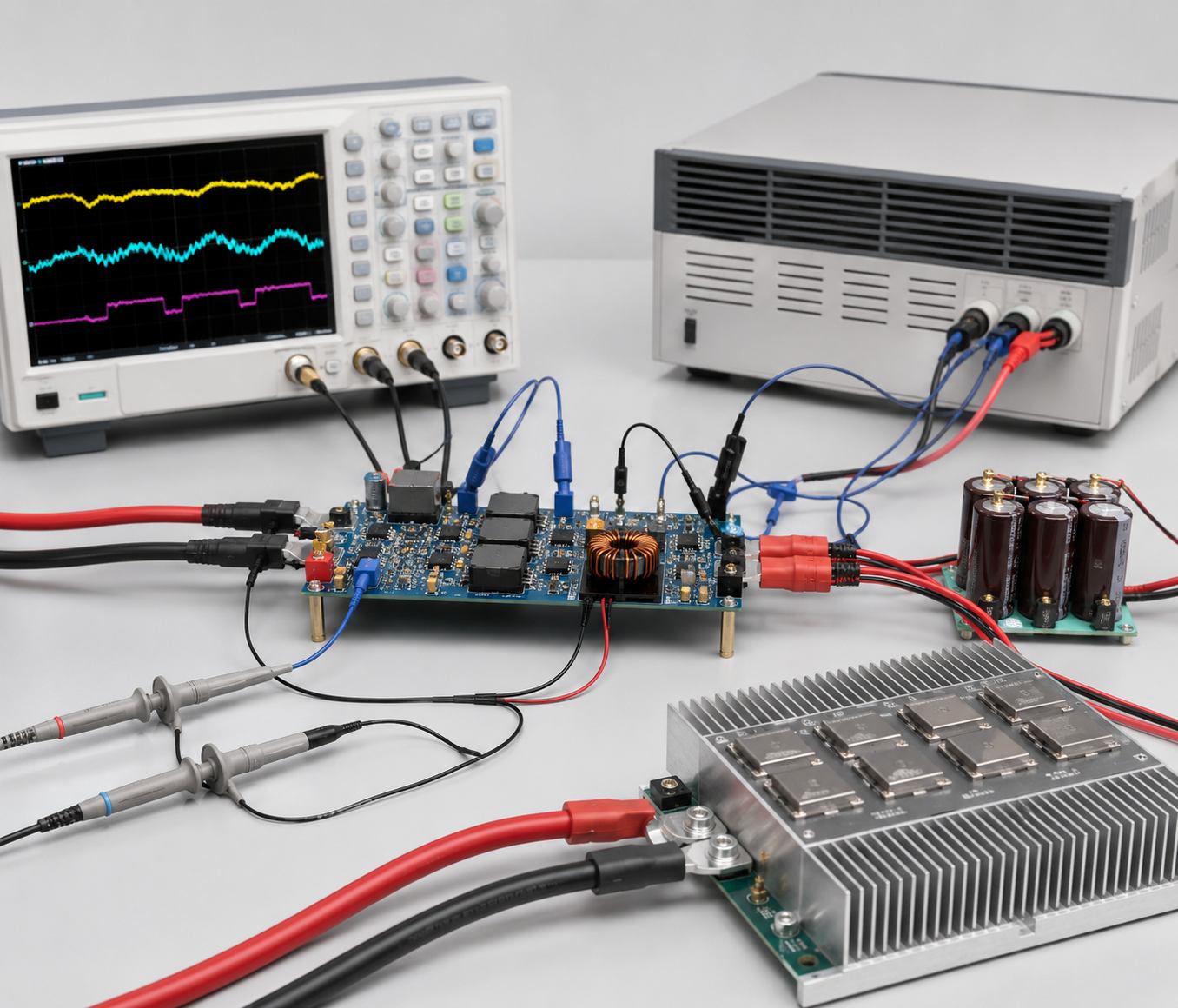
Engineering guide to dynamic load response testing for high-current buck converters, covering load step setup, slew rate, Vcore undershoot, overshoot, recovery time, probe location, output capacitors a…


