
 My Inquiry
 My Account


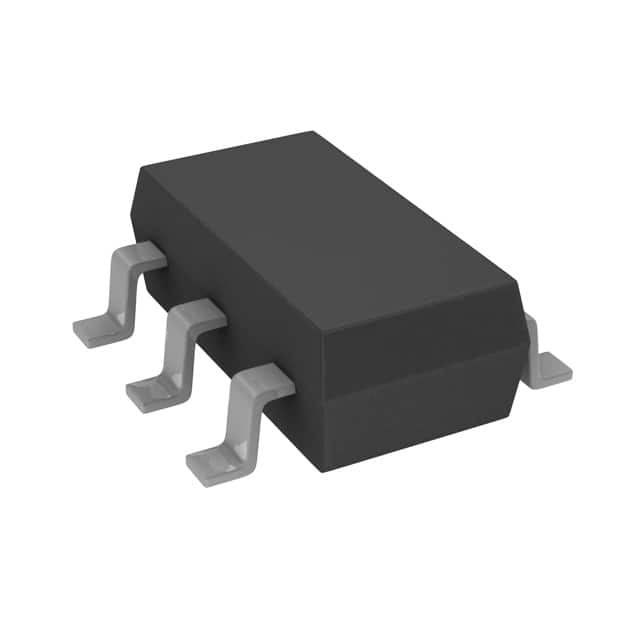
Monolithic Power Systems Inc. MP2331HGTL-P

- Part No.:
- MP2331HGTL-P
- Manufacturer:
- Monolithic Power Systems Inc.
- Package:
- SOT-583
- Datasheet:
-
 MP2331HGTL-P.pdf
- Description:
- IC REG BUCK ADJ 2A SOT583
- Quantity:
- Payment:

- Shipping:

Inventory:3,151
Please send an inquiry. Send us your inquiry, and we will respond immediately.
Product details
Overview
MP2331HGTL-P from Monolithic Power Systems is a fully integrated, synchronous buck converter delivering 2A continuous output current with 4.2V–24V input range, 1.2MHz switching frequency, and constant-on-time (COT) control for fast transient response in space-constrained power rails. It integrates 110mΩ/45mΩ high- and low-side MOSFETs, supports pre-bias start-up, and provides power-good indication in a thermally enhanced SOT583 package.
For engineers reviewing the MP2331HGTL-P datasheet, MP2331HGTL-P pinout, MP2331HGTL-P application, or MP2331HGTL-P equivalent, key selection considerations include COT-based loop stability, 200µA quiescent current under light load, programmable soft-start time via external capacitor, and thermal shutdown at 150°C with 20°C hysteresis.
Technical Context
The MP2331HGTL-P employs constant-on-time (COT) control with input- and output-voltage-dependent on-timer to maintain stable ~1.2MHz switching across 4.2V–24V input while enabling sub-100ns minimum off-time for high duty-cycle operation down to ~1V output. Its valley-current sensing OCP triggers hiccup-mode recovery upon overcurrent, and internal bootstrap charging sustains high-side gate drive without external diode.
It operates in forced continuous conduction mode (CCM) with dead-time control to prevent shoot-through, integrates a 7.3µA soft-start current source, and uses an open-drain PG pin with 87–92% UV and 115–125% OV thresholds referenced to 805mV FB voltage-enabling precise system sequencing and fault reporting.
Key Specifications
| Parameter | Value and Actual Design Meaning |
|---|---|
| Input Voltage Range | 4.2V to 24V - supports wide industrial and automotive supply rails without external LDO pre-regulation |
| Output Current | 2A continuous - sufficient for powering SoCs, FPGAs, and DDR memory subsystems in compact devices |
| Switching Frequency | 1.2MHz typical - enables use of small 1–2.2µH inductors and reduces EMI filter size |
| Quiescent Current | 200µA - minimizes standby power loss in always-on applications like set-top boxes and game consoles |
| Feedback Reference | 805mV ±1.5% - sets accurate output voltage with standard resistor dividers; enables 0.8V–13V adjustable outputs |
| Thermal Shutdown | 150°C with 20°C hysteresis - protects against sustained overload or poor PCB thermal design without latch-up |
| Power Good Threshold | UV: 92% VREF, OV: 120% VREF - provides reliable system enable/disable signaling with 50µs rising / 35µs falling delay |
Pinout & Package
SOT583 (1.6mm × 2.1mm, 0.5mm pitch), thermally enhanced 8-pin package with exposed pad for improved heat dissipation in high-density layouts.
| Pin/Terminal | Circuit Role | Design Meaning |
|---|---|---|
| 1 - PG | Open-drain power-good indicator | Signals valid regulation after soft-start; requires external pull-up; asserts low during UVLO, OCP, OTP, or EN=low |
| 2 - IN | Main input supply rail | Accepts 4.2V–24V; must be decoupled with ≥22µF ceramic capacitor placed adjacent to pin |
| 3 - SW | Switch node | Connects to inductor; carries high di/dt; requires short, wide copper trace and minimal loop area |
| 4 - GND | System ground reference | Primary return path for power and feedback; must be connected to large copper pour with multiple vias |
| 5 - BST | Bootstrap supply for high-side driver | Requires 1µF X7R ceramic capacitor between BST and SW; enables N-channel high-side MOSFET drive |
| 6 - EN | Enable control input | Active-high logic; 1.23V threshold with 100mV hysteresis; internal 2.8V Zener clamp protects against overvoltage |
| 7 - SS | Soft-start timing input | Charged by 7.3µA internal current source; external capacitor sets ramp time per CSS = (TSS × 1000) / (2 × 0.805) |
| 8 - FB | Feedback voltage sense | Monitors resistive divider output; regulates VOUT to 805mV; input bias current ≤80nA minimizes divider error |
Key Features
| Feature | Design Value |
|---|---|
| Constant-on-time (COT) control | Delivers <50µs load transient recovery without external compensation components |
| Programmable soft-start | Prevents inrush current into pre-biased loads and ensures monotonic VOUT ramp using external capacitor |
| Forced PWM operation | Maintains fixed 1.2MHz switching across full load range-eliminates audible noise and simplifies EMI filtering |
| Pre-bias start-up support | Enables safe startup into existing output voltage without reverse current or latch-up |
| Integrated 110mΩ/45mΩ MOSFETs | Reduces BOM count and PCB area; achieves >90% efficiency at 1A with 12VIN/3.3VOUT |
Applications
| Game Consoles | Digital Set-Top Boxes |
|---|---|
Use Scenario: Powering GPU core voltage rail in handheld gaming devices with tight thermal and board space constraints. IC Role / Device Role / Timing Role: Primary step-down regulator converting 12V battery or adapter input to 1.2V core supply with fast dynamic response to burst workloads. Use Value: COT control maintains <±25mV output deviation during 1A–2A load steps; 200µA IQ extends battery runtime in suspend mode. | Use Scenario: Generating 3.3V and 5V rails for demodulator, tuner, and HDMI interface ICs in cable/satellite receivers. IC Role / Device Role / Timing Role: Secondary DC/DC converter downstream of AC/DC adapter, providing clean, sequenced power with PG confirmation. Use Value: PG pin synchronizes FPGA configuration and video processor boot; 1.2MHz switching avoids interference with RF front-end bands. |
| Flat-Panel Television | Industrial HMIs |
Use Scenario: Supplying 1.8V logic and 3.3V I/O rails for display controller and touch interface in smart TV mainboards. IC Role / Device Role / Timing Role: High-efficiency point-of-load regulator operating from 19V backlight supply bus. Use Value: 92% peak efficiency at 1.8V/2A reduces thermal load on densely packed PCB; SOT583 footprint saves >30% area vs. SO-8. | Use Scenario: Powering ARM Cortex-M7 microcontroller and isolated CAN transceiver in factory-floor HMI panels with 24V DC input. IC Role / Device Role / Timing Role: Robust primary regulator handling wide-input industrial supply variations and ESD transients. Use Value: 4.2V–24V input range accommodates brownout and surge conditions; thermal shutdown + hiccup OCP ensures fail-safe operation. |
Equivalent & Alternatives
The following parts are listed as comparable options for similar synchronous buck converter applications.
| Alternative Part | Technical Difference | Application Difference | Selection Advice |
|---|---|---|---|
| MP2331GTL-Z | Same die, SOT563 package (1.6mm×1.6mm); higher θJA (130°C/W); no BST pin exposed | Limited thermal performance above 1.2A; unsuitable for 24V input at full load without derating | Select only for ultra-low-height designs where thermal margin >30°C is guaranteed |
| TPS562211RHLR | 4.5V–18V input; 1.4MHz fixed-frequency; 3.5A rating; requires external compensation | Better current headroom but narrower VIN range; lacks pre-bias start-up and TON extension | Prefer when >1.8A continuous current or tighter input voltage control (e.g., 12V-only systems) is required |
Compared with MP2331HGTL-P, MP2331GTL-Z trades thermal capability for smaller footprint, while TPS562211RHLR offers higher current and fixed-frequency predictability at the cost of design flexibility and wide-input robustness.
Availability
MP2331HGTL-P is available at Aetrix Electronics and suitable for game consoles, digital set-top boxes, flat-panel television power supplies, and industrial human-machine interfaces requiring stable component supply with full production traceability.
Supply support for MP2331HGTL-P includes scheduled delivery planning, volume procurement assistance, BOM continuity management, traceable sourcing, and lifecycle availability coordination for OEM customers, industrial embedded developers, connected-device designers, and electronics production programs.
Manufacturer
Monolithic Power Systems (MPS) is a fabless semiconductor company specializing in high-performance power management ICs, with design centers in the US, China, and Taiwan, and global manufacturing partnerships.
The MP2331H product line delivers compact, high-efficiency synchronous buck converters for consumer and industrial applications demanding wide input range, fast transient response, and minimal external components.
FAQ
What is the minimum recommended input capacitance for MP2331HGTL-P?
A minimum 22µF X5R/X7R ceramic capacitor is required at the IN pin, placed directly adjacent to pins 2 and 4. This value ensures adequate high-frequency decoupling and limits input ripple to <100mV under 2A load steps. For 24V input, a second 10µF capacitor in parallel improves hold-up during line dips.
Can MP2331HGTL-P operate with a 3.3V input?
No - the absolute minimum input voltage is 4.2V per datasheet specifications. At 3.3V, the internal UVLO circuit prevents startup, and the bootstrap capacitor cannot charge sufficiently to drive the high-side MOSFET. Operation below 4.2V risks undefined behavior and potential damage during transient events.
How is the soft-start time calculated for a given capacitor value?
Soft-start time (TSS) in milliseconds equals (CSS in nF × 1.61) ÷ 1000, where CSS is the capacitor connected from SS to GND. For example, a 100nF capacitor yields ~16ms ramp time. The internal 7.3µA current source charges the capacitor linearly until VSS/2 exceeds the 805mV reference.
Does MP2331HGTL-P support forced discontinuous conduction mode (DCM)?
No - it operates exclusively in forced continuous conduction mode (CCM) with valley-current OCP. There is no DCM or pulse-skipping mode; switching remains at ~1.2MHz regardless of load. This ensures consistent EMI profile and eliminates low-frequency output ripple associated with light-load DCM.
What is the maximum allowable output capacitance before soft-start failure occurs?
The maximum output capacitance is limited by soft-start current and time: CO_MAX ≈ (ILIM_AVG − IOUT) × TSS / VOUT. With 7.3µA SS current and 100ms soft-start, CO_MAX is ~2200µF for a 3.3V/2A output. Exceeding this causes VOUT to rise too slowly, preventing FB from reaching regulation before SS completes.
Is the BST capacitor polarity-sensitive, and what dielectric is recommended?
Yes - the BST capacitor must be connected between BST and SW pins with correct orientation (no reverse voltage). X7R or X5R ceramic dielectrics are mandatory; Y5V or Z5U types exhibit excessive capacitance loss at DC bias and temperature, risking high-side driver failure due to insufficient bootstrap voltage.
How does the MP2331HGTL-P respond to a short-circuit event on the output?
Upon short-circuit detection via valley-current sensing, it enters hiccup mode: disables switching, discharges the SS capacitor, waits ~20ms, then attempts soft-start again. Each hiccup cycle lasts ~100ms. This limits average power dissipation to <1W during fault, preventing thermal runaway while allowing automatic recovery when fault clears.
MP2331HGTL-P Specifications
- Product attributes
- Attribute value
- Manufacturer:
- Monolithic Power Systems Inc.
- Series:
- MP
- Package/Case:
- SOT-583
- Packaging:
- Tape & Reel (TR)
- Product Status:
- Active
- Function:
- Step-Down
- Output Configuration:
- Positive
- Topology:
- Buck
- Output Type:
- Adjustable
- Number of Outputs:
- 1
- Voltage - Input (Min):
- 4.2V
- Voltage - Input (Max):
- 24V
- Voltage - Output (Min/Fixed):
- 0.8V
- Voltage - Output (Max):
- 13V
- Current - Output:
- 2A
- Frequency - Switching:
- 1.2MHz
- Synchronous Rectifier:
- Yes
- Operating Temperature:
- -40°C ~ 125°C (TJ)
- Grade:
- -
- Qualification:
- -
- Mounting Type:
- Surface Mount
- Supplier Device Package:
- SOT-583
MP2331HGTL-P FAQ
1.How can I place an order for MP2331HGTL-P through Aetrix?
Please submit a Request for Quotation (RFQ) for MP2331HGTL-P on Aetrix. Our sales agent will provide a competitive quotation and guide you through the order confirmation once you accept the terms.
2.Are the price and stock information for MP2331HGTL-P reliable?
The price and inventory of MP2331HGTL-P are updated periodically and may fluctuate due to market conditions. Stock and pricing data are typically refreshed every 24 hours. Quotation validity for MP2331HGTL-P is usually 5 days.
3.What payment methods are accepted for MP2331HGTL-P?
We accept Wire Transfer, PayPal, Credit Card, Western Union, MoneyGram, and Escrow for MP2331HGTL-P transactions.
Note: Certain payment methods may incur a processing fee.
4.How is shipping managed for MP2331HGTL-P?
MP2331HGTL-P orders can be shipped via leading logistics carriers, including DHL, UPS, FedEx, TNT, or Registered Mail.
Once your MP2331HGTL-P order is processed, you will receive an email with the shipment details and tracking number.
Note: Tracking information may take up to 24 hours to appear. Express delivery typically takes 3–5 business days.
5.How can I obtain technical support or documentation for MP2331HGTL-P?
For technical support, including MP2331HGTL-P datasheets, pinout diagrams, or application guidance, please contact our engineering support team. They can provide detailed documentation and assistance for your MP2331HGTL-P requirements.
6.How does Aetrix verify that MP2331HGTL-P is sourced from the original manufacturer or authorized distributors?
All MP2331HGTL-P products on Aetrix are procured from qualified distributors and authorized channels. Our dedicated quality assurance team conducts strict verification, including traceability checks and, if necessary, third-party testing. This ensures that MP2331HGTL-P meets industry standards.
7.What is the process for return or replacement of MP2331HGTL-P?
All MP2331HGTL-P units undergo pre-shipment inspection (PSI). If there is an issue with MP2331HGTL-P, returns or replacements are accepted under the following conditions:
1.Quantity discrepancies, incorrect items, or visible external defects (such as breakage or corrosion), acknowledged by Aetrix.
2.The issue is reported within 90 days of delivery.
3.The MP2331HGTL-P part is unused and in its original packaging.
Return procedure for MP2331HGTL-P:
1.Submit a request within 90 days.
2.Obtain a Return Material Authorization (RMA) from Aetrix.
MP2331HGTL-P Tags
-
TPS562201DDCR
Texas Instruments

-
MC34063ABD-TR
STMicroelectronics
-
TPS561201DDCR
Texas Instruments

-
MC33063ADR
Texas Instruments
-
MC34063ADR
Texas Instruments
-
TPS560200DBVR
Texas Instruments
-
AP3012KTR-G1
Diodes Incorporated
-
TLV61048DBVR
Texas Instruments
-
AZ34063UMTR-G1
Diodes Incorporated
-
TPS562200DDCR
Texas Instruments
-
AP62300TWU-7
Diodes Incorporated
-
MC34063EBD-TR
STMicroelectronics
Tech Hub

A practical engineering guide to 3.3V and 5V logic compatibility, input thresholds, resistor dividers, translator ICs, MOSFET level shifting, I2C pull-ups, timing limits and power-sequencing risks.

The 74HC595 uses push-pull logic outputs, while the TPIC6B595 uses 50 V open-drain DMOS sinks for higher-power loads. This guide compares timing, current limits, 3.3 V interfacing, load wiring, thermal…

The 74HC595 converts serial data into eight stable parallel outputs. This guide covers pin functions, shift and storage timing, OE and MR behavior, drive-current limits, cascading, voltage compatibilit…

A technical comparison of level-sensitive latches and edge-triggered flip-flops, covering timing windows, setup and hold limits, master–slave operation, time borrowing, race-through, HDL inference and…

A D latch stores one bit while Enable controls when data can pass. This reference covers gate-level operation, truth tables, transparency, setup and hold timing, LE versus OE, common ICs and practical …

An SR latch stores one bit through cross-coupled feedback. This engineering reference covers NOR and NAND implementations, truth tables, forbidden-state recovery, gated operation, switch debouncing, fa…

Latch circuits retain one bit through feedback. This technical reference covers SR and D latches, truth tables, transparency, timing limits, latch-versus-flip-flop behavior, applications and common log…

An engineering guide to LED driver operation, constant-current and constant-voltage outputs, linear and switching topologies, dimming, IC selection, calculations, replacement compatibility, and fault c…

Operational amplifier guide covering op amp basics, feedback, ideal vs real op amps, common configurations, buffer circuits, offset, bias current, gain-bandwidth, slew rate, rail-to-rail limits and sel…

Jumper cables guide covering safe connection order, red and black clamp placement, final ground connection, cable gauge, length, clamp quality, copper vs CCA cables, jump starter comparison and battery…


