
 My Inquiry
 My Account


STMicroelectronics MP23DB01HPTR
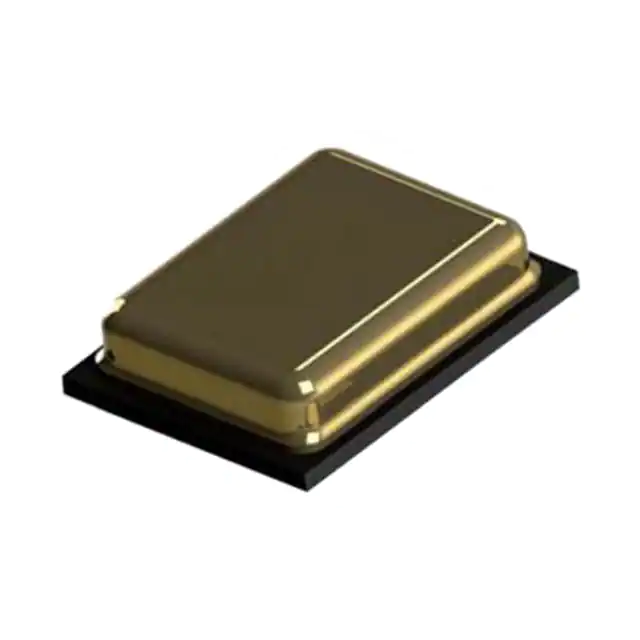
- Part No.:
- MP23DB01HPTR
- Manufacturer:
- STMicroelectronics
- Category:
- Microphones
- Package:
- Datasheet:
-
 MP23DB01HPTR.pdf
- Description:
- MIC MEMS DIGITAL PDM OMNI -24DB
- Quantity:
- Payment:

- Shipping:

Inventory:20,246
Please send an inquiry. Send us your inquiry, and we will respond immediately.
Product details
Overview
MP23DB01HPTR from STMicroelectronics is an ultra-compact, bottom-port, omnidirectional digital MEMS microphone with PDM output, offering 135 dBSPL acoustic overload point in performance mode, –41 dBFS ±1 dB sensitivity, and selectable stereo configuration via L/R pin. It operates across –40 °C to +85 °C and supports sleep (2 µA), low-power (285 µA), and performance (800 µA @ 2.4 MHz) modes for voice capture in space-constrained portable devices.
For engineers reviewing the MP23DB01HPTR datasheet, MP23DB01HPTR pinout, MP23DB01HPTR application, or MP23DB01HPTR equivalent, key selection criteria include AOP vs. SNR trade-offs across clock-driven modes, PDM timing compliance (Tdv = 120 ns), EMI-shielded RHLGA package integration, and L/R channel selection logic for mono/stereo routing.
Technical Context
The MP23DB01HPTR integrates a silicon micromachined capacitive sensing element with a CMOS interface IC to deliver single-bit PDM output synchronized to an external clock (0.15–3.3 MHz). Its three operational modes are controlled solely by input clock frequency range, with no dedicated control pins beyond CLK, DOUT, L/R, VDD, and GND.
Channel selection is implemented via the L/R pin: tied to GND for left-channel data on CLK high, or to VDD for right-channel data on CLK high - enabling hardware-configured stereo without I²C/SPI. The device features internal EMI shielding, A-weighted SNR of 65 dB(A) in performance mode, and PSR of –95 dBFS at 217 Hz.
Key Specifications
| Parameter | Value and Actual Design Meaning |
|---|---|
| AOP | 135 dBSPL in performance mode - enables clean voice capture under loud ambient conditions without clipping. |
| Sensitivity | –41 dBFS ±1 dB at 94 dBSPL/1 kHz - tight matching simplifies multi-mic beamforming calibration. |
| SNR | 65 dB(A) (20 Hz–20 kHz) in performance mode - supports high-fidelity far-field speech processing. |
| Current draw | 2 µA (sleep), 285 µA (low-power @ 768 kHz), 800 µA (performance @ 2.4 MHz) - enables battery-life optimization per use case. |
| Output format | PDM single-bit stream - eliminates need for external ADC and reduces host-side signal processing overhead. |
| Timing delay | Tdv = 120 ns (CL = 100 pF) - ensures deterministic alignment with host PDM decimation filters. |
| Supply range | 1.6 V to 3.6 V - compatible with modern low-voltage SoC I/O domains including 1.8 V and 3.3 V rails. |
Pinout & Package
RHLGA-5L package: 3.5 × 2.65 × 0.98 mm, bottom-port, EMI-shielded metal cap, RoHS/ECOPACK® compliant, SMD-reflow compatible per JEDEC J-STD-020.
| Pin/Terminal | Circuit Role | Design Meaning |
|---|---|---|
| 1 DOUT | PDM data output | Single-bit left/right channel data synchronized to CLK rising edge; high-Z when inactive per L/R state. |
| 2 L/R | Channel select control | Hardware-configured stereo routing: GND = left valid on CLK high; VDD = right valid on CLK high (200 kΩ internal pull-down). |
| 3 GND | Ground reference | Ground ring terminal - provides low-impedance return path and enhances EMI immunity via shielded cavity. |
| 4 CLK | Master clock input | Asynchronous external clock (0.15–3.3 MHz) that determines operating mode and sampling rate; duty cycle 40–60% required. |
| 5 VDD | Power supply | 1.6–3.6 V analog/digital supply; requires local 100 nF + 1 µF ceramic decoupling per layout recommendations. |
Key Features
| Feature | Design Value |
|---|---|
| Omnidirectional response | ±2 dB variation over 360° azimuth - enables consistent pickup regardless of orientation in compact enclosures. |
| Multi-mode power management | Three clock-defined modes (sleep/low-power/performance) - eliminates firmware-controlled mode registers and simplifies system-level power sequencing. |
| EMI-shielded RHLGA package | Metal cap integrated into 5-pin land grid array - suppresses RF ingress without requiring external shielding cans or PCB cutouts. |
| Bottom acoustic port | Direct coupling to internal cavity through PCB-mounted aperture - enables flush-mount design in thin-profile consumer devices. |
| High AOP / low THD coexistence | 135 dBSPL AOP with ≤0.5% THD at 110 dBSPL - preserves speech intelligibility in noisy environments without distortion artifacts. |
Applications
| Smart Speakers | True Wireless Stereo Earbuds |
|---|---|
|
Use Scenario: Far-field voice assistant interaction in living-room environments with background noise up to 75 dB(A). IC Role / Device Role / Timing Role: Primary PDM audio capture sensor feeding DSP-based beamforming and wake-word detection. Use Value: 135 dBSPL AOP prevents clipping during loud commands; ±1 dB sensitivity matching across multiple units enables precise spatial filtering. |
Use Scenario: Dual-mic beamforming in sub-20 mm earbud housings with strict thermal and power constraints. IC Role / Device Role / Timing Role: Left/right channel PDM source with hardware L/R pin selection - eliminates inter-earbud data synchronization latency. Use Value: 285 µA low-power mode extends talk time; bottom-port design allows full enclosure sealing while maintaining acoustic path integrity. |
| Laptops & Notebooks | Wearable Health Monitors |
|
Use Scenario: Conference call audio capture in clamshell devices with microphones placed near hinge or keyboard edge. IC Role / Device Role / Timing Role: Always-on voice trigger sensor operating in low-power mode until wake-word detection activates performance mode. Use Value: 2 µA sleep current minimizes standby drain; 65 dB(A) SNR supports noise-suppressed uplink streaming over Bluetooth LE Audio. |
Use Scenario: Continuous respiratory sound monitoring during sleep or physical activity in wrist-worn form factors. IC Role / Device Role / Timing Role: Low-noise acoustic transducer capturing breath harmonics (20–200 Hz) and cough signatures with minimal self-noise. Use Value: A-weighted 64 dB(A) SNR in low-power mode captures subtle airflow variations; –40 °C to +85 °C rating ensures reliability across body-worn thermal cycles. |
Equivalent & Alternatives
The following parts are listed as comparable options for similar digital MEMS microphone applications.
| Alternative Part | Technical Difference | Application Difference | Selection Advice |
|---|---|---|---|
| INVENSENSE ICS-43432 | Fixed 64 dB(A) SNR, no multi-mode clock control; requires external mode register write via I²C. | Lacks hardware L/R stereo selection - needs host processor coordination for dual-mic sync. | Prefer when I²C configurability (e.g., gain adjustment) outweighs deterministic clock-mode simplicity. |
| TDK INMP522 | Higher 67 dB(A) SNR but lower 128 dBSPL AOP; only two modes (active/sleep) with fixed 1.2 MHz clock. | No L/R pin - stereo requires two separate PDM streams and time-aligned capture in host. | Choose when maximum SNR is critical and AOP >130 dBSPL is not required for target acoustic environment. |
Compared with ICS-43432 and INMP522, the MP23DB01HPTR uniquely combines clock-defined multi-mode operation, hardware L/R stereo routing, and industry-leading 135 dBSPL AOP - making it optimal for battery-powered, space-constrained voice interfaces where deterministic timing and acoustic headroom are non-negotiable.
Availability
MP23DB01HPTR is available at Aetrix Electronics and suitable for smart speakers, TWS earbuds, and wearable health monitors requiring stable component supply, EMI-robust audio capture, and extended temperature operation.
Supply support for MP23DB01HPTR includes scheduled delivery planning, volume procurement assistance, BOM continuity management, traceable sourcing, and lifecycle availability coordination for OEM customers, industrial embedded developers, connected-device designers, and electronics production programs.
Manufacturer
STMicroelectronics is a global semiconductor leader headquartered in Geneva, Switzerland, designing and manufacturing microcontrollers, sensors, power ICs, and analog/mixed-signal products for industrial, automotive, and consumer markets.
The MP23DB01HPTR belongs to ST's high-performance MEMS audio sensor family, engineered specifically for always-on, low-power voice interfaces in next-generation portable and IoT devices demanding acoustic fidelity, miniaturization, and robust EMI immunity.
FAQ
What clock frequencies enable each operating mode?
The MP23DB01HPTR uses clock frequency to determine mode: 0–0.15 MHz for power-down (2 µA), 0.54–1.1 MHz for low-power (285 µA), and 1.5–3.3 MHz for performance (800–880 µA). Mode transitions require clock stop ≥50 µs or continuous clock; no command register is involved.
How is stereo configuration implemented without I²C or SPI?
Stereo is hardware-configured using the L/R pin: tie to GND for left-channel data on CLK high, or to VDD for right-channel data on CLK high. The internal 200 kΩ pull-down means GND connection is optional for left mode, reducing BOM count and routing complexity.
Does the RHLGA package require special PCB layout considerations?
Yes - the metal cap must be soldered to a solid ground plane via the exposed ground ring (Pin 3); the bottom acoustic port requires a 1.0 mm diameter unmasked aperture aligned beneath the package; and 100 nF + 1 µF decoupling caps must be placed within 2 mm of Pin 5 (VDD) per ST layout guidelines.
What is the wake-up time from power-down to valid PDM output?
Wake-up time is 20 ms - defined as the interval from the first CLK edge after power-down exit to the appearance of valid data on DOUT. This is a design-specified parameter (not typical), ensuring predictable latency for voice-triggered systems.
MP23DB01HPTR Specifications
- Product attributes
- Attribute value
- Manufacturer:
- STMicroelectronics
- Series:
- -
- Packaging:
- Tape & Reel (TR)
- Product Status:
- Active
- Type:
- MEMS (Silicon)
- Output Type:
- Digital, PDM
- Direction:
- Omnidirectional
- Frequency Range:
- 20 Hz ~ 10 kHz
- Sensitivity:
- -24dB ±1dB @ 94dB SPL
- S/N Ratio:
- 64dB
- Impedance:
- -
- Voltage - Rated:
- 1.8 V
- Voltage Range:
- 1.6 V ~ 3.6 V
- Current - Supply:
- 800 µA
- Port Location:
- Bottom
- Ratings:
- -
- Termination:
- Solder Pads
- Size / Dimension:
- 0.138" L x 0.104" W (3.50mm x 2.65mm)
- Height (Max):
- 0.043" (1.08mm)
- Shape:
- Rectangular
- Grade:
- -
- Qualification:
- -
MP23DB01HPTR FAQ
1.How can I place an order for MP23DB01HPTR through Aetrix?
Please submit a Request for Quotation (RFQ) for MP23DB01HPTR on Aetrix. Our sales agent will provide a competitive quotation and guide you through the order confirmation once you accept the terms.
2.Are the price and stock information for MP23DB01HPTR reliable?
The price and inventory of MP23DB01HPTR are updated periodically and may fluctuate due to market conditions. Stock and pricing data are typically refreshed every 24 hours. Quotation validity for MP23DB01HPTR is usually 5 days.
3.What payment methods are accepted for MP23DB01HPTR?
We accept Wire Transfer, PayPal, Credit Card, Western Union, MoneyGram, and Escrow for MP23DB01HPTR transactions.
Note: Certain payment methods may incur a processing fee.
4.How is shipping managed for MP23DB01HPTR?
MP23DB01HPTR orders can be shipped via leading logistics carriers, including DHL, UPS, FedEx, TNT, or Registered Mail.
Once your MP23DB01HPTR order is processed, you will receive an email with the shipment details and tracking number.
Note: Tracking information may take up to 24 hours to appear. Express delivery typically takes 3–5 business days.
5.How can I obtain technical support or documentation for MP23DB01HPTR?
For technical support, including MP23DB01HPTR datasheets, pinout diagrams, or application guidance, please contact our engineering support team. They can provide detailed documentation and assistance for your MP23DB01HPTR requirements.
6.How does Aetrix verify that MP23DB01HPTR is sourced from the original manufacturer or authorized distributors?
All MP23DB01HPTR products on Aetrix are procured from qualified distributors and authorized channels. Our dedicated quality assurance team conducts strict verification, including traceability checks and, if necessary, third-party testing. This ensures that MP23DB01HPTR meets industry standards.
7.What is the process for return or replacement of MP23DB01HPTR?
All MP23DB01HPTR units undergo pre-shipment inspection (PSI). If there is an issue with MP23DB01HPTR, returns or replacements are accepted under the following conditions:
1.Quantity discrepancies, incorrect items, or visible external defects (such as breakage or corrosion), acknowledged by Aetrix.
2.The issue is reported within 90 days of delivery.
3.The MP23DB01HPTR part is unused and in its original packaging.
Return procedure for MP23DB01HPTR:
1.Submit a request within 90 days.
2.Obtain a Return Material Authorization (RMA) from Aetrix.
MP23DB01HPTR Tags
-
SPU0410LR5H-QB
Knowles
-
CMA-4544PF-W
Same Sky (Formerly CUI Devices)
-
CMB-6544PF
Same Sky (Formerly CUI Devices)
-
SPH0641LM4H-1
Knowles
-
CMA-6542PF
Same Sky (Formerly CUI Devices)

-
SPV0142LR5H-1
Knowles
-
AOM-4544P-2-R
PUI Audio, Inc.
-
MMICT390200012
TDK InvenSense
-
SPH0690LM4H-1
Knowles
-
EM-6022P
Soberton Inc.
-
SPH6611LR5H-1
Knowles
-
AMM-3738-B-R
PUI Audio, Inc.
Tech Hub

An engineering guide to LED driver operation, constant-current and constant-voltage outputs, linear and switching topologies, dimming, IC selection, calculations, replacement compatibility, and fault c…

Operational amplifier guide covering op amp basics, feedback, ideal vs real op amps, common configurations, buffer circuits, offset, bias current, gain-bandwidth, slew rate, rail-to-rail limits and sel…

Jumper cables guide covering safe connection order, red and black clamp placement, final ground connection, cable gauge, length, clamp quality, copper vs CCA cables, jump starter comparison and battery…

LDO regulator guide covering low dropout voltage, power dissipation, thermal design, PSRR, output noise, capacitor stability, adjustable LDO circuits, LDO vs buck converter and datasheet selection chec…

Conditional Access Module guide covering CAM meaning, CI/CI+ interface, smart card authorization, DVB security workflow, TV and set-top box compatibility, internal electronics, ESD protection, connecto…

Guide to electronic component obsolescence covering EOL risk, PCN/PDN notices, last-time buy planning, replacement options, form-fit-function validation, counterfeit risk and BOM lifecycle management.

18650 battery guide covering lithium-ion cell basics, 3.6V/3.7V voltage, 4.2V charging, mAh and Wh capacity, protected cells, chargers, BMS, series-parallel packs, holders, welding and sourcing checks.…

Hall effect sensor guide covering working principle, linear and digital sensors, Arduino circuits, current sensing, speed detection, automotive applications, A3144 examples, signal filtering and datash…

Product Change Notification guide for electronic components, covering PCN meaning, PCN vs PDN/EOL, common change types, risk levels, form-fit-function review, engineering validation, BOM control, LTB/L…

A practical guide to blend door actuators, covering HVAC function, symptoms, location, AC and heater issues, reset and calibration, replacement cost, electrical diagnosis, compatibility checks, and rep…


