
 My Inquiry
 My Account


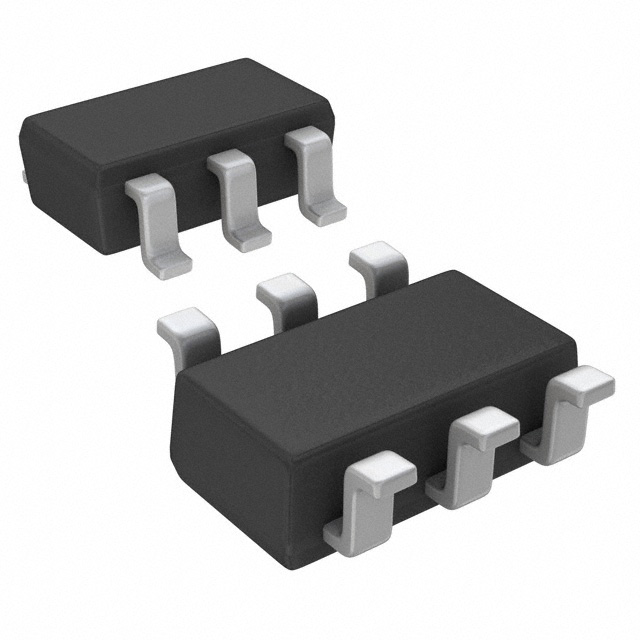
Monolithic Power Systems Inc. MP2456GJ-P
- Part No.:
- MP2456GJ-P
- Manufacturer:
- Monolithic Power Systems Inc.
- Package:
- SOT-23-6 Thin, TSOT-23-6
- Datasheet:
-
 MP2456GJ-P.pdf
- Description:
- IC REG BUCK ADJ 500MA TSOT23-6
- Quantity:
- Payment:

- Shipping:

Inventory:22,787
Please send an inquiry. Send us your inquiry, and we will respond immediately.
Product details
Overview
MP2456GJ-P from Monolithic Power Systems is a monolithic 0.5A, 50V, 1.2MHz current-mode step-down DC/DC converter with integrated 1Ω high-side MOSFET in TSOT23-6 package. It delivers regulated output from 0.81V to 0.9×VIN across 4.5–50V input, supports ceramic output capacitors, and features cycle-by-cycle over-current protection and thermal shutdown - used in battery chargers and pre-regulators for linear regulators.
For engineers reviewing the MP2456GJ-P datasheet, MP2456GJ-P pinout, MP2456GJ-P application, or MP2456GJ-P equivalent, key selection criteria include its 1.2MHz fixed-frequency operation, 0.1μA shutdown current, 50V max input rating, and bootstrap-based gate drive architecture requiring external BST capacitor placement.
Technical Context
The MP2456GJ-P implements peak-current-mode control with internal ramp compensation, enabling fast transient response and stable loop behavior without external compensation. Its error amplifier compares FB voltage against a 0.812V bandgap reference and integrates the difference to adjust peak inductor current.
Operation relies on a 1.2MHz oscillator with foldback to 200kHz under short-circuit (FB < 250mV), while EN pin logic enables/disables switching with 1.35V rising threshold and 180mV hysteresis. Bootstrap capacitor between BST and SW supplies gate drive above VIN for the integrated MOSFET.
Key Specifications
| Parameter | Value and Actual Design Meaning |
|---|---|
| Input Voltage Range | 4.5V to 50V - supports wide industrial and automotive supply rails including 24V and 48V systems. |
| Output Voltage Range | 0.81V to 0.9×VIN - adjustable via external resistor divider; minimum 0.81V enables low-voltage logic rail generation. |
| Switching Frequency | Fixed 1.2MHz - enables compact magnetics and reduces output ripple; foldback to 200kHz during fault conditions. |
| Peak Output Current | 0.5A - limited by internal current sense and cycle-by-cycle protection; peak inductor current reaches ~1.25A. |
| Internal MOSFET RDS(ON) | 1Ω - defines conduction loss at light-to-moderate loads; optimized for efficiency in 5V/12V buck applications. |
| Shutdown Quiescent Current | 0.1μA - enables ultra-low power standby in battery-powered metering and IoT edge nodes. |
| Feedback Reference Voltage | 0.812V ±2% - sets output accuracy; low tolerance minimizes resistor-divider error impact on VOUT. |
Pinout & Package
MP2456GJ-P is housed in a thermally enhanced TSOT23-6 package with exposed pad (not electrically connected), rated for 220°C/W junction-to-ambient thermal resistance on a 4-layer PCB. Pin 1 is bottom-left when top marking "AGV" is read left-to-right.
| Pin/Terminal | Circuit Role | Design Meaning |
|---|---|---|
| BST | Bootstrap supply | Connects external 0.1–1µF capacitor to SW to generate floating gate drive voltage > VIN for high-side MOSFET. |
| GND | Analog & power ground | Reference for feedback and internal circuitry; requires separate low-noise routing from power return path to avoid switching noise coupling. |
| FB | Voltage feedback input | Senses output via resistor divider; internal 0.812V reference enables precise regulation; triggers frequency foldback below 250mV. |
| EN | Enable control | Active-high logic input; 1.35V threshold with 180mV hysteresis; sinks ≤100μA - compatible with microcontroller GPIO or resistive VIN tie. |
| IN | Main power input | Accepts 4.5–50V unregulated supply; requires local 4.7µF ceramic decoupling to suppress high-frequency transients. |
| SW | Power switch node | Drives external Schottky diode and inductor; carries high di/dt switching current - demands short, wide PCB trace and ground plane isolation. |
Key Features
| Feature | Design Value |
|---|---|
| Integrated 1Ω high-side MOSFET | Eliminates external switch and driver, reducing BOM count and layout complexity in space-constrained designs. |
| Stable with low-ESR ceramic capacitors | Enables use of compact, reliable X5R/X7R MLCCs instead of bulkier electrolytics - critical for long-life industrial meters. |
| 0.6ms internal soft-start | Prevents output overshoot and inrush current during startup, especially beneficial with large output capacitance (>2200µF). |
| Cycle-by-cycle over-current protection | Provides immediate current limiting per switching cycle - protects against short-circuit faults without latch-off or external sensing. |
| Thermal shutdown with 20°C hysteresis | Shuts down at 165°C junction temperature and resumes only after cooling to 145°C - prevents thermal runaway in sealed enclosures. |
Applications
| Power Meters | Distributed Power Systems |
|---|---|
Use Scenario: Metering ICs and RF modules in smart electricity meters require isolated, low-noise 3.3V or 5V rails from 24V or 48V backplane supplies. IC Role / Device Role / Timing Role: Primary non-isolated buck regulator supplying MCU, ADC, and communication interfaces. Use Value: 1.2MHz switching allows small 10µH inductors and 22µF ceramic output caps, meeting stringent size and reliability requirements. | Use Scenario: Point-of-load conversion in telecom or industrial rack systems where multiple voltage domains (e.g., 12V, 5V, 3.3V) are derived from a common 48V bus. IC Role / Device Role / Timing Role: Secondary buck stage stepping down intermediate 12V to 5V for FPGA I/O banks or peripheral controllers. Use Value: Wide 4.5–50V input range accommodates upstream regulator tolerance and line transients without derating. |
| Battery Chargers | WLED Drivers |
Use Scenario: Constant-voltage stage in multi-cell Li-ion charger circuits, regulating 8.4V or 12.6V from variable solar or adapter input. IC Role / Device Role / Timing Role: Pre-regulator feeding linear charger ICs (e.g., MCP73831) to improve thermal performance and efficiency. Use Value: 0.1μA shutdown current extends standby life in portable chargers; adjustable output supports diverse cell configurations. | Use Scenario: Constant-current LED driver for backlighting or indicator arrays using series-connected WLEDs with forward voltage up to 18V. IC Role / Device Role / Timing Role: Buck converter operating in constant-voltage mode to feed external current-sink ICs or resistive current-setting networks. Use Value: 50V absolute max input withstands load-dump transients in automotive lighting; 1.2MHz frequency avoids AM radio band interference. |
Equivalent & Alternatives
The following parts are listed as comparable options for similar step-down converter applications.
| Alternative Part | Technical Difference | Application Difference | Selection Advice |
|---|---|---|---|
| LMR14050SDDAR | 50V, 0.5A, 400kHz–2.5MHz adjustable frequency; higher 2.1Ω RDS(ON); requires external compensation. | Supports programmable soft-start and sync input; better suited for noise-sensitive audio systems needing frequency dithering. | Select when design requires synchronization to system clock or tighter EMI control via spread-spectrum capability. |
| TPS54260DGQR | 60V, 0.6A, 100kHz–2.5MHz adjustable; integrated error amp compensation; 1.5μA shutdown current. | Includes built-in VREF tracking and enable delay; preferred for cascaded power trees with sequencing requirements. | Choose when coordinating startup timing with upstream/downstream rails is mandatory, e.g., FPGA core/I/O domain sequencing. |
Compared with LMR14050SDDAR and TPS54260DGQR, MP2456GJ-P offers lower quiescent current (0.1μA vs ≥1.5μA), smaller footprint (TSOT23-6 vs SOIC-8), and simpler layout due to internal compensation - ideal for cost- and space-sensitive industrial metering and battery-powered edge sensors.
Availability
MP2456GJ-P is available at Aetrix Electronics and suitable for power meters, distributed power systems, and battery chargers requiring stable component supply, RoHS-compliant packaging, and long-term industrial lifecycle support.
Supply support for MP2456GJ-P includes scheduled delivery planning, volume procurement assistance, BOM continuity management, traceable sourcing, and lifecycle availability coordination for OEM customers, industrial embedded developers, connected-device designers, and electronics production programs.
Manufacturer
Monolithic Power Systems (MPS) is a fabless semiconductor company specializing in high-performance analog and power ICs, with design centers in the US, China, and Taiwan, and global manufacturing partnerships.
The MP2456 belongs to MPS's high-voltage buck converter product line, engineered for industrial, metering, and automotive auxiliary power applications demanding wide input range, small solution size, and robust fault protection.
FAQ
What is the minimum recommended output capacitance for stable operation?
The MP2456GJ-P is stable with low-ESR ceramic capacitors as small as 10µF, but 22µF is recommended for typical 5V/12V outputs to maintain <1% ripple under 0.5A load. X5R/X7R dielectrics ensure consistent performance across temperature and bias voltage.
Can the MP2456GJ-P operate without an external bootstrap diode?
Yes - the internal bootstrap circuit functions without an external diode for most applications. An external IN4148 diode from VOUT to BST is optional only when VOUT is 3.3V or 5V and duty cycle exceeds 65%, improving efficiency by ~2–3% under heavy load.
How does the frequency foldback feature behave during output short-circuit?
When FB voltage drops below 250mV (indicating severe overload or short), the oscillator frequency folds back from 1.2MHz to 200kHz. This reduces average switch current and thermal stress while maintaining current-limit protection - enabling safe hiccup-mode recovery without latch-off.
What is the maximum allowable inductor DCR for 0.5A continuous operation?
For optimal efficiency and thermal margin, the inductor's DC resistance should be ≤200mΩ. At 0.5A load, this limits I²R loss to ≤50mW - keeping total dissipation within the TSOT23-6's 0.568W limit at +25°C ambient with proper PCB copper area.
Is the GND pin internally connected to the exposed thermal pad?
No - the exposed pad on the TSOT23-6 package is not electrically connected to any internal node. It may be left floating or soldered to a thermal pad for improved heat dissipation, but must not be tied to signal or power ground unless verified by MPS layout guidelines for that revision.
Does the MP2456GJ-P support forced PWM mode at light load?
No - the MP2456GJ-P operates exclusively in current-mode PWM without pulse-skipping or burst-mode capability. Light-load efficiency is maintained via low 0.85mA quiescent current and minimal gate drive losses, but it does not enter discontinuous conduction mode automatically.
MP2456GJ-P Specifications
- Product attributes
- Attribute value
- Manufacturer:
- Monolithic Power Systems Inc.
- Series:
- -
- Package/Case:
- SOT-23-6 Thin, TSOT-23-6
- Packaging:
- Tape & Reel (TR)
- Product Status:
- Active
- Function:
- Step-Down
- Output Configuration:
- Positive
- Topology:
- Buck
- Output Type:
- Adjustable
- Number of Outputs:
- 1
- Voltage - Input (Min):
- 4.5V
- Voltage - Input (Max):
- 50V
- Voltage - Output (Min/Fixed):
- 0.81V
- Voltage - Output (Max):
- 45V
- Current - Output:
- 500mA
- Frequency - Switching:
- 1.2MHz
- Synchronous Rectifier:
- No
- Operating Temperature:
- -40°C ~ 125°C (TJ)
- Grade:
- -
- Qualification:
- -
- Mounting Type:
- Surface Mount
- Supplier Device Package:
- TSOT-23-6
MP2456GJ-P FAQ
1.How can I place an order for MP2456GJ-P through Aetrix?
Please submit a Request for Quotation (RFQ) for MP2456GJ-P on Aetrix. Our sales agent will provide a competitive quotation and guide you through the order confirmation once you accept the terms.
2.Are the price and stock information for MP2456GJ-P reliable?
The price and inventory of MP2456GJ-P are updated periodically and may fluctuate due to market conditions. Stock and pricing data are typically refreshed every 24 hours. Quotation validity for MP2456GJ-P is usually 5 days.
3.What payment methods are accepted for MP2456GJ-P?
We accept Wire Transfer, PayPal, Credit Card, Western Union, MoneyGram, and Escrow for MP2456GJ-P transactions.
Note: Certain payment methods may incur a processing fee.
4.How is shipping managed for MP2456GJ-P?
MP2456GJ-P orders can be shipped via leading logistics carriers, including DHL, UPS, FedEx, TNT, or Registered Mail.
Once your MP2456GJ-P order is processed, you will receive an email with the shipment details and tracking number.
Note: Tracking information may take up to 24 hours to appear. Express delivery typically takes 3–5 business days.
5.How can I obtain technical support or documentation for MP2456GJ-P?
For technical support, including MP2456GJ-P datasheets, pinout diagrams, or application guidance, please contact our engineering support team. They can provide detailed documentation and assistance for your MP2456GJ-P requirements.
6.How does Aetrix verify that MP2456GJ-P is sourced from the original manufacturer or authorized distributors?
All MP2456GJ-P products on Aetrix are procured from qualified distributors and authorized channels. Our dedicated quality assurance team conducts strict verification, including traceability checks and, if necessary, third-party testing. This ensures that MP2456GJ-P meets industry standards.
7.What is the process for return or replacement of MP2456GJ-P?
All MP2456GJ-P units undergo pre-shipment inspection (PSI). If there is an issue with MP2456GJ-P, returns or replacements are accepted under the following conditions:
1.Quantity discrepancies, incorrect items, or visible external defects (such as breakage or corrosion), acknowledged by Aetrix.
2.The issue is reported within 90 days of delivery.
3.The MP2456GJ-P part is unused and in its original packaging.
Return procedure for MP2456GJ-P:
1.Submit a request within 90 days.
2.Obtain a Return Material Authorization (RMA) from Aetrix.
MP2456GJ-P Tags
-
TPS562201DDCR
Texas Instruments

-
MC34063ABD-TR
STMicroelectronics
-
TPS561201DDCR
Texas Instruments

-
MC33063ADR
Texas Instruments
-
MC34063ADR
Texas Instruments
-
TPS560200DBVR
Texas Instruments
-
AP3012KTR-G1
Diodes Incorporated
-
TLV61048DBVR
Texas Instruments
-
AZ34063UMTR-G1
Diodes Incorporated
-
TPS562200DDCR
Texas Instruments
-
AP62300TWU-7
Diodes Incorporated
-
MC34063EBD-TR
STMicroelectronics
Tech Hub

A practical engineering guide to 3.3V and 5V logic compatibility, input thresholds, resistor dividers, translator ICs, MOSFET level shifting, I2C pull-ups, timing limits and power-sequencing risks.

The 74HC595 uses push-pull logic outputs, while the TPIC6B595 uses 50 V open-drain DMOS sinks for higher-power loads. This guide compares timing, current limits, 3.3 V interfacing, load wiring, thermal…

The 74HC595 converts serial data into eight stable parallel outputs. This guide covers pin functions, shift and storage timing, OE and MR behavior, drive-current limits, cascading, voltage compatibilit…

A technical comparison of level-sensitive latches and edge-triggered flip-flops, covering timing windows, setup and hold limits, master–slave operation, time borrowing, race-through, HDL inference and…

A D latch stores one bit while Enable controls when data can pass. This reference covers gate-level operation, truth tables, transparency, setup and hold timing, LE versus OE, common ICs and practical …

An SR latch stores one bit through cross-coupled feedback. This engineering reference covers NOR and NAND implementations, truth tables, forbidden-state recovery, gated operation, switch debouncing, fa…

Latch circuits retain one bit through feedback. This technical reference covers SR and D latches, truth tables, transparency, timing limits, latch-versus-flip-flop behavior, applications and common log…

An engineering guide to LED driver operation, constant-current and constant-voltage outputs, linear and switching topologies, dimming, IC selection, calculations, replacement compatibility, and fault c…

Operational amplifier guide covering op amp basics, feedback, ideal vs real op amps, common configurations, buffer circuits, offset, bias current, gain-bandwidth, slew rate, rail-to-rail limits and sel…

Jumper cables guide covering safe connection order, red and black clamp placement, final ground connection, cable gauge, length, clamp quality, copper vs CCA cables, jump starter comparison and battery…


