
 My Inquiry
 My Account


Monolithic Power Systems Inc. MP2459GJ-P
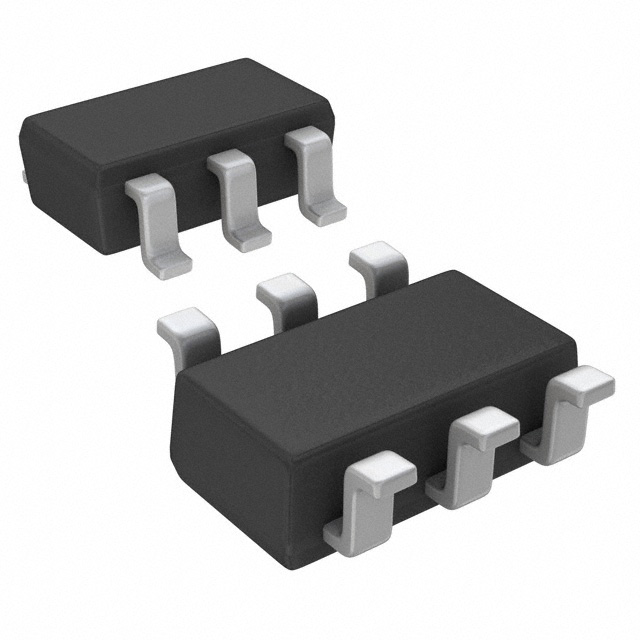
- Part No.:
- MP2459GJ-P
- Manufacturer:
- Monolithic Power Systems Inc.
- Package:
- SOT-23-6 Thin, TSOT-23-6
- Datasheet:
-
 MP2459GJ-P.pdf
- Description:
- IC REG BUCK ADJ 500MA TSOT23-6
- Quantity:
- Payment:

- Shipping:

Inventory:1,004
Please send an inquiry. Send us your inquiry, and we will respond immediately.
Product details
Overview
MP2459GJ-P from Monolithic Power Systems is a monolithic 0.5A, 55V, 480kHz current-mode step-down DC/DC converter with integrated 1Ω power MOSFET, fixed-frequency operation, and cycle-by-cycle over-current protection - designed for high-input-voltage industrial power meters and battery chargers requiring stable 3.3V–5V outputs.
For engineers reviewing the MP2459GJ-P datasheet, MP2459GJ-P pinout, MP2459GJ-P application, or MP2459GJ-P equivalent, key selection criteria include its 4.5V–55V input range, 0.81V feedback reference, TSOT23-6 thermal performance (θJA = 220°C/W), and bootstrap-based high-side gate drive architecture.
Technical Context
The MP2459GJ-P implements a peak-current-mode control architecture with internal slope compensation, enabling fast transient response and simplified loop stability using only two external resistors and one capacitor for output voltage setting. Its error amplifier compares FB voltage against a precise 0.812V bandgap reference.
Operation relies on a self-contained 480kHz oscillator driving an RS flip-flop to control the internal N-channel MOSFET switch; the BST pin supplies a floating gate drive via an external bootstrap capacitor, while EN enables/disables regulation with 1.35V rising threshold and 180mV hysteresis.
Key Specifications
| Parameter | Value and Actual Design Meaning |
|---|---|
| Input Voltage Range | 4.5V to 55V - supports direct connection to 24V/48V industrial rails and automotive battery systems without pre-regulation. |
| Output Current | 0.5A peak - sufficient for powering microcontrollers, sensors, and WLED strings in space-constrained designs. |
| Switching Frequency | Fixed 480kHz - enables compact magnetics (e.g., 15–22μH inductors) and predictable EMI filtering without frequency spread spectrum. |
| Feedback Reference | 0.812V ±2% - sets output voltage via resistor divider; allows adjustable VOUT from 0.81V to 0.95×VIN with tight regulation. |
| Internal MOSFET RDS(ON) | 1Ω typical - limits conduction loss at 0.5A, supporting >90% efficiency at mid-load with ceramic output capacitors. |
| Shutdown Current | 0.1μA - enables ultra-low-power system sleep modes in battery-backed applications like smart meters. |
| Thermal Shutdown | 165°C with 20°C hysteresis - protects die during overload or poor PCB thermal design; recovers automatically after cooldown. |
Pinout & Package
MP2459GJ-P is housed in a thermally enhanced TSOT23-6 package (2.9mm × 1.6mm × 0.9mm) with exposed pad for improved heat dissipation. The package supports reflow soldering per JEDEC MO-193AB and achieves θJA = 220°C/W on a 4-layer PCB.
| Pin/Terminal | Circuit Role | Design Meaning |
|---|---|---|
| 1 - BST | Bootstrap supply node | Connects external 0.1–1μF capacitor between BST and SW to generate gate-drive voltage above VIN for internal high-side MOSFET. |
| 2 - GND | Analog and power ground reference | Must be isolated from high-current return paths (e.g., diode cathode) to prevent switching noise injection into feedback loop. |
| 3 - FB | Output voltage sense input | Connects to resistor divider tap; internal 0.812V reference enables precise output regulation and foldback during short-circuit faults. |
| 4 - EN | Enable control input | Active-high logic input; 1.35V threshold ensures reliable turn-on across temperature; 0.18V hysteresis prevents chatter near trip point. |
| 5 - IN | Main power input | Accepts 4.5–55V unregulated supply; requires local 4.7μF X5R/X7R ceramic capacitor to suppress switching transients. |
| 6 - SW | Switch node output | Drives external Schottky diode and inductor; high dv/dt demands careful PCB layout to minimize EMI and ringing. |
Key Features
| Feature | Design Value |
|---|---|
| Integrated 1Ω MOSFET | Eliminates need for external high-voltage switch, reducing BOM count and board area in 55V-input buck designs. |
| Current-mode control | Provides inherent cycle-by-cycle current limiting and stable operation with minimal external compensation components. |
| 0.1μA shutdown current | Enables multi-year battery life in always-on metering devices by cutting quiescent draw to sub-microamp levels. |
| Wide 4.5–55V input range | Supports direct integration into legacy 24V/48V industrial systems and new high-voltage battery architectures without derating. |
| Stable with ceramic capacitors | Operates reliably with low-ESR X5R/X7R output caps (e.g., 22μF), avoiding costly tantalum or electrolytic alternatives. |
Applications
| Power Meters | Distributed Power Systems |
|---|---|
|
Use Scenario: Smart electricity meter with optical isolation, real-time clock, and RF communication module. IC Role / Device Role / Timing Role: Primary 5V/3.3V point-of-load regulator converting 48V DC bus to MCU and sensor rails. Use Value: 55V input rating eliminates need for front-end pre-regulator; 0.5A output sustains burst transmit currents of sub-GHz radios. |
Use Scenario: Remote I/O node powered from centralized 24V PoE-like distribution bus. IC Role / Device Role / Timing Role: Local DC/DC converter generating isolated 3.3V for ARM Cortex-M4 controller and ADC interface. Use Value: Fixed 480kHz switching enables predictable EMI filter design; TSOT23-6 footprint saves space on dense backplane modules. |
| Battery Chargers | WLED Drivers |
|
Use Scenario: 12S Li-ion pack charger with auxiliary 3.3V rail for fuel gauge and CAN transceiver. IC Role / Device Role / Timing Role: Pre-regulator stepping down up to 55V pack voltage to stable 3.3V before linear LDO stage. Use Value: 4.5V–55V input range accommodates full pack voltage swing (0–54.6V); thermal shutdown prevents overheating during CC/CV transition. |
Use Scenario: Automotive interior lighting module with 8–10 white LEDs in series. IC Role / Device Role / Timing Role: Constant-voltage buck converter supplying regulated current source driver IC input rail. Use Value: 0.812V feedback reference enables accurate current-setting resistor ratio; 0.5A capability supports driver IC bias and control logic. |
Equivalent & Alternatives
The following parts are listed as comparable options for similar step-down converter applications.
| Alternative Part | Technical Difference | Application Difference | Selection Advice |
|---|---|---|---|
| MP2451GJ-Z | Lower 36V max input, 0.6A output, same TSOT23-6 package and 480kHz fSW. | Better suited for 24V-only systems where 55V rating is unnecessary; slightly higher output current margin. | Select when input never exceeds 36V and higher load headroom is needed without changing layout. |
| LM5164QDDARQ1 | Automotive-grade (AEC-Q100), 100V input, 0.6A, 1MHz fSW, requires external MOSFETs. | Designed for harsh environments (−40°C to +125°C junction); supports wider input but adds complexity and cost. | Choose for automotive under-hood applications requiring qualification and extended voltage margin beyond 55V. |
Compared with MP2459GJ-P, MP2451GJ-Z trades input voltage range for higher output current in identical footprint, while LM5164QDDARQ1 adds AEC-Q100 compliance and 100V capability at the cost of external FETs and increased BOM count.
Availability
MP2459GJ-P is available at Aetrix Electronics and suitable for power meters, distributed power systems, and battery chargers requiring stable component supply with guaranteed long-term manufacturability and consistent parametric performance.
Supply support for MP2459GJ-P includes scheduled delivery planning, volume procurement assistance, BOM continuity management, traceable sourcing, and lifecycle availability coordination for OEM customers, industrial embedded developers, connected-device designers, and electronics production programs.
Manufacturer
Monolithic Power Systems (MPS) is a fabless semiconductor company specializing in high-performance analog and power ICs, with design centers across Asia and North America and global manufacturing partnerships.
The MP2459 belongs to MPS's high-voltage buck converter product line, engineered for industrial and energy infrastructure applications demanding wide input range, small footprint, and robust fault protection in harsh operating environments.
FAQ
What is the minimum recommended input voltage for reliable startup?
The MP2459GJ-P features an under-voltage lockout (UVLO) with a rising threshold of 2.9V to 3.7V. Reliable startup occurs at ≥4.5V, which is the lower limit of its recommended operating range. Below this, the device remains disabled even if EN is asserted, preventing erratic switching or insufficient gate drive.
Can MP2459GJ-P operate without an external Schottky diode?
No - the MP2459GJ-P uses a non-synchronous buck topology and requires an external Schottky diode (e.g., SS34) connected from SW to output. Unlike synchronous converters, it lacks a second internal MOSFET; omitting the diode causes catastrophic failure due to unclamped inductive kickback.
How does the FB pin behave during output short-circuit conditions?
When FB voltage drops below 250mV during a short, the MP2459GJ-P activates frequency foldback, reducing switching frequency from 480kHz to ~150kHz. This lowers average inductor current and thermal stress while maintaining cycle-by-cycle current limiting, enabling safe hiccup-mode recovery.
Is the TSOT23-6 package lead-free and RoHS-compliant?
Yes - MP2459GJ-P is fully lead-free and complies with the EU RoHS directive. Monolithic Power Systems confirms green status on its official website under Products > Quality Assurance, with no exemptions applied to this part number.
What is the maximum achievable output voltage accuracy over temperature and line/load variation?
The feedback reference voltage is specified as 0.792V to 0.832V (±2.5%) over −40°C to +125°C junction temperature and full input/load range. Combined with resistor tolerance, total output voltage error remains within ±3% for standard 1% feedback resistors in typical applications.
Does MP2459GJ-P support forced PWM mode or skip-cycle operation at light load?
No - MP2459GJ-P operates exclusively in forced continuous conduction mode (CCM) at fixed 480kHz. It does not feature pulse-skipping or burst-mode control; light-load efficiency is maintained via low 0.85mA quiescent current rather than frequency modulation.
What layout guidance is critical for stable operation at 55V input?
Three layout priorities are essential: (1) Minimize the IN–SW–GND high-current loop area using short, wide copper traces; (2) Isolate GND connections for FB and power return paths to avoid noise coupling; (3) Connect the exposed pad directly to a large thermal plane with ≥4 thermal vias to manage 0.568W max power dissipation at +25°C ambient.
MP2459GJ-P Specifications
- Product attributes
- Attribute value
- Manufacturer:
- Monolithic Power Systems Inc.
- Series:
- -
- Package/Case:
- SOT-23-6 Thin, TSOT-23-6
- Packaging:
- Tape & Reel (TR)
- Product Status:
- Active
- Function:
- Step-Down
- Output Configuration:
- Positive
- Topology:
- Buck
- Output Type:
- Adjustable
- Number of Outputs:
- 1
- Voltage - Input (Min):
- 4.5V
- Voltage - Input (Max):
- 55V
- Voltage - Output (Min/Fixed):
- 0.81V
- Voltage - Output (Max):
- 52.25V
- Current - Output:
- 500mA
- Frequency - Switching:
- 480kHz
- Synchronous Rectifier:
- No
- Operating Temperature:
- -40°C ~ 125°C (TJ)
- Grade:
- -
- Qualification:
- -
- Mounting Type:
- Surface Mount
- Supplier Device Package:
- TSOT-23-6
MP2459GJ-P FAQ
1.How can I place an order for MP2459GJ-P through Aetrix?
Please submit a Request for Quotation (RFQ) for MP2459GJ-P on Aetrix. Our sales agent will provide a competitive quotation and guide you through the order confirmation once you accept the terms.
2.Are the price and stock information for MP2459GJ-P reliable?
The price and inventory of MP2459GJ-P are updated periodically and may fluctuate due to market conditions. Stock and pricing data are typically refreshed every 24 hours. Quotation validity for MP2459GJ-P is usually 5 days.
3.What payment methods are accepted for MP2459GJ-P?
We accept Wire Transfer, PayPal, Credit Card, Western Union, MoneyGram, and Escrow for MP2459GJ-P transactions.
Note: Certain payment methods may incur a processing fee.
4.How is shipping managed for MP2459GJ-P?
MP2459GJ-P orders can be shipped via leading logistics carriers, including DHL, UPS, FedEx, TNT, or Registered Mail.
Once your MP2459GJ-P order is processed, you will receive an email with the shipment details and tracking number.
Note: Tracking information may take up to 24 hours to appear. Express delivery typically takes 3–5 business days.
5.How can I obtain technical support or documentation for MP2459GJ-P?
For technical support, including MP2459GJ-P datasheets, pinout diagrams, or application guidance, please contact our engineering support team. They can provide detailed documentation and assistance for your MP2459GJ-P requirements.
6.How does Aetrix verify that MP2459GJ-P is sourced from the original manufacturer or authorized distributors?
All MP2459GJ-P products on Aetrix are procured from qualified distributors and authorized channels. Our dedicated quality assurance team conducts strict verification, including traceability checks and, if necessary, third-party testing. This ensures that MP2459GJ-P meets industry standards.
7.What is the process for return or replacement of MP2459GJ-P?
All MP2459GJ-P units undergo pre-shipment inspection (PSI). If there is an issue with MP2459GJ-P, returns or replacements are accepted under the following conditions:
1.Quantity discrepancies, incorrect items, or visible external defects (such as breakage or corrosion), acknowledged by Aetrix.
2.The issue is reported within 90 days of delivery.
3.The MP2459GJ-P part is unused and in its original packaging.
Return procedure for MP2459GJ-P:
1.Submit a request within 90 days.
2.Obtain a Return Material Authorization (RMA) from Aetrix.
MP2459GJ-P Tags
-
TPS562201DDCR
Texas Instruments
-
MC34063ABD-TR
STMicroelectronics
-
TPS561201DDCR
Texas Instruments

-
MC33063ADR
Texas Instruments
-
MC34063ADR
Texas Instruments
-
TPS560200DBVR
Texas Instruments
-
AP3012KTR-G1
Diodes Incorporated
-
TLV61048DBVR
Texas Instruments
-
AZ34063UMTR-G1
Diodes Incorporated
-
TPS562200DDCR
Texas Instruments
-
AP62300TWU-7
Diodes Incorporated
-
MC34063EBD-TR
STMicroelectronics
Tech Hub

A practical engineering guide to 3.3V and 5V logic compatibility, input thresholds, resistor dividers, translator ICs, MOSFET level shifting, I2C pull-ups, timing limits and power-sequencing risks.

The 74HC595 uses push-pull logic outputs, while the TPIC6B595 uses 50 V open-drain DMOS sinks for higher-power loads. This guide compares timing, current limits, 3.3 V interfacing, load wiring, thermal…

The 74HC595 converts serial data into eight stable parallel outputs. This guide covers pin functions, shift and storage timing, OE and MR behavior, drive-current limits, cascading, voltage compatibilit…

A technical comparison of level-sensitive latches and edge-triggered flip-flops, covering timing windows, setup and hold limits, master–slave operation, time borrowing, race-through, HDL inference and…

A D latch stores one bit while Enable controls when data can pass. This reference covers gate-level operation, truth tables, transparency, setup and hold timing, LE versus OE, common ICs and practical …

An SR latch stores one bit through cross-coupled feedback. This engineering reference covers NOR and NAND implementations, truth tables, forbidden-state recovery, gated operation, switch debouncing, fa…

Latch circuits retain one bit through feedback. This technical reference covers SR and D latches, truth tables, transparency, timing limits, latch-versus-flip-flop behavior, applications and common log…

An engineering guide to LED driver operation, constant-current and constant-voltage outputs, linear and switching topologies, dimming, IC selection, calculations, replacement compatibility, and fault c…

Operational amplifier guide covering op amp basics, feedback, ideal vs real op amps, common configurations, buffer circuits, offset, bias current, gain-bandwidth, slew rate, rail-to-rail limits and sel…

Jumper cables guide covering safe connection order, red and black clamp placement, final ground connection, cable gauge, length, clamp quality, copper vs CCA cables, jump starter comparison and battery…


