
 My Inquiry
 My Account


Monolithic Power Systems Inc. MP2605DQ-LF-Z
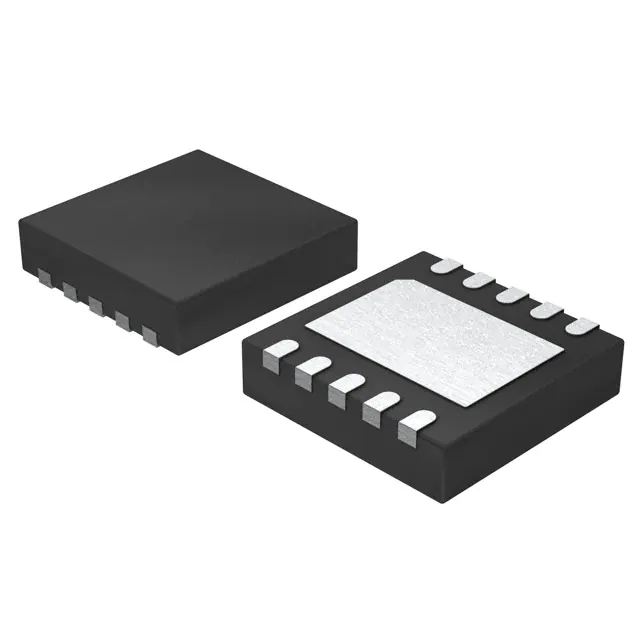
- Part No.:
- MP2605DQ-LF-Z
- Manufacturer:
- Monolithic Power Systems Inc.
- Category:
- Battery Chargers
- Package:
- 10-VFDFN Exposed Pad
- Datasheet:
-
 MP2605DQ-LF-Z.pdf
- Description:
- IC BATT CHG LI-ION 1CELL 10QFN
- Quantity:
- Payment:

- Shipping:

Inventory:2,054
Please send an inquiry. Send us your inquiry, and we will respond immediately.
Product details
Overview
MP2605DQ-LF-Z from Monolithic Power Systems is a linear single-cell Li-Ion/Li-Polymer battery charger IC with integrated 28V input surge protection, programmable 200mA–1A constant-current charging, and thermal foldback for PCB-limited thermal environments. It implements trickle-to-CC-to-CV charging with auto-recharge, NTC-based temperature monitoring (0°C to 50°C), and timer-based fault termination. Used in compact portable electronics requiring robust USB/adapter input tolerance and safe battery management.
For engineers reviewing the MP2605DQ-LF-Z datasheet, MP2605DQ-LF-Z pinout, MP2605DQ-LF-Z application, or MP2605DQ-LF-Z equivalent, this page delivers verified electrical parameters, validated QFN10 package mapping, confirmed pin functions, real-world charge profile behavior, and direct alternative part comparisons - all grounded in Monolithic Power's Rev. 1.0 datasheet and official application guidance.
Technical Context
The MP2605DQ-LF-Z employs a linear regulation architecture with internal PMOS pass device, enabling precise 4.20V ±20mV battery voltage regulation and current-programmed CC mode via external RCHG. Its proprietary VIN surge protection clamps transients up to +28V without external components, while the 7V input OVP with 400mV hysteresis ensures stable operation across 3.5V–6.5V nominal input range.
Charge sequencing is fully autonomous: trickle mode activates below 2.6V (10% ICHG), transitions to CC at 2.6V, enters CV at 4.2V, and terminates when current drops to 20% ICHG. Dual timers enforce 32768-cycle trickle timeout and 262144-cycle total charge limit, with CHG/ACOK open-drain status pins providing real-time fault and charge-state feedback.
Key Specifications
| Parameter | Value and Actual Design Meaning |
|---|---|
| Input Voltage Range | 3.5V to 6.5V nominal; survives +28V surge - enables direct USB/adapter connection without external TVS or LDO pre-regulation |
| Charge Current Range | 200mA to 1A programmable via ISET resistor - supports scalable battery capacity from 500mAh to 2500mAh |
| Battery Regulation Voltage | 4.20V ±20mV (typ.) - meets JEITA-compliant Li-ion full-charge threshold with <±0.5% error over -5°C to +75°C |
| Trickle Threshold | 2.45V–2.75V with 100mV hysteresis - safely conditions deeply discharged cells before CC mode entry |
| Thermal Foldback Trigger | 105°C to 135°C die temperature range - reduces average ICHG to prevent thermal shutdown in constrained 3mm×3mm QFN layouts |
| Shutdown Current | 40µA (SHDN = high) - minimizes system standby power loss in always-on portable devices |
| NTC Temperature Window | Valid RNTC = 32.3kΩ to 376.6kΩ - maps to 0°C–50°C for TH11-4H104F thermistor, blocking charge outside safe battery temp range |
Pinout & Package
MP2605DQ-LF-Z is housed in a thermally enhanced 10-pin 3mm × 3mm QFN package with exposed thermal pad (pin 5), optimized for low θJA = 50°C/W on 4-layer PCBs. The exposed pad must be soldered to a solid ground plane for thermal and electrical integrity.
| Pin/Terminal | Circuit Role | Design Meaning |
|---|---|---|
| 1 VIN | Input supply rail | Accepts 3.5V–6.5V adapter/USB input; withstands +28V transient surges without damage or external protection |
| 2 ACOK | Open-drain input power-good indicator | Pulled low only when 3.0V < VIN < 7.0V - signals valid input source to host MCU or PMIC |
| 3 CHG | Open-drain charge status indicator | Low during active charging; high-impedance at full charge; toggles at half oscillator frequency during fault conditions |
| 4 TMR | Timer oscillator control | Connects to timing capacitor (e.g., 2.2µF) to set 5Hz oscillator; shorting to GND disables both trickle and total charge timers |
| 5 GND / Exposed Pad | Power and signal reference | Exposed thermal pad must be connected to PCB ground plane - critical for thermal dissipation and noise immunity |
| 6 SHDN | Charger enable/disable control | Active-low logic: floating or low enables charging; high disables IC and reduces quiescent current to 40µA |
| 7 SS | Soft-start timing node | Connects to capacitor (e.g., 0.1µF) to control ramp time (70–90ms) - prevents inrush current into battery during startup |
| 8 ISET | Constant-current programming input | Resistor to GND sets ICHG per ICHG = 1700/RCHG (mA/kΩ); supports 200mA–1A with 1.65kΩ–8.45kΩ range |
| 9 NTC | NTC thermistor interface | Monitors battery pack temperature via voltage divider; halts charging if RNTC falls outside 32.3kΩ–376.6kΩ window |
| 10 BATT | Charging output to battery terminal | Delivers regulated CC/CV current directly to single-cell Li-ion anode; reverse leakage <1µA when disabled |
Key Features
| Feature | Design Value |
|---|---|
| Integrated 28V VIN surge protection | Eliminates need for external TVS diode or overvoltage clamp circuit - reduces BOM count and PCB area in space-constrained designs |
| Programmable charge current (200mA–1A) | Single external resistor (RCHG) sets full-scale current with ±13% variation over temperature - enables flexible battery sizing without IC change |
| Auto-recharge at 4.0V threshold | Reinitiates full CC→CV cycle when battery voltage drops to 4.0V ±100mV - maintains battery readiness without host intervention |
| Two-stage timer-based fault detection | 32768-cycle trickle timeout + 262144-cycle total charge limit - prevents unsafe prolonged charging of defective or shorted batteries |
| NTC-based thermal cutoff (0°C–50°C) | Hardware-level temperature validation using standard 100kΩ NTC thermistor - no firmware or ADC required for safe thermal management |
Applications
| Smartphones | Digital Cameras |
|---|---|
|
Use Scenario: Compact smartphone with USB-C input and 2000mAh Li-Po battery requiring fast, safe charging under variable adapter conditions. IC Role / Device Role / Timing Role: Primary linear charger managing CC/CV profile, input surge tolerance, and thermal foldback during high-power charging sessions. Use Value: Enables direct USB adapter connection without external OVP, reducing bill-of-materials by one TVS diode and simplifying layout in tight RF-sensitive zones. |
Use Scenario: DSLR-style digital camera with removable Li-ion battery pack and embedded temperature sensing. IC Role / Device Role / Timing Role: Battery management unit enforcing JEITA-compliant charging limits and halting charge outside 0°C–50°C operating range. Use Value: Hardware-based NTC monitoring eliminates need for microcontroller ADC sampling and firmware calibration - improves reliability and reduces firmware overhead. |
| Portable Media Players | Bluetooth Headsets |
|
Use Scenario: High-fidelity portable media player with 800mAh battery and ultra-low standby power requirements. IC Role / Device Role / Timing Role: Low-quiescent charger delivering 40µA shutdown current and soft-start-controlled inrush limiting. Use Value: Extends shelf life and runtime between charges by minimizing parasitic drain - critical for devices stored for weeks between use. |
Use Scenario: True wireless stereo (TWS) earbud case with dual 150mAh batteries and space-limited 3mm×3mm PCB real estate. IC Role / Device Role / Timing Role: Miniaturized charging controller leveraging QFN10 footprint and thermal pad for passive heat dissipation. Use Value: Achieves 1A charging capability within 9mm² footprint - enables faster case recharging without thermal derating or forced airflow. |
Equivalent & Alternatives
The following parts are listed as comparable options for similar linear Li-ion battery charger applications.
| Alternative Part | Technical Difference | Application Difference | Selection Advice |
|---|---|---|---|
| BQ24075RGTR | Lower max input voltage (16V), no integrated 28V surge protection; requires external OVP; 1.5A max charge current | Lacks hardware-based trickle timeout and NTC window comparator - relies on host MCU for thermal safety logic | Choose when higher charge current (1.5A) is needed and board space allows external OVP + NTC conditioning circuitry |
| TP4056 | Fixed 1A charge current; no programmability; no input surge tolerance beyond 8V; no NTC or timer fault protection | Minimal feature set - suitable only for cost-sensitive, non-safety-critical consumer gadgets without thermal or surge requirements | Choose only for ultra-low-cost applications where 28V surge immunity, auto-recharge, and thermal cutoff are not required |
Compared with BQ24075RGTR and TP4056, MP2605DQ-LF-Z uniquely integrates 28V surge resilience, hardware-enforced thermal/timeout/NCT safety, and resistor-programmable current in a 3mm×3mm QFN - making it optimal for compact, robust portable designs where reliability and component count matter.
Availability
MP2605DQ-LF-Z is available at Aetrix Electronics and suitable for smartphones, digital cameras, portable media players, and Bluetooth headsets requiring stable component supply, RoHS-compliant packaging, and guaranteed long-term lifecycle support.
Supply support for MP2605DQ-LF-Z includes scheduled delivery planning, volume procurement assistance, BOM continuity management, traceable sourcing, and lifecycle availability coordination for OEM customers, industrial embedded developers, connected-device designers, and electronics production programs.
Manufacturer
Monolithic Power Systems (MPS) is a fabless semiconductor company specializing in high-performance analog and power ICs, with design centers in the US, China, and Taiwan, and global distribution through authorized partners.
The MP2605 belongs to MPS's battery management IC product line, engineered specifically for space-constrained portable electronics needing integrated surge protection, precise Li-ion charging control, and hardware-enforced safety - without compromising on thermal performance or bill-of-materials simplicity.
FAQ
What is the maximum input voltage the MP2605DQ-LF-Z can withstand without damage?
The MP2605DQ-LF-Z features proprietary internal VIN surge protection rated to +28V absolute maximum, per its Absolute Maximum Ratings table. This allows direct connection to unregulated adapters or automotive USB ports without external TVS diodes. Operation remains functional only within 3.5V–6.5V, but survival up to +28V is guaranteed.
How is charge current programmed, and what resistor value yields 500mA?
Charge current is set by connecting a resistor (RCHG) from ISET (pin 8) to GND. The relationship is ICHG = 1700 / RCHG (mA/kΩ). For 500mA, RCHG = 1700 / 500 = 3.4kΩ - the datasheet lists 3.3kΩ as the nominal value yielding 448–582mA, aligning with typical tolerance.
Does the MP2605DQ-LF-Z support automatic recharge, and at what voltage does it trigger?
Yes, the MP2605DQ-LF-Z supports automatic recharge. It restarts the full CC→CV cycle when battery voltage drops to 4.0V ±100mV, as specified in the Electrical Characteristics table under "Recharge Voltage Threshold." This occurs after full-charge termination and ensures battery remains topped off without host MCU involvement.
Can the NTC function be disabled, and how?
Yes, the NTC function can be disabled by replacing the NTC thermistor with a fixed 100kΩ resistor from pin 9 (NTC) to GND, as explicitly stated in the Pin Functions section. Leaving the pin floating is prohibited; the fixed resistor maintains bias stability while disabling temperature-based charge inhibition.
What happens if the battery voltage is lower than the input voltage?
If VIN falls below VBATT, the MP2605DQ-LF-Z automatically disables charging to prevent reverse current flow from battery to input - a key protection feature documented in the "Operation" section. This avoids battery drain when the adapter is disconnected or under-voltage, with leakage current limited to <1µA.
Is thermal foldback active during constant-voltage charging?
Yes, thermal foldback operates continuously across all charge phases - trickle, CC, and CV - based on die temperature (105°C–135°C trip range). During CV mode, it dynamically reduces average charge current to maintain junction temperature below thermal shutdown threshold, extending safe charging time without interrupting the profile.
What is the purpose of the TMR pin, and how is its oscillator frequency calculated?
The TMR pin sets the internal oscillator frequency used for both trickle-charge timeout (32768 cycles) and total charge limit (262144 cycles). Frequency is calculated as FOSC = 11 Hz / CTMR(µF); with a 2.2µF capacitor, FOSC = 5 Hz. Shorting TMR to GND disables the timer entirely.
MP2605DQ-LF-Z Specifications
- Product attributes
- Attribute value
- Manufacturer:
- Monolithic Power Systems Inc.
- Series:
- -
- Package/Case:
- 10-VFDFN Exposed Pad
- Packaging:
- Tape & Reel (TR)
- Product Status:
- Active
- Battery Chemistry:
- Lithium Ion/Polymer
- Number of Cells:
- 1
- Current - Charging:
- Constant - Programmable
- Programmable Features:
- Timer
- Fault Protection:
- Over Voltage
- Charge Current - Max:
- 1A
- Battery Pack Voltage:
- 4.2V
- Voltage - Supply (Max):
- 6.5V
- Interface:
- -
- Operating Temperature:
- -40°C ~ 85°C (TA)
- Grade:
- -
- Qualification:
- -
- Mounting Type:
- Surface Mount
- Supplier Device Package:
- 10-QFN (3x3)
MP2605DQ-LF-Z FAQ
1.How can I place an order for MP2605DQ-LF-Z through Aetrix?
Please submit a Request for Quotation (RFQ) for MP2605DQ-LF-Z on Aetrix. Our sales agent will provide a competitive quotation and guide you through the order confirmation once you accept the terms.
2.Are the price and stock information for MP2605DQ-LF-Z reliable?
The price and inventory of MP2605DQ-LF-Z are updated periodically and may fluctuate due to market conditions. Stock and pricing data are typically refreshed every 24 hours. Quotation validity for MP2605DQ-LF-Z is usually 5 days.
3.What payment methods are accepted for MP2605DQ-LF-Z?
We accept Wire Transfer, PayPal, Credit Card, Western Union, MoneyGram, and Escrow for MP2605DQ-LF-Z transactions.
Note: Certain payment methods may incur a processing fee.
4.How is shipping managed for MP2605DQ-LF-Z?
MP2605DQ-LF-Z orders can be shipped via leading logistics carriers, including DHL, UPS, FedEx, TNT, or Registered Mail.
Once your MP2605DQ-LF-Z order is processed, you will receive an email with the shipment details and tracking number.
Note: Tracking information may take up to 24 hours to appear. Express delivery typically takes 3–5 business days.
5.How can I obtain technical support or documentation for MP2605DQ-LF-Z?
For technical support, including MP2605DQ-LF-Z datasheets, pinout diagrams, or application guidance, please contact our engineering support team. They can provide detailed documentation and assistance for your MP2605DQ-LF-Z requirements.
6.How does Aetrix verify that MP2605DQ-LF-Z is sourced from the original manufacturer or authorized distributors?
All MP2605DQ-LF-Z products on Aetrix are procured from qualified distributors and authorized channels. Our dedicated quality assurance team conducts strict verification, including traceability checks and, if necessary, third-party testing. This ensures that MP2605DQ-LF-Z meets industry standards.
7.What is the process for return or replacement of MP2605DQ-LF-Z?
All MP2605DQ-LF-Z units undergo pre-shipment inspection (PSI). If there is an issue with MP2605DQ-LF-Z, returns or replacements are accepted under the following conditions:
1.Quantity discrepancies, incorrect items, or visible external defects (such as breakage or corrosion), acknowledged by Aetrix.
2.The issue is reported within 90 days of delivery.
3.The MP2605DQ-LF-Z part is unused and in its original packaging.
Return procedure for MP2605DQ-LF-Z:
1.Submit a request within 90 days.
2.Obtain a Return Material Authorization (RMA) from Aetrix.
MP2605DQ-LF-Z Tags

-
BQ21040DBVR
Texas Instruments

-
MCP73812T-420I/OT
Microchip Technology
-
MCP73831T-2ACI/OT
Microchip Technology
-
MCP73832T-2ACI/OT
Microchip Technology
-
MCP73831T-2DCI/OT
Microchip Technology
-
MCP73832T-2DCI/OT
Microchip Technology
-
MCP73831T-2ATI/OT
Microchip Technology
-
MCP73832T-2ATI/OT
Microchip Technology
-
MCP73831T-5ACI/OT
Microchip Technology
-
MCP73832T-2ACI/MC
Microchip Technology
-
MCP73831T-2ACI/MC
Microchip Technology
-
MCP73831T-2ATI/MC
Microchip Technology
Tech Hub

Operational amplifier guide covering op amp basics, feedback, ideal vs real op amps, common configurations, buffer circuits, offset, bias current, gain-bandwidth, slew rate, rail-to-rail limits and sel…

Jumper cables guide covering safe connection order, red and black clamp placement, final ground connection, cable gauge, length, clamp quality, copper vs CCA cables, jump starter comparison and battery…

LDO regulator guide covering low dropout voltage, power dissipation, thermal design, PSRR, output noise, capacitor stability, adjustable LDO circuits, LDO vs buck converter and datasheet selection chec…

Conditional Access Module guide covering CAM meaning, CI/CI+ interface, smart card authorization, DVB security workflow, TV and set-top box compatibility, internal electronics, ESD protection, connecto…

Guide to electronic component obsolescence covering EOL risk, PCN/PDN notices, last-time buy planning, replacement options, form-fit-function validation, counterfeit risk and BOM lifecycle management.

18650 battery guide covering lithium-ion cell basics, 3.6V/3.7V voltage, 4.2V charging, mAh and Wh capacity, protected cells, chargers, BMS, series-parallel packs, holders, welding and sourcing checks.…

Hall effect sensor guide covering working principle, linear and digital sensors, Arduino circuits, current sensing, speed detection, automotive applications, A3144 examples, signal filtering and datash…

Product Change Notification guide for electronic components, covering PCN meaning, PCN vs PDN/EOL, common change types, risk levels, form-fit-function review, engineering validation, BOM control, LTB/L…

A practical guide to blend door actuators, covering HVAC function, symptoms, location, AC and heater issues, reset and calibration, replacement cost, electrical diagnosis, compatibility checks, and rep…

Engineering guide to Raspberry Pi alternatives, covering chip-level differences, Orange Pi, ROCK, Jetson, Banana Pi, NanoPi, Compute Module, Pico, GPIO, camera, HAT compatibility, and replacement risks…


