
 My Inquiry
 My Account


Monolithic Power Systems Inc. MP26075EQ-LF-P
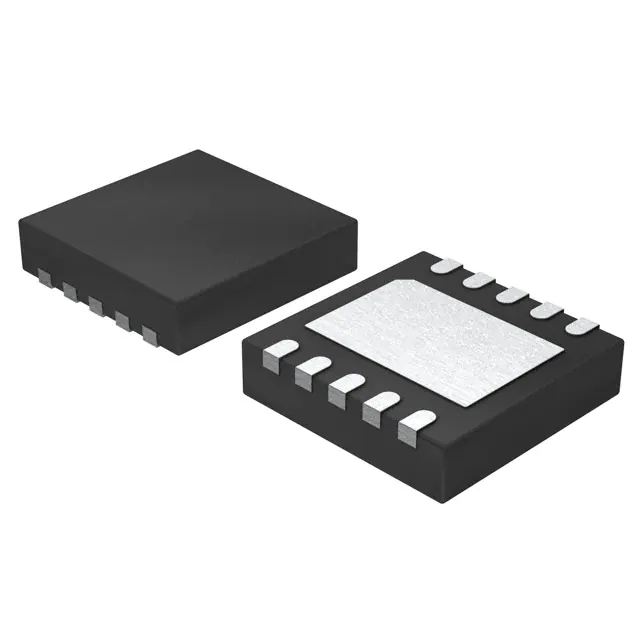
- Part No.:
- MP26075EQ-LF-P
- Manufacturer:
- Monolithic Power Systems Inc.
- Category:
- Battery Chargers
- Package:
- 10-VFDFN Exposed Pad
- Datasheet:
-
 MP26075EQ-LF-P.pdf
- Description:
- IC BATT CHG LI-ION 1CELL 10QFN
- Quantity:
- Payment:

- Shipping:

Inventory:3,581
Please send an inquiry. Send us your inquiry, and we will respond immediately.
Product details
Overview
MP26075EQ-LF-P from Monolithic Power Systems is a linear, high-efficiency single-cell Li-ion/Li-polymer cradle charger IC designed for AC adapter–fed plug-in charging systems. It delivers 4.20 V battery regulation, 1 A constant-current charge capability, input/output overvoltage protection, NTC-based temperature monitoring, and controlled power-up sequencing to limit inrush current. Used in compact portable electronics requiring safe, thermally managed battery charging.
For engineers reviewing the MP26075EQ-LF-P datasheet, MP26075EQ-LF-P pinout, MP26075EQ-LF-P application, or MP26075EQ-LF-P equivalent, key selection criteria include its 4.20 V battery voltage option, QFN-10 (3×3 mm) package with exposed thermal pad, integrated timer-based fault detection (pre-charge/trickle/CV timeout), dual open-drain LED status outputs, and photo-coupler–based adaptive VIN control for flyback adapter optimization.
Technical Context
The MP26075EQ-LF-P implements a linear charging architecture with adaptive input voltage control via the CTL pin, enabling dynamic adjustment of the AC adapter's secondary output through external photo-coupler feedback. This reduces power dissipation across the charger by minimizing VIN–VBATT differential during fast charge.
It integrates a full charge state machine-pre-charge (1 mA), trickle (10% ICHG), constant-current (programmable up to 1.2 A), and constant-voltage (4.20 V ±40 mV)-with automatic recharge triggered at 8% VBATT drop. Safety logic includes NTC window comparator (0.37 V / 2.16 V thresholds), thermal foldback at 120°C, and three independent timers (512/16384/262144 cycles) for mode-specific timeout enforcement.
Key Specifications
| Parameter | Value and Actual Design Meaning |
|---|---|
| Battery Voltage | 4.20 V ±40 mV - precise regulation for standard Li-ion cells; ensures full capacity without overvoltage stress. |
| Charge Current | 1.0 A typical (0.85–1.2 A) - set via external RISET; supports rapid charging of 1800–2500 mAh batteries. |
| Input Voltage Range | 2.2 V to 6.3 V - wide operating range accommodates variable flyback adapter outputs; UVLO at 2.0 V prevents battery discharge. |
| NTC Monitoring | VNTC_LOW = 0.37 V, VNTC_HIGH = 2.16 V - defines safe battery temperature window using standard NTC thermistor divider. |
| OVP Thresholds | VIN OVP = 6.3 V ±200 mV; VBATT OVP = 4.35 V @ 4.2 V setting - dual-stage overvoltage protection prevents damage from adapter surges or cell overcharge. |
| Thermal Limit | Junction shutdown at 120°C - proprietary thermal foldback reduces average charge current before shutdown, preserving reliability under sustained load. |
| Timer Resolution | TMR frequency = 7 Hz (CTMR = 0.1 μF) - enables precise cycle-based timing for pre-charge (512 cycles ≈ 73 s), trickle (16384 cycles ≈ 39 min), and total charge (262144 cycles ≈ 10.4 h). |
Pinout & Package
MP26075EQ-LF-P is housed in a thermally enhanced QFN-10 package (3 mm × 3 mm, 0.75 mm height) with exposed thermal pad for PCB heat sinking. θJA = 50°C/W on 4-layer board.
| Pin/Terminal | Circuit Role | Design Meaning |
|---|---|---|
| 1 VIN | Input supply rail | Accepts 2.2–6.3 V adapter output; requires local 4.7 μF decoupling; internal ±28 V abs max rating protects against surge. |
| 2 LED-G | Open-drain status output | Pulled low during normal charge; high at end-of-charge or fault; sinks ≤8 mA for direct LED drive. |
| 3 LED-R | Open-drain status output | Pulled high during normal charge; low at end-of-charge or fault; complements LED-G for unambiguous state coding. |
| 4 TMR | Oscillator timing node | Connects to GND via 0.1 μF capacitor to set 7 Hz internal clock; shorting to GND disables all timers. |
| 5 GND | Power and signal reference | Common return for all analog/digital functions; must be low-impedance connection to thermal pad. |
| 6 COM | Adapter control loop compensation | Connects to CTL via RC network (e.g., 100 nF + several kΩ) to stabilize photo-coupler feedback loop. |
| 7 CTL | Adapter voltage control interface | Sinks current to modulate photo-coupler LED; adjusts flyback controller COMP pin to regulate secondary output voltage. |
| 8 ISET | Charge current programming | Connects to GND via resistor RISET; sets ICHG = 1.23 V / RISET × 1400 (e.g., 1.7 kΩ → 1.0 A). |
| 9 NTC | Battery temperature sense input | Monitors voltage divider formed by external RNTC and thermistor; triggers charge halt if outside 0.37–2.16 V window. |
| 10 BATT | Charger output terminal | Direct connection to battery anode; reverse leakage <2 μA when VIN = 0; supports auto-recharge at 8% VBATT drop. |
Key Features
| Feature | Design Value |
|---|---|
| VIN control interface | CTL pin provides real-time, current-sink–based feedback to flyback controller COMP pin, enabling adaptive adapter output regulation and >90% system efficiency. |
| Multi-stage charge algorithm | Automated pre-charge (1 mA), trickle (10% ICHG), CC (up to 1.2 A), and CV (4.20 V) phases with mode-specific timeout enforcement prevent dead-battery damage. |
| Dual LED status signaling | LED-R/LED-G open-drain outputs provide unambiguous, hardware-level indication of charge progress (e.g., low/high = charging; high/low = done; high/high = fault). |
| Integrated NTC window comparator | On-die circuitry monitors battery temperature via standard NTC thermistor without external op-amps or ADCs-reducing BOM count and layout complexity. |
| Thermal foldback protection | Reduces average charge current before junction reaches 120°C, avoiding thermal shutdown and enabling graceful degradation under high ambient or poor heatsinking. |
Applications
| Smartphones | Portable Music Players |
|---|---|
Use Scenario: Cradle-based desktop charging for smartphones with removable or sealed Li-ion batteries. IC Role / Device Role / Timing Role: Linear charger IC managing full charge profile, adapter voltage coordination via photo-coupler, and real-time battery safety monitoring. Use Value: Enables compact, low-noise cradle design with no external MOSFET or complex control IC; eliminates need for discrete OVP/OTP circuits. | Use Scenario: Docking station charging for flash-based audio players with 3.7 V Li-polymer cells. IC Role / Device Role / Timing Role: Adaptive linear charger regulating both voltage and current while coordinating with flyback adapter to minimize heat generation. Use Value: Delivers 1 A CC charge within thermal limits of plastic enclosure; NTC monitoring prevents overheating during overnight charging. |
| Digital Cameras | PDA Devices |
Use Scenario: Battery cradle charger for DSLR or mirrorless camera accessories with high-capacity 3.7 V Li-ion packs. IC Role / Device Role / Timing Role: Precision 4.20 V battery regulator with programmable charge current and automatic recharge after partial discharge. Use Value: Ensures consistent full-charge capacity across hundreds of cycles; timer-based fault detection prevents overcharging degraded cells. | Use Scenario: Enterprise-grade PDA docking station supporting hot-swap battery charging and status reporting. IC Role / Device Role / Timing Role: Dual-LED status indicator IC providing visual charge state (LED-R/G) and fault alerts without microcontroller involvement. Use Value: Reduces firmware overhead and BOM cost; enables immediate user feedback (e.g., red/green blink patterns) for service diagnostics. |
Equivalent & Alternatives
The following parts are listed as comparable options for similar linear cradle charger applications.
| Alternative Part | Technical Difference | Application Difference | Selection Advice |
|---|---|---|---|
| BQ24075RGTR | Fixed 4.2 V regulation; no adaptive VIN control; uses internal MOSFET; lacks CTL pin and photo-coupler interface. | Requires standalone DC input (not AC adapter–fed); no system-level adapter coordination; simpler but less efficient in cradle topology. | Select for USB-powered or fixed-VIN applications where adapter co-regulation is unnecessary. |
| TP4056 | Single-resistor-programmed 4.2 V charge; no NTC input; no LED status outputs; no timer-based fault detection; no input OVP. | Targeted at ultra-low-cost, non-temperature-monitored consumer chargers; unsuitable for certified cradle systems requiring safety compliance. | Select only for cost-sensitive, non-safety-critical applications with no thermal or adapter interaction requirements. |
Compared with BQ24075RGTR and TP4056, MP26075EQ-LF-P uniquely supports cradle systems via adaptive flyback adapter control, integrated NTC monitoring, and multi-cycle fault timers-making it the only option qualified for UL/IEC-compliant AC adapter–coupled charging where system-level efficiency and safety co-dependence are critical.
Availability
MP26075EQ-LF-P is available at Aetrix Electronics and suitable for smartphone cradle chargers, portable music player docks, digital camera battery stations, and enterprise PDA docking systems requiring stable component supply, RoHS-compliant packaging, and long-term lifecycle support.
Supply support for MP26075EQ-LF-P includes scheduled delivery planning, volume procurement assistance, BOM continuity management, traceable sourcing, and lifecycle availability coordination for OEM customers, industrial embedded developers, connected-device designers, and electronics production programs.
Manufacturer
Monolithic Power Systems (MPS) is a fabless semiconductor company specializing in high-performance analog and power ICs, with core expertise in DC/DC conversion, LED drivers, motor drivers, and battery management solutions.
The MP26075 belongs to MPS's dedicated battery charger product line, engineered specifically for high-efficiency, adapter-coordinated cradle charging in space-constrained portable devices-emphasizing thermal robustness, safety compliance, and system-level integration over standalone charging simplicity.
FAQ
What battery chemistries does MP26075EQ-LF-P support?
MP26075EQ-LF-P supports single-cell lithium-ion and lithium-polymer batteries only. Its 4.20 V regulation voltage, NTC-based temperature monitoring, and charge termination at 10% ICHG are optimized for these chemistries. It is not rated for LiFePO4, NiMH, or lead-acid batteries due to incompatible voltage profiles and safety thresholds.
How is charge current programmed on MP26075EQ-LF-P?
Charge current is set by connecting a resistor RISET between the ISET pin and GND. The relationship is ICHG = (1.23 V / RISET) × 1400. For example, a 1.7 kΩ resistor yields ~1.0 A. The device tolerates RISET values from 1.2 kΩ to 8.0 kΩ, supporting 0.85–1.2 A nominal current with ±15% variation over temperature.
Does MP26075EQ-LF-P require external MOSFETs or diodes?
No. MP26075EQ-LF-P is a fully integrated linear charger IC with no external pass transistor required. Its proprietary input reverse polarity circuit eliminates the need for an external Schottky diode, and internal circuitry handles all charge sequencing, regulation, and protection-reducing BOM to just RISET, CTMR, RNTC, and decoupling capacitors.
What happens during thermal overload?
When junction temperature reaches 120°C, MP26075EQ-LF-P enters thermal foldback mode: average charge current is reduced to limit die temperature rise. Unlike hard thermal shutdown, this allows continued (slower) charging while preventing permanent damage. Recovery occurs automatically once temperature falls below the hysteresis threshold.
Can MP26075EQ-LF-P operate without an NTC thermistor?
Yes, but not recommended for production. Leaving the NTC pin floating or tying it to a fixed voltage disables temperature monitoring and violates IEC 62368-1 safety requirements for battery-powered devices. In such cases, the IC will not halt charging due to overtemperature, increasing risk of thermal runaway in faulty or aged cells.
How does the CTL pin interface with a flyback controller?
The CTL pin sinks current into an external photo-coupler LED. This modulates the opto-transistor on the primary side, adjusting the COMP pin voltage of the flyback controller (e.g., MP1584, MP6901) to dynamically lower or raise secondary output voltage-keeping VIN just above VBATT + 500 mV during fast charge for optimal efficiency.
Is MP26075EQ-LF-P RoHS and REACH compliant?
Yes. The "-LF" suffix denotes lead-free, RoHS-compliant packaging. MPS certifies MP26075EQ-LF-P as compliant with EU RoHS Directive 2011/65/EU and REACH Regulation (EC) No. 1907/2006, with full material declarations available upon request through Aetrix Electronics' technical support.
MP26075EQ-LF-P Specifications
- Product attributes
- Attribute value
- Manufacturer:
- Monolithic Power Systems Inc.
- Series:
- -
- Package/Case:
- 10-VFDFN Exposed Pad
- Packaging:
- Tape & Reel (TR)
- Product Status:
- Active
- Battery Chemistry:
- Lithium Ion/Polymer
- Number of Cells:
- 1
- Current - Charging:
- Constant
- Programmable Features:
- -
- Fault Protection:
- Over Voltage
- Charge Current - Max:
- 1.2A
- Battery Pack Voltage:
- 4.2V
- Voltage - Supply (Max):
- 6.3V
- Interface:
- -
- Operating Temperature:
- -20°C ~ 85°C (TA)
- Grade:
- -
- Qualification:
- -
- Mounting Type:
- Surface Mount
- Supplier Device Package:
- 10-QFN (3x3)
MP26075EQ-LF-P FAQ
1.How can I place an order for MP26075EQ-LF-P through Aetrix?
Please submit a Request for Quotation (RFQ) for MP26075EQ-LF-P on Aetrix. Our sales agent will provide a competitive quotation and guide you through the order confirmation once you accept the terms.
2.Are the price and stock information for MP26075EQ-LF-P reliable?
The price and inventory of MP26075EQ-LF-P are updated periodically and may fluctuate due to market conditions. Stock and pricing data are typically refreshed every 24 hours. Quotation validity for MP26075EQ-LF-P is usually 5 days.
3.What payment methods are accepted for MP26075EQ-LF-P?
We accept Wire Transfer, PayPal, Credit Card, Western Union, MoneyGram, and Escrow for MP26075EQ-LF-P transactions.
Note: Certain payment methods may incur a processing fee.
4.How is shipping managed for MP26075EQ-LF-P?
MP26075EQ-LF-P orders can be shipped via leading logistics carriers, including DHL, UPS, FedEx, TNT, or Registered Mail.
Once your MP26075EQ-LF-P order is processed, you will receive an email with the shipment details and tracking number.
Note: Tracking information may take up to 24 hours to appear. Express delivery typically takes 3–5 business days.
5.How can I obtain technical support or documentation for MP26075EQ-LF-P?
For technical support, including MP26075EQ-LF-P datasheets, pinout diagrams, or application guidance, please contact our engineering support team. They can provide detailed documentation and assistance for your MP26075EQ-LF-P requirements.
6.How does Aetrix verify that MP26075EQ-LF-P is sourced from the original manufacturer or authorized distributors?
All MP26075EQ-LF-P products on Aetrix are procured from qualified distributors and authorized channels. Our dedicated quality assurance team conducts strict verification, including traceability checks and, if necessary, third-party testing. This ensures that MP26075EQ-LF-P meets industry standards.
7.What is the process for return or replacement of MP26075EQ-LF-P?
All MP26075EQ-LF-P units undergo pre-shipment inspection (PSI). If there is an issue with MP26075EQ-LF-P, returns or replacements are accepted under the following conditions:
1.Quantity discrepancies, incorrect items, or visible external defects (such as breakage or corrosion), acknowledged by Aetrix.
2.The issue is reported within 90 days of delivery.
3.The MP26075EQ-LF-P part is unused and in its original packaging.
Return procedure for MP26075EQ-LF-P:
1.Submit a request within 90 days.
2.Obtain a Return Material Authorization (RMA) from Aetrix.
MP26075EQ-LF-P Tags

-
BQ21040DBVR
Texas Instruments

-
MCP73812T-420I/OT
Microchip Technology
-
MCP73831T-2ACI/OT
Microchip Technology
-
MCP73832T-2ACI/OT
Microchip Technology
-
MCP73831T-2DCI/OT
Microchip Technology
-
MCP73832T-2DCI/OT
Microchip Technology
-
MCP73831T-2ATI/OT
Microchip Technology
-
MCP73832T-2ATI/OT
Microchip Technology
-
MCP73831T-5ACI/OT
Microchip Technology
-
MCP73832T-2ACI/MC
Microchip Technology
-
MCP73831T-2ACI/MC
Microchip Technology
-
MCP73831T-2ATI/MC
Microchip Technology
Tech Hub

Jumper cables guide covering safe connection order, red and black clamp placement, final ground connection, cable gauge, length, clamp quality, copper vs CCA cables, jump starter comparison and battery…

LDO regulator guide covering low dropout voltage, power dissipation, thermal design, PSRR, output noise, capacitor stability, adjustable LDO circuits, LDO vs buck converter and datasheet selection chec…

Conditional Access Module guide covering CAM meaning, CI/CI+ interface, smart card authorization, DVB security workflow, TV and set-top box compatibility, internal electronics, ESD protection, connecto…

Guide to electronic component obsolescence covering EOL risk, PCN/PDN notices, last-time buy planning, replacement options, form-fit-function validation, counterfeit risk and BOM lifecycle management.

18650 battery guide covering lithium-ion cell basics, 3.6V/3.7V voltage, 4.2V charging, mAh and Wh capacity, protected cells, chargers, BMS, series-parallel packs, holders, welding and sourcing checks.…

Hall effect sensor guide covering working principle, linear and digital sensors, Arduino circuits, current sensing, speed detection, automotive applications, A3144 examples, signal filtering and datash…

Product Change Notification guide for electronic components, covering PCN meaning, PCN vs PDN/EOL, common change types, risk levels, form-fit-function review, engineering validation, BOM control, LTB/L…

A practical guide to blend door actuators, covering HVAC function, symptoms, location, AC and heater issues, reset and calibration, replacement cost, electrical diagnosis, compatibility checks, and rep…

Engineering guide to Raspberry Pi alternatives, covering chip-level differences, Orange Pi, ROCK, Jetson, Banana Pi, NanoPi, Compute Module, Pico, GPIO, camera, HAT compatibility, and replacement risks…
Engineering guide to dynamic load response testing for high-current buck converters, covering load step setup, slew rate, Vcore undershoot, overshoot, recovery time, probe location, output capacitors a…


