
 My Inquiry
 My Account


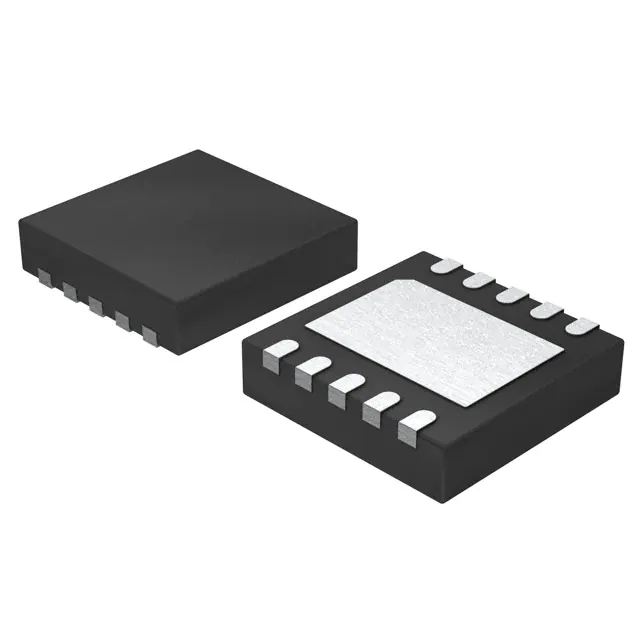
Monolithic Power Systems Inc. MP2670DQ-LF-Z
- Part No.:
- MP2670DQ-LF-Z
- Manufacturer:
- Monolithic Power Systems Inc.
- Category:
- Battery Chargers
- Package:
- 10-VFDFN Exposed Pad
- Datasheet:
-
 MP2670DQ-LF-Z.pdf
- Description:
- IC BATT CHG LI-ION 1CELL 10QFN
- Quantity:
- Payment:

- Shipping:

Inventory:4,047
Please send an inquiry. Send us your inquiry, and we will respond immediately.
Product details
Overview
MP2670DQ-LF-Z from Monolithic Power Systems is a single-cell Li-ion/Li-polymer battery charger protection IC with integrated high-voltage input surge tolerance (up to +30V), input overvoltage protection (5.8V threshold, 1µs response), battery overvoltage protection (4.475V trip), and programmable overcurrent protection (0.9–1.1A range via ILIM resistor). It serves as redundant safety layer between AC adapter and linear charger in portable electronics.
For engineers reviewing the MP2670DQ-LF-Z datasheet, MP2670DQ-LF-Z pinout, MP2670DQ-LF-Z application, or MP2670DQ-LF-Z equivalent, key selection considerations include its 10-pin QFN package, dual open-drain fault indication, thermal shutdown at 150°C with 40°C hysteresis, and compatibility with linear charger systems requiring triple-fault-tolerant protection.
Technical Context
The MP2670 operates as a series protection switch using an internal N-channel MOSFET (RDS(ON) = 250–450 mΩ) placed between VIN and OUT. Its protection logic monitors three independent parameters-input voltage (via comparator CP1), battery voltage (via CP3), and charge current (via sensing FET Q2 and ILIM resistor)-with dedicated blanking times (170 µs for OCP, 180 µs for BOVP) to suppress transients.
It implements two 4-bit binary counters that permanently disable the power FET after 16 cumulative OCP or BOVP events unless reset by toggling EN or cycling VIN. The EN pin features internal 200 kΩ pull-down and 1.5 V logic-high threshold, enabling system-level control of protection activation without external biasing.
Key Specifications
| Parameter | Value and Actual Design Meaning |
|---|---|
| VIN Absolute Max | +30 V - withstands hot-plug surges without external TVS |
| Input OVP Threshold | 5.80 V ±25 mV - triggers within 1 µs to isolate downstream charger |
| Battery OVP Threshold | 4.475 V ±75 mV - prevents Li-ion overcharge beyond safe 4.2 V nominal |
| OCP Range | 0.90–1.10 A - set by external RILIM (e.g., 25 kΩ → 1.0 A) |
| Thermal Shutdown | 150°C rising / 110°C falling - provides hysteresis to avoid oscillation |
| FLT Output Type | Open-drain - sinks ≥5 mA at 0.8 V for direct microcontroller interrupt |
| Package | QFN-10 (3 mm × 3 mm) - exposed pad tied to GND for thermal dissipation (θJA = 50°C/W) |
Pinout & Package
MP2670DQ-LF-Z uses a 10-pin 3 mm × 3 mm QFN package with exposed thermal pad on underside, requiring connection to PCB ground plane for thermal performance and electrical stability.
| Pin/Terminal | Circuit Role | Design Meaning |
|---|---|---|
| VIN (Pin 1) | High-voltage input supply | Accepts up to +30 V; feeds internal pre-regulator and OVP comparator |
| GND (Pin 2) | System ground reference | Reference for all analog comparators and digital logic; connects to exposed pad |
| FLT (Pin 3) | Fault status output | Open-drain signal pulled low during OVP, BOVP, OCP, or OTP events |
| NC (Pins 4, 5) | No-connect terminals | Must remain unconnected per datasheet; no internal bonding |
| EN (Pin 6) | Enable control input | Logic-low (<0.4 V) enables IC; floating or <0.4 V defaults to active |
| VB (Pin 7) | Battery voltage sense input | Monitors battery via external resistor (RVB); leakage ≤20 nA minimizes OVP error |
| ILIM (Pin 8) | Overcurrent threshold programming | Current-sense reference node; sets OCP via resistor to GND (IOCP ≈ 0.8 V / RILIM) |
| OUT (Pins 9, 10) | Protected output power path | Parallel pins reduce resistance and thermal stress; connect to linear charger input |
Key Features
| Feature | Design Value |
|---|---|
| Triple-parameter protection | Simultaneous monitoring of VIN, VB, and charge current ensures no single-point failure bypasses safety |
| Programmable OCP threshold | Resistor-based setting (RILIM) allows precise match to battery chemistry and charger capability |
| Permanent latch-off after 16 faults | Prevents repeated unsafe re-engagement; requires full power cycle or EN toggle to reset |
| 1 µs input OVP response | Fastest-in-class reaction time protects downstream linear charger ICs from transient overvoltage damage |
| Integrated thermal protection | Dual-threshold (150°C/110°C) shutdown avoids nuisance tripping while ensuring die reliability |
Applications
| Smartphones | Digital Cameras |
|---|---|
Use Scenario: USB-powered fast-charging smartphones with integrated linear chargers. IC Role / Device Role / Timing Role: Redundant series protection switch placed between USB port and main charger IC. Use Value: Prevents battery overvoltage during charger IC failure or adapter surge, meeting IEC 62368-1 fault tolerance requirements. | Use Scenario: Compact digital cameras using single-cell Li-ion packs charged via wall adapter. IC Role / Device Role / Timing Role: Input-stage protector isolating charger from 5 V adapter transients and reverse-battery faults. Use Value: Eliminates need for discrete TVS + fuse + PTC stack; reduces BOM count by 3 components while improving response time. |
| MP3 Players | PDA Devices |
Use Scenario: Portable audio players with limited PCB space and strict thermal budgets. IC Role / Device Role / Timing Role: Low-RDS(ON) (250 mΩ typ.) series switch enabling efficient 1 A charging without heatsink. Use Value: Delivers >98% efficiency at 1 A load while maintaining <40°C temperature rise on 4-layer board. | Use Scenario: Legacy PDAs with aging battery packs prone to impedance rise and overvoltage drift. IC Role / Device Role / Timing Role: Battery-side voltage clamp (4.475 V) preventing cell swelling due to charger calibration drift. Use Value: Extends usable life of aged cells by enforcing hard upper voltage limit independent of charger accuracy. |
Equivalent & Alternatives
The following parts are listed as comparable options for similar battery protection applications.
| Alternative Part | Technical Difference | Application Difference | Selection Advice |
|---|---|---|---|
| TI BQ29700DRVR | Single-cell OVP-only device (no OCP or input OVP); 4.35 V fixed threshold; SOT-23-6 | Lacks input surge tolerance and current limiting; suitable only for secondary protection behind robust charger | Select when cost-sensitive designs require minimal footprint and only battery-side OVP is needed |
| Richtek RT9527GQW | Includes OVP, OCP, OTP but no BOVP; 5.8 V input OVP; 10-pin WQFN same size | Missing battery voltage monitoring makes it unsuitable for Li-ion overcharge prevention | Choose only if system already implements BOVP externally and prioritizes lower quiescent current (15 µA vs MP2670's 0.6 mA) |
Compared with BQ29700DRVR and RT9527GQW, MP2670DQ-LF-Z uniquely delivers four-layer protection (OVP, BOVP, OCP, OTP) in one chip, enabling true two-fault-tolerant charging systems without external components-critical for UL/IEC-certified consumer devices.
Availability
MP2670DQ-LF-Z is available at Aetrix Electronics and suitable for smartphones, digital cameras, MP3 players, and PDA devices requiring stable component supply across long-lifecycle consumer electronics programs.
Supply support for MP2670DQ-LF-Z includes scheduled delivery planning, volume procurement assistance, BOM continuity management, traceable sourcing, and lifecycle availability coordination for OEM customers, industrial embedded developers, connected-device designers, and electronics production programs.
Manufacturer
Monolithic Power Systems (MPS) is a fabless semiconductor company specializing in high-performance analog and power ICs, founded in 1997 and headquartered in Kirkland, Washington.
The MP2670 belongs to MPS's battery protection product line, designed specifically to provide certified, fault-tolerant redundancy for linear Li-ion charging systems in space-constrained portable devices.
FAQ
What is the purpose of the two NC pins (4 and 5) on MP2670DQ-LF-Z?
Pins 4 and 5 are unconnected internally and must remain floating per the datasheet. They exist for mechanical symmetry and package standardization-not for thermal relief or ESD protection. Routing traces or placing vias on these pads violates the recommended land pattern and may compromise solder joint integrity or thermal performance.
Can MP2670DQ-LF-Z be used with switching chargers instead of linear chargers?
Yes, but only as input-stage protection. The MP2670 does not regulate charging current or voltage-it acts solely as a smart series switch. When paired with a buck charger, it protects against input surges and overvoltage but cannot replace the charger's own current/voltage control loop or battery-side safety functions like JEITA thermal regulation.
How does the ILIM resistor affect overcurrent protection accuracy?
The ILIM resistor sets OCP threshold via IOCP = 0.8 V / RILIM. With typical RILIM tolerance of ±1%, and 0.8 V reference accuracy of ±2%, total OCP error is ±3%. For 1.0 A target, this yields ±30 mA absolute error-sufficient for most Li-ion applications where ±5% current tolerance is acceptable.
Is the FLT pin compatible with 1.8 V microcontrollers?
Yes. With 1 µA leakage and 0.8 V max low-level voltage at 5 mA sink, FLT can drive 1.8 V GPIO directly using a 100 kΩ pull-up. The output remains valid down to 1.2 V supply, satisfying I²C-compatible logic thresholds and enabling interrupt-driven fault logging without level-shifting.
Does MP2670DQ-LF-Z require external capacitors for stable operation?
Yes. CIN (1–4.7 µF ceramic) is mandatory for input decoupling to suppress hot-insertion overshoot; COUT (1 µF) stabilizes the output rail into the charger IC. Omitting either capacitor risks false OVP triggering or unstable OCP response due to voltage droop during load transients.
What happens if the VB pin is shorted to VIN?
The external RVB resistor (200 kΩ–1 MΩ) limits fault current to ≤130 µA in worst-case 30 V–4.2 V differential. This keeps power dissipation below 4 mW at VB pin, preventing thermal damage and allowing downstream circuitry to safely detect and respond to the fault condition without catastrophic failure.
MP2670DQ-LF-Z Specifications
- Product attributes
- Attribute value
- Manufacturer:
- Monolithic Power Systems Inc.
- Series:
- -
- Package/Case:
- 10-VFDFN Exposed Pad
- Packaging:
- Tape & Reel (TR)
- Product Status:
- Active
- Battery Chemistry:
- Lithium Ion/Polymer
- Number of Cells:
- 1
- Current - Charging:
- Constant - Programmable
- Programmable Features:
- -
- Fault Protection:
- Over Current, Over Voltage
- Charge Current - Max:
- 1A
- Battery Pack Voltage:
- 4.475V (Max)
- Voltage - Supply (Max):
- 5.5V
- Interface:
- -
- Operating Temperature:
- -40°C ~ 85°C (TA)
- Grade:
- -
- Qualification:
- -
- Mounting Type:
- Surface Mount
- Supplier Device Package:
- 10-QFN (3x3)
MP2670DQ-LF-Z FAQ
1.How can I place an order for MP2670DQ-LF-Z through Aetrix?
Please submit a Request for Quotation (RFQ) for MP2670DQ-LF-Z on Aetrix. Our sales agent will provide a competitive quotation and guide you through the order confirmation once you accept the terms.
2.Are the price and stock information for MP2670DQ-LF-Z reliable?
The price and inventory of MP2670DQ-LF-Z are updated periodically and may fluctuate due to market conditions. Stock and pricing data are typically refreshed every 24 hours. Quotation validity for MP2670DQ-LF-Z is usually 5 days.
3.What payment methods are accepted for MP2670DQ-LF-Z?
We accept Wire Transfer, PayPal, Credit Card, Western Union, MoneyGram, and Escrow for MP2670DQ-LF-Z transactions.
Note: Certain payment methods may incur a processing fee.
4.How is shipping managed for MP2670DQ-LF-Z?
MP2670DQ-LF-Z orders can be shipped via leading logistics carriers, including DHL, UPS, FedEx, TNT, or Registered Mail.
Once your MP2670DQ-LF-Z order is processed, you will receive an email with the shipment details and tracking number.
Note: Tracking information may take up to 24 hours to appear. Express delivery typically takes 3–5 business days.
5.How can I obtain technical support or documentation for MP2670DQ-LF-Z?
For technical support, including MP2670DQ-LF-Z datasheets, pinout diagrams, or application guidance, please contact our engineering support team. They can provide detailed documentation and assistance for your MP2670DQ-LF-Z requirements.
6.How does Aetrix verify that MP2670DQ-LF-Z is sourced from the original manufacturer or authorized distributors?
All MP2670DQ-LF-Z products on Aetrix are procured from qualified distributors and authorized channels. Our dedicated quality assurance team conducts strict verification, including traceability checks and, if necessary, third-party testing. This ensures that MP2670DQ-LF-Z meets industry standards.
7.What is the process for return or replacement of MP2670DQ-LF-Z?
All MP2670DQ-LF-Z units undergo pre-shipment inspection (PSI). If there is an issue with MP2670DQ-LF-Z, returns or replacements are accepted under the following conditions:
1.Quantity discrepancies, incorrect items, or visible external defects (such as breakage or corrosion), acknowledged by Aetrix.
2.The issue is reported within 90 days of delivery.
3.The MP2670DQ-LF-Z part is unused and in its original packaging.
Return procedure for MP2670DQ-LF-Z:
1.Submit a request within 90 days.
2.Obtain a Return Material Authorization (RMA) from Aetrix.
MP2670DQ-LF-Z Tags

-
BQ21040DBVR
Texas Instruments
-
MCP73812T-420I/OT
Microchip Technology
-
MCP73831T-2ACI/OT
Microchip Technology
-
MCP73832T-2ACI/OT
Microchip Technology
-
MCP73831T-2DCI/OT
Microchip Technology
-
MCP73832T-2DCI/OT
Microchip Technology
-
MCP73831T-2ATI/OT
Microchip Technology
-
MCP73832T-2ATI/OT
Microchip Technology
-
MCP73831T-5ACI/OT
Microchip Technology
-
MCP73832T-2ACI/MC
Microchip Technology
-
MCP73831T-2ACI/MC
Microchip Technology
-
MCP73831T-2ATI/MC
Microchip Technology
Tech Hub

Operational amplifier guide covering op amp basics, feedback, ideal vs real op amps, common configurations, buffer circuits, offset, bias current, gain-bandwidth, slew rate, rail-to-rail limits and sel…

Jumper cables guide covering safe connection order, red and black clamp placement, final ground connection, cable gauge, length, clamp quality, copper vs CCA cables, jump starter comparison and battery…

LDO regulator guide covering low dropout voltage, power dissipation, thermal design, PSRR, output noise, capacitor stability, adjustable LDO circuits, LDO vs buck converter and datasheet selection chec…

Conditional Access Module guide covering CAM meaning, CI/CI+ interface, smart card authorization, DVB security workflow, TV and set-top box compatibility, internal electronics, ESD protection, connecto…

Guide to electronic component obsolescence covering EOL risk, PCN/PDN notices, last-time buy planning, replacement options, form-fit-function validation, counterfeit risk and BOM lifecycle management.

18650 battery guide covering lithium-ion cell basics, 3.6V/3.7V voltage, 4.2V charging, mAh and Wh capacity, protected cells, chargers, BMS, series-parallel packs, holders, welding and sourcing checks.…

Hall effect sensor guide covering working principle, linear and digital sensors, Arduino circuits, current sensing, speed detection, automotive applications, A3144 examples, signal filtering and datash…

Product Change Notification guide for electronic components, covering PCN meaning, PCN vs PDN/EOL, common change types, risk levels, form-fit-function review, engineering validation, BOM control, LTB/L…

A practical guide to blend door actuators, covering HVAC function, symptoms, location, AC and heater issues, reset and calibration, replacement cost, electrical diagnosis, compatibility checks, and rep…

Engineering guide to Raspberry Pi alternatives, covering chip-level differences, Orange Pi, ROCK, Jetson, Banana Pi, NanoPi, Compute Module, Pico, GPIO, camera, HAT compatibility, and replacement risks…


