
 My Inquiry
 My Account


Monolithic Power Systems Inc. MP2695GQ-0000-Z
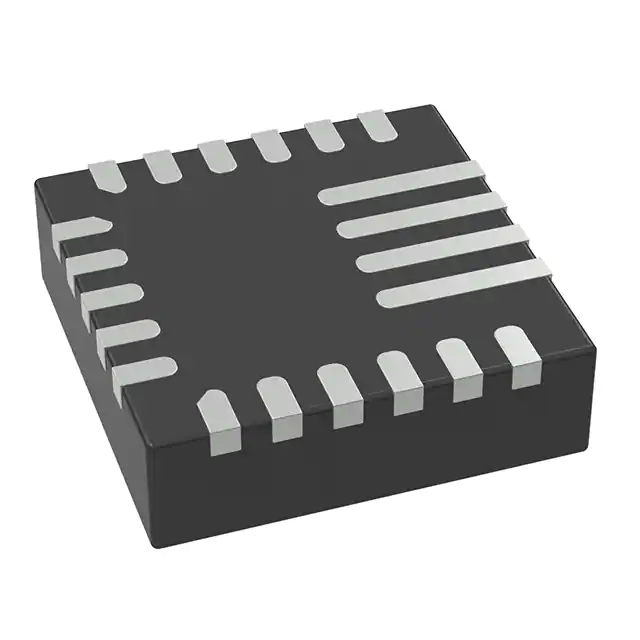
- Part No.:
- MP2695GQ-0000-Z
- Manufacturer:
- Monolithic Power Systems Inc.
- Category:
- Battery Chargers
- Package:
- 21-PowerVFQFN
- Datasheet:
-
 MP2695GQ-0000-Z.pdf
- Description:
- IC BATT CONTRL LI-ION 1CEL 21QFN
- Quantity:
- Payment:

- Shipping:

Inventory:4,935
Please send an inquiry. Send us your inquiry, and we will respond immediately.
Product details
Overview
MP2695GQ-0000-Z from Monolithic Power Systems is a highly integrated I²C-controlled switching battery charger for single-cell Li-ion/Li-polymer batteries, featuring programmable 500mA–3.6A charge current, 3.6V–4.45V regulation voltage (±0.5% accuracy), and JEITA-compliant temperature profiling. It operates from 4.0V–11V input, integrates pre-charge/CC/CV phases, and delivers real-time battery current monitoring via analog IB output-used in portable Bluetooth speakers and mobile accessories requiring adaptive thermal-aware charging.
For engineers reviewing the MP2695GQ-0000-Z datasheet, MP2695GQ-0000-Z pinout, MP2695GQ-0000-Z application, or MP2695GQ-0000-Z equivalent, key selection criteria include I²C-programmable JEITA thresholds, ±10% input current limit accuracy, ultra-low 25μA idle discharge, and QFN-21 (3mm×3mm) thermal performance with θJA = 50°C/W.
Technical Context
The MP2695 implements a synchronous buck-boost topology with integrated high-side (15mΩ), low-side (14mΩ), and power-path (25mΩ) MOSFETs, enabling efficient CC/CV charging across 4.0V–11V input while maintaining precise battery voltage regulation. Its dual-loop power management dynamically enforces both input current limit (100mA–3A) and minimum input voltage (4.5V–4.76V) to prevent adapter overload.
JEITA compliance is implemented via four configurable NTC voltage thresholds (VCOLD, VCOOL, VWARM, VHOT) referenced to VRNTC (3.5V), allowing independent scaling of charge current at cool temps and charge voltage at warm/hot temps-fully controlled through I²C registers without host firmware intervention.
Key Specifications
| Parameter | Value and Actual Design Meaning |
|---|---|
| Input Voltage Range | 4.0V to 11V - Supports USB PD 5V/9V adapters and legacy wall adapters without external LDO. |
| Charge Current Range | 500mA to 3.6A - Programmable in 0.1A steps via I²C; actual current scaled by external sense resistor (e.g., 10mΩ). |
| Battery Regulation Voltage | 3.6V to 4.45V (±0.5%) - Eight discrete settings; enables safe charging of diverse Li-ion chemistries including LCO and NMC. |
| Input Current Limit | 100mA to 3A (±10%) - Prevents adapter brownout; automatically reduces charge current when input voltage drops below VIN_MIN threshold. |
| JEITA Temperature Thresholds | Four programmable NTC windows (VCOLD/VCOOL/VWARM/VHOT) - Enables full JEITA profile compliance with independent current/voltage derating logic. |
| IB Analog Output | 0.35V per 1A (typ.) - Provides real-time battery current feedback without ADC; gain scales linearly with sense resistor value. |
| Thermal Shutdown | 150°C rising / 120°C hysteresis - Protects IC during sustained high-power operation; resumes autonomously after cooldown. |
Pinout & Package
MP2695GQ-0000-Z is housed in a thermally enhanced 21-pin QFN package (3mm × 3mm, 0.4mm pitch) with exposed thermal pad. The package supports high-density PCB layouts and provides low θJA (50°C/W) for continuous 3A charging in compact portable designs.
| Pin/Terminal | Circuit Role | Design Meaning |
|---|---|---|
| 1 PGND | Power Ground | Main power return path; must be connected directly to PCB ground plane under IC for thermal and EMI control. |
| 2 SW | Switch Node | Connects to inductor; carries high-frequency switching current; requires tight layout with minimal loop area. |
| 3 PMID | High-Side Drain | Drain of internal high-side FET; bypassed with ceramic capacitor to PGND for stability and noise suppression. |
| 7, 8 IN | Input Power | Main DC input (4–11V); decoupled with ≥10μF ceramic capacitors close to pins to suppress ripple and transients. |
| 9 CSP | Current Sense (+) | Positive input of integrated current-sense amplifier; connects to high-side of RS1 sense resistor. |
| 10 BATT | Battery Positive | Direct connection to Li-ion cell anode; includes over-voltage protection at 104% of VBATT_REG. |
| 14 INT | Interrupt Output | Open-drain status/fault indicator; pulls low on events like JEITA violation, timer expiry, or OVP. |
| 15 SCL | I²C Clock Input | Master-driven clock line; requires 10kΩ pull-up to logic rail (e.g., 3.3V) for standard/fast-mode operation. |
| 16 SDA | I²C Data I/O | Bidirectional data line; same pull-up requirement as SCL; supports register read/write and status polling. |
| 17 IB | Battery Current Monitor | Analog voltage output proportional to charge current (0.35V/A typ.); used for system-level current telemetry. |
| 18 NTC | Temperature Sense Input | Connects to NTC thermistor; voltage compared against VRNTC to determine battery temperature zone for JEITA. |
| 19 VCC | Internal Bias Supply | 3.3–3.8V LDO output powering internal logic and gate drivers; sourced from PMID or BATT, whichever is higher. |
| 20 VRNTC | NTC Reference | 3.5V precision reference for NTC divider; enables accurate temperature window detection across -40°C to +125°C. |
| 21 BST | Bootstrap Supply | Connects to SW via 470nF capacitor; generates floating gate drive voltage for high-side FET during switching. |
Key Features
| Feature | Design Value |
|---|---|
| Programmable JEITA Profile | Four independent NTC thresholds with configurable current/voltage derating-enables full compliance with JEITA-530-A without external microcontroller logic. |
| I²C-Controlled Charge Parameters | All critical settings-including VBATT_REG, ICC, IIN_LIM, VIN_MIN, safety timer, and JEITA thresholds-are writable/readable via 7-bit I²C slave address. |
| Ultra-Low Idle Discharge | 25μA typical battery leakage in idle mode-extends shelf life and standby time in always-on portable devices like Bluetooth speakers. |
| Integrated Dual-Loop Power Management | Simultaneous enforcement of input current limit and minimum input voltage prevents adapter collapse while maximizing power transfer efficiency. |
| Real-Time Battery Current Monitoring | IB pin delivers analog voltage (0.35V/A) proportional to charge current-eliminates need for external current-sense amplifier or ADC in cost-sensitive designs. |
Applications
| Bluetooth Speaker Charging | USB-C Portable Power Bank |
|---|---|
|
Use Scenario: Recharging sealed Li-ion battery packs in compact, battery-powered Bluetooth speakers with no user-accessible charging port. IC Role / Device Role / Timing Role: Primary switching charger managing CC/CV profile, JEITA thermal adaptation, and input power negotiation from 5V/9V USB sources. Use Value: Enables safe, fast charging up to 3.6A while preventing overheating during extended playback-charging cycles-critical for unattended operation. |
Use Scenario: Integrated charging solution in multi-cell or single-cell USB-C power banks supporting 5V/9V input and 5V output with pass-through capability. IC Role / Device Role / Timing Role: Standalone battery management unit handling pre-charge, constant-current ramp, and CV termination with automatic recharge trigger. Use Value: Reduces BOM count by integrating power-path FETs, current sensing, and JEITA logic-eliminating need for discrete op-amps, comparators, or MCU-based thermal control. |
| Industrial Handheld Scanner | Wireless Earbud Charging Case |
|
Use Scenario: Ruggedized handheld scanners operating in variable ambient temperatures (-20°C to +60°C) with frequent hot-swap battery recharging. IC Role / Device Role / Timing Role: Adaptive charger enforcing JEITA COLD/COOL current reduction and WARM/HOT voltage derating based on NTC feedback. Use Value: Prevents lithium plating at low temps and electrolyte degradation at high temps-extending cycle life beyond 500 cycles in field-deployed units. |
Use Scenario: Ultra-compact charging case for true wireless stereo (TWS) earbuds with space-constrained 300–500mAh Li-polymer battery. IC Role / Device Role / Timing Role: High-efficiency switch-mode charger delivering 500mA–1.5A with <25μA quiescent drain to minimize case self-discharge between uses. Use Value: Achieves >92% CV-stage efficiency at 5V input and 4.2V battery-maximizing usable charge cycles per USB-C top-off and extending case runtime. |
Equivalent & Alternatives
The following parts are listed as comparable options for similar switching battery charger applications.
| Alternative Part | Technical Difference | Application Difference | Selection Advice |
|---|---|---|---|
| BQ25618RTWR | Lower max charge current (3A vs. 3.6A); fixed JEITA thresholds (no I²C programmability); no IB analog output. | Requires external current-sense amp for telemetry; less flexible for custom thermal profiles in consumer audio. | Choose for TI-ecosystem designs where I²C register access is unnecessary and cost is prioritized over configurability. |
| ISL9238HRZ-T | Higher input voltage range (4.5V–20V); supports dual-cell configurations; lacks integrated NTC reference (VRNTC) and JEITA analog windowing. | Suitable for 2S power banks but requires external thermistor biasing and digital JEITA implementation via host MCU. | Choose when scaling to multi-cell systems or needing >11V input support; avoid if single-cell JEITA autonomy is required. |
Compared with BQ25618RTWR and ISL9238HRZ-T, MP2695GQ-0000-Z uniquely combines I²C-programmable JEITA thresholds, integrated VRNTC reference, and analog IB current monitor in a 3mm×3mm footprint-delivering full autonomous thermal-aware charging without host MCU overhead or external signal conditioning.
Availability
MP2695GQ-0000-Z is available at Aetrix Electronics and suitable for Bluetooth speaker charging, USB-C power bank design, industrial handheld scanner battery management, and TWS earbud case integration requiring stable component supply, JEITA compliance, and compact QFN packaging.
Supply support for MP2695GQ-0000-Z includes scheduled delivery planning, volume procurement assistance, BOM continuity management, traceable sourcing, and lifecycle availability coordination for OEM customers, industrial embedded developers, connected-device designers, and electronics production programs.
Manufacturer
Monolithic Power Systems (MPS) is a fabless semiconductor company specializing in high-performance power management ICs, with expertise in DC/DC converters, battery chargers, and motor drivers for portable, industrial, and automotive markets.
The MP2695 belongs to MPS's high-integration battery management product line, designed specifically for space-constrained, thermally sensitive portable electronics requiring autonomous, I²C-configurable, JEITA-compliant charging without external support components.
FAQ
What is the function of the VRNTC pin on MP2695GQ-0000-Z?
The VRNTC pin supplies a precision 3.5V reference voltage to bias the external NTC thermistor network. This enables accurate measurement of battery temperature by comparing the NTC voltage against four programmable thresholds (VCOLD, VCOOL, VWARM, VHOT), forming the basis for JEITA-compliant charge current and voltage derating without host processor involvement.
Can MP2695GQ-0000-Z operate without an I²C host controller?
Yes. MP2695GQ-0000-Z supports autonomous charging using factory-default register values: 4.2V regulation voltage, 1A charge current, 4.65V input voltage limit, and JEITA enabled with default thresholds. I²C is optional for customization-basic CC/CV charging, safety timer, and thermal protection function independently.
How does the IB pin provide battery current information?
The IB pin outputs an analog voltage proportional to battery charge current: VIB = ICHG × 0.35V/A (typ.) when using a 10mΩ sense resistor. Scaling RS1 changes the gain linearly-for example, a 20mΩ resistor yields 0.7V/A. This eliminates need for external current-sense amplifiers in system-level current monitoring.
What happens during input voltage droop below VIN_MIN?
When input voltage falls below the programmed VIN_MIN threshold (e.g., 4.65V), the MP2695 enters input voltage-based power management (VINPPM) mode: it reduces charge current to maintain input voltage above the threshold. An interrupt pulse is generated on the INT pin, and the status register flags VINPPM condition for host awareness.
Is thermal shutdown recovery automatic?
Yes. When junction temperature exceeds 150°C, the MP2695 halts switching and enters thermal shutdown. Once die temperature cools to approximately 120°C (30°C hysteresis), the device automatically resumes normal operation without requiring reset or I²C command-ensuring robustness in thermally constrained enclosures.
Does MP2695GQ-0000-Z support battery preconditioning for deeply discharged cells?
Yes. The IC implements a dedicated pre-charge phase for batteries below 2.9V, delivering a fixed 150mA or 350mA (configurable via IPRE[1:0]) until VBATT rises above 3.0V. This safely conditions Li-ion cells with voltage below 3.0V before initiating constant-current charging, preventing damage from excessive current injection.
What is the role of the SMID pin?
The SMID pin connects to the common drain node of the internal power-path MOSFETs (Q1 and Q2). It must be shorted to PMID on the PCB to ensure proper gate drive and current sharing between the input and battery paths-critical for reliable power-path operation and reverse current blocking.
MP2695GQ-0000-Z Specifications
- Product attributes
- Attribute value
- Manufacturer:
- Monolithic Power Systems Inc.
- Series:
- -
- Package/Case:
- 21-PowerVFQFN
- Packaging:
- Tape & Reel (TR)
- Product Status:
- Active
- Battery Chemistry:
- Lithium Ion/Polymer
- Number of Cells:
- 1
- Current - Charging:
- Constant - Programmable
- Programmable Features:
- Current
- Fault Protection:
- Over Current, Over Temperature, Over Voltage
- Charge Current - Max:
- 3.6A
- Battery Pack Voltage:
- 3.6V
- Voltage - Supply (Max):
- 11V
- Interface:
- I2C
- Operating Temperature:
- -40°C ~ 125°C (TJ)
- Grade:
- -
- Qualification:
- -
- Mounting Type:
- Surface Mount
- Supplier Device Package:
- 21-QFN (3x3)
MP2695GQ-0000-Z FAQ
1.How can I place an order for MP2695GQ-0000-Z through Aetrix?
Please submit a Request for Quotation (RFQ) for MP2695GQ-0000-Z on Aetrix. Our sales agent will provide a competitive quotation and guide you through the order confirmation once you accept the terms.
2.Are the price and stock information for MP2695GQ-0000-Z reliable?
The price and inventory of MP2695GQ-0000-Z are updated periodically and may fluctuate due to market conditions. Stock and pricing data are typically refreshed every 24 hours. Quotation validity for MP2695GQ-0000-Z is usually 5 days.
3.What payment methods are accepted for MP2695GQ-0000-Z?
We accept Wire Transfer, PayPal, Credit Card, Western Union, MoneyGram, and Escrow for MP2695GQ-0000-Z transactions.
Note: Certain payment methods may incur a processing fee.
4.How is shipping managed for MP2695GQ-0000-Z?
MP2695GQ-0000-Z orders can be shipped via leading logistics carriers, including DHL, UPS, FedEx, TNT, or Registered Mail.
Once your MP2695GQ-0000-Z order is processed, you will receive an email with the shipment details and tracking number.
Note: Tracking information may take up to 24 hours to appear. Express delivery typically takes 3–5 business days.
5.How can I obtain technical support or documentation for MP2695GQ-0000-Z?
For technical support, including MP2695GQ-0000-Z datasheets, pinout diagrams, or application guidance, please contact our engineering support team. They can provide detailed documentation and assistance for your MP2695GQ-0000-Z requirements.
6.How does Aetrix verify that MP2695GQ-0000-Z is sourced from the original manufacturer or authorized distributors?
All MP2695GQ-0000-Z products on Aetrix are procured from qualified distributors and authorized channels. Our dedicated quality assurance team conducts strict verification, including traceability checks and, if necessary, third-party testing. This ensures that MP2695GQ-0000-Z meets industry standards.
7.What is the process for return or replacement of MP2695GQ-0000-Z?
All MP2695GQ-0000-Z units undergo pre-shipment inspection (PSI). If there is an issue with MP2695GQ-0000-Z, returns or replacements are accepted under the following conditions:
1.Quantity discrepancies, incorrect items, or visible external defects (such as breakage or corrosion), acknowledged by Aetrix.
2.The issue is reported within 90 days of delivery.
3.The MP2695GQ-0000-Z part is unused and in its original packaging.
Return procedure for MP2695GQ-0000-Z:
1.Submit a request within 90 days.
2.Obtain a Return Material Authorization (RMA) from Aetrix.
MP2695GQ-0000-Z Tags

-
BQ21040DBVR
Texas Instruments

-
MCP73812T-420I/OT
Microchip Technology
-
MCP73831T-2ACI/OT
Microchip Technology
-
MCP73832T-2ACI/OT
Microchip Technology
-
MCP73831T-2DCI/OT
Microchip Technology
-
MCP73832T-2DCI/OT
Microchip Technology
-
MCP73831T-2ATI/OT
Microchip Technology
-
MCP73832T-2ATI/OT
Microchip Technology
-
MCP73831T-5ACI/OT
Microchip Technology
-
MCP73832T-2ACI/MC
Microchip Technology
-
MCP73831T-2ACI/MC
Microchip Technology
-
MCP73831T-2ATI/MC
Microchip Technology
Tech Hub

Operational amplifier guide covering op amp basics, feedback, ideal vs real op amps, common configurations, buffer circuits, offset, bias current, gain-bandwidth, slew rate, rail-to-rail limits and sel…

Jumper cables guide covering safe connection order, red and black clamp placement, final ground connection, cable gauge, length, clamp quality, copper vs CCA cables, jump starter comparison and battery…

LDO regulator guide covering low dropout voltage, power dissipation, thermal design, PSRR, output noise, capacitor stability, adjustable LDO circuits, LDO vs buck converter and datasheet selection chec…

Conditional Access Module guide covering CAM meaning, CI/CI+ interface, smart card authorization, DVB security workflow, TV and set-top box compatibility, internal electronics, ESD protection, connecto…

Guide to electronic component obsolescence covering EOL risk, PCN/PDN notices, last-time buy planning, replacement options, form-fit-function validation, counterfeit risk and BOM lifecycle management.

18650 battery guide covering lithium-ion cell basics, 3.6V/3.7V voltage, 4.2V charging, mAh and Wh capacity, protected cells, chargers, BMS, series-parallel packs, holders, welding and sourcing checks.…

Hall effect sensor guide covering working principle, linear and digital sensors, Arduino circuits, current sensing, speed detection, automotive applications, A3144 examples, signal filtering and datash…

Product Change Notification guide for electronic components, covering PCN meaning, PCN vs PDN/EOL, common change types, risk levels, form-fit-function review, engineering validation, BOM control, LTB/L…

A practical guide to blend door actuators, covering HVAC function, symptoms, location, AC and heater issues, reset and calibration, replacement cost, electrical diagnosis, compatibility checks, and rep…

Engineering guide to Raspberry Pi alternatives, covering chip-level differences, Orange Pi, ROCK, Jetson, Banana Pi, NanoPi, Compute Module, Pico, GPIO, camera, HAT compatibility, and replacement risks…


