
 My Inquiry
 My Account


Monolithic Power Systems Inc. MP2721GRH-0000-P

- Part No.:
- MP2721GRH-0000-P
- Manufacturer:
- Monolithic Power Systems Inc.
- Category:
- Battery Chargers
- Package:
- 22-PowerVFQFN
- Datasheet:
-
 MP2721GRH-0000-P.pdf
- Description:
- 5A, SINGLE-CELL NVDC BUCK CHARGE
- Quantity:
- Payment:

- Shipping:

Inventory:584
Please send an inquiry. Send us your inquiry, and we will respond immediately.
Product details
Overview
MP2721GRH-0000-P from Monolithic Power Systems is a 5A, single-cell Li-ion/Li-polymer buck charger IC with I²C-controlled NVDC power path management, ±0.5% battery voltage regulation, 8.5μA shipping-mode discharge current, and integrated 15mΩ battery MOSFET - deployed in portable POS terminals, Bluetooth headphones, and wearable cameras requiring fast, thermally safe charging.
For engineers reviewing the MP2721GRH-0000-P datasheet, MP2721GRH-0000-P pinout, MP2721GRH-0000-P application, or MP2721GRH-0000-P equivalent, key selection considerations include I²C-programmable JEITA temperature windows (0°C–60°C), USB BC1.2 + non-standard adapter detection, 750kHz–1.5MHz switching frequency control, and dual NTC inputs for precision thermal regulation in space-constrained battery systems.
Technical Context
The MP2721GRH-0000-P implements a monolithic NVDC architecture with integrated high-side (25mΩ), low-side (25mΩ), reverse-blocking (15mΩ), and battery (14mΩ) MOSFETs - enabling seamless system power sourcing from input or battery without voltage droop. Its dual-path control logic dynamically prioritizes SYS rail stability over charge rate during simultaneous load and charge events.
It embeds a dedicated USB D+/D− detection engine compliant with BC1.2 and three non-standard voltage windows (1.2V/2.0V/2.7V), plus an independent 10-bit ADC for dual NTC monitoring and fully configurable JEITA profile enforcement - all coordinated via a register-mapped I²C interface operating at 400kHz with lockable safety registers.
Key Specifications
| Parameter | Value and Actual Design Meaning |
|---|---|
| Charge Current Range | 80mA to 5A - supports full-rate charging of 15W-class devices while enabling ultra-low 30mA termination for wearables. |
| Battery Voltage Regulation | ±0.5% at 4.2V/4.35V - ensures cell longevity and compliance with Li-ion voltage tolerance limits across temperature. |
| Input Voltage Range | 3.9V to 16V - accommodates USB PD, legacy 5V adapters, and industrial 12V supplies without external LDO. |
| Shipping Mode Discharge | 8.5μA typical - extends shelf life >12 months for pre-shipped consumer electronics. |
| Switching Frequency | 750kHz to 1.5MHz - allows optimization between inductor size (high-freq) and efficiency (mid-freq) in compact layouts. |
| Thermal Regulation | Configurable 60°C–120°C die temp limit - prevents thermal runaway during sustained 5A charge in sealed enclosures. |
| I²C Interface Speed | 400kHz standard mode - enables real-time parameter updates and fault reporting without MCU resource contention. |
Pinout & Package
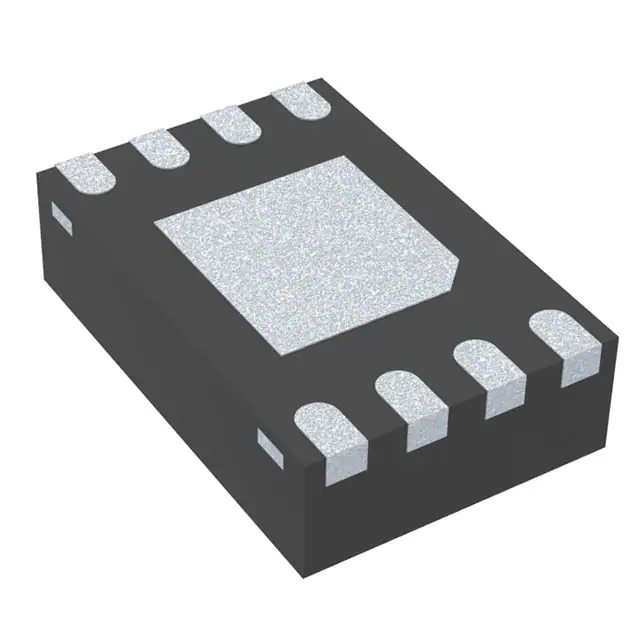
MP2721GRH-0000-P is housed in a thermally enhanced QFN-22 package (2.5mm × 3.5mm, 0.5mm pitch) with exposed thermal pad for PCB heat sinking. Pin numbering follows top-view orientation per MPS datasheet Rev. 1.1.
| Pin/Terminal | Circuit Role | Design Meaning |
|---|---|---|
| IN | Power input | Accepts 3.9–16V input; requires 1μF ceramic decoupling to PGND for EMI suppression and transient immunity. |
| SW | Switching node | Connects to power inductor; carries high di/dt buck switching waveform - routing must minimize loop area. |
| BATT | Battery terminal | Direct connection to Li-ion+; internal 14mΩ BATTFET enables NVDC path with <30mV forward drop in supplement mode. |
| SYS | System power output | Regulated 3.7–3.94V rail; powers host MCU/peripherals even during charging - no external LDO needed. |
| SCL/SDA | I²C interface | 400kHz bidirectional bus; pull-up resistors required (10kΩ to VCC) for reliable communication in noisy environments. |
| NTC1/PG/NTC2 | Dual thermal sensing | NTC1 supports JEITA cold/warm thresholds; PG/NTC2 is reconfigurable as second NTC or power-good indicator. |
| RST | Wake/reset control | Pull low ≥1.1s to exit shipping mode; pull low ≥10s to force BATTFET reset and clear OCP latch. |
| STAT/IB | Status & current monitor | Open-drain status output (blinks on fault); configurable as analog IB output (20μA/mA) for real-time battery current telemetry. |
Key Features
| Feature | Design Value |
|---|---|
| Fully programmable JEITA profile | Four independent temperature zones (cold/cool/warm/hot) with user-defined voltage/current actions - eliminates need for external thermal management IC. |
| USB BC1.2 + non-standard adapter detection | Hardware-accelerated D+/D− comparator with three voltage windows (1.2V/2.0V/2.7V) - enables reliable charging from proprietary wall adapters without firmware overhead. |
| Integrated boost converter for OTG | Configurable 5.0–5.35V output, up to 3A current limit, and 2mF capacitive load drive - powers USB peripherals directly from battery without secondary DC/DC. |
| Lockable safety registers | Write-protection bit prevents accidental modification of critical parameters (VBATT_REG, ICC, IIN_LIM) after factory programming - enhances field reliability. |
| Remote battery sensing (BATTSNS) | Dedicated Kelvin sense pin routed to battery pack + terminal - compensates for PCB trace resistance to maintain ±0.5% regulation accuracy under load. |
Applications
| Bluetooth Headphones | POS Terminals |
|---|---|
Use Scenario: Compact wireless earbuds with 300mAh battery requiring rapid 30-min recharge and zero standby drain during retail shelf storage. IC Role / Device Role / Timing Role: Primary buck charger and system power manager - delivers 2A charge current while maintaining 3.8V SYS rail for Bluetooth SoC operation. Use Value: 8.5μA shipping-mode current extends shelf life beyond 12 months; I²C-configurable 30mA termination prevents overcharge in small cells. | Use Scenario: Handheld payment terminal with dual-role battery (backup + main power) and USB-C host port for peripheral attachment. IC Role / Device Role / Timing Role: Dual-function NVDC charger + OTG boost controller - manages 5A charging from 12V adapter while powering 5V/2A receipt printer via PMID. Use Value: Integrated 3A boost converter eliminates discrete boost IC; programmable input current limit (100mA–3.2A) avoids tripping USB-C source OCP. |
| Portable Cameras | Bluetooth Speakers |
Use Scenario: Action camera with 1200mAh Li-po battery, ambient temperature range −10°C to 50°C, and requirement for safe charging across all conditions. IC Role / Device Role / Timing Role: Thermally adaptive charger with dual NTC inputs - enforces JEITA-compliant voltage reduction below 0°C and above 45°C using NTC1/NTC2. Use Value: Hardware-based JEITA execution avoids MCU dependency; ±2% boost regulation ensures stable 5V supply to image sensor and Wi-Fi module. | Use Scenario: Battery-powered speaker with USB-A input, LED status indicators, and requirement for simultaneous charging + audio playback. IC Role / Device Role / Timing Role: System power arbiter - prioritizes SYS rail stability by throttling charge current when ISYS exceeds 3.2A, preventing brownout during bass-heavy playback. Use Value: NVDC architecture maintains constant 3.8V SYS voltage regardless of battery state; STAT/IB pin drives LED brightness proportional to real-time charge current. |
Equivalent & Alternatives
The following parts are listed as comparable options for similar single-cell I²C-controlled buck charger applications.
| Alternative Part | Technical Difference | Application Difference | Selection Advice |
|---|---|---|---|
| BQ25618RTWR | Lower max charge current (3A vs. 5A); no integrated boost converter; only one NTC input. | Lacks OTG capability and dual-NTC JEITA support - unsuitable for designs requiring battery-powered peripheral hosting or wide-temperature charging. | Select if cost sensitivity outweighs OTG need and thermal requirements are limited to single-zone JEITA. |
| IP2326 | Fixed 4.2V regulation only; no I²C programmability; no USB BC1.2 detection; 2.5A max charge. | Cannot adapt to 4.35V Li-po or custom JEITA profiles - incompatible with high-capacity or wide-temp batteries. | Choose only for basic 4.2V Li-ion applications where firmware configurability and USB compatibility are unnecessary. |
Compared with BQ25618RTWR and IP2326, MP2721GRH-0000-P uniquely combines 5A charging, hardware JEITA with dual NTCs, and integrated OTG boost - making it the sole option for compact, thermally robust, multi-role portable devices needing both high-power charging and battery-sourced peripheral power.
Availability
MP2721GRH-0000-P is available at Aetrix Electronics and suitable for Bluetooth headphones, POS terminals, and portable cameras requiring stable component supply, long-term lifecycle assurance, and RoHS-compliant packaging.
Supply support for MP2721GRH-0000-P includes scheduled delivery planning, volume procurement assistance, BOM continuity management, traceable sourcing, and lifecycle availability coordination for OEM customers, industrial embedded developers, connected-device designers, and electronics production programs.
Manufacturer
Monolithic Power Systems (MPS) is a fabless semiconductor company specializing in high-efficiency power management ICs, with design centers in the US, China, and Taiwan, and global distribution through authorized partners.
The MP2721 product line targets space-constrained, battery-powered consumer and industrial devices requiring integrated charging, system power management, and USB-compliant sourcing - emphasizing thermal safety, firmware flexibility, and minimal external component count.
FAQ
What is the maximum sustainable input voltage for MP2721GRH-0000-P?
The MP2721GRH-0000-P supports a maximum continuous input voltage of 26V, verified per Absolute Maximum Ratings. This allows direct connection to 24V industrial rails or 19V laptop adapters without external clamping, though recommended operating range remains 3.9V–16V for optimal efficiency and thermal performance.
How does the MP2721GRH-0000-P handle battery over-voltage protection?
It implements hardware-based battery OVP at 103–106.5% of the programmed VBATT_REG value (e.g., 4.33V for 4.2V setting), with 1.7% hysteresis. Upon detection, the charger disables FETs and asserts INT pin - no software intervention required, ensuring fail-safe cell protection even during I²C bus failure.
Can the MP2721GRH-0000-P operate without an I²C host controller?
Yes - it boots into default configuration (VBATT_REG = 4.2V, ICC = 1040mA, IIN_LIM = 1.5A) and supports autonomous charging. However, full functionality - JEITA profile, OTG enable, dynamic current scaling, and fault logging - requires I²C initialization and runtime control.
What is the purpose of the VRNTC pin?
VRNTC provides a regulated voltage reference (equal to VCC) to bias external NTC thermistors. It powers both NTC1 and NTC2 circuits, enabling ratiometric ADC measurements that reject supply variation - critical for accurate temperature profiling across battery voltage ranges.
Does MP2721GRH-0000-P support USB On-The-Go (OTG) without additional components?
Yes - its integrated boost converter delivers 5.0–5.35V at up to 3A into loads up to 2mF, with built-in OCP and soft-start. Only external inductor, output capacitor, and optional feedback resistor (for voltage trim) are required - no external MOSFETs or controllers needed.
How is shipping mode exited after manufacturing?
Apply logic-low signal to RST pin for 0.9–1.3 seconds while VIN = 0V. This wakes the IC, enables BATTFET, and restores SYS output. The sequence is hardware-triggered and requires no I²C command - essential for automated test and final assembly line activation.
What thermal metrics define safe continuous operation?
With 2-layer PCB and 2cm² copper pour under thermal pad, θJA = 50°C/W. At TA = 25°C, max continuous power dissipation is 2W before thermal shutdown (TJ = 150°C). Derating begins above 80°C junction - configurable TJ_REG threshold allows preemptive current reduction at 60–120°C.
MP2721GRH-0000-P Specifications
- Product attributes
- Attribute value
- Manufacturer:
- Monolithic Power Systems Inc.
- Series:
- -
- Package/Case:
- 22-PowerVFQFN
- Packaging:
- Tape & Reel (TR)
- Product Status:
- Active
- Battery Chemistry:
- Lithium Ion/Polymer
- Number of Cells:
- 1
- Current - Charging:
- Constant - Programmable
- Programmable Features:
- Current, Timer, Voltage
- Fault Protection:
- Over Current, Over-Under Voltage
- Charge Current - Max:
- 5A
- Battery Pack Voltage:
- 4.6V (Max)
- Voltage - Supply (Max):
- 16V
- Interface:
- I2C
- Operating Temperature:
- -40°C ~ 125°C (TJ)
- Grade:
- -
- Qualification:
- -
- Mounting Type:
- Surface Mount
- Supplier Device Package:
- 22-QFN (2.5x3.5)
MP2721GRH-0000-P FAQ
1.How can I place an order for MP2721GRH-0000-P through Aetrix?
Please submit a Request for Quotation (RFQ) for MP2721GRH-0000-P on Aetrix. Our sales agent will provide a competitive quotation and guide you through the order confirmation once you accept the terms.
2.Are the price and stock information for MP2721GRH-0000-P reliable?
The price and inventory of MP2721GRH-0000-P are updated periodically and may fluctuate due to market conditions. Stock and pricing data are typically refreshed every 24 hours. Quotation validity for MP2721GRH-0000-P is usually 5 days.
3.What payment methods are accepted for MP2721GRH-0000-P?
We accept Wire Transfer, PayPal, Credit Card, Western Union, MoneyGram, and Escrow for MP2721GRH-0000-P transactions.
Note: Certain payment methods may incur a processing fee.
4.How is shipping managed for MP2721GRH-0000-P?
MP2721GRH-0000-P orders can be shipped via leading logistics carriers, including DHL, UPS, FedEx, TNT, or Registered Mail.
Once your MP2721GRH-0000-P order is processed, you will receive an email with the shipment details and tracking number.
Note: Tracking information may take up to 24 hours to appear. Express delivery typically takes 3–5 business days.
5.How can I obtain technical support or documentation for MP2721GRH-0000-P?
For technical support, including MP2721GRH-0000-P datasheets, pinout diagrams, or application guidance, please contact our engineering support team. They can provide detailed documentation and assistance for your MP2721GRH-0000-P requirements.
6.How does Aetrix verify that MP2721GRH-0000-P is sourced from the original manufacturer or authorized distributors?
All MP2721GRH-0000-P products on Aetrix are procured from qualified distributors and authorized channels. Our dedicated quality assurance team conducts strict verification, including traceability checks and, if necessary, third-party testing. This ensures that MP2721GRH-0000-P meets industry standards.
7.What is the process for return or replacement of MP2721GRH-0000-P?
All MP2721GRH-0000-P units undergo pre-shipment inspection (PSI). If there is an issue with MP2721GRH-0000-P, returns or replacements are accepted under the following conditions:
1.Quantity discrepancies, incorrect items, or visible external defects (such as breakage or corrosion), acknowledged by Aetrix.
2.The issue is reported within 90 days of delivery.
3.The MP2721GRH-0000-P part is unused and in its original packaging.
Return procedure for MP2721GRH-0000-P:
1.Submit a request within 90 days.
2.Obtain a Return Material Authorization (RMA) from Aetrix.
MP2721GRH-0000-P Tags

-
BQ21040DBVR
Texas Instruments

-
MCP73812T-420I/OT
Microchip Technology
-
MCP73831T-2ACI/OT
Microchip Technology
-
MCP73832T-2ACI/OT
Microchip Technology
-
MCP73831T-2DCI/OT
Microchip Technology
-
MCP73832T-2DCI/OT
Microchip Technology
-
MCP73831T-2ATI/OT
Microchip Technology
-
MCP73832T-2ATI/OT
Microchip Technology
-
MCP73831T-5ACI/OT
Microchip Technology
-
MCP73832T-2ACI/MC
Microchip Technology
-
MCP73831T-2ACI/MC
Microchip Technology
-
MCP73831T-2ATI/MC
Microchip Technology
Tech Hub

Operational amplifier guide covering op amp basics, feedback, ideal vs real op amps, common configurations, buffer circuits, offset, bias current, gain-bandwidth, slew rate, rail-to-rail limits and sel…

Jumper cables guide covering safe connection order, red and black clamp placement, final ground connection, cable gauge, length, clamp quality, copper vs CCA cables, jump starter comparison and battery…

LDO regulator guide covering low dropout voltage, power dissipation, thermal design, PSRR, output noise, capacitor stability, adjustable LDO circuits, LDO vs buck converter and datasheet selection chec…

Conditional Access Module guide covering CAM meaning, CI/CI+ interface, smart card authorization, DVB security workflow, TV and set-top box compatibility, internal electronics, ESD protection, connecto…

Guide to electronic component obsolescence covering EOL risk, PCN/PDN notices, last-time buy planning, replacement options, form-fit-function validation, counterfeit risk and BOM lifecycle management.

18650 battery guide covering lithium-ion cell basics, 3.6V/3.7V voltage, 4.2V charging, mAh and Wh capacity, protected cells, chargers, BMS, series-parallel packs, holders, welding and sourcing checks.…

Hall effect sensor guide covering working principle, linear and digital sensors, Arduino circuits, current sensing, speed detection, automotive applications, A3144 examples, signal filtering and datash…

Product Change Notification guide for electronic components, covering PCN meaning, PCN vs PDN/EOL, common change types, risk levels, form-fit-function review, engineering validation, BOM control, LTB/L…

A practical guide to blend door actuators, covering HVAC function, symptoms, location, AC and heater issues, reset and calibration, replacement cost, electrical diagnosis, compatibility checks, and rep…

Engineering guide to Raspberry Pi alternatives, covering chip-level differences, Orange Pi, ROCK, Jetson, Banana Pi, NanoPi, Compute Module, Pico, GPIO, camera, HAT compatibility, and replacement risks…


