
 My Inquiry
 My Account


Monolithic Power Systems Inc. MP2760GVT-000A-Z

- Part No.:
- MP2760GVT-000A-Z
- Manufacturer:
- Monolithic Power Systems Inc.
- Category:
- Battery Chargers
- Package:
- 30-PowerWFQFN
- Datasheet:
-
 MP2760GVT-000A-Z.pdf
- Description:
- 1-CELL TO 4-CELL BUCK-BOOST CHAR
- Quantity:
- Payment:

- Shipping:

Inventory:4,519
Please send an inquiry. Send us your inquiry, and we will respond immediately.
Product details
Overview
MP2760GVT-000A-Z from Monolithic Power Systems is an I²C-controlled buck-boost battery charger IC supporting 1–4 series Li-ion/Li-polymer cells, featuring NVDC power path management, 4V–22V input range, up to 6A charge current, and USB PD 3.0 compliance for ultrabook and tablet power systems.
For engineers reviewing the MP2760GVT-000A-Z datasheet, MP2760GVT-000A-Z pinout, MP2760GVT-000A-Z application, or MP2760GVT-000A-Z equivalent, this page delivers verified specifications, TQFN-30 package layout, thermal regulation thresholds, I²C-configurable charge/source parameters, and real-world use cases in portable computing and USB-C PD devices.
Technical Context
The MP2760 implements a synchronous four-switch buck-boost topology with integrated N-channel MOSFET drivers (ACGATE, BGATE), enabling seamless transition between buck and boost modes while maintaining regulated system voltage (VSYS_MIN) independent of battery state. It supports dual-role operation: charging from adapter input (4V–22V) and sourcing power to system (4V–21V) via IN pin.
Its embedded 10-bit ADC monitors battery current (via TS/IMON), temperature (NTC/VNTC), and input/battery voltages, feeding real-time data to I²C/SMBus registers. Safety logic enforces JEITA-compliant thermal thresholds, configurable OVP/UVP on ADP, VIN, SYS, and VBATT, plus battery missing and NTC floating detection.
Key Specifications
| Parameter | Value and Actual Design Meaning |
|---|---|
| Input Voltage Range | 4V to 22V - supports wide-input adapters including USB PD 3.0 compliant sources. |
| Charge Current | Up to 6A - programmable in 50mA steps for precise fast-charge control across cell counts. |
| Battery Voltage Range | Up to 18.72V - covers 4-cell Li-ion (4.68V/cell) with ±0.5% regulation accuracy at 25°C. |
| Source Mode Output | 4V to 21V at IN pin - configurable in 20mV steps, compliant with USB PD 3.0 sink requirements. |
| Switching Frequency | 500kHz to 1.2MHz - adjustable via register to optimize efficiency vs. EMI in compact layouts. |
| Thermal Regulation | Configurable up to 120°C - prevents thermal runaway during high-power charging without full shutdown. |
| Package | TQFN-30 (4mm × 5mm) - exposes thermal pad for PCB heat sinking in space-constrained notebooks. |
Pinout & Package
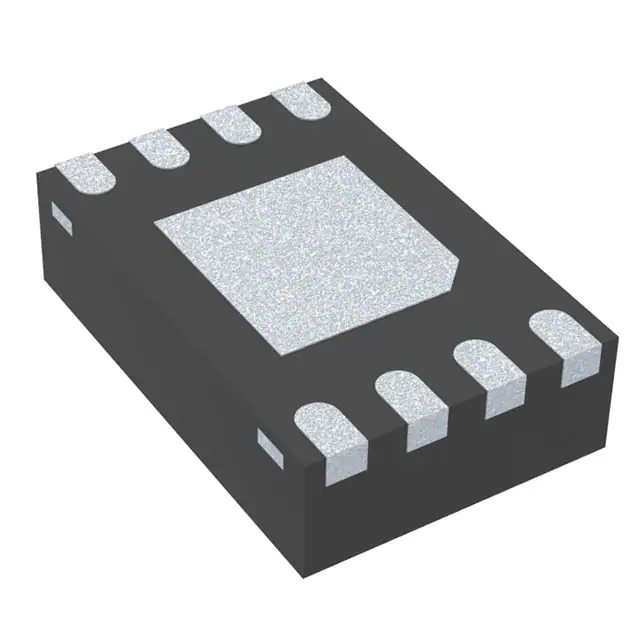
TQFN-30 (4mm × 5mm) package with exposed thermal pad; 30-pin layout optimized for high-current paths and thermal dissipation in portable power applications.
| Pin/Terminal | Circuit Role | Design Meaning |
|---|---|---|
| VCC (Pins 1, 30) | Internal LDO output | 3.6V supply for internal logic and open-drain pull-ups; requires 4.7μF ceramic capacitor to AGND. |
| SCL/SDA (Pins 4, 3) | I²C/SMBus interface | Open-drain communication lines; require external 10kΩ pull-ups to VCC for host configuration and status readback. |
| BGATE (Pin 13) | Battery FET gate driver | Drives external N-channel MOSFET to enable NVDC power path and battery supplement function. |
| ACGATE (Pin 27) | Adapter pass-through FET driver | Controls external N-MOSFET for input OVP and power pass-through; connects to MOSFET source via 1MΩ resistor. |
| TS/IMON (Pin 7) | Current/temperature sense multiplexed pin | Configurable as analog current monitor (charge/discharge) or temperature sense input for JEITA compliance. |
| SRP/SRN (Pins 15, 16, 14) | Input current sense differential pair | Measures IIN for adaptive input current limiting per USB PD specifications; ±0.5µA leakage ensures accuracy. |
Key Features
| Feature | Design Value |
|---|---|
| Narrow-Voltage DC (NVDC) Power Path | Enables system operation even with deeply discharged battery by regulating VSYS_MIN independently of VBATT. |
| USB PD 3.0 Source & Sink Compliance | Supports bidirectional 4V–21V/6A operation with I²C-configurable VIN_SRC, IIN_SRC, and fault reporting. |
| Four-Phase Charging Algorithm | Automated trickle → pre-charge → fast-charge → constant-voltage sequence with auto-recharge and timer-based termination. |
| Integrated Safety Monitoring | Dual OVP (ADP, VIN, SYS, VBATT), thermal regulation (120°C), JEITA temp zones, and battery UVLO (2.6V/cell). |
| Configurable Input Protection | Programmable VIN minimum (4.56V–18.48V) and IIN limit (0–5.8A) prevent adapter overload per USB PD spec. |
Applications
| Ultrabook Power Management | USB-C PD Tablet Charger |
|---|---|
Use Scenario: Dual-role power management in thin-and-light laptops with removable battery and USB-C port. IC Role / Device Role / Timing Role: Primary buck-boost charger and system power arbiter managing adapter-to-battery charging and battery-to-system sourcing. Use Value: Enables instant-on capability and runtime extension via NVDC, while meeting USB PD 3.0 voltage/current negotiation requirements. |
Use Scenario: High-efficiency charging and system power delivery in 2-cell Li-ion tablets with USB-C input/output. IC Role / Device Role / Timing Role: Configured as 2-cell default (-000A variant), handling 6.8–9.36V battery regulation and 4–21V source-mode output. Use Value: Delivers up to 6A charge current with ±0.5% voltage accuracy and seamless buck/boost mode transition during dynamic load changes. |
| Multi-Cell Portable Workstation | USB PD Power Bank Controller |
Use Scenario: 4-cell battery pack powering high-performance mobile workstations requiring stable 13.6–18.72V system rail. IC Role / Device Role / Timing Role: Manages 4-cell charging profile with JEITA thermal zoning and configurable 120°C thermal regulation threshold. Use Value: Prevents thermal throttling during sustained 6A charging while maintaining battery health through precise voltage and temperature control. |
Use Scenario: Bidirectional USB PD power bank supporting both charging from wall adapter and discharging to USB-C devices. IC Role / Device Role / Timing Role: Acts as source-mode regulator (VIN_SRC = 5V/9V/12V/15V/20V) with 50mA-step IIN_SRC limit and output OVP/UVP protection. Use Value: Provides certified USB PD 3.0 sink functionality with real-time status reporting via I²C, enabling smart firmware control and fault logging. |
Equivalent & Alternatives
The following parts are listed as comparable options for similar buck-boost battery charger applications.
| Alternative Part | Technical Difference | Application Difference | Selection Advice |
|---|---|---|---|
| BQ25792RTWR | TI device with integrated ADC, but no native NVDC path control; requires external BATFET for power path. | Lacks autonomous NVDC regulation-system voltage drops when battery depletes unless externally managed. | Select if prioritizing TI ecosystem compatibility and lower BOM count for non-NVDC designs. |
| ISL9241HRZ-T | Renesas part supports 1–4 cells and USB PD, but max charge current limited to 4.5A and no 20mV-step VIN_SRC tuning. | Lower source-mode resolution (50mV steps) and reduced thermal regulation granularity (fixed 110°C threshold). | Choose when 4.5A charge current suffices and simplified register mapping outweighs fine-grained USB PD tuning. |
Compared with BQ25792RTWR and ISL9241HRZ-T, MP2760GVT-000A-Z uniquely integrates NVDC path control, 6A charge capability, and 20mV-resolution source voltage tuning-enabling tighter system voltage regulation and higher power density in ultrabooks and PD-enabled tablets.
Availability
MP2760GVT-000A-Z is available at Aetrix Electronics and suitable for ultrabook power subsystems, USB-C PD tablet chargers, and multi-cell portable workstations requiring stable component supply, long-term lifecycle support, and RoHS-compliant packaging.
Supply support for MP2760GVT-000A-Z includes scheduled delivery planning, volume procurement assistance, BOM continuity management, traceable sourcing, and lifecycle availability coordination for OEM customers, industrial embedded developers, connected-device designers, and electronics production programs.
Manufacturer
Monolithic Power Systems (MPS) is a fabless semiconductor company specializing in high-performance power management ICs for computing, automotive, and industrial markets, with over 20 years of analog design expertise.
The MP2760 belongs to MPS's battery charger product line, engineered specifically for USB PD–enabled portable electronics requiring bidirectional buck-boost conversion, NVDC architecture, and comprehensive JEITA-compliant safety monitoring.
FAQ
What does the "-000A" suffix indicate in MP2760GVT-000A-Z?
The "-000A" suffix denotes the factory-default configuration for 2-cell battery applications, pre-programmed with OTP settings for 6.8–9.36V battery regulation, 6.4V minimum system voltage, and JEITA cold/cool/warm/hot thresholds aligned to common NTC thermistor curves.
How is NVDC power path implemented without external components?
NVDC is enabled via the integrated BGATE driver controlling an external N-channel MOSFET between SYS and BATT pins. The IC regulates VSYS_MIN independently using feedback from the SYS pin, allowing system operation even when VBATT falls below operational voltage.
Can MP2760GVT-000A-Z operate in source mode without battery presence?
No. The device requires a valid battery connection (VBATT > 2.6V/cell) to enable source mode. Battery UVLO detection disables all power path functions if voltage drops below threshold, preventing unsafe unregulated sourcing.
What is the role of the TS/IMON pin in charge versus source mode?
In charge mode, TS/IMON outputs an analog voltage proportional to battery charging current (±1% gain error). In source mode, it reflects discharging current magnitude, enabling real-time battery discharge monitoring without additional sense resistors.
How does the MP2760 handle USB PD voltage negotiation?
The MP2760 itself does not perform PD communication; it relies on an external PD controller (e.g., CYPD3177). That controller writes negotiated voltage/current limits into MP2760 registers (e.g., REG09h for VIN_SRC), which the IC then enforces via its internal DAC and regulation loop.
Is thermal regulation distinct from thermal shutdown?
Yes. Thermal regulation (configurable up to 120°C) reduces switching frequency and charge current to maintain die temperature below threshold. Thermal shutdown (150°C, 20°C hysteresis) forces complete power-down only if regulation fails, providing layered protection.
What package-level thermal performance can be expected on a 4-layer PCB?
With proper thermal pad soldering and copper pour, θJA is 38°C/W. At 3.29W max dissipation (TA=25°C), junction temperature rises ~125°C above ambient-confirming need for thermal regulation activation before reaching 150°C shutdown.
MP2760GVT-000A-Z Specifications
- Product attributes
- Attribute value
- Manufacturer:
- Monolithic Power Systems Inc.
- Series:
- -
- Package/Case:
- 30-PowerWFQFN
- Packaging:
- Tape & Reel (TR)
- Product Status:
- Active
- Battery Chemistry:
- Multi-Chemistry
- Number of Cells:
- 1 ~ 4
- Current - Charging:
- Constant - Programmable
- Programmable Features:
- Current, Timer, Voltage
- Fault Protection:
- Over Current, Over Temperature, Over-Under Voltage, Short Circuit
- Charge Current - Max:
- 6A
- Battery Pack Voltage:
- 18.72V (Max)
- Voltage - Supply (Max):
- 22V
- Interface:
- I2C, SMBus
- Operating Temperature:
- -40°C ~ 125°C (TJ)
- Grade:
- -
- Qualification:
- -
- Mounting Type:
- Surface Mount
- Supplier Device Package:
- 30-TQFN (4x5)
MP2760GVT-000A-Z FAQ
1.How can I place an order for MP2760GVT-000A-Z through Aetrix?
Please submit a Request for Quotation (RFQ) for MP2760GVT-000A-Z on Aetrix. Our sales agent will provide a competitive quotation and guide you through the order confirmation once you accept the terms.
2.Are the price and stock information for MP2760GVT-000A-Z reliable?
The price and inventory of MP2760GVT-000A-Z are updated periodically and may fluctuate due to market conditions. Stock and pricing data are typically refreshed every 24 hours. Quotation validity for MP2760GVT-000A-Z is usually 5 days.
3.What payment methods are accepted for MP2760GVT-000A-Z?
We accept Wire Transfer, PayPal, Credit Card, Western Union, MoneyGram, and Escrow for MP2760GVT-000A-Z transactions.
Note: Certain payment methods may incur a processing fee.
4.How is shipping managed for MP2760GVT-000A-Z?
MP2760GVT-000A-Z orders can be shipped via leading logistics carriers, including DHL, UPS, FedEx, TNT, or Registered Mail.
Once your MP2760GVT-000A-Z order is processed, you will receive an email with the shipment details and tracking number.
Note: Tracking information may take up to 24 hours to appear. Express delivery typically takes 3–5 business days.
5.How can I obtain technical support or documentation for MP2760GVT-000A-Z?
For technical support, including MP2760GVT-000A-Z datasheets, pinout diagrams, or application guidance, please contact our engineering support team. They can provide detailed documentation and assistance for your MP2760GVT-000A-Z requirements.
6.How does Aetrix verify that MP2760GVT-000A-Z is sourced from the original manufacturer or authorized distributors?
All MP2760GVT-000A-Z products on Aetrix are procured from qualified distributors and authorized channels. Our dedicated quality assurance team conducts strict verification, including traceability checks and, if necessary, third-party testing. This ensures that MP2760GVT-000A-Z meets industry standards.
7.What is the process for return or replacement of MP2760GVT-000A-Z?
All MP2760GVT-000A-Z units undergo pre-shipment inspection (PSI). If there is an issue with MP2760GVT-000A-Z, returns or replacements are accepted under the following conditions:
1.Quantity discrepancies, incorrect items, or visible external defects (such as breakage or corrosion), acknowledged by Aetrix.
2.The issue is reported within 90 days of delivery.
3.The MP2760GVT-000A-Z part is unused and in its original packaging.
Return procedure for MP2760GVT-000A-Z:
1.Submit a request within 90 days.
2.Obtain a Return Material Authorization (RMA) from Aetrix.
MP2760GVT-000A-Z Tags

-
BQ21040DBVR
Texas Instruments

-
MCP73812T-420I/OT
Microchip Technology
-
MCP73831T-2ACI/OT
Microchip Technology
-
MCP73832T-2ACI/OT
Microchip Technology
-
MCP73831T-2DCI/OT
Microchip Technology
-
MCP73832T-2DCI/OT
Microchip Technology
-
MCP73831T-2ATI/OT
Microchip Technology
-
MCP73832T-2ATI/OT
Microchip Technology
-
MCP73831T-5ACI/OT
Microchip Technology
-
MCP73832T-2ACI/MC
Microchip Technology
-
MCP73831T-2ACI/MC
Microchip Technology
-
MCP73831T-2ATI/MC
Microchip Technology
Tech Hub

Operational amplifier guide covering op amp basics, feedback, ideal vs real op amps, common configurations, buffer circuits, offset, bias current, gain-bandwidth, slew rate, rail-to-rail limits and sel…

Jumper cables guide covering safe connection order, red and black clamp placement, final ground connection, cable gauge, length, clamp quality, copper vs CCA cables, jump starter comparison and battery…

LDO regulator guide covering low dropout voltage, power dissipation, thermal design, PSRR, output noise, capacitor stability, adjustable LDO circuits, LDO vs buck converter and datasheet selection chec…

Conditional Access Module guide covering CAM meaning, CI/CI+ interface, smart card authorization, DVB security workflow, TV and set-top box compatibility, internal electronics, ESD protection, connecto…

Guide to electronic component obsolescence covering EOL risk, PCN/PDN notices, last-time buy planning, replacement options, form-fit-function validation, counterfeit risk and BOM lifecycle management.

18650 battery guide covering lithium-ion cell basics, 3.6V/3.7V voltage, 4.2V charging, mAh and Wh capacity, protected cells, chargers, BMS, series-parallel packs, holders, welding and sourcing checks.…

Hall effect sensor guide covering working principle, linear and digital sensors, Arduino circuits, current sensing, speed detection, automotive applications, A3144 examples, signal filtering and datash…

Product Change Notification guide for electronic components, covering PCN meaning, PCN vs PDN/EOL, common change types, risk levels, form-fit-function review, engineering validation, BOM control, LTB/L…

A practical guide to blend door actuators, covering HVAC function, symptoms, location, AC and heater issues, reset and calibration, replacement cost, electrical diagnosis, compatibility checks, and rep…

Engineering guide to Raspberry Pi alternatives, covering chip-level differences, Orange Pi, ROCK, Jetson, Banana Pi, NanoPi, Compute Module, Pico, GPIO, camera, HAT compatibility, and replacement risks…


