
 My Inquiry
 My Account


Monolithic Power Systems Inc. MP2930GQK-LF-P
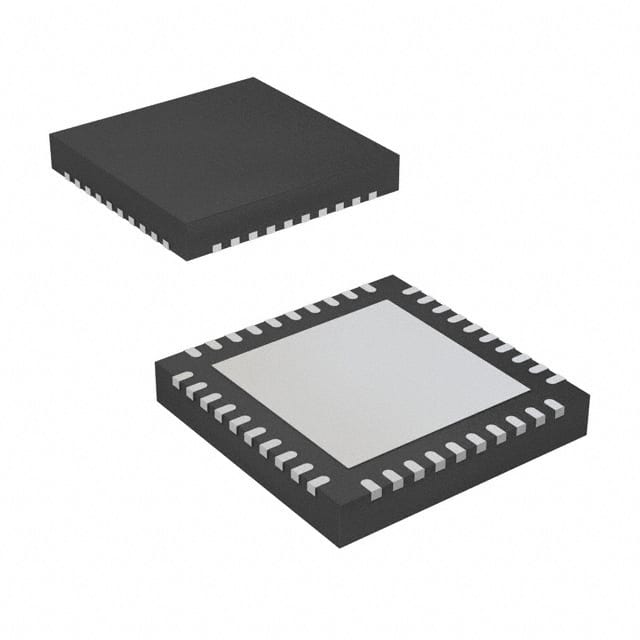
- Part No.:
- MP2930GQK-LF-P
- Manufacturer:
- Monolithic Power Systems Inc.
- Category:
- Special Purpose Regulators
- Package:
- 40-VFQFN Exposed Pad
- Datasheet:
-
 MP2930GQK-LF-P.pdf
- Description:
- IC REG CTRLR INTEL 1OUT 40QFN
- Quantity:
- Payment:

- Shipping:

Inventory:1,862
Please send an inquiry. Send us your inquiry, and we will respond immediately.
Product details
Overview
MP2930GQK-LF-P from Monolithic Power Systems is a 4-phase synchronous buck PWM controller for microprocessor core voltage regulation, featuring 8-bit DAC-based VR10/VR11 dynamic voltage identification (VID), dual-edge PWM for fast load transient response, ±50 µA current-sense accuracy per channel, and integrated voltage droop compensation. It targets high-current desktop/server CPU power delivery with precision current balancing and DCR/resistor current sensing.
For engineers reviewing the MP2930GQK-LF-P datasheet, MP2930GQK-LF-P pinout, MP2930GQK-LF-P application, or MP2930GQK-LF-P equivalent, key selection criteria include phase configurability (2/3/4-phase), VID code compatibility (VR11 vs extended VR10), 6.25 mV/bit DAC resolution, thermal monitoring via TM pin, and interoperability with MPS Intelli-phase drivers like MP86961.
Technical Context
The MP2930 implements interleaved multiphase control with programmable channel count (2/3/4) via PWMx pin strapping, using dual-edge modulation to reduce output capacitor requirements during load transients. Its remote-sense amplifier provides 20 MHz bandwidth and differential VSEN/RGND inputs for accurate output voltage regulation at the load.
Current sensing supports both inductor DCR and discrete resistor methods, with cycle-by-cycle peak-current limiting (120 µA per channel) and average-current OCP (72–98 µA). Voltage droop is implemented by injecting IAVG-proportional current into the FB node, enabling programmable load-line impedance matching.
Key Specifications
| Parameter | Value and Actual Design Meaning |
|---|---|
| Phase Configuration | 2-, 3-, or 4-phase selectable via PWM3/PWM4 pin strapping; enables scalable current handling and ripple reduction. |
| VID Resolution | 6.25 mV per bit over 8-bit ID input; supports precise dynamic voltage scaling for VR10 (extended) and VR11 protocols. |
| Switching Frequency | Adjustable 80 kHz to 1 MHz via FS pin resistor; typical 250 kHz at RT = 100 kΩ for balanced efficiency and transient response. |
| Current Sensing Accuracy | ±50 µA typical sensed current tolerance (IDROOP); ensures <±1% load-line error under DCR sensing conditions. |
| Voltage Droop Range | Programmable via external RFB; achieves load-line impedance matching per Equation (8) for stable CPU voltage under dynamic current. |
| OVP Threshold | 1.275 V before valid ID; DAC + 175 mV after valid ID; prevents processor damage during startup or fault events. |
| Thermal Monitoring | TM pin accepts NTC thermistor for inductor temperature sensing; VR_FAN/VR_HOT open-drain outputs trigger fan or shutdown at defined thresholds. |
Pinout & Package
MP2930GQK-LF-P is housed in a 40-pin QFN package (6 mm × 6 mm, 0.5 mm pitch) with exposed thermal pad. Pin numbering follows standard counter-clockwise layout from top-left corner (Pin 1 = ID6).
| Pin/Terminal | Circuit Role | Design Meaning |
|---|---|---|
| 1–8, 40 | ID[0:7] inputs | 8-bit VID code interface; internal 45 µA pull-up enables direct connection to open-drain CPU VID outputs. |
| 9 | OFS | DC offset programming pin; connects to VCC or GND to inject ±150 mV offset between REF and DAC for fine-tuning no-load voltage. |
| 10–11 | DAC / REF | DAC reference output and error amplifier inverting input; 0.1 µF capacitor stabilizes DAC transitions during VID changes. |
| 14 | IDROOP | Average-channel current mirror output; sources current proportional to total load for droop implementation at FB node. |
| 15–17 | VDIFF / RGND / VSEN | Differential remote sense interface; rejects PCB trace IR drop to regulate voltage precisely at CPU pins. |
| 18 | SD | Shutdown signal for Intelli-phase drivers (e.g., MP86961 EN); pulled low during fault or shutdown to force Hi-Z MOSFET state. |
| 20, 25–26, 31 | PWM1–PWM4 | Phase PWM outputs; PWM3/PWM4 tied to VCC configures 2-/3-phase operation; all support dual-edge modulation. |
| 21–24, 27–29, 30 | ISENx± | Differential current sense inputs per phase; supports DCR or resistive sensing with matched gain for channel balancing. |
| 32–33 | EN_PWR / EN_VTT | Power sequencing enable inputs; require >0.875 V to initiate soft-start; coordinate timing with VCC and VTT rails. |
| 34–35 | FS / SS | Frequency set (RT-to-GND) and soft-start ramp rate (RSS-to-GND); enable independent optimization of switching speed and startup behavior. |
| 36–39 | VR_RDY / VR_FAN / VR_HOT / TM | Status and thermal monitoring outputs; open-drain logic signals for system-level fault reporting and thermal management. |
Key Features
| Feature | Design Value |
|---|---|
| Configurable Phase Count | Hardware-selectable 2/3/4-phase operation via PWM pin strapping-enables design reuse across CPU power tiers without layout change. |
| Dual-Edge PWM Modulation | Simultaneous multi-phase turn-on during load steps reduces peak output capacitor RMS current by >40% versus trailing-edge only. |
| Channel Current Balancing | Active per-phase duty-cycle adjustment based on real-time ISEN comparison to IAVG; maintains ≤±3% inter-channel current mismatch at full load. |
| Dynamic VID Support | 8-bit VR11/VR10 code decoding with 6.25 mV/bit resolution and automatic ID validation-ensures compatibility with Intel Core i-series and Xeon processors. |
| Integrated Thermal Monitoring | TM pin with NTC interface and dual open-drain outputs (VR_FAN/VR_HOT) enables board-level thermal protection without external ICs. |
Applications
| Desktop CPU Power Delivery | Server Core Voltage Regulation |
|---|---|
|
Use Scenario: Regulating 1.0–1.5 V core voltage for Intel LGA1700 desktop CPUs with dynamic VID updates during turbo boost. IC Role / Device Role / Timing Role: Primary 4-phase PWM controller coordinating MP86961 Intelli-phase drivers; manages soft-start, droop, and OVP in sub-100 µs windows. Use Value: Dual-edge PWM and precise current balancing reduce output capacitance by 30% while maintaining <±10 mV regulation under 100 A/µs load steps. |
Use Scenario: High-current (≥200 A) core rail for dual-socket Xeon Scalable platforms with strict VR11 compliance and thermal derating. IC Role / Device Role / Timing Role: Multiphase controller with remote sensing and TM-based thermal throttling; interfaces with BMC via VR_RDY/VR_HOT status lines. Use Value: Programmable droop and DCR sensing eliminate need for current-sense resistors-improving efficiency by 0.5% at 150 A and reducing BOM cost. |
| Memory Subsystem POL | High-Density Power Module |
|
Use Scenario: Point-of-load regulation for DDR5 memory VDD/VDDQ rails requiring tight voltage tracking and fast transient response. IC Role / Device Role / Timing Role: 2-phase configuration (PWM3 tied to VCC) delivering 1.1 V @ 60 A; uses EN_VTT to synchronize with memory controller power-up sequence. Use Value: 20 MHz error amplifier bandwidth and 250 kHz switching frequency enable <50 µs recovery from 50% load step-meeting JEDEC DDR5 timing specs. |
Use Scenario: Embedded 4-phase controller in compact 30 mm × 30 mm power modules for AI accelerators and FPGA SoMs. IC Role / Device Role / Timing Role: Integrated controller with QFN6×6 package and thermal pad; replaces discrete gate drivers and current-sense amps in module design. Use Value: Single-chip solution reduces module footprint by 45% versus discrete controller + driver + sense IC approach while supporting 40 A/channel. |
Equivalent & Alternatives
The following parts are listed as comparable options for similar multiphase PWM controller applications.
| Alternative Part | Technical Difference | Application Difference | Selection Advice |
|---|---|---|---|
| MP2940C | Successor with enhanced VR13 support, lower quiescent current (14 mA vs 26 mA), and improved OVP hysteresis (100 mV vs 75 mV). | Required for new designs targeting Intel 13th/14th Gen Core CPUs; supports higher DAC resolution (10-bit) and faster soft-start. | Select MP2940C for new designs needing VR13 compliance, extended temperature range (–40°C to +135°C), and RoHS-6 compliance. |
| MP2964 | 6-phase capable, adds PMBus interface, digital droop tuning, and enhanced telemetry (voltage/current/temp reporting). | Suitable for server BMC-integrated power systems requiring real-time monitoring and firmware-controlled voltage margins. | Choose MP2964 when digital control, phase scalability beyond 4, or telemetry integration with host processor is required. |
Compared with MP2930GQK-LF-P, MP2940C offers backward-compatible pinout and VR11 functionality with improved efficiency and thermal specs, while MP2964 introduces digital control and 6-phase capability-making it suitable for next-generation server platforms where analog-only control is insufficient.
Availability
MP2930GQK-LF-P is available at Aetrix Electronics and suitable for desktop CPU power delivery, server core voltage regulation, and high-density power modules requiring stable component supply and long-term obsolescence management.
Supply support for MP2930GQK-LF-P includes scheduled delivery planning, volume procurement assistance, BOM continuity management, traceable sourcing, and lifecycle availability coordination for OEM customers, industrial embedded developers, connected-device designers, and electronics production programs.
Manufacturer
Monolithic Power Systems (MPS) is a fabless semiconductor company specializing in high-performance analog and power ICs, with over 20 years of expertise in DC/DC conversion and power management solutions.
The MP2930 belongs to MPS's VR controller product line, designed specifically for Intel and AMD microprocessor voltage regulation standards-including VR10, VR11, and early VR12 implementations-with emphasis on transient performance and thermal robustness.
FAQ
What is the recommended current-sense method for MP2930GQK-LF-P in high-efficiency server applications?
Inductor DCR sensing is recommended for server applications due to zero power loss and inherent thermal compensation when paired with a PTC resistor in the RC network. The MP2930's DCR sensing path supports time-constant matching (L/DCR = R×C), achieving ±1% current measurement accuracy across –40°C to +125°C without additional components.
How does MP2930GQK-LF-P implement voltage droop, and what external components are required?
MP2930GQK-LF-P implements voltage droop by sourcing current from the IDROOP pin-proportional to average channel current-into the FB node through an external resistor RFB. No op-amp or additional IC is needed; droop slope is set solely by RFB value and active phase count per Equation (8) in the datasheet.
Can MP2930GQK-LF-P be used with non-MPS gate drivers, and what interface requirements must be met?
Yes, MP2930GQK-LF-P can drive third-party gate drivers via its PWM1–PWM4 outputs, which are CMOS-compatible (0.5 V low / 4.3 V high thresholds). Drivers must accept 5 V logic levels, support Hi-Z state during shutdown (controlled via SD pin), and tolerate dual-edge timing-verified with TI UCC27282 and Infineon IRS2007STRPBF.
What is the function of the OFS pin, and how does it affect output voltage calibration?
The OFS pin allows ±150 mV DC offset injection between DAC and REF pins to correct board-level voltage drops or margin testing. Connecting OFS to VCC generates positive offset (regulated 1.6 V across ROFS); connecting to GND yields negative offset (regulated 0.4 V), enabling fine-tuning without modifying feedback resistors.
How does MP2930GQK-LF-P handle invalid or missing VID codes during startup?
If no valid VR10/VR11 ID code is detected after the td3 delay (~86 µs minimum), MP2930GQK-LF-P forces VR_RDY low and halts regulation. Recovery requires cycling EN_PWR, EN_VTT, or VCC below POR-falling threshold (3.7–4.2 V); VID code changes alone do not reset the controller.
Is MP2930GQK-LF-P RoHS-compliant and lead-free, and what is its moisture sensitivity level?
Yes, MP2930GQK-LF-P is fully RoHS-6 compliant and lead-free, with MSL Level 3 rating (floor life 168 hours at 30°C/60% RH). The "-LF" suffix confirms lead-free finish; reflow profile must follow J-STD-020D with peak temperature ≤260°C and time above 217°C limited to 60–150 seconds.
What thermal protection features are integrated, and how are they configured?
MP2930GQK-LF-P integrates three thermal functions: VR_FAN triggers at TM = 1.65 V (≈85°C with typical NTC), VR_HOT at TM = 1.4 V (≈105°C), and internal thermal shutdown at TJ = 150°C. Configuration requires only an NTC thermistor from TM to GND and pull-up resistor to VCC-no external comparators needed.
MP2930GQK-LF-P Specifications
- Product attributes
- Attribute value
- Manufacturer:
- Monolithic Power Systems Inc.
- Series:
- -
- Package/Case:
- 40-VFQFN Exposed Pad
- Packaging:
- Tape & Reel (TR)
- Product Status:
- Not For New Designs
- Applications:
- Controller, Intel VR10, VR11
- Voltage - Input:
- 4.75V ~ 5.25V
- Number of Outputs:
- 1
- Voltage - Output:
- Programmable
- Operating Temperature:
- -40°C ~ 125°C
- Grade:
- -
- Qualification:
- -
- Mounting Type:
- Surface Mount
- Supplier Device Package:
- 40-QFN (6x6)
MP2930GQK-LF-P FAQ
1.How can I place an order for MP2930GQK-LF-P through Aetrix?
Please submit a Request for Quotation (RFQ) for MP2930GQK-LF-P on Aetrix. Our sales agent will provide a competitive quotation and guide you through the order confirmation once you accept the terms.
2.Are the price and stock information for MP2930GQK-LF-P reliable?
The price and inventory of MP2930GQK-LF-P are updated periodically and may fluctuate due to market conditions. Stock and pricing data are typically refreshed every 24 hours. Quotation validity for MP2930GQK-LF-P is usually 5 days.
3.What payment methods are accepted for MP2930GQK-LF-P?
We accept Wire Transfer, PayPal, Credit Card, Western Union, MoneyGram, and Escrow for MP2930GQK-LF-P transactions.
Note: Certain payment methods may incur a processing fee.
4.How is shipping managed for MP2930GQK-LF-P?
MP2930GQK-LF-P orders can be shipped via leading logistics carriers, including DHL, UPS, FedEx, TNT, or Registered Mail.
Once your MP2930GQK-LF-P order is processed, you will receive an email with the shipment details and tracking number.
Note: Tracking information may take up to 24 hours to appear. Express delivery typically takes 3–5 business days.
5.How can I obtain technical support or documentation for MP2930GQK-LF-P?
For technical support, including MP2930GQK-LF-P datasheets, pinout diagrams, or application guidance, please contact our engineering support team. They can provide detailed documentation and assistance for your MP2930GQK-LF-P requirements.
6.How does Aetrix verify that MP2930GQK-LF-P is sourced from the original manufacturer or authorized distributors?
All MP2930GQK-LF-P products on Aetrix are procured from qualified distributors and authorized channels. Our dedicated quality assurance team conducts strict verification, including traceability checks and, if necessary, third-party testing. This ensures that MP2930GQK-LF-P meets industry standards.
7.What is the process for return or replacement of MP2930GQK-LF-P?
All MP2930GQK-LF-P units undergo pre-shipment inspection (PSI). If there is an issue with MP2930GQK-LF-P, returns or replacements are accepted under the following conditions:
1.Quantity discrepancies, incorrect items, or visible external defects (such as breakage or corrosion), acknowledged by Aetrix.
2.The issue is reported within 90 days of delivery.
3.The MP2930GQK-LF-P part is unused and in its original packaging.
Return procedure for MP2930GQK-LF-P:
1.Submit a request within 90 days.
2.Obtain a Return Material Authorization (RMA) from Aetrix.
MP2930GQK-LF-P Tags
-
TPS51206DSQR
Texas Instruments
-
TPS51200DRCR
Texas Instruments
-
TPS51200DRCT
Texas Instruments
-
TPS62740DSSR
Texas Instruments
-
TPS51100DGQR
Texas Instruments
-
NCP51200MNTXG
onsemi
-
NCP51400MNTXG
onsemi
-
RT9026GSP
Richtek USA Inc.
-
LP2998MRX/NOPB
Texas Instruments
-
TPS51200QDRCRQ1
Texas Instruments
-
DPA423GN-TL
Power Integrations
-
LM10011SD/NOPB
Texas Instruments
Tech Hub

Operational amplifier guide covering op amp basics, feedback, ideal vs real op amps, common configurations, buffer circuits, offset, bias current, gain-bandwidth, slew rate, rail-to-rail limits and sel…

Jumper cables guide covering safe connection order, red and black clamp placement, final ground connection, cable gauge, length, clamp quality, copper vs CCA cables, jump starter comparison and battery…

LDO regulator guide covering low dropout voltage, power dissipation, thermal design, PSRR, output noise, capacitor stability, adjustable LDO circuits, LDO vs buck converter and datasheet selection chec…

Conditional Access Module guide covering CAM meaning, CI/CI+ interface, smart card authorization, DVB security workflow, TV and set-top box compatibility, internal electronics, ESD protection, connecto…

Guide to electronic component obsolescence covering EOL risk, PCN/PDN notices, last-time buy planning, replacement options, form-fit-function validation, counterfeit risk and BOM lifecycle management.

18650 battery guide covering lithium-ion cell basics, 3.6V/3.7V voltage, 4.2V charging, mAh and Wh capacity, protected cells, chargers, BMS, series-parallel packs, holders, welding and sourcing checks.…

Hall effect sensor guide covering working principle, linear and digital sensors, Arduino circuits, current sensing, speed detection, automotive applications, A3144 examples, signal filtering and datash…

Product Change Notification guide for electronic components, covering PCN meaning, PCN vs PDN/EOL, common change types, risk levels, form-fit-function review, engineering validation, BOM control, LTB/L…

A practical guide to blend door actuators, covering HVAC function, symptoms, location, AC and heater issues, reset and calibration, replacement cost, electrical diagnosis, compatibility checks, and rep…

Engineering guide to Raspberry Pi alternatives, covering chip-level differences, Orange Pi, ROCK, Jetson, Banana Pi, NanoPi, Compute Module, Pico, GPIO, camera, HAT compatibility, and replacement risks…


