
 My Inquiry
 My Account


Monolithic Power Systems Inc. MP2930GQK-LF-Z
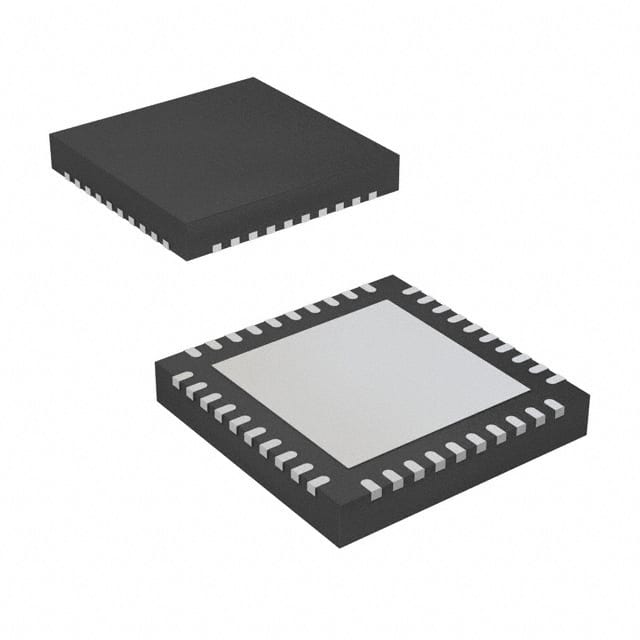
- Part No.:
- MP2930GQK-LF-Z
- Manufacturer:
- Monolithic Power Systems Inc.
- Category:
- Special Purpose Regulators
- Package:
- 40-VFQFN Exposed Pad
- Datasheet:
-
 MP2930GQK-LF-Z.pdf
- Description:
- IC REG CTRLR INTEL 1OUT 40QFN
- Quantity:
- Payment:

- Shipping:

Inventory:2,076
Please send an inquiry. Send us your inquiry, and we will respond immediately.
Product details
Overview
MP2930GQK-LF-Z from Monolithic Power Systems is a 4-phase synchronous buck PWM controller for microprocessor core voltage regulation, featuring 8-bit VR10/VR11 DAC code input (6.25 mV/bit), dual-edge PWM mode for fast load transient response, and precision current balancing across all active phases. It supports 2-, 3-, or 4-phase operation with DCR/resistor current sensing and integrated voltage droop for load-line regulation in server and desktop CPU power delivery.
For engineers reviewing the MP2930GQK-LF-Z datasheet, MP2930GQK-LF-Z pinout, MP2930GQK-LF-Z application, or MP2930GQK-LF-Z equivalent, key selection criteria include phase configurability, remote-sense accuracy (20 MHz bandwidth), adjustable switching frequency (0.08–1.0 MHz), thermal monitoring via TM pin, and compatibility with MPS Intelli-phase drivers like MP86961.
Technical Context
The MP2930 implements interleaved multiphase control with programmable channel count (2/3/4) and symmetric phase timing determined by external resistor on FS pin. Its dual-edge PWM modulator enables simultaneous multi-phase turn-on during load transients to reduce output capacitor requirements.
Current sensing uses either precision DCR networks (RC time constant matched to L/DCR) or discrete sense resistors, feeding into per-channel current comparators and an averaging circuit for real-time channel-current balance. The error amplifier features ≥80 dB open-loop gain and ≥20 MHz bandwidth, driving a sawtooth-comparing PWM generator with remote-sense differential amplifier (VDIFF = VSEN − RGND).
Key Specifications
| Parameter | Value and Actual Design Meaning |
|---|---|
| Phase Count | Configurable 2-, 3-, or 4-phase operation via PWMx pin strapping - enables flexible power stage scaling for CPU VR designs. |
| Switching Frequency | 0.08–1.0 MHz, set by resistor on FS pin - allows optimization of efficiency vs. size for 12 V input, 0.6–1.6 V output applications. |
| DAC Resolution & Step | 8-bit ID input, 6.25 mV/bit step - provides precise dynamic voltage identification compliant with VR10 and VR11 specifications. |
| Current Sensing | Supports both DCR and resistive sensing - enables lossless current measurement or higher-accuracy discrete sensing with cycle-by-cycle OCP. |
| Voltage Droop Accuracy | ±0.5% ID system accuracy over 0°C–70°C - ensures tight load-line regulation critical for stable microprocessor core voltage under varying current. |
| Remote Sense Bandwidth | 20 MHz - delivers fast feedback path response for high-frequency load transients in modern CPU power delivery. |
| OVP Threshold | 175 mV above DAC voltage after valid ID - protects CPU from overvoltage with dual-action shutdown (PWM low → Hi-Z + SD assertion). |
| Thermal Monitoring | TM pin accepts NTC thermistor - enables inductor temperature tracking for adaptive fan control (VR_FAN) and hot-alert (VR_HOT). |
Pinout & Package
MP2930GQK-LF-Z is housed in a 40-pin QFN package (6 mm × 6 mm, 0.5 mm pitch) with exposed thermal pad. Pin functions are validated per Monolithic Power Systems Rev. 1.01 datasheet (April 2012).
| Pin/Terminal | Circuit Role | Design Meaning |
|---|---|---|
| 1–7, 40 | ID[6:0] & ID7 | 8-bit VR code inputs - determine DAC reference voltage; internal 45 µA pull-up enables direct interface with open-drain VID sources. |
| 8 | VRSEL | VR10/VR11 mode select - tied to GND for extended VR10 code, floated/high for VR11 - sets DAC LSB weight and range mapping. |
| 9 | OFS | Offset programming terminal - connects to VCC (for +1.6 V regulated offset) or GND (for −0.4 V offset) to adjust no-load output voltage. |
| 10–11 | DAC / REF | DAC output and error amp reference - forms precision feedback node; 0.1 µF capacitor between REF and GND suppresses VID transition noise. |
| 14 | IDROOP | Average current proportional output - sinks current proportional to total load current for accurate droop implementation and OCP averaging. |
| 15–17 | VDIFF / RGND / VSEN | Differential remote sense interface - rejects PCB IR drop; VDIFF drives error amp inverting input for true point-of-load regulation. |
| 18 | SD | Shutdown signal for Intelli-phase drivers - pulled low during fault or shutdown to force MP86961 into Hi-Z state and disable power stage. |
| 20, 25–26, 31 | PWM1–PWM4 | Phase PWM outputs - configured as 2/3/4-phase by strapping unused PWM pins to VCC; drive external gate drivers (e.g., MP86961). |
| 21–22, 27–28, 29–30, 23–24 | ISENx+/− | Differential current sense inputs - accept DCR or resistor-based signals; enable per-phase current limiting and channel balancing. |
| 32–33 | EN_PWR / EN_VTT | Sequencing enable inputs - require >0.875 V to exit shutdown; coordinate startup with 5 V rail and VTT regulator for safe CPU power-up. |
| 34–35 | FS / SS | Frequency and soft-start ramp rate setting - resistor-to-GND on FS sets fSW; resistor on SS sets soft-start slew rate (0.625–6.25 mV/µs). |
| 36–39 | VR_RDY / VR_FAN / VR_HOT / TM | Status and thermal monitoring - open-drain logic outputs (VR_RDY high after soft-start); TM accepts NTC for inductor temp sensing. |
Key Features
| Feature | Design Value |
|---|---|
| Configurable multiphase topology | 2-/3-/4-phase operation selected by PWM pin strapping - eliminates need for multiple part numbers across platform variants. |
| Dual-edge transient response | Simultaneous multi-phase turn-on during load steps - reduces peak output voltage deviation and cuts required bulk capacitance by up to 40%. |
| Integrated channel-current balancing | Per-phase current sensing + average current calculation - maintains ≤±3% current mismatch across channels at full load, preventing thermal imbalance. |
| Programmable voltage droop | Load-line regulation via IDROOP current and external RFB - achieves precise droop impedance matching to CPU VR spec without external op-amps. |
| Thermal-aware protection | NTC-based TM pin with dedicated VR_FAN/VR_HOT outputs - enables closed-loop fan control and early overtemperature warning before VR shutdown. |
| Intelli-phase driver coordination | SD pin interface with MP86961 - synchronizes controller shutdown with gate driver disable, eliminating shoot-through risk during faults. |
Applications
| Desktop CPU Core VR | Server Processor Power |
|---|---|
|
Use Scenario: Regulating 0.6–1.6 V core voltage for Intel LGA1700 or AMD AM5 desktop CPUs with dynamic VID updates. IC Role / Device Role / Timing Role: Primary 4-phase PWM controller coordinating MP86961 gate drivers; manages VID decoding, droop, and remote sense. Use Value: Enables <1% output voltage deviation under 50 A/µs load steps while supporting VR11-compliant dynamic voltage scaling. |
Use Scenario: High-current core power delivery for dual-socket Xeon Scalable or EPYC processors in 1U/2U rack servers. IC Role / Device Role / Timing Role: Multiphase controller with thermal monitoring (TM pin) and VR_RDY sequencing for BIOS handoff and BMC supervision. Use Value: Delivers >300 A total output with balanced per-phase current and real-time inductor temperature feedback for predictive thermal management. |
| Memory Subsystem POL | AI Accelerator VR Module |
|
Use Scenario: Point-of-load regulation for DDR5 memory VDD/VDDQ rails requiring tight voltage tolerance and fast transient response. IC Role / Device Role / Timing Role: 2-phase configuration (PWM3 strapped to VCC) with DCR sensing for compact, high-efficiency memory VR design. Use Value: Achieves <500 µs soft-start and ±5 mV load regulation across 0–60 A, meeting JEDEC DDR5 VDDQ specification. |
Use Scenario: Core voltage regulation for GPU or AI ASICs with aggressive load transients (>100 A/µs) and thermal constraints. IC Role / Device Role / Timing Role: 4-phase controller with dual-edge PWM and TM-based thermal derating - interfaces with FPGA-based system manager. Use Value: Supports dynamic frequency scaling with sub-100 ns OVP reaction and coordinated shutdown via SD pin to protect expensive compute silicon. |
Equivalent & Alternatives
The following parts are listed as comparable options for similar multiphase PWM controller applications.
| Alternative Part | Technical Difference | Application Difference | Selection Advice |
|---|---|---|---|
| MP2940C | Successor with enhanced VR13/IMVP9 support, lower quiescent current (15 mA typ), and improved DAC linearity (±0.3% ID). | Required for new designs targeting Intel 13th/14th Gen Core or AMD Ryzen 7000+ platforms with IMVP9 compliance. | Select MP2940C for new designs needing VR13/IMVP9 support, extended temperature range (−40°C to +125°C), and lower power consumption. |
| MP2964 | 6-phase controller with integrated MOSFET drivers, 0.5–2.0 MHz fSW, and digital telemetry interface (PMBus 1.3). | Suitable for high-power AI accelerators or next-gen server CPUs requiring >400 A output and telemetry-based health monitoring. | Choose MP2964 when phase count >4, integrated drivers, or PMBus telemetry are required - not a drop-in replacement for MP2930. |
Compared with MP2930GQK-LF-Z, MP2940C offers tighter DAC accuracy and VR13 readiness for future-proofing, while MP2964 adds phase count, integration, and digital control at the cost of increased complexity and BOM count - MP2930 remains optimal for cost-sensitive VR10/VR11 desktop/server designs where EOL status is managed via inventory planning.
Availability
MP2930GQK-LF-Z is available at Aetrix Electronics and suitable for desktop CPU core VR, server processor power, and memory subsystem POL applications requiring stable component supply amid end-of-life transitions.
Supply support for MP2930GQK-LF-Z includes scheduled delivery planning, volume procurement assistance, BOM continuity management, traceable sourcing, and lifecycle availability coordination for OEM customers, industrial embedded developers, connected-device designers, and electronics production programs.
Manufacturer
Monolithic Power Systems (MPS) is a fabless semiconductor company specializing in high-performance analog and power ICs, with design centers in the US, China, and Taiwan, and global manufacturing partnerships.
The MP2930 belongs to MPS's VR controller product line, engineered specifically for high-efficiency, multi-phase CPU and GPU core voltage regulation with emphasis on transient response, thermal intelligence, and VR standard compliance.
FAQ
Is MP2930GQK-LF-Z still in production?
No - MP2930 is officially end-of-life per MPS documentation (Rev. 1.01, April 2012). Aetrix Electronics maintains limited legacy stock for existing designs and provides migration support to MP2940C or MP2964 with pin-compatible layout guidance and VR spec alignment analysis.
What is the function of the OFS pin, and how is it configured?
The OFS pin programs a DC offset between DAC and REF to adjust no-load output voltage. Connect OFS to VCC via resistor for +1.6 V-regulated offset (positive adjustment), or to GND for −0.4 V-regulated offset (negative adjustment, max 150 mV). Leaving OFS unconnected disables offset.
How does MP2930 achieve current balancing across phases?
MP2930 measures per-phase current via ISENx+/− inputs, computes average current (IAVG), then compares each channel's sensed current to IAVG. It dynamically adjusts individual PWM duty cycles to maintain ≤±3% current mismatch - confirmed in electrical characteristics tables and block diagram feedback paths.
Can MP2930GQK-LF-Z be used with non-MPS gate drivers?
Yes - MP2930 outputs standard logic-level PWM signals (0.5 V low / 4.3 V high thresholds) compatible with third-party gate drivers. However, the SD pin is optimized for MPS Intelli-phase drivers (e.g., MP86961); interfacing with other drivers requires external logic to replicate Hi-Z shutdown behavior.
What is the purpose of the VRSEL pin, and how does it affect VID decoding?
VRSEL selects between VR10 extended code (VRSEL = GND) and VR11 code (VRSEL = floating or high). This changes the DAC's LSB weight from 6.25 mV (VR11) to 5 mV (extended VR10), altering the mapping between ID bits and output voltage - verified in the "8-Bit ID Input" feature description and electrical specs.
Does MP2930 support DCR current sensing with temperature compensation?
Yes - MP2930 supports DCR sensing using an RC network matched to L/DCR. For temperature compensation, MPS recommends using a PTC resistor in series with the sense network to counteract DCR drift, as explicitly stated in the "Inductor DCR Sensing" section of the datasheet.
How is overvoltage protection triggered, and what actions follow?
OVP triggers at DAC + 175 mV after valid ID detection. First, all PWM outputs go low within >20 ns to activate low-side FETs; then, when VDIFF falls below DAC + 75 mV, PWM enters Hi-Z and SD pin pulls low to disable external drivers - both actions are hardware-asserted and require VCC/EN reset to recover.
MP2930GQK-LF-Z Specifications
- Product attributes
- Attribute value
- Manufacturer:
- Monolithic Power Systems Inc.
- Series:
- -
- Package/Case:
- 40-VFQFN Exposed Pad
- Packaging:
- Tape & Reel (TR)
- Product Status:
- Not For New Designs
- Applications:
- Controller, Intel VR10, VR11
- Voltage - Input:
- 4.75V ~ 5.25V
- Number of Outputs:
- 1
- Voltage - Output:
- Programmable
- Operating Temperature:
- -40°C ~ 125°C
- Grade:
- -
- Qualification:
- -
- Mounting Type:
- Surface Mount
- Supplier Device Package:
- 40-QFN (6x6)
MP2930GQK-LF-Z FAQ
1.How can I place an order for MP2930GQK-LF-Z through Aetrix?
Please submit a Request for Quotation (RFQ) for MP2930GQK-LF-Z on Aetrix. Our sales agent will provide a competitive quotation and guide you through the order confirmation once you accept the terms.
2.Are the price and stock information for MP2930GQK-LF-Z reliable?
The price and inventory of MP2930GQK-LF-Z are updated periodically and may fluctuate due to market conditions. Stock and pricing data are typically refreshed every 24 hours. Quotation validity for MP2930GQK-LF-Z is usually 5 days.
3.What payment methods are accepted for MP2930GQK-LF-Z?
We accept Wire Transfer, PayPal, Credit Card, Western Union, MoneyGram, and Escrow for MP2930GQK-LF-Z transactions.
Note: Certain payment methods may incur a processing fee.
4.How is shipping managed for MP2930GQK-LF-Z?
MP2930GQK-LF-Z orders can be shipped via leading logistics carriers, including DHL, UPS, FedEx, TNT, or Registered Mail.
Once your MP2930GQK-LF-Z order is processed, you will receive an email with the shipment details and tracking number.
Note: Tracking information may take up to 24 hours to appear. Express delivery typically takes 3–5 business days.
5.How can I obtain technical support or documentation for MP2930GQK-LF-Z?
For technical support, including MP2930GQK-LF-Z datasheets, pinout diagrams, or application guidance, please contact our engineering support team. They can provide detailed documentation and assistance for your MP2930GQK-LF-Z requirements.
6.How does Aetrix verify that MP2930GQK-LF-Z is sourced from the original manufacturer or authorized distributors?
All MP2930GQK-LF-Z products on Aetrix are procured from qualified distributors and authorized channels. Our dedicated quality assurance team conducts strict verification, including traceability checks and, if necessary, third-party testing. This ensures that MP2930GQK-LF-Z meets industry standards.
7.What is the process for return or replacement of MP2930GQK-LF-Z?
All MP2930GQK-LF-Z units undergo pre-shipment inspection (PSI). If there is an issue with MP2930GQK-LF-Z, returns or replacements are accepted under the following conditions:
1.Quantity discrepancies, incorrect items, or visible external defects (such as breakage or corrosion), acknowledged by Aetrix.
2.The issue is reported within 90 days of delivery.
3.The MP2930GQK-LF-Z part is unused and in its original packaging.
Return procedure for MP2930GQK-LF-Z:
1.Submit a request within 90 days.
2.Obtain a Return Material Authorization (RMA) from Aetrix.
MP2930GQK-LF-Z Tags
-
TPS51206DSQR
Texas Instruments
-
TPS51200DRCR
Texas Instruments
-
TPS51200DRCT
Texas Instruments
-
TPS62740DSSR
Texas Instruments
-
TPS51100DGQR
Texas Instruments
-
NCP51200MNTXG
onsemi
-
NCP51400MNTXG
onsemi
-
RT9026GSP
Richtek USA Inc.
-
LP2998MRX/NOPB
Texas Instruments
-
TPS51200QDRCRQ1
Texas Instruments
-
DPA423GN-TL
Power Integrations
-
LM10011SD/NOPB
Texas Instruments
Tech Hub

Operational amplifier guide covering op amp basics, feedback, ideal vs real op amps, common configurations, buffer circuits, offset, bias current, gain-bandwidth, slew rate, rail-to-rail limits and sel…

Jumper cables guide covering safe connection order, red and black clamp placement, final ground connection, cable gauge, length, clamp quality, copper vs CCA cables, jump starter comparison and battery…

LDO regulator guide covering low dropout voltage, power dissipation, thermal design, PSRR, output noise, capacitor stability, adjustable LDO circuits, LDO vs buck converter and datasheet selection chec…

Conditional Access Module guide covering CAM meaning, CI/CI+ interface, smart card authorization, DVB security workflow, TV and set-top box compatibility, internal electronics, ESD protection, connecto…

Guide to electronic component obsolescence covering EOL risk, PCN/PDN notices, last-time buy planning, replacement options, form-fit-function validation, counterfeit risk and BOM lifecycle management.

18650 battery guide covering lithium-ion cell basics, 3.6V/3.7V voltage, 4.2V charging, mAh and Wh capacity, protected cells, chargers, BMS, series-parallel packs, holders, welding and sourcing checks.…

Hall effect sensor guide covering working principle, linear and digital sensors, Arduino circuits, current sensing, speed detection, automotive applications, A3144 examples, signal filtering and datash…

Product Change Notification guide for electronic components, covering PCN meaning, PCN vs PDN/EOL, common change types, risk levels, form-fit-function review, engineering validation, BOM control, LTB/L…

A practical guide to blend door actuators, covering HVAC function, symptoms, location, AC and heater issues, reset and calibration, replacement cost, electrical diagnosis, compatibility checks, and rep…

Engineering guide to Raspberry Pi alternatives, covering chip-level differences, Orange Pi, ROCK, Jetson, Banana Pi, NanoPi, Compute Module, Pico, GPIO, camera, HAT compatibility, and replacement risks…


