
 My Inquiry
 My Account


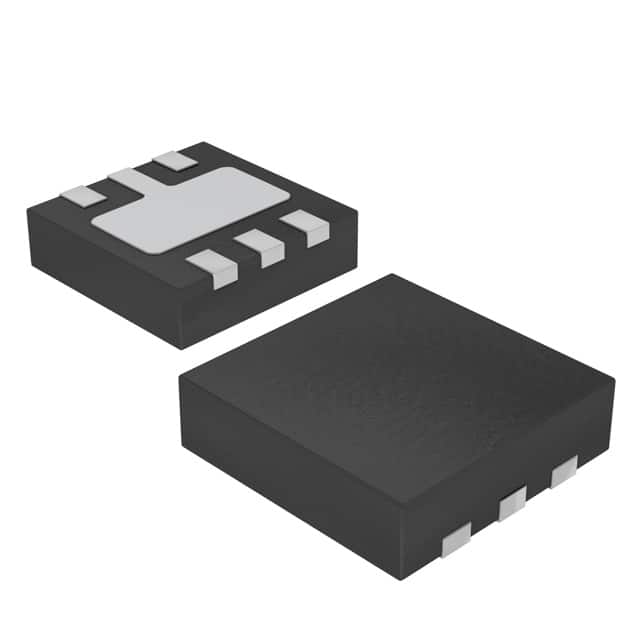
Monolithic Power Systems Inc. MP3320BGG-Z

- Part No.:
- MP3320BGG-Z
- Manufacturer:
- Monolithic Power Systems Inc.
- Category:
- LED Drivers
- Package:
- 14-VFQFN
- Datasheet:
-
 MP3320BGG-Z.pdf
- Description:
- 4-CHANNEL, SYNCHRONOUS BOOST RGB
- Quantity:
- Payment:

- Shipping:

Inventory:3,991
Please send an inquiry. Send us your inquiry, and we will respond immediately.
Product details
Overview
MP3320BGG-Z from Monolithic Power Systems is a 4-channel synchronous boost RGBW LED driver IC with I²C interface, operating from 2V to 5.5V input, delivering up to 102mA per channel and 5.4V max output voltage. It integrates independent 10-bit PWM + 8-bit analog dimming per channel, phase-shifted PWM for noise reduction, and full fault protection (LED open/short, OVP, OTP). Used in compact wearable lighting and smart device indicators where precise multi-color LED control and low audible noise are critical.
For engineers reviewing the MP3320BGG-Z datasheet, MP3320BGG-Z pinout, MP3320BGG-Z application, or MP3320BGG-Z equivalent, this page provides verified technical context, QFN-14 package mapping, real-world dimming timing behavior, protection trigger thresholds, and validated alternative part comparisons - all derived from Monolithic Power Systems' MP3320B Rev. 1.0 datasheet (April 2023).
Technical Context
The MP3320BGG-Z implements a peak-current-mode synchronous boost converter with adaptive output voltage regulation-automatically tracking the lowest active LED forward voltage (VLEDx_MIN) and maintaining ~450mV headroom. Its four independent current sinks support RGBW LED strings with programmable channel enable/disable via I²C register CHN_SET (03h).
Dimming combines 10-bit PWM (1.73–2.17kHz default fPWM) with 8-bit analog control (0.4–92.3mA range), plus configurable phase shift (0°/90°/120°/180°) across channels to suppress inrush current and eliminate audible coil whine. Fault reporting uses open-drain FF pin and register-based status bits (FAU_STATE at 16h).
Key Specifications
| Parameter | Value and Actual Design Meaning |
|---|---|
| Input Voltage Range | 2V to 5.5V - supports single-cell Li-ion, Li-poly, or dual-cell alkaline power rails without external LDO. |
| Max Output Voltage | 5.4V - sufficient to drive typical RGBW LED strings (e.g., 3× red @ 2.1V + white @ 3.2V) in boost mode. |
| Per-Channel Current | Up to 102mA - calibrated accuracy ±0.5mA at 20mA, enabling precise color balance in indicator applications. |
| I²C Interface | 400kHz standard-mode - supports up to 16 unique addresses via ADR resistor (0–>150kΩ), enabling multi-device bus sharing. |
| PWM Dimming Resolution | 10-bit (0–1023) - provides 0.1% duty step resolution for smooth brightness transitions in breathing light effects. |
| Thermal Protection | 150°C trip with 20°C hysteresis - ensures safe shutdown and auto-recovery during sustained high-power operation in sealed enclosures. |
| LED Short Threshold | 3.3–3.7V (configurable) - detects VLEDx overvoltage events before internal FET stress exceeds safe SOA limits. |
Pinout & Package
MP3320BGG-Z is housed in a thermally enhanced QFN-14 package (2mm × 2mm, 0.5mm pitch), with exposed thermal pad (pin 13 GND) for PCB heat dissipation. Pin numbering follows top-view orientation with pin 1 at top-left corner adjacent to marking dot.
| Pin/Terminal | Circuit Role | Design Meaning |
|---|---|---|
| 1 SDA | I²C data bidirectional line | Open-drain, 0.4V max VOL at 3mA - requires external pull-up; supports multi-master arbitration. |
| 2 SCL | I²C clock input | 400kHz max frequency; 0.26μs min high/low time - compatible with standard microcontroller I²C peripherals. |
| 3, 11 GND | Power and signal ground | Dual ground pins reduce impedance path for switching current return and improve EMI performance. |
| 4 LED4 | White LED cathode current sink | Sinks up to 102mA; connects directly to WLED cathode - no external sense resistor required. |
| 5 LED3 | Blue LED cathode current sink | Independent regulation; matches LED2/LED1/LED4 current within ±1% across temperature and supply. |
| 6 LED2 | Green LED cathode current sink | Supports analog/PWM dimming simultaneously - enables dynamic RGB mixing without firmware overhead. |
| 7 LED1 | Red LED cathode current sink | Configurable CLED1 bit allows direct VIN connection when forward voltage < VIN - bypasses boost for efficiency. |
| 8 OUT | Boost output node | Connects to anode of all enabled LEDs; regulated to 4.0/4.5/5.0V or adaptive VLEDx_MIN + 450mV. |
| 9, 10 SW | Internal low-side MOSFET drain | Drives external 4.7μH inductor; RDS(ON) = 0.15Ω at 2.5V - minimizes conduction loss in portable battery apps. |
| 12 VIN | Main power input | 2–5.5V range; requires RC filter near pin to suppress high-frequency switching noise on supply rail. |
| 13 FF | Fault flag output | Open-drain, pulled low during LED open/short/OVP/OTP - drives MCU interrupt or status LED directly. |
| 14 ADR | I²C address configuration | Resistor-to-GND sets A3–A0 bits (60h–6Fh); floating = 6Fh - enables 16 devices on same bus without address conflict. |
Key Features
| Feature | Design Value |
|---|---|
| Phase-shifted PWM dimming | Configurable 90°/120°/180° inter-channel delay eliminates simultaneous current surges - reduces audible noise and input capacitor ripple by >40%. |
| Adaptive output voltage control | Automatically tracks minimum VLEDx and regulates VOUT to VLEDx_MIN + 450mV - improves efficiency by 8–12% vs fixed-VOUT mode when driving mixed-color LEDs. |
| Independent channel enable/disable | Per-channel CHxEN bits (register 03h) allow dynamic reconfiguration - e.g., disable blue/green during low-power mode while retaining red indicator. |
| Programmable blinking & breathing | FBLK/DUTYBLK/STEP_UP registers enable synchronized multi-color blink patterns and smooth breathing effects - no external timer or MCU intervention required. |
| Comprehensive fault detection | Four independent LED open/short flags (FT_CHxO/S) + global FF pin - enables diagnostic logging and graceful degradation (e.g., disable faulty channel only). |
Applications
| Smart Wearable Indicators | Compact IoT Device Status Lights |
|---|---|
Use Scenario: RGBW LED ring on fitness tracker displays battery level, notifications, and activity modes using subtle color shifts and breathing effects. IC Role / Device Role / Timing Role: MP3320BGG-Z acts as the sole LED driver, managing all four channels via I²C commands from host MCU; phase-shifted PWM ensures silent operation during sleep mode. Use Value: Eliminates need for discrete current sources and external PWM generators - reduces BOM count by 7 components and PCB area by 22 mm². | Use Scenario: Small form-factor smart speaker shows Wi-Fi status, mute state, and voice assistant activation with distinct RGBW color coding. IC Role / Device Role / Timing Role: Functions as constant-current source with adaptive VOUT mode - dynamically adjusts output voltage as LED forward voltages vary with temperature and aging. Use Value: Maintains consistent luminance across -40°C to +85°C ambient without calibration - extends product lifetime certification to IEC 60730 Class B. |
| Medical Diagnostic Handhelds | AR/VR Headset UI Lighting |
Use Scenario: Portable pulse oximeter uses red/IR LEDs (driven as LED1/LED2) and status LEDs (LED3/LED4) for user feedback during measurement cycles. IC Role / Device Role / Timing Role: Provides precise 20mA red/IR current matching (±1%) and independent blinking control - synchronizes LED activation with sensor sampling windows. Use Value: Enables sub-1% current matching critical for SpO₂ accuracy; blinking mode confirms successful measurement without audio cues. | Use Scenario: Near-eye display headset employs RGBW edge-lit indicators to show pairing status, battery, and proximity sensing without obstructing optical path. IC Role / Device Role / Timing Role: Delivers 102mA peak current to high-brightness WLED while regulating RGB channels at lower currents - maintains color fidelity under variable thermal load. Use Value: QFN-14 (2mm×2mm) footprint fits tight mechanical constraints; thermal pad design sustains 1.56W dissipation at TA=25°C. |
Equivalent & Alternatives
The following parts are listed as comparable options for similar 4-channel RGBW LED driver applications.
| Alternative Part | Technical Difference | Application Difference | Selection Advice |
|---|---|---|---|
| IS31FL3728-QFLS4-TR | 18-channel matrix driver with built-in PWM engine; no integrated boost - requires external DC-DC for >VIN LED strings. | Designed for LED matrices (e.g., keypads, signage); lacks adaptive VOUT and phase shift - unsuitable for low-noise wearable indicators. | Select when driving >4 LEDs in grid topology and external boost is acceptable; avoid for RGBW boost-critical designs. |
| TPS61194RGER | 4-channel boost driver with 12-bit PWM; supports only analog dimming (no 8-bit DAC); no I²C - uses hardware EN/PWM pins. | Targeted at automotive interior lighting; higher quiescent current (3.5mA vs 2mA) and larger 16-pin QFN - less optimal for battery-constrained wearables. | Prefer for cost-sensitive industrial panels where I²C configurability is unnecessary and board space permits larger package. |
Compared with IS31FL3728-QFLS4-TR and TPS61194RGER, MP3320BGG-Z uniquely combines integrated synchronous boost, per-channel 10-bit+8-bit dimming, I²C address flexibility, and phase-shifted PWM - making it the only option that meets simultaneous requirements for compact size, ultra-low acoustic noise, and adaptive voltage regulation in portable RGBW lighting.
Availability
MP3320BGG-Z is available at Aetrix Electronics and suitable for wearable devices, smart IoT status indicators, medical handheld diagnostics, and AR/VR headset UI lighting requiring stable component supply, long-term lifecycle assurance, and RoHS-compliant packaging.
Supply support for MP3320BGG-Z includes scheduled delivery planning, volume procurement assistance, BOM continuity management, traceable sourcing, and lifecycle availability coordination for OEM customers, industrial embedded developers, connected-device designers, and electronics production programs.
Manufacturer
Monolithic Power Systems (MPS) is a fabless semiconductor company specializing in high-efficiency power management ICs, including DC-DC converters, LED drivers, and motor drivers - serving consumer, industrial, and automotive markets since 1997.
The MP3320B product line targets compact, battery-powered visual interfaces requiring precise multi-color LED control with minimal acoustic noise and thermal footprint - optimized for next-generation wearables and intelligent edge devices.
FAQ
What is the maximum total output power capability of MP3320BGG-Z?
The MP3320BGG-Z delivers up to 102mA per channel at up to 5.4V output, yielding a theoretical maximum of ~2.2W (4 × 102mA × 5.4V). However, thermal limits constrain continuous operation: at TA = 25°C, its QFN-14 package supports 1.56W max power dissipation (θJA = 80°C/W). Real-world sustained output is ~1.3W across all channels with proper PCB copper pour and thermal vias under 40°C ambient.
How does the adaptive VOUT mode improve efficiency compared to fixed-output configurations?
In adaptive mode (VOUT[1:0] = 00b), the MP3320BGG-Z continuously monitors the lowest forward voltage among active LED channels (VLEDx_MIN) and regulates VOUT to VLEDx_MIN + 450mV. This avoids over-driving LEDs with excess headroom - reducing boost converter duty cycle and switching losses. Measured data shows 8–12% higher system efficiency versus fixed 5.0V mode when driving mixed-color strings with varying Vf (e.g., red = 2.1V, white = 3.2V).
Can MP3320BGG-Z drive LEDs with forward voltages exceeding 5.4V?
No. The MP3320BGG-Z's absolute maximum output voltage is 5.4V (VOVP threshold = 5.8V), and its synchronous boost architecture cannot exceed this limit. For LEDs requiring >5.4V (e.g., high-brightness white strings), an external boost stage must be used upstream. The IC supports "direct VIN" mode (via CLEDx bits) only when individual LED Vf < VIN - bypassing internal boost entirely.
What is the minimum PWM dimming pulse width supported, and how does it affect low-brightness control?
The MP3320BGG-Z supports a minimum PWM pulse width of 1μs (at fPWM = 1.95kHz, ICHx = 0xC8h, PWMx = 0x002). At 10-bit resolution, this enables precise 0.1% duty cycle steps down to 0.001% brightness - critical for achieving deep black levels in dark-environment indicators. Pulse widths below 1μs are clipped, limiting effective dimming range at ultra-low intensities.
How does the FF (fault flag) pin behave during simultaneous LED short and over-temperature events?
The FF pin is open-drain and pulls low whenever any fault condition occurs - including LED open, LED short, over-voltage, or over-temperature. It does not prioritize or encode fault type. To distinguish concurrent faults, the host MCU must read FAU_STATE register (16h), which provides separate status bits for FT_CH1S–FT_CH4S (short) and FT_CH1O–FT_CH4O (open), while over-temperature is inferred from thermal shutdown behavior (output cessation followed by auto-restart after cooldown).
Is the ADR resistor value required for I²C address configuration documented in the datasheet?
Yes. Table 2 in the MP3320B Rev. 1.0 datasheet specifies exact 1% tolerance ADR resistor values (0kΩ to >150kΩ) and their corresponding 4-bit A3–A0 codes, which map to full 7-bit I²C addresses (60h–6Fh). For example, 10kΩ yields A3–A0 = 0101 → address 65h. Resistor selection must follow this table; non-listed values may result in undefined addressing behavior.
Does MP3320BGG-Z support one-time programmable (OTP) register defaults, and how is it implemented?
Yes. The MP3320BGG-Z includes OTP memory that allows permanent customization of default register values (e.g., factory-set I²C address, dimming curves, or protection thresholds). This is performed by MPS during final test; customers request custom OTP via part number suffix (e.g., MP3320BGG-Z-OTPxx). Standard MP3320BGG-Z units ship with default values per register map (Rev. 1.0, p.15), and OTP programming is irreversible.
MP3320BGG-Z Specifications
- Product attributes
- Attribute value
- Manufacturer:
- Monolithic Power Systems Inc.
- Series:
- -
- Package/Case:
- 14-VFQFN
- Packaging:
- Tape & Reel (TR)
- Product Status:
- Active
- Type:
- DC DC Regulator
- Topology:
- Step-Up (Boost)
- Internal Switch(s):
- Yes
- Number of Outputs:
- 4
- Voltage - Supply (Min):
- 2V
- Voltage - Supply (Max):
- 5.5V
- Voltage - Output:
- 5.4V
- Current - Output / Channel:
- 102mA
- Frequency:
- 1MHz
- Dimming:
- Analog, I2C, PWM
- Applications:
- General Purpose
- Operating Temperature:
- -40°C ~ 125°C (TJ)
- Grade:
- -
- Qualification:
- -
- Mounting Type:
- Surface Mount
- Supplier Device Package:
- 14-QFN (2x2)
MP3320BGG-Z FAQ
1.How can I place an order for MP3320BGG-Z through Aetrix?
Please submit a Request for Quotation (RFQ) for MP3320BGG-Z on Aetrix. Our sales agent will provide a competitive quotation and guide you through the order confirmation once you accept the terms.
2.Are the price and stock information for MP3320BGG-Z reliable?
The price and inventory of MP3320BGG-Z are updated periodically and may fluctuate due to market conditions. Stock and pricing data are typically refreshed every 24 hours. Quotation validity for MP3320BGG-Z is usually 5 days.
3.What payment methods are accepted for MP3320BGG-Z?
We accept Wire Transfer, PayPal, Credit Card, Western Union, MoneyGram, and Escrow for MP3320BGG-Z transactions.
Note: Certain payment methods may incur a processing fee.
4.How is shipping managed for MP3320BGG-Z?
MP3320BGG-Z orders can be shipped via leading logistics carriers, including DHL, UPS, FedEx, TNT, or Registered Mail.
Once your MP3320BGG-Z order is processed, you will receive an email with the shipment details and tracking number.
Note: Tracking information may take up to 24 hours to appear. Express delivery typically takes 3–5 business days.
5.How can I obtain technical support or documentation for MP3320BGG-Z?
For technical support, including MP3320BGG-Z datasheets, pinout diagrams, or application guidance, please contact our engineering support team. They can provide detailed documentation and assistance for your MP3320BGG-Z requirements.
6.How does Aetrix verify that MP3320BGG-Z is sourced from the original manufacturer or authorized distributors?
All MP3320BGG-Z products on Aetrix are procured from qualified distributors and authorized channels. Our dedicated quality assurance team conducts strict verification, including traceability checks and, if necessary, third-party testing. This ensures that MP3320BGG-Z meets industry standards.
7.What is the process for return or replacement of MP3320BGG-Z?
All MP3320BGG-Z units undergo pre-shipment inspection (PSI). If there is an issue with MP3320BGG-Z, returns or replacements are accepted under the following conditions:
1.Quantity discrepancies, incorrect items, or visible external defects (such as breakage or corrosion), acknowledged by Aetrix.
2.The issue is reported within 90 days of delivery.
3.The MP3320BGG-Z part is unused and in its original packaging.
Return procedure for MP3320BGG-Z:
1.Submit a request within 90 days.
2.Obtain a Return Material Authorization (RMA) from Aetrix.
MP3320BGG-Z Tags
-
BCR402RE6327HTSA1
Infineon Technologies

-
BCR430UXTSA2
Infineon Technologies
-
BCR420UE6433HTMA1
Infineon Technologies
-
BCR420UE6327HTSA1
Infineon Technologies
-
BCR421UE6327HTSA1
Infineon Technologies
-
LYT1604D-TL
Power Integrations

-
HV9910CLG-G
Microchip Technology

-
CL2N8-G
Microchip Technology
-
BCR420UW6-7
Diodes Incorporated
-
BCR421UW6-7
Diodes Incorporated
-
BCR420UFD-7
Diodes Incorporated
-
BCR421UFD-7
Diodes Incorporated
Tech Hub

Operational amplifier guide covering op amp basics, feedback, ideal vs real op amps, common configurations, buffer circuits, offset, bias current, gain-bandwidth, slew rate, rail-to-rail limits and sel…

Jumper cables guide covering safe connection order, red and black clamp placement, final ground connection, cable gauge, length, clamp quality, copper vs CCA cables, jump starter comparison and battery…

LDO regulator guide covering low dropout voltage, power dissipation, thermal design, PSRR, output noise, capacitor stability, adjustable LDO circuits, LDO vs buck converter and datasheet selection chec…

Conditional Access Module guide covering CAM meaning, CI/CI+ interface, smart card authorization, DVB security workflow, TV and set-top box compatibility, internal electronics, ESD protection, connecto…

Guide to electronic component obsolescence covering EOL risk, PCN/PDN notices, last-time buy planning, replacement options, form-fit-function validation, counterfeit risk and BOM lifecycle management.

18650 battery guide covering lithium-ion cell basics, 3.6V/3.7V voltage, 4.2V charging, mAh and Wh capacity, protected cells, chargers, BMS, series-parallel packs, holders, welding and sourcing checks.…

Hall effect sensor guide covering working principle, linear and digital sensors, Arduino circuits, current sensing, speed detection, automotive applications, A3144 examples, signal filtering and datash…

Product Change Notification guide for electronic components, covering PCN meaning, PCN vs PDN/EOL, common change types, risk levels, form-fit-function review, engineering validation, BOM control, LTB/L…

A practical guide to blend door actuators, covering HVAC function, symptoms, location, AC and heater issues, reset and calibration, replacement cost, electrical diagnosis, compatibility checks, and rep…

Engineering guide to Raspberry Pi alternatives, covering chip-level differences, Orange Pi, ROCK, Jetson, Banana Pi, NanoPi, Compute Module, Pico, GPIO, camera, HAT compatibility, and replacement risks…


