
 My Inquiry
 My Account


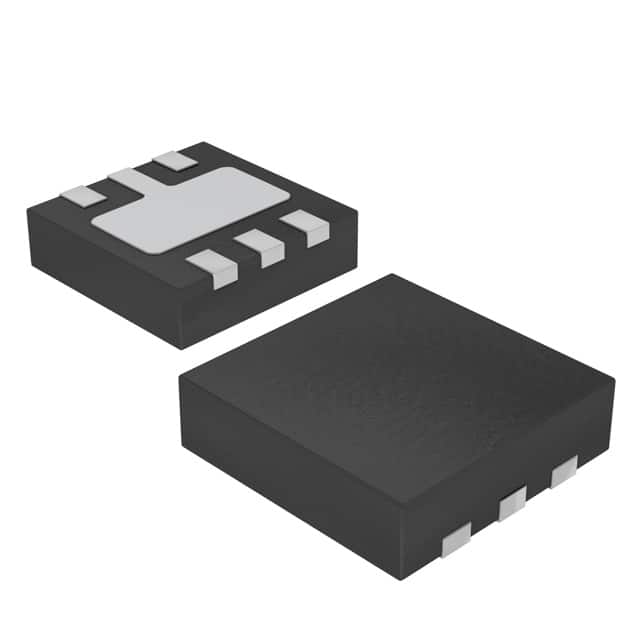
Monolithic Power Systems Inc. MP3326GR-Z

- Part No.:
- MP3326GR-Z
- Manufacturer:
- Monolithic Power Systems Inc.
- Category:
- LED Drivers
- Package:
- 24-VFQFN
- Datasheet:
-
 MP3326GR-Z.pdf
- Description:
- IC LED DRVR LIN PWM 50MA 24QFN
- Quantity:
- Payment:

- Shipping:

Inventory:815
Please send an inquiry. Send us your inquiry, and we will respond immediately.
Product details
Overview
MP3326GR-Z from Monolithic Power Systems is a 16-channel WLED driver IC with integrated current sinks, I²C interface, and independent PWM + analog dimming per channel. It operates from 4V to 16V input, delivers up to 50mA per channel (VIN ≥ 4.5V), supports 12-bit PWM and 6-bit analog dimming, and features open-load/short/over-temperature protection. It is used in automotive instrument clusters for precise multi-zone backlight control.
For engineers reviewing the MP3326GR-Z datasheet, MP3326GR-Z pinout, MP3326GR-Z application, or MP3326GR-Z equivalent, key selection considerations include per-channel dimming resolution, cascaded I²C address configuration (10 options), RFSH/FLT dual-mode functionality (refresh sync or fault flag), LED current slew rate programmability (5–20 µs), and thermal shutdown threshold (170°C).
Technical Context
The MP3326GR-Z implements 16 matched current-sink channels with external ISET resistor programming and internal 12-bit PWM counters plus 6-bit DAC-based analog dimming. Its I²C controller supports register-level channel enable/disable, dimming value write, protection mode selection (hiccup/latch-off), and refresh frequency configuration via FRFSH[9:0].
Protection logic integrates voltage-based LED open-detection (100–160 mV threshold, 4 ms delay) and configurable short-detection (2–5 V thresholds), with fault status reported via open-drain RFSH/FLT and dedicated register bits. Phase-shifted PWM timing (40 µs inter-channel delay) and programmable current slew rate reduce EMI in high-density LED arrays.
Key Specifications
| Parameter | Value and Actual Design Meaning |
|---|---|
| Input Voltage Range | 4 V to 16 V - Supports wide automotive battery range including cold-crank transients down to 4.5 V minimum for full 50 mA operation. |
| LED Channels | 16 independent current sinks - Enables full-segment control for high-resolution LCD backlighting without external current-setting components per channel. |
| Max Current per Channel | 50 mA (VIN ≥ 4.5 V) - Sufficient for driving medium-brightness white LEDs in instrument clusters and industrial displays. |
| PWM Dimming Resolution | 12-bit (4096 steps) - Enables fine-grained brightness control with <1% duty step size at 250 Hz, critical for flicker-free human-machine interfaces. |
| Analog Dimming Resolution | 6-bit (64 steps) - Provides coarse current scaling for power-efficient dimming where PWM switching noise must be minimized. |
| I²C Address Options | 10 configurable addresses - Allows daisy-chaining up to 10 devices on one bus for large-area LED systems without address conflict. |
| Thermal Shutdown Threshold | 170 °C - Protects against sustained overloads while permitting temporary peak power in thermally constrained enclosures. |
Pinout & Package
MP3326GR-Z is housed in a thermally enhanced QFN-24 package (4 mm × 4 mm, 0.5 mm pitch) with exposed thermal pad for PCB heat dissipation. Pin 14 is GND; pin 24 is VIN; pins 7–23 are LEDx cathode current sinks (x = 1 to 16); pin 6 is ISET; pins 3–5 are SCL, SDA, ADDR; pin 1 is RFSH/FLT; pin 2 is EN.
| Pin/Terminal | Circuit Role | Design Meaning |
|---|---|---|
| 1 RFSH/FLT | Refresh output / Fault flag | Open-drain output: outputs synchronized refresh signal (configurable frequency) when FLTEN = 0; pulls low on any fault (open, short, OTP) when FLTEN = 1. |
| 2 EN | Enable control | Active-high digital input: IC enters standby when pulled low; full operation enabled only after I²C register setup and EN bit set via register 0x01 bit 0. |
| 3 SCL | I²C clock | Standard-mode I²C input (up to 1.2 MHz), compatible with 3.3 V logic; requires external pull-up. |
| 4 SDA | I²C data | Open-drain bidirectional I²C line; supports read/write of 58+ registers including per-channel dimming, protection, and timing settings. |
| 5 ADDR | I²C address select | Analog input biased by internal current source; resistor-to-GND sets lower 4 bits of 7-bit I²C address (0x30–0x39). |
| 6 ISET | Current reference | Analog input connected to external resistor (RISET) to ground; sets nominal LED current (e.g., 20 kΩ → 25 mA typical per channel). |
| 7–23 LED1–LED16 | LED cathode current sinks | 16 independent current-sink outputs; each connects directly to LED string cathode; headroom ≤210 mV at 25 mA ensures low dropout operation. |
| 14 GND | Power and signal ground | Primary return path for all currents; must be low-impedance connection to thermal pad and system ground plane. |
| 24 VIN | Power supply input | 4–16 V input with UVLO (3.45–3.95 V rising threshold); requires local 10 µF ceramic bypass capacitor near pin. |
Key Features
| Feature | Design Value |
|---|---|
| Separated PWM + analog dimming per channel | Enables simultaneous use of 12-bit PWM for smooth brightness transitions and 6-bit analog scaling for low-noise static levels-eliminates need for external dimming controllers. |
| Configurable LED current slew rate | Programmable rise/fall times (5 µs, 10 µs, 20 µs, or disabled) directly reduce conducted EMI during PWM transitions without sacrificing dimming fidelity. |
| 40 µs inter-channel phase shift | Reduces peak input current and ripple by staggering PWM edges across 16 channels-critical for meeting CISPR-25 Class 5 EMC limits in automotive applications. |
| Refresh signal output (RFSH/FLT) | Generates synchronous LCD panel refresh timing (programmable 0–300 Hz) from same pin used for fault indication-saves board space and simplifies timing coordination. |
| Configurable LED short-protection threshold | Four selectable thresholds (2 V, 3 V, 4 V, 5 V) allow tuning to specific LED forward-voltage tolerances-prevents false trips in multi-Vf LED arrays. |
Applications
| Automotive Instrument Clusters | Industrial HMI Displays |
|---|---|
|
Use Scenario: Driving segmented white LED backlight behind TFT-LCD gauges with variable ambient light compensation. IC Role / Device Role / Timing Role: 16-channel current sink providing independent dimming per gauge zone; RFSH/FLT synchronizes backlight updates with LCD frame rate. Use Value: Eliminates visible PWM beat frequencies between backlight and display scan, ensuring flicker-free readability under all lighting conditions. |
Use Scenario: Backlighting ruggedized touch-panel displays in factory control cabinets with wide temperature (-40°C to +85°C) and EMI requirements. IC Role / Device Role / Timing Role: High-reliability LED driver with latch-off fault mode and 170°C thermal shutdown; I²C allows remote diagnostics and dynamic brightness adjustment. Use Value: Reduces field failure risk by detecting open/short faults before thermal runaway and enabling predictive maintenance via fault register reads. |
| RGB Status Indicator Arrays | Medical Device UI Panels |
|
Use Scenario: Driving tri-color (R/G/B) LED indicators on network equipment front panels requiring precise color balance and intensity matching. IC Role / Device Role / Timing Role: Per-channel analog dimming adjusts DC current amplitude; PWM dimming controls overall brightness-enabling independent hue/saturation control. Use Value: Achieves consistent chromaticity across batches using 6-bit analog scaling, while 12-bit PWM preserves dynamic range for status intensity grading. |
Use Scenario: Backlighting diagnostic touchscreen interfaces in portable ultrasound and patient monitors where low EMI and zero flicker are regulatory requirements. IC Role / Device Role / Timing Role: Low-noise analog dimming mode suppresses switching artifacts; phase-shifted PWM minimizes conducted emissions into sensitive analog front-end circuits. Use Value: Meets IEC 60601-1-2 4th edition EMC immunity requirements without added filtering, reducing BOM cost and board area. |
Equivalent & Alternatives
The following parts are listed as comparable options for similar 16-channel LED driver applications.
| Alternative Part | Technical Difference | Application Difference | Selection Advice |
|---|---|---|---|
| IS31FL3729-QFLS4 | 18-channel, 40 mA max, no analog dimming-PWM-only with 16-bit resolution; uses SPI, not I²C. | Lacks analog dimming path; higher channel count but lower per-channel current; SPI interface increases MCU pin count. | Prefer when higher PWM resolution is critical and SPI is available; avoid if analog dimming or I²C bus sharing is required. |
| MAX20052ATP/V+T | 16-channel, 50 mA max, I²C interface, but only PWM dimming (12-bit); no RFSH output or phase shift. | No refresh sync capability; fixed 250 Hz PWM frequency; no programmable slew rate or short-threshold selection. | Select when simplified timing architecture suffices and RFSH synchronization or EMI optimization is not needed. |
Compared with IS31FL3729-QFLS4 and MAX20052ATP/V+T, the MP3326GR-Z uniquely combines per-channel analog+PWM dimming, RFSH/FLT dual-mode timing/fault signaling, and programmable EMI-reduction features-making it optimal for automotive and medical displays demanding flicker-free operation and robust fault handling.
Availability
MP3326GR-Z is available at Aetrix Electronics and suitable for automotive instrument clusters, industrial HMI displays, RGB indicator arrays, and medical device UI panels requiring stable component supply across extended product lifecycles.
Supply support for MP3326GR-Z includes scheduled delivery planning, volume procurement assistance, BOM continuity management, traceable sourcing, and lifecycle availability coordination for OEM customers, industrial embedded developers, connected-device designers, and electronics production programs.
Manufacturer
Monolithic Power Systems (MPS) is a fabless semiconductor company specializing in high-performance power management ICs, with design centers in the US, China, and Taiwan, and global manufacturing partnerships.
The MP3326 belongs to MPS's high-channel-count LED driver product line, engineered specifically for automotive-grade backlighting and industrial display applications requiring precision dimming, robust fault protection, and EMI-compliant operation.
FAQ
What is the maximum number of MP3326GR-Z devices that can be cascaded on a single I²C bus?
Up to 10 MP3326GR-Z devices can be cascaded on one I²C bus. Each device supports 10 unique I²C addresses (0x30–0x39) configured via the ADDR pin resistor divider. No external address jumpers or hardware modifications are required-address selection is fully resistor-programmable and stable across temperature.
How does the RFSH/FLT pin function in dual-mode operation?
The RFSH/FLT pin operates in two mutually exclusive modes controlled by the FLTEN bit (Register 0x01, bit 7). When FLTEN = 0, it outputs a programmable refresh signal (0–300 Hz) synchronized to PWM timing. When FLTEN = 1, it becomes an active-low open-drain fault flag pulled low on any detected open-load, short-circuit, or over-temperature event.
Can analog and PWM dimming be used simultaneously on the same channel?
Yes-each of the 16 channels supports concurrent analog and PWM dimming. The analog dimming register (ICHx, 6-bit) scales the full-scale LED current set by RISET, while the PWM register (PWMx, 12-bit) modulates that scaled current. The resulting output is the product of both values, enabling ultra-fine brightness control across >18-bit effective resolution.
What is the purpose of the 40 µs phase shift feature, and how is it enabled?
The 40 µs phase shift staggers PWM rising edges across consecutive LED channels (e.g., CH2 starts 40 µs after CH1), reducing peak input current and conducted EMI. It is enabled by setting PS_EN = 1 (Register 0x01, bit 1) and requires no additional timing circuitry-fully implemented in silicon with deterministic delay.
Does the MP3326GR-Z support latch-off or hiccup mode for fault recovery?
Yes-the LATCH bit (Register 0x01, bit 6) selects fault response mode. When LATCH = 1, the device enters latch-off mode: faulted channels remain disabled until VIN or EN is cycled. When LATCH = 0, it enters hiccup mode: faulted channels retry every 1 ms for 32 µs to detect fault clearance, allowing automatic recovery without system reset.
What is the minimum external ISET resistor value required for 50 mA per channel operation?
For 50 mA per channel at VIN ≥ 4.5 V, the recommended ISET resistor is 10 kΩ. This yields VISET ≈ 1.2 V (per datasheet), resulting in ILED = (VISET / RISET) × (63 / 63) = 1.2 V / 10 kΩ = 120 µA × 63 = 7.56 mA base, scaled to 50 mA via register ICHx = 0x3F. Actual RISET depends on target current and dimming range-20 kΩ gives ~25 mA nominal.
Is the thermal pad on the QFN-24 package electrically connected, and how should it be handled on the PCB?
Yes-the exposed thermal pad on the MP3326GR-Z QFN-24 package is internally connected to GND. It must be soldered to a solid copper thermal pad on the PCB, connected via ≥4 thermal vias (0.3 mm diameter) to inner-layer or back-side ground planes to ensure θJA ≤ 42 °C/W and reliable operation at full load.
MP3326GR-Z Specifications
- Product attributes
- Attribute value
- Manufacturer:
- Monolithic Power Systems Inc.
- Series:
- -
- Package/Case:
- 24-VFQFN
- Packaging:
- Tape & Reel (TR)
- Product Status:
- Active
- Type:
- Linear
- Topology:
- -
- Internal Switch(s):
- No
- Number of Outputs:
- 16
- Voltage - Supply (Min):
- 4V
- Voltage - Supply (Max):
- 16V
- Voltage - Output:
- -
- Current - Output / Channel:
- 50mA
- Frequency:
- 220Hz, 250Hz, 280Hz, 330Hz
- Dimming:
- Analog, I2C, PWM
- Applications:
- Backlight
- Operating Temperature:
- -40°C ~ 150°C (TJ)
- Grade:
- -
- Qualification:
- -
- Mounting Type:
- Surface Mount, Wettable Flank
- Supplier Device Package:
- 24-QFN (4x4)
MP3326GR-Z FAQ
1.How can I place an order for MP3326GR-Z through Aetrix?
Please submit a Request for Quotation (RFQ) for MP3326GR-Z on Aetrix. Our sales agent will provide a competitive quotation and guide you through the order confirmation once you accept the terms.
2.Are the price and stock information for MP3326GR-Z reliable?
The price and inventory of MP3326GR-Z are updated periodically and may fluctuate due to market conditions. Stock and pricing data are typically refreshed every 24 hours. Quotation validity for MP3326GR-Z is usually 5 days.
3.What payment methods are accepted for MP3326GR-Z?
We accept Wire Transfer, PayPal, Credit Card, Western Union, MoneyGram, and Escrow for MP3326GR-Z transactions.
Note: Certain payment methods may incur a processing fee.
4.How is shipping managed for MP3326GR-Z?
MP3326GR-Z orders can be shipped via leading logistics carriers, including DHL, UPS, FedEx, TNT, or Registered Mail.
Once your MP3326GR-Z order is processed, you will receive an email with the shipment details and tracking number.
Note: Tracking information may take up to 24 hours to appear. Express delivery typically takes 3–5 business days.
5.How can I obtain technical support or documentation for MP3326GR-Z?
For technical support, including MP3326GR-Z datasheets, pinout diagrams, or application guidance, please contact our engineering support team. They can provide detailed documentation and assistance for your MP3326GR-Z requirements.
6.How does Aetrix verify that MP3326GR-Z is sourced from the original manufacturer or authorized distributors?
All MP3326GR-Z products on Aetrix are procured from qualified distributors and authorized channels. Our dedicated quality assurance team conducts strict verification, including traceability checks and, if necessary, third-party testing. This ensures that MP3326GR-Z meets industry standards.
7.What is the process for return or replacement of MP3326GR-Z?
All MP3326GR-Z units undergo pre-shipment inspection (PSI). If there is an issue with MP3326GR-Z, returns or replacements are accepted under the following conditions:
1.Quantity discrepancies, incorrect items, or visible external defects (such as breakage or corrosion), acknowledged by Aetrix.
2.The issue is reported within 90 days of delivery.
3.The MP3326GR-Z part is unused and in its original packaging.
Return procedure for MP3326GR-Z:
1.Submit a request within 90 days.
2.Obtain a Return Material Authorization (RMA) from Aetrix.
MP3326GR-Z Tags
-
BCR402RE6327HTSA1
Infineon Technologies

-
BCR430UXTSA2
Infineon Technologies
-
BCR420UE6433HTMA1
Infineon Technologies
-
BCR420UE6327HTSA1
Infineon Technologies
-
BCR421UE6327HTSA1
Infineon Technologies
-
LYT1604D-TL
Power Integrations

-
HV9910CLG-G
Microchip Technology

-
CL2N8-G
Microchip Technology
-
BCR420UW6-7
Diodes Incorporated
-
BCR421UW6-7
Diodes Incorporated
-
BCR420UFD-7
Diodes Incorporated
-
BCR421UFD-7
Diodes Incorporated
Tech Hub

Operational amplifier guide covering op amp basics, feedback, ideal vs real op amps, common configurations, buffer circuits, offset, bias current, gain-bandwidth, slew rate, rail-to-rail limits and sel…

Jumper cables guide covering safe connection order, red and black clamp placement, final ground connection, cable gauge, length, clamp quality, copper vs CCA cables, jump starter comparison and battery…

LDO regulator guide covering low dropout voltage, power dissipation, thermal design, PSRR, output noise, capacitor stability, adjustable LDO circuits, LDO vs buck converter and datasheet selection chec…

Conditional Access Module guide covering CAM meaning, CI/CI+ interface, smart card authorization, DVB security workflow, TV and set-top box compatibility, internal electronics, ESD protection, connecto…

Guide to electronic component obsolescence covering EOL risk, PCN/PDN notices, last-time buy planning, replacement options, form-fit-function validation, counterfeit risk and BOM lifecycle management.

18650 battery guide covering lithium-ion cell basics, 3.6V/3.7V voltage, 4.2V charging, mAh and Wh capacity, protected cells, chargers, BMS, series-parallel packs, holders, welding and sourcing checks.…

Hall effect sensor guide covering working principle, linear and digital sensors, Arduino circuits, current sensing, speed detection, automotive applications, A3144 examples, signal filtering and datash…

Product Change Notification guide for electronic components, covering PCN meaning, PCN vs PDN/EOL, common change types, risk levels, form-fit-function review, engineering validation, BOM control, LTB/L…

A practical guide to blend door actuators, covering HVAC function, symptoms, location, AC and heater issues, reset and calibration, replacement cost, electrical diagnosis, compatibility checks, and rep…

Engineering guide to Raspberry Pi alternatives, covering chip-level differences, Orange Pi, ROCK, Jetson, Banana Pi, NanoPi, Compute Module, Pico, GPIO, camera, HAT compatibility, and replacement risks…


