
 My Inquiry
 My Account


Monolithic Power Systems Inc. MP3336GC-P
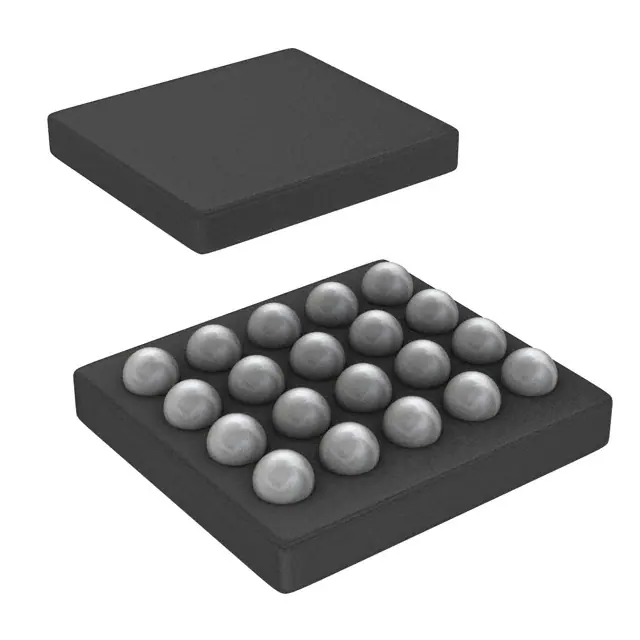
- Part No.:
- MP3336GC-P
- Manufacturer:
- Monolithic Power Systems Inc.
- Category:
- LED Drivers
- Package:
- 20-UFBGA, WLCSP
- Datasheet:
-
 MP3336GC-P.pdf
- Description:
- IC LED DRVR RGLTR I2C 2A 20WLCSP
- Quantity:
- Payment:

- Shipping:

Inventory:2,950
Please send an inquiry. Send us your inquiry, and we will respond immediately.
Product details
Overview
MP3336GC-P from Monolithic Power Systems is a dual-channel, synchronous current-mode PWM boost LED driver optimized for smartphone flash applications. It delivers up to 2A per channel in flash mode with ±7% current accuracy, supports I²C-controlled operation across flash/assist/torch/indicator/5V DC modes, and integrates VIN-to-VOUT disconnection and LED forward-voltage balancing for thermal efficiency in compact camera modules.
For engineers reviewing the MP3336GC-P datasheet, MP3336GC-P pinout, MP3336GC-P application, or MP3336GC-P equivalent, key selection criteria include dual 2A flash current capability, WLCSP-20 thermal performance, I²C programmable timing and protection registers, and compatibility with battery-limited mobile power rails (2.7–5.5V).
Technical Context
The MP3336GC-P implements a synchronous boost converter with selectable 1/2/3/4MHz switching frequency and fold-back control that dynamically reduces frequency to 1MHz or lower under high headroom conditions to maintain efficiency and EMI compliance. Its dual independent current sources regulate LED1/LED2 anode-side current with real-time load balancing (±130mV hysteresis) to minimize power loss from VF mismatch.
Operation is fully managed via 400kHz I²C interface with dedicated STR/TOR/TX pins enabling hardware-synchronized flash triggering, torch activation, and RF transmission coordination. Protection logic includes adaptive thermal shutdown (130°C warning, 150°C cutoff), input DC current limiting (1–4.2A programmable), and low-battery voltage detection with stepwise current reduction during flash pulses.
Key Specifications
| Parameter | Value and Actual Design Meaning |
|---|---|
| Input Voltage Range | 2.7V–5.5V: Supports direct connection to single-cell Li-ion batteries with UVLO at 2.35V. |
| Flash Current Accuracy | ±7% per channel: Ensures consistent brightness and color matching between dual LEDs in low-light capture. |
| Max Switching Frequency | 4MHz selectable: Enables smaller external inductors (e.g., 1.1µH) for space-constrained PCB layouts. |
| I²C Interface Speed | 400kHz: Allows rapid configuration of flash timing, current ramp rates, and protection thresholds during runtime. |
| Thermal Shutdown Threshold | 150°C junction: Halts switching and resets mode registers to prevent silicon damage under sustained overload. |
| LED Load Balance Hysteresis | 130mV: Actively equalizes current between LEDs when forward voltage difference exceeds threshold, improving system efficiency. |
| Input DC Current Limit | Programmable 1A–4.2A: Prevents excessive battery draw during flash bursts while maintaining pulse integrity. |
Pinout & Package
MP3336GC-P is housed in a WLCSP-20 (1.6mm × 2.0mm) package with 0.4mm pitch, optimized for ultra-thin mobile camera modules and thermally efficient GND-referenced LED cathode layout.
| Pin/Terminal | Circuit Role | Design Meaning |
|---|---|---|
| LED1, LED2 | Dual high-current anode drivers | Each sinks up to 2A in flash mode; cathodes connect directly to system GND for improved thermal dissipation. |
| VOUT | Boost converter output node | Supplies regulated voltage to LED strings; disconnects from VIN during fault conditions to isolate battery. |
| STR, TOR, TX | Hardware trigger inputs | STR synchronizes flash to image capture; TOR enables torch mode; TX coordinates with RF transmission to avoid interference. |
| SCL, SDA | I²C bidirectional interface | Enable full register access for current setting, timing control, protection configuration, and fault status readback. |
| VIN, PGND, AGND | Power and ground references | VIN powers internal logic and gate drivers; separate PGND/AGND paths reduce noise coupling into analog current regulation loop. |
| NTC | Temperature sensing input | Sources 35µA for external NTC resistor; triggers thermal fault if LED temperature exceeds safe operating range. |
Key Features
| Feature | Design Value |
|---|---|
| Dual independent current sources | Each channel programmable from 0–2A (flash) or 0–319mA (torch/assist) with 7.84mA/step and 1.25mA/step resolution respectively. |
| Multi-mode operation | Five distinct operational states-flash, assist, torch, indicator (31.5kHz PWM), and fixed 5V DC output-configured via I²C or hardware pins. |
| LED forward-voltage balancing | Automatically adjusts channel currents within ±10% range to minimize power loss when VF mismatch exceeds 130mV. |
| Comprehensive fault protection | Integrated detection for LED short/open, VOUT-GND short, over-voltage (5.5V), low-battery, over-temperature, and input current limit violation. |
| Switching frequency fold-back | Reduces max frequency from 4MHz → 1MHz → ~100kHz under high headroom to sustain efficiency and reduce EMI without external compensation. |
Applications
| Smartphone Dual-LED Flash | Tablet Integrated Camera Module |
|---|---|
Use Scenario: Simultaneous illumination from two spatially separated LEDs during still image capture in sub-10lux environments. IC Role / Device Role / Timing Role: Dual-channel current regulator with hardware-synchronized STR-triggered flash pulse and programmable 200ms timeout. Use Value: Delivers matched 2A peak current per LED with ±7% accuracy, enabling consistent white balance and reduced motion blur without requiring external current-sense resistors. | Use Scenario: Video assist lighting for front-facing tablet cameras during video conferencing under mixed ambient lighting. IC Role / Device Role / Timing Role: Torch mode driver with smooth 1.25mA/step current ramp-up and I²C-adjustable brightness levels. Use Value: Provides flicker-free continuous illumination up to 319mA per channel while maintaining thermal safety on thermally constrained tablet PCBs. |
| Digital Still Camera Auxiliary Light | Mobile Device Indicator & Blinking UI |
Use Scenario: Pre-capture focus assist light in compact digital cameras where flash capacitor size is limited. IC Role / Device Role / Timing Role: Assist mode controller with fast-ramp current delivery synchronized to AF module activation. Use Value: Supplies up to 319mA per LED with <8µs ramp-up time, enabling near-instant illumination for contrast-detection autofocus in low-light conditions. | Use Scenario: Status indication and user notification via rhythmic LED blinking on smartphones and wearables. IC Role / Device Role / Timing Role: Indicator mode PWM driver with 31.5kHz dimming and programmable 128/256/512ms blink intervals. Use Value: Eliminates visible flicker while supporting customizable blink patterns using only I²C register writes-no external timing components required. |
Equivalent & Alternatives
The following parts are listed as comparable options for similar dual-channel flash LED driver applications.
| Alternative Part | Technical Difference | Application Difference | Selection Advice |
|---|---|---|---|
| RT8547GQW | Single-channel 2A flash driver with integrated MOSFETs; lacks dual-channel independence and LED balancing. | Requires two ICs for dual-LED systems; no built-in VF load balancing or TX synchronization pin. | Select when cost-per-channel is prioritized over board area and thermal optimization in non-matching LED configurations. |
| ISL97646IRZ | Dual-channel with 1.5A max flash current; uses analog current programming instead of I²C; no 5V DC mode or NTC interface. | Fixed-function design limits runtime reconfiguration; no software-controlled blinking or low-battery current reduction. | Prefer for legacy designs requiring pin-compatible replacement without firmware updates to support I²C register access. |
Compared with RT8547GQW and ISL97646IRZ, the MP3336GC-P uniquely combines dual 2A flash capability, I²C-configurable multi-mode operation, active LED load balancing, and integrated TX/STR hardware sync-enabling higher integration, better thermal management, and richer feature sets in modern mobile imaging platforms.
Availability
MP3336GC-P is available at Aetrix Electronics and suitable for smartphone flash LED applications, tablet camera modules, and digital still camera assist lighting requiring stable component supply, long-term lifecycle support, and RoHS-compliant packaging.
Supply support for MP3336GC-P includes scheduled delivery planning, volume procurement assistance, BOM continuity management, traceable sourcing, and lifecycle availability coordination for OEM customers, industrial embedded developers, connected-device designers, and electronics production programs.
Manufacturer
Monolithic Power Systems (MPS) is a fabless semiconductor company specializing in high-performance analog and power ICs for consumer, computing, and industrial markets.
The MP3336 product line targets mobile imaging power management, delivering highly integrated, thermally optimized LED drivers with advanced protection and multi-mode flexibility for next-generation camera subsystems.
FAQ
What is the maximum continuous current per channel in torch mode?
The MP3336GC-P supports up to 319mA per channel in torch mode, programmable in 1.25mA steps via I²C registers I1_TOR and I2_TOR. This value is guaranteed across the full operating temperature range (–40°C to +125°C) and input voltage range (2.7V–5.5V), with ±7% accuracy referenced to the programmed code.
How does the switching frequency fold-back function improve system performance?
When headroom voltage (VOUT – VLED) exceeds the VTH_PAS threshold, the MP3336GC-P automatically reduces switching frequency from 4MHz down to 1MHz or lower. This maintains high efficiency under light loads or high input voltages, reduces EMI emissions, and avoids audible noise from ceramic capacitors-without requiring external compensation components.
Can the MP3336GC-P drive LEDs with mismatched forward voltages?
Yes-the device includes active LED load balancing with 130mV hysteresis. When |VLED1 – VLED2| exceeds this threshold, it adjusts each channel's current within ±10% of nominal to equalize power dissipation. This improves overall efficiency and thermal distribution without requiring matched-bin LEDs in production.
What protection features activate during a VOUT-to-GND short condition?
Upon detecting VOUT < 1V, the MP3336GC-P immediately disables the synchronous PMOS switch, disconnects VIN from VOUT, and sets the FT_VOSC fault bit. The device halts switching to prevent excessive battery current draw and holds the fault state until the register is read back or power is cycled.
Is the NTC temperature monitoring function mandatory for operation?
No-the NTC pin is optional. When unused, it must be left floating; the IC operates normally without NTC biasing. If enabled via the NTC_WD register, it sources 35µA to an external NTC resistor and triggers FT_LEDHOT when voltage drops below the programmed threshold-providing LED junction temperature monitoring independent of die temperature.
How is flash timing controlled when using hardware-level triggering?
In hardware level-trigger mode (STR_MOD=1, STR_LV=1), flash duration is determined by the STR signal pulse width, capped by the FL_TIM register timeout (e.g., 200ms). Current ramps up after STR goes high and terminates either when STR goes low or when the timer expires-ensuring precise synchronization with image sensor exposure windows.
Does the MP3336GC-P support simultaneous operation of flash and 5V DC output modes?
No-5V DC mode (5V_MOD=1) overrides LED current regulation and configures the boost converter as a fixed 5V voltage source. While LED_EN bits remain functional, driving LEDs directly from 5V risks thermal overload; the datasheet recommends disabling LED1/2_EN during 5V mode to prevent unintended current flow.
MP3336GC-P Specifications
- Product attributes
- Attribute value
- Manufacturer:
- Monolithic Power Systems Inc.
- Series:
- -
- Package/Case:
- 20-UFBGA, WLCSP
- Packaging:
- Tape & Reel (TR)
- Product Status:
- Active
- Type:
- DC DC Regulator
- Topology:
- Boost
- Internal Switch(s):
- Yes
- Number of Outputs:
- 2
- Voltage - Supply (Min):
- 2.7V
- Voltage - Supply (Max):
- 5.5V
- Voltage - Output:
- 5V
- Current - Output / Channel:
- 2A
- Frequency:
- 1MHz
- Dimming:
- I2C, PWM
- Applications:
- Camera Flash
- Operating Temperature:
- -40°C ~ 125°C (TJ)
- Grade:
- -
- Qualification:
- -
- Mounting Type:
- Surface Mount
- Supplier Device Package:
- 20-WLCSP (1.65x2.05)
MP3336GC-P FAQ
1.How can I place an order for MP3336GC-P through Aetrix?
Please submit a Request for Quotation (RFQ) for MP3336GC-P on Aetrix. Our sales agent will provide a competitive quotation and guide you through the order confirmation once you accept the terms.
2.Are the price and stock information for MP3336GC-P reliable?
The price and inventory of MP3336GC-P are updated periodically and may fluctuate due to market conditions. Stock and pricing data are typically refreshed every 24 hours. Quotation validity for MP3336GC-P is usually 5 days.
3.What payment methods are accepted for MP3336GC-P?
We accept Wire Transfer, PayPal, Credit Card, Western Union, MoneyGram, and Escrow for MP3336GC-P transactions.
Note: Certain payment methods may incur a processing fee.
4.How is shipping managed for MP3336GC-P?
MP3336GC-P orders can be shipped via leading logistics carriers, including DHL, UPS, FedEx, TNT, or Registered Mail.
Once your MP3336GC-P order is processed, you will receive an email with the shipment details and tracking number.
Note: Tracking information may take up to 24 hours to appear. Express delivery typically takes 3–5 business days.
5.How can I obtain technical support or documentation for MP3336GC-P?
For technical support, including MP3336GC-P datasheets, pinout diagrams, or application guidance, please contact our engineering support team. They can provide detailed documentation and assistance for your MP3336GC-P requirements.
6.How does Aetrix verify that MP3336GC-P is sourced from the original manufacturer or authorized distributors?
All MP3336GC-P products on Aetrix are procured from qualified distributors and authorized channels. Our dedicated quality assurance team conducts strict verification, including traceability checks and, if necessary, third-party testing. This ensures that MP3336GC-P meets industry standards.
7.What is the process for return or replacement of MP3336GC-P?
All MP3336GC-P units undergo pre-shipment inspection (PSI). If there is an issue with MP3336GC-P, returns or replacements are accepted under the following conditions:
1.Quantity discrepancies, incorrect items, or visible external defects (such as breakage or corrosion), acknowledged by Aetrix.
2.The issue is reported within 90 days of delivery.
3.The MP3336GC-P part is unused and in its original packaging.
Return procedure for MP3336GC-P:
1.Submit a request within 90 days.
2.Obtain a Return Material Authorization (RMA) from Aetrix.
MP3336GC-P Tags
-
BCR402RE6327HTSA1
Infineon Technologies

-
BCR430UXTSA2
Infineon Technologies
-
BCR420UE6433HTMA1
Infineon Technologies
-
BCR420UE6327HTSA1
Infineon Technologies
-
BCR421UE6327HTSA1
Infineon Technologies
-
LYT1604D-TL
Power Integrations

-
HV9910CLG-G
Microchip Technology

-
CL2N8-G
Microchip Technology
-
BCR420UW6-7
Diodes Incorporated
-
BCR421UW6-7
Diodes Incorporated
-
BCR420UFD-7
Diodes Incorporated
-
BCR421UFD-7
Diodes Incorporated
Tech Hub

Operational amplifier guide covering op amp basics, feedback, ideal vs real op amps, common configurations, buffer circuits, offset, bias current, gain-bandwidth, slew rate, rail-to-rail limits and sel…

Jumper cables guide covering safe connection order, red and black clamp placement, final ground connection, cable gauge, length, clamp quality, copper vs CCA cables, jump starter comparison and battery…

LDO regulator guide covering low dropout voltage, power dissipation, thermal design, PSRR, output noise, capacitor stability, adjustable LDO circuits, LDO vs buck converter and datasheet selection chec…

Conditional Access Module guide covering CAM meaning, CI/CI+ interface, smart card authorization, DVB security workflow, TV and set-top box compatibility, internal electronics, ESD protection, connecto…

Guide to electronic component obsolescence covering EOL risk, PCN/PDN notices, last-time buy planning, replacement options, form-fit-function validation, counterfeit risk and BOM lifecycle management.

18650 battery guide covering lithium-ion cell basics, 3.6V/3.7V voltage, 4.2V charging, mAh and Wh capacity, protected cells, chargers, BMS, series-parallel packs, holders, welding and sourcing checks.…

Hall effect sensor guide covering working principle, linear and digital sensors, Arduino circuits, current sensing, speed detection, automotive applications, A3144 examples, signal filtering and datash…

Product Change Notification guide for electronic components, covering PCN meaning, PCN vs PDN/EOL, common change types, risk levels, form-fit-function review, engineering validation, BOM control, LTB/L…

A practical guide to blend door actuators, covering HVAC function, symptoms, location, AC and heater issues, reset and calibration, replacement cost, electrical diagnosis, compatibility checks, and rep…

Engineering guide to Raspberry Pi alternatives, covering chip-level differences, Orange Pi, ROCK, Jetson, Banana Pi, NanoPi, Compute Module, Pico, GPIO, camera, HAT compatibility, and replacement risks…


