
 My Inquiry
 My Account


Monolithic Power Systems Inc. MP3388EY-LF
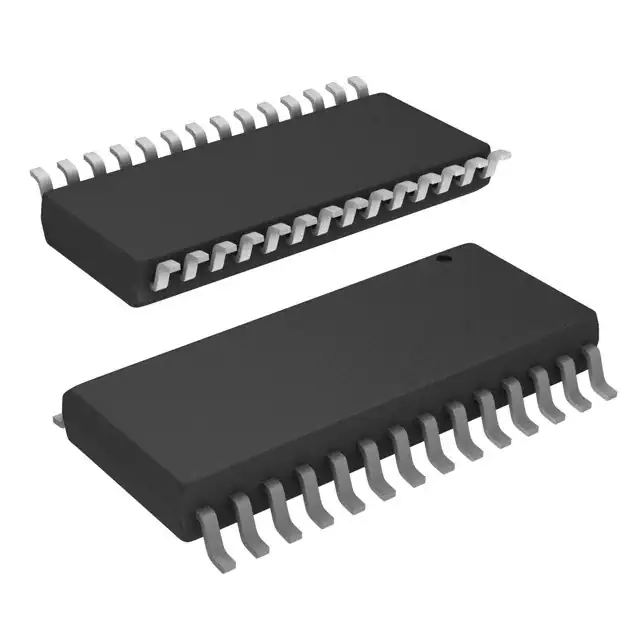
- Part No.:
- MP3388EY-LF
- Manufacturer:
- Monolithic Power Systems Inc.
- Category:
- LED Drivers
- Package:
- 28-SOIC (0.295", 7.50mm Width)
- Datasheet:
-
 MP3388EY-LF.pdf
- Description:
- IC LED DRV RGLTR PWM 20MA 28SOIC
- Quantity:
- Payment:

- Shipping:

Inventory:4,175
Please send an inquiry. Send us your inquiry, and we will respond immediately.
Product details
Overview
MP3388EY-LF from Monolithic Power Systems is an 8-channel white LED driver IC with integrated step-up converter, designed for LCD panel backlighting in notebooks, tablets, and small TVs. It delivers up to 50V output from 4.5–25V input, regulates 8 independent LED strings with ±3% current matching, and supports selectable 1.25MHz/625kHz switching frequency and dual-mode PWM dimming.
For engineers reviewing the MP3388EY-LF datasheet, MP3388EY-LF pinout, MP3388EY-LF application, or MP3388EY-LF equivalent, key selection criteria include its 600mV LED current-sense voltage, SOIC28 package thermal resistance (θJA = 60°C/W), OVP threshold programmability via resistor divider, and support for both external PWM and DC-input dimming modes.
Technical Context
The MP3388EY-LF implements a fixed-frequency, current-mode boost controller paired with eight matched open-drain current sinks. Its internal 5V LDO (VCC) powers gate drivers and control logic, while the COMP pin enables loop compensation using RC networks for stability across varying LED string configurations.
It integrates comprehensive protection: programmable over-voltage protection (OVP) triggered at 1.23V on the OVP pin, open-string detection via LEDX UVLO (175mV threshold), short-string detection at 5.5V on LEDX pins, and thermal shutdown at 150°C. Dimming is implemented via DPWM generation synchronized to FSET-set frequency (1.2–1.6 kHz with 2.2nF).
Key Specifications
| Parameter | Value and Actual Design Meaning |
|---|---|
| Input Voltage Range | 4.5V to 25V - Supports wide-range DC supplies including 5V, 12V, and 19V laptop adapters. |
| Max Output Voltage | 50V - Enables driving up to 14–16 white LEDs in series per string (3.3V typical VF). |
| LED Current Matching | ±3% - Ensures uniform brightness across all 8 strings without external calibration. |
| Switching Frequency | Selectable 625kHz or 1.25MHz - Balances efficiency vs. component size: 625kHz for higher efficiency with larger inductors, 1.25MHz for compact layouts. |
| LED Regulation Voltage | 600mV - Low sense voltage minimizes power loss in current sources, improving system efficiency. |
| Dimming Frequency Range | 1.2–1.6 kHz (DPWM) - Matches human eye persistence for flicker-free dimming down to 0.1% duty cycle. |
| OVP Threshold Accuracy | ±5% (1.23V reference) - Enables precise overvoltage cutoff to protect LEDs and output capacitors. |
Pinout & Package
MP3388EY-LF uses a 28-pin SOIC package (17.9mm × 7.5mm, 1.27mm pitch) with exposed thermal pad internally connected to GND. The package provides θJA = 60°C/W and θJC = 30°C/W, supporting industrial temperature operation (–20°C to +85°C).
| Pin | Circuit Role | Design Meaning |
|---|---|---|
| 1 (VFAULT) | Fault disconnection driver output | Drives external PMOS to isolate input during fault conditions (OVP, OTP, UVLO); pulls low when enabled, high-impedance when disabled. |
| 2 (COMP) | Boost loop compensation node | Connects RC network to stabilize feedback loop; critical for transient response and ripple suppression under dynamic LED load changes. |
| 3 (VIN) | Main power input | Accepts 4.5–25V supply; requires local ceramic bypass (≥4.7μF) to suppress high-frequency switching noise. |
| 4 (VCC) | Internal 5V LDO output | Powers internal gate drivers and logic; must be bypassed with ≥1μF ceramic capacitor; tied to VIN if input <5.5V. |
| 5 (EN) | Enable control input | Active-high logic input; must not float; 1.8V threshold ensures robust start-up sequencing with system power rails. |
| 6 (OSC) | Frequency selection input | GND = 625kHz, floating/VCC = 1.25MHz; sets switching frequency without external components. |
| 7 (FSET) | DPWM frequency setting | Connects timing capacitor (e.g., 2.2nF → 1.6kHz); defines dimming frequency independent of input PWM signal. |
| 8 (PWMO) | PWM filter output / DC dimming input | Outputs filtered DC voltage (0.2–1.2V) proportional to PWMI duty cycle; also accepts direct DC dimming voltage (negative polarity). |
| 9 (GND) | Analog ground reference | Reference for all analog circuitry; must be separated from PGND and connected at single point to minimize noise coupling. |
| 10 (PWMI) | External PWM signal input | Accepts 100Hz–50kHz square wave (min 1.5V high); used for external brightness control with automatic DPWM conversion. |
| 11–18 (LED1–LED8) | LED string cathode current sinks | Open-drain outputs regulating current per string; each sinks up to 30mA; internally matched to ±3%. |
| 19 (ISET) | Current programming input | Connects external resistor (e.g., 60.4kΩ) to set all 8 string currents identically: ILED = 1220V/(RSET+1kΩ). |
| 20–21 (LED4, LED3) | LED string cathode current sinks | Same function as LED1–LED8; full 8-channel support confirmed by pin mapping and functional diagram. |
| 22 (OVP) | Programmable over-voltage sense | Resistor divider from output sets OVP threshold: VOVP = 1.23V × (R1+R2)/R2; triggers shutdown if exceeded. |
| 23–24 (PGND2, PGND1) | Power ground return paths | Separate high-current grounds for boost stage; must be shorted externally and routed away from analog traces. |
| 25–26 (SW1, SW2) | Boost switch drain outputs | Parallel-connected internal MOSFET drains; swing 0V to 50V; require low-ESR output diode and tight layout with PGND. |
| 27–28 (NC) | No-connect terminals | Not bonded; must remain unconnected to avoid parasitic coupling or ESD risk. |
Key Features
| Feature | Design Value |
|---|---|
| 8-channel current matching | ±3% regulation accuracy eliminates need for per-string current trimming resistors, reducing BOM count and board area. |
| Low 600mV LED sense voltage | Reduces power dissipation in current sources by >40% versus 1V+ references, enabling higher efficiency in high-current backlight designs. |
| Dual dimming architecture | Supports both external PWM (PWMI) and DC analog (PWMO) inputs - simplifies integration with MCU GPIOs or DAC-based brightness control. |
| Integrated open/short LED protection | Detects failed strings within 1.6ms and disables only affected channels, maintaining partial backlight operation and enabling graceful degradation. |
| Programmable OVP with 1.23V reference | Allows precise overvoltage cutoff at 102–130% of nominal output, protecting LEDs and bulk capacitors without external comparators. |
Applications
| Notebook PC Backlight | Small LCD TV Backlight |
|---|---|
Use Scenario: Driving 8 parallel LED strings behind 13.3"–15.6" IPS LCD panels with dynamic dimming zones. IC Role / Device Role / Timing Role: Primary LED current regulator and boost controller; manages string current, OVP, and DPWM dimming synchronization. Use Value: Delivers uniform luminance across full display with <3% inter-string variation, enabling factory-calibrated gamma correction and reduced power consumption vs. discrete solutions. | Use Scenario: Backlighting 22"–32" HD LCD panels in cost-sensitive consumer TVs with minimal external components. IC Role / Device Role / Timing Role: Integrated step-up + current sink controller; replaces separate boost IC and 8-channel current drivers. Use Value: Reduces total solution footprint by 35% and component count by 12+ parts versus multi-chip alternatives, lowering assembly cost and test complexity. |
| Handheld Terminal Display | Automotive Infotainment Display |
Use Scenario: Illuminating ruggedized 7"–10" sunlight-readable displays in industrial handhelds with wide input voltage range. IC Role / Device Role / Timing Role: High-efficiency LED driver supporting 4.5–25V input transients common in 12V vehicle systems and battery-powered operation. Use Value: Maintains stable brightness during cold-cranking (down to 4.5V) and load-dump events (up to 25V), eliminating display flicker or dropout. | Use Scenario: Backlighting 8"–12" automotive-grade TFT displays requiring AEC-Q200 compliance and fault reporting. IC Role / Device Role / Timing Role: Fault-aware LED controller with VFAULT-driven PMOS disconnect, thermal shutdown, and per-string open/short detection. Use Value: Provides ASIL-B compatible fault signaling via VFAULT pin and enables fail-safe display dimming or blanking during critical faults. |
Equivalent & Alternatives
The following parts are listed as comparable options for similar 8-channel WLED driver applications.
| Alternative Part | Technical Difference | Application Difference | Selection Advice |
|---|---|---|---|
| RT9397BZSP | Fixed 1MHz switching frequency; no selectable OSC pin; 40V max output; ±5% current matching. | Limited to smaller panels (<10" diagonal); lacks dual-mode dimming flexibility and OVP programmability. | Choose for cost-sensitive, space-constrained designs where 50V headroom and ±3% matching are non-critical. |
| ISL97693IRTZ | 9-channel capability; 40V max output; 1.5MHz fixed frequency; 12-bit I²C dimming interface instead of analog/PWM. | Requires microcontroller I²C interface; no standalone analog dimming; higher BOM cost due to added level-shifting and filtering. | Choose when digital control, channel expansion beyond 8 strings, or tighter I²C-based brightness resolution is required. |
Compared with RT9397BZSP and ISL97693IRTZ, MP3388EY-LF offers superior voltage headroom (50V), tighter current matching (±3%), analog/digital dimming flexibility, and user-programmable OVP - making it optimal for high-reliability, large-panel backlighting where efficiency, uniformity, and fault resilience are prioritized.
Availability
MP3388EY-LF is available at Aetrix Electronics and suitable for notebook PC backlighting, small LCD TV power management, and automotive infotainment display systems requiring stable component supply, long-term lifecycle support, and RoHS-compliant packaging.
Supply support for MP3388EY-LF includes scheduled delivery planning, volume procurement assistance, BOM continuity management, traceable sourcing, and lifecycle availability coordination for OEM customers, industrial embedded developers, connected-device designers, and electronics production programs.
Manufacturer
Monolithic Power Systems (MPS) is a fabless semiconductor company specializing in high-performance analog and power ICs, with design centers in the US, China, and Taiwan, and global manufacturing partnerships.
The MP3388 product line targets high-efficiency, multi-string LED backlighting for portable and mid-size displays, emphasizing integration, thermal robustness, and protection features for demanding consumer and industrial environments.
FAQ
What is the maximum allowable LED string voltage when using MP3388EY-LF?
The MP3388EY-LF supports a maximum step-up output voltage of 50V. This allows driving up to 14–16 standard white LEDs (VF ≈ 3.3V) in series per string. The actual usable string voltage depends on input voltage, efficiency, and thermal limits - sustained operation above 45V requires careful thermal design due to increased power dissipation in the internal switches.
How does the MP3388EY-LF handle open LED string faults?
When an LED string opens, the corresponding LEDX pin voltage drops below 175mV (UVLO threshold). The IC detects this within 1.6ms, marks off the faulty string, and continues regulating remaining strings using the highest-voltage string as the reference. If all strings open, the boost converter shuts down and VFAULT disables the external PMOS to isolate input power.
Can MP3388EY-LF operate with input voltage below 5.5V?
Yes - when VIN < 5.5V, the internal VCC LDO cannot regulate. In this case, VCC must be tied directly to VIN (or supplied externally with a stable 5V rail), and the EN pin threshold remains valid. The device retains full functionality except that the internal 5V rail is no longer generated, so external biasing of gate drivers may be needed in custom implementations.
What is the purpose of the two PGND pins (PGND1 and PGND2)?
PGND1 and PGND2 are separate high-current ground returns for the boost power stage. They reduce ground bounce and improve EMI performance by separating high-di/dt switching currents from analog ground. These pins must be shorted together externally near the IC and connected to the main power ground plane with low-inductance traces - never routed separately to different ground islands.
How is LED current programmed, and what tolerance does the ISET circuit provide?
LED current is set by a single external resistor (RSET) from ISET to GND, using the formula ILED = 1220V / (RSET + 1kΩ). The 1.22V internal reference has ±1% initial accuracy, and RSET tolerance dominates overall error. With 1% metal-film resistors, total current accuracy is typically ±2.5%, sufficient for display backlighting without per-string calibration.
Does MP3388EY-LF support I²C or other digital interfaces?
No - MP3388EY-LF is an analog/PWM-controlled device with no digital communication interface. Brightness is adjusted via PWMI (external PWM), PWMO (DC voltage), or FSET (dimming frequency). For I²C-configurable alternatives, consider MPS's MPQ3367 or Richtek's RT9397 series, which trade analog simplicity for digital programmability.
What thermal derating applies to MP3388EY-LF in SOIC28 package at 85°C ambient?
In SOIC28, θJA = 60°C/W. At TA = 85°C and TJ(MAX) = 125°C, maximum allowed power dissipation is (125 − 85) / 60 = 0.67W. Since typical operating power is 1.2–1.8W depending on load, forced airflow or copper pour under the exposed pad is required to maintain safe junction temperature - PCB layout must include ≥4cm² thermal pad connected to internal ground planes.
MP3388EY-LF Specifications
- Product attributes
- Attribute value
- Manufacturer:
- Monolithic Power Systems Inc.
- Series:
- -
- Package/Case:
- 28-SOIC (0.295", 7.50mm Width)
- Packaging:
- Tube
- Product Status:
- Active
- Type:
- DC DC Regulator
- Topology:
- Step-Up (Boost)
- Internal Switch(s):
- Yes
- Number of Outputs:
- 8
- Voltage - Supply (Min):
- 4.5V
- Voltage - Supply (Max):
- 25V
- Voltage - Output:
- 50V
- Current - Output / Channel:
- 20mA
- Frequency:
- 1.25MHz
- Dimming:
- PWM
- Applications:
- Backlight
- Operating Temperature:
- -20°C ~ 85°C (TA)
- Grade:
- -
- Qualification:
- -
- Mounting Type:
- Surface Mount
- Supplier Device Package:
- 28-SOIC
MP3388EY-LF FAQ
1.How can I place an order for MP3388EY-LF through Aetrix?
Please submit a Request for Quotation (RFQ) for MP3388EY-LF on Aetrix. Our sales agent will provide a competitive quotation and guide you through the order confirmation once you accept the terms.
2.Are the price and stock information for MP3388EY-LF reliable?
The price and inventory of MP3388EY-LF are updated periodically and may fluctuate due to market conditions. Stock and pricing data are typically refreshed every 24 hours. Quotation validity for MP3388EY-LF is usually 5 days.
3.What payment methods are accepted for MP3388EY-LF?
We accept Wire Transfer, PayPal, Credit Card, Western Union, MoneyGram, and Escrow for MP3388EY-LF transactions.
Note: Certain payment methods may incur a processing fee.
4.How is shipping managed for MP3388EY-LF?
MP3388EY-LF orders can be shipped via leading logistics carriers, including DHL, UPS, FedEx, TNT, or Registered Mail.
Once your MP3388EY-LF order is processed, you will receive an email with the shipment details and tracking number.
Note: Tracking information may take up to 24 hours to appear. Express delivery typically takes 3–5 business days.
5.How can I obtain technical support or documentation for MP3388EY-LF?
For technical support, including MP3388EY-LF datasheets, pinout diagrams, or application guidance, please contact our engineering support team. They can provide detailed documentation and assistance for your MP3388EY-LF requirements.
6.How does Aetrix verify that MP3388EY-LF is sourced from the original manufacturer or authorized distributors?
All MP3388EY-LF products on Aetrix are procured from qualified distributors and authorized channels. Our dedicated quality assurance team conducts strict verification, including traceability checks and, if necessary, third-party testing. This ensures that MP3388EY-LF meets industry standards.
7.What is the process for return or replacement of MP3388EY-LF?
All MP3388EY-LF units undergo pre-shipment inspection (PSI). If there is an issue with MP3388EY-LF, returns or replacements are accepted under the following conditions:
1.Quantity discrepancies, incorrect items, or visible external defects (such as breakage or corrosion), acknowledged by Aetrix.
2.The issue is reported within 90 days of delivery.
3.The MP3388EY-LF part is unused and in its original packaging.
Return procedure for MP3388EY-LF:
1.Submit a request within 90 days.
2.Obtain a Return Material Authorization (RMA) from Aetrix.
MP3388EY-LF Tags
-
BCR402RE6327HTSA1
Infineon Technologies

-
BCR430UXTSA2
Infineon Technologies
-
BCR420UE6433HTMA1
Infineon Technologies
-
BCR420UE6327HTSA1
Infineon Technologies
-
BCR421UE6327HTSA1
Infineon Technologies
-
LYT1604D-TL
Power Integrations

-
HV9910CLG-G
Microchip Technology

-
CL2N8-G
Microchip Technology
-
BCR420UW6-7
Diodes Incorporated
-
BCR421UW6-7
Diodes Incorporated
-
BCR420UFD-7
Diodes Incorporated
-
BCR421UFD-7
Diodes Incorporated
Tech Hub

Operational amplifier guide covering op amp basics, feedback, ideal vs real op amps, common configurations, buffer circuits, offset, bias current, gain-bandwidth, slew rate, rail-to-rail limits and sel…

Jumper cables guide covering safe connection order, red and black clamp placement, final ground connection, cable gauge, length, clamp quality, copper vs CCA cables, jump starter comparison and battery…

LDO regulator guide covering low dropout voltage, power dissipation, thermal design, PSRR, output noise, capacitor stability, adjustable LDO circuits, LDO vs buck converter and datasheet selection chec…

Conditional Access Module guide covering CAM meaning, CI/CI+ interface, smart card authorization, DVB security workflow, TV and set-top box compatibility, internal electronics, ESD protection, connecto…

Guide to electronic component obsolescence covering EOL risk, PCN/PDN notices, last-time buy planning, replacement options, form-fit-function validation, counterfeit risk and BOM lifecycle management.

18650 battery guide covering lithium-ion cell basics, 3.6V/3.7V voltage, 4.2V charging, mAh and Wh capacity, protected cells, chargers, BMS, series-parallel packs, holders, welding and sourcing checks.…

Hall effect sensor guide covering working principle, linear and digital sensors, Arduino circuits, current sensing, speed detection, automotive applications, A3144 examples, signal filtering and datash…

Product Change Notification guide for electronic components, covering PCN meaning, PCN vs PDN/EOL, common change types, risk levels, form-fit-function review, engineering validation, BOM control, LTB/L…

A practical guide to blend door actuators, covering HVAC function, symptoms, location, AC and heater issues, reset and calibration, replacement cost, electrical diagnosis, compatibility checks, and rep…

Engineering guide to Raspberry Pi alternatives, covering chip-level differences, Orange Pi, ROCK, Jetson, Banana Pi, NanoPi, Compute Module, Pico, GPIO, camera, HAT compatibility, and replacement risks…


