
 My Inquiry
 My Account


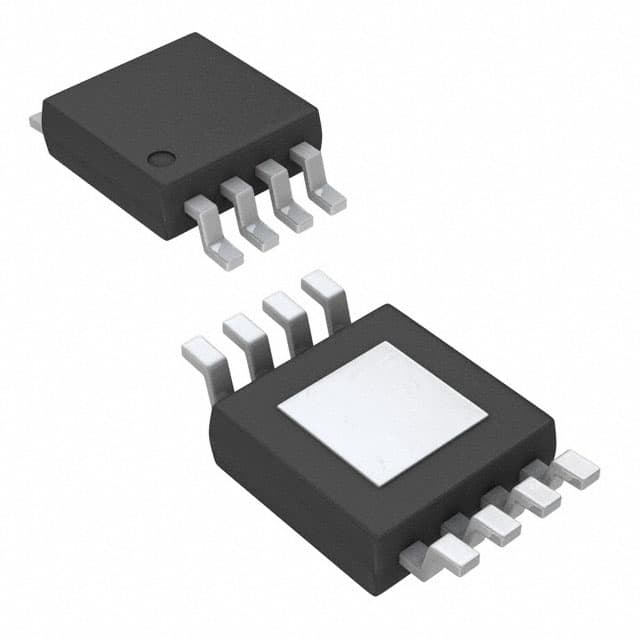
Monolithic Power Systems Inc. MP3801DH-LF-Z
- Part No.:
- MP3801DH-LF-Z
- Manufacturer:
- Monolithic Power Systems Inc.
- Category:
- Lighting, Ballast Controllers
- Package:
- 8-TSSOP, 8-MSOP (0.118", 3.00mm Width) Exposed Pad
- Datasheet:
-
 MP3801DH-LF-Z.pdf
- Description:
- IC EL LAMP DRIVER 200KHZ 8MSOP
- Quantity:
- Payment:

- Shipping:

Inventory:1,465
Please send an inquiry. Send us your inquiry, and we will respond immediately.
Product details
Overview
MP3801DH-LF-Z from Monolithic Power Systems is a high-voltage DC-to-AC converter IC designed to drive electroluminescent (EL) lamps up to 5 in², delivering a regulated ±95V (190VPP) AC output waveform. It operates from 2.5V–5.5V DC input, supports adjustable lamp drive frequency (200–274 Hz) and boost switching frequency (50–200 kHz), and features 10nA shutdown current. Used in mobile phone keypad backlighting and handheld GPS displays.
For engineers reviewing the MP3801DH-LF-Z datasheet, MP3801DH-LF-Z pinout, MP3801DH-LF-Z application, or MP3801DH-LF-Z equivalent, key selection criteria include EL lamp voltage compliance, dual-oscillator configurability, MSOP-8 thermal resistance (θJA = 150°C/W), and compatibility with single-cell Li-ion or multi-cell alkaline/NiMH power sources.
Technical Context
The MP3801 integrates two independent functional stages: a boost converter that regulates up to +95V at CS pin, and an H-bridge driver that alternates ±95V across VA and VB terminals to generate AC lamp drive. Each stage uses a dedicated internal oscillator with external resistor control (RSW_OSC for boost frequency, REL_OSC for EL frequency).
It supports split-supply operation and enables/disables via VEN logic referenced to VDD. The device implements N-channel MOSFET switching (RDS(ON) = 9Ω typ.) and requires only one external inductor and minimal passive components-no transformer or high-voltage capacitors beyond the 100V NPO ceramic at CS.
Key Specifications
| Parameter | Value and Actual Design Meaning |
|---|---|
| Input Voltage Range | 2.5V to 5.5V DC - supports direct connection to 1-cell Li-ion or 2–3-cell alkaline/NiMH batteries. |
| Output Voltage | ±95V (190VPP) AC - regulated high-voltage AC output suitable for driving EL lamps up to 5 in². |
| Lamp Drive Frequency | 200–274 Hz - externally adjustable via REL_OSC resistor; optimized for visible brightness and low audible noise. |
| Boost Switching Frequency | 50–200 kHz - set by RSW_OSC resistor; balances inductor size, efficiency, and EMI. |
| Shutdown Current | 10 nA - enables ultra-low-power standby in battery-critical portable devices. |
| RDS(ON) | 9 Ω - low on-resistance of internal N-MOSFET switch reduces conduction loss in boost stage. |
| Operating Temperature | –40°C to +85°C - qualified for industrial and consumer handheld environments. |
Pinout & Package
MP3801DH-LF-Z is housed in an 8-pin MSOP package with exposed thermal pad connected to GND (Pin 4). The package supports surface-mount assembly and provides θJA = 150°C/W on 1"² 1 oz copper PCB.
| Pin/Terminal | Circuit Role | Design Meaning |
|---|---|---|
| 1 VDD | Power supply input | Accepts 2.5–5.5V DC; powers both boost and H-bridge stages. |
| 2 RSW_OSC | Boost oscillator frequency control | Resistor-connected node setting boost switching frequency (50–200 kHz). |
| 3 REL_OSC | EL lamp oscillator frequency control | Resistor-connected node setting lamp drive frequency (200–274 Hz). |
| 4 GND | Ground reference and thermal pad connection | Primary return path; exposed pad must be soldered to PCB ground plane for thermal management. |
| 5 LX | Boost switch node | Connects to external inductor and internal N-MOSFET drain; carries high di/dt switching current. |
| 6 CS | Boost output / high-side rail | Regulated +95V output; requires 100V NPO ceramic capacitor for energy storage and ripple suppression. |
| 7 VB | H-bridge output B | One terminal of AC output delivered to EL lamp; alternates between +95V and –95V. |
| 8 VA | H-bridge output A | Second terminal of AC output delivered to EL lamp; phase-opposed to VB for true AC drive. |
Key Features
| Feature | Design Value |
|---|---|
| Dual independent oscillators | Separate RSW_OSC and REL_OSC pins enable independent optimization of boost efficiency and EL brightness/flicker performance. |
| Single-inductor architecture | Eliminates need for transformer or coupled inductors-reduces BOM count and board area in space-constrained portable designs. |
| Split-supply capability | Supports bipolar AC output generation without external charge pumps or floating supplies-simplifies high-voltage EL lamp interface. |
| Low shutdown current | 10nA quiescent draw extends battery life during display-off periods in remote controls and GPS units. |
Applications
| Mobile Phone Keypad Backlighting | Handheld GPS Display Illumination |
|---|---|
Use Scenario: Driving small-area EL panels behind rubberized keypad membranes in GSM/3G feature phones. IC Role / Device Role / Timing Role: Generates regulated 190VPP AC at ~240Hz to excite phosphor layer; timing controlled by REL_OSC resistor. Use Value: Delivers uniform, flicker-free illumination with no visible strobing, while consuming <20mA from 3.7V Li-ion cell. | Use Scenario: Providing edge-lit backlighting for monochrome LCDs in ruggedized outdoor GPS receivers. IC Role / Device Role / Timing Role: Functions as compact high-voltage AC source; boost stage (fSW ≈ 85kHz) and lamp stage (fEL ≈ 240Hz) operate independently. Use Value: Enables thin, low-profile display modules with consistent luminance across temperature (–40°C to +85°C) and battery voltage range. |
| Remote Control Button Illumination | PDA Status Indicator Panel |
Use Scenario: Powering segmented EL traces on IR remote PCBs for night-use visibility. IC Role / Device Role / Timing Role: Supplies low-current, high-impedance AC drive; enabled only during button press via VEN logic. Use Value: Achieves <10nA shutdown state and fast wake-up, extending alkaline battery life beyond 12 months in low-duty-cycle use. | Use Scenario: Driving multi-segment EL icons (signal strength, battery, Bluetooth) on legacy PDA front bezels. IC Role / Device Role / Timing Role: Acts as integrated HV AC generator with configurable fEL to match human-perceived brightness vs. power trade-off. Use Value: Replaces discrete transistor+transformer solutions, reducing component count by >60% and improving long-term reliability. |
Equivalent & Alternatives
The following parts are listed as comparable options for similar EL lamp driver applications.
| Alternative Part | Technical Difference | Application Difference | Selection Advice |
|---|---|---|---|
| MP3802DH-LF-Z | Successor IC with improved efficiency, lower RDS(ON) (6Ω), and extended fEL range (40–1000 Hz); same MSOP-8 footprint. | Supports wider lamp sizes and higher brightness modes; better suited for new designs requiring longer battery life. | Select MP3802 for new designs-pin-compatible upgrade with enhanced thermal performance and broader frequency tuning. |
| MAX14521EASA+ | Maxim Integrated EL driver; 200VPP output, fixed 400Hz fEL, requires external MOSFETs; SO-8 package. | Lacks integrated switches-needs external high-voltage transistors and gate drivers; higher BOM cost and layout complexity. | Consider MAX14521 only when fixed-frequency operation and external switch control are required; not drop-in compatible. |
Compared with MP3801DH-LF-Z, MP3802DH-LF-Z offers lower conduction loss and wider lamp frequency tuning, while MAX14521EASA+ trades integration for flexibility in high-voltage switching topology-making MP3801 appropriate only for legacy repair or cost-sensitive replacement where its 190VPP/240Hz profile matches existing EL panel specs.
Availability
MP3801DH-LF-Z is available at Aetrix Electronics and suitable for mobile phone keypad backlighting, handheld GPS display illumination, and remote control button illumination requiring stable component supply and long-lifecycle support for legacy portable electronics.
Supply support for MP3801DH-LF-Z includes scheduled delivery planning, volume procurement assistance, BOM continuity management, traceable sourcing, and lifecycle availability coordination for OEM customers, industrial embedded developers, connected-device designers, and electronics production programs.
Manufacturer
Monolithic Power Systems (MPS) is a fabless semiconductor company specializing in high-performance analog and power ICs, with design centers in the US, China, and Taiwan.
The MP3801 belongs to MPS's high-voltage display driver product line, engineered specifically for efficient, compact EL lamp excitation in battery-powered portable devices-prioritizing low quiescent current, dual-frequency control, and minimal external component count.
FAQ
What does "NOT RECOMMENDED FOR NEW DESIGNS" mean for MP3801DH-LF-Z?
This designation indicates Monolithic Power Systems has superseded the MP3801 with the MP3802, which offers improved RDS(ON), wider frequency range, and enhanced efficiency. MP3801 remains fully functional and supported for existing designs but is not approved for inclusion in newly initiated projects per MPS's product roadmap guidance.
Can MP3801DH-LF-Z drive EL lamps larger than 5 square inches?
No. The datasheet specifies a maximum lamp area of 5 in² under recommended operating conditions. Larger lamps increase capacitive load, causing excessive current demand, reduced output voltage regulation, and potential thermal overload-especially at higher fEL settings or elevated ambient temperatures.
Why does MP3801 require separate resistors for RSW_OSC and REL_OSC?
Independent resistor control allows simultaneous optimization of boost converter efficiency (via fSW) and EL lamp visual performance (via fEL). For example, high fSW minimizes inductor size but increases switching loss, while low fEL improves brightness but may cause visible flicker-decoupling these enables precise system-level tuning.
Is the exposed pad on the MSOP-8 package electrically connected?
Yes-the exposed thermal pad is internally connected to GND (Pin 4). It must be soldered to a PCB copper pour tied to the system ground plane to ensure proper thermal dissipation (θJC = 65°C/W) and electrical stability; floating or unconnected pads cause overheating and premature failure.
What is the role of the 100V NPO capacitor at the CS pin?
This capacitor serves as the output energy storage element for the boost stage. It smooths the pulsed LX waveform into a regulated +95V DC rail at CS, supplying stable voltage to the H-bridge. NPO dielectric ensures minimal capacitance drift over temperature and voltage-critical for maintaining consistent EL lamp brightness.
Does MP3801DH-LF-Z support PWM dimming of EL lamps?
No. The IC does not implement PWM-based brightness control. Brightness is adjusted indirectly via lamp drive frequency (fEL) using the REL_OSC resistor-higher fEL increases perceived luminance but also power consumption and audible noise. True dimming requires external enable/disable cycling, which is not recommended due to lamp stress.
MP3801DH-LF-Z Specifications
- Product attributes
- Attribute value
- Manufacturer:
- Monolithic Power Systems Inc.
- Series:
- -
- Package/Case:
- 8-TSSOP, 8-MSOP (0.118", 3.00mm Width) Exposed Pad
- Packaging:
- Tape & Reel (TR)
- Product Status:
- Not For New Designs
- Type:
- EL Lamp Driver
- Frequency:
- 50kHz ~ 200kHz
- Voltage - Supply:
- 2.5V ~ 5.5V
- Current - Supply:
- -
- Current - Output Source/Sink:
- -
- Dimming:
- No
- Operating Temperature:
- -40°C ~ 85°C
- Grade:
- -
- Qualification:
- -
- Mounting Type:
- Surface Mount
- Supplier Device Package:
- 8-MSOP-EP
MP3801DH-LF-Z FAQ
1.How can I place an order for MP3801DH-LF-Z through Aetrix?
Please submit a Request for Quotation (RFQ) for MP3801DH-LF-Z on Aetrix. Our sales agent will provide a competitive quotation and guide you through the order confirmation once you accept the terms.
2.Are the price and stock information for MP3801DH-LF-Z reliable?
The price and inventory of MP3801DH-LF-Z are updated periodically and may fluctuate due to market conditions. Stock and pricing data are typically refreshed every 24 hours. Quotation validity for MP3801DH-LF-Z is usually 5 days.
3.What payment methods are accepted for MP3801DH-LF-Z?
We accept Wire Transfer, PayPal, Credit Card, Western Union, MoneyGram, and Escrow for MP3801DH-LF-Z transactions.
Note: Certain payment methods may incur a processing fee.
4.How is shipping managed for MP3801DH-LF-Z?
MP3801DH-LF-Z orders can be shipped via leading logistics carriers, including DHL, UPS, FedEx, TNT, or Registered Mail.
Once your MP3801DH-LF-Z order is processed, you will receive an email with the shipment details and tracking number.
Note: Tracking information may take up to 24 hours to appear. Express delivery typically takes 3–5 business days.
5.How can I obtain technical support or documentation for MP3801DH-LF-Z?
For technical support, including MP3801DH-LF-Z datasheets, pinout diagrams, or application guidance, please contact our engineering support team. They can provide detailed documentation and assistance for your MP3801DH-LF-Z requirements.
6.How does Aetrix verify that MP3801DH-LF-Z is sourced from the original manufacturer or authorized distributors?
All MP3801DH-LF-Z products on Aetrix are procured from qualified distributors and authorized channels. Our dedicated quality assurance team conducts strict verification, including traceability checks and, if necessary, third-party testing. This ensures that MP3801DH-LF-Z meets industry standards.
7.What is the process for return or replacement of MP3801DH-LF-Z?
All MP3801DH-LF-Z units undergo pre-shipment inspection (PSI). If there is an issue with MP3801DH-LF-Z, returns or replacements are accepted under the following conditions:
1.Quantity discrepancies, incorrect items, or visible external defects (such as breakage or corrosion), acknowledged by Aetrix.
2.The issue is reported within 90 days of delivery.
3.The MP3801DH-LF-Z part is unused and in its original packaging.
Return procedure for MP3801DH-LF-Z:
1.Submit a request within 90 days.
2.Obtain a Return Material Authorization (RMA) from Aetrix.
MP3801DH-LF-Z Tags
-
HV833MG-G
Microchip Technology
-
HV857MG-G
Microchip Technology
-
MIC4826YMM-TR
Microchip Technology

-
HV823LG-G
Microchip Technology
-
IR2156STRPBF
Infineon Technologies
-
BTS712204ESAXUMA1
Infineon Technologies
-
UC3872DW
Texas Instruments
-
MAX14514ETD+
Analog Devices Inc./Maxim Integrated
-
MAX14521EETG+
Analog Devices Inc./Maxim Integrated
-
HV857LMG-G
Microchip Technology
-
HV860K7-G
Microchip Technology
-
MIC4832YMM
Microchip Technology
Tech Hub

Jumper cables guide covering safe connection order, red and black clamp placement, final ground connection, cable gauge, length, clamp quality, copper vs CCA cables, jump starter comparison and battery…

LDO regulator guide covering low dropout voltage, power dissipation, thermal design, PSRR, output noise, capacitor stability, adjustable LDO circuits, LDO vs buck converter and datasheet selection chec…

Conditional Access Module guide covering CAM meaning, CI/CI+ interface, smart card authorization, DVB security workflow, TV and set-top box compatibility, internal electronics, ESD protection, connecto…

Guide to electronic component obsolescence covering EOL risk, PCN/PDN notices, last-time buy planning, replacement options, form-fit-function validation, counterfeit risk and BOM lifecycle management.

18650 battery guide covering lithium-ion cell basics, 3.6V/3.7V voltage, 4.2V charging, mAh and Wh capacity, protected cells, chargers, BMS, series-parallel packs, holders, welding and sourcing checks.…

Hall effect sensor guide covering working principle, linear and digital sensors, Arduino circuits, current sensing, speed detection, automotive applications, A3144 examples, signal filtering and datash…

Product Change Notification guide for electronic components, covering PCN meaning, PCN vs PDN/EOL, common change types, risk levels, form-fit-function review, engineering validation, BOM control, LTB/L…

A practical guide to blend door actuators, covering HVAC function, symptoms, location, AC and heater issues, reset and calibration, replacement cost, electrical diagnosis, compatibility checks, and rep…

Engineering guide to Raspberry Pi alternatives, covering chip-level differences, Orange Pi, ROCK, Jetson, Banana Pi, NanoPi, Compute Module, Pico, GPIO, camera, HAT compatibility, and replacement risks…

Engineering guide to dynamic load response testing for high-current buck converters, covering load step setup, slew rate, Vcore undershoot, overshoot, recovery time, probe location, output capacitors a…


