
 My Inquiry
 My Account


Monolithic Power Systems Inc. MP3910AGS-Z
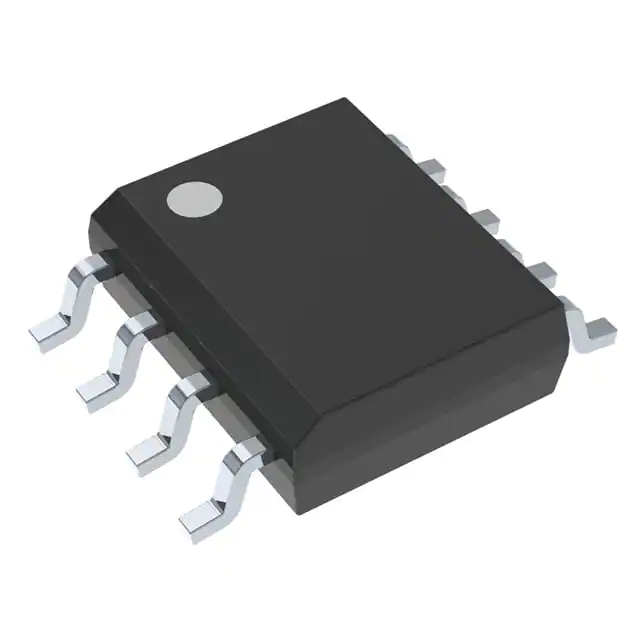
- Part No.:
- MP3910AGS-Z
- Manufacturer:
- Monolithic Power Systems Inc.
- Category:
- DC DC Switching Controllers
- Package:
- 8-SOIC (0.154", 3.90mm Width)
- Datasheet:
-
 MP3910AGS-Z.pdf
- Description:
- PEAK CURRENT MODE BOOST PWM CONT
- Quantity:
- Payment:

- Shipping:

Inventory:2,500
Please send an inquiry. Send us your inquiry, and we will respond immediately.
Product details
Overview
MP3910AGS-Z from Monolithic Power Systems is a peak current mode PWM controller for external N-channel MOSFETs in flyback, boost, forward, and SEPIC topologies. It delivers 1A gate drive, supports 30–400kHz programmable switching frequency, features pulse-skipping light-load operation, and integrates cycle-by-cycle current limit, OVP, SCP, OLP hiccup protection, and external soft-start-enabling high-efficiency telecom isolated supplies and PoE-powered devices.
For engineers reviewing the MP3910AGS-Z datasheet, MP3910AGS-Z pinout, MP3910AGS-Z application, or MP3910AGS-Z equivalent, key selection criteria include its SOIC-8 package compatibility, 9–14V VCC range, 185mV current-sense threshold, 0.95V pulse-skip trigger, and dual feedback mode (FB/COMP) auto-detection via ISENSE pin voltage.
Technical Context
The MP3910AGS-Z implements a peak current mode control architecture with integrated slope compensation, enabling stable loop compensation and inherent cycle-by-cycle current limiting. Its programmable oscillator uses an external RT-to-GND resistor to set frequency between 30kHz and 400kHz, with maximum operating frequency rated at 500kHz.
Feedback configuration is dynamically selected at startup via ISENSE pin: a ≥185mV detection enables COMP-pin direct feedback (for isolated flyback), while <185mV enables internal error amplifier operation with FB-pin sensing (for non-isolated boost). Soft-start and hiccup-mode protections are coordinated through SS pin voltage ramping (54μA charge) and controlled discharge (17.8μA/1.66μA) based on OLP/OVP/SCP events.
Key Specifications
| Parameter | Value and Actual Design Meaning |
|---|---|
| VCC Range | 9V to 14V - powers internal circuitry; UVLO rising threshold at 8V with 650mV hysteresis ensures reliable enable/disable sequencing. |
| Gate Drive Strength | 1A sourcing/sinking - minimizes MOSFET switching losses and supports wide selection of standard-threshold N-channel devices. |
| Switching Frequency | 30kHz to 400kHz (programmable via RT resistor) - balances EMI, efficiency, and magnetics size across telecom and industrial power designs. |
| Current Sense Threshold | 185mV typical - sets cycle-by-cycle peak current limit; enables precise overcurrent response without external amplification. |
| Pulse-Skip Threshold | 0.95V on COMP pin - triggers light-load efficiency mode by pausing PWM cycles, reducing gate drive and switching losses below ~10% load. |
| Soft-Start Charge Current | 54μA - controls ramp rate of SS capacitor voltage to manage inrush current and prevent output overshoot during startup and fault recovery. |
| OVP Reference | 1.438V typical on FB pin - detects overvoltage in non-isolated applications or auxiliary winding voltage in isolated flyback configurations. |
| Thermal Shutdown | 160°C with 20°C hysteresis - protects die from thermal runaway; automatic recovery after cooldown avoids latch-off behavior. |
Pinout & Package
MP3910AGS-Z is housed in a standard SOIC-8 package with exposed pad (not thermally enhanced per datasheet), suitable for surface-mount assembly and compatible with JEDEC MS-012AC footprint.
| Pin/Terminal | Circuit Role | Design Meaning |
|---|---|---|
| 1 GND | Power ground reference | Return path for gate driver and internal bias circuits; must be low-impedance connection to minimize noise coupling into current sense path. |
| 2 RT | Frequency programming input | Connects external resistor to GND to set oscillator frequency; value determines switching frequency per fSW ≈ 2.35×10³/RT (RT in kΩ, fSW in kHz). |
| 3 COMP | Error amplifier output / isolated feedback input | Drives compensation network in non-isolated mode; accepts optocoupler signal directly in isolated mode when ISENSE detects ≥185mV. |
| 4 FB | Voltage feedback / OVP monitor | Connects to resistive divider for output regulation in boost; monitors auxiliary winding voltage for OVP in flyback; internal 1.237V reference enables precision regulation. |
| 5 SS | Soft-start and protection timer | Controls COMP voltage ramp during startup/fault recovery; charged at 54μA, discharged at 17.8μA (OLP) or 1.66μA (SCP/OVP) to implement hiccup-mode restart logic. |
| 6 ISENSE | Current sense input / topology detection | Senses voltage across external shunt for peak current control; outputs 55μA pulse at startup to auto-detect isolated vs. non-isolated configuration based on reflected voltage level. |
| 7 VCC | Supply input | Accepts 9–14V DC; requires local bypass capacitor; clamping required if input exceeds 14V to prevent damage. |
| 8 GATE | MOSFET gate driver output | 1A push-pull driver for N-channel power MOSFET; low impedance (4.1Ω sourcing / 2Ω sinking) reduces gate charge time and conduction loss. |
Key Features
| Feature | Design Value |
|---|---|
| Dual feedback topology auto-detection | ISENSE pin voltage (≥185mV or <185mV) configures FB or COMP as primary feedback path at power-up-eliminates manual jumper or external logic. |
| Hiccup-mode OLP/SCP/OVP protection | SS pin discharge currents (17.8μA for OLP, 1.66μA for SCP/OVP) and 0.2V restart threshold enforce safe, self-recovering fault handling without external latching circuitry. |
| Programmable frequency with noise-immune RT interface | RT pin accepts 6.81kΩ–80.6kΩ resistor to set 30–400kHz; design guidance limits max RT to maintain robustness against EMI-induced jitter. |
| Pulse-skipping light-load optimization | COMP voltage monitoring below 0.95V disables PWM clock pulses-reducing quiescent current to ~400μA and eliminating switching losses at no/low load. |
| Integrated slope compensation | On-chip ramp generator prevents subharmonic oscillation in duty cycles >50%, enabling stable operation without external components in boost/flyback designs. |
Applications
| Telecom Isolated Power Supplies | Brick Modules |
|---|---|
Use Scenario: 48V input telecom rectifier feeding isolated 12V/24V secondary rails with tight regulation and high reliability. IC Role / Device Role / Timing Role: Primary-side PWM controller regulating flyback transformer via optocoupler feedback to COMP pin; manages 250kHz switching and hiccup-mode OVP/SCP response. Use Value: Auto-detected isolated mode eliminates need for external mode-select resistors; 160°C thermal shutdown prevents field failures under sustained overload. | Use Scenario: Compact 1/4-brick DC-DC module converting 24V–60V input to 5V/3.3V outputs for server backplanes. IC Role / Device Role / Timing Role: Boost controller driving high-current N-MOSFET in non-isolated step-up stage; configured via FB pin with 1.237V reference for ±1% output accuracy. Use Value: 1A gate drive supports fast-switching SiC MOSFETs; pulse-skipping extends no-load efficiency to >85%, meeting Energy Star requirements. |
| Off-line Controller | PoE Powered Devices |
Use Scenario: Universal-input (85–265VAC) offline flyback adapter for consumer electronics with <300mW standby power. IC Role / Device Role / Timing Role: Primary-side controller using auxiliary winding feedback to FB pin; leverages UVLO (8V) and 400μA quiescent current for low-power start-up and hold-up. Use Value: External soft-start (SS pin) prevents inrush into bulk capacitor; leading-edge blanking (214ns) rejects MOSFET turn-on spikes during current sensing. | Use Scenario: IEEE 802.3af/at powered device (PD) accepting 37–57V DC input and generating regulated 12V/5V rails for VoIP phones or wireless APs. IC Role / Device Role / Timing Role: Secondary-side boost controller stepping up midspan PSE output to higher intermediate bus; operates in SEPIC mode for input dropout tolerance. Use Value: Programmable frequency (30–400kHz) allows EMI tuning around PoE data band; OLP hiccup mode prevents thermal damage during cable fault conditions. |
Equivalent & Alternatives
The following parts are listed as comparable options for similar peak current mode PWM controller applications.
| Alternative Part | Technical Difference | Application Difference | Selection Advice |
|---|---|---|---|
| UCC28083DR | Fixed 100kHz/200kHz frequency; no programmable RT; lower gate drive (0.5A); no pulse-skipping mode. | Designed for cost-sensitive AC-DC adapters; lacks light-load efficiency optimization and dual-feedback auto-detection. | Select UCC28083DR only for fixed-frequency, non-isolated boost where BOM count reduction outweighs efficiency and flexibility trade-offs. |
| NCP1252ADR2G | Fixed 65kHz frequency; 0.5A gate drive; no soft-start pin-relies on VCC ramp; no hiccup-mode OLP. | Targeted at low-cost offline flyback; missing programmable frequency, pulse-skip, and SS-controlled protection timing. | Choose NCP1252ADR2G for simple, low-power flyback where thermal derating and fault recovery are managed externally. |
Compared with UCC28083DR and NCP1252ADR2G, MP3910AGS-Z provides superior design flexibility through RT-programmable frequency, true hiccup-mode protection with SS-timed recovery, and automatic topology detection-reducing validation effort and component count in multi-platform power designs.
Availability
MP3910AGS-Z is available at Aetrix Electronics and suitable for telecom isolated power supplies, brick modules, off-line controllers, and PoE powered devices requiring stable component supply, long-term lifecycle support, and RoHS-compliant packaging.
Supply support for MP3910AGS-Z includes scheduled delivery planning, volume procurement assistance, BOM continuity management, traceable sourcing, and lifecycle availability coordination for OEM customers, industrial embedded developers, connected-device designers, and electronics production programs.
Manufacturer
Monolithic Power Systems (MPS) is a fabless semiconductor company specializing in high-performance analog and power ICs, with design centers in the US, China, and Taiwan, and global manufacturing partnerships.
The MP3910A belongs to MPS's high-voltage PWM controller product line, engineered for flexible, efficient, and robust DC-DC conversion in isolated and non-isolated topologies-targeting telecom infrastructure, industrial power, and connected edge devices.
FAQ
What is the minimum recommended RT resistor value for stable operation?
The datasheet specifies a minimum RT value of 6.81kΩ for 308–363kHz operation. Using a lower resistance risks excessive oscillator current, increased jitter, and reduced noise immunity. For designs targeting >300kHz, RT = 6.81kΩ is validated; values below 5.6kΩ are not characterized and may compromise cycle-by-cycle current limit accuracy due to timing skew.
How does the ISENSE pin determine isolated vs. non-isolated mode?
At power-up, the MP3910AGS-Z applies a 55μA current pulse to ISENSE for 180μs. If the resulting voltage exceeds 185mV (indicating optocoupler pull-up in isolated flyback), it disables the internal error amplifier and enables COMP-pin feedback. If voltage remains below 185mV (as in direct FB-divider connection), it enables FB-based regulation with internal EA active.
Can MP3910AGS-Z drive a 600V MOSFET in a 400V boost application?
Yes-the MP3910AGS-Z itself has no drain voltage rating; it drives external MOSFETs. A 600V-rated N-channel MOSFET is appropriate for 400V boost output, provided VDS(MAX) ≥ 1.5 × VOUT (i.e., ≥600V) to absorb turn-off voltage spikes. Gate drive capability (1A) and 14V VCC limit require proper gate resistor selection to avoid shoot-through and ensure clean transitions.
What causes the SS pin voltage to drop to 0.2V during hiccup mode?
During SCP or OVP, the MP3910AGS-Z activates a 1.66μA discharge current on the SS pin. When SS voltage falls to 0.2V, the controller resets its protection latch and initiates a new soft-start cycle-charging SS again at 54μA. This 0.2V threshold ensures full internal reset before re-enabling gate drive, preventing premature restart under persistent fault.
Is the 1.237V FB reference voltage trimmed across temperature?
Yes-the FB reference is specified as 1.211V to 1.258V over –40°C to +125°C, with typical 1.237V at 25°C. This ±1.3% total variation ensures ≤±1.5% output regulation error in well-designed feedback networks, making it suitable for applications requiring tight DC accuracy without post-regulation.
Does pulse-skipping mode affect transient response?
No-pulse-skipping only pauses PWM cycles when COMP voltage falls below 0.95V; regulation remains active via the error amplifier. During load steps, COMP voltage rises immediately, exiting skip mode within one cycle. Transient recovery is preserved because the control loop (EA + COMP) stays fully operational-unlike burst-mode controllers that disable internal bias.
What is the purpose of the 214ns leading-edge blanking on ISENSE?
The 214–398ns leading-edge blanking (LEB) disables current sensing during MOSFET turn-on to ignore gate-drive-induced voltage spikes and transformer leakage ringing. This prevents false OCP triggering while maintaining accurate cycle-by-cycle current limiting during steady-state conduction-critical for stable operation in high-dV/dt flyback designs.
MP3910AGS-Z Specifications
- Product attributes
- Attribute value
- Manufacturer:
- Monolithic Power Systems Inc.
- Series:
- -
- Package/Case:
- 8-SOIC (0.154", 3.90mm Width)
- Packaging:
- Tape & Reel (TR)
- Product Status:
- Active
- Output Type:
- PWM Signal
- Function:
- Step-Up
- Output Configuration:
- Positive
- Topology:
- Boost
- Number of Outputs:
- 1
- Output Phases:
- 1
- Voltage - Supply (Vcc/Vdd):
- 9V ~ 14V
- Frequency - Switching:
- 30kHz ~ 400kHz
- Duty Cycle (Max):
- 95%
- Synchronous Rectifier:
- No
- Clock Sync:
- No
- Serial Interfaces:
- -
- Control Features:
- Current Limit, Frequency Control, Soft Start
- Operating Temperature:
- -40°C ~ 125°C (TJ)
- Grade:
- -
- Qualification:
- -
- Mounting Type:
- Surface Mount
- Supplier Device Package:
- 8-SOIC
MP3910AGS-Z FAQ
1.How can I place an order for MP3910AGS-Z through Aetrix?
Please submit a Request for Quotation (RFQ) for MP3910AGS-Z on Aetrix. Our sales agent will provide a competitive quotation and guide you through the order confirmation once you accept the terms.
2.Are the price and stock information for MP3910AGS-Z reliable?
The price and inventory of MP3910AGS-Z are updated periodically and may fluctuate due to market conditions. Stock and pricing data are typically refreshed every 24 hours. Quotation validity for MP3910AGS-Z is usually 5 days.
3.What payment methods are accepted for MP3910AGS-Z?
We accept Wire Transfer, PayPal, Credit Card, Western Union, MoneyGram, and Escrow for MP3910AGS-Z transactions.
Note: Certain payment methods may incur a processing fee.
4.How is shipping managed for MP3910AGS-Z?
MP3910AGS-Z orders can be shipped via leading logistics carriers, including DHL, UPS, FedEx, TNT, or Registered Mail.
Once your MP3910AGS-Z order is processed, you will receive an email with the shipment details and tracking number.
Note: Tracking information may take up to 24 hours to appear. Express delivery typically takes 3–5 business days.
5.How can I obtain technical support or documentation for MP3910AGS-Z?
For technical support, including MP3910AGS-Z datasheets, pinout diagrams, or application guidance, please contact our engineering support team. They can provide detailed documentation and assistance for your MP3910AGS-Z requirements.
6.How does Aetrix verify that MP3910AGS-Z is sourced from the original manufacturer or authorized distributors?
All MP3910AGS-Z products on Aetrix are procured from qualified distributors and authorized channels. Our dedicated quality assurance team conducts strict verification, including traceability checks and, if necessary, third-party testing. This ensures that MP3910AGS-Z meets industry standards.
7.What is the process for return or replacement of MP3910AGS-Z?
All MP3910AGS-Z units undergo pre-shipment inspection (PSI). If there is an issue with MP3910AGS-Z, returns or replacements are accepted under the following conditions:
1.Quantity discrepancies, incorrect items, or visible external defects (such as breakage or corrosion), acknowledged by Aetrix.
2.The issue is reported within 90 days of delivery.
3.The MP3910AGS-Z part is unused and in its original packaging.
Return procedure for MP3910AGS-Z:
1.Submit a request within 90 days.
2.Obtain a Return Material Authorization (RMA) from Aetrix.
MP3910AGS-Z Tags

-
UCC28C45DR
Texas Instruments
-
UCC28C40DR
Texas Instruments
-
UCC28C43DR
Texas Instruments

-
ZXSC410E6TA
Diodes Incorporated
-
LM3524DMX/NOPB
Texas Instruments
-
LM3489MMX/NOPB
Texas Instruments
-
MIC2102YML-TR
Microchip Technology

-
LM5148RGYR
Texas Instruments
-
TL598CDR
Texas Instruments
-
LM5155DSSR
Texas Instruments
-
LM25085MYX/NOPB
Texas Instruments
-
UCC2813DTR-0
Texas Instruments
Tech Hub

Operational amplifier guide covering op amp basics, feedback, ideal vs real op amps, common configurations, buffer circuits, offset, bias current, gain-bandwidth, slew rate, rail-to-rail limits and sel…

Jumper cables guide covering safe connection order, red and black clamp placement, final ground connection, cable gauge, length, clamp quality, copper vs CCA cables, jump starter comparison and battery…

LDO regulator guide covering low dropout voltage, power dissipation, thermal design, PSRR, output noise, capacitor stability, adjustable LDO circuits, LDO vs buck converter and datasheet selection chec…

Conditional Access Module guide covering CAM meaning, CI/CI+ interface, smart card authorization, DVB security workflow, TV and set-top box compatibility, internal electronics, ESD protection, connecto…

Guide to electronic component obsolescence covering EOL risk, PCN/PDN notices, last-time buy planning, replacement options, form-fit-function validation, counterfeit risk and BOM lifecycle management.

18650 battery guide covering lithium-ion cell basics, 3.6V/3.7V voltage, 4.2V charging, mAh and Wh capacity, protected cells, chargers, BMS, series-parallel packs, holders, welding and sourcing checks.…

Hall effect sensor guide covering working principle, linear and digital sensors, Arduino circuits, current sensing, speed detection, automotive applications, A3144 examples, signal filtering and datash…

Product Change Notification guide for electronic components, covering PCN meaning, PCN vs PDN/EOL, common change types, risk levels, form-fit-function review, engineering validation, BOM control, LTB/L…

A practical guide to blend door actuators, covering HVAC function, symptoms, location, AC and heater issues, reset and calibration, replacement cost, electrical diagnosis, compatibility checks, and rep…

Engineering guide to Raspberry Pi alternatives, covering chip-level differences, Orange Pi, ROCK, Jetson, Banana Pi, NanoPi, Compute Module, Pico, GPIO, camera, HAT compatibility, and replacement risks…


