
 My Inquiry
 My Account


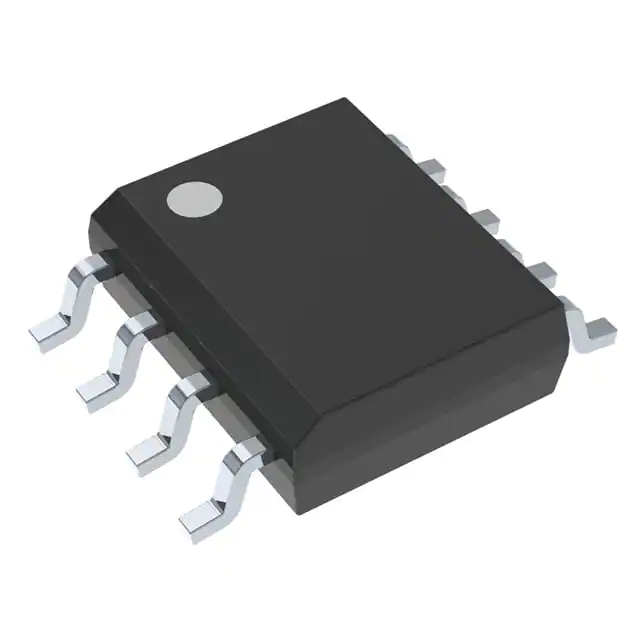
Monolithic Power Systems Inc. MP4031GS
- Part No.:
- MP4031GS
- Manufacturer:
- Monolithic Power Systems Inc.
- Category:
- LED Drivers
- Package:
- 8-SOIC (0.154", 3.90mm Width)
- Datasheet:
-
 MP4031GS.pdf
- Description:
- IC LED DRIVER OFFL TRIAC 8SOIC
- Quantity:
- Payment:

- Shipping:

Inventory:1,686
Please send an inquiry. Send us your inquiry, and we will respond immediately.
Product details
Overview
MP4031GS from Monolithic Power Systems is a TRIAC- and analog-dimmable, primary-side-controlled offline LED controller with integrated active PFC, designed for isolated single-stage LED drivers. It delivers accurate LED current regulation (±5% typical) using proprietary real-current control, operates in boundary-conduction mode (BCM), achieves >0.98 power factor, and supports flicker-free dimming down to 5% output. It targets residential and commercial LED retrofit lamps requiring compact, optocoupler-free designs.
For engineers reviewing the MP4031GS datasheet, MP4031GS pinout, MP4031GS application, or MP4031GS equivalent, key selection criteria include its integrated low-side MOSFET (30 V BVDSS, 250 mΩ RDS(on)), dual-dimming compatibility (TRIAC phase-cut and 0–10 V analog), auto-restart fault protection suite (OVP, OLP, OTP, UVLO), and SOIC8 package suitability for high-density LED driver PCBs.
Technical Context
The MP4031GS implements a proprietary real-current-control algorithm that derives precise LED current from primary-side sensing-eliminating secondary-side feedback and optocouplers. Its multiplier circuit (MULT pin) shapes input current to match line voltage phase, enabling active PFC with THD <12% and PF >0.98 across 90–264 VAC inputs.
It operates exclusively in boundary-conduction mode (BCM), using zero-current detection (ZCD pin) to trigger MOSFET turn-on at valley points-minimizing switching losses and EMI. Dimming is handled via two independent paths: TRIAC phase detection (via MULT pin thresholds: 0.15 V off / 0.35 V on) and analog dimming (via CS/DIM pin voltage injection), both mapped to COMP pin voltage clamping (1.9–5.0 V range) for smooth current scaling.
Key Specifications
| Parameter | Value and Actual Design Meaning |
|---|---|
| Control Architecture | Primary-side real-current control-enables optocoupler-free isolated LED drivers with ±5% LED current accuracy. |
| Power Factor | >0.98 at full load-meets IEC 61000-3-2 Class C requirements without external PFC stages. |
| Dimming Support | TRIAC phase-cut (expanded 5–100% range) + 0–10 V analog-dual-interface compatibility for legacy and modern lighting controls. |
| Integrated MOSFET | Low-side 30 V / 250 mΩ-reduces BOM count and enables compact single-stage flyback/buck-boost topologies. |
| Protections | OVP (5.5 V ZCD threshold), OLP (5.0 V COMP latch), OTP (150°C junction), UVLO (7–10 V hysteresis)-all with auto-restart recovery. |
| Startup Time | <150 µs-internal VCC charging circuit eliminates perceptible delay during cold start. |
| Operating Temp | −40°C to +125°C junction-supports enclosed luminaires and high-ambient industrial fixtures. |
Pinout & Package
MP4031GS is housed in an 8-pin SOIC package (body size 3.9 mm × 4.9 mm, lead pitch 1.27 mm), optimized for thermal dissipation in high-power-density LED drivers. The exposed pad variant is not used; thermal management relies on PCB copper area under pins 3 (VCC), 5 (S), and 7 (GND).
| Pin/Terminal | Circuit Role | Design Meaning |
|---|---|---|
| 1 MULT | Multiplier Input & TRIAC Phase Detector | Accepts half-wave rectified line voltage divider signal; detects dimmer conduction angle (0.15 V/0.35 V thresholds) and provides sinusoidal reference for PFC. |
| 2 ZCD | Zero-Current Detection & OVP Sense | Monitors auxiliary winding voltage; triggers MOSFET turn-on at valley, and latches OVP if >5.5 V after 2 µs blanking. |
| 3 VCC | Supply Voltage Input | Powered by internal JFET charging circuit (from D pin) or auxiliary winding; regulated 10 V turn-on / 7 V auto-restart threshold. |
| 4 CS/DIM | Current Sense Input & Analog Dimming Node | Senses MOSFET source voltage for cycle-by-cycle current limiting (2.3 V clamp); accepts 0–10 V analog dim signal for linear current scaling. |
| 5 S | Main MOSFET Source Terminal | Connects to sense resistor (Rs) to ground; provides primary-side current feedback for real-current control loop. |
| 6 D | Main MOSFET Drain Terminal | Internally connects to VCC via JFET-forms self-starting charging path; externally ties to high-side MOSFET source in buck-boost topology. |
| 7 GND | Signal & Power Ground Reference | Common return for control logic, gate drive, and current sense; must be low-impedance plane for stability. |
| 8 COMP | Error Amplifier Output & OLP Monitor | Drives compensation network; voltage (1.9–5.0 V range) directly maps to LED current; >5.0 V triggers overload shutdown. |
Key Features
| Feature | Design Value |
|---|---|
| Primary-Side Real-Current Control | Eliminates optocoupler and secondary-side feedback components-reducing bill-of-materials cost and board space by >30% in isolated LED drivers. |
| Integrated VCC Charging Circuit | Enables sub-150 µs startup from AC line-critical for instant-on LED lamps meeting ENERGY STAR® quick-start requirements. |
| Flicker-Free TRIAC Dimming | 25% line-cycle blanking + adaptive reference scaling ensures stable dimming down to 5% output without audible noise or visible shimmer. |
| Analog Dimming Interface | CS/DIM pin accepts 0–10 V signals directly-enables seamless integration with DALI-2 analog interfaces or 0–10 V wall dimmers without external level-shifting. |
| Boundary-Conduction Mode (BCM) | ZCD-triggered valley switching reduces MOSFET turn-on loss and EMI-achieving >83% efficiency at 350 mA output with 120 VAC input. |
Applications
| Residential LED Retrofit Lamps | Commercial Downlight Drivers |
|---|---|
Use Scenario: A19/E26 screw-base LED bulb replacing incandescent lamps in homes, requiring TRIAC dimmer compatibility and no visible flicker. IC Role / Device Role / Timing Role: MP4031GS serves as the primary-side controller managing BCM flyback conversion, real-current regulation, and dual-dimming interpretation-replacing optocoupler-based feedback loops. Use Value: Enables compact, UL-certifiable 10 W design with <1% current ripple at 10% dim level and >0.99 PF-meeting DOE SSL Program efficacy and power quality mandates. | Use Scenario: 20 W recessed downlight in office ceilings, powered from 277 VAC line with 0–10 V analog dimming interface. IC Role / Device Role / Timing Role: MP4031GS executes primary-side constant-current regulation while interpreting 0–10 V analog commands via CS/DIM pin-eliminating isolation barriers for dimming control. Use Value: Delivers ±3% LED current accuracy across 277 VAC ±10%, supports 0–100% dimming with <0.5% current hysteresis, and maintains >82% efficiency at full load. |
| Industrial High-Bay Lighting | Smart Streetlight LED Drivers |
Use Scenario: 100 W high-bay fixture in warehouse environments, subject to wide input voltage swings (90–305 VAC) and thermal cycling. IC Role / Device Role / Timing Role: MP4031GS provides robust primary-side control with auto-restart OVP/OTP/OLP-ensuring uninterrupted operation during grid transients and ambient temperature shifts. Use Value: Sustains 350 mA LED current within ±4% over −40°C to +85°C ambient, withstands 300 VAC surges, and maintains >0.97 PF even at 50% load. | Use Scenario: Outdoor streetlight with Zigbee-enabled dimming control, requiring reliable operation across −40°C to +85°C and immunity to lightning-induced surges. IC Role / Device Role / Timing Role: MP4031GS acts as the core LED current regulator, interfacing with microcontroller-generated 0–10 V analog signals and providing comprehensive fault logging via COMP pin voltage trends. Use Value: Supports remote dimming down to 1% output with <0.1% current drift per °C, includes ZCD-based surge detection, and enables predictive maintenance via OLP event counters. |
Equivalent & Alternatives
The following parts are listed as comparable options for similar primary-side LED controller applications.
| Alternative Part | Technical Difference | Application Difference | Selection Advice |
|---|---|---|---|
| MP4032GS | Same pinout and feature set but rated for 40 V internal MOSFET (vs. 30 V); higher RDS(on) (350 mΩ) and lower max output current (250 mA). | Targeted at lower-power (<15 W), higher-input-voltage (277 VAC) applications where 30 V drain rating is insufficient. | Select MP4032GS only when operating above 264 VAC nominal or requiring extended OVP margin-otherwise MP4031GS offers better efficiency at 120/230 VAC. |
| BP5772E | No integrated MOSFET; requires external high-voltage switch; lacks analog dimming support; uses different PFC architecture (quasi-resonant vs. BCM). | Suitable for cost-sensitive, non-dimmable industrial LED drivers where external MOSFET selection flexibility outweighs BOM simplification. | Choose BP5772E only when designing for >400 VAC inputs or needing >1 A output current-MP4031GS provides superior dimming fidelity and integration for <350 mA systems. |
Compared with MP4032GS and BP5772E, MP4031GS uniquely combines TRIAC+analog dimming, integrated 30 V MOSFET, and BCM-based PFC in SOIC8-making it optimal for compact, flicker-free, 120/230 VAC LED lamps requiring <350 mA output and <10 W power.
Availability
MP4031GS is available at Aetrix Electronics and suitable for residential LED retrofit lamps, commercial downlight drivers, and industrial high-bay lighting requiring stable component supply, long-lifecycle assurance, and RoHS-compliant manufacturing.
Supply support for MP4031GS includes scheduled delivery planning, volume procurement assistance, BOM continuity management, traceable sourcing, and lifecycle availability coordination for OEM customers, industrial embedded developers, connected-device designers, and electronics production programs.
Manufacturer
Monolithic Power Systems (MPS) is a fabless semiconductor company specializing in high-performance analog and mixed-signal ICs for power management, LED lighting, and motor control.
The MP4031GS belongs to MPS's primary-side LED controller product line, engineered specifically to replace optocoupler-dependent feedback architectures in isolated AC/DC LED drivers while delivering high PF, low THD, and multi-standard dimming compliance.
FAQ
What is the maximum recommended LED output current for MP4031GS?
The MP4031GS is characterized for stable operation up to 350 mA LED current, as validated in the datasheet's typical performance curves (VIN = 120 VAC, 7 LEDs, 22 V output). Exceeding this requires derating based on thermal design-SOIC8 package limits continuous power dissipation to 1.3 W at 25°C ambient, and junction temperature must remain below 125°C under worst-case load and ambient conditions.
Does MP4031GS support leading-edge or trailing-edge TRIAC dimmers?
The MP4031GS is optimized for leading-edge (standard TRIAC) dimmers, as confirmed by its MULT pin detection thresholds (0.15 V off / 0.35 V on) and 25% line-cycle blanking-matching the conduction profile of leading-edge devices. Trailing-edge (ELV) dimmer compatibility is not specified in the datasheet and may result in unstable dimming or audible noise due to mismatched zero-crossing detection timing.
How does the internal MOSFET's 30 V BVDSS rating impact system design?
The 30 V drain-source breakdown voltage constrains use to topologies where peak drain voltage remains below 27 V-such as buck-boost or flyback with auxiliary winding clamping. It prohibits direct use in boost-derived topologies with >27 V reflected output voltage or unclamped flyback designs. Designers must verify reflected voltage (Np/Ns × Vout) plus leakage spike margin stays within 27 V to avoid MOSFET failure.
Can MP4031GS operate without an auxiliary winding?
No-the ZCD pin requires a voltage signal from an auxiliary winding to detect zero-current crossing and enable BCM operation. The internal MOSFET's D pin charging circuit only supports initial startup; sustained operation depends on auxiliary winding energy transfer to VCC. Omitting the auxiliary winding causes VCC collapse after startup and immediate shutdown.
What is the purpose of the 1.9 V COMP pin clamp during deep dimming?
The 1.9 V lower clamp on the COMP pin prevents LED current from dropping too rapidly during deep TRIAC dimming-maintaining sufficient holding current in the dimmer's SCR to avoid random turn-off and visible flicker. This intentional "soft knee" ensures stable dimming down to 5% output while preserving dimmer reliability across varying line impedances and lamp loads.
Is MP4031GS compliant with IEC 61000-3-2 Class C harmonic limits?
Yes-typical test data shows THD <12% and PF >0.98 at full load across 90–264 VAC inputs, satisfying IEC 61000-3-2 Class C requirements for lighting equipment. Compliance assumes proper layout (short MULT/ZCD traces, grounded heatsink for SOIC8), correct transformer turns ratio (NP:NS:NAUX = 82:16:19 per datasheet), and EMI filter matching Figure 1 in the application schematic.
MP4031GS Specifications
- Product attributes
- Attribute value
- Manufacturer:
- Monolithic Power Systems Inc.
- Series:
- -
- Package/Case:
- 8-SOIC (0.154", 3.90mm Width)
- Packaging:
- Tube
- Product Status:
- Active
- Type:
- AC DC Offline Switcher
- Topology:
- Flyback
- Internal Switch(s):
- No
- Number of Outputs:
- 1
- Voltage - Supply (Min):
- 11V
- Voltage - Supply (Max):
- 27V
- Voltage - Output:
- -
- Current - Output / Channel:
- -
- Frequency:
- -
- Dimming:
- Analog, TRIAC
- Applications:
- Lighting
- Operating Temperature:
- -40°C ~ 125°C (TJ)
- Grade:
- -
- Qualification:
- -
- Mounting Type:
- Surface Mount
- Supplier Device Package:
- 8-SOIC
MP4031GS FAQ
1.How can I place an order for MP4031GS through Aetrix?
Please submit a Request for Quotation (RFQ) for MP4031GS on Aetrix. Our sales agent will provide a competitive quotation and guide you through the order confirmation once you accept the terms.
2.Are the price and stock information for MP4031GS reliable?
The price and inventory of MP4031GS are updated periodically and may fluctuate due to market conditions. Stock and pricing data are typically refreshed every 24 hours. Quotation validity for MP4031GS is usually 5 days.
3.What payment methods are accepted for MP4031GS?
We accept Wire Transfer, PayPal, Credit Card, Western Union, MoneyGram, and Escrow for MP4031GS transactions.
Note: Certain payment methods may incur a processing fee.
4.How is shipping managed for MP4031GS?
MP4031GS orders can be shipped via leading logistics carriers, including DHL, UPS, FedEx, TNT, or Registered Mail.
Once your MP4031GS order is processed, you will receive an email with the shipment details and tracking number.
Note: Tracking information may take up to 24 hours to appear. Express delivery typically takes 3–5 business days.
5.How can I obtain technical support or documentation for MP4031GS?
For technical support, including MP4031GS datasheets, pinout diagrams, or application guidance, please contact our engineering support team. They can provide detailed documentation and assistance for your MP4031GS requirements.
6.How does Aetrix verify that MP4031GS is sourced from the original manufacturer or authorized distributors?
All MP4031GS products on Aetrix are procured from qualified distributors and authorized channels. Our dedicated quality assurance team conducts strict verification, including traceability checks and, if necessary, third-party testing. This ensures that MP4031GS meets industry standards.
7.What is the process for return or replacement of MP4031GS?
All MP4031GS units undergo pre-shipment inspection (PSI). If there is an issue with MP4031GS, returns or replacements are accepted under the following conditions:
1.Quantity discrepancies, incorrect items, or visible external defects (such as breakage or corrosion), acknowledged by Aetrix.
2.The issue is reported within 90 days of delivery.
3.The MP4031GS part is unused and in its original packaging.
Return procedure for MP4031GS:
1.Submit a request within 90 days.
2.Obtain a Return Material Authorization (RMA) from Aetrix.
MP4031GS Tags
-
BCR402RE6327HTSA1
Infineon Technologies

-
BCR430UXTSA2
Infineon Technologies
-
BCR420UE6433HTMA1
Infineon Technologies
-
BCR420UE6327HTSA1
Infineon Technologies
-
BCR421UE6327HTSA1
Infineon Technologies
-
LYT1604D-TL
Power Integrations

-
HV9910CLG-G
Microchip Technology
-
CL2N8-G
Microchip Technology
-
BCR420UW6-7
Diodes Incorporated
-
BCR421UW6-7
Diodes Incorporated
-
BCR420UFD-7
Diodes Incorporated
-
BCR421UFD-7
Diodes Incorporated
Tech Hub

Operational amplifier guide covering op amp basics, feedback, ideal vs real op amps, common configurations, buffer circuits, offset, bias current, gain-bandwidth, slew rate, rail-to-rail limits and sel…

Jumper cables guide covering safe connection order, red and black clamp placement, final ground connection, cable gauge, length, clamp quality, copper vs CCA cables, jump starter comparison and battery…

LDO regulator guide covering low dropout voltage, power dissipation, thermal design, PSRR, output noise, capacitor stability, adjustable LDO circuits, LDO vs buck converter and datasheet selection chec…

Conditional Access Module guide covering CAM meaning, CI/CI+ interface, smart card authorization, DVB security workflow, TV and set-top box compatibility, internal electronics, ESD protection, connecto…

Guide to electronic component obsolescence covering EOL risk, PCN/PDN notices, last-time buy planning, replacement options, form-fit-function validation, counterfeit risk and BOM lifecycle management.

18650 battery guide covering lithium-ion cell basics, 3.6V/3.7V voltage, 4.2V charging, mAh and Wh capacity, protected cells, chargers, BMS, series-parallel packs, holders, welding and sourcing checks.…

Hall effect sensor guide covering working principle, linear and digital sensors, Arduino circuits, current sensing, speed detection, automotive applications, A3144 examples, signal filtering and datash…

Product Change Notification guide for electronic components, covering PCN meaning, PCN vs PDN/EOL, common change types, risk levels, form-fit-function review, engineering validation, BOM control, LTB/L…

A practical guide to blend door actuators, covering HVAC function, symptoms, location, AC and heater issues, reset and calibration, replacement cost, electrical diagnosis, compatibility checks, and rep…

Engineering guide to Raspberry Pi alternatives, covering chip-level differences, Orange Pi, ROCK, Jetson, Banana Pi, NanoPi, Compute Module, Pico, GPIO, camera, HAT compatibility, and replacement risks…


