
 My Inquiry
 My Account


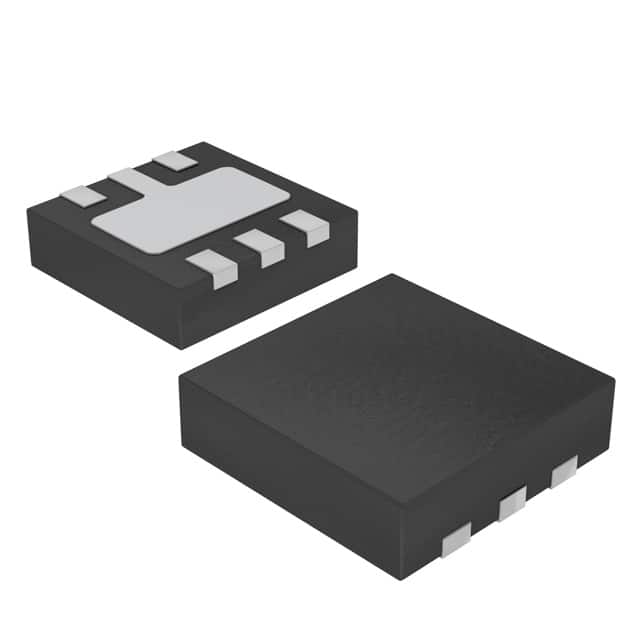
Monolithic Power Systems Inc. MP4088GJ-Z

- Part No.:
- MP4088GJ-Z
- Manufacturer:
- Monolithic Power Systems Inc.
- Category:
- LED Drivers
- Package:
- SOT-23-5 Thin, TSOT-23-5
- Datasheet:
-
 MP4088GJ-Z.pdf
- Description:
- IC LED DRVR OFFL TRIAC TSOT23-5
- Quantity:
- Payment:

- Shipping:

Inventory:4,698
Please send an inquiry. Send us your inquiry, and we will respond immediately.
Product details
Overview
MP4088GJ-Z from Monolithic Power Systems is a non-isolated, TRIAC-dimmable LED driver IC with integrated 500V MOSFET, designed for 230VAC input and up to 10W LED loads. It delivers constant current regulation via internal averaging feedback, achieves >0.7 power factor, and supports buck/buck-boost topologies using only a single-winding inductor in residential A19/GU10 lamp designs.
For engineers reviewing the MP4088GJ-Z datasheet, MP4088GJ-Z pinout, MP4088GJ-Z application, or MP4088GJ-Z equivalent, key selection criteria include its hybrid dimming mode for flicker-free TRIAC compatibility, thermal foldback behavior at >145°C, programmable OVP via external resistors, and TSOT23-5 package suitability for compact retrofit lamps.
Technical Context
The MP4088GJ-Z implements a proprietary hybrid operation mode that dynamically switches between DCM and CCM across the AC half-cycle to maintain stable latching/holding current for reliable TRIAC triggering. Its internal high-voltage regulator draws current directly from HV pin to enable fast start-up without delay.
Current regulation relies on an internal CS comparator with 0.4V threshold and 20ns leading-edge blanking, while output voltage protection uses an OVF pin with 2.0V ±0.25V trigger threshold and 2–32μs response window. Thermal de-rating begins at 145°C and full shutdown occurs at 160°C with 50°C hysteresis.
Key Specifications
| Parameter | Value and Actual Design Meaning |
|---|---|
| Input Voltage Range | 198–265VAC - Validated for European mains; enables direct connection without transformer or bridge rectifier pre-filtering. |
| Output Power Capability | Up to 10W - Supports common A19/GU10/PAR30 lamp form factors with 50–55V output and 100mA current. |
| Power Factor | >0.7 - Meets EN61000-3-2 Class C harmonic limits for lighting equipment without active PFC stage. |
| Integrated MOSFET | 500V/8Ω - Eliminates external HV switch; rated for 230VAC peak (≈325V) with margin for surge transients. |
| Thermal Protection | 145°C de-rating / 160°C shutdown - Prevents LED current collapse and ensures flicker-free operation under enclosed fixture conditions. |
| OVP Threshold | 2.0V ±0.25V on OVF pin - Programmable max output voltage via resistor divider; protects LEDs during open-circuit fault. |
| Start-Up Current Source | 3.8–6.1mA from HV pin - Enables self-biasing from rectified line; eliminates auxiliary winding or startup resistor. |
Pinout & Package
MP4088GJ-Z is housed in a TSOT23-5 package (2.9 × 1.6 × 0.95 mm), optimized for space-constrained LED lamp PCBs. The exposed pad variant is not used in this suffix; thermal dissipation relies on copper pour under pins 1–5.
| Pin/Terminal | Circuit Role | Design Meaning |
|---|---|---|
| VCC (Pin 1) | Internal regulator supply | Accepts 4.2–4.7V; powers control logic; internal HV regulator charges external 10μF capacitor during dimmer conduction. |
| OVF (Pin 2) | Over-voltage feedback input | Monitors scaled output voltage; triggers hiccup-mode shutdown if >2.0V for ≥2μs; sets max LED string voltage. |
| GND (Pin 3) | Signal and power reference | Common return for CS sense path, VCC decoupling, and internal regulator; must be low-impedance plane. |
| CS (Pin 4) | Current sense input | Compares inductor current via external shunt; 0.4V threshold with 20ns blanking to reject switching noise. |
| HV (Pin 5) | High-voltage input | Direct connection to rectified AC line (up to 500V); supplies start-up current and drives integrated MOSFET drain. |
Key Features
| Feature | Design Value |
|---|---|
| Hybrid dimming mode | Dynamically selects DCM/CCM per AC phase quadrant to sustain TRIAC latching current and eliminate pop-on/pop-off. |
| Single-winding inductor support | Enables buck or buck-boost topology with one magnetic component-reduces BOM count and board area by ≥30% vs. flyback. |
| Integrated 500V MOSFET | Eliminates external HV switch and gate driver; reduces layout complexity and EMI loop area in non-isolated designs. |
| Thermal foldback | Reduces LED current gradually above 145°C-prevents abrupt output drop and maintains usable light output in thermally stressed fixtures. |
| Programmable OVP | Configurable max output voltage via R2/R3 divider on OVF pin-enables safe operation across varying LED string counts (e.g., 12–17 LEDs). |
Applications
| Residential LED Lamps | Commercial Downlights |
|---|---|
|
Use Scenario: Retrofit A19 bulb replacing 60W incandescent in standard E26 socket with TRIAC wall dimmer. IC Role / Device Role / Timing Role: Constant-current LED driver regulating 100mA through 17-series white LEDs; manages phase-cut dimmer waveform synchronization. Use Value: Achieves >90% dimming range with no audible noise or visible flicker due to hybrid mode and 22kHz minimum switching frequency. |
Use Scenario: GU10 spotlight in office ceiling grid with leading-edge TRIAC dimmer and enclosed thermal environment. IC Role / Device Role / Timing Role: Non-isolated buck-boost driver delivering 55V/100mA; implements thermal foldback to maintain stable light output at 75°C ambient. Use Value: Prevents thermal runaway and color shift by reducing current 20% at 145°C junction-extends LED lifetime in confined fixtures. |
| Smart Lighting Modules | Dimmable PAR30 Lamps |
|
Use Scenario: Integrated driver + BLE module in connected bulb where space and EMI are constrained. IC Role / Device Role / Timing Role: Primary LED controller with minimal external components (1 inductor, 1 diode, 2 resistors); handles both AC dimming and DC bias from MCU. Use Value: TSOT23-5 footprint (2.9 × 1.6 mm) saves >40% PCB area vs. SOIC-8 alternatives-enables dual-layer design with antenna clearance. |
Use Scenario: Outdoor-rated PAR30 floodlight with aluminum heat sink and 230VAC input. IC Role / Device Role / Timing Role: High-PF (>0.7) driver supporting 10W load with surge immunity via integrated 500V MOSFET and RCD snubber interface. Use Value: Withstands 1kV line surges per IEC61000-4-5; eliminates need for external TVS-reduces failure rate in lightning-prone regions. |
Equivalent & Alternatives
The following parts are listed as comparable options for similar TRIAC-dimmable LED driver applications.
| Alternative Part | Technical Difference | Application Difference | Selection Advice |
|---|---|---|---|
| MP4078GJ-Z | Lacks integrated 500V MOSFET; requires external HV switch; lower BOM cost but higher layout complexity. | Suitable for designs needing <5W output or custom MOSFET selection; not recommended for 10W A19 lamps due to added losses. | Choose when optimizing for ultra-low unit cost and thermal management allows discrete HV FET placement. |
| BP57722D | Fixed 22kHz frequency; no hybrid dimming mode; lower PF (~0.65); no thermal foldback-only hard shutdown at 150°C. | Better suited for non-dimming or trailing-edge dimmer systems; fails abruptly above 150°C-unsuitable for enclosed fixtures. | Select only for cost-sensitive, non-enclosed applications where dimming performance and thermal resilience are secondary. |
Compared with MP4078GJ-Z and BP57722D, MP4088GJ-Z uniquely combines integrated 500V switching, hybrid dimming, and graded thermal foldback-making it the only option among the three validated for flicker-free, high-reliability 10W TRIAC-dimmable lamps in thermally constrained enclosures.
Availability
MP4088GJ-Z is available at Aetrix Electronics and suitable for residential LED retrofits, commercial downlights, and smart lighting modules requiring stable component supply, RoHS-compliant packaging, and long-term production continuity.
Supply support for MP4088GJ-Z includes scheduled delivery planning, volume procurement assistance, BOM continuity management, traceable sourcing, and lifecycle availability coordination for OEM customers, industrial embedded developers, connected-device designers, and electronics production programs.
Manufacturer
Monolithic Power Systems (MPS) is a fabless semiconductor company specializing in high-performance analog and power ICs, with over 20 years of leadership in DC/DC converters, LED drivers, and motor drivers.
The MP4088 product line targets cost-sensitive, non-isolated AC/DC LED lighting applications-specifically engineered to replace magnetic transformers and linear regulators in 230VAC TRIAC-dimmable lamps.
FAQ
What is the maximum LED string voltage supported by MP4088GJ-Z?
The MP4088GJ-Z does not set a fixed maximum LED voltage; instead, it uses the OVF pin to monitor scaled output voltage. With a typical 100kΩ upper feedback resistor (R2) and 10kΩ lower resistor (R3), the maximum output is 55V (VOVP = 2.0V × (R2+R3)/R3). This supports 12–17 white LEDs in series depending on forward voltage tolerance.
Can MP4088GJ-Z operate with trailing-edge (ELV) dimmers?
No-MP4088GJ-Z is specifically optimized for leading-edge (TRIAC) dimmers. Its hybrid operation mode relies on detecting the sharp voltage rise at dimmer turn-on to synchronize switching. Trailing-edge dimmers lack this edge transition, causing unstable dimming or failure to start.
How does the thermal foldback function protect the system?
At junction temperatures above 145°C, the MP4088GJ-Z gradually reduces LED current to ~80% of nominal value. This prevents sudden light loss and thermal runaway while maintaining usable illumination. Full shutdown only occurs at 160°C, allowing recovery once temperature drops below 110°C.
Is an external startup resistor required for MP4088GJ-Z?
No-MP4088GJ-Z features an internal high-voltage current source (3.8–6.1mA) on the HV pin that charges the VCC capacitor directly from rectified AC. This eliminates the need for a high-voltage startup resistor, reducing component count and improving reliability.
What inductor value is recommended for a 10W, 55V/100mA design?
For 55V output and 100mA LED current, a 1.2mH inductor with ≤0.3Ω DCR is recommended. This value balances power factor (>0.7), EMI performance, and dimming smoothness. Inductor saturation current must exceed 350mA to avoid core saturation during peak line conditions.
Does MP4088GJ-Z support buck-boost topology in the TSOT23-5 package?
Yes-the TSOT23-5 variant fully supports both buck and buck-boost configurations as confirmed in the datasheet's Typical Application section. Layout guidelines emphasize minimizing the HV–CS–GND loop area to maintain stability in buck-boost mode at 230VAC input.
What is the minimum dimming level achievable with MP4088GJ-Z?
With compatible leading-edge dimmers, MP4088GJ-Z achieves ≥10% of full light output without flicker or pop-on artifacts. This is enabled by its hybrid mode's adaptive CCM/DCM switching, which sustains TRIAC holding current even at low conduction angles.
MP4088GJ-Z Specifications
- Product attributes
- Attribute value
- Manufacturer:
- Monolithic Power Systems Inc.
- Series:
- -
- Package/Case:
- SOT-23-5 Thin, TSOT-23-5
- Packaging:
- Tape & Reel (TR)
- Product Status:
- Active
- Type:
- AC DC Offline Switcher
- Topology:
- Buck, Boost
- Internal Switch(s):
- Yes
- Number of Outputs:
- 1
- Voltage - Supply (Min):
- 4.5V
- Voltage - Supply (Max):
- 5V
- Voltage - Output:
- -
- Current - Output / Channel:
- -
- Frequency:
- 22kHz
- Dimming:
- Triac
- Applications:
- Lighting
- Operating Temperature:
- -40°C ~ 125°C (TJ)
- Grade:
- -
- Qualification:
- -
- Mounting Type:
- Surface Mount
- Supplier Device Package:
- TSOT-23-5
MP4088GJ-Z FAQ
1.How can I place an order for MP4088GJ-Z through Aetrix?
Please submit a Request for Quotation (RFQ) for MP4088GJ-Z on Aetrix. Our sales agent will provide a competitive quotation and guide you through the order confirmation once you accept the terms.
2.Are the price and stock information for MP4088GJ-Z reliable?
The price and inventory of MP4088GJ-Z are updated periodically and may fluctuate due to market conditions. Stock and pricing data are typically refreshed every 24 hours. Quotation validity for MP4088GJ-Z is usually 5 days.
3.What payment methods are accepted for MP4088GJ-Z?
We accept Wire Transfer, PayPal, Credit Card, Western Union, MoneyGram, and Escrow for MP4088GJ-Z transactions.
Note: Certain payment methods may incur a processing fee.
4.How is shipping managed for MP4088GJ-Z?
MP4088GJ-Z orders can be shipped via leading logistics carriers, including DHL, UPS, FedEx, TNT, or Registered Mail.
Once your MP4088GJ-Z order is processed, you will receive an email with the shipment details and tracking number.
Note: Tracking information may take up to 24 hours to appear. Express delivery typically takes 3–5 business days.
5.How can I obtain technical support or documentation for MP4088GJ-Z?
For technical support, including MP4088GJ-Z datasheets, pinout diagrams, or application guidance, please contact our engineering support team. They can provide detailed documentation and assistance for your MP4088GJ-Z requirements.
6.How does Aetrix verify that MP4088GJ-Z is sourced from the original manufacturer or authorized distributors?
All MP4088GJ-Z products on Aetrix are procured from qualified distributors and authorized channels. Our dedicated quality assurance team conducts strict verification, including traceability checks and, if necessary, third-party testing. This ensures that MP4088GJ-Z meets industry standards.
7.What is the process for return or replacement of MP4088GJ-Z?
All MP4088GJ-Z units undergo pre-shipment inspection (PSI). If there is an issue with MP4088GJ-Z, returns or replacements are accepted under the following conditions:
1.Quantity discrepancies, incorrect items, or visible external defects (such as breakage or corrosion), acknowledged by Aetrix.
2.The issue is reported within 90 days of delivery.
3.The MP4088GJ-Z part is unused and in its original packaging.
Return procedure for MP4088GJ-Z:
1.Submit a request within 90 days.
2.Obtain a Return Material Authorization (RMA) from Aetrix.
MP4088GJ-Z Tags
-
BCR402RE6327HTSA1
Infineon Technologies

-
BCR430UXTSA2
Infineon Technologies
-
BCR420UE6433HTMA1
Infineon Technologies
-
BCR420UE6327HTSA1
Infineon Technologies
-
BCR421UE6327HTSA1
Infineon Technologies
-
LYT1604D-TL
Power Integrations

-
HV9910CLG-G
Microchip Technology

-
CL2N8-G
Microchip Technology
-
BCR420UW6-7
Diodes Incorporated
-
BCR421UW6-7
Diodes Incorporated
-
BCR420UFD-7
Diodes Incorporated
-
BCR421UFD-7
Diodes Incorporated
Tech Hub

Operational amplifier guide covering op amp basics, feedback, ideal vs real op amps, common configurations, buffer circuits, offset, bias current, gain-bandwidth, slew rate, rail-to-rail limits and sel…

Jumper cables guide covering safe connection order, red and black clamp placement, final ground connection, cable gauge, length, clamp quality, copper vs CCA cables, jump starter comparison and battery…

LDO regulator guide covering low dropout voltage, power dissipation, thermal design, PSRR, output noise, capacitor stability, adjustable LDO circuits, LDO vs buck converter and datasheet selection chec…

Conditional Access Module guide covering CAM meaning, CI/CI+ interface, smart card authorization, DVB security workflow, TV and set-top box compatibility, internal electronics, ESD protection, connecto…

Guide to electronic component obsolescence covering EOL risk, PCN/PDN notices, last-time buy planning, replacement options, form-fit-function validation, counterfeit risk and BOM lifecycle management.

18650 battery guide covering lithium-ion cell basics, 3.6V/3.7V voltage, 4.2V charging, mAh and Wh capacity, protected cells, chargers, BMS, series-parallel packs, holders, welding and sourcing checks.…

Hall effect sensor guide covering working principle, linear and digital sensors, Arduino circuits, current sensing, speed detection, automotive applications, A3144 examples, signal filtering and datash…

Product Change Notification guide for electronic components, covering PCN meaning, PCN vs PDN/EOL, common change types, risk levels, form-fit-function review, engineering validation, BOM control, LTB/L…

A practical guide to blend door actuators, covering HVAC function, symptoms, location, AC and heater issues, reset and calibration, replacement cost, electrical diagnosis, compatibility checks, and rep…

Engineering guide to Raspberry Pi alternatives, covering chip-level differences, Orange Pi, ROCK, Jetson, Banana Pi, NanoPi, Compute Module, Pico, GPIO, camera, HAT compatibility, and replacement risks…


