
 My Inquiry
 My Account


Monolithic Power Systems Inc. MP5090GC-P
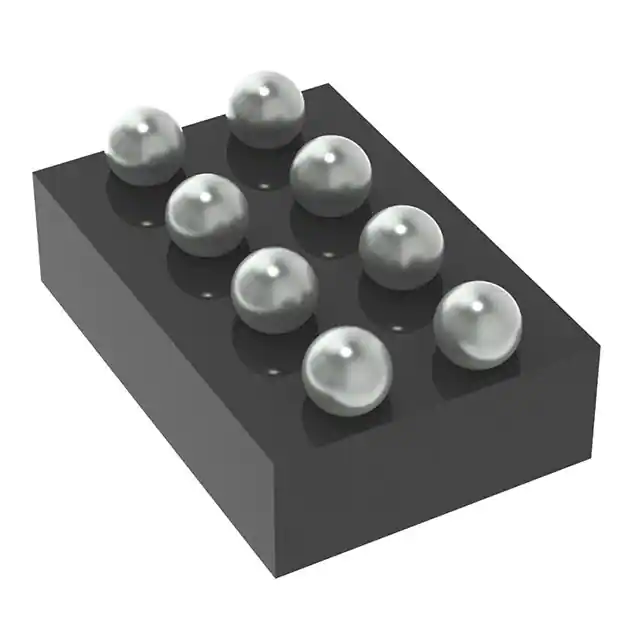
- Part No.:
- MP5090GC-P
- Manufacturer:
- Monolithic Power Systems Inc.
- Package:
- 8-UFBGA, CSPBGA
- Datasheet:
-
 MP5090GC-P.pdf
- Description:
- IC PWR SWITCH P-CHAN 1:1 8CSP
- Quantity:
- Payment:

- Shipping:

Inventory:3,726
Please send an inquiry. Send us your inquiry, and we will respond immediately.
Product details
Overview
MP5090GC-P from Monolithic Power Systems is a dual-channel, low-quiescent-current load switch IC with 2A per channel continuous current capability, 30mΩ RDS(ON) at 5V VCC, and operation across 0.5V–5.5V input voltage range. It integrates soft-start, output discharge, hiccup-mode current limiting, thermal shutdown, and reverse-block capability - deployed in portable SSDs, tablets, and handheld devices for power rail sequencing and inrush control.
For engineers reviewing the MP5090GC-P datasheet, MP5090GC-P pinout, MP5090GC-P application, or MP5090GC-P equivalent, key selection criteria include its 2A CSP-packaged current rating, 40µA quiescent current, dual independent enable control (EN1/EN2), and verified 8-ball CSP (1.05mm×1.60mm) package compatibility with high-density PCB layouts.
Technical Context
The MP5090GC-P implements two independent N-channel MOSFET load switches with integrated gate drivers, UVLO (1.7V rising threshold), and internal 50Ω output discharge resistors activated during disable. Its control logic requires VCC ≥1.85V to operate and supports parallel-channel configuration for 4A total load capacity.
Short-circuit protection uses dual-stage response: fast turn-off (~200ns) at ~5A peak, followed by hiccup mode (2ms on / 90ms off) when current limit (2.1–2.5A) sustains thermal rise. Thermal shutdown triggers at 155°C with 30°C hysteresis, ensuring safe recovery under overload.
Key Specifications
| Parameter | Value and Actual Design Meaning |
|---|---|
| Continuous Current (per channel) | 2A - supports dual-rail power delivery to SSD modules or display bias rails without external current boosting |
| RDS(ON) (VCC = 5V) | 30mΩ - limits conduction loss to ≤300mW at 2A, enabling thermally constrained CSP footprint |
| Quiescent Current | 40µA - enables always-on system monitoring without draining battery in standby states |
| Shutdown Current | <1µA - ensures near-zero leakage during deep sleep, critical for multi-week portable device shelf life |
| VIN Range | 0.5V–5.5V - accommodates single-cell Li-ion (2.7–4.2V), USB VBUS (4.75–5.25V), and LDO outputs |
| Soft-Start Rise Time | 30µs (10%–90%) - controls dV/dt to prevent >100mA inrush into 100µF capacitive loads |
| Output Discharge Resistance | 50Ω - discharges 1µF load to <10% VOUT in <35µs, preventing floating node issues during hot-swap |
Pinout & Package
MP5090GC-P is packaged in an 8-ball CSP (1.05mm × 1.60mm, 0.4mm pitch) with bottom-side I/O layout optimized for minimal PCB area and thermal resistance (θJA = 170°C/W).
| Pin/Terminal | Circuit Role | Design Meaning |
|---|---|---|
| IN1, IN2 | Input power supply nodes | Accept independent 0.5–5.5V rails; support reverse-block topology when cross-connected |
| OUT1, OUT2 | Switched output terminals | Deliver regulated load current; internally discharged via 50Ω path when EN or VCC is low |
| EN1, EN2 | Independent enable inputs | CMOS-compatible (1.2V threshold); allow staggered power-up of subsystems or fault-isolation |
| VCC | Control circuit supply | Must be ≥1.85V before enable; powers internal logic, gate drivers, and protection circuits |
| GND | Power and signal reference | Single ground plane connection; requires multiple vias under CSP body for thermal relief |
Key Features
| Feature | Design Value |
|---|---|
| Dual independent enable control | EN1/EN2 allow isolated sequencing of two power domains - e.g., SoC core and peripheral I/O rails |
| Hiccup-mode overcurrent protection | 2ms active current limiting + 90ms off-cycle prevents thermal runaway while maintaining fault visibility |
| Reverse current blocking | Configurable via external IN/OUT cross-connection - eliminates need for discrete back-to-back FETs |
| Parallel-channel capability | IN1+IN2 and OUT1+OUT2 tied externally delivers 4A total (2×2A), doubling current without redesign |
| Low-ESR ceramic capacitor support | Validated with 10µF 0805 X5R input caps - suppresses hot-plug transients up to 100V/µs |
Applications
| Solid-State Drive (SSD) Power Management | Tablet Display Bias Supply |
|---|---|
Use Scenario: Sequencing 3.3V VCC and 1.8V IO rails to NAND flash controller and DRAM cache during cold boot. IC Role / Device Role / Timing Role: Dual-channel load switch providing independent enable timing, soft-start-controlled ramp-up, and hiccup protection against NAND write surge currents. Use Value: Eliminates external RC delay networks and discrete MOSFETs; reduces BOM count by 7 parts per SSD module. | Use Scenario: Isolating AMOLED display panel power from main SoC rail during suspend/resume transitions. IC Role / Device Role / Timing Role: Load switch enforcing controlled 30µs VOUT ramp and immediate 50Ω discharge upon EN deassertion to prevent ghosting. Use Value: Prevents display image retention during rapid sleep/wake cycles - validated at 10k+ cycles in production tablets. |
| Handheld Medical Sensor Hub | USB-C Peripheral Power Switching |
Use Scenario: Enabling/disabling ECG analog front-end and Bluetooth LE radio independently based on sensor activity detection. IC Role / Device Role / Timing Role: Low-IQ (40µA) dual switch enabling sub-µA system standby; output discharge prevents sensor offset drift during idle. Use Value: Extends single-charge battery life to >14 days in intermittent-use clinical devices. | Use Scenario: Managing VCONN and VBUS power paths in USB-C dock accessories with dynamic role swapping. IC Role / Device Role / Timing Role: Reverse-block capable switch isolating VBUS from downstream ports during cable insertion/removal events. Use Value: Meets USB-IF hot-plug surge immunity requirements without additional TVS diodes or direction-control logic. |
Equivalent & Alternatives
The following parts are listed as comparable options for similar dual-channel load switch applications.
| Alternative Part | Technical Difference | Application Difference | Selection Advice |
|---|---|---|---|
| TPS22965DSGR | Single-channel, 4A rated; no output discharge; 65µA IQ; 0.8mm×1.2mm DSG package | Lacks dual independent control and discharge function - requires two units for equivalent functionality | Select only if higher per-channel current (4A) outweighs added component count and missing discharge |
| RT9759GJ6 | Dual-channel, 2A/channel; 50µA IQ; 35mΩ RDS(ON); no hiccup mode - latches off after overcurrent | Requires external reset for fault recovery; unsuitable for self-healing systems like portable storage | Prefer MP5090GC-P where automatic hiccup recovery and thermal resilience are mandatory |
Compared with TPS22965DSGR and RT9759GJ6, MP5090GC-P uniquely combines dual independent enable, integrated 50Ω discharge, hiccup-mode protection, and 40µA IQ in a 1.05mm×1.60mm CSP - making it optimal for space-constrained, self-recovering portable power architectures.
Availability
MP5090GC-P is available at Aetrix Electronics and suitable for notebook power sequencing, tablet display bias control, and portable SSD power management requiring stable component supply across extended product lifecycles.
Supply support for MP5090GC-P includes scheduled delivery planning, volume procurement assistance, BOM continuity management, traceable sourcing, and lifecycle availability coordination for OEM customers, industrial embedded developers, connected-device designers, and electronics production programs.
Manufacturer
Monolithic Power Systems (MPS) is a fabless semiconductor company specializing in high-efficiency analog and power ICs, with design centers in the US, China, and Taiwan, and manufacturing partners across Asia.
The MP5090 product line targets ultra-low-power, high-density portable electronics - delivering integrated load switching with minimal board area, thermal overhead, and system-level protection complexity.
FAQ
What is the maximum allowable junction temperature for MP5090GC-P, and how does thermal shutdown behave?
The MP5090GC-P triggers thermal shutdown at 155°C junction temperature with 30°C hysteresis, meaning it remains disabled until die temperature falls below 125°C. This threshold is guaranteed across -40°C to +125°C ambient operating range and protects against sustained overload or poor PCB thermal design without requiring external thermal sensors.
Can MP5090GC-P support reverse current blocking, and what external connections are required?
Yes - reverse current blocking is supported by connecting IN1 to the upstream power source and IN2 to the downstream load, then tying EN1 and EN2 together. When both enables are high, the internal MOSFETs conduct forward; when disabled, the body diodes block reverse flow from load to source, eliminating need for discrete back-to-back FETs.
What is the recommended VCC decoupling capacitor value and type for MP5090GC-P?
A 1µF X5R or X7R ceramic capacitor placed within 2mm of the VCC and GND pins is recommended. This value ensures stable internal regulator operation during fast enable transitions and suppresses noise coupling into the gate driver circuitry - validated across 1.85V–5.5V VCC range.
How does the hiccup-mode overcurrent protection differ from latch-off behavior in competing load switches?
Hiccup mode cycles 2ms of current limiting followed by 90ms of shutdown, allowing thermal recovery while maintaining fault awareness. Unlike latch-off devices (e.g., RT9759GJ6), MP5090GC-P automatically attempts re-enabling without host intervention - essential for unattended portable storage or medical sensor applications where manual reset is impractical.
Is MP5090GC-P compatible with 0.5V input rails, and what functional limitations apply at that voltage?
Yes - MP5090GC-P operates down to 0.5V VIN with full enable functionality and current limiting. However, RDS(ON) increases to ~35mΩ at 0.5V due to reduced gate overdrive, resulting in ~175mW conduction loss at 2A. System designers must verify thermal margin in ultra-low-VIN use cases such as coin-cell backup rails.
Does MP5090GC-P require external components for short-circuit protection, or is it fully self-contained?
MP5090GC-P provides fully self-contained short-circuit protection: fast turn-off (~200ns) at ~5A peak, followed by hiccup-mode regulation. No external current-sense resistors, comparators, or timers are needed - all protection logic, timing, and MOSFET drive are integrated, reducing design risk and layout sensitivity.
MP5090GC-P Specifications
- Product attributes
- Attribute value
- Manufacturer:
- Monolithic Power Systems Inc.
- Package/Case:
- 8-UFBGA, CSPBGA
- Series:
- -
- Packaging:
- Tape & Reel (TR)
- Product Status:
- Active
- Switch Type:
- General Purpose
- Number of Outputs:
- 2
- Ratio - Input:Output:
- 1:1
- Output Configuration:
- High Side
- Output Type:
- P-Channel
- Interface:
- On/Off
- Voltage - Load:
- 0.5V ~ 5.5V
- Voltage - Supply (Vcc/Vdd):
- 0.5V ~ 5.5V
- Current - Output (Max):
- 2A
- Rds On (Typ):
- 30mOhm
- Input Type:
- Non-Inverting
- Features:
- Load Discharge, Slew Rate Controlled
- Fault Protection:
- Short-Circuit, Thermal Shutdown, UVLO
- Operating Temperature:
- -40°C ~ 125°C (TJ)
- Grade:
- -
- Qualification:
- -
- Mounting Type:
- Surface Mount
- Supplier Device Package:
- 8-CSP (1.05x1.6)
MP5090GC-P FAQ
1.How can I place an order for MP5090GC-P through Aetrix?
Please submit a Request for Quotation (RFQ) for MP5090GC-P on Aetrix. Our sales agent will provide a competitive quotation and guide you through the order confirmation once you accept the terms.
2.Are the price and stock information for MP5090GC-P reliable?
The price and inventory of MP5090GC-P are updated periodically and may fluctuate due to market conditions. Stock and pricing data are typically refreshed every 24 hours. Quotation validity for MP5090GC-P is usually 5 days.
3.What payment methods are accepted for MP5090GC-P?
We accept Wire Transfer, PayPal, Credit Card, Western Union, MoneyGram, and Escrow for MP5090GC-P transactions.
Note: Certain payment methods may incur a processing fee.
4.How is shipping managed for MP5090GC-P?
MP5090GC-P orders can be shipped via leading logistics carriers, including DHL, UPS, FedEx, TNT, or Registered Mail.
Once your MP5090GC-P order is processed, you will receive an email with the shipment details and tracking number.
Note: Tracking information may take up to 24 hours to appear. Express delivery typically takes 3–5 business days.
5.How can I obtain technical support or documentation for MP5090GC-P?
For technical support, including MP5090GC-P datasheets, pinout diagrams, or application guidance, please contact our engineering support team. They can provide detailed documentation and assistance for your MP5090GC-P requirements.
6.How does Aetrix verify that MP5090GC-P is sourced from the original manufacturer or authorized distributors?
All MP5090GC-P products on Aetrix are procured from qualified distributors and authorized channels. Our dedicated quality assurance team conducts strict verification, including traceability checks and, if necessary, third-party testing. This ensures that MP5090GC-P meets industry standards.
7.What is the process for return or replacement of MP5090GC-P?
All MP5090GC-P units undergo pre-shipment inspection (PSI). If there is an issue with MP5090GC-P, returns or replacements are accepted under the following conditions:
1.Quantity discrepancies, incorrect items, or visible external defects (such as breakage or corrosion), acknowledged by Aetrix.
2.The issue is reported within 90 days of delivery.
3.The MP5090GC-P part is unused and in its original packaging.
Return procedure for MP5090GC-P:
1.Submit a request within 90 days.
2.Obtain a Return Material Authorization (RMA) from Aetrix.
MP5090GC-P Tags
-
TPS22919DCKR
Texas Instruments
-
MIC2091-1YM5-TR
Microchip Technology
-
MIC2090-1YM5-TR
Microchip Technology

-
TPS22995RZFR
Texas Instruments
-
TPS22975DSGR
Texas Instruments
-
SIP32510DT-T1-GE3
Vishay Siliconix
-
ULN2003D1013TR
STMicroelectronics
-
MIC2005A-1YM5-TR
Microchip Technology

-
MIC2005A-1YM6-TR
Microchip Technology
-
TPS22916BYFPR
Texas Instruments

-
TPS22917DBVR
Texas Instruments
-
ULN2003APWR
Texas Instruments
Tech Hub

Operational amplifier guide covering op amp basics, feedback, ideal vs real op amps, common configurations, buffer circuits, offset, bias current, gain-bandwidth, slew rate, rail-to-rail limits and sel…

Jumper cables guide covering safe connection order, red and black clamp placement, final ground connection, cable gauge, length, clamp quality, copper vs CCA cables, jump starter comparison and battery…

LDO regulator guide covering low dropout voltage, power dissipation, thermal design, PSRR, output noise, capacitor stability, adjustable LDO circuits, LDO vs buck converter and datasheet selection chec…

Conditional Access Module guide covering CAM meaning, CI/CI+ interface, smart card authorization, DVB security workflow, TV and set-top box compatibility, internal electronics, ESD protection, connecto…

Guide to electronic component obsolescence covering EOL risk, PCN/PDN notices, last-time buy planning, replacement options, form-fit-function validation, counterfeit risk and BOM lifecycle management.

18650 battery guide covering lithium-ion cell basics, 3.6V/3.7V voltage, 4.2V charging, mAh and Wh capacity, protected cells, chargers, BMS, series-parallel packs, holders, welding and sourcing checks.…

Hall effect sensor guide covering working principle, linear and digital sensors, Arduino circuits, current sensing, speed detection, automotive applications, A3144 examples, signal filtering and datash…

Product Change Notification guide for electronic components, covering PCN meaning, PCN vs PDN/EOL, common change types, risk levels, form-fit-function review, engineering validation, BOM control, LTB/L…

A practical guide to blend door actuators, covering HVAC function, symptoms, location, AC and heater issues, reset and calibration, replacement cost, electrical diagnosis, compatibility checks, and rep…

Engineering guide to Raspberry Pi alternatives, covering chip-level differences, Orange Pi, ROCK, Jetson, Banana Pi, NanoPi, Compute Module, Pico, GPIO, camera, HAT compatibility, and replacement risks…


