
 My Inquiry
 My Account


Monolithic Power Systems Inc. MP62041DQFU-LF-Z
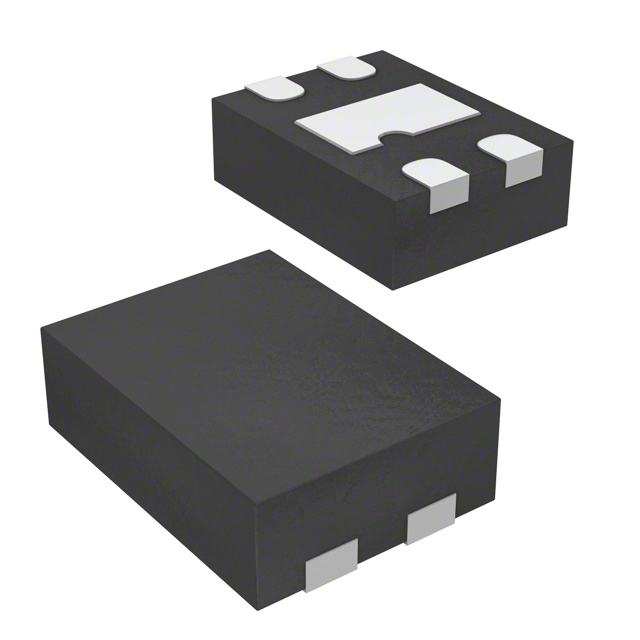
- Part No.:
- MP62041DQFU-LF-Z
- Manufacturer:
- Monolithic Power Systems Inc.
- Package:
- 4-UFDFN Exposed Pad
- Datasheet:
-
 MP62041DQFU-LF-Z.pdf
- Description:
- IC PWR SWITCH P-CHAN 1:1 4UTQFN
- Quantity:
- Payment:

- Shipping:

Inventory:3,532
Please send an inquiry. Send us your inquiry, and we will respond immediately.
Product details
Overview
MP62041DQFU-LF-Z from Monolithic Power Systems is a high-side load switch IC with active-high enable, 1.7V–5.5V input range, 85mΩ RDS(on) at 4.5V, 2A continuous current rating, and 115μs soft-start rise time. It integrates a P-channel MOSFET and level-shift logic for independent EN voltage domain control, used in portable power sequencing and battery switchover circuits.
For engineers reviewing the MP62041DQFU-LF-Z datasheet, MP62041DQFU-LF-Z pinout, MP62041DQFU-LF-Z application, or MP62041DQFU-LF-Z equivalent, key selection criteria include enable polarity compatibility, thermal performance in UTQFN4 (θJA = 173°C/W), inrush current limiting, shutdown current (<1μA), and output slew rate control under varying VIN and load conditions.
Technical Context
The MP62041DQFU-LF-Z implements a high-side P-channel MOSFET switch with integrated gate driver and level-shifting circuitry, enabling EN logic signals referenced to a different supply than VIN. Its soft-start function controls dV/dt via internal slew-rate regulation, limiting inrush current during turn-on.
It operates across industrial temperature range (–40°C to +85°C) with thermal shutdown protection and supports bidirectional voltage translation between EN and VIN domains. The device does not include current-limiting foldback or fault reporting-only controlled turn-on/turn-off timing and low quiescent operation.
Key Specifications
| Parameter | Value and Actual Design Meaning |
|---|---|
| Input Voltage Range | 1.7V to 5.5V - Supports single-cell Li-ion, USB, and logic-supply rails without external LDO. |
| RDS(on) (max) | 115mΩ at 4.5V - Limits conduction loss to ≤517mW at 2A, enabling compact thermal design in UTQFN4. |
| Soft-Start Rise Time | 75–200μs (typ 115μs) - Controls inrush dv/dt to prevent input rail collapse on capacitive loads up to ~100μF. |
| Shutdown Current | 1μA max - Enables ultra-low-power state in battery-backed systems with no external disable path needed. |
| Enable Polarity | Active High - Simplifies interface with standard GPIOs; EN threshold is 1.2V min (VIH) and 0.4V max (VIL). |
| Thermal Resistance θJA | 173°C/W - Requires minimum 25mm² copper pour under exposed pad for reliable 2A operation at +85°C ambient. |
| Turn-On Delay | 235–350μs - Defines system power-up timing budget when synchronizing multiple rails or peripherals. |
Pinout & Package
MP62041DQFU-LF-Z uses a 4-pin UTQFN package (1.6mm × 1.2mm, 0.55mm height) with exposed thermal pad. Pin 2 is GND and must be soldered to PCB ground plane for thermal and electrical integrity.
| Pin/Terminal | Circuit Role | Design Meaning |
|---|---|---|
| 1 (OUT) | Power Distribution Output | High-side switched output node; connects to load; body diode anode faces GND (P-MOSFET source). |
| 2 (GND) | Ground & Thermal Pad | Primary return path and thermal dissipation node; must be connected to solid ground plane. |
| 3 (IN) | Input Supply Rail | Accepts 1.7–5.5V unregulated input; requires ≥10μF local ceramic bypass capacitor. |
| 4 (EN) | Active-High Enable Control | Logic input with VIH ≥1.2V; drives internal level shifter to activate P-MOSFET gate regardless of VIN level. |
Key Features
| Feature | Design Value |
|---|---|
| Ultra-Small UTQFN4 Footprint | 1.6mm × 1.2mm area with 0.55mm profile - enables placement in space-constrained portable PCBs near connectors or batteries. |
| Integrated Level-Shifting Logic | EN accepts logic signals referenced to separate supply (e.g., 1.8V or 3.3V) while controlling 5.5V IN rail - eliminates external level translators. |
| Controlled Slew-Rate Turn-On | 115μs VOUT rise time - limits peak inrush current to <3A for 100μF load, avoiding brownout in shared power domains. |
| Low Shutdown Quiescent Current | 1μA max - extends battery life in always-on subsystems (e.g., RTC backup, sensor wake logic) without external leakage paths. |
| P-Channel High-Side Architecture | No external bootstrap capacitor required - simplifies layout and reduces BOM count versus N-channel high-side alternatives. |
Applications
| Portable Load Switching | Battery Switchover Circuits |
|---|---|
Use Scenario: Enabling/disabling USB peripheral power in smartphones or wearables during sleep/wake cycles. IC Role / Device Role / Timing Role: High-side power gate with active-high enable synchronized to AP GPIO; soft-start prevents VBUS droop during hot-plug detection. Use Value: Eliminates need for discrete MOSFET + resistor + capacitor turn-on network; reduces footprint by >60% vs discrete solution. | Use Scenario: Seamless transition between main Li-ion battery and backup coin cell in medical telemetry devices. IC Role / Device Role / Timing Role: Controlled high-side switch isolating backup rail until main battery falls below UVLO threshold. Use Value: Prevents backfeed and cross-conduction; 1μA shutdown current preserves coin cell for >5 years in standby. |
| Level-Translated Power Enable | USB-C Port Power Management |
Use Scenario: Enabling 5V VBUS from a 3.3V microcontroller in embedded USB host designs. IC Role / Device Role / Timing Role: Voltage-domain decoupled enable interface; EN logic swings independently of VIN, supporting mixed-voltage SoC I/O. Use Value: Removes requirement for external dual-supply level shifter IC or discrete transistor buffer stage. | Use Scenario: Managing VCONN or VBUS power delivery in USB-C receptacle circuits with strict inrush limits. IC Role / Device Role / Timing Role: Pre-regulator switch before downstream DC-DC; soft-start ensures compliance with USB PD inrush specifications (≤50mA/ms). Use Value: Meets USB Type-C specification for controlled power ramp without adding RC snubbers or complex controllers. |
Equivalent & Alternatives
The following parts are listed as comparable options for similar high-side load switch applications.
| Alternative Part | Technical Difference | Application Difference | Selection Advice |
|---|---|---|---|
| TI TPS22915YZPR | Lower RDS(on) (50mΩ), but only 1.2A rated; no level shift - EN must match VIN domain. | Suitable for lower-current, same-rail enable scenarios; unsuitable where EN and VIN voltages differ. | Select when load ≤1.2A and EN/VIN share supply; avoid if level translation is required. |
| ON Semi NIS5020MNTBG | 2A rating, 80mΩ RDS(on), but active-low enable only; no soft-start control - fixed fast turn-on. | Requires inverted logic drive; lacks inrush control - may cause input rail instability with large output caps. | Choose only if active-low control aligns with system architecture and inrush is managed externally. |
Compared with TPS22915YZPR and NIS5020MNTBG, MP62041DQFU-LF-Z uniquely combines active-high enable, integrated level shifting, and programmable slew rate - making it optimal for mixed-voltage portable systems requiring robust inrush management without added components.
Availability
MP62041DQFU-LF-Z is available at Aetrix Electronics and suitable for portable electronics, battery-powered medical devices, and USB-C power management systems requiring stable component supply, RoHS-compliant packaging, and long-term production continuity.
Supply support for MP62041DQFU-LF-Z includes scheduled delivery planning, volume procurement assistance, BOM continuity management, traceable sourcing, and lifecycle availability coordination for OEM customers, industrial embedded developers, connected-device designers, and electronics production programs.
Manufacturer
Monolithic Power Systems (MPS) is a fabless semiconductor company specializing in high-performance analog and power ICs, with core expertise in DC-DC conversion, LED drivers, and power distribution solutions.
The MP6204x series belongs to MPS's high-side load switch product line, designed specifically for space-constrained, battery-sensitive applications demanding low quiescent current, precise inrush control, and flexible enable interface architecture.
FAQ
What is the maximum continuous output current for MP62041DQFU-LF-Z?
The MP62041DQFU-LF-Z supports 2A continuous output current at TA = +25°C with proper PCB thermal design. Derating applies above +25°C: 1.4A at +85°C ambient. This rating assumes full thermal pad soldering to ≥25mm² copper area and airflow-free conditions per JEDEC JESD51-7 4-layer board test setup.
Does MP62041DQFU-LF-Z include overcurrent protection?
No. MP62041DQFU-LF-Z provides only controlled turn-on/turn-off timing and thermal shutdown. It lacks cycle-by-cycle current limiting or fault latching. External current sensing or downstream polyfuse is required for overcurrent protection in safety-critical applications.
Can EN be driven by a 1.8V logic signal while VIN is 5V?
Yes. The built-in level shifter allows EN to operate independently of VIN. With VIH ≥1.2V and VIL ≤0.4V, a 1.8V GPIO fully satisfies the logic thresholds and safely controls the 5V output rail without external components.
What is the recommended input capacitance for stable operation?
A minimum 10μF ceramic capacitor between IN and GND is required per the datasheet. This suppresses input transients caused by switching noise or shared rail coupling. For systems with high di/dt loads, add a 100nF X7R ceramic in parallel for high-frequency decoupling.
Is the exposed thermal pad electrically connected internally?
Yes. Pin 2 (GND) is bonded directly to the exposed thermal pad. The pad must be soldered to a dedicated PCB ground plane with ≥4 thermal vias (0.3mm diameter) to ensure both electrical continuity and thermal performance. Floating or unconnected pads cause thermal runaway above 1A.
How does soft-start behavior change with different input voltages?
VOUT rise time varies with VIN: 200μs at 1.7V, 115μs at 3.6V, and 75μs at 5.5V. Lower VIN slows gate charging due to reduced drive strength; designers must verify inrush remains within spec for worst-case low-VIN, high-capacitance load combinations.
What is the function of the body diode in the internal P-MOSFET?
The intrinsic body diode conducts reverse current from OUT to IN when OUT > IN. Continuous conduction is not recommended (per Absolute Maximum Ratings). Use external reverse-blocking diodes if backfeed risk exists, such as in multi-rail OR-ing configurations.
MP62041DQFU-LF-Z Specifications
- Product attributes
- Attribute value
- Manufacturer:
- Monolithic Power Systems Inc.
- Package/Case:
- 4-UFDFN Exposed Pad
- Series:
- -
- Packaging:
- Tape & Reel (TR)
- Product Status:
- Active
- Switch Type:
- General Purpose
- Number of Outputs:
- 1
- Ratio - Input:Output:
- 1:1
- Output Configuration:
- High Side
- Output Type:
- P-Channel
- Interface:
- On/Off
- Voltage - Load:
- 1.7V ~ 5.5V
- Voltage - Supply (Vcc/Vdd):
- Not Required
- Current - Output (Max):
- 2A
- Rds On (Typ):
- 85mOhm
- Input Type:
- -
- Features:
- Slew Rate Controlled
- Fault Protection:
- -
- Operating Temperature:
- -40°C ~ 85°C (TA)
- Grade:
- -
- Qualification:
- -
- Mounting Type:
- Surface Mount
- Supplier Device Package:
- 4-UTQFN (1.6x1.2)
MP62041DQFU-LF-Z FAQ
1.How can I place an order for MP62041DQFU-LF-Z through Aetrix?
Please submit a Request for Quotation (RFQ) for MP62041DQFU-LF-Z on Aetrix. Our sales agent will provide a competitive quotation and guide you through the order confirmation once you accept the terms.
2.Are the price and stock information for MP62041DQFU-LF-Z reliable?
The price and inventory of MP62041DQFU-LF-Z are updated periodically and may fluctuate due to market conditions. Stock and pricing data are typically refreshed every 24 hours. Quotation validity for MP62041DQFU-LF-Z is usually 5 days.
3.What payment methods are accepted for MP62041DQFU-LF-Z?
We accept Wire Transfer, PayPal, Credit Card, Western Union, MoneyGram, and Escrow for MP62041DQFU-LF-Z transactions.
Note: Certain payment methods may incur a processing fee.
4.How is shipping managed for MP62041DQFU-LF-Z?
MP62041DQFU-LF-Z orders can be shipped via leading logistics carriers, including DHL, UPS, FedEx, TNT, or Registered Mail.
Once your MP62041DQFU-LF-Z order is processed, you will receive an email with the shipment details and tracking number.
Note: Tracking information may take up to 24 hours to appear. Express delivery typically takes 3–5 business days.
5.How can I obtain technical support or documentation for MP62041DQFU-LF-Z?
For technical support, including MP62041DQFU-LF-Z datasheets, pinout diagrams, or application guidance, please contact our engineering support team. They can provide detailed documentation and assistance for your MP62041DQFU-LF-Z requirements.
6.How does Aetrix verify that MP62041DQFU-LF-Z is sourced from the original manufacturer or authorized distributors?
All MP62041DQFU-LF-Z products on Aetrix are procured from qualified distributors and authorized channels. Our dedicated quality assurance team conducts strict verification, including traceability checks and, if necessary, third-party testing. This ensures that MP62041DQFU-LF-Z meets industry standards.
7.What is the process for return or replacement of MP62041DQFU-LF-Z?
All MP62041DQFU-LF-Z units undergo pre-shipment inspection (PSI). If there is an issue with MP62041DQFU-LF-Z, returns or replacements are accepted under the following conditions:
1.Quantity discrepancies, incorrect items, or visible external defects (such as breakage or corrosion), acknowledged by Aetrix.
2.The issue is reported within 90 days of delivery.
3.The MP62041DQFU-LF-Z part is unused and in its original packaging.
Return procedure for MP62041DQFU-LF-Z:
1.Submit a request within 90 days.
2.Obtain a Return Material Authorization (RMA) from Aetrix.
MP62041DQFU-LF-Z Tags
-
TPS22919DCKR
Texas Instruments
-
MIC2091-1YM5-TR
Microchip Technology
-
MIC2090-1YM5-TR
Microchip Technology

-
TPS22995RZFR
Texas Instruments
-
TPS22975DSGR
Texas Instruments
-
SIP32510DT-T1-GE3
Vishay Siliconix
-
ULN2003D1013TR
STMicroelectronics
-
MIC2005A-1YM5-TR
Microchip Technology

-
MIC2005A-1YM6-TR
Microchip Technology
-
TPS22916BYFPR
Texas Instruments

-
TPS22917DBVR
Texas Instruments
-
ULN2003APWR
Texas Instruments
Tech Hub

Operational amplifier guide covering op amp basics, feedback, ideal vs real op amps, common configurations, buffer circuits, offset, bias current, gain-bandwidth, slew rate, rail-to-rail limits and sel…

Jumper cables guide covering safe connection order, red and black clamp placement, final ground connection, cable gauge, length, clamp quality, copper vs CCA cables, jump starter comparison and battery…

LDO regulator guide covering low dropout voltage, power dissipation, thermal design, PSRR, output noise, capacitor stability, adjustable LDO circuits, LDO vs buck converter and datasheet selection chec…

Conditional Access Module guide covering CAM meaning, CI/CI+ interface, smart card authorization, DVB security workflow, TV and set-top box compatibility, internal electronics, ESD protection, connecto…

Guide to electronic component obsolescence covering EOL risk, PCN/PDN notices, last-time buy planning, replacement options, form-fit-function validation, counterfeit risk and BOM lifecycle management.

18650 battery guide covering lithium-ion cell basics, 3.6V/3.7V voltage, 4.2V charging, mAh and Wh capacity, protected cells, chargers, BMS, series-parallel packs, holders, welding and sourcing checks.…

Hall effect sensor guide covering working principle, linear and digital sensors, Arduino circuits, current sensing, speed detection, automotive applications, A3144 examples, signal filtering and datash…

Product Change Notification guide for electronic components, covering PCN meaning, PCN vs PDN/EOL, common change types, risk levels, form-fit-function review, engineering validation, BOM control, LTB/L…

A practical guide to blend door actuators, covering HVAC function, symptoms, location, AC and heater issues, reset and calibration, replacement cost, electrical diagnosis, compatibility checks, and rep…

Engineering guide to Raspberry Pi alternatives, covering chip-level differences, Orange Pi, ROCK, Jetson, Banana Pi, NanoPi, Compute Module, Pico, GPIO, camera, HAT compatibility, and replacement risks…


