
 My Inquiry
 My Account


Monolithic Power Systems Inc. MP6411GS-33
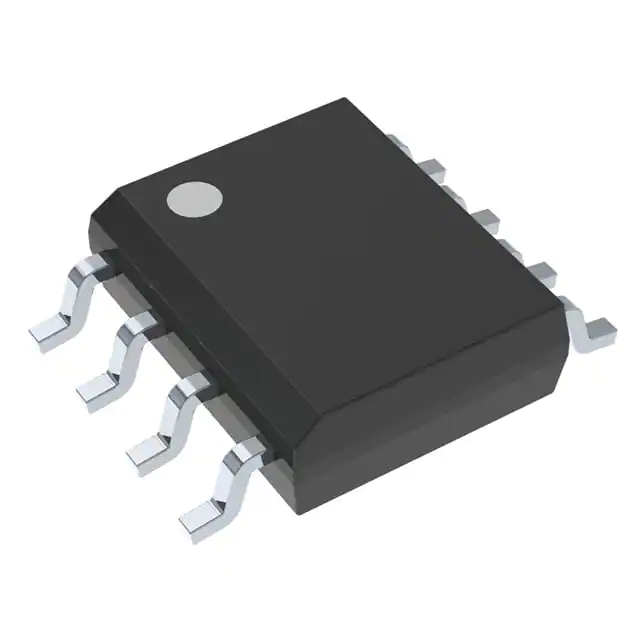
- Part No.:
- MP6411GS-33
- Manufacturer:
- Monolithic Power Systems Inc.
- Category:
- Supervisors
- Package:
- 8-SOIC (0.154", 3.90mm Width)
- Datasheet:
-
 MP6411GS-33.pdf
- Description:
- IC SUPERVISOR 1 CHANNEL 8SOIC
- Quantity:
- Payment:

- Shipping:

Inventory:3,358
Please send an inquiry. Send us your inquiry, and we will respond immediately.
Product details
Overview
MP6411GS-33 from Monolithic Power Systems is a 3.3V windowed watchdog timer IC designed to monitor microcontroller health in safety-critical embedded systems. It delivers programmable short/long window timing (t2–t5), power-on reset with 2.9V–3.1V threshold, and open-drain WDO output requiring external pull-up. Used in automotive engine control units to prevent MCU lockup during ECU firmware execution.
For engineers reviewing the MP6411GS-33 datasheet, MP6411GS-33 pinout, MP6411GS-33 application, or MP6411GS-33 equivalent, key selection criteria include VCC=3.3V operation, MODE-selectable window timing, /WD_DIS disable function, and SOIC-8 package compatibility with industrial PCB layouts.
Technical Context
The MP6411GS-33 implements a state-machine-based windowed watchdog with two distinct timing modes controlled by the MODE pin. Its internal oscillator derives timing from an external RTIMER resistor (51kΩ typical), enabling precise window durations: t2/t3 = 15/10 cycles (short mode) or t4/t5 = 1500/1000 cycles (long mode) at 3.3V.
It integrates power-on reset (VPOR-HIGH = 2.9–3.1V, VPOR-LOW = 2.8–3.0V), WDI synchronization monitoring (t1 = 450 cycles), and fault handling for sustained WDI low (WDI error detection). WDO operates as open-drain MOSFET output, mandating external pull-up per datasheet specification.
Key Specifications
| Parameter | Value and Actual Design Meaning |
|---|---|
| VCC Supply | 3.3V ±10% - fixed rail requirement; not 5V-compatible |
| Power-On Reset Threshold | 2.9V–3.1V rising, 2.8V–3.0V falling - ensures reliable MCU reset during brown-out |
| Quiescent Current | 10–14µA (RTIMER=100kΩ) - enables ultra-low-power system monitoring |
| Watchdog Window Timing | Short mode: 15-cycle close + 10-cycle open; long mode: 1500+1000 cycles - defines MCU trigger deadline windows |
| WDO Output Type | Open-drain MOSFET - requires external pull-up resistor (e.g., 100kΩ) |
| WDI Logic Levels | High ≥2.1V, low ≤0.6V - compatible with 3.3V CMOS I/O |
| Operating Temperature | −40°C to +125°C - qualified for under-hood automotive environments |
Pinout & Package
MP6411GS-33 is housed in an SOIC-8 package (JEDEC MS-012 AA, 150mil width) with standard 1.27mm pitch and 0.25mm max lead coplanarity. Pin 1 marked via notch or dot; pin 5 is NC (no connection).
| Pin/Terminal | Circuit Role | Design Meaning |
|---|---|---|
| 1 WDO | Watchdog reset output | Open-drain output requiring external pull-up; asserts low to reset MCU |
| 2 WDI | Watchdog trigger input | Accepts MCU-generated pulse; monitors for missing/faulty sync signals |
| 3 MODE | Window mode select | Pull high for long window (1500/1000 cycles), low for short window (15/10 cycles) |
| 4 GND | Ground reference | Return path for all internal circuitry and reset logic |
| 5 NC | No connection | Internally unconnected; must remain floating or grounded per layout guidelines |
| 6 VCC | Power supply input | 3.3V ±10% supply; powers internal oscillator, logic, and reset circuitry |
| 7 TIMER | Timing resistor interface | Connects external RTIMER (e.g., 51kΩ) to set base timing period (~880µs) |
| 8 /WD_DIS | Watchdog enable/disable | Pull low to disable watchdog; weak internal pull-up enables default operation |
Key Features
| Feature | Design Value |
|---|---|
| Programmable window timing | Two discrete timing modes (short/long) selected via MODE pin-enables flexible MCU watchdog coverage without firmware changes |
| Open-drain WDO output | Supports level-shifting and wired-OR reset bus configurations across mixed-voltage systems |
| WDI synchronization monitoring | Detects invalid WDI pulses (e.g., stuck-low >5ms) and triggers immediate reset-prevents false-clear scenarios |
| Low-quiescent-current operation | 10–14µA typical at 3.3V-minimizes impact on battery-backed or energy-constrained systems |
| Integrated POR with hysteresis | 2.9–3.1V rising threshold and 2.8–3.0V falling threshold-ensures clean reset release during supply ramp-up/down |
Applications
| Engine Control Unit (ECU) | Industrial PLC Controller |
|---|---|
Use Scenario: Real-time monitoring of diesel engine ECU firmware execution during cold-start and transient load conditions. IC Role / Device Role / Timing Role: Windowed watchdog enforcing strict MCU heartbeat timing windows to detect firmware hangs or memory corruption. Use Value: Prevents unsafe engine operation by asserting WDO reset within 15–1500 clock cycles if MCU fails to trigger WDI in defined window. | Use Scenario: Supervising ladder-logic execution cycle in DIN-rail mounted programmable logic controller operating in factory automation. IC Role / Device Role / Timing Role: Independent hardware-level reset supervisor ensuring deterministic recovery from software faults in deterministic scan-cycle environments. Use Value: Guarantees <100ms worst-case reset response using long-window mode (t4+t5 ≈ 2500 cycles @ 3.3V), meeting IEC 61131-2 safety timing requirements. |
| Automotive ADAS Camera Module | Railway Signaling Interface Board |
Use Scenario: Monitoring image processing SoC in rear-view camera module exposed to thermal cycling and EMI in vehicle cabin. IC Role / Device Role / Timing Role: Fault-detection node verifying periodic SoC health signal integrity under voltage fluctuations and temperature extremes. Use Value: Uses short-window mode (t2+t3 = 25 cycles) for rapid fault detection during critical video frame processing intervals. | Use Scenario: Ensuring fail-safe behavior of track-side signaling logic board subjected to long-term vibration and wide ambient temperature swings. IC Role / Device Role / Timing Role: Hardware-enforced reset generator synchronized to field-programmable gate array (FPGA) heartbeat signal. Use Value: Leverages /WD_DIS pin for maintenance-mode watchdog disable during firmware updates while retaining POR functionality. |
Equivalent & Alternatives
The following parts are listed as comparable options for similar windowed watchdog timer applications.
| Alternative Part | Technical Difference | Application Difference | Selection Advice |
|---|---|---|---|
| MAX6373KA+T | Fixed 1.6s timeout, no windowed mode; 3.3V supply; push-pull WDO output | Lacks programmable window timing and MODE-selectable modes; suited for simple timeout supervision only | Select when windowing complexity is unnecessary and push-pull reset drive is preferred |
| TPS3823DBVR | Non-windowed watchdog; 3.3V supply; 200ms fixed timeout; open-drain WDO | Provides basic timeout reset but no early/late trigger rejection-cannot distinguish valid vs. out-of-window MCU pulses | Choose for cost-sensitive designs where windowed discrimination is not required |
Compared with MAX6373KA+T and TPS3823DBVR, MP6411GS-33 uniquely supports dual-mode windowed supervision with programmable timing boundaries, enabling robust detection of both missed and premature MCU triggers-critical for ASIL-B automotive functions.
Availability
MP6411GS-33 is available at Aetrix Electronics and suitable for automotive engine control units, industrial PLC controllers, ADAS camera modules, and railway signaling interface boards requiring stable component supply across extended temperature ranges and long production lifecycles.
Supply support for MP6411GS-33 includes scheduled delivery planning, volume procurement assistance, BOM continuity management, traceable sourcing, and lifecycle availability coordination for OEM customers, industrial embedded developers, connected-device designers, and electronics production programs.
Manufacturer
Monolithic Power Systems (MPS) is a fabless semiconductor company specializing in high-performance analog and power ICs, with design centers in the US, China, and Taiwan.
The MP6411 product line delivers precision windowed watchdog timers targeting functional safety applications in automotive and industrial systems, emphasizing deterministic timing, supply robustness, and fail-safe reset generation.
FAQ
What is the exact VCC operating range for MP6411GS-33?
The MP6411GS-33 is specified for 3.3V ±10% operation (2.97V to 3.63V). Operation outside this range violates recommended conditions and may cause unreliable POR behavior or timing drift. The device is not rated for 5V operation-using MP6411GS instead is required for 5V systems.
How does the /WD_DIS pin behave when left unconnected?
When /WD_DIS is left unconnected, its internal weak pull-up activates, enabling the watchdog by default. This ensures fail-safe operation: the device monitors WDI unless explicitly disabled via external grounding. No external pull-up resistor is needed for enable-by-default use cases.
Why does MP6411GS-33 require an external pull-up on WDO?
WDO is implemented as an open-drain MOSFET output. Without an external pull-up resistor (e.g., 100kΩ to 3.3V), WDO cannot assert a high logic level. This architecture allows multiple devices to share a common reset bus and supports level translation-unlike push-pull outputs which would conflict in wired-OR configurations.
Can MODE be changed dynamically during operation?
Yes-MODE can be toggled between high and low states during normal operation to switch between short and long window modes without reset. The state machine transitions immediately upon MODE edge detection, allowing runtime adaptation to varying MCU task criticality or diagnostic phases.
What happens if WDI remains low longer than 5ms?
If WDI stays low beyond the maximum WDI_OK pulse width (5ms), the device detects a WDI error and pulls WDO low continuously until WDI returns high. This prevents spurious resets from noise-induced glitches and enforces strict pulse-width compliance for valid watchdog triggers.
Is RTIMER value fixed or adjustable per application?
RTIMER is externally adjustable: a 51kΩ resistor yields ~880µs base period, but values from 10kΩ to 100kΩ are supported. The datasheet provides linear equations (T = 15.75×RTIMER + 73.5) to calculate exact timing-enabling precise window tuning for specific MCU instruction cycle budgets.
MP6411GS-33 Specifications
- Product attributes
- Attribute value
- Manufacturer:
- Monolithic Power Systems Inc.
- Series:
- -
- Package/Case:
- 8-SOIC (0.154", 3.90mm Width)
- Packaging:
- Tube
- Product Status:
- Active
- Programmable:
- Not Verified
- Type:
- Watchdog Circuit
- Number of Voltages Monitored:
- 1
- Voltage - Threshold:
- 3V
- Output:
- -
- Reset:
- -
- Reset Timeout:
- -
- Operating Temperature:
- -40°C ~ 125°C (TJ)
- Grade:
- -
- Qualification:
- -
- Mounting Type:
- Surface Mount
- Supplier Device Package:
- 8-SOIC
MP6411GS-33 FAQ
1.How can I place an order for MP6411GS-33 through Aetrix?
Please submit a Request for Quotation (RFQ) for MP6411GS-33 on Aetrix. Our sales agent will provide a competitive quotation and guide you through the order confirmation once you accept the terms.
2.Are the price and stock information for MP6411GS-33 reliable?
The price and inventory of MP6411GS-33 are updated periodically and may fluctuate due to market conditions. Stock and pricing data are typically refreshed every 24 hours. Quotation validity for MP6411GS-33 is usually 5 days.
3.What payment methods are accepted for MP6411GS-33?
We accept Wire Transfer, PayPal, Credit Card, Western Union, MoneyGram, and Escrow for MP6411GS-33 transactions.
Note: Certain payment methods may incur a processing fee.
4.How is shipping managed for MP6411GS-33?
MP6411GS-33 orders can be shipped via leading logistics carriers, including DHL, UPS, FedEx, TNT, or Registered Mail.
Once your MP6411GS-33 order is processed, you will receive an email with the shipment details and tracking number.
Note: Tracking information may take up to 24 hours to appear. Express delivery typically takes 3–5 business days.
5.How can I obtain technical support or documentation for MP6411GS-33?
For technical support, including MP6411GS-33 datasheets, pinout diagrams, or application guidance, please contact our engineering support team. They can provide detailed documentation and assistance for your MP6411GS-33 requirements.
6.How does Aetrix verify that MP6411GS-33 is sourced from the original manufacturer or authorized distributors?
All MP6411GS-33 products on Aetrix are procured from qualified distributors and authorized channels. Our dedicated quality assurance team conducts strict verification, including traceability checks and, if necessary, third-party testing. This ensures that MP6411GS-33 meets industry standards.
7.What is the process for return or replacement of MP6411GS-33?
All MP6411GS-33 units undergo pre-shipment inspection (PSI). If there is an issue with MP6411GS-33, returns or replacements are accepted under the following conditions:
1.Quantity discrepancies, incorrect items, or visible external defects (such as breakage or corrosion), acknowledged by Aetrix.
2.The issue is reported within 90 days of delivery.
3.The MP6411GS-33 part is unused and in its original packaging.
Return procedure for MP6411GS-33:
1.Submit a request within 90 days.
2.Obtain a Return Material Authorization (RMA) from Aetrix.
MP6411GS-33 Tags
-
MIC826SYMT-TR
Microchip Technology
-
APX803S-31SA-7
Diodes Incorporated
-
APX803L20-29SA-7
Diodes Incorporated
-
TPS3828-33DBVR
Texas Instruments

-
V6340RSP3B+
EM Microelectronic
-
EM6325CXSP5B-2.9+
EM Microelectronic
-
MCP120T-300I/TT
Microchip Technology
-
MCP130T-315I/TT
Microchip Technology
-
MCP120T-475I/TT
Microchip Technology
-
MCP111T-300E/TT
Microchip Technology
-
MCP120T-315I/TT
Microchip Technology
-
MCP809T-315I/TT
Microchip Technology
Tech Hub

Operational amplifier guide covering op amp basics, feedback, ideal vs real op amps, common configurations, buffer circuits, offset, bias current, gain-bandwidth, slew rate, rail-to-rail limits and sel…

Jumper cables guide covering safe connection order, red and black clamp placement, final ground connection, cable gauge, length, clamp quality, copper vs CCA cables, jump starter comparison and battery…

LDO regulator guide covering low dropout voltage, power dissipation, thermal design, PSRR, output noise, capacitor stability, adjustable LDO circuits, LDO vs buck converter and datasheet selection chec…

Conditional Access Module guide covering CAM meaning, CI/CI+ interface, smart card authorization, DVB security workflow, TV and set-top box compatibility, internal electronics, ESD protection, connecto…

Guide to electronic component obsolescence covering EOL risk, PCN/PDN notices, last-time buy planning, replacement options, form-fit-function validation, counterfeit risk and BOM lifecycle management.

18650 battery guide covering lithium-ion cell basics, 3.6V/3.7V voltage, 4.2V charging, mAh and Wh capacity, protected cells, chargers, BMS, series-parallel packs, holders, welding and sourcing checks.…

Hall effect sensor guide covering working principle, linear and digital sensors, Arduino circuits, current sensing, speed detection, automotive applications, A3144 examples, signal filtering and datash…

Product Change Notification guide for electronic components, covering PCN meaning, PCN vs PDN/EOL, common change types, risk levels, form-fit-function review, engineering validation, BOM control, LTB/L…

A practical guide to blend door actuators, covering HVAC function, symptoms, location, AC and heater issues, reset and calibration, replacement cost, electrical diagnosis, compatibility checks, and rep…

Engineering guide to Raspberry Pi alternatives, covering chip-level differences, Orange Pi, ROCK, Jetson, Banana Pi, NanoPi, Compute Module, Pico, GPIO, camera, HAT compatibility, and replacement risks…


