
 My Inquiry
 My Account


Monolithic Power Systems Inc. MP6520GV-Z
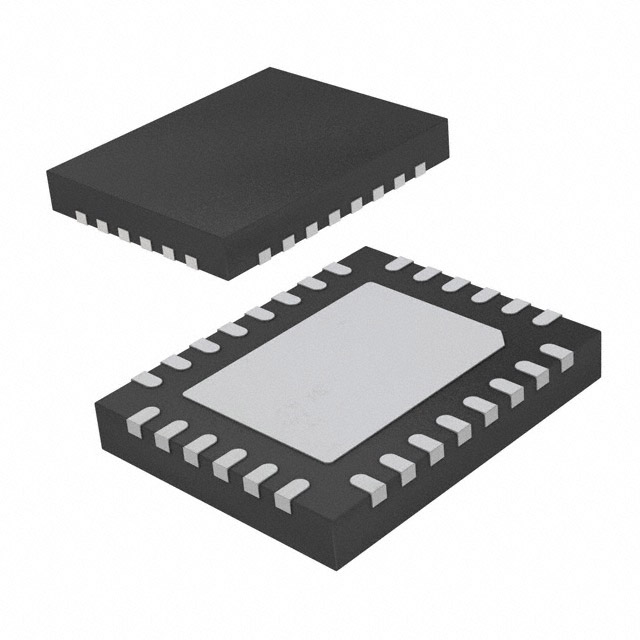
- Part No.:
- MP6520GV-Z
- Manufacturer:
- Monolithic Power Systems Inc.
- Category:
- Motor Drivers, Controllers
- Package:
- 28-VFQFN Exposed Pad
- Datasheet:
-
 MP6520GV-Z.pdf
- Description:
- 8V TO 32V, 1.5A, STEPPER MOTOR D
- Quantity:
- Payment:

- Shipping:

Inventory:3,232
Please send an inquiry. Send us your inquiry, and we will respond immediately.
Product details
Overview
MP6520GV-Z from Monolithic Power Systems is a bipolar stepper motor driver IC with integrated dual full-bridge N-channel MOSFETs, microstepping translator, and 3.3V LDO regulator. It operates from 8V to 32V input, delivers up to ±1.5A per phase, supports full/half/quarter/eighth-step modes, and includes OCP/OVP/UVLO/thermal shutdown. Used in precision motion control for printers, CNC stages, and lab automation.
For engineers reviewing the MP6520GV-Z datasheet, MP6520GV-Z pinout, MP6520GV-Z application, or MP6520GV-Z equivalent, key selection criteria include its integrated gate drive charge pump, adjustable mixed-decay PWM current control, open-drain nFAULT/nHOME outputs, QFN-28 thermal pad layout, and logic-level compatibility with 3.3V/5V microcontrollers.
Technical Context
The MP6520GV-Z implements a constant-off-time (COT) PWM current regulation architecture with programmable blanking time (2µs) and crossover dead time (400ns), using external ROSC resistor to set off-time (20–40µs). Its internal DAC-driven translator sequences phase currents per step table, with MDS pin enabling voltage-controlled mixed-decay ratio (0–100% fast decay).
It integrates an internal charge pump (525kHz) driving high-side MOSFETs via VCP, with CPA/CPB pins requiring 100nF ceramic capacitor; VG supplies gate drive bias and requires 1µF bypass. The 3.3V reference (3.2–3.45V, 1mA load) powers logic and eliminates need for external VCC.
Key Specifications
| Parameter | Value and Actual Design Meaning |
|---|---|
| Supply Voltage Range | 8V to 32V - supports wide industrial DC bus inputs including 12V, 24V, and 32V systems without external regulators. |
| Max Output Current | ±1.5A per phase - enables direct drive of NEMA 17–23 stepper motors with torque up to ~0.5 N·m at 24V. |
| On-Resistance (HS/LS) | 0.30Ω typical at 25°C - reduces conduction loss to <700mW per FET at 1.5A, minimizing heatsink requirements. |
| Microstep Resolution | Full / Half / Quarter / Eighth - provides up to 32 microsteps per electrical cycle, enabling smooth low-speed operation and sub-0.9° positioning resolution. |
| VREF Input Range | 0–3.3V - sets full-scale current limit via ILIMIT = VREF × 5 / RSENSE, supporting precise current tuning from 10% to 100% of rated output. |
| Fault Protection | OCP (2.5–5.5A), OVP (36–40V), UVLO (6.5–7.7V), thermal shutdown (165°C) - autonomous fault response with nFAULT open-drain alert and auto-retry recovery. |
| Logic Interface | 3.3V/5V compatible with internal pull-downs on STEP/DIR/MS1/MS2/nENBL/nSLEEP/nRSET - simplifies MCU interface without level shifters or external biasing. |
Pinout & Package
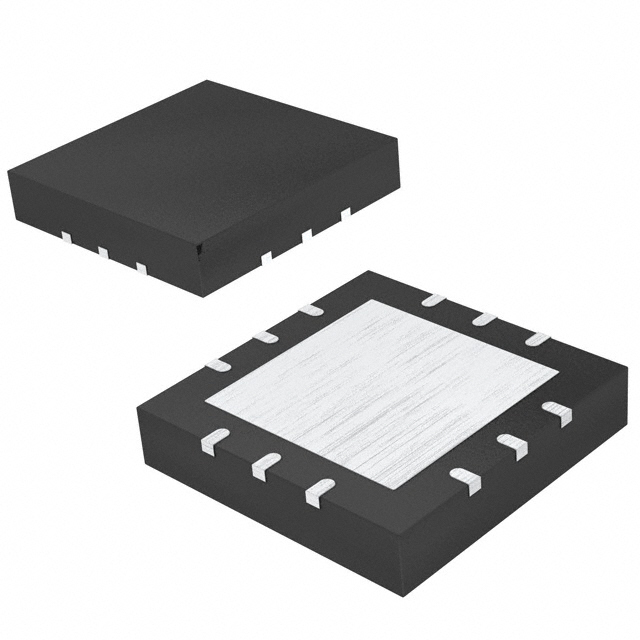
MP6520GV-Z is housed in a thermally enhanced QFN-28 (4mm × 5mm) package with exposed GND pad on underside for PCB heat dissipation. Pin 1 is marked by index area; top marking includes MPS prefix, year/week code, part number, and lot ID.
| Pin/Terminal | Circuit Role | Design Meaning |
|---|---|---|
| VIN (Pins 1,10) | Main power input | Accepts 8–32V supply; both pins must be connected to same rail for current sharing and low-impedance path. |
| AOUT1/AOUT2/BOUT1/BOUT2 (Pins 2,5,6,9) | H-bridge output terminals | Drive bipolar stepper motor windings A and B; each pair forms a full bridge with integrated N-MOSFETs. |
| SENA/SENB (Pins 3,4,7,8) | Current sense inputs | Connect to low-side sense resistors (RSENSE) for phase current feedback; referenced to VREF for PWM regulation. |
| nFAULT/nHOME (Pins 19,20) | Open-drain status outputs | Require external pull-up; nFAULT asserts low on OCP/OVP/thermal fault; nHOME pulses low at home position (step 5 in table). |
| STEP/DIR/MS1/MS2 (Pins 18,17,16,15) | Translator control inputs | Edge-triggered STEP advances microstep; DIR sets rotation direction; MS1/MS2 select step mode per truth table. |
| nENBL/nSLEEP/nRSET (Pins 14,11,13) | Functional enable/reset controls | nENBL disables H-bridges only; nSLEEP powers down entire IC (including 3P3VOUT); nRSET resets translator to home position. |
| VREF/3P3VOUT/MDS/ROSC (Pins 23,24,22,21) | Analog configuration nodes | VREF sets current limit; 3P3VOUT supplies 3.3V logic rail; MDS adjusts decay ratio; ROSC sets PWM off-time with resistor. |
| CPA/CPB/VCP/VG (Pins 25,26,27,12) | Charge pump & gate drive | CPA/CPB form flying capacitor node; VCP supplies boosted gate voltage; VG powers gate drivers and requires 1µF bypass. |
Key Features
| Feature | Design Value |
|---|---|
| Integrated dual full-bridge MOSFETs | Eliminates 8 discrete power switches and associated gate drivers, reducing BOM count and PCB footprint by >40% vs discrete solutions. |
| Programmable mixed-decay PWM | MDS pin accepts 0–3.3V analog input to linearly adjust fast-decay ratio from 0% (pure slow decay) to 100%, optimizing torque ripple and efficiency per motor load. |
| Self-contained 3.3V regulator | 3P3VOUT delivers regulated 3.3V @ 1mA, powering internal logic and external MCU peripherals-no separate logic supply required. |
| Auto-recovering fault protection | OCP triggers 5ms disable + auto-retry; five consecutive faults cause latch-off-enables robust field operation without manual reset intervention. |
| Thermally optimized QFN-28 | Exposed GND pad and θJA = 40°C/W (4-layer PCB) allow 1.5A continuous operation at TA ≤ 70°C without heatsink in typical layouts. |
Applications
| Printer Paper Feed Control | CNC Milling Axis Driver |
|---|---|
Use Scenario: Precise paper advancement and registration in inkjet/laser printers with variable media thickness. IC Role / Device Role / Timing Role: Stepper driver executing microstepped motion commands from printer controller MCU; manages current decay timing to suppress resonance during start/stop transitions. Use Value: Eighth-step mode enables 0.045° angular resolution per step, reducing audible noise and positional jitter during low-speed paper handling. | Use Scenario: Closed-loop X/Y/Z axis positioning in desktop CNC mills with NEMA 17 stepper motors. IC Role / Device Role / Timing Role: Bipolar H-bridge driver with real-time current regulation; ROSC-set PWM off-time synchronizes with motor inductance to maintain torque above 200 RPM. Use Value: Adjustable mixed decay (via MDS) minimizes back-EMF-induced current overshoot during direction reversal, improving contour accuracy in G-code toolpaths. |
| Lab Automation Sample Carousel | 3D Printer Extruder Motor Control |
Use Scenario: Indexing multi-position sample carousel in analytical instruments requiring repeatable 10° increments. IC Role / Device Role / Timing Role: Translator-based stepper controller with nHOME output signaling mechanical home position; UVLO ensures safe shutdown during brownout events. Use Value: Built-in nHOME open-drain signal eliminates need for external limit switch, reducing mechanical complexity and calibration steps. | Use Scenario: Filament feed control in FDM 3D printers where extrusion rate must match print head velocity. IC Role / Device Role / Timing Role: High-bandwidth current-regulated driver responding to STEP pulses at up to 500Hz; VREF scaling allows dynamic current reduction during coast phases. Use Value: 1.5A peak current capability sustains extrusion torque under filament jam conditions while OCP prevents MOSFET failure during stall events. |
Equivalent & Alternatives
The following parts are listed as comparable options for similar bipolar stepper motor driver applications.
| Alternative Part | Technical Difference | Application Difference | Selection Advice |
|---|---|---|---|
| TB6600HG | Higher 4.5A rating, external MOSFETs, no integrated charge pump or 3.3V LDO | Requires external gate drivers, logic supply, and sense resistors; suited for high-torque (>1.2 N·m) industrial axes | Select when >2A phase current or discrete power stage flexibility is required; adds 12+ BOM items and layout complexity. |
| DRV8825 | Lower 2.2A rating, integrated current regulation, no charge pump, 3.3V logic only | No OVP/thermal shutdown latching; limited to 3.3V MCU interfaces; lacks nHOME output | Choose for cost-sensitive 3D printer boards where 1.5A is sufficient and simplified fault handling is acceptable. |
Compared with TB6600HG and DRV8825, MP6520GV-Z uniquely combines integrated MOSFETs, self-powered logic, comprehensive fault latching, and analog decay control-making it optimal for compact, reliable, and thermally constrained motion subsystems.
Availability
MP6520GV-Z is available at Aetrix Electronics and suitable for printer paper feed mechanisms, CNC milling axis drives, lab automation carousels, and 3D printer extruder control requiring stable component supply across production lifecycles.
Supply support for MP6520GV-Z includes scheduled delivery planning, volume procurement assistance, BOM continuity management, traceable sourcing, and lifecycle availability coordination for OEM customers, industrial embedded developers, connected-device designers, and electronics production programs.
Manufacturer
Monolithic Power Systems (MPS) is a fabless semiconductor company specializing in high-performance analog and power ICs, with design centers in the US, China, and Taiwan, and global distribution since 1997.
The MP6520 belongs to MPS's integrated motor driver product line, engineered for compact, thermally efficient stepper control in space-constrained industrial and consumer motion systems without external gate drivers or logic supplies.
FAQ
What is the maximum allowable motor supply voltage for MP6520GV-Z?
The absolute maximum VIN rating is 40V, but the recommended operating range is 8V to 32V. Operation above 32V risks triggering the 36–40V input over-voltage protection (OVP), which disables outputs and asserts nFAULT. Sustained use beyond 32V is not advised due to reduced safety margin and potential reliability impact.
How does the MP6520GV-Z achieve thermal stability in QFN-28 packaging?
Thermal stability relies on the exposed GND pad soldered to a large PCB copper pour, achieving θJA = 40°C/W on a 4-layer board. Combined with thermal shutdown at 165°C and 30°C hysteresis, the device autonomously cycles off during overload, allowing safe cooldown before resuming operation without external intervention.
Can MP6520GV-Z drive unipolar stepper motors?
No. MP6520GV-Z is designed exclusively for bipolar stepper motors with center-tapped or dual-winding configurations. Its dual full-bridge topology requires four-terminal connection (A+, A−, B+, B−) and cannot interface with 5- or 6-wire unipolar motors without external rewiring or external transistor arrays.
What is the function of the nRSET pin, and how does it differ from nSLEEP?
nRSET resets the internal step table to home position (step 5) and ignores STEP inputs while asserted low; it does not power down circuitry. nSLEEP disables all internal blocks-including charge pump, 3P3VOUT, and translators-and reduces quiescent current to 5µA. Wake-up from sleep requires ≥1ms stabilization before issuing STEP.
Is an external pull-up resistor required for nFAULT and nHOME outputs?
Yes. Both nFAULT and nHOME are open-drain outputs with no internal pull-up. A 4.7kΩ to 10kΩ resistor to 3.3V or 5V is required to ensure valid logic-high levels when no fault occurs or home position is inactive. Missing pull-ups result in floating states and unreliable system-level fault detection.
How is current limit set, and what is the role of VREF in PWM regulation?
Current limit is set by VREF voltage applied to Pin 23 and external sense resistor RSENSE, per ILIMIT = VREF × 5 / RSENSE. VREF feeds a DAC that scales the current comparator threshold; at 3.3V VREF and 0.1Ω RSENSE, full-scale current is 1.65A-matching the 1.5A rating with margin.
Does MP6520GV-Z support automatic decay mode, and how is it enabled?
Yes. Automatic decay activates when MDS voltage exceeds 2.8V. In this mode, the device selects slow decay for current increases and mixed decay (30% fast decay) for decreases-optimizing efficiency and torque consistency without MCU intervention or analog tuning.
MP6520GV-Z Specifications
- Product attributes
- Attribute value
- Manufacturer:
- Monolithic Power Systems Inc.
- Series:
- *
- Package/Case:
- 28-VFQFN Exposed Pad
- Packaging:
- Tape & Reel (TR)
- Product Status:
- Active
- Motor Type - Stepper:
- -
- Motor Type - AC, DC:
- -
- Function:
- -
- Output Configuration:
- -
- Interface:
- -
- Technology:
- -
- Step Resolution:
- -
- Applications:
- -
- Current - Output:
- -
- Voltage - Supply:
- -
- Voltage - Load:
- -
- Operating Temperature:
- -
- Grade:
- -
- Qualification:
- -
- Mounting Type:
- Surface Mount
- Supplier Device Package:
- 28-QFN (4x5)
MP6520GV-Z FAQ
1.How can I place an order for MP6520GV-Z through Aetrix?
Please submit a Request for Quotation (RFQ) for MP6520GV-Z on Aetrix. Our sales agent will provide a competitive quotation and guide you through the order confirmation once you accept the terms.
2.Are the price and stock information for MP6520GV-Z reliable?
The price and inventory of MP6520GV-Z are updated periodically and may fluctuate due to market conditions. Stock and pricing data are typically refreshed every 24 hours. Quotation validity for MP6520GV-Z is usually 5 days.
3.What payment methods are accepted for MP6520GV-Z?
We accept Wire Transfer, PayPal, Credit Card, Western Union, MoneyGram, and Escrow for MP6520GV-Z transactions.
Note: Certain payment methods may incur a processing fee.
4.How is shipping managed for MP6520GV-Z?
MP6520GV-Z orders can be shipped via leading logistics carriers, including DHL, UPS, FedEx, TNT, or Registered Mail.
Once your MP6520GV-Z order is processed, you will receive an email with the shipment details and tracking number.
Note: Tracking information may take up to 24 hours to appear. Express delivery typically takes 3–5 business days.
5.How can I obtain technical support or documentation for MP6520GV-Z?
For technical support, including MP6520GV-Z datasheets, pinout diagrams, or application guidance, please contact our engineering support team. They can provide detailed documentation and assistance for your MP6520GV-Z requirements.
6.How does Aetrix verify that MP6520GV-Z is sourced from the original manufacturer or authorized distributors?
All MP6520GV-Z products on Aetrix are procured from qualified distributors and authorized channels. Our dedicated quality assurance team conducts strict verification, including traceability checks and, if necessary, third-party testing. This ensures that MP6520GV-Z meets industry standards.
7.What is the process for return or replacement of MP6520GV-Z?
All MP6520GV-Z units undergo pre-shipment inspection (PSI). If there is an issue with MP6520GV-Z, returns or replacements are accepted under the following conditions:
1.Quantity discrepancies, incorrect items, or visible external defects (such as breakage or corrosion), acknowledged by Aetrix.
2.The issue is reported within 90 days of delivery.
3.The MP6520GV-Z part is unused and in its original packaging.
Return procedure for MP6520GV-Z:
1.Submit a request within 90 days.
2.Obtain a Return Material Authorization (RMA) from Aetrix.
MP6520GV-Z Tags
-
DRV2603RUNR
Texas Instruments
-
DRV8837CDSGR
Texas Instruments
-
DRV8837DSGR
Texas Instruments
-
DRV8838DSGR
Texas Instruments
-
DRV8839DSSR
Texas Instruments
-
EMC2301-1-ACZL-TR
Microchip Technology
-
DRV8231ADSGR
Texas Instruments
-
EMC2302-2-AIZL-TR
Microchip Technology
-
DRV8800PWPR
Texas Instruments
-
DRV8835DSSR
Texas Instruments
-
EMC2303-1-KP-TR
Microchip Technology
-
DRV8876PWPR
Texas Instruments
Tech Hub

Operational amplifier guide covering op amp basics, feedback, ideal vs real op amps, common configurations, buffer circuits, offset, bias current, gain-bandwidth, slew rate, rail-to-rail limits and sel…

Jumper cables guide covering safe connection order, red and black clamp placement, final ground connection, cable gauge, length, clamp quality, copper vs CCA cables, jump starter comparison and battery…

LDO regulator guide covering low dropout voltage, power dissipation, thermal design, PSRR, output noise, capacitor stability, adjustable LDO circuits, LDO vs buck converter and datasheet selection chec…

Conditional Access Module guide covering CAM meaning, CI/CI+ interface, smart card authorization, DVB security workflow, TV and set-top box compatibility, internal electronics, ESD protection, connecto…

Guide to electronic component obsolescence covering EOL risk, PCN/PDN notices, last-time buy planning, replacement options, form-fit-function validation, counterfeit risk and BOM lifecycle management.

18650 battery guide covering lithium-ion cell basics, 3.6V/3.7V voltage, 4.2V charging, mAh and Wh capacity, protected cells, chargers, BMS, series-parallel packs, holders, welding and sourcing checks.…

Hall effect sensor guide covering working principle, linear and digital sensors, Arduino circuits, current sensing, speed detection, automotive applications, A3144 examples, signal filtering and datash…

Product Change Notification guide for electronic components, covering PCN meaning, PCN vs PDN/EOL, common change types, risk levels, form-fit-function review, engineering validation, BOM control, LTB/L…

A practical guide to blend door actuators, covering HVAC function, symptoms, location, AC and heater issues, reset and calibration, replacement cost, electrical diagnosis, compatibility checks, and rep…

Engineering guide to Raspberry Pi alternatives, covering chip-level differences, Orange Pi, ROCK, Jetson, Banana Pi, NanoPi, Compute Module, Pico, GPIO, camera, HAT compatibility, and replacement risks…


