
 My Inquiry
 My Account


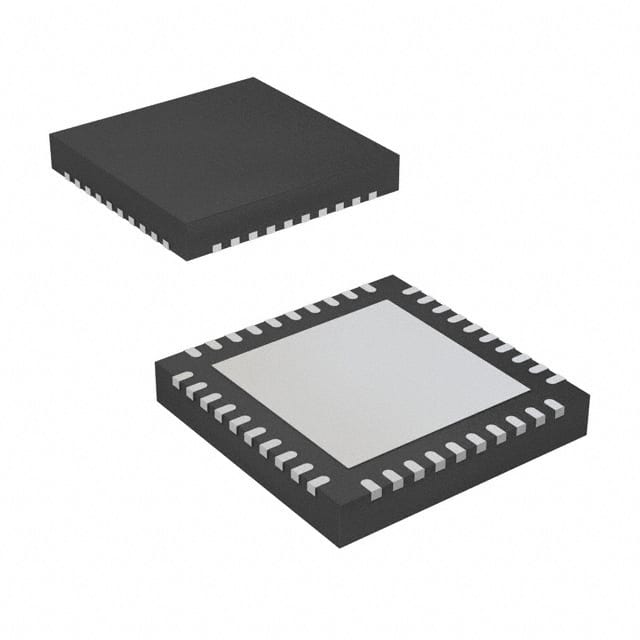
Monolithic Power Systems Inc. MP6535GU-Z
- Part No.:
- MP6535GU-Z
- Manufacturer:
- Monolithic Power Systems Inc.
- Category:
- Motor Drivers, Controllers
- Package:
- 40-VFQFN Exposed Pad
- Datasheet:
-
 MP6535GU-Z.pdf
- Description:
- IC MTR DRVR MULTPHAS 5-55V 40QFN
- Quantity:
- Payment:

- Shipping:

Inventory:1,938
Please send an inquiry. Send us your inquiry, and we will respond immediately.
Product details
Overview
MP6535GU-Z from Monolithic Power Systems is a three-phase BLDC motor pre-driver IC with integrated 500mA buck regulator and 120° Hall-sensor commutation logic. It drives six external N-channel MOSFETs across 5V–55V input, supports 100% duty-cycle high-side operation via trickle-charged bootstrap, and delivers 0.8A source / 1A sink gate drive per phase. Used in e-bike controllers and power drills for precise motor speed/direction/brake control.
For engineers reviewing the MP6535GU-Z datasheet, MP6535GU-Z pinout, MP6535GU-Z application, or MP6535GU-Z equivalent, key selection criteria include its integrated buck regulator output (10–12.8V), programmable short-circuit protection via OCREF, adjustable dead-time control (30ns to 6µs), and thermal shutdown at 150°C - all critical for robust motor drive design under variable load and voltage conditions.
Technical Context
The MP6535GU-Z implements a regulated charge pump generating ~11.5V at VREG for low-side gate drive, while high-side drive relies on bootstrap capacitors replenished by an internal 5µA trickle-charge circuit - enabling continuous conduction without gate voltage collapse. Its 120° commutation engine accepts three Hall sensor inputs (HA/HB/HC) and interprets direction (DIR), PWM speed modulation, and active-low braking (nBRAKE) to sequence six gate outputs.
Protection architecture includes dual over-current mechanisms: VDS-based short-circuit detection referenced to OCREF (0.125–2.4V range), and LSS-shunt-based OCP with 0.5V threshold and 53–80µs fixed off-time. Fault reporting occurs via open-drain nFAULT, latched until reset by nSLEEP or VIN UVLO recovery.
Key Specifications
| Parameter | Value and Actual Design Meaning |
|---|---|
| Input Voltage Range | 5V to 55V - powers both gate drivers and internal buck regulator; supports wide battery chemistries (e.g., 12V–48V e-bike packs). |
| VREG Output | 10V to 12.8V at up to 500mA - supplies local MCU, sensors, or logic; eliminates need for external LDO in motor control subsystems. |
| Gate Drive Strength | 0.8A source / 1A sink per channel - ensures fast turn-on/turn-off of N-MOSFETs with <10nC gate charge, reducing switching losses. |
| Dead Time Range | 30ns (DT grounded) to 6µs (DT open) - prevents shoot-through in half-bridge legs; externally adjustable via single RDT resistor. |
| OCP Threshold | 0.4V to 0.6V at LSS pin - sets current limit via external shunt; enables stall current limiting in BLDC motors without additional sensing ICs. |
| Thermal Shutdown | 150°C junction temperature - protects die during overload or poor heatsinking; latched fault requires nSLEEP or VIN cycle to clear. |
| UVLO Threshold | 3.3V to 4.5V rising on VIN - disables all functions below safe operating voltage; 200mV hysteresis prevents chatter near threshold. |
Pinout & Package
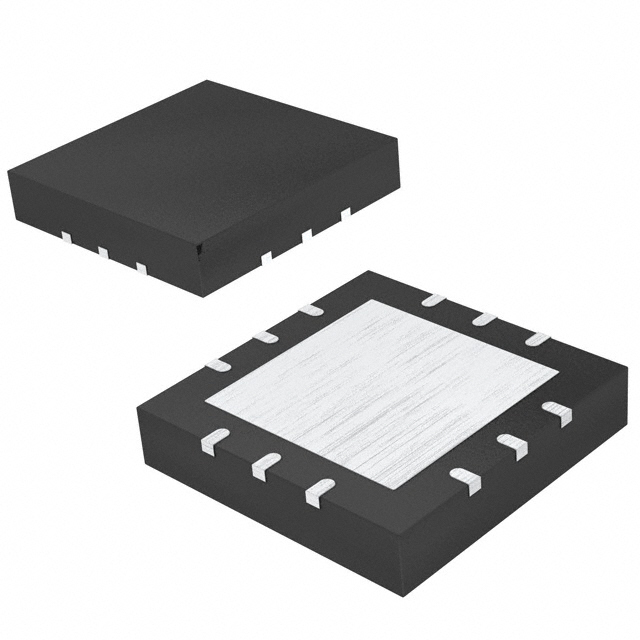
MP6535GU-Z uses a thermally enhanced 40-pin QFN package (5mm × 5mm) with exposed thermal pad for efficient heat dissipation in motor drive applications.
| Pin/Terminal | Circuit Role | Design Meaning |
|---|---|---|
| 1, 26, 30, 36 | N/C | No internal connection; must remain unconnected per datasheet. |
| 2, 22, 37 (BSTA/BSTB/BSTC) | Bootstrap Phase Terminal | Connects ceramic capacitor to respective SHx pin; stores charge to drive high-side gates above VIN. |
| 3, 23, 38 (SHC/SHA/SHB) | High-Side Source | Source node of external high-side N-MOSFET; ties directly to phase winding terminals. |
| 4, 24, 39 (GHC/GHA/GHB) | High-Side Gate Driver Output | Drives gate of high-side N-MOSFET with 0.8A source capability; referenced to SHx. |
| 5, 25, 40 (GLC/GLA/GLB) | Low-Side Gate Driver Output | Drives gate of low-side N-MOSFET with 1A sink capability; referenced to GND. |
| 6 (LSS) | Low-Side Current Sense Input | Monitors shunt voltage for OCP; 0.5V threshold enables 50mΩ–100mΩ sense resistors at 5–10A range. |
| 7–9 (HC/HB/HA) | Hall Sensor Inputs | Internal pulldown; accept 120° spaced digital Hall signals to determine rotor position for commutation. |
| 10 (nBRAKE) | Active-Low Brake Control | Pulls all GLx outputs high to short motor phases to GND; provides dynamic braking independent of PWM/DIR. |
| 11 (PWM) | Speed Control Input | Modulates duty cycle of driven phase; high = drive selected phase high, low = drive low (per commutation table). |
| 12 (DIR) | Direction Control Input | Configures forward/reverse rotation sequence; determines phase activation order in 120° Hall commutation. |
| 13 (nFAULT) | Open-Drain Fault Indicator | Asserts low on UVLO, OCP, short-circuit, or thermal fault; requires external pull-up for system-level monitoring. |
| 14 (nSLEEP) | Active-Low Sleep Enable | Reduces quiescent current to 1µA; disables all drivers and logic; wake-up triggers full power-up sequence (~1ms). |
| 15 (OCREF) | OCP/Short-Circuit Reference | Sets VDS trip point (0.125–2.4V); tying to VREG disables protection; used with external resistor divider for precision setting. |
| 16 (DT) | Dead-Time Adjustment | Resistor-to-GND sets tDEAD = 3.7 × RDT (kΩ) ns; open = 6µs, grounded = 30ns minimum. |
| 17, 34 (GND) | Power Ground | Main return path for gate drive, buck regulator, and logic; connects to exposed thermal pad for thermal performance. |
| 18 (VIN) | Main Power Input | Supplies pre-driver and buck regulator; requires ceramic bypass + bulk capacitance; absolute max 65V transient. |
| 19–20 (CPA/CPB) | Charge Pump Capacitor Terminals | Connect external ceramic cap between CPA–CPB; generates regulated ~11.5V for VREG and low-side gate drive. |
| 21 (VREG) | Regulated Gate Drive Supply | 10–12.8V output; powers low-side drivers and external circuitry; decoupled with 10µF ceramic to GND. |
| 27 (RBST) | Buck Regulator Boost Pin | Connects boost capacitor between RBST and RSW; enables high-efficiency synchronous buck operation. |
| 28–29 (RSW) | Buck Regulator Switch Node | Internal high-side switch output; connects to external inductor and Schottky diode or synchronous FET. |
| 31–32 (RIN) | Buck Regulator Input | Typically tied to VIN; supplies buck stage; supports 5–60V input range with internal 1Ω RDS(ON). |
| 33 (RFB) | Buck Feedback Input | Connects to resistor divider from VOUT to GND; sets output voltage via 0.812V reference; enables 3.3V/5V/12V outputs. |
| 35 (REN) | Buck Enable Input | Pull >1.35V to enable; tie to VIN via 100kΩ for auto-start; draws only 0.1µA in shutdown. |
Key Features
| Feature | Design Value |
|---|---|
| Integrated 500mA Buck Regulator | Generates stable 3.3V/5V/12V local supply from same VIN rail - eliminates external DC-DC converter and reduces BOM count. |
| Trickle-Charged Bootstrap Circuit | Maintains high-side gate voltage during 100% duty cycle - enables continuous conduction mode in field-oriented control (FOC) derivatives. |
| Programmable Short-Circuit Protection | OCREF pin accepts 0.125–2.4V reference - allows precise VDS trip point tuning for diverse MOSFET RDS(ON) values and voltage rails. |
| Adjustable Dead-Time Control | Single RDT resistor sets 30ns–6µs dead time - balances shoot-through prevention against torque ripple in high-speed BLDC operation. |
| 120° Hall Sensor Commutation Engine | Hardwired logic processes HA/HB/HC inputs - removes need for MCU-based commutation firmware, simplifying embedded motor control design. |
Applications
| Power Tools | E-Bike Motor Controllers |
|---|---|
|
Use Scenario: Cordless power drill requiring variable speed, reversible torque, and dynamic braking under high mechanical load. IC Role / Device Role: Pre-driver orchestrating 3-phase commutation, regulating gate voltage, and managing brake/fault states via nBRAKE and nFAULT. Use Value: Integrated buck powers drill's MCU and Hall sensors from same battery; 100% duty-cycle support enables full-torque stall without gate drive collapse. |
Use Scenario: Mid-drive e-bike controller interfacing with 36V/48V battery, Hall-effect motor, and pedal-assist sensor. IC Role / Device Role: Central gate driver executing Hall-based commutation, delivering 0.8A/1A gate drive to 60V-rated MOSFETs, and supplying 5V to microcontroller. Use Value: Single-chip solution replaces discrete gate drivers + LDO; programmable OCP protects against wheel lockup or hill-climb overcurrent events. |
| Industrial Blowers | Automated Door Actuators |
|
Use Scenario: HVAC blower fan demanding quiet, efficient operation across 20–100% airflow with thermal resilience. IC Role / Device Role: Pre-driver managing PWM-modulated speed, DIR-controlled airflow reversal, and thermal shutdown at 150°C junction. Use Value: Adjustable dead time minimizes audible switching noise; VREG output powers fan speed feedback circuitry without extra regulators. |
Use Scenario: Garage door opener requiring precise position control, soft-start, and emergency stop with mechanical load sensing. IC Role / Device Role: Gate driver interpreting Hall rotor position, executing commutation, and asserting nFAULT on motor jam or overtemperature. Use Value: LSS-based OCP detects stalling during door obstruction; nBRAKE provides fail-safe mechanical braking independent of MCU state. |
Equivalent & Alternatives
The following parts are listed as comparable options for similar three-phase BLDC pre-driver applications.
| Alternative Part | Technical Difference | Application Difference | Selection Advice |
|---|---|---|---|
| MP6532GU-Z | Lacks integrated buck regulator; no VREG output; identical gate drive specs and Hall commutation. | Requires external 5V/3.3V supply for MCU/sensors; suitable where local regulation already exists. | Select when system-level power architecture provides dedicated low-voltage rails and board space is constrained. |
| TBD7200AFNG,EL | Higher 60V max VIN; includes built-in current sense amplifier; no integrated buck; different pinout and Hall logic interface. | Supports higher-voltage industrial motors; requires external op-amp for OCP; lacks 120° Hall auto-commutation. | Choose for 60V+ systems needing analog current monitoring but willing to implement commutation in MCU firmware. |
Compared with MP6535GU-Z, MP6532GU-Z reduces integration but improves thermal margin in compact layouts, while TBD7200AFNG offers higher voltage tolerance at the cost of increased design complexity and loss of autonomous Hall commutation.
Availability
MP6535GU-Z is available at Aetrix Electronics and suitable for e-bike motor controllers, cordless power tools, industrial blowers, and automated door actuators requiring stable component supply across automotive-grade temperature ranges (-40°C to +125°C).
Supply support for MP6535GU-Z includes scheduled delivery planning, volume procurement assistance, BOM continuity management, traceable sourcing, and lifecycle availability coordination for OEM customers, industrial embedded developers, connected-device designers, and electronics production programs.
Manufacturer
Monolithic Power Systems (MPS) is a fabless semiconductor company specializing in high-performance analog and power ICs, with core expertise in DC-DC conversion, motor control, and LED drivers.
The MP6535 belongs to MPS's BLDC pre-driver product line, engineered specifically for cost-sensitive, thermally demanding motor applications where integration of gate drive, commutation logic, and local regulation reduces system footprint and firmware overhead.
FAQ
What is the maximum continuous output current capability of the integrated buck regulator?
The MP6535GU-Z buck regulator delivers up to 500mA continuous output current at its VREG pin. This is specified across the full input range (5V–60V) and ambient temperatures (–40°C to +125°C), with typical output voltage of 10–12.8V. The regulator uses current-mode control with 330–570kHz switching frequency and includes foldback protection during short-circuit events.
How does the trickle-charge circuit enable 100% duty-cycle operation?
The trickle-charge circuit supplies ~5µA of continuous current to each bootstrap capacitor during high-side conduction, compensating for leakage and ESR losses that would otherwise discharge the capacitor. This maintains sufficient gate-source voltage (VGS) on the high-side MOSFET even when the complementary low-side FET remains off indefinitely - a requirement for field-oriented control (FOC) and certain braking modes.
Can the MP6535GU-Z operate without Hall sensors?
No - the MP6535GU-Z requires three Hall sensor inputs (HA/HB/HC) to execute its hardwired 120° commutation logic. It does not support sensorless back-EMF detection or alternative commutation methods. If Hall-less operation is needed, a different pre-driver (e.g., MP6540) or MCU-based solution must be used.
What is the purpose of the OCREF pin, and how is it configured for over-current protection?
The OCREF pin sets the voltage threshold for both VDS-based short-circuit detection and LSS-shunt-based over-current protection. Applying 0.5V to OCREF configures OCP to trigger when shunt voltage exceeds 0.5V (e.g., 10A through 50mΩ). Connecting OCREF to VREG disables both protections. A resistor divider from VREG to GND allows precise threshold programming across the 0.125–2.4V range.
Is the nFAULT output latched or auto-recovering after a fault event?
The nFAULT output is latched: once asserted low due to UVLO, OCP, short-circuit, or thermal shutdown, it remains low until the fault condition is cleared *and* the device is reset via either cycling nSLEEP (low→high) or allowing VIN to drop below UVLO threshold and recover. This ensures persistent fault signaling for system-level safety monitoring.
What thermal management considerations apply to the QFN-40 package?
The MP6535GU-Z QFN-40 (5mm×5mm) has θJA = 36°C/W and θJC = 8°C/W on a 4-layer PCB per JESD51-7. To maintain TJ ≤ 125°C at full load, the exposed thermal pad must be soldered to a minimum 250mm² copper pour with ≥4 thermal vias (0.3mm diameter) to inner ground planes. Ambient temperature and airflow significantly impact achievable power dissipation.
Does the MP6535GU-Z support PWM frequency scaling for acoustic noise reduction?
Yes - the MP6535GU-Z's gate driver operates synchronously with the external PWM input signal, which can be varied from DC up to the system MCU's maximum output frequency (typically ≤20kHz). While the internal charge pump and buck oscillator frequencies are fixed (110kHz and ~450kHz respectively), the commutation timing follows the applied PWM, enabling audible-noise optimization by shifting switching above 20kHz.
MP6535GU-Z Specifications
- Product attributes
- Attribute value
- Manufacturer:
- Monolithic Power Systems Inc.
- Series:
- -
- Package/Case:
- 40-VFQFN Exposed Pad
- Packaging:
- Tape & Reel (TR)
- Product Status:
- Active
- Motor Type - Stepper:
- Multiphase
- Motor Type - AC, DC:
- Brushless DC (BLDC)
- Function:
- Controller - Commutation, Direction Management
- Output Configuration:
- Pre-Driver - Half Bridge (3)
- Interface:
- PWM
- Technology:
- Power MOSFET
- Step Resolution:
- -
- Applications:
- General Purpose
- Current - Output:
- -
- Voltage - Supply:
- 5V ~ 55V
- Voltage - Load:
- -
- Operating Temperature:
- -40°C ~ 125°C (TJ)
- Grade:
- -
- Qualification:
- -
- Mounting Type:
- Surface Mount
- Supplier Device Package:
- 40-QFN (5x5)
MP6535GU-Z FAQ
1.How can I place an order for MP6535GU-Z through Aetrix?
Please submit a Request for Quotation (RFQ) for MP6535GU-Z on Aetrix. Our sales agent will provide a competitive quotation and guide you through the order confirmation once you accept the terms.
2.Are the price and stock information for MP6535GU-Z reliable?
The price and inventory of MP6535GU-Z are updated periodically and may fluctuate due to market conditions. Stock and pricing data are typically refreshed every 24 hours. Quotation validity for MP6535GU-Z is usually 5 days.
3.What payment methods are accepted for MP6535GU-Z?
We accept Wire Transfer, PayPal, Credit Card, Western Union, MoneyGram, and Escrow for MP6535GU-Z transactions.
Note: Certain payment methods may incur a processing fee.
4.How is shipping managed for MP6535GU-Z?
MP6535GU-Z orders can be shipped via leading logistics carriers, including DHL, UPS, FedEx, TNT, or Registered Mail.
Once your MP6535GU-Z order is processed, you will receive an email with the shipment details and tracking number.
Note: Tracking information may take up to 24 hours to appear. Express delivery typically takes 3–5 business days.
5.How can I obtain technical support or documentation for MP6535GU-Z?
For technical support, including MP6535GU-Z datasheets, pinout diagrams, or application guidance, please contact our engineering support team. They can provide detailed documentation and assistance for your MP6535GU-Z requirements.
6.How does Aetrix verify that MP6535GU-Z is sourced from the original manufacturer or authorized distributors?
All MP6535GU-Z products on Aetrix are procured from qualified distributors and authorized channels. Our dedicated quality assurance team conducts strict verification, including traceability checks and, if necessary, third-party testing. This ensures that MP6535GU-Z meets industry standards.
7.What is the process for return or replacement of MP6535GU-Z?
All MP6535GU-Z units undergo pre-shipment inspection (PSI). If there is an issue with MP6535GU-Z, returns or replacements are accepted under the following conditions:
1.Quantity discrepancies, incorrect items, or visible external defects (such as breakage or corrosion), acknowledged by Aetrix.
2.The issue is reported within 90 days of delivery.
3.The MP6535GU-Z part is unused and in its original packaging.
Return procedure for MP6535GU-Z:
1.Submit a request within 90 days.
2.Obtain a Return Material Authorization (RMA) from Aetrix.
MP6535GU-Z Tags
-
DRV2603RUNR
Texas Instruments
-
DRV8837CDSGR
Texas Instruments
-
DRV8837DSGR
Texas Instruments
-
DRV8838DSGR
Texas Instruments
-
DRV8839DSSR
Texas Instruments
-
EMC2301-1-ACZL-TR
Microchip Technology
-
DRV8231ADSGR
Texas Instruments
-
EMC2302-2-AIZL-TR
Microchip Technology
-
DRV8800PWPR
Texas Instruments
-
DRV8835DSSR
Texas Instruments
-
EMC2303-1-KP-TR
Microchip Technology
-
DRV8876PWPR
Texas Instruments
Tech Hub

Operational amplifier guide covering op amp basics, feedback, ideal vs real op amps, common configurations, buffer circuits, offset, bias current, gain-bandwidth, slew rate, rail-to-rail limits and sel…

Jumper cables guide covering safe connection order, red and black clamp placement, final ground connection, cable gauge, length, clamp quality, copper vs CCA cables, jump starter comparison and battery…

LDO regulator guide covering low dropout voltage, power dissipation, thermal design, PSRR, output noise, capacitor stability, adjustable LDO circuits, LDO vs buck converter and datasheet selection chec…

Conditional Access Module guide covering CAM meaning, CI/CI+ interface, smart card authorization, DVB security workflow, TV and set-top box compatibility, internal electronics, ESD protection, connecto…

Guide to electronic component obsolescence covering EOL risk, PCN/PDN notices, last-time buy planning, replacement options, form-fit-function validation, counterfeit risk and BOM lifecycle management.

18650 battery guide covering lithium-ion cell basics, 3.6V/3.7V voltage, 4.2V charging, mAh and Wh capacity, protected cells, chargers, BMS, series-parallel packs, holders, welding and sourcing checks.…

Hall effect sensor guide covering working principle, linear and digital sensors, Arduino circuits, current sensing, speed detection, automotive applications, A3144 examples, signal filtering and datash…

Product Change Notification guide for electronic components, covering PCN meaning, PCN vs PDN/EOL, common change types, risk levels, form-fit-function review, engineering validation, BOM control, LTB/L…

A practical guide to blend door actuators, covering HVAC function, symptoms, location, AC and heater issues, reset and calibration, replacement cost, electrical diagnosis, compatibility checks, and rep…

Engineering guide to Raspberry Pi alternatives, covering chip-level differences, Orange Pi, ROCK, Jetson, Banana Pi, NanoPi, Compute Module, Pico, GPIO, camera, HAT compatibility, and replacement risks…


