
 My Inquiry
 My Account


Monolithic Power Systems Inc. MP6619LGQ-Z

- Part No.:
- MP6619LGQ-Z
- Manufacturer:
- Monolithic Power Systems Inc.
- Category:
- Motor Drivers, Controllers
- Package:
- 19-VFQFN
- Datasheet:
-
 MP6619LGQ-Z.pdf
- Description:
- 2.5V TO 28V, 5A H-BRIDGE MOTOR D
- Quantity:
- Payment:

- Shipping:

Inventory:4,887
Please send an inquiry. Send us your inquiry, and we will respond immediately.
Product details
Overview
MP6619LGQ-Z from Monolithic Power Systems is a fully integrated H-bridge motor driver IC designed for brushed DC motor control in compact, high-efficiency systems. It operates from 2.5V to 28V input, delivers up to 5A peak output current, features configurable current limiting via ISET pin (100–200mV trip voltage), and integrates dual N-channel high-side MOSFETs with 65mΩ RDS(ON) at 5V VCC. It is used in battery-powered robotics and precision actuator positioning where bidirectional torque and fault-aware operation are required.
For engineers reviewing the MP6619LGQ-Z datasheet, MP6619LGQ-Z pinout, MP6619LGQ-Z application, or MP6619LGQ-Z equivalent, this page provides verified technical context, validated pin functions, confirmed protection behavior (OCP, OVP, UVLO, OTP), real-world current-sense resistor design guidance, and direct alternative comparisons - all derived from the official MPS MP6619L Rev. 1.0 datasheet.
Technical Context
The MP6619LGQ-Z implements a dual half-bridge architecture with independent IN1/IN2 logic control and EN enable, supporting forward/reverse/brake/coast modes per truth table. Its internal charge pump enables 100% duty-cycle operation of N-channel high-side MOSFETs using BST1/BST2 bootstrap capacitors.
Current regulation is implemented via external sense resistor on LSS, with feedback routed to IFB and trip threshold set by ISET-resistor or floating default (200mV). Fault detection includes cycle-by-cycle OCP with 1ms retry time, VIN overvoltage lockout at 34V typical, and thermal shutdown at 150°C with 20°C hysteresis - all signaled via open-drain nFAULT.
Key Specifications
| Parameter | Value and Actual Design Meaning |
|---|---|
| VIN Range | 2.5V to 28V - supports single-cell LiFePO₄ up to 24V industrial rails without external step-up/down. |
| Peak Output Current | 5A - sustained bidirectional drive capability for 12V/24V DC motors up to ~25W mechanical output. |
| RDS(ON) (HS + LS) | 65mΩ per FET at 5V VCC - limits conduction loss to ≤1.6W at 5A, enabling thermally constrained PCB layouts. |
| Current Trip Voltage | 100mV or 200mV (configurable) - sets precise overcurrent threshold (e.g., 5A with 40mΩ sense resistor). |
| Shutdown Current | 1μA - enables ultra-low-power sleep mode in portable devices with long standby duration. |
| Fault Reporting | nFAULT open-drain output - asserts low for OCP, OVP, OTP, or current-limit events; requires external pull-up. |
| Thermal Shutdown | 150°C junction temperature with 20°C hysteresis - prevents permanent damage during overload or poor heatsinking. |
Pinout & Package
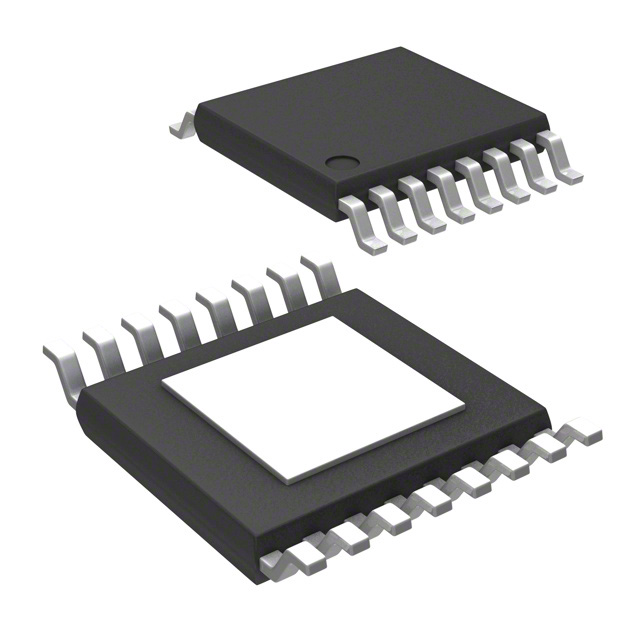
MP6619LGQ-Z is housed in a thermally enhanced QFN-19 (3mm × 3mm, 0.5mm pitch) package with exposed thermal pad (pin 19 = AGND). The package supports reflow soldering per JEDEC J-STD-020 and achieves θJA = 50°C/W on a 4-layer PCB.
| Pin/Terminal | Circuit Role | Design Meaning |
|---|---|---|
| 1 IFB | Current-sense feedback input | Connects directly to LSS node; monitors voltage drop across external sense resistor to trigger current limit. |
| 2, 11 VIN | Motor power supply input | Dual VIN pins reduce trace inductance and improve high-current routing; accepts 2.5V–28V DC input. |
| 3 OUT2, 10 OUT1 | H-bridge output terminals | Drive brushed DC motor terminals; support bidirectional current flow and freewheeling paths. |
| 4 BST2, 9 BST1 | Bootstrap supply for HS-FET gates | Each connects capacitor to respective OUTx; enables 100% duty cycle by sustaining gate drive above VIN. |
| 5 EN | Enable control input | Active-high logic input; <100ns low pulse disables all FETs and reduces ICC to 1μA. |
| 6–8 LSS | Low-side source common | Three parallel pins for Kelvin connection to external current-sense resistor; minimizes PCB trace resistance error. |
| 12 OCP_SET | OCP enable/disable control | Float = OCP enabled; tie to AGND = OCP disabled - allows safe startup into stalled loads. |
| 13 nFAULT | Fault status output | Open-drain signal pulled low during OCP, OVP, OTP, or current-limit events; requires external pull-up. |
| 14 VCC | Logic supply input | Accepts 2.8V–5.5V; powers internal gate drivers, logic, and charge pump; UVLO threshold = 2.7V (rising). |
| 15 IN1, 16 IN2 | H-bridge control inputs | Independent TTL/CMOS-compatible inputs; define OUT1/OUT2 state per truth table (EN = high). |
| 17 ISET | Current trip voltage setting | Resistor-to-ground sets VITRIP (100–200mV); floating = default 200mV; enables precision current limiting. |
| 18 NC | No-connect terminal | Must be left floating or tied to AGND; no internal connection; avoids unintended coupling. |
| 19 AGND | Analog ground reference | Separate ground for internal logic and current-sense circuitry; connects to thermal pad for heat dissipation. |
Key Features
| Feature | Design Value |
|---|---|
| Configurable current limit | Settable 100–200mV trip voltage via ISET resistor enables accurate, low-loss current sensing with standard 1% resistors. |
| Integrated charge pump | Enables 100% duty cycle operation of N-channel high-side MOSFETs without external boost circuitry or timing constraints. |
| Comprehensive fault protection | OCP (5.5–18.5A threshold), VIN OVP (34V typ), VCC UVLO (2.7V rising), and OTP (150°C) with unified nFAULT reporting. |
| Low quiescent consumption | 2.2mA VCC supply current in standby and only 1μA in shutdown - critical for battery longevity in portable systems. |
| Robust layout support | Dual VIN and triple LSS pins, dedicated BST caps, and exposed thermal pad simplify PCB routing and thermal management. |
Applications
| Robotics Actuation | Industrial Valve Control |
|---|---|
Use Scenario: Bidirectional positioning of servo-driven robotic joints in collaborative robots (cobots) operating from 12V–24V battery packs. IC Role / Device Role / Timing Role: H-bridge driver controlling direction and PWM speed of 24V brushed DC gearmotor; nFAULT signals stall or wiring fault to MCU. Use Value: 5A peak current and 65mΩ RDS(ON) enable rapid acceleration without thermal throttling; configurable current limit prevents motor demagnetization during jam. |
Use Scenario: Precise linear actuation of pneumatic/hydraulic valves in factory automation panels powered by 24V DC rails. IC Role / Device Role / Timing Role: Motor driver executing open/close commands with controlled ramp-up; OCP_SET pin disabled during initial valve seating to avoid false trips. Use Value: 28V max VIN accommodates 24V system transients; nFAULT integration simplifies PLC-level diagnostics without external comparators. |
| Portable Medical Pumps | Automotive Accessory Modules |
Use Scenario: Low-noise infusion pump requiring silent, reversible micro-motor control from 3.7V Li-ion battery with >10-hour runtime. IC Role / Device Role / Timing Role: Efficient H-bridge delivering regulated 500mA–2A motor current; shutdown mode reduces system standby drain to sub-μA levels. Use Value: 2.5V minimum VIN enables full battery utilization down to 3.3V; 1μA shutdown current extends battery life between doses. |
Use Scenario: Sunroof or power window module in 12V automotive systems requiring robust ESD tolerance and load dump survival. IC Role / Device Role / Timing Role: Motor driver interfacing with body controller via PWM; VIN OVP (34V) protects against ISO 7637-2 load dump spikes. Use Value: ±2kV HBM ESD rating and 36V absolute max VIN ensure reliability in harsh vehicle environments without external TVS. |
Equivalent & Alternatives
The following parts are listed as comparable options for similar H-bridge motor driver applications.
| Alternative Part | Technical Difference | Application Difference | Selection Advice |
|---|---|---|---|
| TB9051FTG | 40V max VIN, 3.5A continuous, integrated current sense amplifier (no external resistor needed), SPI interface for diagnostics. | Requires microcontroller with SPI; higher BOM cost but eliminates sense resistor and improves measurement accuracy. | Choose when diagnostic visibility and programmable protection outweigh cost and footprint sensitivity. |
| VNH7040ASTR | 41V max VIN, 12A peak, built-in charge pump, but no configurable current limit - fixed 12A OCP threshold. | Lacks fine-grained current limiting; better suited for high-power fans or wipers than precision actuators. | Choose for higher-current, lower-precision applications where OCP margin is less critical than raw drive capability. |
Compared with TB9051FTG and VNH7040ASTR, MP6619LGQ-Z offers optimal balance of configurability (ISET/OCP_SET), compact QFN-19 footprint, and low quiescent power - making it preferred for space-constrained, battery-sensitive designs requiring precise current control without serial interface overhead.
Availability
MP6619LGQ-Z is available at Aetrix Electronics and suitable for robotics actuation, industrial valve control, portable medical pumps, and automotive accessory modules requiring stable component supply, consistent parametric performance, and long-term production continuity.
Supply support for MP6619LGQ-Z includes scheduled delivery planning, volume procurement assistance, BOM continuity management, traceable sourcing, and lifecycle availability coordination for OEM customers, industrial embedded developers, connected-device designers, and electronics production programs.
Manufacturer
Monolithic Power Systems (MPS) is a fabless semiconductor company specializing in high-performance power management ICs, including DC/DC converters, motor drivers, and LED controllers, with global manufacturing and quality certifications.
The MP6619L belongs to MPS's integrated H-bridge motor driver product line, engineered for compact, efficient brushed DC motor control in battery-powered and industrial equipment where thermal efficiency, fault resilience, and design simplicity are prioritized.
FAQ
What is the minimum recommended input capacitance for MP6619LGQ-Z?
Two 22µF X5R/X7R ceramic capacitors - one placed near each VIN pin - are recommended per the datasheet. This configuration ensures low impedance at the 400kHz switching frequency, suppresses input ripple, and maintains stable operation under dynamic load conditions. Total effective capacitance should exceed 40µF with low ESR.
How does the ISET pin configure current limit, and what resistor value yields 3A trip current with a 50mΩ sense resistor?
ISET sets VITRIP using VITRIP = 0.2V × (40kΩ / RISET). For 3A trip with RSENSE = 50mΩ, required VITRIP = 150mV. Solving gives RISET ≈ 53.3kΩ. A standard 53.6kΩ 1% resistor achieves 149.8mV trip voltage, resulting in 2.996A actual limit - within design tolerance.
Can MP6619LGQ-Z drive a 3.3V logic system directly, and what is the VCC UVLO threshold?
Yes - MP6619LGQ-Z supports 2.8V to 5.5V VCC, making it compatible with 3.3V logic systems. Its VCC UVLO rising threshold is 2.7V (typical), with 0.3V hysteresis, ensuring reliable startup and shutdown sequencing without external supervisors. VCC must exceed 2.7V before internal circuits activate.
What is the purpose of the three LSS pins, and how should they be connected?
The three LSS pins provide Kelvin connections to the external current-sense resistor, minimizing voltage error from PCB trace resistance. All three must be shorted together and connected to the resistor's ground-side terminal using low-inductance, wide copper pours - never daisy-chained. This ensures accurate current measurement across temperature and load variations.
Does MP6619LGQ-Z require external bootstrap diodes for BST1/BST2 operation?
No - the MP6619LGQ-Z integrates internal bootstrap diodes. Only external BST capacitors (e.g., 0.1µF X7R ceramics) are required between BST1–OUT1 and BST2–OUT2. Adding external diodes is unnecessary and may impair charge pump efficiency or cause timing mismatches.
How does nFAULT behave during simultaneous OCP and OTP events?
nFAULT is a wired-OR fault bus: it pulls low if *any* protected condition occurs - OCP, OTP, OVP, or current-limit trip. It remains low until *all* faults clear. After clearance, nFAULT returns high only after internal deglitch timers expire (e.g., 1ms OCP retry) and normal operation resumes - no manual reset is needed.
Is the NC pin (Pin 18) safe to connect to AGND in high-noise environments?
Yes - Pin 18 is unconnected internally and may be tied to AGND or left floating per datasheet guidance. Grounding it in noisy environments helps reduce potential coupling into adjacent pins (e.g., IN1/IN2), with no functional impact on device operation or specifications.
MP6619LGQ-Z Specifications
- Product attributes
- Attribute value
- Manufacturer:
- Monolithic Power Systems Inc.
- Series:
- -
- Package/Case:
- 19-VFQFN
- Packaging:
- Tape & Reel (TR)
- Product Status:
- Active
- Motor Type - Stepper:
- Bipolar
- Motor Type - AC, DC:
- Brushed DC
- Function:
- Driver - Fully Integrated, Control and Power Stage
- Output Configuration:
- Half Bridge (2)
- Interface:
- PWM
- Technology:
- NMOS
- Step Resolution:
- -
- Applications:
- General Purpose
- Current - Output:
- 5A
- Voltage - Supply:
- 2.8V ~ 5.5V
- Voltage - Load:
- 2.5V ~ 28V
- Operating Temperature:
- -40°C ~ 125°C (TJ)
- Grade:
- -
- Qualification:
- -
- Mounting Type:
- Surface Mount
- Supplier Device Package:
- 19-QFN (3x3)
MP6619LGQ-Z FAQ
1.How can I place an order for MP6619LGQ-Z through Aetrix?
Please submit a Request for Quotation (RFQ) for MP6619LGQ-Z on Aetrix. Our sales agent will provide a competitive quotation and guide you through the order confirmation once you accept the terms.
2.Are the price and stock information for MP6619LGQ-Z reliable?
The price and inventory of MP6619LGQ-Z are updated periodically and may fluctuate due to market conditions. Stock and pricing data are typically refreshed every 24 hours. Quotation validity for MP6619LGQ-Z is usually 5 days.
3.What payment methods are accepted for MP6619LGQ-Z?
We accept Wire Transfer, PayPal, Credit Card, Western Union, MoneyGram, and Escrow for MP6619LGQ-Z transactions.
Note: Certain payment methods may incur a processing fee.
4.How is shipping managed for MP6619LGQ-Z?
MP6619LGQ-Z orders can be shipped via leading logistics carriers, including DHL, UPS, FedEx, TNT, or Registered Mail.
Once your MP6619LGQ-Z order is processed, you will receive an email with the shipment details and tracking number.
Note: Tracking information may take up to 24 hours to appear. Express delivery typically takes 3–5 business days.
5.How can I obtain technical support or documentation for MP6619LGQ-Z?
For technical support, including MP6619LGQ-Z datasheets, pinout diagrams, or application guidance, please contact our engineering support team. They can provide detailed documentation and assistance for your MP6619LGQ-Z requirements.
6.How does Aetrix verify that MP6619LGQ-Z is sourced from the original manufacturer or authorized distributors?
All MP6619LGQ-Z products on Aetrix are procured from qualified distributors and authorized channels. Our dedicated quality assurance team conducts strict verification, including traceability checks and, if necessary, third-party testing. This ensures that MP6619LGQ-Z meets industry standards.
7.What is the process for return or replacement of MP6619LGQ-Z?
All MP6619LGQ-Z units undergo pre-shipment inspection (PSI). If there is an issue with MP6619LGQ-Z, returns or replacements are accepted under the following conditions:
1.Quantity discrepancies, incorrect items, or visible external defects (such as breakage or corrosion), acknowledged by Aetrix.
2.The issue is reported within 90 days of delivery.
3.The MP6619LGQ-Z part is unused and in its original packaging.
Return procedure for MP6619LGQ-Z:
1.Submit a request within 90 days.
2.Obtain a Return Material Authorization (RMA) from Aetrix.
MP6619LGQ-Z Tags
-
DRV2603RUNR
Texas Instruments
-
DRV8837CDSGR
Texas Instruments
-
DRV8837DSGR
Texas Instruments
-
DRV8838DSGR
Texas Instruments
-
DRV8839DSSR
Texas Instruments
-
EMC2301-1-ACZL-TR
Microchip Technology
-
DRV8231ADSGR
Texas Instruments
-
EMC2302-2-AIZL-TR
Microchip Technology
-
DRV8800PWPR
Texas Instruments
-
DRV8835DSSR
Texas Instruments
-
EMC2303-1-KP-TR
Microchip Technology
-
DRV8876PWPR
Texas Instruments
Tech Hub

A practical engineering guide to 3.3V and 5V logic compatibility, input thresholds, resistor dividers, translator ICs, MOSFET level shifting, I2C pull-ups, timing limits and power-sequencing risks.

The 74HC595 uses push-pull logic outputs, while the TPIC6B595 uses 50 V open-drain DMOS sinks for higher-power loads. This guide compares timing, current limits, 3.3 V interfacing, load wiring, thermal…

The 74HC595 converts serial data into eight stable parallel outputs. This guide covers pin functions, shift and storage timing, OE and MR behavior, drive-current limits, cascading, voltage compatibilit…

A technical comparison of level-sensitive latches and edge-triggered flip-flops, covering timing windows, setup and hold limits, master–slave operation, time borrowing, race-through, HDL inference and…

A D latch stores one bit while Enable controls when data can pass. This reference covers gate-level operation, truth tables, transparency, setup and hold timing, LE versus OE, common ICs and practical …

An SR latch stores one bit through cross-coupled feedback. This engineering reference covers NOR and NAND implementations, truth tables, forbidden-state recovery, gated operation, switch debouncing, fa…

Latch circuits retain one bit through feedback. This technical reference covers SR and D latches, truth tables, transparency, timing limits, latch-versus-flip-flop behavior, applications and common log…

An engineering guide to LED driver operation, constant-current and constant-voltage outputs, linear and switching topologies, dimming, IC selection, calculations, replacement compatibility, and fault c…

Operational amplifier guide covering op amp basics, feedback, ideal vs real op amps, common configurations, buffer circuits, offset, bias current, gain-bandwidth, slew rate, rail-to-rail limits and sel…

Jumper cables guide covering safe connection order, red and black clamp placement, final ground connection, cable gauge, length, clamp quality, copper vs CCA cables, jump starter comparison and battery…


