
 My Inquiry
 My Account


Monolithic Power Systems Inc. MP6650GJR-0000-Z
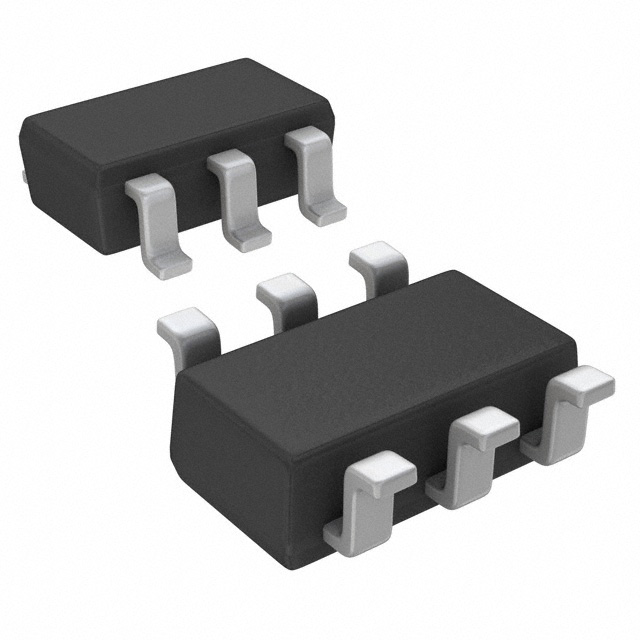
- Part No.:
- MP6650GJR-0000-Z
- Manufacturer:
- Monolithic Power Systems Inc.
- Category:
- Motor Drivers, Controllers
- Package:
- SOT-23-6 Thin, TSOT-23-6
- Datasheet:
-
 MP6650GJR-0000-Z.pdf
- Description:
- 18V, 2A,SINGLE-PHASE, BLDC MOTOR
- Quantity:
- Payment:

- Shipping:

Inventory:4,937
Please send an inquiry. Send us your inquiry, and we will respond immediately.
Product details
Overview
MP6650GJR-0000-Z from Monolithic Power Systems is a single-phase BLDC motor driver IC with integrated Hall-effect sensor, power MOSFETs (740 mΩ total RDS(on)), and reverse-voltage protection. It delivers up to 2 A output current, operates from 3.3 V to 18 V, and features configurable speed curve, soft on/off phase transitions, and rotor lock detection via open-drain FG/RD pin - used in CPU fan control for servers and desktop PCs.
For engineers reviewing the MP6650GJR-0000-Z datasheet, MP6650GJR-0000-Z pinout, MP6650GJR-0000-Z application, or MP6650GJR-0000-Z equivalent, key selection criteria include Hall-integrated single-phase drive capability, TSOT23-6-R package compatibility, 26 kHz fixed switching frequency, input reverse protection, and programmable current limit (0.7–2 A) for thermal and acoustic optimization in compact fan modules.
Technical Context
The MP6650 implements closed-loop commutation using an embedded Hall sensor to detect rotor position and synchronize MOSFET switching with winding BEMF zero-crossing via automatic phase-lock logic. Its PWM interface accepts 2–100 kHz signals to linearly scale output duty cycle while maintaining fixed 26 kHz internal switching frequency above audible range.
Protection architecture includes input OVP (19.2 V), UVLO (3.25 V), thermal shutdown (150 °C), rotor deadlock detection (0.6 s timeout), and configurable overload current limiting (0.7–2 A). The FG/RD pin serves dual function - rotational speed indication (FG) or open-drain rotor lock fault signal (RD) - selected via register bit FGRD[1:0].
Key Specifications
| Parameter | Value and Actual Design Meaning |
|---|---|
| Input voltage range | 3.3 V to 18 V - supports wide-input 12 V server fan rails and enables direct connection without external LDO or regulator. |
| Output current capability | Up to 2 A - sufficient for high-airflow CPU fans up to ~30 CFM in TSOT23-6 footprint. |
| Switching frequency | Fixed 26 kHz - eliminates audible noise while enabling small passive filtering components. |
| Integrated MOSFET RDS(on) | 740 mΩ total (HS + LS) - reduces conduction loss and thermal stress in space-constrained fan modules. |
| Hall sensor sensitivity | Operate point ±1–2 mT - reliably detects standard ferrite or NdFeB rotor magnets at typical air gaps (0.5–1.5 mm). |
| PWM input frequency range | 2 kHz to 100 kHz - compatible with standard motherboard PWM controllers and allows flexible system-level speed resolution. |
| Thermal shutdown threshold | 150 °C with 25 °C hysteresis - ensures safe recovery after transient overloads without manual reset. |
| Reverse voltage protection | Active down to −18 V - eliminates need for external series diode in supply line, reducing BOM count and forward drop loss. |
Pinout & Package
MP6650GJR-0000-Z is housed in TSOT23-6-R package - a 6-pin, reverse-pinout variant of the standard TSOT23-6, with Pin 1 located at upper-left when reading top marking left-to-right. Package dimensions comply with JEDEC MO-193 AB variation and support reflow-compatible PCB assembly.
| Pin/Terminal | Circuit Role | Design Meaning |
|---|---|---|
| 1 GND | Power ground reference | Primary return path for motor current and IC bias; requires low-impedance PCB pour to minimize noise coupling into Hall sensor. |
| 2 VCC | Supply input with RVP | Accepts 3.3–18 V; internal reverse-voltage protection circuit disables operation below −0.3 V to prevent damage during miswiring. |
| 3 FG/RD | Open-drain status output | Configurable as tachometer (FG) or rotor lock fault (RD); requires external pull-up resistor (typically 4.7 kΩ to 5 V). |
| 4 PWM | Speed control input | Internal 41–50 kΩ pull-up enables direct MCU GPIO connection; accepts 2–100 kHz PWM with 1.5 V high/0.4 V low thresholds. |
| 5 OUT2 | Half-bridge low-side output | Connects to motor winding midpoint; switches synchronously with OUT1 under Hall-based commutation logic. |
| 6 OUT1 | Half-bridge high-side output | Drives motor winding with soft on/off transitions (22.5°–45° angle) to reduce torque ripple and acoustic noise. |
Key Features
| Feature | Design Value |
|---|---|
| Embedded Hall sensor | High-sensitivity (±1–2 mT operate point) monolithic Hall cell eliminates external sensor placement and alignment complexity. |
| Soft on/off phase transition | Programmable 22.5°–45° ramp angles reduce current overshoot and mechanical vibration during startup/shutdown. |
| Automatic phase-lock detection | Synchronizes MOSFET switching to winding BEMF zero-crossing without external timing components or microcontroller intervention. |
| Configurable speed curve | 14H register sets PWM starting duty (e.g., 12.5%); 00h–08h lookup table defines full-speed mapping for precise RPM vs. PWM response. |
| Programmable current limit | Four selectable thresholds (0.7/1.1/1.6/2 A) via SUCL[1:0] bits enable thermal derating for different fan loads and ambient conditions. |
| Input reverse voltage protection | Active circuitry blocks reverse current flow at VCC < −0.3 V, removing need for external series diode and associated 0.3–0.7 V drop. |
Applications
| CPU Fan Control | Server Chassis Cooling |
|---|---|
|
Use Scenario: Regulating airflow in high-density 1U/2U rack servers where thermal headroom is constrained and acoustic noise must remain below 42 dBA. IC Role / Device Role / Timing Role: Single-phase BLDC driver with integrated Hall sensor provides closed-loop commutation, speed feedback (FG), and rotor lock detection (RD) without external controller. Use Value: Reduces component count by eliminating discrete Hall sensor, gate drivers, and reverse-protection diode - cutting PCB area by >30% versus discrete solutions. |
Use Scenario: Driving multiple 40 mm or 60 mm brushless fans in redundant cooling systems for enterprise storage enclosures. IC Role / Device Role / Timing Role: Motor driver with programmable current limit (1.6 A default) and thermal shutdown ensures reliable operation across −40 °C to +70 °C ambient. Use Value: Configurable soft-start time (2.6 s or 5.2 s) prevents inrush current surges during hot-swap fan replacement events. |
| Desktop PC Thermal Management | Industrial Embedded Fan Modules |
|
Use Scenario: Controlling CPU heatsink fans in consumer-grade motherboards with Intel/AMD PWM headers. IC Role / Device Role / Timing Role: Interprets standard 25 kHz motherboard PWM signal to drive fan at variable speed; outputs tachometer (FG) signal back to BIOS. Use Value: Fixed 26 kHz switching frequency avoids beat frequencies with common 25 kHz PWM sources, eliminating audible whine. |
Use Scenario: Fan control in sealed industrial HMIs or edge computing gateways requiring long-life, maintenance-free cooling. IC Role / Device Role / Timing Role: Integrated rotor lock protection (0.6 s detection + 3.6 s retry) enables autonomous recovery from dust-clogged or bearing-failed motors. Use Value: Non-volatile register programming allows factory calibration of speed curves and current limits - eliminating field tuning effort. |
Equivalent & Alternatives
The following parts are listed as comparable options for similar single-phase BLDC motor driver applications.
| Alternative Part | Technical Difference | Application Difference | Selection Advice |
|---|---|---|---|
| MP6650GJL-0000-Z | Same die, TSOT23-6-L (normal pinout) instead of TSOT23-6-R; identical electrical specs and register map. | Requires PCB layout revision to match pin 1 location (lower-left vs. upper-left); no functional change in fan control behavior. | Select when existing board design uses standard TSOT23-6-L land pattern and top-mark orientation. |
| MP6651GJR-0000-Z | Successor with enhanced Hall sensitivity (±0.5 mT), lower RDS(on) (650 mΩ), and extended temperature range (−40 °C to +135 °C). | Enables higher-efficiency operation in thermally demanding environments; supports faster rotor lock recovery (0.3 s detection). | Choose for new designs targeting improved acoustic performance, higher reliability, or extended junction temperature margin. |
Compared with MP6650GJR-0000-Z, the MP6650GJL-0000-Z offers identical functionality in a mechanically incompatible package, while the MP6651GJR-0000-Z delivers measurable improvements in Hall sensitivity, conduction loss, and thermal robustness - justifying migration only when those parameters impact system-level acoustic, efficiency, or lifetime requirements.
Availability
MP6650GJR-0000-Z is available at Aetrix Electronics and suitable for CPU fan control, server chassis cooling, desktop thermal management, and industrial embedded fan modules requiring stable component supply, consistent parametric performance, and long-term lifecycle support.
Supply support for MP6650GJR-0000-Z includes scheduled delivery planning, volume procurement assistance, BOM continuity management, traceable sourcing, and lifecycle availability coordination for OEM customers, industrial embedded developers, connected-device designers, and electronics production programs.
Manufacturer
Monolithic Power Systems (MPS) is a fabless semiconductor company specializing in high-performance power management ICs, with over two decades of expertise in DC-DC converters, motor drivers, and LED controllers.
The MP6650 belongs to MPS's Phase Fan Driver product line, designed specifically for cost-sensitive, space-constrained BLDC fan applications requiring integrated Hall sensing, programmable speed profiles, and comprehensive fault protection - targeting data center, computing, and industrial thermal markets.
FAQ
What is the difference between MP6650GJR-0000-Z and MP6650GJL-0000-Z?
The MP6650GJR-0000-Z uses the TSOT23-6-R package with reverse pinout (Pin 1 at upper-left), while MP6650GJL-0000-Z uses TSOT23-6-L (Pin 1 at lower-left). Electrical specifications, register map, and functional behavior are identical; only PCB layout and top-mark orientation differ. No firmware or configuration changes are required when swapping between them.
Does MP6650GJR-0000-Z require external programming to operate?
No. MP6650GJR-0000-Z operates out-of-the-box with factory-default register settings: 1.6 A current limit (SUCL = 10), FG output mode (FGRD = 00), soft switching enabled (SOFTEN = 1), and 12.5% PWM starting duty (14H = 0x20). Programming via test mode is optional for custom speed curves, current limits, or rotor lock retry timing.
How does the FG/RD pin function in dual-mode operation?
The FG/RD pin operates as an open-drain output whose function is selected by register bit FGRD[1:0]: 00 = full-speed tachometer (1× Hall frequency), 01 = half-speed tachometer (0.5× Hall frequency), 11 = rotor lock fault indicator (active-low pulse during deadlock). Mode selection is non-volatile and persists across power cycles.
What thermal derating applies at 85°C ambient temperature?
With θJA = 100 °C/W and TJ(MAX) = 150 °C, maximum continuous power dissipation at 85°C ambient is 0.65 W. At 12 V input and 2 A load, conduction loss is ~1.48 W (I²R = 2² × 0.74), exceeding this limit - thus continuous 2 A operation requires forced airflow or heatsinking to maintain junction temperature ≤150°C.
Can MP6650GJR-0000-Z drive a three-phase BLDC motor?
No. MP6650GJR-0000-Z is strictly a single-phase driver with one half-bridge (OUT1/OUT2) and one integrated Hall sensor. It commutates only two-wire fan motors with center-tapped windings. Three-phase motors require dedicated 3-phase gate drivers (e.g., MP6530) or microcontroller-based solutions.
What is the minimum PWM duty cycle required to start motor rotation?
Motor starts rotating when PWM input duty exceeds the value set in register 14H (DUTY_STARTING), with 1.2% hysteresis. Default value is 0x20 (12.5%), so startup occurs at ≥13.7% duty. Below that, output remains at zero (if SPD_ZERO = 1) or minimum programmed duty (if SPD_ZERO = 0).
Is input capacitor C1 mandatory, and what value is recommended?
Yes - C1 is mandatory for stable VCC regulation and EMI suppression. For 12 V, ≤2 A applications, a 1 µF X7R ceramic capacitor placed within 2 mm of VCC/GND pins is recommended. Larger electrolytic capacitors (e.g., 10–47 µF) may be added in parallel for high-inertia fans to absorb back-EMF energy.
MP6650GJR-0000-Z Specifications
- Product attributes
- Attribute value
- Manufacturer:
- Monolithic Power Systems Inc.
- Series:
- -
- Package/Case:
- SOT-23-6 Thin, TSOT-23-6
- Packaging:
- Tape & Reel (TR)
- Product Status:
- Active
- Motor Type - Stepper:
- Unipolar
- Motor Type - AC, DC:
- Brushless DC (BLDC)
- Function:
- Driver
- Output Configuration:
- Half Bridge (2)
- Interface:
- PWM
- Technology:
- Power MOSFET
- Step Resolution:
- -
- Applications:
- Brushless DC (BLDC)
- Current - Output:
- 2A
- Voltage - Supply:
- 3.3V ~ 18V
- Voltage - Load:
- -
- Operating Temperature:
- -40°C ~ 125°C (TJ)
- Grade:
- -
- Qualification:
- -
- Mounting Type:
- Surface Mount
- Supplier Device Package:
- TSOT-23-6-R
MP6650GJR-0000-Z FAQ
1.How can I place an order for MP6650GJR-0000-Z through Aetrix?
Please submit a Request for Quotation (RFQ) for MP6650GJR-0000-Z on Aetrix. Our sales agent will provide a competitive quotation and guide you through the order confirmation once you accept the terms.
2.Are the price and stock information for MP6650GJR-0000-Z reliable?
The price and inventory of MP6650GJR-0000-Z are updated periodically and may fluctuate due to market conditions. Stock and pricing data are typically refreshed every 24 hours. Quotation validity for MP6650GJR-0000-Z is usually 5 days.
3.What payment methods are accepted for MP6650GJR-0000-Z?
We accept Wire Transfer, PayPal, Credit Card, Western Union, MoneyGram, and Escrow for MP6650GJR-0000-Z transactions.
Note: Certain payment methods may incur a processing fee.
4.How is shipping managed for MP6650GJR-0000-Z?
MP6650GJR-0000-Z orders can be shipped via leading logistics carriers, including DHL, UPS, FedEx, TNT, or Registered Mail.
Once your MP6650GJR-0000-Z order is processed, you will receive an email with the shipment details and tracking number.
Note: Tracking information may take up to 24 hours to appear. Express delivery typically takes 3–5 business days.
5.How can I obtain technical support or documentation for MP6650GJR-0000-Z?
For technical support, including MP6650GJR-0000-Z datasheets, pinout diagrams, or application guidance, please contact our engineering support team. They can provide detailed documentation and assistance for your MP6650GJR-0000-Z requirements.
6.How does Aetrix verify that MP6650GJR-0000-Z is sourced from the original manufacturer or authorized distributors?
All MP6650GJR-0000-Z products on Aetrix are procured from qualified distributors and authorized channels. Our dedicated quality assurance team conducts strict verification, including traceability checks and, if necessary, third-party testing. This ensures that MP6650GJR-0000-Z meets industry standards.
7.What is the process for return or replacement of MP6650GJR-0000-Z?
All MP6650GJR-0000-Z units undergo pre-shipment inspection (PSI). If there is an issue with MP6650GJR-0000-Z, returns or replacements are accepted under the following conditions:
1.Quantity discrepancies, incorrect items, or visible external defects (such as breakage or corrosion), acknowledged by Aetrix.
2.The issue is reported within 90 days of delivery.
3.The MP6650GJR-0000-Z part is unused and in its original packaging.
Return procedure for MP6650GJR-0000-Z:
1.Submit a request within 90 days.
2.Obtain a Return Material Authorization (RMA) from Aetrix.
MP6650GJR-0000-Z Tags
-
DRV2603RUNR
Texas Instruments
-
DRV8837CDSGR
Texas Instruments
-
DRV8837DSGR
Texas Instruments
-
DRV8838DSGR
Texas Instruments
-
DRV8839DSSR
Texas Instruments
-
EMC2301-1-ACZL-TR
Microchip Technology
-
DRV8231ADSGR
Texas Instruments
-
EMC2302-2-AIZL-TR
Microchip Technology
-
DRV8800PWPR
Texas Instruments
-
DRV8835DSSR
Texas Instruments
-
EMC2303-1-KP-TR
Microchip Technology
-
DRV8876PWPR
Texas Instruments
Tech Hub

A practical engineering guide to 3.3V and 5V logic compatibility, input thresholds, resistor dividers, translator ICs, MOSFET level shifting, I2C pull-ups, timing limits and power-sequencing risks.

The 74HC595 uses push-pull logic outputs, while the TPIC6B595 uses 50 V open-drain DMOS sinks for higher-power loads. This guide compares timing, current limits, 3.3 V interfacing, load wiring, thermal…

The 74HC595 converts serial data into eight stable parallel outputs. This guide covers pin functions, shift and storage timing, OE and MR behavior, drive-current limits, cascading, voltage compatibilit…

A technical comparison of level-sensitive latches and edge-triggered flip-flops, covering timing windows, setup and hold limits, master–slave operation, time borrowing, race-through, HDL inference and…

A D latch stores one bit while Enable controls when data can pass. This reference covers gate-level operation, truth tables, transparency, setup and hold timing, LE versus OE, common ICs and practical …

An SR latch stores one bit through cross-coupled feedback. This engineering reference covers NOR and NAND implementations, truth tables, forbidden-state recovery, gated operation, switch debouncing, fa…

Latch circuits retain one bit through feedback. This technical reference covers SR and D latches, truth tables, transparency, timing limits, latch-versus-flip-flop behavior, applications and common log…

An engineering guide to LED driver operation, constant-current and constant-voltage outputs, linear and switching topologies, dimming, IC selection, calculations, replacement compatibility, and fault c…

Operational amplifier guide covering op amp basics, feedback, ideal vs real op amps, common configurations, buffer circuits, offset, bias current, gain-bandwidth, slew rate, rail-to-rail limits and sel…

Jumper cables guide covering safe connection order, red and black clamp placement, final ground connection, cable gauge, length, clamp quality, copper vs CCA cables, jump starter comparison and battery…


