
 My Inquiry
 My Account


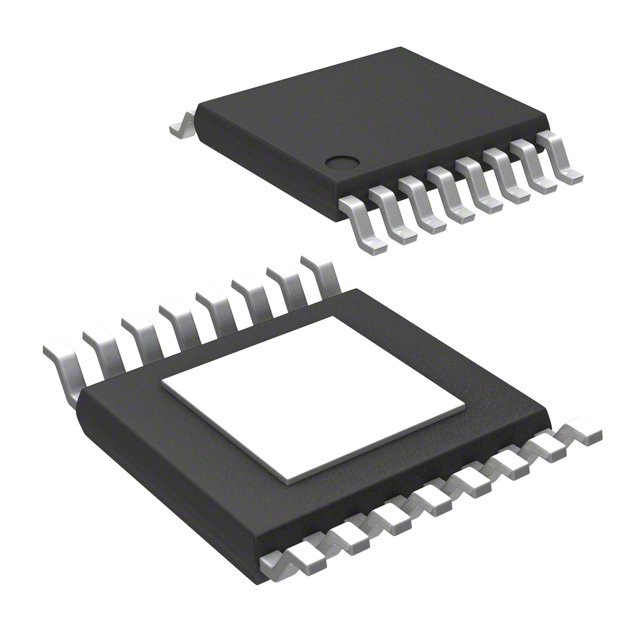
Monolithic Power Systems Inc. MP8126DF-LF
- Part No.:
- MP8126DF-LF
- Manufacturer:
- Monolithic Power Systems Inc.
- Category:
- Special Purpose Regulators
- Package:
- 16-TSSOP (0.173", 4.40mm Width) Exposed Pad
- Datasheet:
-
 MP8126DF-LF.pdf
- Description:
- IC REG CONV LNB 1OUT 16TSSOP
- Quantity:
- Payment:

- Shipping:

Inventory:1,466
Please send an inquiry. Send us your inquiry, and we will respond immediately.
Product details
Overview
MP8126DF-LF from Monolithic Power Systems is a DiSEqC 1.x–compliant LNB power supply and control-voltage regulator integrating a current-mode boost converter (342 kHz, internal switch) and a tracking linear regulator. It delivers up to 550 mA at selectable 13 V/18 V outputs with 1 V line-drop compensation, supports 22 kHz tone shaping for satellite polarization switching, and operates from 8 V to 14 V input - deployed in satellite set-top box RF front-ends to power low-noise block downconverters over coaxial cable.
For engineers reviewing the MP8126DF-LF datasheet, MP8126DF-LF pinout, MP8126DF-LF application, or MP8126DF-LF equivalent, key selection criteria include DiSEqC-compliant 22 kHz signal shaping, programmable current limit via ILIMIT resistor, ±12% POK monitoring, thermal shutdown at 150°C, and dual-package availability (TSSOP16EP/QFN24) for thermal and layout optimization in LNB power delivery systems.
Technical Context
The MP8126DF-LF implements a two-stage regulation architecture: a fixed-frequency (342 kHz) boost converter generates a dynamically tracked VBOOST voltage that feeds a low-noise linear regulator, minimizing dropout and preserving RF signal integrity. Its internal 22 kHz shaper accepts TTL-level EXTM input and produces a 50% duty-cycle, 0.4–0.8 VPP modulated output compliant with EUTELSAT DiSEqC 1.x timing and amplitude requirements.
Control logic includes dedicated pins for polarization selection (13V/18V), coaxial voltage drop compensation (LINEDROP), soft-start timing (TCAP), and dynamic overload protection (50 ms on-time / 2 s off-time). The device uses peak-current-mode control for boost stability and integrates cycle-by-cycle overcurrent limiting with external resistor programming (ILIMIT).
Key Specifications
| Parameter | Value and Actual Design Meaning |
|---|---|
| Input Voltage Range | 8 V to 14 V - matches standard satellite receiver DC bus rails; enables direct integration without pre-regulation. |
| Output Voltage Options | 13 V / 14 V / 18 V / 19 V - selected via 13V/18V and LINEDROP logic pins; supports horizontal/vertical LNB polarization and long-cable compensation. |
| Max Output Current | 550 mA - sufficient for powering dual-LNB modules or high-gain LNBs under worst-case coax loss conditions. |
| Boost Switching Frequency | 342 kHz - balances EMI filtering complexity and inductor size; enables use of compact 2.2 µH–4.7 µH shielded inductors. |
| POK Accuracy | ±12% window around nominal VOUT - provides reliable power-good signaling for system microcontroller sequencing and fault detection. |
| Thermal Shutdown Threshold | 150°C with 20°C hysteresis - ensures safe operation during sustained overload or poor PCB heatsinking; automatic recovery at ~130°C. |
| 22 kHz Tone Output | 0.4–0.8 VPP, 50% duty, <8 µs rise/fall - meets DiSEqC 1.x amplitude and edge-rate specs without external shaping circuitry. |
| Current Limit Range | 600–1100 mA - set by external resistor (10 kΩ ≤ RLIMIT ≤ 13 kΩ); enables precise matching to LNB max draw and cable impedance. |
Pinout & Package
MP8126DF-LF is packaged in a thermally enhanced TSSOP16EP (4.4 mm × 5.0 mm, 0.65 mm pitch) with exposed pad for GND-connected heatsinking. Pin functions are validated per MPS MP8126 Rev. 1.03 datasheet (pp. 5–6).
| Pin | Circuit Role | Design Meaning |
|---|---|---|
| 1 (SGND) | Analog ground reference | Separate low-noise return path for COMP, TCAP, BYPASS; must be star-connected to PGND at single point. |
| 3 (VDD) | Main input supply | 8–14 V DC input; requires local 10 µF X7R ceramic decoupling adjacent to pin and SGND. |
| 5 (EN) | Enable control input | TTL-compatible active-high startup; internal pull-up not provided - requires 100 kΩ external pull-up if VIN > 6 V. |
| 6 (LINEDROP) | VOUT compensation select | Logic HIGH adds +1 V to nominal output (e.g., 13 V → 14 V, 18 V → 19 V) to offset coax voltage drop. |
| 7 (POK) | Power-good open-drain output | Active-low indicator; sinks ≥5 mA when VOUT deviates >±12%; requires external pull-up to system rail. |
| 8 (13V/18V) | Polarization voltage select | Logic LOW = 13 V output (horizontal LNB), HIGH = 18 V output (vertical LNB); defines primary LNB bias mode. |
| 9 (EXTM) | 22 kHz tone input | Accepts TTL-level 20–24 kHz square wave; internally shaped and superimposed onto VOUT for DiSEqC command transmission. |
| 10 (TCAP) | Soft-start timing capacitor | Connects to SGND; 7 µA internal current charges CSS to set VOUT slew rate (e.g., 100 nF ≈ 10 ms rise). |
| 11 (ILIMIT) | Current limit programming | Resistor-to-GND sets output current limit (ILIMIT ≈ 7700/RLIMIT Ω); enables precise LNB overcurrent protection. |
| 12–13 (VOUT) | Regulated LNB output | High-current output node; requires low-ESR 22 µF X7R ceramic capacitor to PGND near pin. |
| 14–15 (VBOOST) | Linear regulator input | Boost-derived intermediate rail; tracks VOUT to minimize dropout; connects to VOUT via internal LDO pass element. |
| 16 (PGND) | Power ground return | High-current return for SW, VOUT, VBOOST; must be solid copper plane connected to exposed pad and SGND at single point. |
Key Features
| Feature | Design Value |
|---|---|
| DiSEqC 1.x compliance | Fully integrated 22 kHz tone generation, shaping, and modulation - eliminates external oscillator, comparator, and driver components. |
| Programmable current limit | External resistor (ILIMIT pin) sets 600–1100 mA limit with 50 ms overload hold and 2 s auto-restart - protects against shorted coax or faulty LNB. |
| 1 V line-drop compensation | LINEDROP pin toggles +1 V offset to counteract IR drop on long coax runs (>30 m), maintaining stable LNB bias at antenna end. |
| Tracking linear post-regulator | VBOOST dynamically follows VOUT to maintain minimum dropout (1.26 V @ 500 mA), reducing heat dissipation vs. fixed-headroom LDOs. |
| Thermal and short-circuit protection | 150°C junction shutdown with 20°C hysteresis + cycle-by-cycle boost overcurrent limiting - ensures robust field operation in unventilated enclosures. |
| Adjustable soft-start | TCAP pin accepts external capacitor to control VOUT ramp rate (e.g., prevent inrush into large LNB input capacitance or coax cable). |
Applications
| Satellite Set-Top Box LNB Power | Dual-LNB Switching System |
|---|---|
|
Use Scenario: Powers single LNB in consumer-grade satellite receivers using 8–14 V DC input over coaxial cable. IC Role / Device Role / Timing Role: Provides regulated 13 V or 18 V bias and embeds DiSEqC 1.x 22 kHz commands onto same coax line. Use Value: Eliminates need for separate LNB power supply and tone generator IC; reduces BOM count and PCB area by >30%. |
Use Scenario: Enables independent control of two LNBs (e.g., universal LNB + legacy LNB) via DiSEqC 1.0/1.1 commands. IC Role / Device Role / Timing Role: Generates precise 22 kHz tone with controlled rise/fall time and amplitude per DiSEqC spec. Use Value: Ensures reliable switching between orbital positions without tone distortion or false triggering due to cable reflections. |
| Long-Cable LNB Deployment | Industrial Satellite Receiver Module |
|
Use Scenario: Powers LNBs located >50 m from receiver using standard RG-6 coax with significant IR drop. IC Role / Device Role / Timing Role: Uses LINEDROP pin to add +1 V to nominal output, compensating for voltage loss across cable resistance. Use Value: Maintains LNB operating voltage within specification (e.g., 13 V ±0.5 V) despite 1.5–2.0 V drop, preventing gain collapse. |
Use Scenario: Embedded in ruggedized satellite terminals for maritime, vehicular, or remote broadcast applications. IC Role / Device Role / Timing Role: Delivers stable LNB bias under wide temperature (-40°C to +125°C) and input voltage (8–14 V) variation. Use Value: Thermal shutdown and ±12% POK enable autonomous fault recovery and system-level health monitoring in headless deployments. |
Equivalent & Alternatives
The following parts are listed as comparable options for similar LNB power supply and DiSEqC control applications.
| Alternative Part | Technical Difference | Application Difference | Selection Advice |
|---|---|---|---|
| MP8124DF-LF | Successor device with improved efficiency, lower quiescent current (3.5 mA vs. 5 mA), and extended thermal shutdown hysteresis (25°C vs. 20°C). | Pin-compatible drop-in replacement; supports identical DiSEqC 1.x functions and package footprint (TSSOP16EP). | Select MP8124DF-LF for new designs requiring longer battery life in portable satellite receivers or tighter thermal margins. |
| LMX2531LQ1730E | RF synthesizer with integrated LNB bias (up to 25 V, 300 mA), but lacks DiSEqC tone generation, line-drop compensation, and POK output. | Requires external 22 kHz generator and voltage compensation circuitry; not a functional substitute for full DiSEqC compliance. | Only consider if DiSEqC is unused and system already implements discrete tone generation and voltage sensing. |
Compared with MP8126DF-LF, MP8124DF-LF offers measurable improvements in light-load efficiency and thermal recovery behavior while retaining full DiSEqC functionality and pinout compatibility; LMX2531LQ1730E serves only as a partial analog-bias source and cannot replace MP8126DF-LF's integrated control features.
Availability
MP8126DF-LF is available at Aetrix Electronics and suitable for satellite set-top box manufacturing, LNB module assembly, and industrial satellite receiver development requiring stable component supply and long-term lifecycle support.
Supply support for MP8126DF-LF includes scheduled delivery planning, volume procurement assistance, BOM continuity management, traceable sourcing, and lifecycle availability coordination for OEM customers, industrial embedded developers, connected-device designers, and electronics production programs.
Manufacturer
Monolithic Power Systems (MPS) is a fabless semiconductor company specializing in high-performance analog and power ICs, with design centers in the US, China, and Taiwan, and global distribution through authorized partners.
The MP8126 belongs to MPS's satellite communication power management product line, engineered specifically for DiSEqC-compliant LNB biasing, coaxial command embedding, and thermal resilience in space-constrained consumer and professional RF front-ends.
FAQ
What is the function of the TCAP pin on MP8126DF-LF?
The TCAP pin sources a constant 7 µA current to charge an external capacitor to ground, controlling the soft-start ramp rate of VOUT. A 100 nF capacitor yields ~10 ms rise time, preventing inrush current into coax cable capacitance or LNB input stages. Placement must be close to TCAP and SGND, away from noisy nodes like SW.
Can MP8126DF-LF drive a 24 V LNB?
No. MP8126DF-LF supports only four factory-trimmed output voltages: 13 V, 14 V, 18 V, and 19 V - selected via 13V/18V and LINEDROP pins. It lacks internal feedback scaling or external resistor programming for 24 V operation. For 24 V LNBs, a discrete boost+LDO solution or alternate IC is required.
How does the ILIMIT pin set current limit?
The ILIMIT pin draws no current; instead, it senses voltage across an external resistor (RLIMIT) tied between ILIMIT and PGND. Output current limit is calculated as ILIMIT ≈ 7700 / RLIMIT (Ω), yielding 600–1100 mA range. RLIMIT must be ≥10 kΩ to ensure stable regulation and avoid false triggering.
Is MP8126DF-LF pin-compatible with MP8124DF-LF?
Yes. MP8124DF-LF shares identical TSSOP16EP pinout, pin functions, and electrical interface with MP8126DF-LF. It is a direct drop-in replacement with enhanced specs (lower IQ, wider thermal hysteresis), and is recommended for all new designs per MPS documentation.
What happens when the EXTM pin is left floating?
Leaving EXTM floating causes undefined behavior: the internal 22 kHz shaper may misinterpret noise as valid tone input, leading to spurious LNB switching or unstable output. MPS explicitly requires EXTM to be tied to GND if unused - no pull-up or pull-down resistor is needed beyond direct GND connection.
Does MP8126DF-LF support DiSEqC 2.x or USALS protocols?
No. MP8126DF-LF implements only DiSEqC 1.x (1.0/1.1) command framing and 22 kHz tone generation. It lacks UART interface, bidirectional communication capability, or motor control logic required for DiSEqC 2.x or Universal Sat Automatic Location System (USALS) protocols.
Why does MP8126DF-LF use separate SGND and PGND pins?
SGND carries low-noise analog references (COMP, TCAP, BYPASS), while PGND handles high-current switching returns (SW, VOUT, VBOOST). Separating them prevents noise coupling from power switching into regulation loops - critical for maintaining low-output ripple (<20 mVAC) and stable DiSEqC tone fidelity.
MP8126DF-LF Specifications
- Product attributes
- Attribute value
- Manufacturer:
- Monolithic Power Systems Inc.
- Series:
- -
- Package/Case:
- 16-TSSOP (0.173", 4.40mm Width) Exposed Pad
- Packaging:
- Tube
- Product Status:
- Active
- Applications:
- Converter, LNB
- Voltage - Input:
- 8V ~ 14V
- Number of Outputs:
- 1
- Voltage - Output:
- 13V, 14V, 18V, 19V
- Operating Temperature:
- -40°C ~ 125°C
- Grade:
- -
- Qualification:
- -
- Mounting Type:
- Surface Mount
- Supplier Device Package:
- 16-TSSOP-EP
MP8126DF-LF FAQ
1.How can I place an order for MP8126DF-LF through Aetrix?
Please submit a Request for Quotation (RFQ) for MP8126DF-LF on Aetrix. Our sales agent will provide a competitive quotation and guide you through the order confirmation once you accept the terms.
2.Are the price and stock information for MP8126DF-LF reliable?
The price and inventory of MP8126DF-LF are updated periodically and may fluctuate due to market conditions. Stock and pricing data are typically refreshed every 24 hours. Quotation validity for MP8126DF-LF is usually 5 days.
3.What payment methods are accepted for MP8126DF-LF?
We accept Wire Transfer, PayPal, Credit Card, Western Union, MoneyGram, and Escrow for MP8126DF-LF transactions.
Note: Certain payment methods may incur a processing fee.
4.How is shipping managed for MP8126DF-LF?
MP8126DF-LF orders can be shipped via leading logistics carriers, including DHL, UPS, FedEx, TNT, or Registered Mail.
Once your MP8126DF-LF order is processed, you will receive an email with the shipment details and tracking number.
Note: Tracking information may take up to 24 hours to appear. Express delivery typically takes 3–5 business days.
5.How can I obtain technical support or documentation for MP8126DF-LF?
For technical support, including MP8126DF-LF datasheets, pinout diagrams, or application guidance, please contact our engineering support team. They can provide detailed documentation and assistance for your MP8126DF-LF requirements.
6.How does Aetrix verify that MP8126DF-LF is sourced from the original manufacturer or authorized distributors?
All MP8126DF-LF products on Aetrix are procured from qualified distributors and authorized channels. Our dedicated quality assurance team conducts strict verification, including traceability checks and, if necessary, third-party testing. This ensures that MP8126DF-LF meets industry standards.
7.What is the process for return or replacement of MP8126DF-LF?
All MP8126DF-LF units undergo pre-shipment inspection (PSI). If there is an issue with MP8126DF-LF, returns or replacements are accepted under the following conditions:
1.Quantity discrepancies, incorrect items, or visible external defects (such as breakage or corrosion), acknowledged by Aetrix.
2.The issue is reported within 90 days of delivery.
3.The MP8126DF-LF part is unused and in its original packaging.
Return procedure for MP8126DF-LF:
1.Submit a request within 90 days.
2.Obtain a Return Material Authorization (RMA) from Aetrix.
MP8126DF-LF Tags
-
TPS51206DSQR
Texas Instruments
-
TPS51200DRCR
Texas Instruments
-
TPS51200DRCT
Texas Instruments
-
TPS62740DSSR
Texas Instruments
-
TPS51100DGQR
Texas Instruments
-
NCP51200MNTXG
onsemi
-
NCP51400MNTXG
onsemi
-
RT9026GSP
Richtek USA Inc.
-
LP2998MRX/NOPB
Texas Instruments
-
TPS51200QDRCRQ1
Texas Instruments
-
DPA423GN-TL
Power Integrations
-
LM10011SD/NOPB
Texas Instruments
Tech Hub

Operational amplifier guide covering op amp basics, feedback, ideal vs real op amps, common configurations, buffer circuits, offset, bias current, gain-bandwidth, slew rate, rail-to-rail limits and sel…

Jumper cables guide covering safe connection order, red and black clamp placement, final ground connection, cable gauge, length, clamp quality, copper vs CCA cables, jump starter comparison and battery…

LDO regulator guide covering low dropout voltage, power dissipation, thermal design, PSRR, output noise, capacitor stability, adjustable LDO circuits, LDO vs buck converter and datasheet selection chec…

Conditional Access Module guide covering CAM meaning, CI/CI+ interface, smart card authorization, DVB security workflow, TV and set-top box compatibility, internal electronics, ESD protection, connecto…

Guide to electronic component obsolescence covering EOL risk, PCN/PDN notices, last-time buy planning, replacement options, form-fit-function validation, counterfeit risk and BOM lifecycle management.

18650 battery guide covering lithium-ion cell basics, 3.6V/3.7V voltage, 4.2V charging, mAh and Wh capacity, protected cells, chargers, BMS, series-parallel packs, holders, welding and sourcing checks.…

Hall effect sensor guide covering working principle, linear and digital sensors, Arduino circuits, current sensing, speed detection, automotive applications, A3144 examples, signal filtering and datash…

Product Change Notification guide for electronic components, covering PCN meaning, PCN vs PDN/EOL, common change types, risk levels, form-fit-function review, engineering validation, BOM control, LTB/L…

A practical guide to blend door actuators, covering HVAC function, symptoms, location, AC and heater issues, reset and calibration, replacement cost, electrical diagnosis, compatibility checks, and rep…

Engineering guide to Raspberry Pi alternatives, covering chip-level differences, Orange Pi, ROCK, Jetson, Banana Pi, NanoPi, Compute Module, Pico, GPIO, camera, HAT compatibility, and replacement risks…


