
 My Inquiry
 My Account


Monolithic Power Systems Inc. MP8128GQ-Z

- Part No.:
- MP8128GQ-Z
- Manufacturer:
- Monolithic Power Systems Inc.
- Category:
- Special Purpose Regulators
- Package:
- 20-VFQFN Exposed Pad
- Datasheet:
-
 MP8128GQ-Z.pdf
- Description:
- 1A LNB POWER REGULATOR WITH I2C
- Quantity:
- Payment:

- Shipping:

Inventory:4,970
Please send an inquiry. Send us your inquiry, and we will respond immediately.
Product details
Overview
MP8128GQ-Z from Monolithic Power Systems is a 1A LNB voltage regulator with integrated I²C interface and DiSEqC 2.x support, designed for satellite receiver antenna port power and control. It delivers low-noise 13–18V output via a boost + tracking LDO architecture, provides 22kHz tone generation/detection, and supports programmable current limiting (up to 1.43A), OCP/SCP/OVP/OTP, and selectable internal/external tone source - enabling precise LNB biasing in set-top boxes and PC card receivers.
For engineers reviewing the MP8128GQ-Z datasheet, MP8128GQ-Z pinout, MP8128GQ-Z application, or MP8128GQ-Z equivalent, key selection criteria include DiSEqC 2.x compliance, I²C-configurable output voltage (10.33V–18V), 8–14V input range, QFN-20 thermal performance, and dual-tone signal handling (generation + detection) for satellite LNB control systems.
Technical Context
The MP8128GQ-Z implements a two-stage regulation architecture: a 440kHz fixed-frequency boost converter (RDS(ON) = 200mΩ) supplies VBOOST to a tracking linear regulator, maintaining ≤1.1V dropout while rejecting switching noise. Its DiSEqC 2.x functionality integrates tone detection (TDI/TDO pins), bidirectional bus compatibility, and configurable tone sourcing (internal generator or external EXTM input).
I²C interface (400kHz max) enables full digital control of output voltage (VLINE bits), current limit (ILIMT resistor), tone enable (TEN), tone source (TCTRL), and protection flags (IRQ open-drain fault indicator). The device operates across –40°C to +125°C junction temperature and includes thermal shutdown (150°C) with 20°C hysteresis.
Key Specifications
| Parameter | Value and Actual Design Meaning |
|---|---|
| Input Voltage Range | 8V to 14V - matches standard satellite receiver DC supply rails; UVLO at 7.15V prevents erratic startup. |
| Output Voltage Range | 10.33V to 18V - digitally selectable via I²C VLINE bits; ±2% accuracy ensures stable LNB bias under load. |
| Max Output Current | 1.43A - configurable via ILIMT resistor (6.98kΩ); supports high-current LNBs and DiSEqC 2.x pulsed loads. |
| 22kHz Tone Source | Internal generator (20–24kHz) or external EXTM input - enables DiSEqC 1.x/2.x command transmission and tone-synchronized switching. |
| Tone Detection | TDI input with 50kΩ impedance, 0.2–1.0Vpp sensitivity (17–27kHz) - detects incoming DiSEqC commands without external circuitry. |
| Protection Features | OCP, SCP, OVP, OTP, and PGOOD - IRQ pin asserts low on fault; dynamic overload recovery time is 1.8s off / 50ms on. |
| Package | QFN-20 (3mm × 3mm) with exposed thermal pad - θJA = 35°C/W enables compact PCB layout with efficient heat dissipation. |
Pinout & Package
MP8128GQ-Z is housed in a thermally enhanced QFN-20 (3mm × 3mm) package with an exposed PGND pad. Pin 1 is SW (boost switch node); pin 20 is PGND; the exposed pad must be soldered to PGND with thermal vias for optimal thermal performance.
| Pin/Terminal | Circuit Role | Design Meaning |
|---|---|---|
| SW | Boost switch output | Drain of internal MOSFET; connects to inductor and rectifier diode - critical for boost stage efficiency and EMI control. |
| EXTM | External tone modulation input | Selects tone source: high = enable internal 22kHz generator; 22kHz square wave = external DiSEqC signaling path. |
| EN | Enable control | Active-high logic input; must be biased (not floated) for reliable startup/shutdown sequencing. |
| SDA/SCL | I²C data/clock | Standard I²C interface (400kHz max); supports address selection via ADDR pin resistor network (0001000–0001011). |
| IRQ | Interrupt request | Open-drain fault indicator - pulls low on OCP/OVP event; requires external pull-up for system-level fault monitoring. |
| TDI/TDO | Tone detection input/output | TDI accepts AC-coupled DiSEqC bus signals; TDO asserts low when tone detected - enables closed-loop DiSEqC 2.x response. |
| VOUT | LDO output | Regulated LNB supply (10.33–18V); rated to 40V - withstands transient backfeed from LNB during hot-plug events. |
| ILIMT | Current limit setting | Analog input: resistor-to-GND sets output current limit (475mA–1.43A); eliminates need for external sense resistors. |
Key Features
| Feature | Design Value |
|---|---|
| DiSEqC 2.x compliance | Full bidirectional support including tone detection, pulse generation, and protocol timing - eliminates need for discrete DiSEqC transceivers. |
| I²C-configurable output | Voltage (10.33V/12V/13V/15V/18V), current limit, tone mode, and protection thresholds - enables single-BOM flexibility across regional LNB standards. |
| Low-noise LDO output | ≤1.1V dropout at 1A with <20mV load/line regulation - maintains clean LNB bias under dynamic satellite signal loading. |
| Integrated tone generator/detector | 22kHz ±2kHz accuracy, 40–60% duty cycle, 0.5–0.85Vpp amplitude - meets EN 50494 and EN 50607 DiSEqC electrical requirements. |
| Thermal robustness | 150°C junction shutdown with 20°C hysteresis; QFN-20 θJA = 35°C/W - sustains 1A continuous operation in enclosed STB enclosures. |
Applications
| Satellite Set-Top Box LNB Power | PC Card Satellite Receiver |
|---|---|
|
Use Scenario: Powering and controlling LNBs in consumer satellite TV receivers with multi-switch and universal LNB support. IC Role / Device Role / Timing Role: Primary LNB voltage regulator and DiSEqC 2.x transceiver - generates 22kHz tone, detects incoming commands, and regulates 13/18V output. Use Value: Replaces discrete boost + LDO + DiSEqC IC solution; reduces BOM count by ≥4 components and PCB area by >30%. |
Use Scenario: Compact satellite reception in laptop docking stations or portable media centers requiring low-profile power management. IC Role / Device Role / Timing Role: Single-chip LNB supply and DiSEqC interface - handles voltage selection, tone signaling, and fault reporting over I²C. Use Value: Enables USB-powered satellite tuners with <15mm² footprint; supports hot-plug LNB detection via TDI/TDO handshake. |
| TV Satellite Receiver Frontend | Multi-LNB Distribution Hub |
|
Use Scenario: Integrated satellite tuner modules in smart TVs requiring ultra-low EMI and fast DiSEqC response for channel switching. IC Role / Device Role / Timing Role: Low-noise LNB regulator with <10μs tone detection latency and <2ms startup time - synchronizes with tuner RF path enable. Use Value: Eliminates audible "pop" during channel change; maintains <±2% VOUT stability during rapid DiSEqC burst sequences. |
Use Scenario: Centralized LNB power distribution in communal antenna systems serving multiple receivers with independent DiSEqC addressing. IC Role / Device Role / Timing Role: Configurable I²C slave with ADDR pin-based addressing - allows up to four MP8128GQ-Z devices on one bus for multi-output hubs. Use Value: Reduces hub controller complexity; enables per-LNB current limiting and fault isolation without additional microcontrollers. |
Equivalent & Alternatives
The following parts are listed as comparable options for similar LNB voltage regulation and DiSEqC interface applications.
| Alternative Part | Technical Difference | Application Difference | Selection Advice |
|---|---|---|---|
| MAX2181AETL+ | Single-stage buck-boost topology; no integrated tone detector; requires external comparator for DiSEqC receive. | Limited to DiSEqC 1.x; lacks TDI/TDO pins and automatic tone synchronization. | Choose for cost-sensitive DiSEqC 1.x-only designs where tone detection is handled externally. |
| STV0900 | Dedicated DiSEqC transceiver only; no power regulation - requires separate DC/DC converter. | Requires companion PMIC (e.g., STV0297) for LNB supply; higher total solution size and component count. | Choose when legacy DiSEqC 2.x protocol stack reuse is prioritized over integration. |
Compared with MAX2181AETL+ and STV0900, MP8128GQ-Z uniquely combines regulated LNB power delivery, DiSEqC 2.x transceiver functionality, and I²C configurability in one QFN-20 package - reducing bill-of-materials, board space, and firmware complexity for next-generation satellite receivers.
Availability
MP8128GQ-Z is available at Aetrix Electronics and suitable for satellite set-top box manufacturing, PC card satellite receiver design, and smart TV frontend development requiring stable component supply and long-term production continuity.
Supply support for MP8128GQ-Z includes scheduled delivery planning, volume procurement assistance, BOM continuity management, traceable sourcing, and lifecycle availability coordination for OEM customers, industrial embedded developers, connected-device designers, and electronics production programs.
Manufacturer
Monolithic Power Systems (MPS) is a fabless semiconductor company specializing in high-performance power management ICs for consumer, computing, industrial, and automotive markets.
The MP8128 belongs to MPS's satellite communication power product line, engineered specifically to integrate LNB voltage regulation, DiSEqC 2.x signaling, and digital control into a single chip for compact, low-noise satellite receiver designs.
FAQ
What is the maximum allowable VOUT rating for MP8128GQ-Z?
The MP8128GQ-Z has a 40V absolute maximum rating on the VOUT pin, allowing it to safely withstand transient backfeed voltages from LNBs during hot-plug or cable disconnect events without damage. This rating exceeds EN 50494 requirements and enables robust field operation in unshielded coaxial environments.
How does the ILIMT pin configure output current limit?
The ILIMT pin accepts a resistor to ground to set the output current limit: 6.98kΩ yields 1.43A, 14kΩ yields 650mA, and 19.1kΩ yields 475mA. The relationship is linear and specified across temperature; no calibration is required, and the pin must never be left floating to avoid undefined current limiting.
Can MP8128GQ-Z operate with DiSEqC 2.x tone detection and generation simultaneously?
Yes - the device supports concurrent tone generation (via EXTM or internal source) and tone detection (via TDI/TDO) in real time. When TCTRL=1 and TEN=1, EXTM carries outgoing DiSEqC pulses while TDI monitors incoming pulses on the same coaxial line, enabling full-duplex DiSEqC 2.x communication.
What is the purpose of the TCAP pin and how is it used?
The TCAP pin sets soft-start time via an external capacitor to ground. A typical 100nF capacitor yields ~10ms rise time for VOUT, preventing inrush current into large LNB output capacitors. TCAP voltage also serves as the feedback reference, so the capacitor must be placed away from noisy nodes to avoid regulation instability.
Does MP8128GQ-Z require external compensation components?
No external compensation is needed for the LDO stage. However, the COMP pin requires a type-2 compensation network (typically 10kΩ + 1nF to ground) for the boost regulator loop stability, as specified in the datasheet Figure 29. Omitting this network risks oscillation under light-load conditions.
How is I²C address selected on MP8128GQ-Z?
I²C address is set via the ADDR pin: grounding selects 0001000 (0x28), 27kΩ to GND selects 0001001 (0x29), 47kΩ to GND selects 0001010 (0x2A), and floating selects 0001011 (0x2B). Address detection current is 45–55μA, ensuring reliable recognition across voltage and temperature ranges.
What thermal management practices are recommended for QFN-20 layout?
Connect the exposed thermal pad directly to a solid PGND plane using ≥4 thermal vias (0.3mm diameter, 0.8mm pitch). Keep high-current paths (SW, VOUT, PGND) short and wide; place BYPASS (0.22μF) and TCAP capacitors within 2mm of their respective pins to minimize inductance and ensure stable regulation.
MP8128GQ-Z Specifications
- Product attributes
- Attribute value
- Manufacturer:
- Monolithic Power Systems Inc.
- Series:
- MP
- Package/Case:
- 20-VFQFN Exposed Pad
- Packaging:
- Tape & Reel (TR)
- Product Status:
- Active
- Applications:
- Converter, LNB
- Voltage - Input:
- 14V
- Number of Outputs:
- 1
- Voltage - Output:
- 40V
- Operating Temperature:
- -40°C ~ 125°C (TJ)
- Grade:
- -
- Qualification:
- -
- Mounting Type:
- Surface Mount
- Supplier Device Package:
- 20-QFN (3x3)
MP8128GQ-Z FAQ
1.How can I place an order for MP8128GQ-Z through Aetrix?
Please submit a Request for Quotation (RFQ) for MP8128GQ-Z on Aetrix. Our sales agent will provide a competitive quotation and guide you through the order confirmation once you accept the terms.
2.Are the price and stock information for MP8128GQ-Z reliable?
The price and inventory of MP8128GQ-Z are updated periodically and may fluctuate due to market conditions. Stock and pricing data are typically refreshed every 24 hours. Quotation validity for MP8128GQ-Z is usually 5 days.
3.What payment methods are accepted for MP8128GQ-Z?
We accept Wire Transfer, PayPal, Credit Card, Western Union, MoneyGram, and Escrow for MP8128GQ-Z transactions.
Note: Certain payment methods may incur a processing fee.
4.How is shipping managed for MP8128GQ-Z?
MP8128GQ-Z orders can be shipped via leading logistics carriers, including DHL, UPS, FedEx, TNT, or Registered Mail.
Once your MP8128GQ-Z order is processed, you will receive an email with the shipment details and tracking number.
Note: Tracking information may take up to 24 hours to appear. Express delivery typically takes 3–5 business days.
5.How can I obtain technical support or documentation for MP8128GQ-Z?
For technical support, including MP8128GQ-Z datasheets, pinout diagrams, or application guidance, please contact our engineering support team. They can provide detailed documentation and assistance for your MP8128GQ-Z requirements.
6.How does Aetrix verify that MP8128GQ-Z is sourced from the original manufacturer or authorized distributors?
All MP8128GQ-Z products on Aetrix are procured from qualified distributors and authorized channels. Our dedicated quality assurance team conducts strict verification, including traceability checks and, if necessary, third-party testing. This ensures that MP8128GQ-Z meets industry standards.
7.What is the process for return or replacement of MP8128GQ-Z?
All MP8128GQ-Z units undergo pre-shipment inspection (PSI). If there is an issue with MP8128GQ-Z, returns or replacements are accepted under the following conditions:
1.Quantity discrepancies, incorrect items, or visible external defects (such as breakage or corrosion), acknowledged by Aetrix.
2.The issue is reported within 90 days of delivery.
3.The MP8128GQ-Z part is unused and in its original packaging.
Return procedure for MP8128GQ-Z:
1.Submit a request within 90 days.
2.Obtain a Return Material Authorization (RMA) from Aetrix.
MP8128GQ-Z Tags
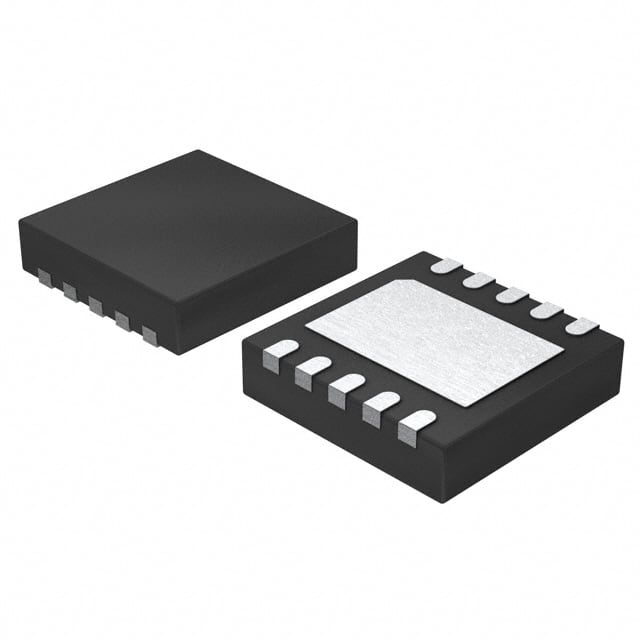
-
TPS51206DSQR
Texas Instruments
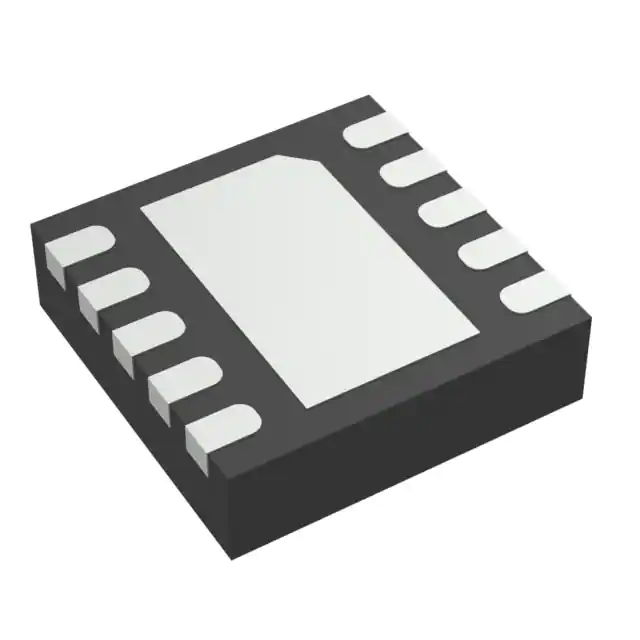
-
TPS51200DRCR
Texas Instruments
-
TPS51200DRCT
Texas Instruments
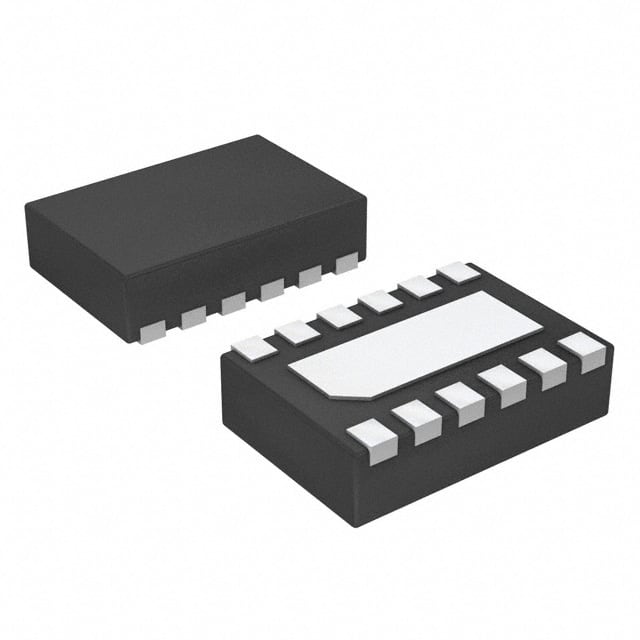
-
TPS62740DSSR
Texas Instruments
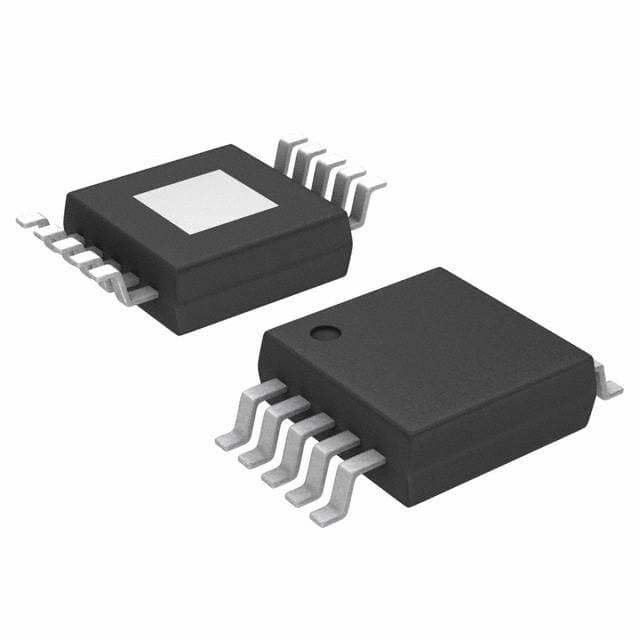
-
TPS51100DGQR
Texas Instruments
-
NCP51200MNTXG
onsemi
-
NCP51400MNTXG
onsemi
-
RT9026GSP
Richtek USA Inc.
-
LP2998MRX/NOPB
Texas Instruments
-
TPS51200QDRCRQ1
Texas Instruments
-
DPA423GN-TL
Power Integrations
-
LM10011SD/NOPB
Texas Instruments
Tech Hub

Operational amplifier guide covering op amp basics, feedback, ideal vs real op amps, common configurations, buffer circuits, offset, bias current, gain-bandwidth, slew rate, rail-to-rail limits and sel…

Jumper cables guide covering safe connection order, red and black clamp placement, final ground connection, cable gauge, length, clamp quality, copper vs CCA cables, jump starter comparison and battery…

LDO regulator guide covering low dropout voltage, power dissipation, thermal design, PSRR, output noise, capacitor stability, adjustable LDO circuits, LDO vs buck converter and datasheet selection chec…

Conditional Access Module guide covering CAM meaning, CI/CI+ interface, smart card authorization, DVB security workflow, TV and set-top box compatibility, internal electronics, ESD protection, connecto…

Guide to electronic component obsolescence covering EOL risk, PCN/PDN notices, last-time buy planning, replacement options, form-fit-function validation, counterfeit risk and BOM lifecycle management.

18650 battery guide covering lithium-ion cell basics, 3.6V/3.7V voltage, 4.2V charging, mAh and Wh capacity, protected cells, chargers, BMS, series-parallel packs, holders, welding and sourcing checks.…

Hall effect sensor guide covering working principle, linear and digital sensors, Arduino circuits, current sensing, speed detection, automotive applications, A3144 examples, signal filtering and datash…

Product Change Notification guide for electronic components, covering PCN meaning, PCN vs PDN/EOL, common change types, risk levels, form-fit-function review, engineering validation, BOM control, LTB/L…

A practical guide to blend door actuators, covering HVAC function, symptoms, location, AC and heater issues, reset and calibration, replacement cost, electrical diagnosis, compatibility checks, and rep…

Engineering guide to Raspberry Pi alternatives, covering chip-level differences, Orange Pi, ROCK, Jetson, Banana Pi, NanoPi, Compute Module, Pico, GPIO, camera, HAT compatibility, and replacement risks…


