
 My Inquiry
 My Account


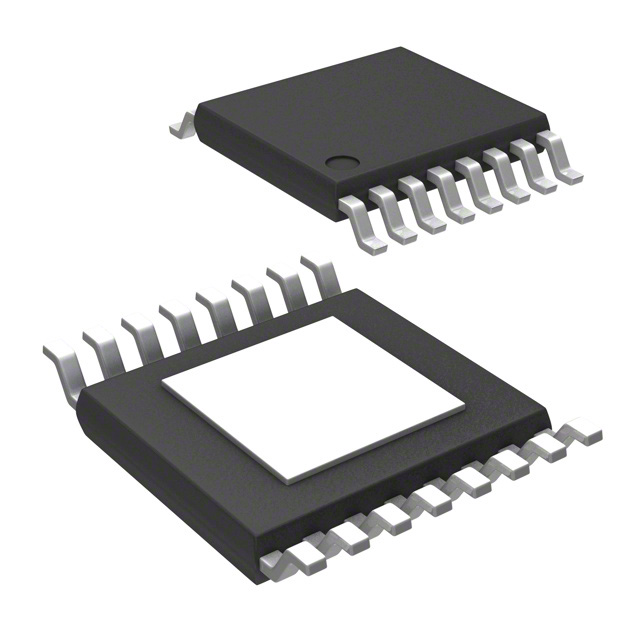
Monolithic Power Systems Inc. MP9517GJS-Z

- Part No.:
- MP9517GJS-Z
- Manufacturer:
- Monolithic Power Systems Inc.
- Category:
- Motor Drivers, Controllers
- Package:
- SOT-23-6 Thin, Flat Leads
- Datasheet:
-
 MP9517GJS-Z.pdf
- Description:
- SINGLE-PHASE, BLDC, MOTOR DRIVER
- Quantity:
- Payment:

- Shipping:

Inventory:2,616
Please send an inquiry. Send us your inquiry, and we will respond immediately.
Product details
Overview
MP9517GJS-Z from Monolithic Power Systems is a single-phase brushless DC motor driver IC with integrated Hall-effect sensor, power MOSFETs (HS+LS RDS(on) = 1.02Ω), 3.3V–18V input range, and 2A overload current limit. It delivers closed-loop speed control via PWM input (2kHz–100kHz), provides rotational speed feedback on open-drain FG pin, and targets CPU/server fan applications requiring low audible noise and high reliability.
For engineers reviewing the MP9517GJS-Z datasheet, MP9517GJS-Z pinout, MP9517GJS-Z application, or MP9517GJS-Z equivalent, this page details its Hall-based commutation logic, soft-on/off timing (22.5°/45°), fixed 26kHz switching frequency, rotor deadlock detection (0.6s timeout), and thermal shutdown (150°C) - all critical for fan driver validation and BOM selection.
Technical Context
The MP9517GJS-Z implements Hall-sensor-triggered, single-phase BLDC commutation with automatic winding BEMF and current zero-crossing alignment in the same phase. Its internal half-bridge drives OUT1/OUT2 with soft-switching control, while the embedded Hall sensor (±1mT sensitivity) directly interfaces with rotor magnet polarity transitions to initiate commutation timing.
Control is fully integrated: PWM input sets target duty cycle (7.8%–100%), which linearly modulates output conduction; FG outputs Hall-edge pulses at motor speed; reverse voltage protection blocks -18V faults; and UVLO (3.25V rising) disables operation below safe supply levels.
Key Specifications
| Parameter | Value and Actual Design Meaning |
|---|---|
| Input Voltage Range | 3.3V to 18V - supports wide-range DC input including 5V, 12V, and 15V fan rails without external regulation. |
| Output Switching Frequency | Fixed 26kHz - operates above audible range to eliminate fan whine and simplify EMI filtering. |
| Overload Current Limit | 2A - protects against short-circuit and stalled-rotor conditions while allowing transient startup surges. |
| Thermal Shutdown Threshold | 150°C with 25°C hysteresis - ensures safe die temperature recovery before resuming operation. |
| PWM Input Frequency Range | 2kHz to 100kHz - compatible with standard microcontroller PWM peripherals and avoids aliasing with internal clock. |
| Hall Sensor Sensitivity | ±1mT - reliably detects small magnetic fields from compact fan rotors with minimal air gap tolerance. |
| Rotor Deadlock Detection Time | 0.6s - triggers automatic recovery sequence before thermal stress accumulates during stall. |
Pinout & Package
MP9517GJS-Z is packaged in TSOT23-6-SL - a 6-pin, surface-mount, lead-free, halogen-free package with 0.95mm pitch and exposed pad for thermal dissipation (θJA = 100°C/W).
| Pin/Terminal | Circuit Role | Design Meaning |
|---|---|---|
| 1 GND | Power ground reference | Common return path for VCC, Hall sensor, and MOSFET sources; must be low-impedance for stable commutation. |
| 2 VCC | Supply input | 3.3V–18V power rail with reverse-voltage protection and UVLO; powers internal LDO, Hall sensor, and gate drivers. |
| 3 FG | Speed indicator output | Open-drain Hall-edge pulse output; requires external pull-up; frequency equals motor RPM/60 × pole-pairs. |
| 4 PWM | Speed control input | Internal 41kΩ pull-up; accepts 2kHz–100kHz PWM; 7.8% minimum duty required to start rotation. |
| 5 OUT2 | Motor driver output 2 | Half-bridge midpoint connection; switches N-channel MOSFET to drive one motor winding terminal. |
| 6 OUT1 | Motor driver output 1 | Half-bridge midpoint connection; switches complementary N-channel MOSFET to drive second winding terminal. |
Key Features
| Feature | Design Value |
|---|---|
| Integrated Hall sensor | Eliminates need for external Hall IC and associated PCB routing, reducing component count and board area by ≥3 parts. |
| Soft-on/off commutation | Gradual 16-step duty ramp (22.5° soft-on, 45° soft-off) minimizes torque ripple and acoustic noise during speed transitions. |
| Winding BEMF & current zero-crossing alignment | Ensures precise phase timing lock between Hall edge and current reversal, maximizing efficiency and reducing vibration. |
| Input reverse voltage protection | Automatically disables internal circuitry when VCC is connected with polarity inversion, preventing damage up to -18V. |
| Automatic rotor deadlock recovery | After 0.6s stall detection, forces LS-FET conduction for 3.6s then retries startup - no host MCU intervention required. |
Applications
| CPU Fan Control | Server Chassis Fan |
|---|---|
|
Use Scenario: Thermal management of Intel/AMD desktop and laptop CPUs under dynamic load. IC Role / Device Role / Timing Role: Single-phase BLDC driver with Hall-based commutation and FG tach feedback for closed-loop speed regulation. Use Value: Soft commutation reduces audible noise during rapid speed changes; 26kHz switching avoids interference with audio subsystems. |
Use Scenario: Redundant cooling in 1U/2U rack-mounted servers with multi-zone thermal monitoring. IC Role / Device Role / Timing Role: Motor driver with rotor deadlock protection and automatic restart to maintain airflow during unexpected stalls. Use Value: 0.6s RDP timeout and 3.6s recovery enable unattended fan recovery without BMC intervention or system reboot. |
| Network Switch Fan | Industrial Embedded Fan |
|
Use Scenario: Forced-air cooling of high-density Ethernet switch ASICs operating at -40°C to +85°C ambient. IC Role / Device Role / Timing Role: Integrated Hall driver delivering robust speed control across wide input voltage (3.3V–18V) and temperature ranges. Use Value: UVLO (3.25V) and thermal shutdown (150°C) ensure fail-safe operation during brownouts or enclosure overheating. |
Use Scenario: Fan-driven cooling in sealed industrial PCs, medical imaging enclosures, or ruggedized edge controllers. IC Role / Device Role / Timing Role: Compact motor driver with TSOT23-6-SL footprint enabling direct placement near fan connector. Use Value: Minimal external components (1µF CIN, 2Ω snubber) reduce BOM cost and improve long-term reliability vs. discrete solutions. |
Equivalent & Alternatives
The following parts are listed as comparable options for similar single-phase BLDC motor driver applications.
| Alternative Part | Technical Difference | Application Difference | Selection Advice |
|---|---|---|---|
| MP6532GJ-Z | Two-phase BLDC driver; no integrated Hall sensor; requires external Hall IC and more external components. | Targeted at higher-torque fans where two-phase commutation improves torque density and reduces torque ripple. | Select when needing >2A continuous current or dual-winding control; not drop-in for MP9517GJS-Z's single-phase Hall-integrated design. |
| ALLEGRO A4964KJPTR-T | Single-phase BLDC driver with Hall interface but no integrated Hall sensor; separate Hall biasing and signal conditioning required. | Used in automotive HVAC blower modules where AEC-Q100 qualification and extended temp range (-40°C to +150°C) are mandatory. | Choose only if AEC-Q100 compliance is required; lacks MP9517GJS-Z's integrated Hall, soft-commutation angles, and reverse-voltage protection. |
Compared with MP6532GJ-Z and A4964KJPTR-T, MP9517GJS-Z uniquely integrates Hall sensing, soft commutation timing, and reverse-voltage protection in a 6-pin TSOT23 package - reducing bill-of-materials, layout complexity, and qualification effort for cost-sensitive CPU/server fan designs.
Availability
MP9517GJS-Z is available at Aetrix Electronics and suitable for CPU fan control, server chassis cooling, and network switch thermal management requiring stable component supply, RoHS-compliant packaging, and long-lifecycle availability.
Supply support for MP9517GJS-Z includes scheduled delivery planning, volume procurement assistance, BOM continuity management, traceable sourcing, and lifecycle availability coordination for OEM customers, industrial embedded developers, connected-device designers, and electronics production programs.
Manufacturer
Monolithic Power Systems (MPS) is a fabless semiconductor company specializing in high-performance power management ICs, with over 20 years of expertise in DC/DC converters, motor drivers, and LED drivers.
The MP9517 belongs to MPS's integrated fan driver product line, designed specifically to replace discrete MOSFET+Hall+controller solutions in space-constrained, low-noise, high-reliability cooling applications.
FAQ
What is the minimum PWM duty cycle required to start motor rotation?
The MP9517GJS-Z requires a minimum input PWM duty cycle of 7.8% to initiate rotation. Below this threshold, the motor remains stationary. A 1.2% hysteresis prevents oscillation near the startup point, so rotation resumes only when duty exceeds 9% after a stall event.
Does MP9517GJS-Z require an external pull-up resistor on the FG pin?
Yes. The FG pin is an open-drain output and must be pulled up externally - typically with a 4.7kΩ to 10kΩ resistor to a 3.3V or 5V rail. Without this pull-up, FG cannot generate valid tachometer pulses for speed monitoring or closed-loop control.
How does rotor deadlock protection operate, and what happens after detection?
When no Hall signal edge is detected for 0.6 seconds, MP9517GJS-Z activates rotor deadlock protection by turning on both low-side MOSFETs for forced conduction. After a 3.6-second hold period, it automatically attempts restart. FG resumes output only after detecting three consecutive Hall edges post-recovery.
What is the purpose of the 2Ω resistor in series with the input capacitor in the typical application circuit?
The 2Ω resistor forms an RC snubber with the input capacitor to dampen ringing caused by energy exchange during soft-switching commutation. This suppresses high-frequency voltage spikes on VCC, improving EMC performance and preventing false UVLO or OVP triggering.
Can MP9517GJS-Z drive motors beyond CPU/server fan loads?
No. MP9517GJS-Z is optimized for single-phase BLDC fans with ≤2A peak current and ≤18V supply. Its 1.02Ω total RDS(on), thermal limits (1.25W PD), and Hall sensitivity (±1mT) are calibrated for small-form-factor axial fans - not for pumps, blowers, or industrial motors requiring higher torque or voltage.
Is MP9517GJS-Z pin-compatible with other MPS fan drivers like MP6532?
No. MP9517GJS-Z uses a 6-pin TSOT23-6-SL package with dedicated Hall-integrated functionality, while MP6532 uses an 8-pin SOIC package and lacks integrated Hall sensing. Pin functions, package dimensions, and control architecture differ fundamentally - no mechanical or electrical compatibility exists.
MP9517GJS-Z Specifications
- Product attributes
- Attribute value
- Manufacturer:
- Monolithic Power Systems Inc.
- Series:
- -
- Package/Case:
- SOT-23-6 Thin, Flat Leads
- Packaging:
- Tape & Reel (TR)
- Product Status:
- Active
- Motor Type - Stepper:
- Bipolar
- Motor Type - AC, DC:
- Brushless DC (BLDC)
- Function:
- Driver - Fully Integrated, Control and Power Stage
- Output Configuration:
- Half Bridge (4)
- Interface:
- PWM
- Technology:
- Power MOSFET
- Step Resolution:
- -
- Applications:
- General Purpose
- Current - Output:
- 2A
- Voltage - Supply:
- 3.3V ~ 18V
- Voltage - Load:
- 3.3V ~ 18V
- Operating Temperature:
- -40°C ~ 125°C (TJ)
- Grade:
- -
- Qualification:
- -
- Mounting Type:
- Surface Mount
- Supplier Device Package:
- TSOT-23-6-SL
MP9517GJS-Z FAQ
1.How can I place an order for MP9517GJS-Z through Aetrix?
Please submit a Request for Quotation (RFQ) for MP9517GJS-Z on Aetrix. Our sales agent will provide a competitive quotation and guide you through the order confirmation once you accept the terms.
2.Are the price and stock information for MP9517GJS-Z reliable?
The price and inventory of MP9517GJS-Z are updated periodically and may fluctuate due to market conditions. Stock and pricing data are typically refreshed every 24 hours. Quotation validity for MP9517GJS-Z is usually 5 days.
3.What payment methods are accepted for MP9517GJS-Z?
We accept Wire Transfer, PayPal, Credit Card, Western Union, MoneyGram, and Escrow for MP9517GJS-Z transactions.
Note: Certain payment methods may incur a processing fee.
4.How is shipping managed for MP9517GJS-Z?
MP9517GJS-Z orders can be shipped via leading logistics carriers, including DHL, UPS, FedEx, TNT, or Registered Mail.
Once your MP9517GJS-Z order is processed, you will receive an email with the shipment details and tracking number.
Note: Tracking information may take up to 24 hours to appear. Express delivery typically takes 3–5 business days.
5.How can I obtain technical support or documentation for MP9517GJS-Z?
For technical support, including MP9517GJS-Z datasheets, pinout diagrams, or application guidance, please contact our engineering support team. They can provide detailed documentation and assistance for your MP9517GJS-Z requirements.
6.How does Aetrix verify that MP9517GJS-Z is sourced from the original manufacturer or authorized distributors?
All MP9517GJS-Z products on Aetrix are procured from qualified distributors and authorized channels. Our dedicated quality assurance team conducts strict verification, including traceability checks and, if necessary, third-party testing. This ensures that MP9517GJS-Z meets industry standards.
7.What is the process for return or replacement of MP9517GJS-Z?
All MP9517GJS-Z units undergo pre-shipment inspection (PSI). If there is an issue with MP9517GJS-Z, returns or replacements are accepted under the following conditions:
1.Quantity discrepancies, incorrect items, or visible external defects (such as breakage or corrosion), acknowledged by Aetrix.
2.The issue is reported within 90 days of delivery.
3.The MP9517GJS-Z part is unused and in its original packaging.
Return procedure for MP9517GJS-Z:
1.Submit a request within 90 days.
2.Obtain a Return Material Authorization (RMA) from Aetrix.
MP9517GJS-Z Tags
-
DRV2603RUNR
Texas Instruments
-
DRV8837CDSGR
Texas Instruments
-
DRV8837DSGR
Texas Instruments
-
DRV8838DSGR
Texas Instruments
-
DRV8839DSSR
Texas Instruments
-
EMC2301-1-ACZL-TR
Microchip Technology
-
DRV8231ADSGR
Texas Instruments
-
EMC2302-2-AIZL-TR
Microchip Technology
-
DRV8800PWPR
Texas Instruments
-
DRV8835DSSR
Texas Instruments
-
EMC2303-1-KP-TR
Microchip Technology
-
DRV8876PWPR
Texas Instruments
Tech Hub

Operational amplifier guide covering op amp basics, feedback, ideal vs real op amps, common configurations, buffer circuits, offset, bias current, gain-bandwidth, slew rate, rail-to-rail limits and sel…

Jumper cables guide covering safe connection order, red and black clamp placement, final ground connection, cable gauge, length, clamp quality, copper vs CCA cables, jump starter comparison and battery…

LDO regulator guide covering low dropout voltage, power dissipation, thermal design, PSRR, output noise, capacitor stability, adjustable LDO circuits, LDO vs buck converter and datasheet selection chec…

Conditional Access Module guide covering CAM meaning, CI/CI+ interface, smart card authorization, DVB security workflow, TV and set-top box compatibility, internal electronics, ESD protection, connecto…

Guide to electronic component obsolescence covering EOL risk, PCN/PDN notices, last-time buy planning, replacement options, form-fit-function validation, counterfeit risk and BOM lifecycle management.

18650 battery guide covering lithium-ion cell basics, 3.6V/3.7V voltage, 4.2V charging, mAh and Wh capacity, protected cells, chargers, BMS, series-parallel packs, holders, welding and sourcing checks.…

Hall effect sensor guide covering working principle, linear and digital sensors, Arduino circuits, current sensing, speed detection, automotive applications, A3144 examples, signal filtering and datash…

Product Change Notification guide for electronic components, covering PCN meaning, PCN vs PDN/EOL, common change types, risk levels, form-fit-function review, engineering validation, BOM control, LTB/L…

A practical guide to blend door actuators, covering HVAC function, symptoms, location, AC and heater issues, reset and calibration, replacement cost, electrical diagnosis, compatibility checks, and rep…

Engineering guide to Raspberry Pi alternatives, covering chip-level differences, Orange Pi, ROCK, Jetson, Banana Pi, NanoPi, Compute Module, Pico, GPIO, camera, HAT compatibility, and replacement risks…


