
 My Inquiry
 My Account


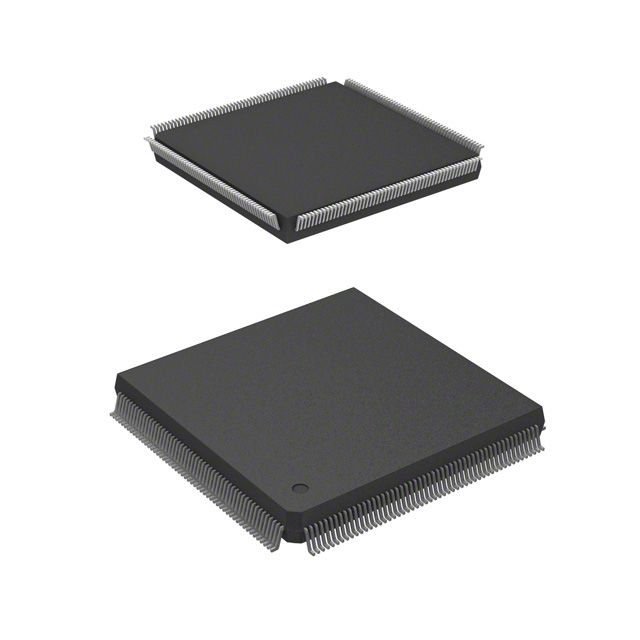
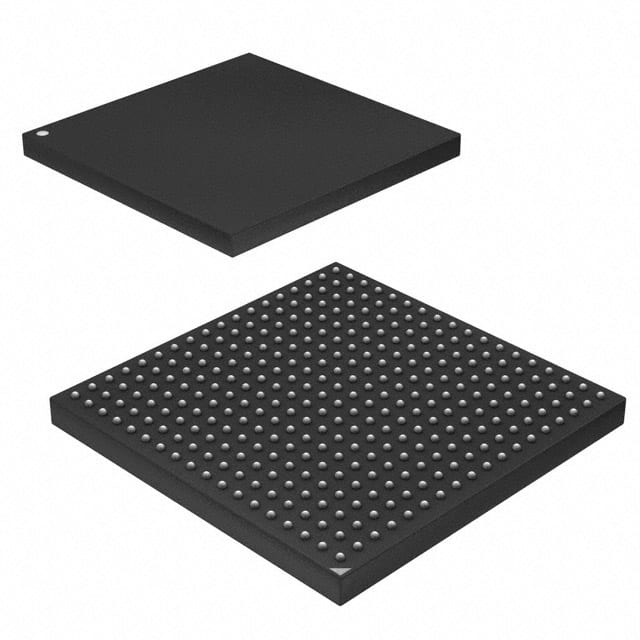
NXP Semiconductors MPC603RZT200LC
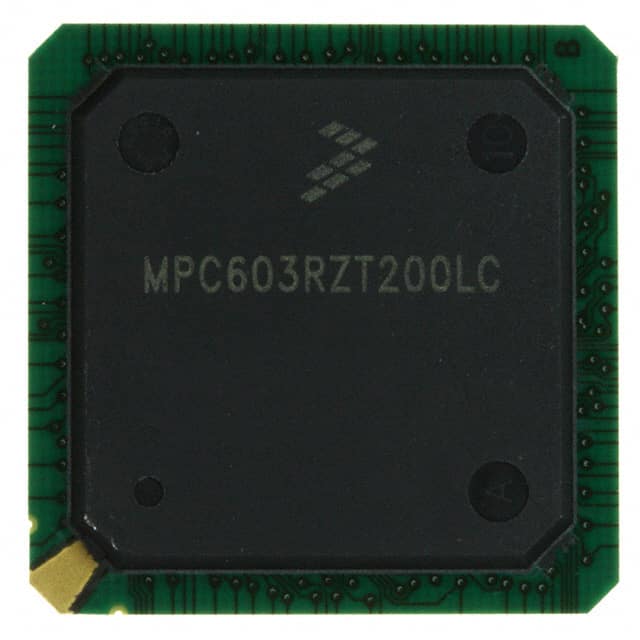
- Part No.:
- MPC603RZT200LC
- Manufacturer:
- NXP Semiconductors
- Category:
- Microprocessors
- Package:
- 255-BBGA
- Datasheet:
-
 MPC603RZT200LC.pdf
- Description:
- IC MPU MPC6XX 200MHZ 255BGA
- Quantity:
- Payment:

- Shipping:

Inventory:4,030
Please send an inquiry. Send us your inquiry, and we will respond immediately.
Product details
Overview
MPC603RZT200LC from Freescale Semiconductor (formerly Motorola) is a PowerPC 603e RISC microprocessor with 200 MHz CPU frequency, 2.5 V ±5% core supply voltage, and industrial temperature range (–40°C to +105°C). It implements a five-stage pipeline, integrated FPU (functionally guaranteed per revision 2.1), 16 KB instruction cache, 16 KB data cache, and supports symmetric multiprocessing via bus snooping and cache coherency protocols. It was used in Apple Macintosh G3-era embedded control and communications subsystems.
For engineers reviewing the MPC603RZT200LC datasheet, MPC603RZT200LC pinout, MPC603RZT200LC application, or MPC603RZT200LC equivalent, key selection considerations include its BGA-255 package, 200 MHz deterministic timing under industrial thermal conditions, errata-aware cache coherency handling, and compatibility with PowerPC 603e software toolchains and memory controllers.
Technical Context
The MPC603RZT200LC implements a superscalar, five-stage integer pipeline with dual-issue capability for integer operations and separate floating-point unit supporting IEEE 754 single/double precision. Its bus interface complies with the PowerPC 60x bus protocol, supporting 64-bit data transfers at up to 66 MHz bus clock.
It integrates on-die L1 cache (16 KB I-cache + 16 KB D-cache), Harvard architecture, write-back policy, and supports cache lock, dcbz, dcbi, and touch-load (dcbt) instructions. Coherency relies on external snoop logic and requires careful sequencing around lwarx/stwcx and dcbz broadcast due to documented errata.
Key Specifications
| Parameter | Value and Actual Design Meaning |
|---|---|
| CPU Frequency | 200 MHz - fixed clock rate; determines maximum instruction throughput and real-time latency bounds. |
| Core Supply Voltage | 2.5 V ±5% - strict regulation required; deviation beyond tolerance risks timing violation or functional failure. |
| Junction Temperature Range | –40°C to +105°C - validated for industrial environments; requires thermal design accommodating 105°C max TJ. |
| L1 Cache | 16 KB instruction + 16 KB data - Harvard architecture enables concurrent fetch/execute; impacts code density and memory bandwidth pressure. |
| Bus Interface | 64-bit PowerPC 60x - synchronous, multiplexed address/data; mandates compatible northbridge or custom ASIC glue logic. |
| Floating-Point Unit | Integrated IEEE 754-compliant FPU - functional per revision 2.1; no floating-point guarantee for MPE variants, but MPC603RZT200LC includes it. |
| Package | 255-pin CBGA - 17 × 17 mm body, 1.27 mm pitch; requires controlled-depth reflow and X-ray inspection for solder joint reliability. |
Pinout & Package
Package: 255-pin Ceramic Ball Grid Array (CBGA), 17 mm × 17 mm, 1.27 mm ball pitch, RoHS-compliant lead-free finish. Thermal pad on underside requires dedicated PCB thermal via array.
| Pin/Terminal | Circuit Role | Design Meaning |
|---|---|---|
| CLKIN | Primary clock input | Accepts differential or single-ended 200 MHz system clock; internal PLL multiplies to core frequency. |
| RESET | Asynchronous reset input | Active-low; initiates full processor state reset including caches, registers, and bus interface logic. |
| BR0–BR7 | Bus request signals | Eight independent bus request lines support priority-based arbitration in multi-master systems. |
| ACK0–ACK7 | Bus acknowledge outputs | Correspond to BR0–BR7; indicate bus grant status and enable synchronized access handshaking. |
| ADS* | Address strobe | Indicates valid address on ABUS; initiates bus transaction cycle timing for memory or I/O accesses. |
| RW* | Read/write control | Active-low signal defining direction of data transfer on DBUS during current cycle. |
| DBUS[63:0] | Data bus | 64-bit bidirectional data path; requires matched trace length and termination for signal integrity at 66 MHz. |
| ABUS[31:3] | Address bus | 29-bit multiplexed address; upper bits define memory region, lower bits select byte within doubleword. |
Key Features
| Feature | Design Value |
|---|---|
| Superscalar five-stage pipeline | Enables dual-issue integer execution per cycle; improves IPC over scalar designs without increasing clock frequency. |
| On-chip FPU with IEEE 754 compliance | Eliminates need for external math coprocessor; ensures deterministic floating-point behavior in real-time control loops. |
| Separate 16 KB I-cache and D-cache | Reduces instruction fetch stalls and data access conflicts; supports cache locking for critical ISR code sections. |
| PowerPC 60x bus protocol support | Ensures interoperability with standard PowerPC-compatible memory controllers and peripheral bridges (e.g., MPC107). |
| Cache coherency primitives (dcbi, lwarx/stwcx) | Enables SMP configurations with hardware-assisted cache consistency; requires errata mitigation in software. |
Applications
| Network Router Control Plane | Industrial Motion Controller |
|---|---|
Use Scenario: Embedded routing engine managing packet classification, ACL processing, and QoS policy enforcement in mid-tier enterprise routers. IC Role / Device Role / Timing Role: Primary control processor executing Linux-based routing stack; handles interrupt-driven packet dispatch and configuration management. Use Value: 200 MHz deterministic execution and integrated FPU accelerate route computation and crypto offload prep; industrial temp rating ensures reliability in fanless chassis. | Use Scenario: Real-time motion coordination across multiple servo axes in CNC machine tools with closed-loop feedback. IC Role / Device Role / Timing Role: Central motion planner running RTOS; synchronizes trajectory generation, encoder sampling, and PWM update timing. Use Value: Five-stage pipeline and cache lock support guarantee sub-100 µs ISR latency; 105°C junction rating accommodates sealed enclosure thermal profiles. |
| Avionics Data Concentrator | Medical Imaging Subsystem Controller |
Use Scenario: ARINC 664 (AFDX) end-system node aggregating sensor telemetry and actuator commands in regional aircraft. IC Role / Device Role / Timing Role: Deterministic communication controller interfacing with FPGA-based AFDX MAC; manages time-triggered message scheduling. Use Value: Bus snooping and cache coherency primitives enable safe shared-memory IPC with safety-critical FPGA firmware; –40°C to +105°C operation meets DO-160E Section 22 Category E requirements. | Use Scenario: Image reconstruction accelerator supervisor in ultrasound or MRI front-end modules requiring low-latency DMA and FFT pre-processing. IC Role / Device Role / Timing Role: Host processor coordinating FPGA-accelerated DSP kernels and high-speed ADC/DAC interfaces via local bus. Use Value: 64-bit PowerPC 60x bus enables 533 MB/s sustained memory bandwidth; integrated FPU accelerates calibration coefficient computation without external math IC. |
Equivalent & Alternatives
The following parts are listed as comparable options for similar RISC microprocessor applications.
| Alternative Part | Technical Difference | Application Difference | Selection Advice |
|---|---|---|---|
| MPC603RRX200LC | Same core, same 200 MHz speed, same 2.5 V supply, but rated for 0°C to +105°C (not extended industrial). | Not qualified for –40°C startup or sustained operation; unsuitable for outdoor or avionics deployments. | Select MPC603RZT200LC when cold-start capability below 0°C is required. |
| MPC8245LZQ266B | PowerPC G2 core, 266 MHz, integrated PCI bridge and memory controller; different instruction set extensions and cache hierarchy. | Higher integration reduces external logic count but increases power and complexity; not binary-compatible. | Choose MPC8245LZQ266B only when PCI host bridge functionality and higher clock rate justify architectural migration. |
Compared with MPC603RRX200LC, MPC603RZT200LC adds guaranteed –40°C operation and shares identical errata and FPU functionality; compared with MPC8245LZQ266B, it offers simpler board design and lower power but requires external memory controller and lacks PCI integration.
Availability
MPC603RZT200LC is available at Aetrix Electronics and suitable for network router control planes, industrial motion controllers, avionics data concentrators, and medical imaging subsystems requiring stable component supply and long-term lifecycle support.
Supply support for MPC603RZT200LC includes scheduled delivery planning, volume procurement assistance, BOM continuity management, traceable sourcing, and lifecycle availability coordination for OEM customers, industrial embedded developers, connected-device designers, and electronics production programs.
Manufacturer
Freescale Semiconductor (now part of NXP Semiconductors) designed high-performance PowerPC microprocessors for embedded computing, networking, and automotive applications before its 2015 acquisition.
The MPC603RZT200LC belongs to the PowerPC 603e family, engineered for cost-sensitive, thermally constrained embedded systems needing deterministic real-time performance and software compatibility with PowerPC toolchains.
FAQ
What is the operating temperature range specified for the MPC603RZT200LC?
The MPC603RZT200LC is rated for a junction temperature range of –40°C to +105°C, qualifying it for extended industrial applications where cold-start capability and high-temperature reliability are required. This differs from the standard LC-suffixed variants like MPC603RRX200LC, which are limited to 0°C minimum. The ZT suffix explicitly denotes the extended temperature grade, and thermal design must ensure TJ remains within this bound under worst-case power dissipation.
Does the MPC603RZT200LC include a functional floating-point unit?
Yes, the MPC603RZT200LC includes a fully functional IEEE 754-compliant floating-point unit, as confirmed by Freescale's PID7v-603e specification and revision 2.1 documentation. Unlike MPE603R variants marked "floating point not guaranteed," the MPC603RZT200LC is a full-featured MPC603R part. Its FPU supports both single- and double-precision arithmetic and is integral to real-time control and signal processing workloads executed on the MPC603RZT200LC.
What package type and pin count does the MPC603RZT200LC use?
The MPC603RZT200LC uses a 255-pin Ceramic Ball Grid Array (CBGA) package with a 17 mm × 17 mm body and 1.27 mm ball pitch. This package is mechanically and electrically identical to other MPC603R variants in the same family, including MPC603RRX200LC and MPC603RRX200TC. The CBGA construction provides superior thermal dissipation and signal integrity for high-speed bus operation, and requires precise PCB layout with thermal vias beneath the central die pad.
Which errata affect cache coherency usage on the MPC603RZT200LC?
The MPC603RZT200LC exhibits five documented errata impacting cache coherency, including indefinite dcbz broadcast retries, snoop copyback interfering with dcbi address broadcast, and lwarx/stwcx live-lock under bus pipelining. These require software mitigation-such as disabling dcbz broadcasting via BAT/PTE global bit settings, inserting NOPs before lwarx, or avoiding touch loads after MMU exceptions. These errata are identical across all revision 2.1 PID7t-603e parts, including the MPC603RZT200LC.
Is the MPC603RZT200LC pin-compatible with other PowerPC 603e microprocessors?
Yes, the MPC603RZT200LC is pin-compatible with other 255-ball CBGA-packaged PowerPC 603e microprocessors, including MPC603RRX200LC and MPC603RRX200TC. All share identical pinout, signal definitions, power/ground ball assignments, and thermal pad layout. However, differences in temperature grade and internal mask revision do not affect physical or electrical pin compatibility-only operational limits and errata applicability. System-level validation remains necessary due to potential timing or thermal derating effects.
MPC603RZT200LC Specifications
- Product attributes
- Attribute value
- Manufacturer:
- NXP Semiconductors
- Package/Case:
- 255-BBGA
- Series:
- MPC6xx
- Packaging:
- Tray
- Product Status:
- Obsolete
- Core Processor:
- PowerPC 603e
- Number of Cores/Bus Width:
- 1 Core, 32-Bit
- Speed:
- 200MHz
- Co-Processors/DSP:
- -
- RAM Controllers:
- -
- Graphics Acceleration:
- No
- Display & Interface Controllers:
- -
- Ethernet:
- -
- SATA:
- -
- USB:
- -
- Voltage - I/O:
- 3.3V
- Operating Temperature:
- 0°C ~ 105°C (TA)
- Grade:
- -
- Qualification:
- -
- Security Features:
- -
- Mounting Type:
- Surface Mount
- Supplier Device Package:
- 255-PBGA (23x23)
- Additional Interfaces:
- -
MPC603RZT200LC FAQ
1.How can I place an order for MPC603RZT200LC through Aetrix?
Please submit a Request for Quotation (RFQ) for MPC603RZT200LC on Aetrix. Our sales agent will provide a competitive quotation and guide you through the order confirmation once you accept the terms.
2.Are the price and stock information for MPC603RZT200LC reliable?
The price and inventory of MPC603RZT200LC are updated periodically and may fluctuate due to market conditions. Stock and pricing data are typically refreshed every 24 hours. Quotation validity for MPC603RZT200LC is usually 5 days.
3.What payment methods are accepted for MPC603RZT200LC?
We accept Wire Transfer, PayPal, Credit Card, Western Union, MoneyGram, and Escrow for MPC603RZT200LC transactions.
Note: Certain payment methods may incur a processing fee.
4.How is shipping managed for MPC603RZT200LC?
MPC603RZT200LC orders can be shipped via leading logistics carriers, including DHL, UPS, FedEx, TNT, or Registered Mail.
Once your MPC603RZT200LC order is processed, you will receive an email with the shipment details and tracking number.
Note: Tracking information may take up to 24 hours to appear. Express delivery typically takes 3–5 business days.
5.How can I obtain technical support or documentation for MPC603RZT200LC?
For technical support, including MPC603RZT200LC datasheets, pinout diagrams, or application guidance, please contact our engineering support team. They can provide detailed documentation and assistance for your MPC603RZT200LC requirements.
6.How does Aetrix verify that MPC603RZT200LC is sourced from the original manufacturer or authorized distributors?
All MPC603RZT200LC products on Aetrix are procured from qualified distributors and authorized channels. Our dedicated quality assurance team conducts strict verification, including traceability checks and, if necessary, third-party testing. This ensures that MPC603RZT200LC meets industry standards.
7.What is the process for return or replacement of MPC603RZT200LC?
All MPC603RZT200LC units undergo pre-shipment inspection (PSI). If there is an issue with MPC603RZT200LC, returns or replacements are accepted under the following conditions:
1.Quantity discrepancies, incorrect items, or visible external defects (such as breakage or corrosion), acknowledged by Aetrix.
2.The issue is reported within 90 days of delivery.
3.The MPC603RZT200LC part is unused and in its original packaging.
Return procedure for MPC603RZT200LC:
1.Submit a request within 90 days.
2.Obtain a Return Material Authorization (RMA) from Aetrix.
MPC603RZT200LC Tags
-
AT91SAM9260B-CU-999
Microchip Technology
-
AT91SAM9G25-CU
Microchip Technology
-
ATSAMA5D27C-CU
Microchip Technology
-
AT91SAM9X35-CU
Microchip Technology
-
AT91SAM9X25-CU
Microchip Technology
-
MCIMX6Y2CVM08AB
NXP Semiconductors
.JPG)
-
AM3352BZCZ100
Texas Instruments
-
AT91SAM9260B-CU
Microchip Technology
-
AT91SAM9260B-QU
Microchip Technology
-
ATSAMA5D31A-CU
Microchip Technology
-
AT91SAM9G20B-CU-999
Microchip Technology
-
MCIMX6Y2CVM05AB
NXP Semiconductors
Tech Hub

A practical engineering guide to 3.3V and 5V logic compatibility, input thresholds, resistor dividers, translator ICs, MOSFET level shifting, I2C pull-ups, timing limits and power-sequencing risks.

The 74HC595 uses push-pull logic outputs, while the TPIC6B595 uses 50 V open-drain DMOS sinks for higher-power loads. This guide compares timing, current limits, 3.3 V interfacing, load wiring, thermal…

The 74HC595 converts serial data into eight stable parallel outputs. This guide covers pin functions, shift and storage timing, OE and MR behavior, drive-current limits, cascading, voltage compatibilit…

A technical comparison of level-sensitive latches and edge-triggered flip-flops, covering timing windows, setup and hold limits, master–slave operation, time borrowing, race-through, HDL inference and…

A D latch stores one bit while Enable controls when data can pass. This reference covers gate-level operation, truth tables, transparency, setup and hold timing, LE versus OE, common ICs and practical …

An SR latch stores one bit through cross-coupled feedback. This engineering reference covers NOR and NAND implementations, truth tables, forbidden-state recovery, gated operation, switch debouncing, fa…

Latch circuits retain one bit through feedback. This technical reference covers SR and D latches, truth tables, transparency, timing limits, latch-versus-flip-flop behavior, applications and common log…

An engineering guide to LED driver operation, constant-current and constant-voltage outputs, linear and switching topologies, dimming, IC selection, calculations, replacement compatibility, and fault c…

Operational amplifier guide covering op amp basics, feedback, ideal vs real op amps, common configurations, buffer circuits, offset, bias current, gain-bandwidth, slew rate, rail-to-rail limits and sel…

Jumper cables guide covering safe connection order, red and black clamp placement, final ground connection, cable gauge, length, clamp quality, copper vs CCA cables, jump starter comparison and battery…


