
 My Inquiry
 My Account


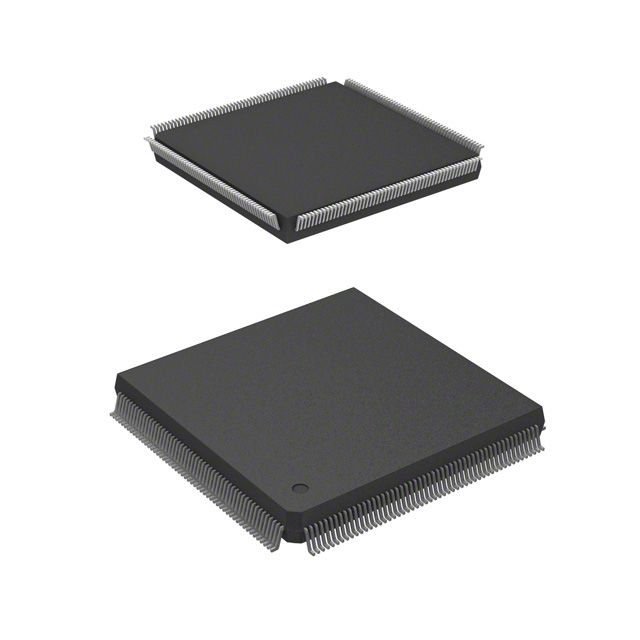
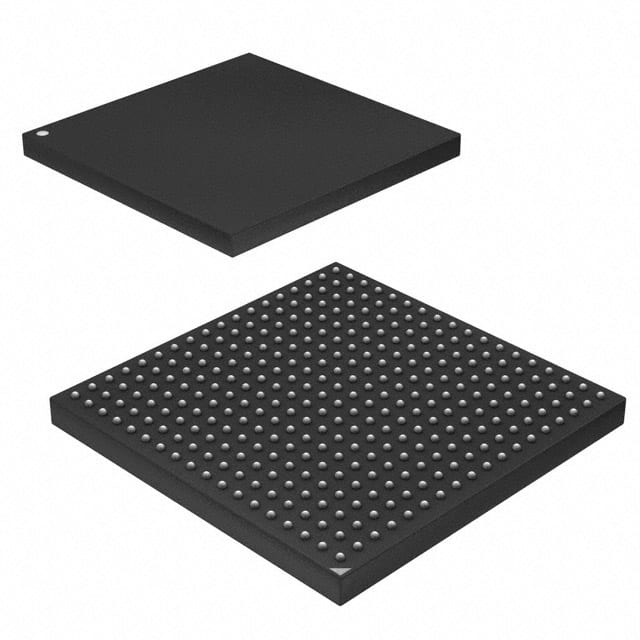
NXP Semiconductors MPC853TVR100A
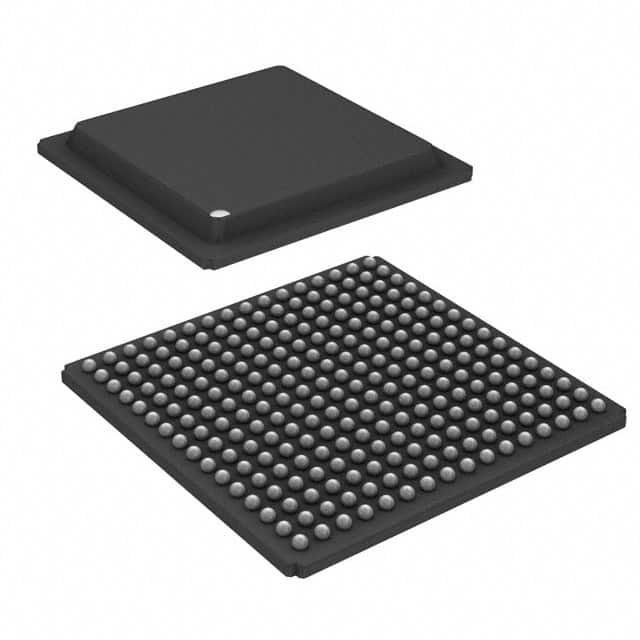
- Part No.:
- MPC853TVR100A
- Manufacturer:
- NXP Semiconductors
- Category:
- Microprocessors
- Package:
- 256-BBGA
- Datasheet:
-
 MPC853TVR100A.pdf
- Description:
- IC MPU MPC8XX 100MHZ 256BGA
- Quantity:
- Payment:

- Shipping:

Inventory:2,449
Please send an inquiry. Send us your inquiry, and we will respond immediately.
Product details
Overview
MPC853TVR100A from Freescale Semiconductor is a PowerPC architecture-based integrated communications controller (PowerQUICC™) featuring an MPC8xx core operating up to 100 MHz, 66-MHz external bus support, 1.8-V core / 3.3-V I/O voltage operation with 5-V TTL compatibility, and integrated Fast Ethernet Controller (FEC), CPM, and SIU - deployed in Ethernet routers, VoIP clients, Wi-Fi access points, and CPE equipment.
For engineers reviewing the MPC853TVR100A datasheet, MPC853TVR100A pinout, MPC853TVR100A application, or MPC853TVR100A equivalent, this page delivers verified core frequency, bus timing, thermal resistance (RθJA = 49°C/W on single-layer board), DC electrical specs (VDDL: 1.7–1.9 V, VDDH: 3.135–3.465 V), and mandatory reset configuration requirements per Freescale's Advance Information specification Rev. 1 (Dec 2004).
Technical Context
The MPC853TVR100A implements a single-issue 32-bit MPC8xx core with 4-Kbyte instruction and 4-Kbyte data caches (two-way set-associative, 128 sets each), MMU with 32-entry fully associative TLBs, and support for 4/16/512 Kbyte and 8 Mbyte page sizes. It integrates a System Integration Unit (SIU) with clock synthesizer, PIT, watchdog, IEEE 1149.1 JTAG interface, and a Communications Processor Module (CPM) with 8-Kbyte dual-port RAM and eight SDMA channels.
Its bus architecture supports dynamic 8/16/32-bit data width, 32 address lines, eight memory banks with programmable wait states (up to 30), glueless interfacing to DRAM, SRAM, Flash, and EPROM, and Fast Ethernet Controller compliant with IEEE 802.3 at 10 Mbps via SCC3/SCC4. The device operates in 1:1 (core = bus) or 2:1 (core = 2× bus) modes, with 100-MHz core requiring 2:1 mode exclusively.
Key Specifications
| Parameter | Value and Actual Design Meaning |
|---|---|
| Core Frequency | Up to 100 MHz - enables high-throughput packet processing in embedded networking applications without external clock multiplication. |
| External Bus Speed | Up to 66 MHz - defines maximum synchronous memory and peripheral interface bandwidth in 2:1 mode. |
| Core Supply Voltage (VDDL) | 1.7–1.9 V - requires tightly regulated low-noise 1.8-V supply; must not exceed VDDH during power sequencing. |
| I/O Supply Voltage (VDDH) | 3.135–3.465 V - powers all digital I/Os; pins PA[0:3], PA[8:11], PB15, PB[24:25], PB[28:31], PC[4:7], PC[12:13], PC15, PD[3:15], TDI/TDO/TCK/TRST/TMS, MII_TXEN/MDIO are 5-V tolerant. |
| Junction-to-Ambient Thermal Resistance | 49°C/W (natural convection, single-layer board) - determines maximum allowable ambient temperature for reliable 100-MHz operation at full load. |
| Cache Configuration | 4-Kbyte instruction + 4-Kbyte data cache, two-way set-associative - reduces memory latency for real-time protocol stack execution. |
| Memory Controller | Eight banks, up to 30 programmable wait states, boot chip-select options - supports flexible boot-from-Flash/SRAM and mixed-memory-system designs without external logic. |
Pinout & Package
The MPC853TVR100A is packaged in a 352-pin PBGA (Plastic Ball Grid Array) with 1.27-mm pitch, RoHS-compliant, and thermally enhanced design optimized for board-level heat dissipation via thermal balls connected to ground plane.
| Pin/Terminal | Circuit Role | Design Meaning |
|---|---|---|
| VDDL | Core power supply | Must be ramped ≤ VDDH during power-up; violation risks ESD diode forward-bias and long-term reliability failure. |
| VDDH | I/O power supply | Supplies all digital I/O buffers; 5-V tolerant pins require Vin ≤ VDDH + 2.5 V at all times including power-down. |
| CLKOUT | System clock output | Provides buffered core-derived clock; rise/fall time ≤ 4 ns, phase jitter ≤ 4 ns (peak-to-peak) at ≥15 MHz OSCLK. |
| HRESET | Hardware reset input | Active-low asynchronous reset; must be held asserted during power stabilization and used with RSTCONF to configure DBGC bit in SIUMCR. |
| MII_TXEN / MII_MDIO | FEC management interface | 5-V tolerant pins for IEEE 802.3 MII control; enable PHY register access and transmit enable signaling in 10-Mbps Ethernet operation. |
| PA[0:3], PA[8:11], PB15, etc. | General-purpose I/O / peripheral multiplexing | Configurable as GPIO, SCC/SMC signals, SPI, or FEC pins; direction and function set via PAPAR/PADIR registers post-reset. |
Key Features
| Feature | Design Value |
|---|---|
| Integrated Fast Ethernet Controller (FEC) | Enables standalone 10-Mbps Ethernet connectivity via SCC3/SCC4 without external MAC; supports IEEE 802.3 framing and MII interface. |
| Communications Processor Module (CPM) | Offloads protocol processing (HDLC/UART/transparent bitstream) from main CPU using dedicated RISC engine and 8-Kbyte dual-port RAM. |
| Time-Slot Assigner (TSA) | Routes TDM traffic across SCCs and SMC with 1-/8-bit resolution, supporting ISDN basic/primary rate, T1, CEPT, and custom PCM highway configurations. |
| PCMCIA Interface (Release 2.1) | Provides master socket interface for removable storage or modem cards; supports 8 independent memory/I/O windows with ATA-compatible timing. |
| Debug Support (8 Watchpoint Comparators) | Enables non-intrusive code/data breakpoint triggering on instruction address, data address, or data value - critical for real-time firmware validation. |
Applications
| Ethernet Router Control | VoIP Client Terminal |
|---|---|
|
Use Scenario: Embedded routing platform handling NAT, QoS, and firewall functions for SOHO broadband gateways. IC Role / Device Role / Timing Role: Main system controller executing Linux-based network stack; MPC853TVR100A provides integrated FEC, memory controller, and CPM for concurrent packet forwarding and voice codec offload. Use Value: Eliminates external PHY and MAC, reducing BOM cost and PCB area while maintaining deterministic 10-Mbps Ethernet latency under 66-MHz bus load. |
Use Scenario: IP phone endpoint with SIP stack, audio codec interface, and Ethernet backhaul in residential/enterprise deployments. IC Role / Device Role / Timing Role: Real-time communications processor managing RTP packetization, jitter buffering, and hardware-accelerated HDLC framing over SCC channels. Use Value: CPM handles voice packet assembly/disassembly independently of CPU, enabling sub-15-ms end-to-end voice delay at 100-MHz core frequency. |
| Wi-Fi Access Point Baseband | CPE Equipment Management |
|
Use Scenario: Dual-band Wi-Fi AP with integrated wired uplink, QoS scheduling, and remote management agent. IC Role / Device Role / Timing Role: Central host processor coordinating WLAN MAC layer (via external chipset) and wired LAN interface via FEC; uses SPI for flash boot and SMC for serial console. Use Value: 32-bit PowerPC core and 4-Kbyte caches deliver sufficient MIPS for concurrent WPA2 encryption, SNMP polling, and web UI serving without external co-processor. |
Use Scenario: DSL/cable modem termination unit with TR-069 management, DOCSIS/EuroDOCSIS compliance, and local bridging. IC Role / Device Role / Timing Role: System-on-chip controller integrating FEC for WAN Ethernet, PCMCIA for firmware update card, and TSA for TDM-based telephony line interface. Use Value: Single-chip integration of FEC, PCMCIA, and TSA reduces component count by ≥7 parts versus discrete solution, improving MTBF and thermal margin. |
Equivalent & Alternatives
The following parts are listed as comparable options for similar integrated communications controller applications.
| Alternative Part | Technical Difference | Application Difference | Selection Advice |
|---|---|---|---|
| MPC860TVR100B | Higher integration: adds QUICC Engine, additional SCCs, and enhanced FEC with 10/100 capability; larger 352-pin PBGA footprint but identical pinout for core signals. | Supports 100-Mbps Ethernet and multi-protocol HDLC/PPP stacks; suitable for carrier-grade edge routers where MPC853TVR100A lacks bandwidth. | Select MPC860TVR100B when 100-Mbps PHY interface, additional serial channels, or QUICC Engine offload are required - not a drop-in replacement due to enhanced peripheral register map. |
| MPC855TVR100D | Same MPC8xx core and package, but includes integrated USB 1.1 host controller and enhanced DMA; VDDL/VDDH specs identical, thermal resistance slightly higher (RθJA = 52°C/W). | Enables USB-connected peripherals (e.g., 3G modems, storage) in CPE; MPC853TVR100A lacks native USB and requires external bridge IC. | Choose MPC855TVR100D for USB-dependent field-deployable devices; verify PCB layout accommodates identical 352-pin PBGA but updated power delivery for USB PHY section. |
Compared with MPC853TVR100A, MPC860TVR100B offers broader protocol support and higher Ethernet speed at increased complexity and cost, while MPC855TVR100D adds USB connectivity with minimal thermal trade-off - both retain the same 100-MHz MPC8xx core but extend functionality beyond the base PowerQUICC™ feature set.
Availability
MPC853TVR100A is available at Aetrix Electronics and suitable for Ethernet router control, VoIP client terminals, Wi-Fi access point baseband, and CPE equipment requiring stable component supply across extended product lifecycles.
Supply support for MPC853TVR100A includes scheduled delivery planning, volume procurement assistance, BOM continuity management, traceable sourcing, and lifecycle availability coordination for OEM customers, industrial embedded developers, connected-device designers, and electronics production programs.
Manufacturer
Freescale Semiconductor (now part of NXP Semiconductors) designed high-performance Power Architecture™ processors for networking, automotive, and industrial embedded systems before its 2015 acquisition.
The MPC853TVR100A belongs to the PowerQUICC™ family - engineered specifically for cost-sensitive, low-power communications controllers in broadband CPE, VoIP, and managed Ethernet infrastructure where integration of CPU, FEC, CPM, and memory controller reduces system-level complexity.
FAQ
What is the maximum supported core frequency for MPC853TVR100A, and what bus mode is required?
The MPC853TVR100A supports a maximum core frequency of 100 MHz, which requires operation exclusively in 2:1 bus mode (core clock = 2 × external bus clock). In this mode, the external bus runs at 50 MHz. Attempting 100-MHz core operation in 1:1 mode violates the device specification and will result in undefined behavior. This constraint is explicitly defined in Freescale's MPC853T Hardware Specification Rev. 1, Section 2 (Features).
Does MPC853TVR100A support 100-Mbps Ethernet, or is it limited to 10 Mbps?
The MPC853TVR100A supports only 10-Mbps Ethernet via its Fast Ethernet Controller (FEC) and SCC3/SCC4 interfaces, as confirmed in Section 2 (Features) and Figure 1 of the Freescale MPC853T Hardware Specification. It does not implement MII timing or PHY interface features required for 100-Mbps operation. For 100-Mbps capability, designers must select the MPC860 series or later PowerQUICC™ derivatives.
What are the mandatory power supply sequencing requirements for MPC853TVR100A?
MPC853TVR100A requires strict power sequencing: VDDL must never exceed VDDH during power-up or power-down, and both supplies must remain within absolute maxima (VDDL ≤ 1.9 V, VDDH ≤ 3.465 V). Violation risks forward-biasing internal ESD diodes, causing cumulative damage. Freescale recommends using Schottky diodes (e.g., MUR420) in the sequencing circuit shown in Figure 2 of the specification to enforce compliance.
Which pins on MPC853TVR100A are 5-V tolerant, and what is the voltage limit relative to VDDH?
The MPC853TVR100A has 5-V tolerant pins including PA[0:3], PA[8:11], PB15, PB[24:25], PB[28:31], PC[4:7], PC[12:13], PC15, PD[3:15], TDI, TDO, TCK, TRST, TMS, MII_TXEN, and MII_MDIO. For these pins, input voltage must not exceed VDDH + 2.5 V at any time - including power-up, power-down, and normal operation - and must remain ≤ 5.5 V absolute maximum, per Table 5 and Section 8 of the hardware specification.
What reset configuration registers must be initialized after HRESET deassertion for MPC853TVR100A?
After HRESET deassertion, MPC853TVR100A requires mandatory initialization of MBMR[GPLB4DIS] = 0, PAPAR[4:7]/PAPAR[12:15] = 0, PADIR[4:7]/PADIR[12:15] = 1, PBPAR[14]/PBPAR[16:23]/PBPAR[26:27] = 0, PBDIR[14]/PBDIR[16:23]/PBDIR[26:27] = 1, PCPAR[8:11]/PCPAR[14] = 0, and PCDIR[8:11]/PCDIR[14] = 1, as specified in Table 6 of the hardware spec. Failure to program these registers causes undefined I/O behavior and potential system lockup.
MPC853TVR100A Specifications
- Product attributes
- Attribute value
- Manufacturer:
- NXP Semiconductors
- Package/Case:
- 256-BBGA
- Series:
- MPC8xx
- Packaging:
- Bulk
- Product Status:
- Obsolete
- Core Processor:
- MPC8xx
- Number of Cores/Bus Width:
- 1 Core, 32-Bit
- Speed:
- 100MHz
- Co-Processors/DSP:
- Communications; CPM
- RAM Controllers:
- DRAM
- Graphics Acceleration:
- No
- Display & Interface Controllers:
- -
- Ethernet:
- 10Mbps (1)
- SATA:
- -
- USB:
- -
- Voltage - I/O:
- 3.3V
- Operating Temperature:
- 0°C ~ 95°C (TA)
- Grade:
- -
- Qualification:
- -
- Security Features:
- -
- Mounting Type:
- Surface Mount
- Supplier Device Package:
- 256-PBGA (23x23)
- Additional Interfaces:
- HDLC/SDLC, PCMCIA, SPI, TDM, UART
MPC853TVR100A FAQ
1.How can I place an order for MPC853TVR100A through Aetrix?
Please submit a Request for Quotation (RFQ) for MPC853TVR100A on Aetrix. Our sales agent will provide a competitive quotation and guide you through the order confirmation once you accept the terms.
2.Are the price and stock information for MPC853TVR100A reliable?
The price and inventory of MPC853TVR100A are updated periodically and may fluctuate due to market conditions. Stock and pricing data are typically refreshed every 24 hours. Quotation validity for MPC853TVR100A is usually 5 days.
3.What payment methods are accepted for MPC853TVR100A?
We accept Wire Transfer, PayPal, Credit Card, Western Union, MoneyGram, and Escrow for MPC853TVR100A transactions.
Note: Certain payment methods may incur a processing fee.
4.How is shipping managed for MPC853TVR100A?
MPC853TVR100A orders can be shipped via leading logistics carriers, including DHL, UPS, FedEx, TNT, or Registered Mail.
Once your MPC853TVR100A order is processed, you will receive an email with the shipment details and tracking number.
Note: Tracking information may take up to 24 hours to appear. Express delivery typically takes 3–5 business days.
5.How can I obtain technical support or documentation for MPC853TVR100A?
For technical support, including MPC853TVR100A datasheets, pinout diagrams, or application guidance, please contact our engineering support team. They can provide detailed documentation and assistance for your MPC853TVR100A requirements.
6.How does Aetrix verify that MPC853TVR100A is sourced from the original manufacturer or authorized distributors?
All MPC853TVR100A products on Aetrix are procured from qualified distributors and authorized channels. Our dedicated quality assurance team conducts strict verification, including traceability checks and, if necessary, third-party testing. This ensures that MPC853TVR100A meets industry standards.
7.What is the process for return or replacement of MPC853TVR100A?
All MPC853TVR100A units undergo pre-shipment inspection (PSI). If there is an issue with MPC853TVR100A, returns or replacements are accepted under the following conditions:
1.Quantity discrepancies, incorrect items, or visible external defects (such as breakage or corrosion), acknowledged by Aetrix.
2.The issue is reported within 90 days of delivery.
3.The MPC853TVR100A part is unused and in its original packaging.
Return procedure for MPC853TVR100A:
1.Submit a request within 90 days.
2.Obtain a Return Material Authorization (RMA) from Aetrix.
MPC853TVR100A Tags
-
AT91SAM9260B-CU-999
Microchip Technology
-
AT91SAM9G25-CU
Microchip Technology
-
ATSAMA5D27C-CU
Microchip Technology
-
AT91SAM9X35-CU
Microchip Technology
-
AT91SAM9X25-CU
Microchip Technology
-
MCIMX6Y2CVM08AB
NXP Semiconductors
.JPG)
-
AM3352BZCZ100
Texas Instruments
-
AT91SAM9260B-CU
Microchip Technology
-
AT91SAM9260B-QU
Microchip Technology
-
ATSAMA5D31A-CU
Microchip Technology
-
AT91SAM9G20B-CU-999
Microchip Technology
-
MCIMX6Y2CVM05AB
NXP Semiconductors
Tech Hub

A practical engineering guide to 3.3V and 5V logic compatibility, input thresholds, resistor dividers, translator ICs, MOSFET level shifting, I2C pull-ups, timing limits and power-sequencing risks.

The 74HC595 uses push-pull logic outputs, while the TPIC6B595 uses 50 V open-drain DMOS sinks for higher-power loads. This guide compares timing, current limits, 3.3 V interfacing, load wiring, thermal…

The 74HC595 converts serial data into eight stable parallel outputs. This guide covers pin functions, shift and storage timing, OE and MR behavior, drive-current limits, cascading, voltage compatibilit…

A technical comparison of level-sensitive latches and edge-triggered flip-flops, covering timing windows, setup and hold limits, master–slave operation, time borrowing, race-through, HDL inference and…

A D latch stores one bit while Enable controls when data can pass. This reference covers gate-level operation, truth tables, transparency, setup and hold timing, LE versus OE, common ICs and practical …

An SR latch stores one bit through cross-coupled feedback. This engineering reference covers NOR and NAND implementations, truth tables, forbidden-state recovery, gated operation, switch debouncing, fa…

Latch circuits retain one bit through feedback. This technical reference covers SR and D latches, truth tables, transparency, timing limits, latch-versus-flip-flop behavior, applications and common log…

An engineering guide to LED driver operation, constant-current and constant-voltage outputs, linear and switching topologies, dimming, IC selection, calculations, replacement compatibility, and fault c…

Operational amplifier guide covering op amp basics, feedback, ideal vs real op amps, common configurations, buffer circuits, offset, bias current, gain-bandwidth, slew rate, rail-to-rail limits and sel…

Jumper cables guide covering safe connection order, red and black clamp placement, final ground connection, cable gauge, length, clamp quality, copper vs CCA cables, jump starter comparison and battery…


