
 My Inquiry
 My Account


Monolithic Power Systems Inc. MPQ2019GN-P

- Part No.:
- MPQ2019GN-P
- Manufacturer:
- Monolithic Power Systems Inc.
- Package:
- 8-SOIC (0.154", 3.90mm Width) Exposed Pad
- Datasheet:
-
 MPQ2019GN-P.pdf
- Description:
- INDUSTRIAL GRADE, 40V, 300MA, LO
- Quantity:
- Payment:

- Shipping:

Inventory:1,818
Please send an inquiry. Send us your inquiry, and we will respond immediately.
Product details
Overview
MPQ2019GN-P from Monolithic Power Systems is an AEC-Q100 Grade 1 qualified adjustable-output linear regulator delivering up to 300mA output current with 10µA quiescent supply current, 3V–40V input range, and ±2% output voltage accuracy over temperature. It integrates programmable power-good delay, thermal shutdown, short-circuit protection, and operates across –40°C to +150°C junction temperature - deployed in automotive body control modules requiring ultra-low-power standby regulation.
For engineers reviewing the MPQ2019GN-P datasheet, MPQ2019GN-P pinout, MPQ2019GN-P application, or MPQ2019GN-P equivalent, this device supports precise low-noise biasing of 12-bit+ ADCs, enables fail-safe power sequencing in battery-backed systems, and provides validated PG timing control for microcontroller reset coordination under wide-input transients.
Technical Context
The MPQ2019GN-P uses a PMOS pass transistor architecture enabling low-dropout operation (420mV @ 300mA, VOUT=5V) and reverse-voltage blocking via internal body diode management. Its feedback loop regulates FB to 1.25V with 50nA input bias, supporting external resistor-divider programming from 1.25V to 15V.
Power-good assertion is controlled by an open-drain MOSFET with 89–97% VFB rising threshold and 5% hysteresis; delay time is set by external capacitor on PGDL pin using 3–9µA charging current and 1.7V threshold - enabling configurable startup hold-off from 5ms to 15ms.
Key Specifications
| Parameter | Value and Actual Design Meaning |
|---|---|
| Input Voltage Range | 3V to 40V - supports direct connection to 12V/24V automotive batteries including load-dump transients. |
| Output Current | 300mA continuous - sufficient for powering ARM Cortex-M0+ MCUs, CAN transceivers, and sensor signal chains. |
| Quiescent Current | 10µA - enables >10-year battery life in always-on telematics modules with <100µA system sleep current. |
| Output Accuracy | ±2% over –40°C to +125°C ambient - ensures reliable ADC reference stability without calibration. |
| Dropout Voltage | 420mV @ 300mA, VOUT=5V - maintains regulation down to VIN=5.42V, critical for cold-crank automotive operation. |
| PSRR | 57dB @ 100Hz - suppresses alternator ripple and switching converter noise before sensitive analog circuitry. |
| Thermal Shutdown | 165°C with 30°C hysteresis - prevents permanent damage during sustained overload or poor PCB heatsinking. |
Pinout & Package
MPQ2019GN-P is housed in a SOIC-8 EP (exposed pad) package optimized for thermal dissipation in automotive environments. The exposed pad must be soldered to a dedicated ground plane for θJA = 50°C/W performance.
| Pin/Terminal | Circuit Role | Design Meaning |
|---|---|---|
| 1 OUT | Regulated output | Delivers stable voltage; requires only ≥0.47µF ceramic capacitor for stability - reduces BOM count vs. electrolytic solutions. |
| 2 NC | No connection | Internally unconnected; must remain floating - no routing or copper fill required. |
| 3 GND | Ground reference | Primary return path; exposed pad connects here - mandatory for thermal and EMI performance. |
| 4 IN | Input supply | Accepts 3–40V; internal UVLO prevents start-up below 3V - avoids brownout during ignition cycles. |
| 5 EN | Enable control | Logic-level input (VIH=1.8V, VIL=0.3V); ties to VIN for automatic start-up - simplifies power sequencing. |
| 6 PG | Power-good open drain | Signals valid regulation; pulled high via external resistor - synchronizes MCU reset and peripheral enable timing. |
| 7 PGDL | PG delay capacitor terminal | Sets PG assertion delay (5–15ms) via external capacitor - prevents false resets during input ramp-up. |
| 8 FB | Feedback input | Regulated to 1.25V; sets output via resistor divider - enables precision adjustment without trimming resistors. |
Key Features
| Feature | Design Value |
|---|---|
| AEC-Q100 Grade 1 qualification | Validated for automotive applications operating from –40°C to +125°C ambient - meets ISO/TS 16949 production requirements. |
| Programmable PG delay | 5–15ms delay via single external capacitor - eliminates need for discrete RC timers or FPGA-based sequencing logic. |
| Stable with 0.47µF ceramic output cap | Reduces footprint and cost vs. legacy LDOs requiring ≥10µF tantalum - improves reliability and temperature stability. |
| Internal current limit | 600–1350mA peak - protects downstream circuitry during short-circuit events without external foldback components. |
| Low-noise operation | Feed-forward capacitor support across FB divider - suppresses output noise for high-resolution ADC and precision sensor interfaces. |
Applications
| Automotive Body Control Module | Industrial Battery-Backed PLC I/O |
|---|---|
Use Scenario: Regulating 5V rail for microcontroller, LIN transceiver, and door-lock actuator drivers in BCM units. IC Role / Device Role / Timing Role: Primary low-quiescent LDO supplying always-on domain; PG signal coordinates MCU wake-from-sleep sequence. Use Value: 10µA IQ enables >15-year coin-cell backup runtime; 40V input withstands 35V load-dump pulses per ISO 7637-2. | Use Scenario: Providing stable 3.3V bias to FPGA configuration memory and real-time clock during AC power loss. IC Role / Device Role / Timing Role: Hold-up regulator activated by backup battery; PGDL delay prevents spurious resets during switchover transients. Use Value: Programmable 10ms PG delay ensures FPGA completes save-to-EEPROM before asserting reset; SOIC-8 EP aids thermal management on dense I/O boards. |
| Medical Portable Ultrasound Probe | Smart Energy Meter MCU Subsystem |
Use Scenario: Powering low-noise analog front-end (AFE) and 16-bit SAR ADC in handheld ultrasound transducers. IC Role / Device Role / Timing Role: Clean post-regulator for ADC reference and op-amp bias; feed-forward capacitor minimizes switching noise coupling. Use Value: 57dB PSRR at 100Hz attenuates mains-borne interference; ±2% accuracy preserves dynamic range without digital correction. | Use Scenario: Supplying 1.8V core voltage to metrology SoC and isolated RS-485 transceiver in revenue-grade meters. IC Role / Device Role / Timing Role: Secondary LDO fed from buck converter; PG signal validates rail before enabling secure boot sequence. Use Value: Thermal shutdown at 165°C prevents field failure in sealed enclosures; AEC-Q100 qualification assures long-term reliability in utility deployments. |
Equivalent & Alternatives
The following parts are listed as comparable options for similar adjustable-output LDO applications.
| Alternative Part | Technical Difference | Application Difference | Selection Advice |
|---|---|---|---|
| TLE42754G | Fixed 5V output only; 35µA IQ; no PGDL; TO-252-5 package | Lacks adjustable output and programmable PG delay - unsuitable for multi-rail systems requiring 3.3V/1.8V generation. | Select when fixed 5V output suffices and board space allows larger SMD package. |
| TPS7B8133QDGNRQ1 | 300mA, 25µA IQ, 3V–40V, fixed 3.3V, integrated watchdog timer | Includes watchdog but no adjustable output or PGDL - adds complexity if only power-good timing is needed. | Prefer when system-level fault detection beyond PG is required; avoid if adjustable voltage or minimal IQ is critical. |
Compared with TLE42754G and TPS7B8133QDGNRQ1, MPQ2019GN-P uniquely combines adjustable output (1.25–15V), 10µA IQ, and programmable PG delay in SOIC-8 EP - making it optimal for space-constrained, multi-voltage automotive subsystems where flexibility and ultra-low standby power are mandatory.
Availability
MPQ2019GN-P is available at Aetrix Electronics and suitable for automotive body electronics, industrial battery-backed controllers, portable medical imaging, and smart energy metering requiring stable component supply with AEC-Q100 compliance and long-lifecycle assurance.
Supply support for MPQ2019GN-P includes scheduled delivery planning, volume procurement assistance, BOM continuity management, traceable sourcing, and lifecycle availability coordination for OEM customers, industrial embedded developers, connected-device designers, and electronics production programs.
Manufacturer
Monolithic Power Systems (MPS) is a fabless semiconductor company specializing in high-performance analog and power ICs, with design centers in the US, China, and Taiwan, and global manufacturing partnerships.
The MPQ2019 belongs to MPS's automotive-grade linear regulator product line, engineered specifically for harsh-environment applications demanding ultra-low quiescent current, wide input range, and robust fault protection - targeting body electronics, ADAS sensors, and infotainment power rails.
FAQ
What is the minimum output capacitor value required for stability?
The MPQ2019GN-P is stable with a minimum 0.47µF X5R/X7R ceramic capacitor on the output. This low requirement reduces board area and cost versus legacy LDOs needing ≥10µF tantalum capacitors. Larger values (up to 22µF) improve load transient response and noise filtering, especially in high-precision analog applications.
How does the PGDL pin function, and what capacitor value achieves a 10ms delay?
The PGDL pin accepts an external capacitor to program power-good assertion delay. Using the formula tPGDL (ms) = (CPGDL × Vth_PGDL) / IPGDL with Vth_PGDL = 1.7V and IPGDL = 5.5µA (typical), a 47nF capacitor yields ~10ms delay. This enables precise coordination of MCU reset timing after input stabilization, avoiding premature wake-up during battery recovery.
Can the MPQ2019GN-P be used with a 2.5V fixed output?
Yes - while MPQ2019GN-P is the adjustable version, the MPQ2019 family includes factory-trimmed fixed-output variants (e.g., MPQ2019GN-25). For custom 2.5V output on MPQ2019GN-P, use R1 = 1.0MΩ and R2 = 1MΩ in the FB divider to achieve VOUT = 1.25V × (1 + R1/R2) = 2.5V, maintaining 1.215µA minimum FB bias current.
What thermal derating applies above 25°C ambient?
With θJA = 50°C/W and TJ(MAX) = 150°C, maximum continuous power dissipation drops linearly: PD(MAX) = (150 – TA)/50 W. At TA = 85°C, PD(MAX) = 1.3W. To sustain 300mA output at 5V (1.5W dissipation), reduce VIN to ≤12V or enhance PCB copper area - the exposed pad must connect directly to ≥2cm² internal ground plane for rated thermal performance.
Is reverse-voltage protection required when the output is held higher than input?
Yes - the internal PMOS pass transistor's body diode conducts from OUT to IN if VOUT > VIN, causing uncontrolled reverse current. An external Schottky diode (e.g., 1N5819) between IN and GND is recommended in battery-backup configurations to block reverse conduction and prevent IC damage during input disconnection or grounding.
Does the MPQ2019GN-P support feed-forward capacitor implementation?
Yes - a 2.2nF ceramic capacitor placed across the upper FB divider resistor (R1) significantly reduces output noise, particularly beneficial for 12-bit+ ADCs and precision op-amp circuits. This feed-forward path bypasses high-frequency noise around the error amplifier, improving PSRR above 10kHz without affecting DC regulation or stability.
What is the EN pin behavior during power-up, and how should it be configured?
The EN pin enables the regulator when pulled above 1.8V and disables it below 0.3V. For automatic start-up, connect EN directly to VIN - eliminating external pull-up components. If controlled sequencing is needed, drive EN with a GPIO or supervisor IC; EN input current remains ≤0.5µA, minimizing loading on control signals.
MPQ2019GN-P Specifications
- Product attributes
- Attribute value
- Manufacturer:
- Monolithic Power Systems Inc.
- Series:
- MPQ
- Package/Case:
- 8-SOIC (0.154", 3.90mm Width) Exposed Pad
- Packaging:
- Tape & Reel (TR)
- Product Status:
- Active
- Output Configuration:
- Positive
- Output Type:
- Adjustable
- Number of Regulators:
- 1
- Voltage - Input (Max):
- 40V
- Voltage - Output (Min/Fixed):
- 1.25V
- Voltage - Output (Max):
- 15V
- Voltage Dropout (Max):
- 0.55V @ 300mA
- Current - Output:
- 300mA
- Current - Quiescent (Iq):
- 15 µA
- Current - Supply (Max):
- 95 µA
- PSRR:
- 45dB (1kHz), 57dB ~ 51dB (100Hz ~ 100kHz)
- Control Features:
- Enable, Power Good
- Protection Features:
- Over Current, Over Temperature, Short Circuit, Under Voltage Lockout (UVLO)
- Operating Temperature:
- -40°C ~ 125°C (TA)
- Grade:
- Automotive
- Qualification:
- AEC-Q100
- Mounting Type:
- Surface Mount
- Supplier Device Package:
- 8-SOIC-EP
MPQ2019GN-P FAQ
1.How can I place an order for MPQ2019GN-P through Aetrix?
Please submit a Request for Quotation (RFQ) for MPQ2019GN-P on Aetrix. Our sales agent will provide a competitive quotation and guide you through the order confirmation once you accept the terms.
2.Are the price and stock information for MPQ2019GN-P reliable?
The price and inventory of MPQ2019GN-P are updated periodically and may fluctuate due to market conditions. Stock and pricing data are typically refreshed every 24 hours. Quotation validity for MPQ2019GN-P is usually 5 days.
3.What payment methods are accepted for MPQ2019GN-P?
We accept Wire Transfer, PayPal, Credit Card, Western Union, MoneyGram, and Escrow for MPQ2019GN-P transactions.
Note: Certain payment methods may incur a processing fee.
4.How is shipping managed for MPQ2019GN-P?
MPQ2019GN-P orders can be shipped via leading logistics carriers, including DHL, UPS, FedEx, TNT, or Registered Mail.
Once your MPQ2019GN-P order is processed, you will receive an email with the shipment details and tracking number.
Note: Tracking information may take up to 24 hours to appear. Express delivery typically takes 3–5 business days.
5.How can I obtain technical support or documentation for MPQ2019GN-P?
For technical support, including MPQ2019GN-P datasheets, pinout diagrams, or application guidance, please contact our engineering support team. They can provide detailed documentation and assistance for your MPQ2019GN-P requirements.
6.How does Aetrix verify that MPQ2019GN-P is sourced from the original manufacturer or authorized distributors?
All MPQ2019GN-P products on Aetrix are procured from qualified distributors and authorized channels. Our dedicated quality assurance team conducts strict verification, including traceability checks and, if necessary, third-party testing. This ensures that MPQ2019GN-P meets industry standards.
7.What is the process for return or replacement of MPQ2019GN-P?
All MPQ2019GN-P units undergo pre-shipment inspection (PSI). If there is an issue with MPQ2019GN-P, returns or replacements are accepted under the following conditions:
1.Quantity discrepancies, incorrect items, or visible external defects (such as breakage or corrosion), acknowledged by Aetrix.
2.The issue is reported within 90 days of delivery.
3.The MPQ2019GN-P part is unused and in its original packaging.
Return procedure for MPQ2019GN-P:
1.Submit a request within 90 days.
2.Obtain a Return Material Authorization (RMA) from Aetrix.
MPQ2019GN-P Tags
-
MIC5504-1.8YM5-TR
Microchip Technology
-
MIC5504-3.3YM5-TR
Microchip Technology
-
MIC5365-3.0YC5-TR
Microchip Technology
-
MIC5365-1.8YC5-TR
Microchip Technology
-
MIC5365-2.5YC5-TR
Microchip Technology
-
MIC5365-3.3YC5-TR
Microchip Technology
-
MIC5365-3.3YD5-TR
Microchip Technology
-
MIC5317-3.3YM5-TR
Microchip Technology
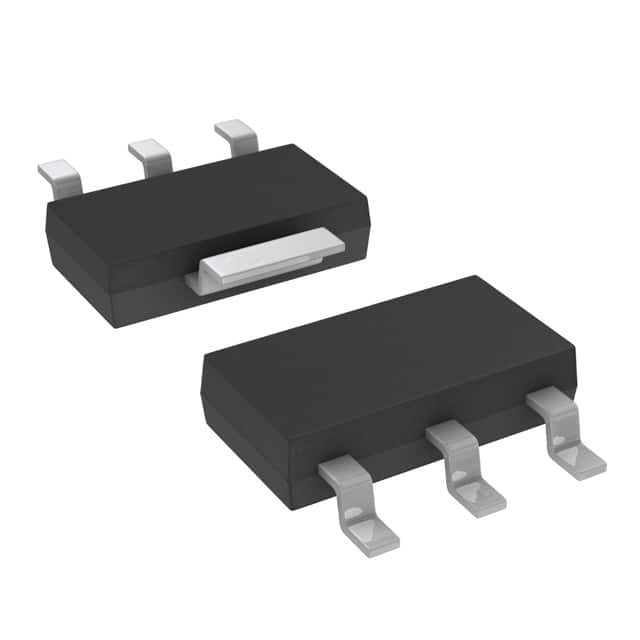
-
TLV1117LV33DCYR
Texas Instruments
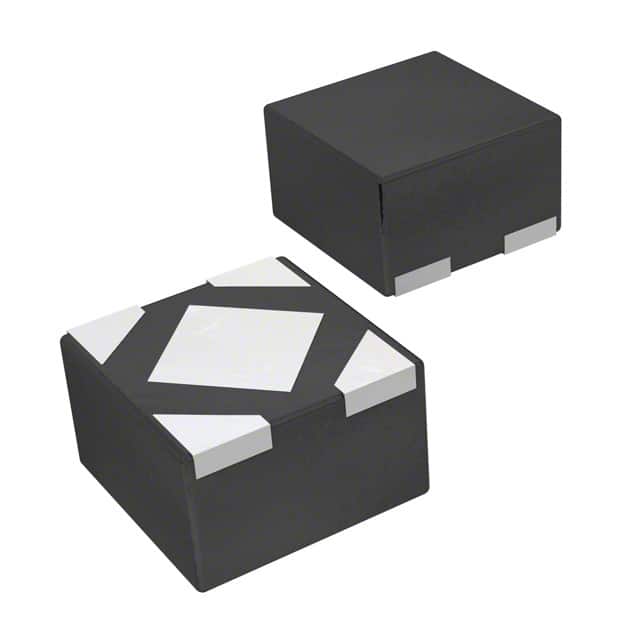
-
MIC5317-3.3YMT-TZ
Microchip Technology
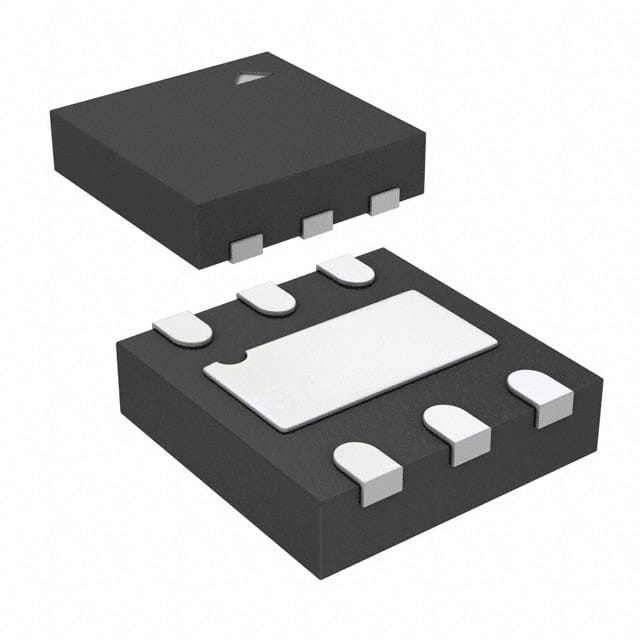
-
MIC5528-3.3YMT-TR
Microchip Technology
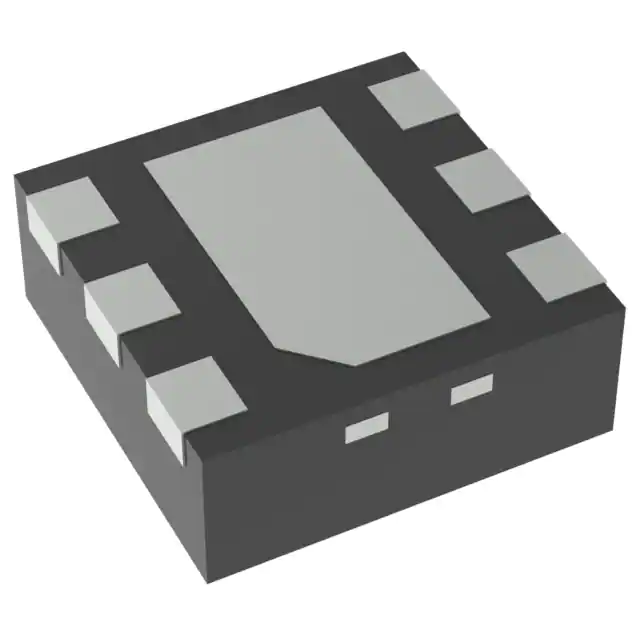
-
TLV75801PDRVR
Texas Instruments
Tech Hub
A D latch stores one bit while Enable controls when data can pass. This reference covers gate-level operation, truth tables, transparency, setup and hold timing, LE versus OE, common ICs and practical …
An SR latch stores one bit through cross-coupled feedback. This engineering reference covers NOR and NAND implementations, truth tables, forbidden-state recovery, gated operation, switch debouncing, fa…

Latch circuits retain one bit through feedback. This technical reference covers SR and D latches, truth tables, transparency, timing limits, latch-versus-flip-flop behavior, applications and common log…

An engineering guide to LED driver operation, constant-current and constant-voltage outputs, linear and switching topologies, dimming, IC selection, calculations, replacement compatibility, and fault c…

Operational amplifier guide covering op amp basics, feedback, ideal vs real op amps, common configurations, buffer circuits, offset, bias current, gain-bandwidth, slew rate, rail-to-rail limits and sel…

Jumper cables guide covering safe connection order, red and black clamp placement, final ground connection, cable gauge, length, clamp quality, copper vs CCA cables, jump starter comparison and battery…

LDO regulator guide covering low dropout voltage, power dissipation, thermal design, PSRR, output noise, capacitor stability, adjustable LDO circuits, LDO vs buck converter and datasheet selection chec…

Conditional Access Module guide covering CAM meaning, CI/CI+ interface, smart card authorization, DVB security workflow, TV and set-top box compatibility, internal electronics, ESD protection, connecto…

Guide to electronic component obsolescence covering EOL risk, PCN/PDN notices, last-time buy planning, replacement options, form-fit-function validation, counterfeit risk and BOM lifecycle management.

18650 battery guide covering lithium-ion cell basics, 3.6V/3.7V voltage, 4.2V charging, mAh and Wh capacity, protected cells, chargers, BMS, series-parallel packs, holders, welding and sourcing checks.…


