
 My Inquiry
 My Account


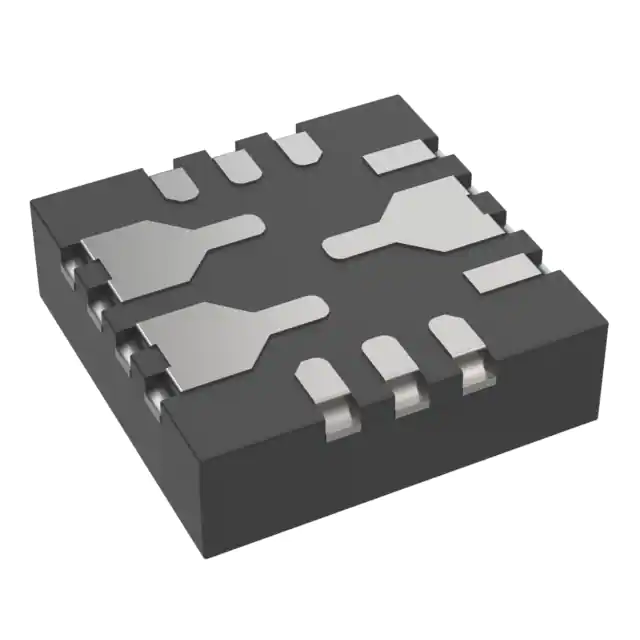
Monolithic Power Systems Inc. MPQ2167AGQE-AEC1-Z
- Part No.:
- MPQ2167AGQE-AEC1-Z
- Manufacturer:
- Monolithic Power Systems Inc.
- Package:
- 14-PowerVFQFN
- Datasheet:
-
 MPQ2167AGQE-AEC1-Z.pdf
- Description:
- IC REG BUCK ADJ 6A 14QFN
- Quantity:
- Payment:

- Shipping:

Inventory:10,666
Please send an inquiry. Send us your inquiry, and we will respond immediately.
Product details
Overview
MPQ2167AGQE-AEC1-Z from Monolithic Power Systems is an AEC-Q100 Grade-1 qualified, frequency-configurable (300kHz–2.2MHz) synchronous buck converter delivering up to 6A continuous output current from a 2.7V–6.0V input, with 0.606V minimum output voltage and integrated 35mΩ/25mΩ MOSFETs. It supports automotive infotainment power rails requiring high efficiency, compact size, and robust protection in -40°C to +125°C environments.
For engineers reviewing the MPQ2167AGQE-AEC1-Z datasheet, MPQ2167AGQE-AEC1-Z pinout, MPQ2167AGQE-AEC1-Z application, or MPQ2167AGQE-AEC1-Z equivalent, this device offers selectable AAM/FCCM operation, external SYNC capability up to 2.2MHz, 42μA quiescent current, cycle-by-cycle OCP with valley detection, and wettable flank QFN-14 packaging for automotive-grade solder joint inspection.
Technical Context
The MPQ2167AGQE-AEC1-Z employs peak-current-mode control with internal compensation, enabling fast transient response without external loop components. Its dual-mode operation-advanced asynchronous mode (AAM) below 0.4V on MODE pin and forced continuous conduction mode (FCCM) above 1.2V-directly governs light-load efficiency versus output ripple trade-offs.
Switching frequency is set via resistor on FREQ/SYNC pin (300kHz–2.2MHz range) or synchronized externally up to 2.2MHz; SYNCO provides 180° out-of-phase clock for multi-phase coordination. Protection architecture includes valley-current OCP, short-circuit recovery, 170°C thermal shutdown with 25°C hysteresis, and ±15% PG window referenced to 0.606V FB threshold.
Key Specifications
| Parameter | Value and Actual Design Meaning |
|---|---|
| Input Voltage Range | 2.7V to 6.0V - Supports wide automotive battery transients including cold-crank (2.7V) and load-dump (6.0V) conditions. |
| Output Current | 6A continuous - Delivers full rated current at TJ ≤ 125°C with QFN-14 package and standard PCB layout. |
| Feedback Voltage | 0.606V ±10mV - Enables precise low-voltage regulation (e.g., 1.2V with 1:1 divider) with <±0.5% line/load regulation. |
| Quiescent Current | 42μA in AAM - Minimizes standby power loss in always-on automotive modules such as telematics wake-up circuits. |
| Switching Frequency | Configurable 300kHz–2.2MHz - Allows optimization of inductor size (e.g., 1μH at 2.1MHz) and EMI profile across applications. |
| Protection Features | OCP (valley detection), SCP, OVP (115% VFB), UVLO (2.5V rising), thermal shutdown (170°C) - Fully autonomous fault handling without host intervention. |
| Package | QFN-14 (3mm × 3mm) with wettable flanks - Enables automated optical inspection (AOI) of solder joints per automotive manufacturing requirements. |
Pinout & Package
MPQ2167AGQE-AEC1-Z is housed in a thermally enhanced, lead-free, wettable flank QFN-14 (3mm × 3mm) package with exposed thermal pad. Pin numbering follows top-view orientation; PGND and IN pins are paired for low-inductance input path routing.
| Pin/Terminal | Circuit Role | Design Meaning |
|---|---|---|
| 1, 2 IN | Power input supply | Primary VIN connection; requires local 10μF ceramic decoupling placed adjacent to pins to suppress switching noise. |
| 3, 4 PGND | Power ground return | Low-impedance return path for high di/dt currents; must connect directly to large copper pour under IC and capacitor negatives. |
| 5 FREQ/SYNC | Frequency configuration & sync input | Resistor-to-GND sets fSW; external clock up to 2.2MHz overrides internal oscillator for synchronized multi-rail systems. |
| 6 AGND | Analog reference ground | Separate ground for feedback, error amp, and bias circuitry; must be star-connected to PGND at single point near FB pin. |
| 7 FB | Output voltage feedback node | Connects to resistor divider tap; monitors VOUT for regulation and enables PG, UVLO, and OVP functions. |
| 8 SS | Soft-start timing control | Capacitor-to-GND sets ramp time; floating enables internal 1ms default-prevents inrush current during power-up. |
| 9, 10 SW | Switch node | Drives external inductor; connects internally to HS/LS MOSFETs; requires tight layout to minimize ringing and EMI. |
| 11 PG | Power good open-drain indicator | Pulled high to VIN when VFB within ±15%; signals stable regulation to MCU or PMIC sequencer with 40–180μs delay. |
| 12 SYNCO | Synchronization output | 180° phase-shifted clock output for interleaving with companion converters-reduces input/output ripple. |
| 13 MODE | Light-load operation mode select | Logic-low → AAM (efficiency-optimized); logic-high → FCCM (fixed-frequency, low-ripple); must not float. |
| 14 EN | Enable control input | Active-high enable with 1.2V threshold; internal 1MΩ pulldown allows direct MCU GPIO control without external resistor. |
Key Features
| Feature | Design Value |
|---|---|
| Integrated Power Stage | 35mΩ high-side + 25mΩ low-side MOSFETs - Eliminates need for external Schottky diode and reduces BOM count while maintaining >90% efficiency at 3A/1.8V. |
| Mode Flexibility | Selectable AAM or FCCM via MODE pin - Enables system-level optimization: AAM for battery runtime extension, FCCM for noise-sensitive ADAS sensors. |
| Robust Protection Suite | Valley-current OCP, auto-recovery thermal shutdown, and 115% VFB overvoltage limit - Prevents latch-up during overload, short-circuit, or thermal stress without external supervision. |
| Automotive-Ready Packaging | Wettable flank QFN-14 - Supports AOI-based solder joint inspection required for IATF 16949-compliant automotive production lines. |
| Internal Compensation | Single-pole, single-zero compensation network embedded - Removes need for external compensation components, reducing layout complexity and board area. |
Applications
| Automotive Infotainment | Automotive Digital Cluster |
|---|---|
|
Use Scenario: Powering SoC core voltage (1.0V–1.2V) and DDR memory rails in head-unit systems with variable processing load. IC Role / Device Role / Timing Role: Primary DC/DC regulator providing tightly regulated, low-noise power with dynamic mode switching between AAM (idle) and FCCM (navigation rendering). Use Value: 42μA quiescent current extends battery life during vehicle-off state; 6A capability supports burst loads from GPU acceleration without rail collapse. |
Use Scenario: Supplying display driver ICs and microcontroller peripherals in digital instrument clusters operating across -40°C to +125°C ambient. IC Role / Device Role / Timing Role: Main 3.3V/5V power source with PG signaling to MCU for safe boot sequencing and fault reporting. Use Value: AEC-Q100 Grade-1 qualification ensures reliability under thermal cycling; PG delay <180μs enables deterministic startup timing for ASIL-B functional safety compliance. |
| Automotive Telematics | Portable Industrial Instruments |
|
Use Scenario: Regulating LTE modem and GNSS receiver power in connected car telematics control units (TCUs) with aggressive size constraints. IC Role / Device Role / Timing Role: Compact, high-frequency (2.2MHz) buck supplying 1.8V/3.3V rails; SYNCO synchronizes with other converters to avoid beat frequencies. Use Value: 2.2MHz operation allows use of 1μH inductors, reducing solution footprint by >40% vs. 500kHz alternatives while maintaining >88% efficiency at 2A. |
Use Scenario: Powering ARM Cortex-M7 microcontrollers and precision ADCs in handheld test equipment requiring stable, low-noise analog supplies. IC Role / Device Role / Timing Role: High-PSRR, low-ripple power stage supporting sensitive analog front-ends; FCCM mode selected for consistent switching frequency during measurement cycles. Use Value: 0.606V FB reference enables accurate 1.2V generation with <±2mV drift over temperature; internal compensation eliminates tuning effort during design validation. |
Equivalent & Alternatives
The following parts are listed as comparable options for similar synchronous buck converter applications.
| Alternative Part | Technical Difference | Application Difference | Selection Advice |
|---|---|---|---|
| TPS6286418ARQYR | Lower IQ (12μA), fixed 2.2MHz, no AAM mode, smaller 1.5mm×2mm DSBGA package | Better suited for ultra-low-power always-on nodes but lacks valley-current OCP and automotive qualification | Choose for space-constrained consumer wearables; avoid for AEC-Q100 systems or where valley-current protection is required. |
| RTQ2134BGQW | AEC-Q100 Grade-1, 4A output, 2.5V–5.5V input, 500kHz–2.2MHz sync range, no wettable flanks | Matches automotive qualification and sync capability but lower current rating limits use in high-performance infotainment SoCs | Acceptable for mid-tier cluster displays; insufficient for 6A SoC core rails or systems requiring AOI-compatible packaging. |
Compared with TPS6286418ARQYR and RTQ2134BGQW, MPQ2167AGQE-AEC1-Z uniquely combines 6A current, AEC-Q100 Grade-1, wettable flank QFN, and valley-current OCP-making it the only option qualified for high-current, safety-critical automotive power rails requiring both robustness and manufacturability assurance.
Availability
MPQ2167AGQE-AEC1-Z is available at Aetrix Electronics and suitable for automotive infotainment, digital instrument clusters, and telematics control units requiring stable component supply with full AEC-Q100 traceability and long-term lifecycle support.
Supply support for MPQ2167AGQE-AEC1-Z includes scheduled delivery planning, volume procurement assistance, BOM continuity management, traceable sourcing, and lifecycle availability coordination for OEM customers, industrial embedded developers, connected-device designers, and electronics production programs.
Manufacturer
Monolithic Power Systems (MPS) is a fabless semiconductor company specializing in high-performance power management ICs, with over two decades of innovation in DC/DC conversion, motor drivers, and LED lighting controllers.
The MPQ2167A product line targets automotive power delivery systems requiring AEC-Q100 qualification, high efficiency at light load, and compact solution size-designed specifically for infotainment, cluster, and telematics subsystems operating across extended temperature ranges.
FAQ
What is the maximum allowable input voltage for MPQ2167AGQE-AEC1-Z?
The absolute maximum input voltage is +6.5V, but the recommended operating range is 2.7V to 6.0V. Operation beyond 6.0V risks exceeding internal MOSFET breakdown limits and may trigger permanent damage even if within absolute max ratings. Automotive cold-crank (2.7V) and nominal battery (12V/48V-derived 5V rails) fall safely within spec.
How does the MODE pin affect efficiency and output ripple?
When MODE is pulled low (<0.4V), the device enters Advanced Asynchronous Mode (AAM), reducing switching frequency under light load to cut gate and switching losses-boosting efficiency but increasing output ripple. When MODE is pulled high (>1.2V), Forced Continuous Conduction Mode (FCCM) maintains fixed frequency, minimizing ripple at the cost of higher light-load quiescent loss.
Can MPQ2167AGQE-AEC1-Z synchronize to an external clock above 2.2MHz?
No-the SYNC input accepts external clocks only within 0.3MHz to 2.2MHz. Attempting synchronization outside this range causes unpredictable behavior, including skipped cycles or failure to lock. The internal oscillator's upper limit is also 2.2MHz, so no operational benefit exists beyond this frequency.
Is the PG signal compatible with 1.8V logic interfaces?
Yes-PG is an open-drain output with internal pull-up to VIN. When VIN = 5V, PG pulls up to ~4.5V; when VIN = 3.3V, it reaches ~2.8V. For 1.8V logic, add an external pull-down resistor (e.g., 10kΩ) and level-shifter or use a logic buffer with 3.3V-tolerant inputs to ensure clean recognition of the PG high state.
Does the device require external compensation components?
No-MPQ2167AGQE-AEC1-Z features fully internal compensation with a single-pole, single-zero network optimized for stability with standard 1μH–4.7μH inductors and 22μF–47μF output capacitors. Adding external compensation will destabilize the loop and is neither recommended nor supported.
What thermal derating applies at 125°C ambient?
At TA = 125°C, the maximum continuous output current drops to approximately 3.2A due to junction temperature limits (TJ ≤ 150°C) and θJA = 60°C/W. Derating curves in the datasheet show linear reduction from 6A at 25°C ambient; PCB copper area and airflow significantly impact actual performance.
How is short-circuit protection implemented and recovered?
SCP triggers when valley current exceeds 7A for >100μs, forcing immediate shutdown. Recovery is automatic after thermal cooldown and removal of fault-no external reset needed. PG goes low during SCP and returns high only after VFB re-stabilizes within ±15%, ensuring safe re-engagement.
MPQ2167AGQE-AEC1-Z Specifications
- Product attributes
- Attribute value
- Manufacturer:
- Monolithic Power Systems Inc.
- Series:
- MPQ
- Package/Case:
- 14-PowerVFQFN
- Packaging:
- Tape & Reel (TR)
- Product Status:
- Active
- Function:
- Step-Down
- Output Configuration:
- Positive
- Topology:
- Buck
- Output Type:
- Adjustable
- Number of Outputs:
- 1
- Voltage - Input (Min):
- 2.7V
- Voltage - Input (Max):
- 6V
- Voltage - Output (Min/Fixed):
- 0.606V
- Voltage - Output (Max):
- 6V
- Current - Output:
- 6A
- Frequency - Switching:
- 450kHz ~ 2.1MHz
- Synchronous Rectifier:
- Yes
- Operating Temperature:
- -40°C ~ 125°C (TJ)
- Grade:
- Automotive
- Qualification:
- AEC-Q100
- Mounting Type:
- Surface Mount, Wettable Flank
- Supplier Device Package:
- 14-QFN (3x3)
MPQ2167AGQE-AEC1-Z FAQ
1.How can I place an order for MPQ2167AGQE-AEC1-Z through Aetrix?
Please submit a Request for Quotation (RFQ) for MPQ2167AGQE-AEC1-Z on Aetrix. Our sales agent will provide a competitive quotation and guide you through the order confirmation once you accept the terms.
2.Are the price and stock information for MPQ2167AGQE-AEC1-Z reliable?
The price and inventory of MPQ2167AGQE-AEC1-Z are updated periodically and may fluctuate due to market conditions. Stock and pricing data are typically refreshed every 24 hours. Quotation validity for MPQ2167AGQE-AEC1-Z is usually 5 days.
3.What payment methods are accepted for MPQ2167AGQE-AEC1-Z?
We accept Wire Transfer, PayPal, Credit Card, Western Union, MoneyGram, and Escrow for MPQ2167AGQE-AEC1-Z transactions.
Note: Certain payment methods may incur a processing fee.
4.How is shipping managed for MPQ2167AGQE-AEC1-Z?
MPQ2167AGQE-AEC1-Z orders can be shipped via leading logistics carriers, including DHL, UPS, FedEx, TNT, or Registered Mail.
Once your MPQ2167AGQE-AEC1-Z order is processed, you will receive an email with the shipment details and tracking number.
Note: Tracking information may take up to 24 hours to appear. Express delivery typically takes 3–5 business days.
5.How can I obtain technical support or documentation for MPQ2167AGQE-AEC1-Z?
For technical support, including MPQ2167AGQE-AEC1-Z datasheets, pinout diagrams, or application guidance, please contact our engineering support team. They can provide detailed documentation and assistance for your MPQ2167AGQE-AEC1-Z requirements.
6.How does Aetrix verify that MPQ2167AGQE-AEC1-Z is sourced from the original manufacturer or authorized distributors?
All MPQ2167AGQE-AEC1-Z products on Aetrix are procured from qualified distributors and authorized channels. Our dedicated quality assurance team conducts strict verification, including traceability checks and, if necessary, third-party testing. This ensures that MPQ2167AGQE-AEC1-Z meets industry standards.
7.What is the process for return or replacement of MPQ2167AGQE-AEC1-Z?
All MPQ2167AGQE-AEC1-Z units undergo pre-shipment inspection (PSI). If there is an issue with MPQ2167AGQE-AEC1-Z, returns or replacements are accepted under the following conditions:
1.Quantity discrepancies, incorrect items, or visible external defects (such as breakage or corrosion), acknowledged by Aetrix.
2.The issue is reported within 90 days of delivery.
3.The MPQ2167AGQE-AEC1-Z part is unused and in its original packaging.
Return procedure for MPQ2167AGQE-AEC1-Z:
1.Submit a request within 90 days.
2.Obtain a Return Material Authorization (RMA) from Aetrix.
MPQ2167AGQE-AEC1-Z Tags
-
TPS562201DDCR
Texas Instruments

-
MC34063ABD-TR
STMicroelectronics
-
TPS561201DDCR
Texas Instruments

-
MC33063ADR
Texas Instruments
-
MC34063ADR
Texas Instruments

-
TPS560200DBVR
Texas Instruments
-
AP3012KTR-G1
Diodes Incorporated
-
TLV61048DBVR
Texas Instruments
-
AZ34063UMTR-G1
Diodes Incorporated
-
TPS562200DDCR
Texas Instruments
-
AP62300TWU-7
Diodes Incorporated
-
MC34063EBD-TR
STMicroelectronics
Tech Hub

A practical engineering guide to 3.3V and 5V logic compatibility, input thresholds, resistor dividers, translator ICs, MOSFET level shifting, I2C pull-ups, timing limits and power-sequencing risks.

The 74HC595 uses push-pull logic outputs, while the TPIC6B595 uses 50 V open-drain DMOS sinks for higher-power loads. This guide compares timing, current limits, 3.3 V interfacing, load wiring, thermal…

The 74HC595 converts serial data into eight stable parallel outputs. This guide covers pin functions, shift and storage timing, OE and MR behavior, drive-current limits, cascading, voltage compatibilit…

A technical comparison of level-sensitive latches and edge-triggered flip-flops, covering timing windows, setup and hold limits, master–slave operation, time borrowing, race-through, HDL inference and…

A D latch stores one bit while Enable controls when data can pass. This reference covers gate-level operation, truth tables, transparency, setup and hold timing, LE versus OE, common ICs and practical …

An SR latch stores one bit through cross-coupled feedback. This engineering reference covers NOR and NAND implementations, truth tables, forbidden-state recovery, gated operation, switch debouncing, fa…

Latch circuits retain one bit through feedback. This technical reference covers SR and D latches, truth tables, transparency, timing limits, latch-versus-flip-flop behavior, applications and common log…

An engineering guide to LED driver operation, constant-current and constant-voltage outputs, linear and switching topologies, dimming, IC selection, calculations, replacement compatibility, and fault c…

Operational amplifier guide covering op amp basics, feedback, ideal vs real op amps, common configurations, buffer circuits, offset, bias current, gain-bandwidth, slew rate, rail-to-rail limits and sel…

Jumper cables guide covering safe connection order, red and black clamp placement, final ground connection, cable gauge, length, clamp quality, copper vs CCA cables, jump starter comparison and battery…


