
 My Inquiry
 My Account


Monolithic Power Systems Inc. MPQ2483ADS-LF-P

- Part No.:
- MPQ2483ADS-LF-P
- Manufacturer:
- Monolithic Power Systems Inc.
- Category:
- LED Drivers
- Package:
- 14-SOIC (0.154", 3.90mm Width)
- Datasheet:
-
 MPQ2483ADS-LF-P.pdf
- Description:
- INDUSTRIAL GRADE, 2.5A/55V PROG
- Quantity:
- Payment:

- Shipping:

Inventory:3,870
Please send an inquiry. Send us your inquiry, and we will respond immediately.
Product details
Overview
MPQ2483ADS-LF-P from Monolithic Power Systems is an AEC-Q100-qualified, industrial-grade 55V, 2.5A peak-current LED driver supporting buck and inverting buck-boost topologies. It integrates analog/PWM dimming on a single EN/DIM pin, features 0.198V feedback reference, 0.28Ω internal MOSFET, and full protection including OVP, SCP, open-string detection, and thermal shutdown - deployed in automotive headlamps and LCD backlighting.
For engineers reviewing the MPQ2483ADS-LF-P datasheet, MPQ2483ADS-LF-P pinout, MPQ2483ADS-LF-P application, or MPQ2483ADS-LF-P equivalent, key selection criteria include input voltage range (4.5–55V), programmable switching frequency (250kHz–1.7MHz via RSET), dual dimming interface, and SOIC-14 package thermal performance (θJA = 86°C/W).
Technical Context
The MPQ2483ADS-LF-P operates in current-mode control with cycle-by-cycle peak current limiting and slope compensation for stable loop response across wide duty cycles. Its error amplifier regulates LED current by comparing FB voltage against a precise 0.198V reference, while COMP pin supports soft-start and PWM dimming via external capacitor coupling.
It implements dual protection logic: OVP threshold is set externally via resistor divider (0.4–1.2V at OVP pin), and short-circuit detection triggers frequency foldback when OVP < 0.4V and FB < 0.1V. The separate INGND reference enables robust enable/dimming control in negative-output configurations.
Key Specifications
| Parameter | Value and Actual Design Meaning |
|---|---|
| Input Voltage Range | 4.5V to 55V - supports 12V/24V/48V automotive and industrial rails without pre-regulation |
| Peak Switch Current | 2.5A - enables direct drive of high-brightness LED strings up to ~2A average current |
| Feedback Reference | 0.198V ±3% - sets LED current with 0.1% tolerance per 1% sense resistor accuracy |
| Internal MOSFET RDS(on) | 0.28Ω - reduces conduction loss and thermal stress in SOIC-14 package at 2A load |
| Switching Frequency Range | 250kHz to 1.7MHz - adjustable via RSET; default 1.35MHz when open for compact magnetics |
| Dimming Interface | Single EN/DIM pin - 0.7–1.4V analog dimming or 100Hz–2kHz PWM with >1.4V amplitude |
| Protection Features | OVP, SCP, open-string, thermal shutdown, cycle-by-cycle OCP - eliminates need for external fault monitoring circuitry |
Pinout & Package
MPQ2483ADS-LF-P is housed in a 14-pin SOIC package (3.9mm × 8.7mm) with exposed pad not present; thermal resistance θJA = 86°C/W on 4-layer PCB. Pin functions are validated per MPS datasheet Rev. 1.01 (2016).
| Pin/Terminal | Circuit Role | Design Meaning |
|---|---|---|
| VDD (Pin 1) | Power supply input | Accepts 4.5–55V unregulated input; requires local 4.7µF ceramic bypass to VSS |
| VSS (Pin 2) | Power return reference | Ground reference for regulated output and switch node; connects to Schottky anode |
| OVP (Pin 3) | Over-voltage protection input | External resistor divider sets shutdown threshold (0.4–1.2V); detects open LED or overvoltage |
| FB (Pin 4) | Current-sense feedback | Regulates voltage across sense resistor to 0.198V; determines LED current magnitude |
| COMP (Pin 5) | Error amplifier output | Connect 1nF+ capacitor for loop stability, soft-start, and PWM dimming filtering |
| RSET (Pin 6) | Frequency programming | Resistor to VSS sets fSW; 124kΩ yields 0.31–0.51MHz; open = 1.35MHz default |
| EN/DIM (Pin 7) | Enable and dimming control | 0.6V turn-on threshold; 0.7–1.4V analog dimming range; >1.4V for PWM |
| INGND (Pin 8) | Input ground reference | Reference for EN/DIM signal; isolated from VSS to support negative-output topologies |
| BST (Pin 9) | Bootstrap supply | Connect 100nF ceramic between BST and SW to gate-drive internal high-side MOSFET |
| SW (Pin 10) | Switch node output | Drives external inductor and Schottky rectifier cathode; carries high di/dt current |
| NC (Pins 11–14) | No connection | Not internally bonded; must remain unconnected per datasheet layout guidelines |
Key Features
| Feature | Design Value |
|---|---|
| Buck or inverting buck-boost topology support | Enables both step-down and negative-output LED drivers without external controller rework |
| Integrated 0.28Ω MOSFET switch | Eliminates external high-current switch and associated gate-drive complexity |
| Analog + PWM dimming on single pin | Reduces system BOM count and PCB routing vs. dual-control solutions |
| AEC-Q100 Grade 1 qualification | Validated for automotive ambient temperature range (−40°C to +125°C junction) |
| Stable with low-ESR ceramic capacitors | Permits use of compact, reliable X5R/X7R MLCCs instead of bulkier electrolytics |
Applications
| Automotive Headlamp Control | LCD Backlight Driver |
|---|---|
Use Scenario: High-intensity LED headlamps in passenger vehicles requiring adaptive beam shaping and thermal derating. IC Role / Device Role / Timing Role: Constant-current LED driver with analog dimming for low-speed cornering lamps and PWM dimming for dynamic DRL modulation. Use Value: 55V input rating handles load-dump transients; AEC-Q100 qualification ensures reliability under automotive vibration and temperature cycling. | Use Scenario: Edge-lit LCD panels in infotainment displays and instrument clusters. IC Role / Device Role / Timing Role: Buck-mode current regulator powering 4–8 series-connected white LEDs with uniform brightness control. Use Value: 0.198V reference enables tight current matching across LED strings; 1.35MHz default frequency allows miniature 2.2µH inductors. |
| Industrial Status Lighting | Truck & Bus Marker Lights |
Use Scenario: DIN-rail mounted control panels with multi-color status indicators using high-brightness LEDs. IC Role / Device Role / Timing Role: Programmable-frequency buck driver enabling EMI optimization during system-level compliance testing. Use Value: RSET-adjustable switching frequency avoids critical noise bands; SOIC-14 package simplifies through-hole assembly for ruggedized enclosures. | Use Scenario: Red/amber marker and clearance lights on commercial vehicles operating from 24V battery systems. IC Role / Device Role / Timing Role: Inverting buck-boost LED driver delivering negative output for common-anode LED arrays. Use Value: Separate INGND reference enables safe dimming control referenced to vehicle chassis; 55V rating covers ISO 16750-2 pulse 4a (load dump). |
Equivalent & Alternatives
The following parts are listed as comparable options for similar LED driver applications.
| Alternative Part | Technical Difference | Application Difference | Selection Advice |
|---|---|---|---|
| MPQ2483ADQ-LF-Z | QFN-10 (3×3mm) package; θJA = 50°C/W; supports higher power density but requires PCB thermal vias | Better suited for space-constrained automotive modules where board area is limited | Select for compact designs needing lower thermal resistance; verify layout compatibility with exposed pad grounding |
| MPQ4425AGU-AEC1-P | 40V max input; 2.5A peak; integrated current sense; no RSET pin; fixed 2.2MHz fSW | Targeted at lower-voltage interior lighting; lacks programmable frequency and OVP flexibility | Choose when 40V input ceiling is acceptable and high-frequency operation is preferred for ultra-small magnetics |
Compared with MPQ2483ADS-LF-P, the QFN variant offers superior thermal performance in minimal footprint, while MPQ4425AGU-AEC1-P trades input voltage headroom and frequency flexibility for integration simplicity and higher base switching frequency.
Availability
MPQ2483ADS-LF-P is available at Aetrix Electronics and suitable for automotive lighting, LCD backlighting, and industrial status indication requiring stable component supply across extended temperature ranges and long production lifecycles.
Supply support for MPQ2483ADS-LF-P includes scheduled delivery planning, volume procurement assistance, BOM continuity management, traceable sourcing, and lifecycle availability coordination for OEM customers, industrial embedded developers, connected-device designers, and electronics production programs.
Manufacturer
Monolithic Power Systems (MPS) is a fabless semiconductor company specializing in high-performance analog and power ICs, with design centers in the US, China, and Taiwan.
The MPQ2483A product line delivers robust, AEC-Q100-qualified LED drivers for harsh-environment applications including automotive exterior lighting and industrial panel illumination, emphasizing wide input range, integrated protection, and topology flexibility.
FAQ
What is the maximum recommended LED string current for MPQ2483ADS-LF-P in continuous operation?
The device supports up to 2A average LED current in buck mode with ≤35% duty cycle; above that, thermal limits in the SOIC-14 package require derating. Peak switch current remains 2.5A, but sustained 2A loads demand careful PCB copper area and airflow management per the 86°C/W θJA spec.
Can MPQ2483ADS-LF-P operate in boost-only configuration?
No - the MPQ2483A supports only buck and inverting buck-boost (step-up/down) topologies, not standard boost. Its internal architecture ties the SW node to the inductor and Schottky cathode, and VSS serves as the output reference, making non-inverting boost incompatible without external level-shifting circuitry.
How does open-string protection function without external components?
When the LED string opens, FB voltage drops near 0V. The controller increases duty cycle until the OVP pin voltage (set by external resistor divider) reaches 1.2V, triggering shutdown. Recovery occurs automatically once OVP falls below hysteresis threshold (1.14V), enabling self-resetting fault handling without microcontroller intervention.
Is the EN/DIM pin compatible with 3.3V logic microcontrollers?
Yes - EN/DIM accepts 0–6V input with respect to INGND. A 3.3V GPIO can directly drive analog dimming (0.7–1.4V range) using a resistive divider or PWM dimming (≥1.4V amplitude). No level-shifter is needed, though INGND must be tied to the MCU ground if sharing reference.
What is the minimum recommended RSET resistor value and its impact on stability?
MPS specifies 20kΩ as the lower limit for RSET. Using <20kΩ risks excessive switching frequency (>2MHz), which may degrade efficiency due to increased gate charge loss and reduce loop phase margin. Stability is maintained via COMP capacitor tuning, but frequencies beyond 1.7MHz are not characterized for SOIC-14 thermal performance.
Does MPQ2483ADS-LF-P support synchronous rectification?
No - the device drives an external Schottky diode (D1) and does not provide a second gate drive output. Synchronous rectification would require replacing D1 with an N-channel MOSFET and adding external timing control to avoid shoot-through, which is outside the MPQ2483A's architecture.
How is thermal shutdown behavior implemented during overload conditions?
Thermal shutdown activates at 150°C junction temperature, halting switching and holding EN/DIM inactive until die temperature falls by ≥20°C hysteresis. During shutdown, quiescent current drops to ≤20μA, and the device resumes normal operation automatically without external reset - verified per AEC-Q100 transient thermal stress testing.
MPQ2483ADS-LF-P Specifications
- Product attributes
- Attribute value
- Manufacturer:
- Monolithic Power Systems Inc.
- Series:
- MPQ
- Package/Case:
- 14-SOIC (0.154", 3.90mm Width)
- Packaging:
- Tape & Reel (TR)
- Product Status:
- Active
- Type:
- DC DC Regulator
- Topology:
- Step-Down (Buck), Step-Up (Boost)
- Internal Switch(s):
- Yes
- Number of Outputs:
- 1
- Voltage - Supply (Min):
- 4.5V
- Voltage - Supply (Max):
- 55V
- Voltage - Output:
- -
- Current - Output / Channel:
- -
- Frequency:
- 250kHz ~ 1.35MHz
- Dimming:
- Analog, PWM
- Applications:
- Lighting
- Operating Temperature:
- -40°C ~ 125°C (TJ)
- Grade:
- Automotive
- Qualification:
- AEC-Q100
- Mounting Type:
- Surface Mount
- Supplier Device Package:
- 14-SOIC
MPQ2483ADS-LF-P FAQ
1.How can I place an order for MPQ2483ADS-LF-P through Aetrix?
Please submit a Request for Quotation (RFQ) for MPQ2483ADS-LF-P on Aetrix. Our sales agent will provide a competitive quotation and guide you through the order confirmation once you accept the terms.
2.Are the price and stock information for MPQ2483ADS-LF-P reliable?
The price and inventory of MPQ2483ADS-LF-P are updated periodically and may fluctuate due to market conditions. Stock and pricing data are typically refreshed every 24 hours. Quotation validity for MPQ2483ADS-LF-P is usually 5 days.
3.What payment methods are accepted for MPQ2483ADS-LF-P?
We accept Wire Transfer, PayPal, Credit Card, Western Union, MoneyGram, and Escrow for MPQ2483ADS-LF-P transactions.
Note: Certain payment methods may incur a processing fee.
4.How is shipping managed for MPQ2483ADS-LF-P?
MPQ2483ADS-LF-P orders can be shipped via leading logistics carriers, including DHL, UPS, FedEx, TNT, or Registered Mail.
Once your MPQ2483ADS-LF-P order is processed, you will receive an email with the shipment details and tracking number.
Note: Tracking information may take up to 24 hours to appear. Express delivery typically takes 3–5 business days.
5.How can I obtain technical support or documentation for MPQ2483ADS-LF-P?
For technical support, including MPQ2483ADS-LF-P datasheets, pinout diagrams, or application guidance, please contact our engineering support team. They can provide detailed documentation and assistance for your MPQ2483ADS-LF-P requirements.
6.How does Aetrix verify that MPQ2483ADS-LF-P is sourced from the original manufacturer or authorized distributors?
All MPQ2483ADS-LF-P products on Aetrix are procured from qualified distributors and authorized channels. Our dedicated quality assurance team conducts strict verification, including traceability checks and, if necessary, third-party testing. This ensures that MPQ2483ADS-LF-P meets industry standards.
7.What is the process for return or replacement of MPQ2483ADS-LF-P?
All MPQ2483ADS-LF-P units undergo pre-shipment inspection (PSI). If there is an issue with MPQ2483ADS-LF-P, returns or replacements are accepted under the following conditions:
1.Quantity discrepancies, incorrect items, or visible external defects (such as breakage or corrosion), acknowledged by Aetrix.
2.The issue is reported within 90 days of delivery.
3.The MPQ2483ADS-LF-P part is unused and in its original packaging.
Return procedure for MPQ2483ADS-LF-P:
1.Submit a request within 90 days.
2.Obtain a Return Material Authorization (RMA) from Aetrix.
MPQ2483ADS-LF-P Tags
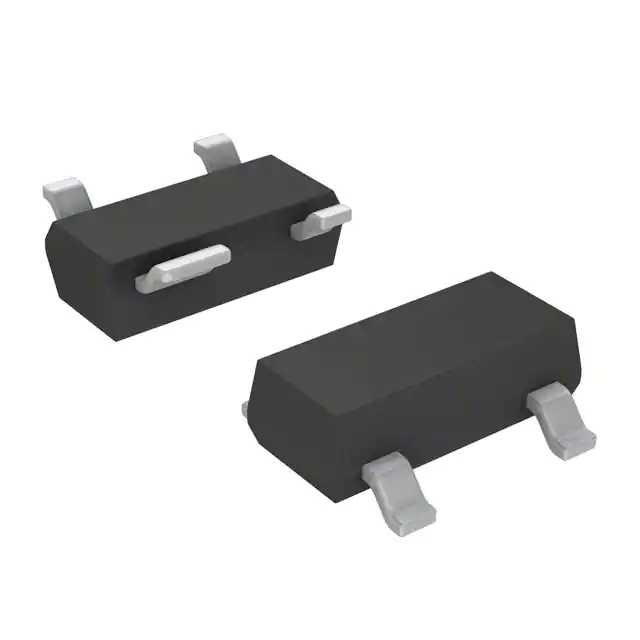
-
BCR402RE6327HTSA1
Infineon Technologies

-
BCR430UXTSA2
Infineon Technologies
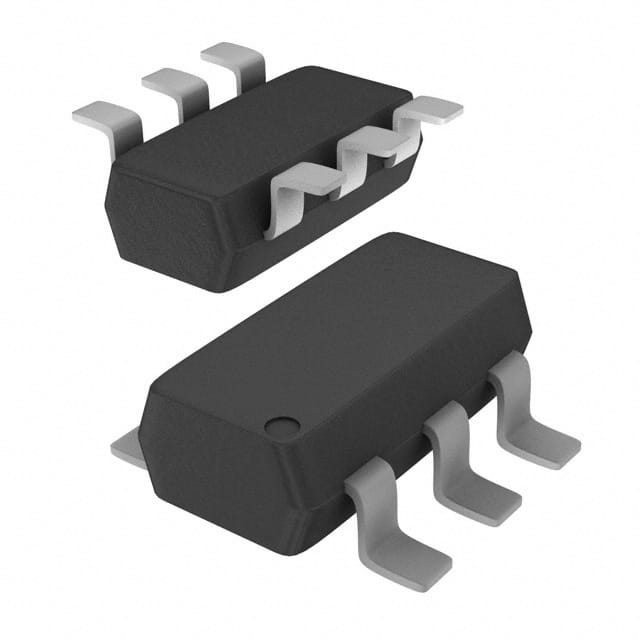
-
BCR420UE6433HTMA1
Infineon Technologies
-
BCR420UE6327HTSA1
Infineon Technologies
-
BCR421UE6327HTSA1
Infineon Technologies
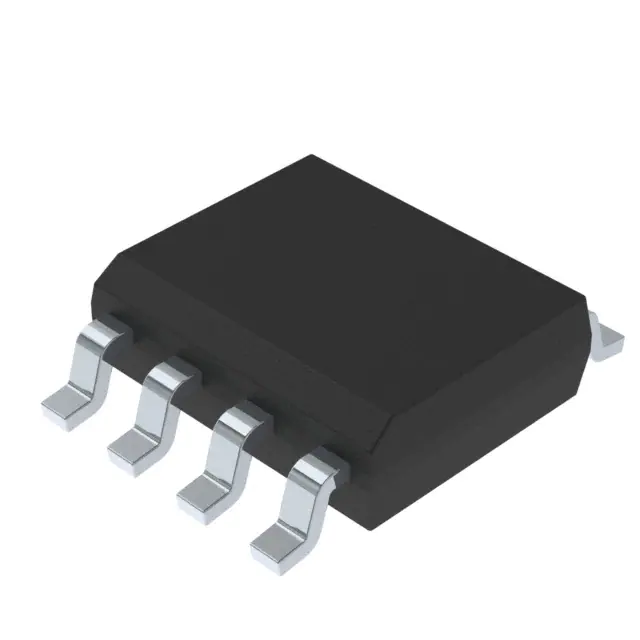
-
LYT1604D-TL
Power Integrations

-
HV9910CLG-G
Microchip Technology
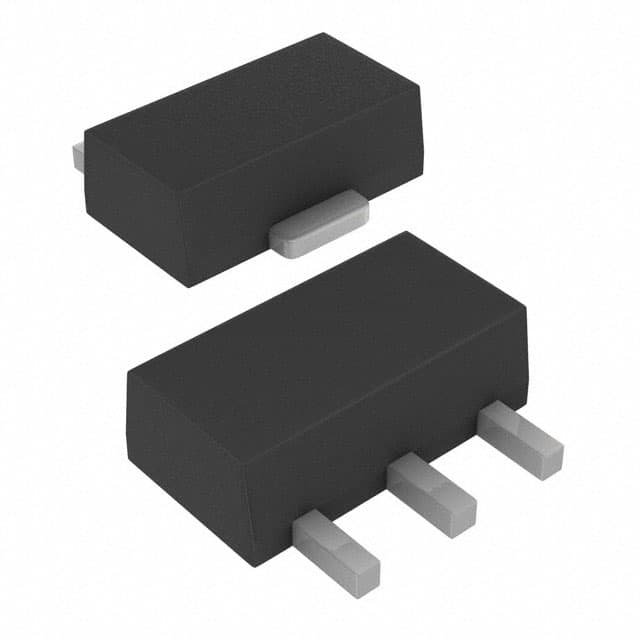
-
CL2N8-G
Microchip Technology
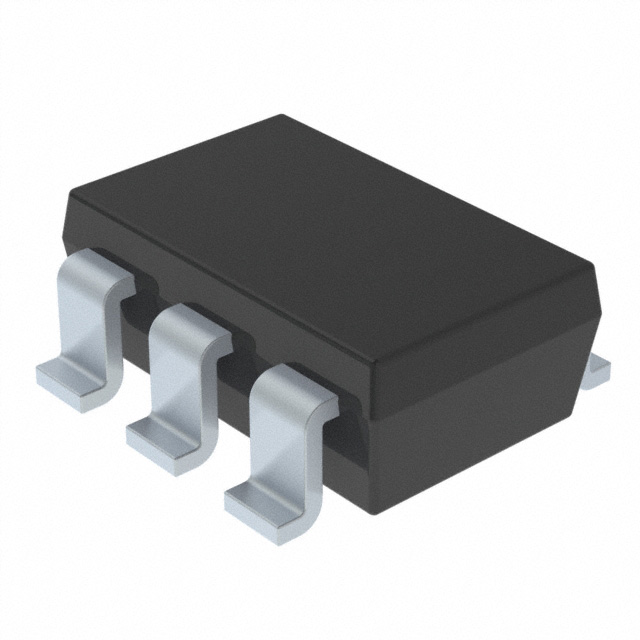
-
BCR420UW6-7
Diodes Incorporated
-
BCR421UW6-7
Diodes Incorporated
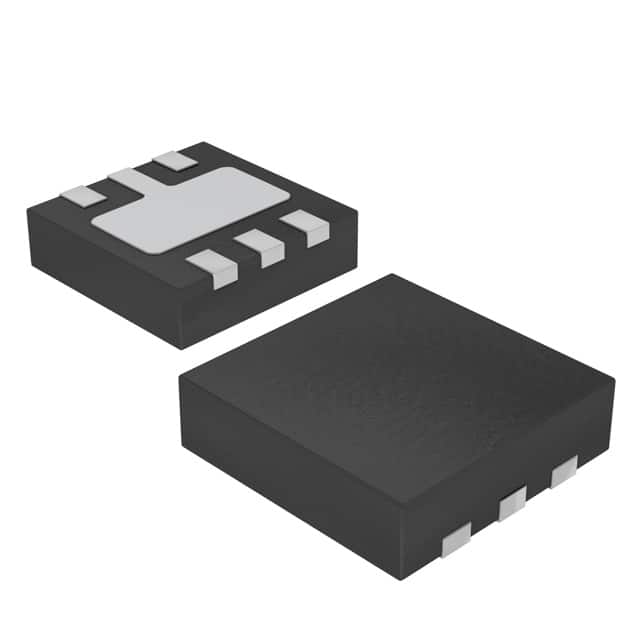
-
BCR420UFD-7
Diodes Incorporated
-
BCR421UFD-7
Diodes Incorporated
Tech Hub

Operational amplifier guide covering op amp basics, feedback, ideal vs real op amps, common configurations, buffer circuits, offset, bias current, gain-bandwidth, slew rate, rail-to-rail limits and sel…

Jumper cables guide covering safe connection order, red and black clamp placement, final ground connection, cable gauge, length, clamp quality, copper vs CCA cables, jump starter comparison and battery…

LDO regulator guide covering low dropout voltage, power dissipation, thermal design, PSRR, output noise, capacitor stability, adjustable LDO circuits, LDO vs buck converter and datasheet selection chec…

Conditional Access Module guide covering CAM meaning, CI/CI+ interface, smart card authorization, DVB security workflow, TV and set-top box compatibility, internal electronics, ESD protection, connecto…

Guide to electronic component obsolescence covering EOL risk, PCN/PDN notices, last-time buy planning, replacement options, form-fit-function validation, counterfeit risk and BOM lifecycle management.

18650 battery guide covering lithium-ion cell basics, 3.6V/3.7V voltage, 4.2V charging, mAh and Wh capacity, protected cells, chargers, BMS, series-parallel packs, holders, welding and sourcing checks.…

Hall effect sensor guide covering working principle, linear and digital sensors, Arduino circuits, current sensing, speed detection, automotive applications, A3144 examples, signal filtering and datash…

Product Change Notification guide for electronic components, covering PCN meaning, PCN vs PDN/EOL, common change types, risk levels, form-fit-function review, engineering validation, BOM control, LTB/L…

A practical guide to blend door actuators, covering HVAC function, symptoms, location, AC and heater issues, reset and calibration, replacement cost, electrical diagnosis, compatibility checks, and rep…

Engineering guide to Raspberry Pi alternatives, covering chip-level differences, Orange Pi, ROCK, Jetson, Banana Pi, NanoPi, Compute Module, Pico, GPIO, camera, HAT compatibility, and replacement risks…


