
 My Inquiry
 My Account


Monolithic Power Systems Inc. MPQ3326AGRE-AEC1-P

- Part No.:
- MPQ3326AGRE-AEC1-P
- Manufacturer:
- Monolithic Power Systems Inc.
- Category:
- LED Drivers
- Package:
- 24-VFQFN
- Datasheet:
-
 MPQ3326AGRE-AEC1-P.pdf
- Description:
- 16-CHANNEL, 80MA/CH, LED DRIVER
- Quantity:
- Payment:

- Shipping:

Inventory:463
Please send an inquiry. Send us your inquiry, and we will respond immediately.
Product details
Overview
MPQ3326AGRE-AEC1-P from Monolithic Power Systems is a 16-channel AEC-Q100 Grade 1 LED driver IC for automotive lighting and instrument clusters, delivering up to 80mA per channel with independent 12-bit PWM and 6-bit analog dimming, I²C-configurable addresses (10 options), and integrated LED open/short/thermal protection. It operates from 4.5V–16V input and supports synchronized refresh signaling for LCD backlight timing.
For engineers reviewing the MPQ3326AGRE-AEC1-P datasheet, MPQ3326AGRE-AEC1-P pinout, MPQ3326AGRE-AEC1-P application, or MPQ3326AGRE-AEC1-P equivalent, this page delivers verified electrical parameters, QFN-24 wettable flank package details, fault-handling behavior, dimming resolution trade-offs, and automotive-grade thermal performance metrics required for functional safety-compliant display subsystem design.
Technical Context
The MPQ3326AGRE-AEC1-P integrates sixteen matched current sinks with programmable headroom (200–400mV at 50–80mA), enabling precise per-channel LED current regulation without external FETs. Its dual-dimming architecture decouples amplitude control (6-bit analog) from duty-cycle control (12-bit PWM), allowing simultaneous fine-grained brightness and flicker-free modulation.
It implements configurable phase-shifted PWM edges (40μs inter-channel delay), slew-rate-controlled current transitions (5/10/20μs options), and a dedicated RFSH/FLT pin that toggles between synchronized refresh output (fREFRESH = 127.5kHz / FRFSH × fPWM) and active-low fault indication-enabling real-time diagnostics without interrupting display timing.
Key Specifications
| Parameter | Value and Actual Design Meaning |
|---|---|
| Input Voltage Range | 4.5V to 16V - Supports direct connection to automotive battery rails (9–16V nominal) with UVLO hysteresis (3.3V–4.2V). |
| Max Output Current/Ch | 80mA - Configured via external ISET resistor (e.g., 15kΩ yields 80mA ±5%); enables high-brightness RGB or white LED strings. |
| PWM Dimming Resolution | 12-bit (4096 steps) - Enables smooth, low-frequency (<1Hz) brightness ramping without visible stepping in instrument clusters. |
| Analog Dimming Resolution | 6-bit (64 steps) - Provides coarse current scaling for power optimization while preserving PWM timing integrity. |
| PWM Frequency Options | 220/250/280/330Hz - Selectable via FPWM[1:0]; 250Hz default avoids audible noise and matches common LCD refresh harmonics. |
| Thermal Shutdown Threshold | 170°C with 20°C hysteresis - Ensures fail-safe shutdown during sustained overloads; recovery occurs only after die cools to ~150°C. |
| I²C Address Options | 10 unique addresses (0x30–0x39) - Set by RADDR/RISET ratio; allows daisy-chaining up to 10 ICs on one bus for large-area displays. |
Pinout & Package
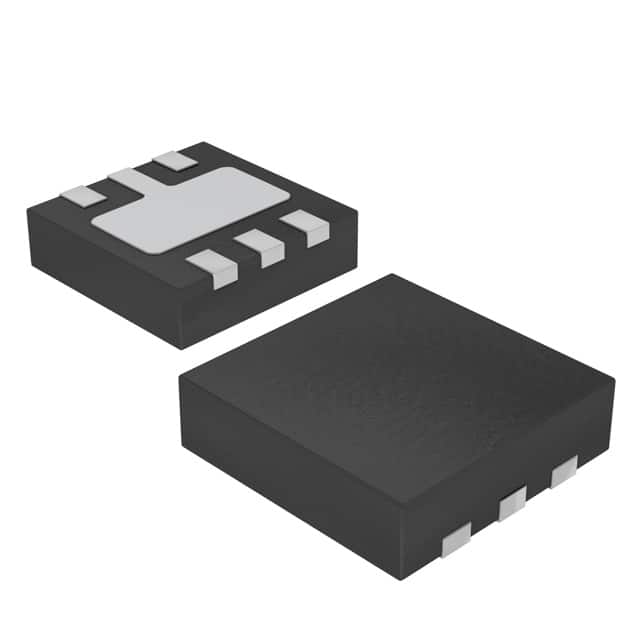
MPQ3326AGRE-AEC1-P uses a wettable flank QFN-24 (4mm × 4mm) package optimized for automated optical inspection (AOI) and solder joint reliability in automotive PCB assemblies.
| Pin/Terminal | Circuit Role | Design Meaning |
|---|---|---|
| 1 RFSH/FLT | Refresh signal output / Fault flag | Open-drain output: drives low on any fault (LED open/short, OTP); outputs configurable rectangular refresh signal when FLTEN=0. |
| 2 EN | Global enable input | Active-high logic: must exceed 2.1V to activate device; internal 1MΩ pull-down ensures safe default-off state. |
| 3 SCL / 4 SDA | I²C interface clock/data | Standard-mode (10–1000kHz) compliant; supports multi-master arbitration and 10 address configurations via ADDR pin. |
| 5 ADDR | I²C address LSB selector | Voltage divider with RADDR sets 4-bit address bits; 10 discrete ratios yield addresses 0x30–0x39. |
| 6 ISET | Current reference input | Connects to GND via precision resistor (e.g., 15kΩ → 80mA); internal 1.2V reference ensures stable ILED across temperature. |
| 7–23 LED1–LED16 | Current sink outputs | Each pin sinks up to 80mA; connects directly to LED cathodes; 200–400mV headroom enables operation with short LED strings. |
| 14 GND / 24 VIN | Power return / Input supply | VIN requires local 10μF ceramic capacitor; GND pad under package provides low-inductance thermal path and EMI reduction. |
Key Features
| Feature | Design Value |
|---|---|
| Separated PWM + analog dimming | Independent 12-bit PWM duty and 6-bit current scaling per channel-eliminates brightness/flicker coupling in dynamic UIs. |
| Configurable LED protection thresholds | Adjustable short-circuit detection (2V/3V/4V/5V via STH[1:0]) and open-circuit threshold (100mV) with 4ms debounce. |
| EMI-reduction controls | Selectable ILED slew rate (5/10/20μs) and 40μs inter-channel PWM phase shift suppress peak current harmonics. |
| Refresh signal generation | fREFRESH = 127.5kHz / (FRFSH × fPWM) - Generates precise, software-synchronized LCD backlight strobes without MCU intervention. |
| AEC-Q100 Grade 1 qualification | Rated for −40°C to +125°C junction temperature; includes latch/hiccup fault recovery modes and production-tested ESD robustness (HBM Class 1C). |
Applications
| Automotive Instrument Clusters | Automotive Center Stack Displays |
|---|---|
|
Use Scenario: Driving digital speedometers, tachometers, and warning indicators with variable brightness across daylight/night conditions. IC Role / Device Role / Timing Role: LED current sink array providing independent dimming per gauge segment; RFSH/FLT synchronizes backlight strobes with display controller frame rate. Use Value: 12-bit PWM eliminates visible stepping during slow brightness ramps; AEC-Q100 qualification ensures reliability over 15-year vehicle lifetime. |
Use Scenario: Backlighting high-resolution infotainment touchscreens with localized dimming zones for contrast enhancement. IC Role / Device Role / Timing Role: 16-channel current source driving segmented LED arrays behind LCD layers; I²C enables dynamic zone mapping via MCU firmware. Use Value: 10 configurable I²C addresses allow cascading multiple MPQ3326A ICs for >16-zone control without bus contention. |
| Automotive Exterior Lighting | Industrial HMI Panels |
|
Use Scenario: Controlling sequential turn signals and adaptive daytime running lights (DRL) requiring precise current matching. IC Role / Device Role / Timing Role: High-accuracy current sink (±5% at 80mA) with channel enable/disable via I²C registers for pattern sequencing. Use Value: LED open/short protection with hiccup mode prevents single-fault propagation across lighting zones during field operation. |
Use Scenario: Backlighting ruggedized operator interfaces in factory automation equipment exposed to vibration and wide temperature swings. IC Role / Device Role / Timing Role: Automotive-grade LED driver operating from 12V DC industrial supplies; wettable flank QFN ensures solder joint integrity under thermal cycling. Use Value: Over-temperature protection (170°C trigger) and −40°C startup capability meet EN 61000-6-2 industrial EMC requirements. |
Equivalent & Alternatives
The following parts are listed as comparable options for similar 16-channel LED driver applications.
| Alternative Part | Technical Difference | Application Difference | Selection Advice |
|---|---|---|---|
| IS31FL3729-QFLS4-TR | 18-channel, 40mA max/ch, no analog dimming, SPI interface only | Lacks separated dimming modes and automotive qualification; suited for consumer panels only | Choose when cost-sensitive non-automotive designs require higher channel count but lower current per channel. |
| TPS61196RGER | 16-channel, 60mA max/ch, I²C, no refresh output, no phase shift | No RFSH/FLT sync signal or EMI-reduction features; not AEC-Q100 qualified | Prefer for simpler interior lighting where LCD synchronization and automotive compliance are unnecessary. |
Compared with IS31FL3729-QFLS4-TR and TPS61196RGER, MPQ3326AGRE-AEC1-P uniquely combines AEC-Q100 Grade 1 rating, dual-dimming independence, hardware-generated refresh signaling, and configurable EMI suppression-making it the only option qualified for safety-critical automotive display backlighting.
Availability
MPQ3326AGRE-AEC1-P is available at Aetrix Electronics and suitable for automotive instrument clusters, center stack displays, and exterior lighting systems requiring stable component supply, long-term lifecycle support, and AEC-Q100-compliant traceability.
Supply support for MPQ3326AGRE-AEC1-P includes scheduled delivery planning, volume procurement assistance, BOM continuity management, traceable sourcing, and lifecycle availability coordination for OEM customers, industrial embedded developers, connected-device designers, and electronics production programs.
Manufacturer
Monolithic Power Systems (MPS) is a fabless semiconductor company specializing in high-performance power management ICs, with core expertise in DC/DC converters, LED drivers, and motor drivers for automotive, industrial, and computing markets.
The MPQ3326A product line targets automotive display subsystems requiring high-current accuracy, functional safety features, and synchronized timing-designed specifically to replace discrete LED driver solutions in instrument clusters and infotainment systems.
FAQ
What is the maximum number of MPQ3326AGRE-AEC1-P ICs that can be cascaded on a single I²C bus?
Up to 10 MPQ3326AGRE-AEC1-P devices can share one I²C bus using unique addresses (0x30–0x39) set by the ADDR pin's resistor ratio. Each device requires its own RADDR resistor tied to GND, and all SCL/SDA lines must be pulled up externally with ≤2.2kΩ resistors to ensure signal integrity across the bus length.
How does the RFSH/FLT pin function during normal operation versus fault conditions?
When FLTEN = 0, RFSH/FLT outputs a configurable rectangular refresh signal synchronized to fPWM. When FLTEN = 1, it becomes an active-low fault flag: pulled low on LED open/short or over-temperature events, with corresponding fault bits (CHxO/CHxS/FT_OTP) set in registers 06h–09h and 02h.
Can analog and PWM dimming be used simultaneously on the same channel?
Yes-each channel supports concurrent 6-bit analog dimming (ICHx register) and 12-bit PWM dimming (PWMx register). Analog dimming scales the peak ILED amplitude, while PWM dimming modulates its duty cycle; both operate independently to achieve granular brightness control without interaction.
What is the minimum LED string voltage required for reliable operation at 80mA per channel?
At 80mA, the MPQ3326AGRE-AEC1-P requires ≥350mV headroom (VLEDx) across each LED string, as specified in the Electrical Characteristics table. This means the forward voltage of the LED string must be ≤(VIN – 0.35V); for VIN = 4.5V, maximum usable Vf is 4.15V per string.
Does the device support hiccup-mode or latch-off fault recovery, and how is it configured?
Fault recovery mode is selected via the LATCH bit (bit 6) in register 01h: LATCH = 0 enables hiccup mode (32μs retry every 1ms), while LATCH = 1 enables latch-off mode (channel remains disabled until VIN or EN reset). Both modes assert RFSH/FLT low and set corresponding fault registers.
Is the wettable flank QFN-24 package compatible with standard reflow profiles and AOI inspection?
Yes-the MPQ3326AGRE-AEC1-P's wettable flank QFN-24 package meets IPC-7095D guidelines for solder paste deposition and reflow. Its side-wettable leads enable automated optical inspection of solder fillets, and the package is qualified for JEDEC J-STD-020 moisture sensitivity level 1 (unlimited floor life at ≤30°C/60% RH).
How is the refresh signal frequency (fREFRESH) calculated, and what is its practical range?
fREFRESH = 127.5kHz / (FRFSH × fPWM), where FRFSH is the 10-bit value in registers 02h–03h (0x001–0x3FF) and fPWM is the selected PWM frequency (220/250/280/330Hz). With FRFSH = 0x1A9 (425) and fPWM = 250Hz, fREFRESH = 300Hz-ideal for synchronizing with 60Hz video frames or LCD gate drivers.
MPQ3326AGRE-AEC1-P Specifications
- Product attributes
- Attribute value
- Manufacturer:
- Monolithic Power Systems Inc.
- Series:
- -
- Package/Case:
- 24-VFQFN
- Packaging:
- Tape & Reel (TR)
- Product Status:
- Active
- Type:
- Linear
- Topology:
- -
- Internal Switch(s):
- Yes
- Number of Outputs:
- 16
- Voltage - Supply (Min):
- 4.5V
- Voltage - Supply (Max):
- 16V
- Voltage - Output:
- 22V
- Current - Output / Channel:
- 80mA
- Frequency:
- 220Hz, 250Hz, 280Hz, 330Hz
- Dimming:
- Analog, PWM
- Applications:
- -
- Operating Temperature:
- -40°C ~ 125°C (TJ)
- Grade:
- Automotive
- Qualification:
- AEC-Q100
- Mounting Type:
- Surface Mount, Wettable Flank
- Supplier Device Package:
- 24-QFN (4x4)
MPQ3326AGRE-AEC1-P FAQ
1.How can I place an order for MPQ3326AGRE-AEC1-P through Aetrix?
Please submit a Request for Quotation (RFQ) for MPQ3326AGRE-AEC1-P on Aetrix. Our sales agent will provide a competitive quotation and guide you through the order confirmation once you accept the terms.
2.Are the price and stock information for MPQ3326AGRE-AEC1-P reliable?
The price and inventory of MPQ3326AGRE-AEC1-P are updated periodically and may fluctuate due to market conditions. Stock and pricing data are typically refreshed every 24 hours. Quotation validity for MPQ3326AGRE-AEC1-P is usually 5 days.
3.What payment methods are accepted for MPQ3326AGRE-AEC1-P?
We accept Wire Transfer, PayPal, Credit Card, Western Union, MoneyGram, and Escrow for MPQ3326AGRE-AEC1-P transactions.
Note: Certain payment methods may incur a processing fee.
4.How is shipping managed for MPQ3326AGRE-AEC1-P?
MPQ3326AGRE-AEC1-P orders can be shipped via leading logistics carriers, including DHL, UPS, FedEx, TNT, or Registered Mail.
Once your MPQ3326AGRE-AEC1-P order is processed, you will receive an email with the shipment details and tracking number.
Note: Tracking information may take up to 24 hours to appear. Express delivery typically takes 3–5 business days.
5.How can I obtain technical support or documentation for MPQ3326AGRE-AEC1-P?
For technical support, including MPQ3326AGRE-AEC1-P datasheets, pinout diagrams, or application guidance, please contact our engineering support team. They can provide detailed documentation and assistance for your MPQ3326AGRE-AEC1-P requirements.
6.How does Aetrix verify that MPQ3326AGRE-AEC1-P is sourced from the original manufacturer or authorized distributors?
All MPQ3326AGRE-AEC1-P products on Aetrix are procured from qualified distributors and authorized channels. Our dedicated quality assurance team conducts strict verification, including traceability checks and, if necessary, third-party testing. This ensures that MPQ3326AGRE-AEC1-P meets industry standards.
7.What is the process for return or replacement of MPQ3326AGRE-AEC1-P?
All MPQ3326AGRE-AEC1-P units undergo pre-shipment inspection (PSI). If there is an issue with MPQ3326AGRE-AEC1-P, returns or replacements are accepted under the following conditions:
1.Quantity discrepancies, incorrect items, or visible external defects (such as breakage or corrosion), acknowledged by Aetrix.
2.The issue is reported within 90 days of delivery.
3.The MPQ3326AGRE-AEC1-P part is unused and in its original packaging.
Return procedure for MPQ3326AGRE-AEC1-P:
1.Submit a request within 90 days.
2.Obtain a Return Material Authorization (RMA) from Aetrix.
MPQ3326AGRE-AEC1-P Tags
-
BCR402RE6327HTSA1
Infineon Technologies

-
BCR430UXTSA2
Infineon Technologies
-
BCR420UE6433HTMA1
Infineon Technologies
-
BCR420UE6327HTSA1
Infineon Technologies
-
BCR421UE6327HTSA1
Infineon Technologies
-
LYT1604D-TL
Power Integrations

-
HV9910CLG-G
Microchip Technology

-
CL2N8-G
Microchip Technology
-
BCR420UW6-7
Diodes Incorporated
-
BCR421UW6-7
Diodes Incorporated
-
BCR420UFD-7
Diodes Incorporated
-
BCR421UFD-7
Diodes Incorporated
Tech Hub

Operational amplifier guide covering op amp basics, feedback, ideal vs real op amps, common configurations, buffer circuits, offset, bias current, gain-bandwidth, slew rate, rail-to-rail limits and sel…

Jumper cables guide covering safe connection order, red and black clamp placement, final ground connection, cable gauge, length, clamp quality, copper vs CCA cables, jump starter comparison and battery…

LDO regulator guide covering low dropout voltage, power dissipation, thermal design, PSRR, output noise, capacitor stability, adjustable LDO circuits, LDO vs buck converter and datasheet selection chec…

Conditional Access Module guide covering CAM meaning, CI/CI+ interface, smart card authorization, DVB security workflow, TV and set-top box compatibility, internal electronics, ESD protection, connecto…

Guide to electronic component obsolescence covering EOL risk, PCN/PDN notices, last-time buy planning, replacement options, form-fit-function validation, counterfeit risk and BOM lifecycle management.

18650 battery guide covering lithium-ion cell basics, 3.6V/3.7V voltage, 4.2V charging, mAh and Wh capacity, protected cells, chargers, BMS, series-parallel packs, holders, welding and sourcing checks.…

Hall effect sensor guide covering working principle, linear and digital sensors, Arduino circuits, current sensing, speed detection, automotive applications, A3144 examples, signal filtering and datash…

Product Change Notification guide for electronic components, covering PCN meaning, PCN vs PDN/EOL, common change types, risk levels, form-fit-function review, engineering validation, BOM control, LTB/L…

A practical guide to blend door actuators, covering HVAC function, symptoms, location, AC and heater issues, reset and calibration, replacement cost, electrical diagnosis, compatibility checks, and rep…

Engineering guide to Raspberry Pi alternatives, covering chip-level differences, Orange Pi, ROCK, Jetson, Banana Pi, NanoPi, Compute Module, Pico, GPIO, camera, HAT compatibility, and replacement risks…


