
 My Inquiry
 My Account


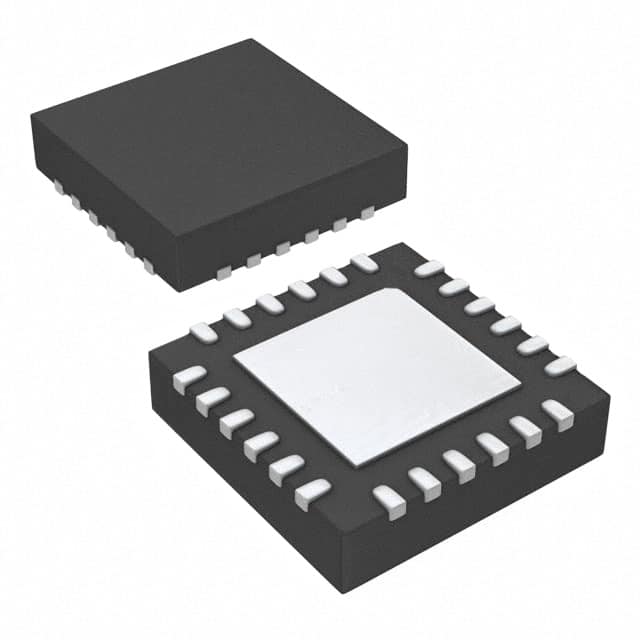
Monolithic Power Systems Inc. MPQ3369GR-Z
- Part No.:
- MPQ3369GR-Z
- Manufacturer:
- Monolithic Power Systems Inc.
- Category:
- LED Drivers
- Package:
- 24-VFQFN Exposed Pad
- Datasheet:
-
 MPQ3369GR-Z.pdf
- Description:
- IC LED DRV RGLTR PWM 100MA 24QFN
- Quantity:
- Payment:

- Shipping:

Inventory:4,975
Please send an inquiry. Send us your inquiry, and we will respond immediately.
Product details
Overview
MPQ3369GR-Z from Monolithic Power Systems is a 6-channel boost white LED driver IC designed for LCD backlighting in tablets and notebooks. It delivers up to 100mA per channel with 2.5% current matching, supports I²C configuration, and achieves a 15,000:1 PWM dimming ratio at ≤200Hz. Its integrated 100mΩ/50V MOSFET, peak-current-mode control, and phase-shift PWM dimming enable high-efficiency, low-noise operation in space-constrained displays.
For engineers reviewing the MPQ3369GR-Z datasheet, MPQ3369GR-Z pinout, MPQ3369GR-Z application, or MPQ3369GR-Z equivalent, key selection criteria include its 3.5–36V input range, QFN-24 (4mm×4mm) thermal performance, multi-dimming mode flexibility (PWM/analog/mix), configurable OVP/STH thresholds, and robust fault protection including LED open/short, OCP, OTP, and inductor short detection.
Technical Context
The MPQ3369GR-Z implements peak-current-mode PWM control for the boost converter, using an internal 100mΩ low-side MOSFET and adaptive output voltage regulation based on the lowest active LEDx pin voltage. Its six independent cathode-connected current sinks are trimmed to ±2.5% matching across channels at 20mA and 100mA loads.
Dimming is managed via three modes: direct PWM (LED current amplitude fixed, duty-following), analog (current scaled linearly with PWM duty), and mix dimming (25% or 12.5% transfer point between analog and PWM). Phase shift-60° for six channels, 90° for four-is applied to stagger LED current pulses and suppress audible noise and inrush currents during PWM dimming.
Key Specifications
| Parameter | Value and Actual Design Meaning |
|---|---|
| Input Voltage Range | 3.5V to 36V - supports wide-range DC power sources including automotive battery rails and industrial adapters. |
| Max Output Current per Channel | 100mA - enables driving high-brightness WLED strings with up to 12-series configurations per channel. |
| Current Matching Accuracy | ±2.5% - ensures uniform luminance across all six LED strings without external calibration. |
| PWM Dimming Ratio | 15,000:1 at fPWM ≤ 200Hz - enables ultra-deep dimming for HDR display black-level control. |
| Switching Frequency Range | 495kHz to 2.2MHz - configurable via resistor, I²C, or external sync clock to avoid EMI-sensitive bands. |
| Integrated MOSFET RDS(on) | 100mΩ @ 12V - reduces conduction loss and improves efficiency in high-current boost stages. |
| Thermal Shutdown Threshold | 170°C with 20°C hysteresis - provides fail-safe protection during sustained overload or poor PCB thermal design. |
Pinout & Package
MPQ3369GR-Z is housed in a thermally enhanced QFN-24 package (4mm × 4mm, 0.5mm pitch) with exposed thermal pad connected to AGND. The package supports high-power dissipation (θJA = 42°C/W) and requires controlled-impedance PCB layout for stable boost operation and EMI compliance.
| Pin/Terminal | Circuit Role | Design Meaning |
|---|---|---|
| 1 DIM | PWM brightness control input | Accepts 100Hz–20kHz PWM signal; internally pulled low; triggers dimming mode transitions. |
| 2 MIX/AD | Dimming mode select | 18μA current-source pin; voltage level (≤0.3V / 0.5–0.8V / 1.0–1.3V) selects mix/PWM/analog dimming. |
| 3 FREQ/SYNC | Switching frequency set or sync input | Resistor-to-GND sets fSW; external clock overrides internal oscillator for synchronized multi-device operation. |
| 4 EN | Enable control | Active-high logic; 1.2V threshold; pulls internal circuitry into shutdown state when low (ISHDN = 1μA). |
| 5 SCL/PSE & 6 SDA/PSE | I²C interface + phase-shift enable | Open-drain I²C bus pins; tied together and biased to 0.75–1.0V to activate phase-shift PWM dimming function. |
| 9 ISET | LED current reference | 1.2V reference node; external resistor to AGND sets full-scale current (e.g., 50mA @ 24.9kΩ). |
| 11–16 LED1–LED6 | LED string cathode current sinks | Sink up to 100mA each; auto-detects grounded unused channels during startup; supports multi-string sharing. |
| 18 SW | Internal MOSFET drain | Connects to boost inductor; rated for 50V max, supports cycle-by-cycle current limiting up to 2.6A. |
| 19 OVP | Over-voltage protection sense | Resistor divider from VOUT to GND programs OVP threshold (1.9–2.1V typical); latches off on fault. |
| 20 STH | LED short threshold set | 18μA current source; resistor sets short-detection voltage; float for register-based threshold selection. |
| 22 VCC | Internal 5V LDO output | Powers gate driver and logic; requires local 1μF ceramic decoupling; drops to 0V in shutdown. |
| 24 VIN | Main power input | Supplies IC bias and boost stage; UVLO activates at 3.1V rising edge with 100mV hysteresis. |
Key Features
| Feature | Design Value |
|---|---|
| Multi-dimming architecture | Hardware-selectable PWM/analog/mix modes with 25% or 12.5% transfer points-enables flicker-free, low-noise dimming across brightness ranges. |
| Phase-shift PWM dimming | 60° (6-channel) or 90° (4-channel) inter-channel delay-reduces peak input current and eliminates audible coil whine in portable displays. |
| Configurable protection thresholds | OVP, LED short (STH), and thermal shutdown thresholds adjustable via external resistors-supports custom safety margins for varied LED stack voltages and thermal environments. |
| Frequency spread spectrum (FSS) | FSP pin controls dither depth (1/20 or 1/32 of fSW)-lowers EMI peak emissions by spreading energy across ~100kHz bandwidth. |
| Robust fault handling | Dedicated open-drain FF pin asserts low on OCP/OVP/OTP/LED open/short/inductor short-enables system-level fault logging and graceful fallback. |
| Auto-decrement at high temperature | Optional LED current reduction above TJ = 125°C-preserves display functionality while preventing thermal runaway in sealed enclosures. |
Applications
| Tablet Backlight Control | Notebook Display Driver |
|---|---|
|
Use Scenario: Driving 6 parallel WLED strings (e.g., 6P12S) in a 10.1″ IPS LCD panel with dynamic contrast enhancement. IC Role / Device Role / Timing Role: Constant-current boost controller with I²C-configurable dimming mode, phase-shifted PWM timing, and real-time current matching. Use Value: Enables 15,000:1 dimming depth for true black reproduction while maintaining color fidelity and eliminating visible PWM artifacts. |
Use Scenario: Powering dual-zone edge-lit backlight in a 14″ ultrabook with ambient light adaptive brightness and thermal derating. IC Role / Device Role / Timing Role: Six-channel WLED driver with programmable OVP threshold, auto LED current decrement above 125°C, and fault-flag reporting. Use Value: Ensures consistent luminance over temperature and runtime, with fail-safe shutdown before thermal damage occurs. |
| Automotive Infotainment Display | Industrial HMI Panel |
|
Use Scenario: Backlighting a 7″ TFT display in a vehicle dashboard operating across -40°C to +105°C ambient. IC Role / Device Role / Timing Role: High-input-voltage (up to 36V) boost driver with UVLO hysteresis, wide-temp current matching, and robust ESD protection (8kV HBM on LEDx). Use Value: Maintains uniform brightness despite battery transients and thermal cycling, meeting AEC-Q200 stress requirements via design margin. |
Use Scenario: Driving ruggedized outdoor display with extended lifetime requirements and infrequent maintenance windows. IC Role / Device Role / Timing Role: Fault-resilient WLED driver with LED open/short detection, inductor short protection, and latch-off behavior on critical faults. Use Value: Reduces field failures by detecting and isolating degraded LED strings early, extending mean time between failures (MTBF). |
Equivalent & Alternatives
The following parts are listed as comparable options for similar 6-channel boost WLED driver applications.
| Alternative Part | Technical Difference | Application Difference | Selection Advice |
|---|---|---|---|
| RTQ2133BGQW | 4-channel only; 12-bit I²C DAC for analog dimming; no phase-shift or mix dimming; 10,000:1 PWM dim ratio. | Limited to smaller panels; lacks multi-string phase management for noise-sensitive designs. | Select when cost sensitivity outweighs channel count and advanced dimming features. |
| ISL97693IRTZ | 6-channel with 12-bit DAC; supports only analog and PWM dimming (no mix mode); 3000:1 PWM dim ratio; no FSS or phase shift. | Lower dimming resolution; higher EMI risk in compact layouts; no thermal current derating. | Choose where precise analog control is prioritized over deep PWM dimming and acoustic noise suppression. |
Compared with RTQ2133BGQW and ISL97693IRTZ, MPQ3369GR-Z uniquely combines six-channel capability, 15,000:1 PWM dimming, hardware-configurable mix dimming, and integrated phase-shift timing-making it optimal for premium portable and automotive displays requiring both luminance precision and acoustic silence.
Availability
MPQ3369GR-Z is available at Aetrix Electronics and suitable for tablet backlighting, notebook display systems, and automotive infotainment panels requiring stable component supply, long-term lifecycle support, and RoHS-compliant packaging.
Supply support for MPQ3369GR-Z includes scheduled delivery planning, volume procurement assistance, BOM continuity management, traceable sourcing, and lifecycle availability coordination for OEM customers, industrial embedded developers, connected-device designers, and electronics production programs.
Manufacturer
Monolithic Power Systems (MPS) is a fabless semiconductor company specializing in high-performance power management ICs, with expertise in DC/DC conversion, LED drivers, and motor control solutions.
The MPQ3369 belongs to MPS's high-dynamic-range WLED driver product line, engineered specifically for LCD backlight applications demanding ultra-deep dimming, multi-channel synchronization, and robust fault resilience in compact form factors.
FAQ
What dimming modes does MPQ3369GR-Z support, and how are they selected?
The MPQ3369GR-Z supports direct PWM, analog, and mix dimming modes. Selection is achieved either via the MIX/AD pin voltage (0.3V, 0.5–0.8V, or 1.0–1.3V) or through I²C register writes (MODE1:0 bits). Mix dimming uses a 25% or 12.5% transfer point to combine analog scaling at high brightness with PWM switching at low brightness, enabling smooth transitions and eliminating flicker.
How does the phase-shift function reduce audible noise in PWM dimming?
The phase-shift function staggers the turn-on timing of LED current sinks-by 60° for six active channels or 90° for four-distributing inrush current across the PWM period. This lowers peak input current harmonics and prevents mechanical vibration in inductors and capacitors, effectively eliminating coil whine commonly heard below 20kHz in portable displays.
Can MPQ3369GR-Z drive fewer than six LED strings, and how is channel disable handled?
Yes. Unused LEDx pins (e.g., LED6 for five-string operation) can be tied to AGND to auto-disable that channel at startup. Alternatively, the CH2:0 register bits configure active channel count (000 = all six, 101 = LED1 only). Auto-detection avoids current leakage and ensures accurate output voltage regulation based only on active strings.
What protections are implemented, and how are faults reported?
MPQ3369GR-Z integrates over-current (OCP), over-voltage (OVP), over-temperature (OTP), LED open/short, inductor short, and VOUT-to-GND short protection. All faults assert the open-drain FF pin low. OVP and STH thresholds are resistor-programmable; OTP is fixed at 170°C with 20°C hysteresis; fault latching requires EN toggle or I²C reset.
Is the internal MOSFET sufficient for typical 6-string WLED applications?
Yes. The integrated 100mΩ/50V N-channel MOSFET supports continuous 100mA per channel with typical boost efficiencies >88% at 12V input and 36V output. Its low RDS(on) and optimized gate drive minimize conduction and switching losses, eliminating the need for external high-side switches in most medium-size display designs.
How is the 15,000:1 PWM dimming ratio achieved, and what limits apply?
This ratio is achieved by combining sub-7μs minimum on-time capability with deep-duty PWM control and output voltage clamping at 93% of OVP during ultra-short pulses. It is specified at fPWM ≤ 200Hz; at higher frequencies (e.g., 20kHz), the practical ratio drops to ~200:1 due to timing resolution and settling constraints.
Does MPQ3369GR-Z require external compensation, and what topology is supported?
Yes. The COMP pin requires an external RC network (typically 1nF + 10kΩ in series) for loop stability in peak-current-mode control. The device supports standard boost topology with external inductor, diode, and output capacitor; it automatically regulates VOUT to the minimum voltage required by the highest-voltage active LED string.
MPQ3369GR-Z Specifications
- Product attributes
- Attribute value
- Manufacturer:
- Monolithic Power Systems Inc.
- Series:
- -
- Package/Case:
- 24-VFQFN Exposed Pad
- Packaging:
- Tape & Reel (TR)
- Product Status:
- Active
- Type:
- DC DC Regulator
- Topology:
- Step-Up (Boost)
- Internal Switch(s):
- Yes
- Number of Outputs:
- 6
- Voltage - Supply (Min):
- 3.5V
- Voltage - Supply (Max):
- 36V
- Voltage - Output:
- 5V
- Current - Output / Channel:
- 100mA
- Frequency:
- 2.2MHz
- Dimming:
- Analog, PWM
- Applications:
- -
- Operating Temperature:
- -40°C ~ 125°C (TJ)
- Grade:
- Automotive
- Qualification:
- -
- Mounting Type:
- Surface Mount
- Supplier Device Package:
- 24-QFN (4x4)
MPQ3369GR-Z FAQ
1.How can I place an order for MPQ3369GR-Z through Aetrix?
Please submit a Request for Quotation (RFQ) for MPQ3369GR-Z on Aetrix. Our sales agent will provide a competitive quotation and guide you through the order confirmation once you accept the terms.
2.Are the price and stock information for MPQ3369GR-Z reliable?
The price and inventory of MPQ3369GR-Z are updated periodically and may fluctuate due to market conditions. Stock and pricing data are typically refreshed every 24 hours. Quotation validity for MPQ3369GR-Z is usually 5 days.
3.What payment methods are accepted for MPQ3369GR-Z?
We accept Wire Transfer, PayPal, Credit Card, Western Union, MoneyGram, and Escrow for MPQ3369GR-Z transactions.
Note: Certain payment methods may incur a processing fee.
4.How is shipping managed for MPQ3369GR-Z?
MPQ3369GR-Z orders can be shipped via leading logistics carriers, including DHL, UPS, FedEx, TNT, or Registered Mail.
Once your MPQ3369GR-Z order is processed, you will receive an email with the shipment details and tracking number.
Note: Tracking information may take up to 24 hours to appear. Express delivery typically takes 3–5 business days.
5.How can I obtain technical support or documentation for MPQ3369GR-Z?
For technical support, including MPQ3369GR-Z datasheets, pinout diagrams, or application guidance, please contact our engineering support team. They can provide detailed documentation and assistance for your MPQ3369GR-Z requirements.
6.How does Aetrix verify that MPQ3369GR-Z is sourced from the original manufacturer or authorized distributors?
All MPQ3369GR-Z products on Aetrix are procured from qualified distributors and authorized channels. Our dedicated quality assurance team conducts strict verification, including traceability checks and, if necessary, third-party testing. This ensures that MPQ3369GR-Z meets industry standards.
7.What is the process for return or replacement of MPQ3369GR-Z?
All MPQ3369GR-Z units undergo pre-shipment inspection (PSI). If there is an issue with MPQ3369GR-Z, returns or replacements are accepted under the following conditions:
1.Quantity discrepancies, incorrect items, or visible external defects (such as breakage or corrosion), acknowledged by Aetrix.
2.The issue is reported within 90 days of delivery.
3.The MPQ3369GR-Z part is unused and in its original packaging.
Return procedure for MPQ3369GR-Z:
1.Submit a request within 90 days.
2.Obtain a Return Material Authorization (RMA) from Aetrix.
MPQ3369GR-Z Tags
-
BCR402RE6327HTSA1
Infineon Technologies

-
BCR430UXTSA2
Infineon Technologies
-
BCR420UE6433HTMA1
Infineon Technologies
-
BCR420UE6327HTSA1
Infineon Technologies
-
BCR421UE6327HTSA1
Infineon Technologies
-
LYT1604D-TL
Power Integrations

-
HV9910CLG-G
Microchip Technology
-
CL2N8-G
Microchip Technology
-
BCR420UW6-7
Diodes Incorporated
-
BCR421UW6-7
Diodes Incorporated
-
BCR420UFD-7
Diodes Incorporated
-
BCR421UFD-7
Diodes Incorporated
Tech Hub

Operational amplifier guide covering op amp basics, feedback, ideal vs real op amps, common configurations, buffer circuits, offset, bias current, gain-bandwidth, slew rate, rail-to-rail limits and sel…

Jumper cables guide covering safe connection order, red and black clamp placement, final ground connection, cable gauge, length, clamp quality, copper vs CCA cables, jump starter comparison and battery…

LDO regulator guide covering low dropout voltage, power dissipation, thermal design, PSRR, output noise, capacitor stability, adjustable LDO circuits, LDO vs buck converter and datasheet selection chec…

Conditional Access Module guide covering CAM meaning, CI/CI+ interface, smart card authorization, DVB security workflow, TV and set-top box compatibility, internal electronics, ESD protection, connecto…

Guide to electronic component obsolescence covering EOL risk, PCN/PDN notices, last-time buy planning, replacement options, form-fit-function validation, counterfeit risk and BOM lifecycle management.

18650 battery guide covering lithium-ion cell basics, 3.6V/3.7V voltage, 4.2V charging, mAh and Wh capacity, protected cells, chargers, BMS, series-parallel packs, holders, welding and sourcing checks.…

Hall effect sensor guide covering working principle, linear and digital sensors, Arduino circuits, current sensing, speed detection, automotive applications, A3144 examples, signal filtering and datash…

Product Change Notification guide for electronic components, covering PCN meaning, PCN vs PDN/EOL, common change types, risk levels, form-fit-function review, engineering validation, BOM control, LTB/L…

A practical guide to blend door actuators, covering HVAC function, symptoms, location, AC and heater issues, reset and calibration, replacement cost, electrical diagnosis, compatibility checks, and rep…

Engineering guide to Raspberry Pi alternatives, covering chip-level differences, Orange Pi, ROCK, Jetson, Banana Pi, NanoPi, Compute Module, Pico, GPIO, camera, HAT compatibility, and replacement risks…


