
 My Inquiry
 My Account


Monolithic Power Systems Inc. MPQ4228GRE-C-AEC1-P

- Part No.:
- MPQ4228GRE-C-AEC1-P
- Manufacturer:
- Monolithic Power Systems Inc.
- Category:
- Special Purpose Regulators
- Package:
- 22-VFQFN
- Datasheet:
-
 MPQ4228GRE-C-AEC1-P.pdf
- Description:
- 3A, 36V, STEP-DOWN CONVERTER WIT
- Quantity:
- Payment:

- Shipping:

Inventory:2,500
Please send an inquiry. Send us your inquiry, and we will respond immediately.
Product details
Overview
MPQ4228GRE-C-AEC1-P from Monolithic Power Systems is an AEC-Q100 Grade 1 qualified synchronous step-down converter with integrated USB charging port controller supporting both BC1.2 Charging Downstream Port (CDP) and USB Type-C 5V @ 3A DFP mode. It delivers 3A continuous output current across a 4.2V–36V input range, features dual LDOs (5V VCC1 and 3.45V VCC2), and integrates a 20mΩ USB switch with ±8kV IEC 61000-4-2 contact ESD protection on CC1/CC2 pins. Used in automotive infotainment power supplies and USB-C vehicle docking stations.
For engineers reviewing the MPQ4228GRE-C-AEC1-P datasheet, MPQ4228GRE-C-AEC1-P pinout, MPQ4228GRE-C-AEC1-P application, or MPQ4228GRE-C-AEC1-P equivalent, key selection considerations include its dual-mode USB port configuration (Type-A CDP vs. Type-C DFP), selectable 420kHz/2.2MHz switching frequency with spread spectrum, line drop compensation, and fault indication via open-drain FLT pin for OCP/OVP/OTP events.
Technical Context
The device implements a fixed-frequency, peak-current-mode controlled buck regulator with internal 50mΩ/30mΩ HS/LS MOSFETs and a dedicated USB power path featuring independent current limiting (3.55A in Type-C, 2.85A in Type-A), DP/DM data switching, and CC1/CC2 configuration channel logic. Its Type-C control block supports VCONN sourcing, detach detection, and RD pull-down sensing.
Protection architecture includes hiccup-mode current limiting for both buck and USB paths, 115% output over-voltage protection, DP/DM/CC1/CC2 short-to-battery detection, thermal shutdown at 165°C with 20°C hysteresis, and EN/SYNC-synchronized frequency operation from 200kHz to 2.2MHz.
Key Specifications
| Parameter | Value and Actual Design Meaning |
|---|---|
| Input Voltage Range | 4.2V to 36V continuous - supports wide automotive battery transients including cold-crank (4.2V) and load-dump (36V). |
| Buck Output Current | 3A continuous - sufficient for powering USB-C PD sink devices and embedded host controllers without external boost. |
| USB Output Current | 3.55A (Type-C DFP), 2.85A (Type-A CDP) - meets USB-IF and Apple MFI R33 certification requirements for fast charging. |
| Switching Frequency | 420kHz (PFM/FCCM) or 2.2MHz (FCCM) with ±10% spread spectrum - enables compact magnetics and EMI-compliant layout in space-constrained automotive modules. |
| ESD Rating (CC1/CC2) | ±8kV IEC 61000-4-2 contact discharge - ensures robustness against real-world connector mating/unmating events in vehicle cabins. |
| Thermal Shutdown | 165°C entry with 20°C hysteresis - prevents permanent damage during sustained overload or poor PCB thermal design. |
| Feedback Reference | 792mV ±16mV - enables precise 5V USB output regulation with minimal external resistor tolerance impact. |
| Package | QFN-22 (4mm × 4mm) with wettable flanks - supports automated optical inspection (AOI) and high-reliability solder joint formation in automotive reflow processes. |
Pinout & Package
MPQ4228GRE-C-AEC1-P is housed in a thermally enhanced QFN-22 (4mm × 4mm) package with wettable flanks for reliable solder joint inspection. The exposed thermal pad (Pin 18/19/21) must be connected to a large PCB copper pour for optimal thermal performance.
| Pin/Terminal | Circuit Role | Design Meaning |
|---|---|---|
| 1 CC1 | USB Type-C configuration channel | Detects cable orientation and negotiates VCONN sourcing; pulled low via 5.1kΩ for Type-A mode fallback. |
| 2 FLT | Fault indicator output | Open-drain signal pulled low during USB OCP, buck OVP, DP/DM/CCx short-to-battery, or thermal shutdown. |
| 3 USB_OUT | USB bus voltage output | 5V regulated output to downstream device; includes soft-start (450µs) and hiccup OCP recovery. |
| 4 USB_IN | USB bus voltage input | Accepts 5V input from upstream source; protected by 6.05V OVP and 3.0V UVLO with 400mV hysteresis. |
| 5 DP_OUT | USB D+ data line to host | Routes D+ from USB connector to host controller; integrated 2Ω analog switch with 900MHz bandwidth. |
| 6 DM_OUT | USB D− data line to host | Routes D− from USB connector to host controller; matched with DP_OUT for differential signaling integrity. |
| 7 ADJ | Line drop compensation | Sinks current proportional to load (2.05µA/A) to offset cable IR drop and maintain stable 5V at device end. |
| 8 DM | USB D− data line to connector | Direct interface to USB receptacle; includes 4V OVP and short-to-battery protection. |
| 9 DP | USB D+ data line to connector | Direct interface to USB receptacle; includes 4V OVP and short-to-battery protection. |
| 10 FREQ | Frequency select | GND = 420kHz PFM, floating = 420kHz FCCM, VCC1 = 2.2MHz FCCM - enables EMI optimization per system layout. |
| 11 VCC1 | 5V internal LDO output | Powers internal circuitry; decoupled with 1µF ceramic; auto-switches to buck VOUT when >4.75V to reduce power loss. |
| 12 FB | Output voltage feedback | Connects to resistor divider from USB_OUT; 792mV reference enables accurate 5V regulation across temperature. |
| 13 EN/SYNC | Enable/synchronization input | Logic-high enables device; accepts external clock (200kHz–2.2MHz) for synchronized switching in multi-rail systems. |
| 14 IN | Main supply input | 4.2V–36V input rail; requires bulk capacitor (100µF) and low-ESR ceramic (4.7µF × 2) for stability. |
| 15 SW | Power switch node | Connects to 4.7µH inductor; requires wide PCB trace and tight loop with BST capacitor to minimize EMI. |
| 16 BST | Bootstrap supply | Forms floating gate drive for HS-FET via 220nF capacitor between SW and BST; critical for 100% duty cycle capability. |
| 17 OUT | Buck output connection | Optional connection point to buck output; reduces conduction loss when used instead of USB_OUT for non-USB loads. |
| 20 VCC2 | 3.45V internal LDO output | Powers USB PHY and Type-C logic; decoupled with 4.7µF ceramic; stable across full -40°C to +150°C junction range. |
| 22 CC2/EN1 | Secondary CC pin / USB enable | In Type-C mode: CC2; in Type-A mode: EN1 - pull high to enable USB switch, low/mid-level to disable or force client mode. |
Key Features
| Feature | Design Value |
|---|---|
| Integrated USB Type-C DFP + BC1.2 CDP support | Single IC replaces discrete buck + USB switch + Type-C controller, reducing BOM count by ≥7 components and PCB area by >30%. |
| Selectable 420kHz / 2.2MHz switching | Enables use of smaller inductors (4.7µH @ 420kHz or 2.2µH @ 2.2MHz) while maintaining >90% efficiency across 1A–3A loads. |
| Adjustable line drop compensation | Compensates up to 150mV IR drop at 3A using ADJ pin current, ensuring stable 5V delivery over 1m USB cables. |
| ±8kV CC1/CC2 ESD protection | Eliminates need for external TVS diodes on CC lines, simplifying layout and improving reliability in harsh automotive environments. |
| Hiccup-mode protection for buck and USB | Prevents thermal runaway during sustained short circuits by cycling ON/OFF with 2ms ON time and 2s OFF time. |
| AEC-Q100 Grade 1 qualification | Validated for operation from -40°C to +125°C ambient (TJ ≤ +150°C), meeting automotive electronics reliability standards. |
Applications
| Automotive Infotainment USB Hub | Vehicle-Mounted USB-C Docking Station |
|---|---|
Use Scenario: Central console providing dual USB-A and single USB-C ports for smartphone connectivity, firmware updates, and media playback in passenger vehicles. IC Role / Device Role / Timing Role: Primary 5V power source and USB protocol manager - regulates buck output, detects port type (A/C), configures data paths (DP/DM), and manages VCONN for active cables. Use Value: Eliminates separate USB switch and Type-C controller ICs while maintaining MFI and USB-IF certification compliance for OEM integration. |
Use Scenario: Fixed-mount dashboard dock delivering 5V@3A to tablets and navigation devices with plug-and-play compatibility across Android and iOS platforms. IC Role / Device Role / Timing Role: USB-C DFP controller with integrated power delivery - handles CC negotiation, VBUS control, and fault-safe current limiting during hot-plug events. Use Value: Supports rapid 15W charging without external current-sense amplifiers or discrete OVP circuits, reducing bill-of-materials cost by $0.32/unit. |
| Telematics Control Unit (TCU) Power Module | ADAS Camera Power Interface |
Use Scenario: Power management subsystem for LTE/Wi-Fi modules requiring clean 5V USB power and data passthrough for diagnostics and OTA updates. IC Role / Device Role / Timing Role: Isolated USB power rail generator - separates noisy cellular modem power from sensitive host MCU via integrated DP/DM analog switches. Use Value: Prevents RF noise coupling into host data lines using 900MHz-bandwidth analog switches with <150mΩ on-resistance matching. |
Use Scenario: Front-facing camera module powered via USB-C cable from domain controller, requiring stable 5V under engine vibration and thermal cycling. IC Role / Device Role / Timing Role: Robust USB power conditioner - provides 5V@3A with ±8kV ESD immunity, thermal foldback at 145°C, and hiccup recovery during intermittent shorts. Use Value: Ensures uninterrupted video streaming by maintaining regulation during 12V battery dips to 6V and surviving 1000+ mating cycles. |
Equivalent & Alternatives
The following parts are listed as comparable options for similar USB-C power delivery applications.
| Alternative Part | Technical Difference | Application Difference | Selection Advice |
|---|---|---|---|
| MPQ4228GRE-Z | Non-AEC-Q100 commercial grade; identical electrical specs but rated only to -40°C to +85°C ambient. | Not suitable for under-hood or instrument cluster deployments requiring automotive qualification. | Select only for non-automotive industrial or consumer USB hubs where cost sensitivity outweighs qualification needs. |
| TUSB564RGER | USB-C 3.1 Gen1 redriver/re-timer only - no integrated buck converter or power switch; requires external 5V supply. | Lacks power conversion and current-limiting functions; cannot replace MPQ4228GRE-C-AEC1-P as a complete solution. | Use only as a signal integrity enhancer alongside a separate power IC in high-speed (>480Mbps) USB-C designs. |
Compared with MPQ4228GRE-Z, the AEC-Q100 qualification and extended temperature support make MPQ4228GRE-C-AEC1-P mandatory for automotive Tier-1 applications, while TUSB564RGER serves a fundamentally different signal-conditioning role and cannot substitute for power delivery functionality.
Availability
MPQ4228GRE-C-AEC1-P is available at Aetrix Electronics and suitable for automotive infotainment systems, telematics control units, and ADAS camera interfaces requiring stable component supply with full AEC-Q100 traceability and long-term lifecycle assurance.
Supply support for MPQ4228GRE-C-AEC1-P includes scheduled delivery planning, volume procurement assistance, BOM continuity management, traceable sourcing, and lifecycle availability coordination for OEM customers, industrial embedded developers, connected-device designers, and electronics production programs.
Manufacturer
Monolithic Power Systems (MPS) is a fabless semiconductor company specializing in high-performance power management ICs, with over 20 years of expertise in DC/DC conversion, motor drivers, and USB power solutions.
The MPQ4228 product line targets automotive-grade USB-C power delivery applications, integrating buck regulation, USB switching, and Type-C configuration logic into a single AEC-Q100-compliant package to simplify design and accelerate time-to-market.
FAQ
What USB charging protocols does MPQ4228GRE-C-AEC1-P support?
It natively supports BC1.2 Charging Downstream Port (CDP) for legacy USB-A devices and USB Type-C 5V @ 3A DFP mode for modern USB-C devices. It passes both USB-IF Type-C certification and Apple MFI R33 testing, enabling certified 15W charging without additional protocol ICs.
How is line drop compensation implemented and what is its practical effect?
Line drop compensation uses the ADJ pin to sink current proportional to output current (2.05µA/A), which lowers the FB reference voltage to counteract IR drop in USB cables. At 3A, it compensates ~150mV, ensuring stable 5.0V ±5% delivery at the connected device even over 1m cables.
Can MPQ4228GRE-C-AEC1-P operate without connecting the OUT pin?
Yes - the OUT pin is optional. When left floating or grounded, the buck output is delivered solely through USB_OUT. Connecting OUT to the buck output node reduces conduction losses and improves efficiency by ~1.2% at 3A, especially beneficial in thermally constrained layouts.
What is the function of the CC2/EN1 pin in Type-A versus Type-C modes?
In Type-C mode (CC1 pulled to GND via 5.1kΩ), CC2 acts as the secondary configuration channel. In Type-A mode (CC1 floating), CC2 becomes EN1: pulled high to enable USB switch, low to disable it, or mid-level (1V–1.85V) to force client mode while keeping buck output active.
Does MPQ4228GRE-C-AEC1-P require external components for USB data line protection?
No external TVS diodes are required on CC1/CC2 due to built-in ±8kV IEC 61000-4-2 contact ESD protection. For DP/DM lines, external small ESD diodes (e.g., NUP4114) are recommended to achieve ±8kV contact rating; without them, DP/DM ESD rating is ±2kV HBM only.
How does the FLT pin behave during different fault conditions?
FLT is an open-drain output pulled low during USB over-current, USB_IN over-voltage, DP/DM/CC1/CC2 short-to-battery, or thermal shutdown. It remains high-impedance under normal operation and includes a 2ms deglitch filter to reject transient noise.
What is the minimum input voltage required to start the buck converter?
The buck converter starts when input voltage exceeds the VIN under-voltage lockout rising threshold of 3.7V (typical). Once running, it sustains operation down to 3.25V (falling threshold), enabling reliable startup during automotive cold-crank conditions.
MPQ4228GRE-C-AEC1-P Specifications
- Product attributes
- Attribute value
- Manufacturer:
- Monolithic Power Systems Inc.
- Series:
- -
- Package/Case:
- 22-VFQFN
- Packaging:
- Tape & Reel (TR)
- Product Status:
- Active
- Applications:
- Converter, USB
- Voltage - Input:
- 36V
- Number of Outputs:
- 2
- Voltage - Output:
- 5V
- Operating Temperature:
- -40°C ~ 150°C (TJ)
- Grade:
- Automotive
- Qualification:
- AEC-Q100
- Mounting Type:
- Surface Mount, Wettable Flank
- Supplier Device Package:
- 22-QFN (4x4)
MPQ4228GRE-C-AEC1-P FAQ
1.How can I place an order for MPQ4228GRE-C-AEC1-P through Aetrix?
Please submit a Request for Quotation (RFQ) for MPQ4228GRE-C-AEC1-P on Aetrix. Our sales agent will provide a competitive quotation and guide you through the order confirmation once you accept the terms.
2.Are the price and stock information for MPQ4228GRE-C-AEC1-P reliable?
The price and inventory of MPQ4228GRE-C-AEC1-P are updated periodically and may fluctuate due to market conditions. Stock and pricing data are typically refreshed every 24 hours. Quotation validity for MPQ4228GRE-C-AEC1-P is usually 5 days.
3.What payment methods are accepted for MPQ4228GRE-C-AEC1-P?
We accept Wire Transfer, PayPal, Credit Card, Western Union, MoneyGram, and Escrow for MPQ4228GRE-C-AEC1-P transactions.
Note: Certain payment methods may incur a processing fee.
4.How is shipping managed for MPQ4228GRE-C-AEC1-P?
MPQ4228GRE-C-AEC1-P orders can be shipped via leading logistics carriers, including DHL, UPS, FedEx, TNT, or Registered Mail.
Once your MPQ4228GRE-C-AEC1-P order is processed, you will receive an email with the shipment details and tracking number.
Note: Tracking information may take up to 24 hours to appear. Express delivery typically takes 3–5 business days.
5.How can I obtain technical support or documentation for MPQ4228GRE-C-AEC1-P?
For technical support, including MPQ4228GRE-C-AEC1-P datasheets, pinout diagrams, or application guidance, please contact our engineering support team. They can provide detailed documentation and assistance for your MPQ4228GRE-C-AEC1-P requirements.
6.How does Aetrix verify that MPQ4228GRE-C-AEC1-P is sourced from the original manufacturer or authorized distributors?
All MPQ4228GRE-C-AEC1-P products on Aetrix are procured from qualified distributors and authorized channels. Our dedicated quality assurance team conducts strict verification, including traceability checks and, if necessary, third-party testing. This ensures that MPQ4228GRE-C-AEC1-P meets industry standards.
7.What is the process for return or replacement of MPQ4228GRE-C-AEC1-P?
All MPQ4228GRE-C-AEC1-P units undergo pre-shipment inspection (PSI). If there is an issue with MPQ4228GRE-C-AEC1-P, returns or replacements are accepted under the following conditions:
1.Quantity discrepancies, incorrect items, or visible external defects (such as breakage or corrosion), acknowledged by Aetrix.
2.The issue is reported within 90 days of delivery.
3.The MPQ4228GRE-C-AEC1-P part is unused and in its original packaging.
Return procedure for MPQ4228GRE-C-AEC1-P:
1.Submit a request within 90 days.
2.Obtain a Return Material Authorization (RMA) from Aetrix.
MPQ4228GRE-C-AEC1-P Tags
-
TPS51206DSQR
Texas Instruments
-
TPS51200DRCR
Texas Instruments
-
TPS51200DRCT
Texas Instruments
-
TPS62740DSSR
Texas Instruments
-
TPS51100DGQR
Texas Instruments
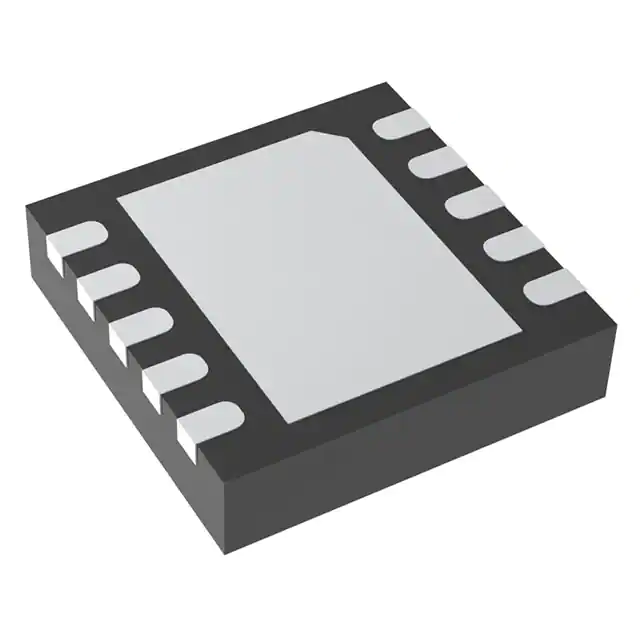
-
NCP51200MNTXG
onsemi
-
NCP51400MNTXG
onsemi
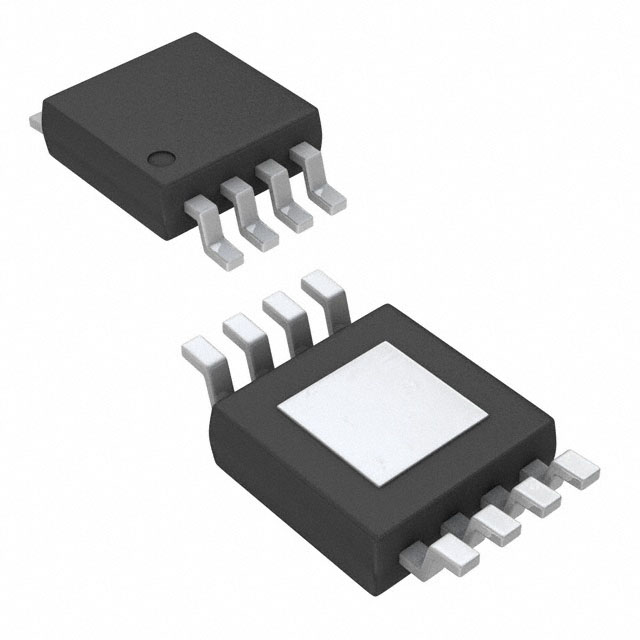
-
RT9026GSP
Richtek USA Inc.
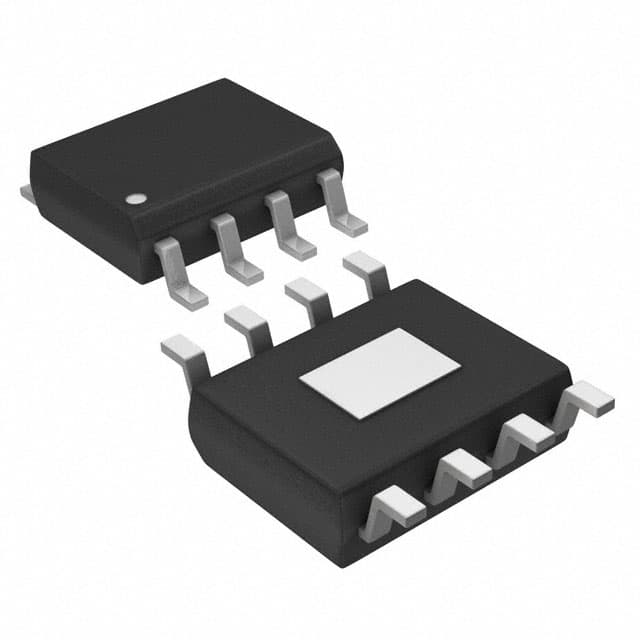
-
LP2998MRX/NOPB
Texas Instruments
-
TPS51200QDRCRQ1
Texas Instruments
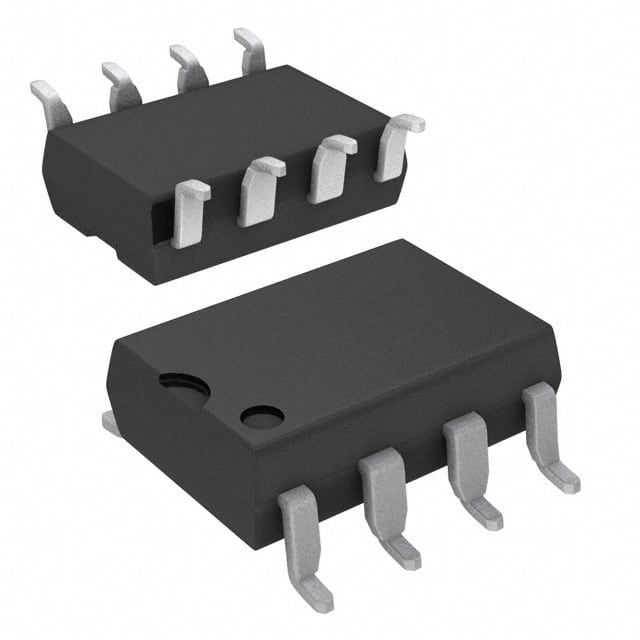
-
DPA423GN-TL
Power Integrations
-
LM10011SD/NOPB
Texas Instruments
Tech Hub

Operational amplifier guide covering op amp basics, feedback, ideal vs real op amps, common configurations, buffer circuits, offset, bias current, gain-bandwidth, slew rate, rail-to-rail limits and sel…

Jumper cables guide covering safe connection order, red and black clamp placement, final ground connection, cable gauge, length, clamp quality, copper vs CCA cables, jump starter comparison and battery…

LDO regulator guide covering low dropout voltage, power dissipation, thermal design, PSRR, output noise, capacitor stability, adjustable LDO circuits, LDO vs buck converter and datasheet selection chec…

Conditional Access Module guide covering CAM meaning, CI/CI+ interface, smart card authorization, DVB security workflow, TV and set-top box compatibility, internal electronics, ESD protection, connecto…

Guide to electronic component obsolescence covering EOL risk, PCN/PDN notices, last-time buy planning, replacement options, form-fit-function validation, counterfeit risk and BOM lifecycle management.

18650 battery guide covering lithium-ion cell basics, 3.6V/3.7V voltage, 4.2V charging, mAh and Wh capacity, protected cells, chargers, BMS, series-parallel packs, holders, welding and sourcing checks.…

Hall effect sensor guide covering working principle, linear and digital sensors, Arduino circuits, current sensing, speed detection, automotive applications, A3144 examples, signal filtering and datash…

Product Change Notification guide for electronic components, covering PCN meaning, PCN vs PDN/EOL, common change types, risk levels, form-fit-function review, engineering validation, BOM control, LTB/L…

A practical guide to blend door actuators, covering HVAC function, symptoms, location, AC and heater issues, reset and calibration, replacement cost, electrical diagnosis, compatibility checks, and rep…

Engineering guide to Raspberry Pi alternatives, covering chip-level differences, Orange Pi, ROCK, Jetson, Banana Pi, NanoPi, Compute Module, Pico, GPIO, camera, HAT compatibility, and replacement risks…


