
 My Inquiry
 My Account


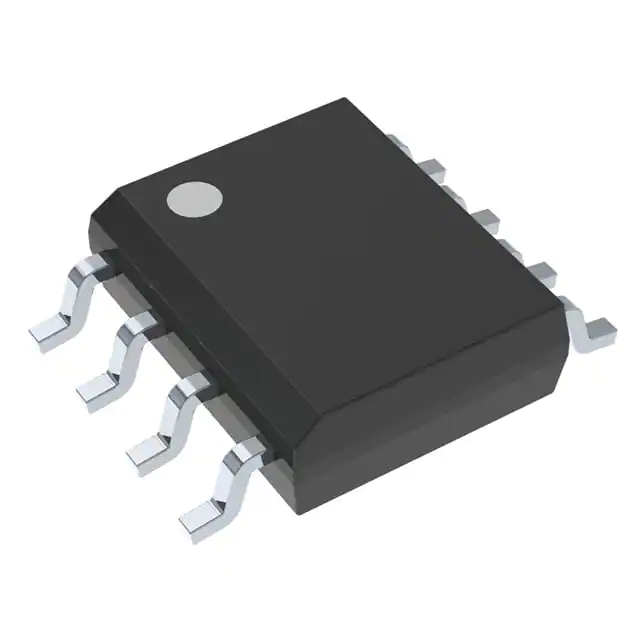
Monolithic Power Systems Inc. MPQ6411GS-33-Z
- Part No.:
- MPQ6411GS-33-Z
- Manufacturer:
- Monolithic Power Systems Inc.
- Category:
- Supervisors
- Package:
- 8-SOIC (0.154", 3.90mm Width)
- Datasheet:
-
 MPQ6411GS-33-Z.pdf
- Description:
- IC SUPERVISOR 1 CHANNEL 8SOIC
- Quantity:
- Payment:

- Shipping:

Inventory:4,216
Please send an inquiry. Send us your inquiry, and we will respond immediately.
Product details
Overview
MPQ6411GS-33-Z from Monolithic Power Systems is a windowed watchdog timer IC designed for automotive and industrial microcontroller supervision. It delivers AEC-Q100 Grade 1 qualification, operates from a 3.3V supply, provides programmable short/long window modes via MODE pin, generates a low-active open-drain reset signal (WDO), and features power-on reset with 2.9–3.1V threshold. It is used in engine control units to prevent MCU lockup during voltage transients or software faults.
For engineers reviewing the MPQ6411GS-33-Z datasheet, MPQ6411GS-33-Z pinout, MPQ6411GS-33-Z application, or MPQ6411GS-33-Z equivalent, this page details its window timing behavior, VCC=3.3V operation, SOIC-8 package layout, WDO open-drain drive requirements, and AEC-Q100 compliance for safety-critical embedded systems.
Technical Context
The MPQ6411GS-33-Z implements a dual-state windowed watchdog architecture with MODE-selectable timing windows: short mode (t2=15 cycles, t3=10 cycles) and long mode (t4=1500 cycles, t5=1000 cycles), all referenced to an internal 880µs base period set by a 51kΩ TIMER resistor. Its state machine transitions between sync monitoring, window open/close, and reset pulse generation based on WDI_OK edge timing relative to MODE level.
It integrates power-on reset (POR) with hysteresis (VPOR-HIGH = 2.9–3.1V, VPOR-LOW = 2.8–3.0V), watchdog disable (/WD_DIS) with weak internal pull-up, and WDO output configured as open-drain MOSFET-requiring external pull-up (e.g., 100kΩ) to VCC. All logic thresholds are scaled for 3.3V operation: WDI high ≥2.1V, MODE low ≤0.6V.
Key Specifications
| Parameter | Value and Actual Design Meaning |
|---|---|
| VCC Supply | 3.3V ±10% - matches automotive 3.3V domain; enables direct interface with 3.3V MCUs without level shifting. |
| Power-On Reset Threshold | 2.9–3.1V rising, 2.8–3.0V falling - ensures reliable MCU reset during cold cranking or battery dip conditions. |
| Quiescent Current | 10–14µA (RTIMER=100kΩ), 14–18µA (RTIMER=51kΩ) - supports ultra-low-power always-on monitoring in sleep-mode ECUs. |
| Watchdog Window Timing | Short mode: 15-cycle close + 10-cycle open; Long mode: 1500-cycle close + 1000-cycle open - enables flexible fault detection granularity across boot vs. runtime phases. |
| WDO Output Type | Open-drain MOSFET - requires external pull-up; allows shared reset bus with other 3.3V devices and voltage-level flexibility. |
| AEC-Q100 Grade | Grade 1 (–40°C to +125°C TJ) - qualified for under-hood automotive applications including transmission control and ADAS sensor modules. |
Pinout & Package
MPQ6411GS-33-Z is housed in an industry-standard SOIC-8 package (JEDEC MS-012 AA), with 1.27mm pitch, 3.9mm × 4.9mm body, and gull-wing leads. Pin 1 marked by notch or dot; pin 5 is NC (no connection) and must remain unconnected.
| Pin/Terminal | Circuit Role | Design Meaning |
|---|---|---|
| 1 WDO | Watchdog reset output | Open-drain output requiring external pull-up (e.g., 100kΩ to VCC); asserts low during POR, timeout, or WDI error. |
| 2 WDI | Watchdog trigger input | Accepts MCU-generated pulse (10µs–5ms low); rising edge initiates window timing; latched low >5ms triggers immediate reset. |
| 3 MODE | Window mode select | Pull low for short window (15+10 cycles), pull high for long window (1500+1000 cycles); weak internal pull-up defaults to long mode if floating. |
| 4 GND | Ground reference | Primary return path for all internal circuits; must be connected to system ground plane with low-impedance trace. |
| 5 NC | No connection | Internally unconnected; PCB pad must be left unconnected and not tied to any net. |
| 6 VCC | Power supply input | 3.3V ±10% input; decoupling capacitor (≥1µF X7R) required within 5mm of pin for noise immunity and POR stability. |
| 7 TIMER | Timing resistor node | Connects external resistor (e.g., 51kΩ) to set base period (880µs typ); value directly scales all window durations linearly. |
| 8 /WD_DIS | Watchdog enable/disable | Active-low disable; pulled high internally - watchdog enabled by default; tie low to disable during debug or safe boot sequences. |
Key Features
| Feature | Design Value |
|---|---|
| Windowed watchdog architecture | Prevents false resets from periodic MCU glitches while detecting true lockups - only accepts WDI pulses within defined time windows, not just presence/absence. |
| MODE-selectable timing windows | Enables runtime adaptation: short window for critical boot-phase supervision, long window for stable runtime monitoring - reduces unnecessary resets without sacrificing safety. |
| Open-drain WDO with 3.3V logic thresholds | Ensures interoperability with 3.3V MCUs and allows wired-OR reset buses; eliminates need for external level translators or active pull-ups. |
| Integrated power-on reset with hysteresis | Guarantees clean MCU initialization at power-up and recovery from brown-out events - no external POR circuit required. |
| Watchdog disable function (/WD_DIS) | Supports safe firmware updates and diagnostic modes - disables timeout monitoring without hardware modification or MCU reconfiguration. |
Applications
| Engine Control Unit (ECU) | Advanced Driver Assistance System (ADAS) Camera Module |
|---|---|
|
Use Scenario: Supervises real-time firmware execution in gasoline/diesel engine management systems during cold start, transient load changes, and EMI-rich under-hood environments. IC Role / Device Role / Timing Role: Windowed watchdog timer providing fail-safe reset initiation when MCU fails to issue valid WDI pulses within programmable time windows. Use Value: Prevents undetected MCU hang during critical combustion control loops - maintains ASIL-B functional safety integrity per ISO 26262. |
Use Scenario: Monitors vision processing SoC in forward-facing camera modules operating in temperature-cycled vehicle cabins and exposed front grilles. IC Role / Device Role / Timing Role: AEC-Q100 Grade 1 watchdog enforcing deterministic reset response to SoC lockup caused by thermal throttling or memory corruption. Use Value: Ensures rapid recovery (<10ms WDO pulse width) from image pipeline freezes - avoids loss of collision warning or lane departure alerts. |
| Industrial PLC I/O Module | Electric Vehicle Battery Management System (BMS) |
|
Use Scenario: Secures programmable logic controller field I/O modules deployed in factory automation systems subject to voltage sags and ESD events. IC Role / Device Role / Timing Role: Resets host MCU upon missed WDI pulses during analog input sampling or digital output update cycles. Use Value: Maintains deterministic I/O state integrity - prevents spurious actuator activation or sensor reporting failure during brown-out recovery. |
Use Scenario: Supervises BMS microcontroller in high-voltage traction battery packs where MCU failure could lead to overcharge, thermal runaway, or isolation fault misreporting. IC Role / Device Role / Timing Role: Enforces strict timing windows on cell voltage monitoring task completion; triggers hardware reset if deadline missed. Use Value: Supports functional safety requirements (ISO 26262 ASIL-C) by eliminating software-only supervision - adds hardware-enforced fail-safe layer. |
Equivalent & Alternatives
The following parts are listed as comparable options for similar windowed watchdog timer applications.
| Alternative Part | Technical Difference | Application Difference | Selection Advice |
|---|---|---|---|
| MAX6373ETA+ | Fixed 1.6s window, no MODE-selectable timing; 5V-only supply; push-pull WDO output. | Lacks programmable window flexibility and 3.3V operation - unsuitable for mixed-voltage automotive domains or adaptive timing needs. | Select only for legacy 5V industrial systems requiring fixed-window simplicity and no MODE pin routing. |
| TLE8888-2 | Integrated 3.3V LDO + watchdog + SPI interface; larger TQFP-48 package; higher quiescent current (50µA). | Offers system-level integration but adds complexity and cost - over-specified if only standalone watchdog functionality is needed. | Choose when co-located power regulation and diagnostics via SPI are required; avoid for space-constrained or ultra-low-IQ designs. |
Compared with MAX6373ETA+ and TLE8888-2, MPQ6411GS-33-Z delivers optimal balance of AEC-Q100 compliance, 3.3V-native operation, MODE-selectable timing windows, and SOIC-8 footprint - making it the preferred choice for new automotive and industrial MCU supervision designs requiring flexibility and minimal board area.
Availability
MPQ6411GS-33-Z is available at Aetrix Electronics and suitable for automotive engine control units, ADAS camera modules, and industrial PLC I/O modules requiring stable component supply across extended temperature ranges and long production lifecycles.
Supply support for MPQ6411GS-33-Z includes scheduled delivery planning, volume procurement assistance, BOM continuity management, traceable sourcing, and lifecycle availability coordination for OEM customers, industrial embedded developers, connected-device designers, and electronics production programs.
Manufacturer
Monolithic Power Systems (MPS) is a fabless semiconductor company specializing in high-performance analog and power ICs, with design centers in the US, China, and Taiwan, and global manufacturing partnerships.
The MPQ6411 belongs to MPS's automotive-grade watchdog timer product line, engineered specifically for functional safety-critical MCU supervision in AEC-Q100-compliant systems - emphasizing timing precision, supply robustness, and seamless integration into existing 3.3V microcontroller platforms.
FAQ
What is the recommended external pull-up resistor value for the WDO pin?
The WDO pin is an open-drain output requiring an external pull-up resistor to VCC. A 100kΩ resistor is explicitly recommended in the datasheet for MPQ6411GS-33-Z to ensure proper rise time and noise immunity while minimizing current draw during reset assertion. Lower values (e.g., 10kΩ) may improve speed but increase static power; higher values risk slow edges in noisy environments.
How does the TIMER pin resistor value affect watchdog timing?
The TIMER pin sets the base period (T) using an external resistor: T ≈ (15.75 × RTIMER + 73.5) µs. For RTIMER = 51kΩ, T ≈ 880µs. All window durations scale linearly with T - e.g., short-mode t2 = 15 × T ≈ 13.2ms. Selecting RTIMER adjusts absolute timing resolution without changing window ratios or MODE behavior.
Can the MPQ6411GS-33-Z operate with a 5V supply?
No. The MPQ6411GS-33-Z is specifically rated for 3.3V ±10% operation (2.97–3.63V). Using 5V exceeds its absolute maximum rating of +6V on VCC but violates recommended operating conditions and risks incorrect logic thresholds, POR behavior, and long-term reliability. For 5V systems, use MPQ6411GS or MPQ6411GS-AEC1 instead.
What happens if the /WD_DIS pin is left unconnected?
The /WD_DIS pin has a weak internal pull-up, so leaving it unconnected defaults the watchdog to enabled state. This is safe for normal operation but means the watchdog cannot be disabled without adding external circuitry. For debug or bootloader scenarios requiring watchdog disable, explicitly tie /WD_DIS to GND via a jumper or GPIO-controlled FET.
Is the NC (pin 5) electrically isolated or internally bonded?
Pin 5 is designated NC (No Connection) in the datasheet and functional block diagram - it is not electrically connected to any internal circuitry and must remain unconnected on the PCB. Bonding or routing to any net may cause unpredictable behavior or damage; the pin is physically present for mechanical symmetry but electrically inert.
How does the WDI_OK pulse width tolerance impact system design?
The WDI_OK pulse width must be between 10µs and 5ms (low duration) to be recognized as valid. MCU firmware must guarantee minimum low time ≥10µs to avoid missed synchronization, and maximum low time ≤5ms to prevent WDI error detection and unintended reset. This constrains GPIO toggle timing but ensures robust glitch rejection.
Does the MPQ6411GS-33-Z support watchdog window reconfiguration during runtime?
Yes. Changing the MODE pin logic level (high/low) dynamically switches between short and long window modes without reset or power cycle. This allows firmware to adapt supervision granularity - e.g., use short windows during boot sequence and switch to long windows after OS initialization - enhancing both safety and operational resilience.
MPQ6411GS-33-Z Specifications
- Product attributes
- Attribute value
- Manufacturer:
- Monolithic Power Systems Inc.
- Series:
- -
- Package/Case:
- 8-SOIC (0.154", 3.90mm Width)
- Packaging:
- Tape & Reel (TR)
- Product Status:
- Active
- Programmable:
- Not Verified
- Type:
- Watchdog Circuit
- Number of Voltages Monitored:
- 1
- Voltage - Threshold:
- 3V
- Output:
- -
- Reset:
- -
- Reset Timeout:
- -
- Operating Temperature:
- -40°C ~ 125°C (TJ)
- Grade:
- -
- Qualification:
- -
- Mounting Type:
- Surface Mount
- Supplier Device Package:
- 8-SOIC
MPQ6411GS-33-Z FAQ
1.How can I place an order for MPQ6411GS-33-Z through Aetrix?
Please submit a Request for Quotation (RFQ) for MPQ6411GS-33-Z on Aetrix. Our sales agent will provide a competitive quotation and guide you through the order confirmation once you accept the terms.
2.Are the price and stock information for MPQ6411GS-33-Z reliable?
The price and inventory of MPQ6411GS-33-Z are updated periodically and may fluctuate due to market conditions. Stock and pricing data are typically refreshed every 24 hours. Quotation validity for MPQ6411GS-33-Z is usually 5 days.
3.What payment methods are accepted for MPQ6411GS-33-Z?
We accept Wire Transfer, PayPal, Credit Card, Western Union, MoneyGram, and Escrow for MPQ6411GS-33-Z transactions.
Note: Certain payment methods may incur a processing fee.
4.How is shipping managed for MPQ6411GS-33-Z?
MPQ6411GS-33-Z orders can be shipped via leading logistics carriers, including DHL, UPS, FedEx, TNT, or Registered Mail.
Once your MPQ6411GS-33-Z order is processed, you will receive an email with the shipment details and tracking number.
Note: Tracking information may take up to 24 hours to appear. Express delivery typically takes 3–5 business days.
5.How can I obtain technical support or documentation for MPQ6411GS-33-Z?
For technical support, including MPQ6411GS-33-Z datasheets, pinout diagrams, or application guidance, please contact our engineering support team. They can provide detailed documentation and assistance for your MPQ6411GS-33-Z requirements.
6.How does Aetrix verify that MPQ6411GS-33-Z is sourced from the original manufacturer or authorized distributors?
All MPQ6411GS-33-Z products on Aetrix are procured from qualified distributors and authorized channels. Our dedicated quality assurance team conducts strict verification, including traceability checks and, if necessary, third-party testing. This ensures that MPQ6411GS-33-Z meets industry standards.
7.What is the process for return or replacement of MPQ6411GS-33-Z?
All MPQ6411GS-33-Z units undergo pre-shipment inspection (PSI). If there is an issue with MPQ6411GS-33-Z, returns or replacements are accepted under the following conditions:
1.Quantity discrepancies, incorrect items, or visible external defects (such as breakage or corrosion), acknowledged by Aetrix.
2.The issue is reported within 90 days of delivery.
3.The MPQ6411GS-33-Z part is unused and in its original packaging.
Return procedure for MPQ6411GS-33-Z:
1.Submit a request within 90 days.
2.Obtain a Return Material Authorization (RMA) from Aetrix.
MPQ6411GS-33-Z Tags
-
MIC826SYMT-TR
Microchip Technology
-
APX803S-31SA-7
Diodes Incorporated
-
APX803L20-29SA-7
Diodes Incorporated

-
TPS3828-33DBVR
Texas Instruments

-
V6340RSP3B+
EM Microelectronic
-
EM6325CXSP5B-2.9+
EM Microelectronic
-
MCP120T-300I/TT
Microchip Technology
-
MCP130T-315I/TT
Microchip Technology
-
MCP120T-475I/TT
Microchip Technology
-
MCP111T-300E/TT
Microchip Technology
-
MCP120T-315I/TT
Microchip Technology
-
MCP809T-315I/TT
Microchip Technology
Tech Hub

Operational amplifier guide covering op amp basics, feedback, ideal vs real op amps, common configurations, buffer circuits, offset, bias current, gain-bandwidth, slew rate, rail-to-rail limits and sel…

Jumper cables guide covering safe connection order, red and black clamp placement, final ground connection, cable gauge, length, clamp quality, copper vs CCA cables, jump starter comparison and battery…

LDO regulator guide covering low dropout voltage, power dissipation, thermal design, PSRR, output noise, capacitor stability, adjustable LDO circuits, LDO vs buck converter and datasheet selection chec…

Conditional Access Module guide covering CAM meaning, CI/CI+ interface, smart card authorization, DVB security workflow, TV and set-top box compatibility, internal electronics, ESD protection, connecto…

Guide to electronic component obsolescence covering EOL risk, PCN/PDN notices, last-time buy planning, replacement options, form-fit-function validation, counterfeit risk and BOM lifecycle management.

18650 battery guide covering lithium-ion cell basics, 3.6V/3.7V voltage, 4.2V charging, mAh and Wh capacity, protected cells, chargers, BMS, series-parallel packs, holders, welding and sourcing checks.…

Hall effect sensor guide covering working principle, linear and digital sensors, Arduino circuits, current sensing, speed detection, automotive applications, A3144 examples, signal filtering and datash…

Product Change Notification guide for electronic components, covering PCN meaning, PCN vs PDN/EOL, common change types, risk levels, form-fit-function review, engineering validation, BOM control, LTB/L…

A practical guide to blend door actuators, covering HVAC function, symptoms, location, AC and heater issues, reset and calibration, replacement cost, electrical diagnosis, compatibility checks, and rep…

Engineering guide to Raspberry Pi alternatives, covering chip-level differences, Orange Pi, ROCK, Jetson, Banana Pi, NanoPi, Compute Module, Pico, GPIO, camera, HAT compatibility, and replacement risks…


