
 My Inquiry
 My Account


Monolithic Power Systems Inc. MPQ7920GRM-0000-AEC1-Z
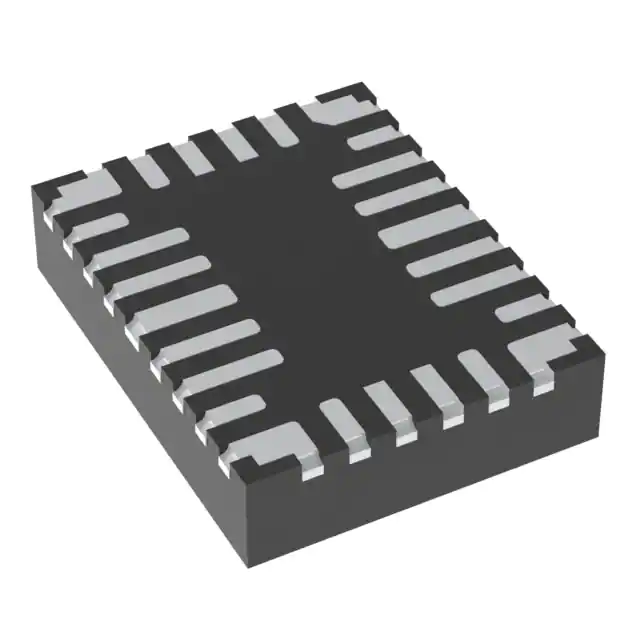
- Part No.:
- MPQ7920GRM-0000-AEC1-Z
- Manufacturer:
- Monolithic Power Systems Inc.
- Category:
- Voltage Regulators - Linear + Switching
- Package:
- 26-PowerVFQFN
- Datasheet:
-
 MPQ7920GRM-0000-AEC1-Z.pdf
- Description:
- 5V PMIC WITH FOUR 2A/2.5A/4.5A/4
- Quantity:
- Payment:

- Shipping:

Inventory:1,801
Please send an inquiry. Send us your inquiry, and we will respond immediately.
Product details
Overview
MPQ7920GRM-0000-AEC1-Z from Monolithic Power Systems is an AEC-Q100 Grade 1 automotive power management IC integrating four synchronous buck converters (4.5A/2.5A/4.5A/2A), five LDOs (including RTC-dedicated 10mA LDO), I²C interface, and two-time programmable MTP for voltage, sequencing, and mode configuration. It operates from 2.7V–5.5V input and delivers tightly regulated outputs for SoC and sensor subsystems in infotainment head units.
For engineers reviewing the MPQ7920GRM-0000-AEC1-Z datasheet, MPQ7920GRM-0000-AEC1-Z pinout, MPQ7920GRM-0000-AEC1-Z application, or MPQ7920GRM-0000-AEC1-Z equivalent, this page provides verified technical context, QFN-26 pin mapping, real-world automotive use cases, and validated alternative PMICs with documented functional differences.
Technical Context
The MPQ7920 employs constant-on-time (COT) control across all four buck regulators to achieve fast transient response (<10µs load step recovery) and stable operation without external compensation. Each converter supports independent programmable switching frequency up to 2.75MHz, enabling compact 1.5–2.2µH inductors and low-ESR ceramic output capacitors.
System-level flexibility is enabled by dual configuration paths: factory-programmed MTP (two-time writable for MPQ7920GRM-0000-AEC1-Z) sets default power-on sequence (0.5ms/2ms/8ms/16ms slots), soft-start times (140–430µs), and forced-PWM/auto-PFM modes; runtime I²C (address 0x69, 3.4MHz max) allows dynamic voltage scaling and fault monitoring via 8-bit register map.
Key Specifications
| Parameter | Value and Actual Design Meaning |
|---|---|
| Input Voltage Range | 2.7V to 5.5V - supports direct connection to automotive 5V rail with ±10% tolerance and UVLO hysteresis of 300mV. |
| Buck Output Current | Buck1/Buck3: 4.5A; Buck2: 2.5A; Buck4: 2A - enables parallel operation (Buck1+Buck3, Buck2+Buck4) for higher current rails. |
| Output Voltage Accuracy | ±2.3% over -40°C to +125°C - VFB1 = 1.15V ±2.3%, VFB2 = 1.5V ±2.3%, critical for DDR memory and core logic supply stability. |
| Switching Frequency | Adjustable 1.8–2.75MHz - reduces inductor size and improves light-load efficiency in CCM mode. |
| LDO Dropout | 50mV at 300mA - ensures stable 1.8V/3.3V LDO outputs even under high-current transients in display timing controllers. |
| I²C Interface | Standard-mode/fast-mode compatible (3.4MHz), 0.4V logic low, 1.4V logic high - interoperable with automotive microcontrollers without level-shifting. |
| ESD Rating | ±4kV HBM, ±2kV CDM on all pins - meets AEC-Q100 stress requirements for harsh automotive environments. |
Pinout & Package
MPQ7920GRM-0000-AEC1-Z is housed in a wettable-flank QFN-26 package (3.5mm × 4.5mm, 0.5mm pitch), optimized for automated optical inspection (AOI) and thermal performance (θJA = 20°C/W on 4-layer EVB). The package integrates dedicated ground planes (GND1 for Buck1/Buck3, GND2 for Buck2/Buck4) and analog ground (AGND) separation to minimize noise coupling.
| Pin/Terminal | Circuit Role | Design Meaning |
|---|---|---|
| 1 FB1 | Buck 1 feedback input | Direct connection to Buck1 output; sets 1.15V default with ±2.3% accuracy over temperature. |
| 2 PWRON | Power-on/off enable input | Level-triggered logic input (0.8–1.2V threshold); initiates full power sequence when pulled high. |
| 3 VIN1 | Buck 1 input supply | 2.7–5.5V rail shared with VIN2/VIN3/VIN4/AVIN; requires local 22µF ceramic decoupling. |
| 4 SW1 | Buck 1 high-side switch node | Connects to external 1µH inductor; layout must use wide copper trace to minimize EMI and conduction loss. |
| 5 GND1 | Power ground for Buck1/Buck3 | Separate ground plane tied to GND2 and AGND via multiple vias to reduce ground bounce during switching. |
| 9 RSTO | Open-drain reset output | Asserts low during power-up/down sequences; requires external pull-up for CPU reset signaling (50ms delay configurable). |
| 10 SCL | I²C clock input | Supports 3.4MHz fast-mode; internal 5µA pull-down ensures bus idle state when unconnected. |
| 11 SDA | I²C data bidirectional pin | Drives and senses I²C data; compatible with standard automotive MCU I²C peripherals. |
| 22 OUT3 | LDO3 output (1.8V) | 300mA low-noise LDO powered by VIN2; used for camera sensor analog supplies. |
| 23 OUT2/EN1 | Configurable LDO2 output or enable input | When configured as EN1, logic ≤3.3V disables entire PMIC; as LDO2, delivers 1.8V @ 300mA. |
| 24 OUTRTC | RTC-dedicated LDO output | 10mA, 3.3V output with 25µA quiescent current; maintains real-time clock during system sleep. |
| 25 AGND | Analog ground reference | Must be connected to GND1/GND2 with low-inductance path; isolates sensitive feedback and I²C circuits. |
| 26 AVIN | Analog logic supply input | 2.7–5.5V input bypassed with 0.1µF capacitor; connected via 4.7Ω resistor to suppress noise coupling into control circuitry. |
Key Features
| Feature | Design Value |
|---|---|
| Four independent buck converters with parallel capability | Buck1+Buck3 (4.5A+4.5A) and Buck2+Buck4 (2.5A+2A) support scalable power delivery for multi-core SoCs. |
| Two-time programmable MTP (MPQ7920GRM-0000-AEC1-Z) | Enables field-programmable power-on sequence, soft-start, and voltage defaults without requiring I²C host during boot. |
| Flexible LDO architecture with dual input rails | VIN2 powers LDORTC/LDO2/LDO3; VIN5 powers LDO4/LDO5 - allows independent supply domain isolation for display and audio subsystems. |
| Integrated protection suite | UVLO, OCP (7.4–11.4A per buck), OVP (115–125% VREF), thermal shutdown (153°C trip), and output discharge resistors (3–20Ω) prevent latch-up and overshoot. |
| Automotive-grade reliability | AEC-Q100 Grade 1 (-40°C to +125°C TJ), wettable flanks for solder joint inspection, and RoHS/halogen-free construction. |
Applications
| Automotive Infotainment Head Unit | Automotive Video Recorder (DVR) |
|---|---|
Use Scenario: Central infotainment system powering application processor, GPU, DDR memory, and touch controller. IC Role / Device Role / Timing Role: Primary PMIC delivering 1.15V core, 1.5V GPU, 1.15V memory, and 1.8V I/O rails with synchronized power-up sequence. Use Value: Eliminates discrete DC/DC + LDO solution; reduces BOM count by 12+ components and PCB area by >35% versus discrete design. |
Use Scenario: Dual-channel dashcam with image signal processor, CMOS sensors, and eMMC storage. IC Role / Device Role / Timing Role: Supplies 3.3V RTC, 1.8V sensor analog, 1.1V ISP core, and 1.8V memory I/O with independent VIN2/VIN5 domains. Use Value: Enables clean power domain separation between video capture and storage subsystems, reducing cross-talk-induced image artifacts. |
| Automotive Digital Instrument Cluster | Automotive ADAS Camera Module |
Use Scenario: TFT-LCD cluster with graphics controller, backlight driver, and CAN interface. IC Role / Device Role / Timing Role: Generates 1.8V display interface, 3.3V CAN transceiver, 1.1V GPU core, and 1.8V memory with 50ms RSTO delay for safe MCU initialization. Use Value: Integrated RSTO and programmable power sequencing ensure deterministic boot order, preventing display initialization faults. |
Use Scenario: Front-facing 8MP camera module with HDR sensor and MIPI CSI-2 interface. IC Role / Device Role / Timing Role: Delivers low-noise 1.8V analog sensor supply (LDO4), 1.1V digital core (Buck4), and 3.3V lens actuator (LDO5) with <50mV dropout. Use Value: PSRR of 52dB at 1kHz on LDO4/LDO5 suppresses switching noise from bucks, preserving sensor SNR and HDR linearity. |
Equivalent & Alternatives
The following parts are listed as comparable options for similar multi-rail automotive PMIC applications.
| Alternative Part | Technical Difference | Application Difference | Selection Advice |
|---|---|---|---|
| NCP81239MNTXG | Three 4A bucks + four LDOs; no MTP; fixed 2.2MHz fSW; I²C only (no OTP/MTP) | Lacks field-programmable sequencing; requires external sequencer for complex power-up timing | Select when MTP is unnecessary and cost sensitivity outweighs configurability needs. |
| TPS65917Q1RSLRQ1 | Four 3A bucks + six LDOs; one-time programmable OTP (not MTP); 2.2MHz max fSW; integrated watchdog | OTP limits post-silicon tuning; lacks two-time reprogrammability for firmware updates or variant management | Select when integrated watchdog and TI ecosystem support are prioritized over field reconfiguration. |
Compared with NCP81239MNTXG and TPS65917Q1RSLRQ1, MPQ7920GRM-0000-AEC1-Z uniquely combines two-time MTP, parallel buck capability, and wettable-flank QFN in a single 3.5×4.5mm footprint-enabling late-stage power architecture tuning without hardware revision.
Availability
MPQ7920GRM-0000-AEC1-Z is available at Aetrix Electronics and suitable for automotive infotainment, video recorder, and digital instrument cluster designs requiring stable component supply, AEC-Q100 compliance, and long-term lifecycle assurance.
Supply support for MPQ7920GRM-0000-AEC1-Z includes scheduled delivery planning, volume procurement assistance, BOM continuity management, traceable sourcing, and lifecycle availability coordination for OEM customers, industrial embedded developers, connected-device designers, and electronics production programs.
Manufacturer
Monolithic Power Systems (MPS) is a fabless semiconductor company specializing in high-performance power management ICs, with over 20 years of expertise in DC/DC conversion, battery management, and automotive-grade solutions.
The MPQ7920 belongs to MPS's AEC-Q100-qualified automotive PMIC product line, designed specifically for 5V-based infotainment, ADAS, and body electronics systems requiring high integration, programmability, and thermal robustness.
FAQ
What is the MTP programming limit for MPQ7920GRM-0000-AEC1-Z?
This part features two-time programmable MTP, allowing full configuration of default output voltages, power-on/off sequence timing (0.5ms/2ms/8ms/16ms slots), soft-start duration, and operating modes. Unlike OTP versions, it supports field reprogramming for design iteration or variant customization without mask changes.
How does the COT control improve transient response compared to voltage-mode control?
Constant-on-time (COT) control eliminates loop compensation components and delivers sub-10µs load transient recovery by directly adjusting on-time based on output voltage deviation. This avoids phase-margin instability risks inherent in voltage-mode architectures, especially under wide input/output voltage ranges typical in automotive 5V systems.
Can Buck1 and Buck3 be paralleled, and what is required for stable current sharing?
Yes-Buck1 and Buck3 support parallel operation via shared FB1/FB3 nodes and synchronized phase delay programming. Stable current sharing requires matched external components (inductors, output capacitors), identical PCB trace impedance, and enabling the "parallel mode" bit in the MTP/I²C register (REG0x0A[7]). No external current-sense resistors are needed.
What is the function of the OUT2/EN1 pin, and how is its mode selected?
OUT2/EN1 is a dual-function pin: when configured as LDO2, it delivers 1.8V @ 300mA; when configured as EN1, it acts as a logic-enable input (≤3.3V compatible) to globally disable all regulators. Mode selection is set via MTP bit REG0x02[0] and locked after power-up; no runtime switching is supported.
Does MPQ7920GRM-0000-AEC1-Z support dynamic voltage scaling (DVS) during operation?
Yes-via I²C register writes (e.g., REG0x10–REG0x13), output voltages of all four bucks and five LDOs can be adjusted in real time. DVS steps are 12.5mV (for 0.4–3.5875V range) or 7.4mV (for 0.4–2.2V range), enabling adaptive power management for processors and memory subsystems.
What thermal derating applies above 85°C ambient temperature?
With θJA = 20°C/W on a 4-layer evaluation board, maximum continuous power dissipation drops linearly: at TA = 105°C, PD(MAX) = (150°C − 105°C) / 20°C/W = 2.25W. Derating is enforced by internal thermal shutdown at 153°C junction temperature, with 23°C hysteresis for recovery.
Is the RSTO pin actively driven or open-drain, and what pull-up value is recommended?
RSTO is an open-drain output requiring an external pull-up resistor to a 3.3V or 5V rail. A 10kΩ resistor is recommended to ensure fast rise time (<1µs) while limiting current to <0.5mA during assertion. The pin asserts low for 50ms (configurable via I²C) during power-on and power-off sequences.
MPQ7920GRM-0000-AEC1-Z Specifications
- Product attributes
- Attribute value
- Manufacturer:
- Monolithic Power Systems Inc.
- Series:
- -
- Package/Case:
- 26-PowerVFQFN
- Packaging:
- Tape & Reel (TR)
- Product Status:
- Discontinued at Digi-Key
- Topology:
- Step-Down (Buck) Synchronous (4), Linear (LDO) (5)
- Number of Outputs:
- 9
- Frequency - Switching:
- 2.2MHz
- Voltage/Current - Output 1:
- Programmable, 0.4V ~ 3.5875V, 4.5A
- Voltage/Current - Output 2:
- Programmable, 0.4V ~ 3.5875V, 4.5A
- Voltage/Current - Output 3:
- Programmable, 0.4V ~ 3.5875V, 4.5A
- w/LED Driver:
- No
- w/Supervisor:
- No
- w/Sequencer:
- No
- Voltage - Supply:
- 2.7V ~ 5.5V
- Operating Temperature:
- -40°C ~ 125°C (TJ)
- Grade:
- Automotive
- Qualification:
- AEC-Q100
- Mounting Type:
- Surface Mount
- Supplier Device Package:
- 26-QFN (3.5x4.5)
MPQ7920GRM-0000-AEC1-Z FAQ
1.How can I place an order for MPQ7920GRM-0000-AEC1-Z through Aetrix?
Please submit a Request for Quotation (RFQ) for MPQ7920GRM-0000-AEC1-Z on Aetrix. Our sales agent will provide a competitive quotation and guide you through the order confirmation once you accept the terms.
2.Are the price and stock information for MPQ7920GRM-0000-AEC1-Z reliable?
The price and inventory of MPQ7920GRM-0000-AEC1-Z are updated periodically and may fluctuate due to market conditions. Stock and pricing data are typically refreshed every 24 hours. Quotation validity for MPQ7920GRM-0000-AEC1-Z is usually 5 days.
3.What payment methods are accepted for MPQ7920GRM-0000-AEC1-Z?
We accept Wire Transfer, PayPal, Credit Card, Western Union, MoneyGram, and Escrow for MPQ7920GRM-0000-AEC1-Z transactions.
Note: Certain payment methods may incur a processing fee.
4.How is shipping managed for MPQ7920GRM-0000-AEC1-Z?
MPQ7920GRM-0000-AEC1-Z orders can be shipped via leading logistics carriers, including DHL, UPS, FedEx, TNT, or Registered Mail.
Once your MPQ7920GRM-0000-AEC1-Z order is processed, you will receive an email with the shipment details and tracking number.
Note: Tracking information may take up to 24 hours to appear. Express delivery typically takes 3–5 business days.
5.How can I obtain technical support or documentation for MPQ7920GRM-0000-AEC1-Z?
For technical support, including MPQ7920GRM-0000-AEC1-Z datasheets, pinout diagrams, or application guidance, please contact our engineering support team. They can provide detailed documentation and assistance for your MPQ7920GRM-0000-AEC1-Z requirements.
6.How does Aetrix verify that MPQ7920GRM-0000-AEC1-Z is sourced from the original manufacturer or authorized distributors?
All MPQ7920GRM-0000-AEC1-Z products on Aetrix are procured from qualified distributors and authorized channels. Our dedicated quality assurance team conducts strict verification, including traceability checks and, if necessary, third-party testing. This ensures that MPQ7920GRM-0000-AEC1-Z meets industry standards.
7.What is the process for return or replacement of MPQ7920GRM-0000-AEC1-Z?
All MPQ7920GRM-0000-AEC1-Z units undergo pre-shipment inspection (PSI). If there is an issue with MPQ7920GRM-0000-AEC1-Z, returns or replacements are accepted under the following conditions:
1.Quantity discrepancies, incorrect items, or visible external defects (such as breakage or corrosion), acknowledged by Aetrix.
2.The issue is reported within 90 days of delivery.
3.The MPQ7920GRM-0000-AEC1-Z part is unused and in its original packaging.
Return procedure for MPQ7920GRM-0000-AEC1-Z:
1.Submit a request within 90 days.
2.Obtain a Return Material Authorization (RMA) from Aetrix.
MPQ7920GRM-0000-AEC1-Z Tags

-
TPS6521905RHBR
Texas Instruments
-
MIC3385YHL-TR
Microchip Technology
-
A4402ELPTR-T
Allegro MicroSystems
-
LM26480SQ-AA/NOPB
Texas Instruments
-
A4402KLPTR-T
Allegro MicroSystems
-
BD71847AMWV-E2
ROHM Semiconductor
-
ADP5040ACPZ-1-R7
Analog Devices Inc.
-
LT3048IDC#TRPBF
Analog Devices Inc.
-
ADP5037ACPZ-R7
Analog Devices Inc.
-
XRP7714ILB-F
MaxLinear, Inc.
-
LTC3260EDE#TRPBF
Analog Devices Inc.
-
LTC3260EMSE#PBF
Analog Devices Inc.
Tech Hub

A practical engineering guide to 3.3V and 5V logic compatibility, input thresholds, resistor dividers, translator ICs, MOSFET level shifting, I2C pull-ups, timing limits and power-sequencing risks.

The 74HC595 uses push-pull logic outputs, while the TPIC6B595 uses 50 V open-drain DMOS sinks for higher-power loads. This guide compares timing, current limits, 3.3 V interfacing, load wiring, thermal…

The 74HC595 converts serial data into eight stable parallel outputs. This guide covers pin functions, shift and storage timing, OE and MR behavior, drive-current limits, cascading, voltage compatibilit…

A technical comparison of level-sensitive latches and edge-triggered flip-flops, covering timing windows, setup and hold limits, master–slave operation, time borrowing, race-through, HDL inference and…

A D latch stores one bit while Enable controls when data can pass. This reference covers gate-level operation, truth tables, transparency, setup and hold timing, LE versus OE, common ICs and practical …

An SR latch stores one bit through cross-coupled feedback. This engineering reference covers NOR and NAND implementations, truth tables, forbidden-state recovery, gated operation, switch debouncing, fa…

Latch circuits retain one bit through feedback. This technical reference covers SR and D latches, truth tables, transparency, timing limits, latch-versus-flip-flop behavior, applications and common log…

An engineering guide to LED driver operation, constant-current and constant-voltage outputs, linear and switching topologies, dimming, IC selection, calculations, replacement compatibility, and fault c…

Operational amplifier guide covering op amp basics, feedback, ideal vs real op amps, common configurations, buffer circuits, offset, bias current, gain-bandwidth, slew rate, rail-to-rail limits and sel…

Jumper cables guide covering safe connection order, red and black clamp placement, final ground connection, cable gauge, length, clamp quality, copper vs CCA cables, jump starter comparison and battery…


