
 My Inquiry
 My Account


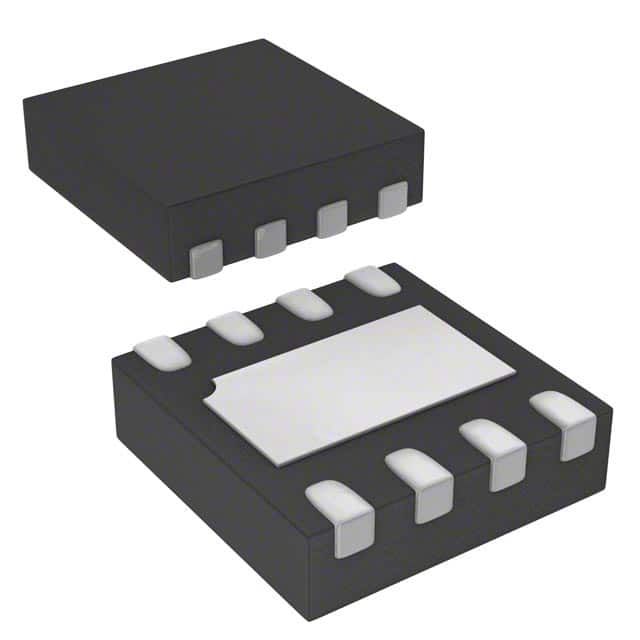
NXP Semiconductors MPR031EPR2
- Part No.:
- MPR031EPR2
- Manufacturer:
- NXP Semiconductors
- Category:
- Sensor, Capacitive Touch
- Package:
- 8-UFDFN
- Datasheet:
-
 MPR031EPR2.pdf
- Description:
- IC CTLR TOUCH SENSOR 8-DFN
- Quantity:
- Payment:

- Shipping:

Inventory:2,593
Please send an inquiry. Send us your inquiry, and we will respond immediately.
Product details
Overview
MPR031EPR2 from NXP Semiconductors (formerly Freescale) is a 2- or 3-pad proximity capacitive touch sensor controller IC designed for low-power handheld electronics. It operates from 1.71V to 2.75V, draws 8 μA in active two-electrode mode with 64 ms response and IRQ enabled, and uses an I²C interface to manage electrode status changes in Bluetooth headsets, remote controls, and mobile phones.
For engineers reviewing the MPR031EPR2 datasheet, MPR031EPR2 pinout, MPR031EPR2 application, or MPR031EPR2 equivalent, key selection factors include its uDFN-8 package size (2 × 2 × 0.65 mm), independent auto-calibration per electrode, separate touch/release thresholds, interrupt-driven electrode reporting, and support for either two electrodes with IRQ or three electrodes without IRQ.
Technical Context
The MPR031EPR2 implements a dedicated CMOS state machine architecture-not software-based-enabling deterministic, low-latency touch detection without host MCU intervention. Its internal logic handles continuous auto-calibration, hysteresis via independent trip thresholds, and electrode multiplexing control.
It supports two operational configurations: (1) two electrodes + IRQ output for event-driven wake-up, or (2) three electrodes with IRQ disabled-both using the same I²C interface and sharing identical supply voltage (1.71–2.75 V) and temperature range (−40°C to +85°C) specifications.
Key Specifications
| Parameter | Value and Actual Design Meaning |
|---|---|
| Supply Voltage | 1.71 V to 2.75 V - enables direct integration with single-cell Li-ion or coin-cell power rails |
| Active Current (2-electrode) | 8 μA @ 64 ms response with IRQ enabled - supports multi-year battery life in always-on remote controls |
| Shutdown Current | ≤4 μA - ensures minimal leakage during system sleep states |
| Electrode Support | 2 electrodes + IRQ OR 3 electrodes without IRQ - provides layout flexibility without changing IC footprint |
| Interface | I²C-compatible serial bus - allows daisy-chaining or shared bus use with other peripherals |
| Package | 8-pin uDFN (2.0 × 2.0 × 0.65 mm) - fits space-constrained PCBs in wearables and compact remotes |
| Operating Temp | −40°C to +85°C - qualified for consumer and industrial ambient environments |
Pinout & Package
MPR031EPR2 is housed in an 8-pin ultra-thin dual flat no-lead (uDFN) package with wettable flank terminations, measuring 2.0 mm × 2.0 mm × 0.65 mm and specified for reflow soldering per JEDEC J-STD-020.
| Pin/Terminal | Circuit Role | Design Meaning |
|---|---|---|
| VDD | Power supply input | Connects to regulated 1.71–2.75 V rail; bypass capacitor required near pin |
| GND | Ground reference | Common return path for analog and digital sections; low-impedance connection critical |
| SCL | I²C clock input | Accepts standard-mode (100 kHz) or fast-mode (400 kHz) I²C clock signals |
| SDA | I²C data bidirectional line | Open-drain I/O requiring external pull-up; shares bus with other I²C devices |
| IRQ | Interrupt output | Active-low open-drain signal indicating electrode state change; only valid in 2-electrode mode |
| ELE0 | Electrode 0 input | Capacitive sensing node; connects to PCB trace or conductive pad; internal C-to-D conversion |
| ELE1 | Electrode 1 input | Second independent sensing node; auto-calibrated separately from ELE0 |
| ELE2 | Electrode 2 input | Third sensing node; functional only when IRQ is disabled per configuration register setting |
Key Features
| Feature | Design Value |
|---|---|
| Continuous auto-calibration | Each electrode independently tracks baseline capacitance drift due to humidity, temperature, or contamination - eliminates manual recalibration |
| Separate touch/release thresholds | Hysteresis prevents false toggling near threshold; enables stable on/off behavior across varying environmental conditions |
| I²C + optional IRQ | Reduces host polling overhead; IRQ pin allows MCU to remain in deep-sleep until touch event occurs |
| Two-mode electrode configuration | Designers choose between higher reliability (2-electrode + IRQ) or higher channel count (3-electrode) without hardware change |
| Ultra-small uDFN package | Enables integration into sub-10 mm² PCB areas - critical for earbuds, stylus buttons, and compact remotes |
Applications
| Remote Control Interface | Bluetooth Headset Controls |
|---|---|
Use Scenario: Capacitive touch buttons replace mechanical switches on IR remote PCBs to improve longevity and aesthetics. IC Role / Device Role / Timing Role: MPR031EPR2 acts as autonomous touch event detector, converting electrode capacitance shifts into I²C-register-accessible status flags. Use Value: Eliminates switch bounce, mechanical wear, and assembly complexity while maintaining <64 ms user-perceived response time. | Use Scenario: Touch-sensitive earpiece housing detects tap gestures for play/pause or call answer/reject functions. IC Role / Device Role / Timing Role: MPR031EPR2 serves as low-power gesture front-end, monitoring up to three discrete zones with independent thresholds. Use Value: Enables waterproof design (no openings), extends battery life via 8 μA active current, and avoids false triggers through per-electrode hysteresis. |
| Mobile Phone Side Keys | Lighting Dimmer Panel |
Use Scenario: Slim bezel-mounted touch strips replace physical volume/power keys on smartphone edges. IC Role / Device Role / Timing Role: MPR031EPR2 functions as dedicated side-key controller, interfacing directly to baseband processor over I²C without firmware load. Use Value: Reduces BOM count by eliminating discrete tact switches and associated debounce circuitry; supports IP67 sealing. | Use Scenario: Linear slider on wall-mounted lighting control panel adjusts brightness via capacitive swipe gesture. IC Role / Device Role / Timing Role: MPR031EPR2 manages three adjacent electrodes to detect directional swipe motion and absolute position. Use Value: Provides smooth, jitter-free dimming control with no moving parts; auto-calibration maintains accuracy across seasonal humidity swings. |
Equivalent & Alternatives
The following parts are listed as comparable options for similar proximity touch sensing applications.
| Alternative Part | Technical Difference | Application Difference | Selection Advice |
|---|---|---|---|
| MPR032EPR2 | Same pinout and electrical specs; supports second I²C address (0x42 vs MPR031EPR2's 0x41) for bus sharing | Required when multiple MPR03x devices share one I²C bus without level-shifting or muxing | Select MPR032EPR2 only if dual-address capability is needed; otherwise MPR031EPR2 is functionally identical |
| AT42QT1070-MAHR | 7-channel QTouch controller; 1.8–5.5 V supply; 12-lead SOIC package; no IRQ pin | Better suited for multi-button panels (>3 zones); less optimal for ultra-compact, low-IQ designs | Choose AT42QT1070-MAHR when expanding beyond three electrodes or operating above 2.75 V; not drop-in compatible |
Compared with MPR031EPR2, MPR032EPR2 offers identical performance with added I²C address flexibility, while AT42QT1070-MAHR provides more channels at the cost of larger footprint and higher minimum supply voltage-making MPR031EPR2 optimal for space- and power-constrained 2–3 zone interfaces.
Availability
MPR031EPR2 is available at Aetrix Electronics and suitable for remote controls, Bluetooth headsets, and mobile phone side-key interfaces requiring stable component supply and long-term lifecycle support.
Supply support for MPR031EPR2 includes scheduled delivery planning, volume procurement assistance, BOM continuity management, traceable sourcing, and lifecycle availability coordination for OEM customers, industrial embedded developers, connected-device designers, and electronics production programs.
Manufacturer
NXP Semiconductors is a global semiconductor company formed from the spin-off of Philips' semiconductor division, specializing in secure connectivity solutions, automotive MCUs, and sensor ICs.
The MPR031EPR2 belongs to NXP's proximity capacitive touch sensor family, engineered specifically for ultra-low-power, small-form-factor human interface applications in portable consumer electronics.
FAQ
What is the maximum number of electrodes supported by the MPR031EPR2?
The MPR031EPR2 supports up to three electrodes, but only two electrodes may be used simultaneously when the IRQ output is enabled. When IRQ is disabled via configuration register, all three electrodes (ELE0–ELE2) become active and independently monitored with auto-calibration and separate touch/release thresholds.
Does the MPR031EPR2 require an external microcontroller to operate?
No, the MPR031EPR2 contains a dedicated CMOS state machine and requires no external firmware. It autonomously monitors electrodes, performs calibration, and reports status via I²C registers. The host MCU reads results or responds to IRQ assertions - no real-time processing is needed on the MPR031EPR2 itself.
What is the purpose of separate touch and release thresholds in the MPR031EPR2?
Separate thresholds provide built-in hysteresis to prevent oscillation near detection boundaries. For each electrode, the MPR031EPR2 uses a higher capacitance value to trigger 'touch' and a lower value to register 'release', ensuring stable, noise-immune switching behavior under varying environmental conditions without requiring host-side debouncing logic.
Can the MPR031EPR2 be used with non-standard PCB trace geometries?
Yes - the MPR031EPR2 supports customizable electrode sensitivity and baseline tracking. Application Note AN3747 details pad layout guidelines, including trace width, spacing, and ground guard ring implementation. Electrode geometry affects raw capacitance range, but the MPR031EPR2's auto-calibration adapts to variations within its 0.1–30 pF input range.
Is the MPR031EPR2 RoHS compliant and halogen-free?
Yes, the MPR031EPR2 meets RoHS Directive 2011/65/EU and is halogen-free per IEC 61249-2-21. The uDFN package uses lead-free matte tin terminations and complies with JEDEC J-STD-020 moisture sensitivity level 1 (MSL1) for unlimited floor life at ≤30°C/60% RH.
MPR031EPR2 Specifications
- Product attributes
- Attribute value
- Manufacturer:
- NXP Semiconductors
- Package/Case:
- 8-UFDFN
- Series:
- -
- Packaging:
- Tape & Reel (TR)
- Product Status:
- Discontinued at Digi-Key
- Programmable:
- Not Verified
- Type:
- Buttons
- Proximity Detection:
- Yes
- Number of Inputs:
- Up to 3
- LED Driver Channels:
- -
- Interface:
- I2C
- Resolution:
- -
- Voltage - Supply:
- 1.71V ~ 2.75V
- Current - Supply:
- 43µA
- Operating Temperature:
- -40°C ~ 85°C
- Grade:
- -
- Qualification:
- -
- Mounting Type:
- Surface Mount
- Supplier Device Package:
- 8-USON (2x2)
MPR031EPR2 FAQ
1.How can I place an order for MPR031EPR2 through Aetrix?
Please submit a Request for Quotation (RFQ) for MPR031EPR2 on Aetrix. Our sales agent will provide a competitive quotation and guide you through the order confirmation once you accept the terms.
2.Are the price and stock information for MPR031EPR2 reliable?
The price and inventory of MPR031EPR2 are updated periodically and may fluctuate due to market conditions. Stock and pricing data are typically refreshed every 24 hours. Quotation validity for MPR031EPR2 is usually 5 days.
3.What payment methods are accepted for MPR031EPR2?
We accept Wire Transfer, PayPal, Credit Card, Western Union, MoneyGram, and Escrow for MPR031EPR2 transactions.
Note: Certain payment methods may incur a processing fee.
4.How is shipping managed for MPR031EPR2?
MPR031EPR2 orders can be shipped via leading logistics carriers, including DHL, UPS, FedEx, TNT, or Registered Mail.
Once your MPR031EPR2 order is processed, you will receive an email with the shipment details and tracking number.
Note: Tracking information may take up to 24 hours to appear. Express delivery typically takes 3–5 business days.
5.How can I obtain technical support or documentation for MPR031EPR2?
For technical support, including MPR031EPR2 datasheets, pinout diagrams, or application guidance, please contact our engineering support team. They can provide detailed documentation and assistance for your MPR031EPR2 requirements.
6.How does Aetrix verify that MPR031EPR2 is sourced from the original manufacturer or authorized distributors?
All MPR031EPR2 products on Aetrix are procured from qualified distributors and authorized channels. Our dedicated quality assurance team conducts strict verification, including traceability checks and, if necessary, third-party testing. This ensures that MPR031EPR2 meets industry standards.
7.What is the process for return or replacement of MPR031EPR2?
All MPR031EPR2 units undergo pre-shipment inspection (PSI). If there is an issue with MPR031EPR2, returns or replacements are accepted under the following conditions:
1.Quantity discrepancies, incorrect items, or visible external defects (such as breakage or corrosion), acknowledged by Aetrix.
2.The issue is reported within 90 days of delivery.
3.The MPR031EPR2 part is unused and in its original packaging.
Return procedure for MPR031EPR2:
1.Submit a request within 90 days.
2.Obtain a Return Material Authorization (RMA) from Aetrix.
MPR031EPR2 Tags

-
IQS228B00000000TSR
Azoteq (Pty) Ltd

-
MTCH101T-I/OT
Microchip Technology
-
IQS323001CSR
Azoteq (Pty) Ltd

-
AT42QT1010-TSHR
Microchip Technology
-
AT42QT1012-TSHR
Microchip Technology
-
AT42QT1011-TSHR
Microchip Technology
-
CAP1206-1-SL-TR
Microchip Technology
-
MTCH102T-I/MS
Microchip Technology
-
IQS323001DNR
Azoteq (Pty) Ltd
-
AT42QT1070-SSUR
Microchip Technology
-
CAP1188-1-CP-TR
Microchip Technology
-
AT42QT1110-AUR
Microchip Technology
Tech Hub

A practical engineering guide to 3.3V and 5V logic compatibility, input thresholds, resistor dividers, translator ICs, MOSFET level shifting, I2C pull-ups, timing limits and power-sequencing risks.

The 74HC595 uses push-pull logic outputs, while the TPIC6B595 uses 50 V open-drain DMOS sinks for higher-power loads. This guide compares timing, current limits, 3.3 V interfacing, load wiring, thermal…

The 74HC595 converts serial data into eight stable parallel outputs. This guide covers pin functions, shift and storage timing, OE and MR behavior, drive-current limits, cascading, voltage compatibilit…

A technical comparison of level-sensitive latches and edge-triggered flip-flops, covering timing windows, setup and hold limits, master–slave operation, time borrowing, race-through, HDL inference and…

A D latch stores one bit while Enable controls when data can pass. This reference covers gate-level operation, truth tables, transparency, setup and hold timing, LE versus OE, common ICs and practical …

An SR latch stores one bit through cross-coupled feedback. This engineering reference covers NOR and NAND implementations, truth tables, forbidden-state recovery, gated operation, switch debouncing, fa…

Latch circuits retain one bit through feedback. This technical reference covers SR and D latches, truth tables, transparency, timing limits, latch-versus-flip-flop behavior, applications and common log…

An engineering guide to LED driver operation, constant-current and constant-voltage outputs, linear and switching topologies, dimming, IC selection, calculations, replacement compatibility, and fault c…

Operational amplifier guide covering op amp basics, feedback, ideal vs real op amps, common configurations, buffer circuits, offset, bias current, gain-bandwidth, slew rate, rail-to-rail limits and sel…

Jumper cables guide covering safe connection order, red and black clamp placement, final ground connection, cable gauge, length, clamp quality, copper vs CCA cables, jump starter comparison and battery…


