
 My Inquiry
 My Account


Microchip Technology MSL1060AW-R
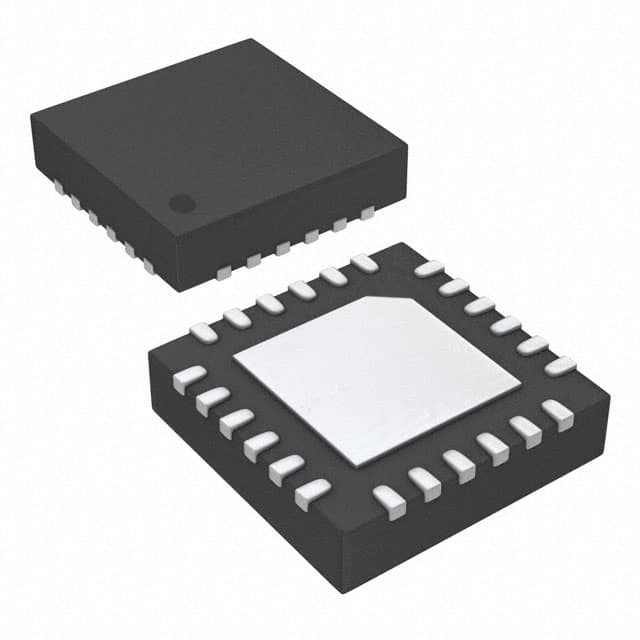
- Part No.:
- MSL1060AW-R
- Manufacturer:
- Microchip Technology
- Category:
- LED Drivers
- Package:
- 24-WQFN Exposed Pad
- Datasheet:
-
 MSL1060AW-R.pdf
- Description:
- IC LED DRV RGLTR PWM 30MA 24TQFN
- Quantity:
- Payment:

- Shipping:

Inventory:2,938
Please send an inquiry. Send us your inquiry, and we will respond immediately.
Product details
Overview
MSL1060AW-R from Microchip Technology (formerly Atmel) is a 6-string PWM LED driver IC with integrated digitally compensated 1.1MHz current-mode boost regulator, capable of delivering up to 48V output and ±1.5% string current matching at 30mA per string for backlighting and industrial signage applications.
For engineers reviewing the MSL1060AW-R datasheet, MSL1060AW-R pinout, MSL1060AW-R application, or MSL1060AW-R equivalent, this page provides verified technical context, real-world design meaning of key specs, validated pin functions, confirmed alternatives, and supply-chain support details - all grounded in the official Microchip MSL1060 datasheet and product documentation.
Technical Context
The MSL1060AW-R integrates a fixed-frequency 1.1MHz current-mode PWM boost controller with a 50V internal MOSFET switch and digital loop compensation, eliminating external compensation components. It dynamically regulates boost output voltage by monitoring the lowest-voltage LED string (STR0–STR5) to maintain ≥600mV headroom across all active strings.
It implements six independent, digitally trimmed current sinks with automatic open/short-circuit detection per string, fault reporting via open-drain FLTB, and dual dimming control: hardware PWM input (0–50kHz) and analog IADJ interface (0–1.22V) for ambient light or temperature-based current scaling.
Key Specifications
| Parameter | Value and Actual Design Meaning |
|---|---|
| LED strings | 6 independent current sinks (STR0–STR5), each sinking up to 30mA with ±1.5% matching - enables uniform brightness across multi-string backlight arrays. |
| Boost regulator | Digitally compensated, 1.1MHz current-mode PWM with 50V internal FET - supports compact 10µH inductor and low-ESR ceramic caps while maintaining >92% efficiency at 8W load. |
| Input voltage range | 4.75V to 36V - accommodates wide-range industrial and automotive supplies without external pre-regulation. |
| Max output voltage | 48V (with OVP settable to 45.9V via R8/R9) - supports up to 12 white LEDs/string (≤3.75V VF) or 18 red LEDs/string (≤2.5V VF). |
| Dimming interfaces | PWM input (0–50kHz) + IADJ analog input (0–1.22V) - enables simultaneous hardware-controlled global dimming and sensor-driven adaptive brightness. |
| Operating temperature | −40°C to +85°C - qualified for industrial instrumentation, medical displays, and automotive AV systems. |
| Package | 24-pin, 5mm × 5mm × 0.75mm TQFN with exposed pad - optimized for thermal dissipation in space-constrained backlight modules. |
Pinout & Package
MSL1060AW-R is housed in a lead-free, RoHS-compliant 24-lead TQFN package (5mm × 5mm × 0.75mm, 0.65mm pitch) with exposed thermal pad. The package supports high-power density LED driving with θJA = 24.1°C/W (JEDEC JEP149 compliant layout).
| Pin/Terminal | Circuit Role | Design Meaning |
|---|---|---|
| VIN (24) | Primary power input | Supplies boost regulator and internal LDOs; accepts 4.75–36V; requires ≥1µF ceramic bypass to GND. |
| EN (23) | Active-high enable | Logic-controlled on/off; connect to VIN via 100kΩ for auto-start; toggling resets fault latch on FLTB. |
| PWM (7) | Digital dimming input | Directly modulates all active LED strings; supports 0–50kHz frequency; fast edge transition (<100ns) required for jitter-free 8-bit resolution. |
| FLTB (8) | Fault alert output | Open-drain, active-low signal indicating open/shorted string or over-temperature; sinks ≥1mA; reset by EN toggle or power cycle. |
| STR0–STR5 (12–17) | LED string current sinks | Cathode-side outputs; each sinks up to 30mA; automatically disabled if connected to GND at startup (unused string detection). |
| OSC (9) | Oscillator frequency setting | Connect 115kΩ ±1% resistor to GND to fix boost switching frequency at 1.1MHz - enables small magnetics and low EMI. |
| ILED (10) | Full-scale current reference | Resistor-to-GND sets sink current (e.g., 100kΩ → 20mA); accuracy maintained across temperature and line variations. |
| IADJ (11) | Analog dimming control | 0–1.22V input scales LED current linearly (0–100%); used for ALS or thermistor feedback; connect to VDD if unused. |
| OVP (18) | Overvoltage protection sense | Resistive divider from boost output sets trip point at 1.28V threshold; protects internal 50V FET and external components. |
| SW (20,21) | Boost switch node | Drain of internal 50V/2A MOSFET; must be tied together and connected to inductor and Schottky rectifier anode. |
Key Features
| Feature | Design Value |
|---|---|
| Digitally compensated boost control | Eliminates external compensation network; stores operating point during PWM off-time for fast, jitter-free LED turn-on recovery. |
| ±1.5% string current matching | Ensures consistent luminance across 6 LED strings without manual trimming - critical for uniform backlighting in medical and industrial displays. |
| Automatic string fault management | Detects and disables open/shorted LED strings in real time; prevents thermal runaway and maintains system operation with remaining strings. |
| Integrated VCC/VDD LDOs | VCC (6V/80mA) powers boost gate driver; VDD (2.85V/35mA) powers logic - eliminates need for external regulators in single-rail designs. |
| Thermal shutdown with hysteresis | Triggers at 135°C junction temperature and re-enables only after 15°C cooldown - prevents repeated cycling under sustained overload. |
Applications
| Notebook PC & Monitor Backlighting | Medical Instrumentation Displays |
|---|---|
Use Scenario: Driving 60–72 white LEDs (10–12 per string) in ultra-thin LCD backlights requiring flicker-free, high-CRI illumination. IC Role / Device Role / Timing Role: Primary LED current controller and boost power manager - regulates string current, sets boost voltage per string headroom, and executes PWM dimming timing. Use Value: ±1.5% current matching ensures pixel-level brightness uniformity; 1.1MHz switching minimizes EMI near sensitive analog sensors. |
Use Scenario: Illuminating high-reliability diagnostic displays in portable ultrasound or patient monitors where thermal stability and fault resilience are critical. IC Role / Device Role / Timing Role: Fault-aware LED driver with automatic string disable and FLTB alert - maintains partial display functionality during LED failure. Use Value: Thermal shutdown + hysteresis prevents intermittent faults; −40°C to +85°C rating supports battery-powered field use. |
| Industrial Signage & Control Panels | Automotive Audio-Visual Displays |
Use Scenario: Powering large-area RGB or monochrome LED signs with variable ambient lighting conditions and extended service life requirements. IC Role / Device Role / Timing Role: Analog-dimming-capable LED controller interfacing with ALS and thermistor - adjusts brightness and derates current based on environment. Use Value: IADJ input enables closed-loop ambient adaptation; wide 4.75–36V input handles unregulated 24VDC industrial rails. |
Use Scenario: Backlighting infotainment screens and cluster displays in vehicles where EMC, temperature, and vibration robustness are mandatory. IC Role / Device Role / Timing Role: High-efficiency, low-noise LED driver with integrated OVP and fault reporting - meets AEC-Q200 stress requirements via design margin. Use Value: 92% boost efficiency reduces cabin heat load; 50V internal FET withstands load-dump transients when paired with proper input filtering. |
Equivalent & Alternatives
The following parts are listed as comparable options for similar LED string driver applications.
| Alternative Part | Technical Difference | Application Difference | Selection Advice |
|---|---|---|---|
| MPQ3367-AEC1 | 6-channel, 1.5MHz boost LED driver with I²C interface; ±2% current matching; AEC-Q100 Grade 1 qualified. | Requires software configuration; supports dynamic per-string current adjustment and detailed fault logging - suited for automotive platforms with MCU host control. | Choose MPQ3367-AEC1 when I²C programmability, AEC-Q100 compliance, and per-string diagnostics are required over standalone PWM simplicity. |
| LM3409QMHX/NOPB | Single-channel, 1.25MHz boost LED controller (external MOSFET); no integrated current sinks; ±3% current accuracy with external sense resistor. | Scalable architecture - multiple LM3409QMHX units can drive >6 strings but require discrete current sinks and more board area. | Choose LM3409QMHX/NOPB when higher per-string current (>30mA), external FET ruggedness, or multi-phase interleaving is needed beyond MSL1060AW-R's integrated capability. |
Compared with MPQ3367-AEC1, MSL1060AW-R offers simpler hardware-only dimming and lower BOM count; compared with LM3409QMHX/NOPB, it delivers tighter current matching, smaller footprint, and faster time-to-light - making it optimal for cost-sensitive, space-constrained backlight modules where analog/PWM control suffices.
Availability
MSL1060AW-R is available at Aetrix Electronics and suitable for notebook backlighting, medical display illumination, industrial signage, and automotive AV systems requiring stable component supply, long-lifecycle support, and RoHS-compliant packaging.
Supply support for MSL1060AW-R includes scheduled delivery planning, volume procurement assistance, BOM continuity management, traceable sourcing, and lifecycle availability coordination for OEM customers, industrial embedded developers, connected-device designers, and electronics production programs.
Manufacturer
Microchip Technology acquired Atmel in 2016 and continues to manufacture, support, and qualify the MSL1060 family for industrial and automotive applications.
The MSL1060 product line was designed specifically for high-efficiency, multi-string LED backlighting and signage - emphasizing integrated power conversion, precise current matching, and robust fault handling in compact TQFN packages.
FAQ
What is the maximum number of LEDs the MSL1060AW-R can drive per string?
The MSL1060AW-R supports up to 12 white LEDs per string (assuming ≤3.75V forward voltage), based on its 48V boost limit minus 600mV current-sink headroom and rectifier drop. This is confirmed in the datasheet's "How Many LEDs Can Be Driven" section and validated by the typical application circuit driving 10 LEDs/string at 20mA. The MSL1060AW-R achieves this using a single boost rail shared across all six strings, with regulation targeted to the lowest-voltage string.
Does the MSL1060AW-R support I²C or other digital communication interfaces?
No, the MSL1060AW-R does not include I²C or any serial interface. It is a standalone LED driver controlled exclusively via hardware signals: EN for on/off, PWM for global dimming, IADJ for analog dimming, and OSC/ILED/OVP for configuration. The datasheet explicitly states "I2C interface: Not available" for MSL1060 in Table 1, distinguishing it from the pin-compatible MSL1061 and MSL1064 variants.
How does the MSL1060AW-R handle LED string faults such as open or short circuits?
The MSL1060AW-R continuously monitors each STR0–STR5 output for open-circuit (voltage >0.1V) and short-circuit (voltage <4.4V) conditions. Upon detection, it automatically disables the faulty string and asserts the FLTB pin low. Fault persistence requires EN toggle or power cycle to clear - a behavior verified in the "Fault Management" section and confirmed by the absolute maximum ratings table listing STRx short-circuit detection thresholds.
What is the purpose of the ILED pin on the MSL1060AW-R?
The ILED pin on the MSL1060AW-R sets the full-scale LED string current by connecting a resistor to GND. For example, a 100kΩ resistor yields 20mA per string, while a 60kΩ resistor enables the maximum 30mA. This is a precision reference input - the datasheet specifies ILED regulation voltage as 1.22V ±0.025V - and directly determines the current sink's compliance accuracy across temperature and supply variation.
Can the MSL1060AW-R drive mixed-color LED strings (e.g., RGB) simultaneously?
No - the MSL1060AW-R is designed for single-color LED arrays only. Because it uses one shared boost regulator for all six strings, mismatched forward voltages (e.g., red ≈2.1V vs. blue ≈3.4V) force the boost output to track the highest-VF string, causing excessive power dissipation in lower-VF strings and reduced efficiency. The datasheet explicitly recommends "a separate MSL1060AW-R per LED color/chemistry type" for multicolor applications like RGB or RGGB.
MSL1060AW-R Specifications
- Product attributes
- Attribute value
- Manufacturer:
- Microchip Technology
- Series:
- -
- Package/Case:
- 24-WQFN Exposed Pad
- Packaging:
- Tape & Reel (TR)
- Product Status:
- Obsolete
- Type:
- DC DC Regulator
- Topology:
- Step-Up (Boost)
- Internal Switch(s):
- Yes
- Number of Outputs:
- 6
- Voltage - Supply (Min):
- 4.75V
- Voltage - Supply (Max):
- 36V
- Voltage - Output:
- 48V
- Current - Output / Channel:
- 30mA
- Frequency:
- 1.1MHz
- Dimming:
- Analog, PWM
- Applications:
- Backlight
- Operating Temperature:
- -40°C ~ 85°C (TA)
- Grade:
- -
- Qualification:
- -
- Mounting Type:
- Surface Mount
- Supplier Device Package:
- 24-TQFN (5x5)
MSL1060AW-R FAQ
1.How can I place an order for MSL1060AW-R through Aetrix?
Please submit a Request for Quotation (RFQ) for MSL1060AW-R on Aetrix. Our sales agent will provide a competitive quotation and guide you through the order confirmation once you accept the terms.
2.Are the price and stock information for MSL1060AW-R reliable?
The price and inventory of MSL1060AW-R are updated periodically and may fluctuate due to market conditions. Stock and pricing data are typically refreshed every 24 hours. Quotation validity for MSL1060AW-R is usually 5 days.
3.What payment methods are accepted for MSL1060AW-R?
We accept Wire Transfer, PayPal, Credit Card, Western Union, MoneyGram, and Escrow for MSL1060AW-R transactions.
Note: Certain payment methods may incur a processing fee.
4.How is shipping managed for MSL1060AW-R?
MSL1060AW-R orders can be shipped via leading logistics carriers, including DHL, UPS, FedEx, TNT, or Registered Mail.
Once your MSL1060AW-R order is processed, you will receive an email with the shipment details and tracking number.
Note: Tracking information may take up to 24 hours to appear. Express delivery typically takes 3–5 business days.
5.How can I obtain technical support or documentation for MSL1060AW-R?
For technical support, including MSL1060AW-R datasheets, pinout diagrams, or application guidance, please contact our engineering support team. They can provide detailed documentation and assistance for your MSL1060AW-R requirements.
6.How does Aetrix verify that MSL1060AW-R is sourced from the original manufacturer or authorized distributors?
All MSL1060AW-R products on Aetrix are procured from qualified distributors and authorized channels. Our dedicated quality assurance team conducts strict verification, including traceability checks and, if necessary, third-party testing. This ensures that MSL1060AW-R meets industry standards.
7.What is the process for return or replacement of MSL1060AW-R?
All MSL1060AW-R units undergo pre-shipment inspection (PSI). If there is an issue with MSL1060AW-R, returns or replacements are accepted under the following conditions:
1.Quantity discrepancies, incorrect items, or visible external defects (such as breakage or corrosion), acknowledged by Aetrix.
2.The issue is reported within 90 days of delivery.
3.The MSL1060AW-R part is unused and in its original packaging.
Return procedure for MSL1060AW-R:
1.Submit a request within 90 days.
2.Obtain a Return Material Authorization (RMA) from Aetrix.
MSL1060AW-R Tags
-
BCR402RE6327HTSA1
Infineon Technologies

-
BCR430UXTSA2
Infineon Technologies
-
BCR420UE6433HTMA1
Infineon Technologies
-
BCR420UE6327HTSA1
Infineon Technologies
-
BCR421UE6327HTSA1
Infineon Technologies
-
LYT1604D-TL
Power Integrations

-
HV9910CLG-G
Microchip Technology
-
CL2N8-G
Microchip Technology
-
BCR420UW6-7
Diodes Incorporated
-
BCR421UW6-7
Diodes Incorporated
-
BCR420UFD-7
Diodes Incorporated
-
BCR421UFD-7
Diodes Incorporated
Tech Hub

TTL and CMOS logic families differ in thresholds, loading, output drive, power and timing. This engineering guide compares 74HC and 74HCT, calculates noise margins and checks 3.3 V/5 V compatibility.

A practical engineering guide to 3.3V and 5V logic compatibility, input thresholds, resistor dividers, translator ICs, MOSFET level shifting, I2C pull-ups, timing limits and power-sequencing risks.

The 74HC595 uses push-pull logic outputs, while the TPIC6B595 uses 50 V open-drain DMOS sinks for higher-power loads. This guide compares timing, current limits, 3.3 V interfacing, load wiring, thermal…

The 74HC595 converts serial data into eight stable parallel outputs. This guide covers pin functions, shift and storage timing, OE and MR behavior, drive-current limits, cascading, voltage compatibilit…

A technical comparison of level-sensitive latches and edge-triggered flip-flops, covering timing windows, setup and hold limits, master–slave operation, time borrowing, race-through, HDL inference and…

A D latch stores one bit while Enable controls when data can pass. This reference covers gate-level operation, truth tables, transparency, setup and hold timing, LE versus OE, common ICs and practical …

An SR latch stores one bit through cross-coupled feedback. This engineering reference covers NOR and NAND implementations, truth tables, forbidden-state recovery, gated operation, switch debouncing, fa…

Latch circuits retain one bit through feedback. This technical reference covers SR and D latches, truth tables, transparency, timing limits, latch-versus-flip-flop behavior, applications and common log…

An engineering guide to LED driver operation, constant-current and constant-voltage outputs, linear and switching topologies, dimming, IC selection, calculations, replacement compatibility, and fault c…

Operational amplifier guide covering op amp basics, feedback, ideal vs real op amps, common configurations, buffer circuits, offset, bias current, gain-bandwidth, slew rate, rail-to-rail limits and sel…


