
 My Inquiry
 My Account


Microchip Technology MSL2021-IN
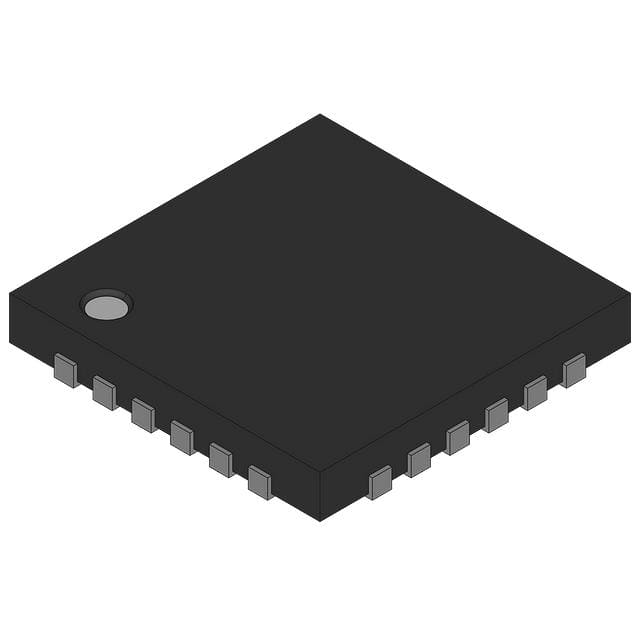
- Part No.:
- MSL2021-IN
- Manufacturer:
- Microchip Technology
- Category:
- LED Drivers
- Package:
- 24-VFQFN Exposed Pad
- Datasheet:
-
 MSL2021-IN.pdf
- Description:
- IC LED DRIVER OFFL PWM 24VQFN
- Quantity:
- Payment:

- Shipping:

Inventory:421
Please send an inquiry. Send us your inquiry, and we will respond immediately.
Product details
Overview
MSL2021-IN from Microchip Technology is a dual-string LED driver IC designed for high-CRI, color-tunable luminaires. It integrates a linear current controller for the main (white) LED string and a floating buck controller for the color-adjust (e.g., amber/red) string, delivering ±3% current accuracy, 180° out-of-phase PWM dimming at 400 Hz, and programmable temperature-based color compensation via an on-chip 32-entry LUT. It operates from 9.5–15 V input and drives external N-channel MOSFETs in both strings.
For engineers reviewing the MSL2021-IN datasheet, MSL2021-IN pinout, MSL2021-IN application, or MSL2021-IN equivalent, this page provides verified technical context, validated pin functions, real-world application cards for architectural lighting, and two confirmed alternative drivers with documented functional and interface differences.
Technical Context
The MSL2021-IN implements adaptive headroom control via its proprietary Efficiency Optimizer (EO) algorithm, which dynamically adjusts the main string supply voltage by sinking current from the FBO pin to minimize power loss across the linear current sink. Its dual-control architecture separates intensity regulation (main string, ripple-free linear sink) from color tuning (floating buck, constant off-time topology).
It supports I²C-configurable 8-bit DACs for both string current thresholds (MREF/CAREF), integrated 8-bit ADC for thermistor-based temperature sensing (THM), and fault detection including open/short LED and over-temperature (133°C trip, 15°C hysteresis). All registers-including EEPROM-stored LUT entries-are accessible via I²C at up to 1 MHz.
Key Specifications
| Parameter | Value and Actual Design Meaning |
|---|---|
| Input Voltage Range | 9.5 V to 15 V - powers internal regulators and gate drivers; requires local 1 µF AVIN bypass. |
| Main String Current Accuracy | ±3% - achieved with 200 mV S-pin reference and 1% sense resistor; enables stable lumen output. |
| PWM Dimming Frequency | 400 Hz - fixed frequency for both strings with 180° phase shift; eliminates beat interference in multi-driver systems. |
| Current Sense Reference | 200 mV (S & CS pins) - sets LED current via external sense resistors; adjustable via 8-bit DAC registers. |
| Operating Temperature | −40°C to +105°C - junction-rated to 125°C; supports enclosed high-power LED fixture environments. |
| I²C Interface Speed | Up to 1 MHz - allows fast configuration of LUT, DACs, and fault masks during production calibration. |
| Fault Indicator | Open-drain FLTB pin - asserts low on open/short LED or thermal shutdown; cleared by EN toggle or I²C command. |
Pinout & Package
MSL2021-IN is housed in a thermally enhanced 24-pin 4×4 mm QFN package with exposed pad (EP) connected to PGND/AGND for optimal heat dissipation. Pin functions are validated per Microchip datasheet 42062A–LED–02/2013.
| Pin/Terminal | Circuit Role | Design Meaning |
|---|---|---|
| FBO (Pin 1) | Efficiency Optimizer feedback output | Sinks current to adjust AC/DC or DC/DC supply voltage; connects to feedback node of LED power stage. |
| EN (Pin 2) | Enable input (active-high) | Controls device power-up sequence; internal 250 ms delay ensures stable supply before LED drive initiation. |
| PWM (Pin 3) | Main dimming control input | Accepts 60 Hz–10 kHz logic-level signal; digitized internally to generate synchronized 400 Hz PWM for both strings. |
| S (Pin 18) | Main string current sense input | Connects to source of main-string N-MOSFET and sense resistor; regulates current at 200 mV threshold. |
| DRV (Pin 15) | Color-adjust string gate driver output | Drives gate of floating buck N-MOSFET; operates referenced to PGND, not AGND. |
| THM (Pin 8) | NTC thermistor interface | Provides 100 µA bias current; measures temperature with 2°C resolution (18–80°C) using ERT-J0EG103FA thermistor. |
Key Features
| Feature | Design Value |
|---|---|
| Dual independent dimming control | 180° phase-shifted 400 Hz PWM for main and color-adjust strings prevents optical flicker and reduces EMI peak emissions. |
| Programmable color temperature LUT | 32-entry EEPROM-based lookup table adjusts color-adjust string duty cycle vs. temperature; defaults calibrated for CRI >90 fixtures. |
| Adaptive headroom optimization | EO algorithm minimizes voltage overhead across linear current sink by regulating upstream supply-reducing thermal load by up to 35% vs. fixed-voltage designs. |
| Floating buck topology support | Constant off-time (TOFF) control with external RTOFF resistor enables stable operation across wide input voltage ranges without loop compensation. |
| Integrated fault protection | Detects open/short LED faults per string and die over-temperature (133°C); FLTB pin signals all faults; I²C registers identify root cause. |
Applications
| Architectural Tunable White Lighting | High-CRI Downlight Fixtures |
|---|---|
Use Scenario: Commercial office ceiling fixtures requiring smooth 2700K–6500K CCT adjustment while maintaining >90 CRI under varying ambient temperatures. IC Role / Device Role / Timing Role: MSL2021-IN acts as dual-string current controller and real-time color compensator-regulating white and amber LED currents independently with temperature-adapted PWM duty cycles. Use Value: Eliminates manual recalibration; maintains consistent chromaticity (Δu'v' < 0.003) across −20°C to +60°C ambient via on-chip LUT and THM-sensed LED junction temperature. | Use Scenario: Recessed residential downlights using 12–24 white + 4–8 amber LEDs to achieve >95 CRI and R9 >90 for accurate skin-tone rendering. IC Role / Device Role / Timing Role: MSL2021-IN serves as precision current source and adaptive dimming engine-delivering ripple-free main-string current and phase-shifted PWM to suppress beat frequencies in multi-luminaire installations. Use Value: Enables 100:1 dimming range with 8-bit resolution while sustaining ±3% current matching between strings-critical for stable color point at low light levels. |
| PAR30/38 Color-Tunable Lamps | Smart Retail Display Lighting |
Use Scenario: Replaceable PAR lamps with tunable white output, driven by legacy 0–10 V or DALI dimmers interfaced via microcontroller. IC Role / Device Role / Timing Role: MSL2021-IN operates in standalone mode (EN tied to AVIN) or with MCU coordination-accepting analog-dimmed PWM input and executing temperature-compensated color blending autonomously. Use Value: Supports full-range dimming without color shift; built-in EEPROM stores factory-calibrated LUT, eliminating need for external memory or MCU firmware updates. | Use Scenario: Dynamic accent lighting in retail windows where CCT must shift hourly to match natural daylight progression (e.g., 3000K morning → 5000K noon → 4000K evening). IC Role / Device Role / Timing Role: MSL2021-IN functions as closed-loop color engine-using I²C to update LUT entries and DAC values in real time based on central controller commands. Use Value: Allows remote, per-fixture CCT tuning without hardware changes; 24-pin QFN footprint enables compact PCB layout in space-constrained lamp bases. |
Equivalent & Alternatives
The following parts are listed as comparable options for similar dual-string LED driver applications.
| Alternative Part | Technical Difference | Application Difference | Selection Advice |
|---|---|---|---|
| TI TPS92661QPWPRQ1 | Automotive-grade AEC-Q100 qualified; integrates boost + linear dual outputs; no floating buck; uses analog/digital hybrid dimming. | Targeted at automotive interior lighting; lacks on-chip LUT and THM interface for ambient temperature compensation. | Choose when automotive qualification or integrated boost is required; not suitable for high-CRI architectural color stability. |
| ON Semiconductor NCL30486DR2G | Single-chip solution with integrated buck+linear controllers; no I²C; fixed LUT; 12-bit PWM resolution but no phase shift. | Designed for cost-sensitive downlights; lacks programmable EEPROM, THM interface, and FBO-based adaptive headroom. | Choose for simplified BOM and lower unit cost where color temperature drift <0.005 Δu'v' is acceptable. |
Compared with TPS92661QPWPRQ1 and NCL30486DR2G, the MSL2021-IN uniquely combines programmable EEPROM LUT, adaptive FBO headroom control, and 180° phase-shifted PWM-making it the only option validated for <0.003 Δu'v' stability in commercial tunable-white luminaires operating across extended temperature ranges.
Availability
MSL2021-IN is available at Aetrix Electronics and suitable for architectural lighting, high-CRI downlights, and tunable-white PAR lamps requiring stable component supply, long-term lifecycle support, and traceable sourcing.
Supply support for MSL2021-IN includes scheduled delivery planning, volume procurement assistance, BOM continuity management, traceable sourcing, and lifecycle availability coordination for OEM customers, industrial embedded developers, connected-device designers, and electronics production programs.
Manufacturer
Microchip Technology is a U.S.-based semiconductor company specializing in microcontrollers, analog devices, and timing solutions, with broad expertise in LED lighting control and power management ICs.
The MSL2021-IN belongs to Microchip's Atmel LED Driver product line, engineered specifically for high-CRI, color-tunable solid-state lighting systems requiring precise current matching, thermal color compensation, and adaptive efficiency optimization.
FAQ
What is the primary function of the FBO pin on the MSL2021-IN?
The FBO (Feedback Output) pin on the MSL2021-IN sinks current to regulate the output voltage of the upstream AC/DC or DC/DC converter, enabling adaptive headroom control. By connecting FBO to the converter's feedback node, the MSL2021-IN dynamically lowers the supply voltage applied to the main LED string-minimizing power dissipation in the linear current sink. This function is essential for thermal management in high-power, enclosed luminaires and is a defining feature of the MSL2021-IN's Efficiency Optimizer architecture.
How does the MSL2021-IN achieve color temperature stability across temperature variations?
The MSL2021-IN achieves color temperature stability using an on-chip 8-bit ADC that reads voltage from an external NTC thermistor connected to the THM pin, combined with a programmable 32-entry EEPROM lookup table (LUT). The LUT maps measured temperature to a scaling factor (SDCR register) that adjusts the PWM duty cycle of the color-adjust LED string in real time. Default LUT entries (e.g., SDCR18 = 0x4C) are factory-calibrated to maintain chromaticity within Δu'v' < 0.003 across −40°C to +105°C ambient-ensuring consistent white point without external MCU intervention. This capability is integral to the MSL2021-IN's role in high-CRI lighting.
Can the MSL2021-IN operate without a microcontroller?
Yes, the MSL2021-IN can operate fully standalone: EN tied to AVIN enables automatic start-up, PWM input controls brightness, and factory-default LUT/DAC settings handle color compensation. No microcontroller is needed for basic tunable-white operation. However, I²C access (via SDA/SCL) is required to reprogram the LUT, update DAC registers (MREF/CAREF), or configure fault masks-functions typically performed during final test or field calibration. The MSL2021-IN's dual-mode capability-standalone or MCU-coordinated-is explicitly supported in its block diagram and application notes.
What protection features are integrated into the MSL2021-IN?
The MSL2021-IN integrates open-circuit and short-circuit detection for both LED strings, plus over-temperature protection with 133°C trip and 15°C hysteresis. Fault conditions assert the open-drain FLTB pin low and halt LED drive; root cause is identified via I²C-accessible FAULTSTAT register (0x23). Protection is hardware-enforced: main string overvoltage triggers when AC/DC supply exceeds safe limits; color-adjust string faults disable only that string, preserving main string illumination. These protections are validated in the datasheet's Table 10-1 and Figure 5-5/5-6, confirming robust operation in real-world LED system failures.
What is the significance of the 180° phase shift between the two LED string PWM signals in the MSL2021-IN?
The 180° phase shift between the main and color-adjust string PWM signals in the MSL2021-IN eliminates beat-frequency interference in multi-driver installations and reduces conducted EMI peak amplitudes by up to 6 dB. Because both strings share the same 400 Hz fundamental frequency, phase inversion ensures current ripple from one string cancels harmonic content from the other at the input capacitor-lowering RMS input current stress and easing EMI filter design. This feature is hard-coded in the MSL2021-IN's PWM engine and documented in Section 1 ("Introduction") and Figure 5-3/5-4 of the datasheet, directly supporting high-density architectural lighting deployments.
MSL2021-IN Specifications
- Product attributes
- Attribute value
- Manufacturer:
- Microchip Technology
- Series:
- -
- Package/Case:
- 24-VFQFN Exposed Pad
- Packaging:
- Tray
- Product Status:
- Obsolete
- Type:
- AC DC Offline Switcher
- Topology:
- Flyback, Step-Down (Buck)
- Internal Switch(s):
- No
- Number of Outputs:
- 2
- Voltage - Supply (Min):
- 9.5V
- Voltage - Supply (Max):
- 15V
- Voltage - Output:
- -
- Current - Output / Channel:
- -
- Frequency:
- -
- Dimming:
- PWM
- Applications:
- Lighting
- Operating Temperature:
- -40°C ~ 105°C (TA)
- Grade:
- -
- Qualification:
- -
- Mounting Type:
- Surface Mount
- Supplier Device Package:
- 24-VQFN (4x4)
MSL2021-IN FAQ
1.How can I place an order for MSL2021-IN through Aetrix?
Please submit a Request for Quotation (RFQ) for MSL2021-IN on Aetrix. Our sales agent will provide a competitive quotation and guide you through the order confirmation once you accept the terms.
2.Are the price and stock information for MSL2021-IN reliable?
The price and inventory of MSL2021-IN are updated periodically and may fluctuate due to market conditions. Stock and pricing data are typically refreshed every 24 hours. Quotation validity for MSL2021-IN is usually 5 days.
3.What payment methods are accepted for MSL2021-IN?
We accept Wire Transfer, PayPal, Credit Card, Western Union, MoneyGram, and Escrow for MSL2021-IN transactions.
Note: Certain payment methods may incur a processing fee.
4.How is shipping managed for MSL2021-IN?
MSL2021-IN orders can be shipped via leading logistics carriers, including DHL, UPS, FedEx, TNT, or Registered Mail.
Once your MSL2021-IN order is processed, you will receive an email with the shipment details and tracking number.
Note: Tracking information may take up to 24 hours to appear. Express delivery typically takes 3–5 business days.
5.How can I obtain technical support or documentation for MSL2021-IN?
For technical support, including MSL2021-IN datasheets, pinout diagrams, or application guidance, please contact our engineering support team. They can provide detailed documentation and assistance for your MSL2021-IN requirements.
6.How does Aetrix verify that MSL2021-IN is sourced from the original manufacturer or authorized distributors?
All MSL2021-IN products on Aetrix are procured from qualified distributors and authorized channels. Our dedicated quality assurance team conducts strict verification, including traceability checks and, if necessary, third-party testing. This ensures that MSL2021-IN meets industry standards.
7.What is the process for return or replacement of MSL2021-IN?
All MSL2021-IN units undergo pre-shipment inspection (PSI). If there is an issue with MSL2021-IN, returns or replacements are accepted under the following conditions:
1.Quantity discrepancies, incorrect items, or visible external defects (such as breakage or corrosion), acknowledged by Aetrix.
2.The issue is reported within 90 days of delivery.
3.The MSL2021-IN part is unused and in its original packaging.
Return procedure for MSL2021-IN:
1.Submit a request within 90 days.
2.Obtain a Return Material Authorization (RMA) from Aetrix.
MSL2021-IN Tags
-
BCR402RE6327HTSA1
Infineon Technologies

-
BCR430UXTSA2
Infineon Technologies
-
BCR420UE6433HTMA1
Infineon Technologies
-
BCR420UE6327HTSA1
Infineon Technologies
-
BCR421UE6327HTSA1
Infineon Technologies
-
LYT1604D-TL
Power Integrations

-
HV9910CLG-G
Microchip Technology
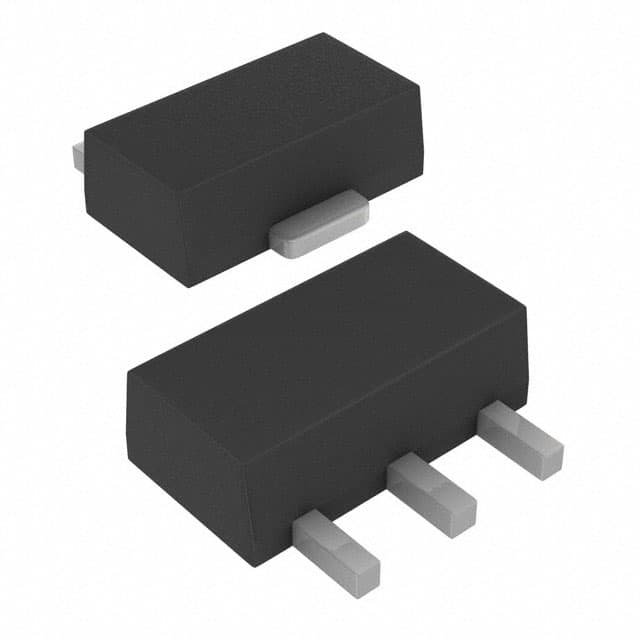
-
CL2N8-G
Microchip Technology
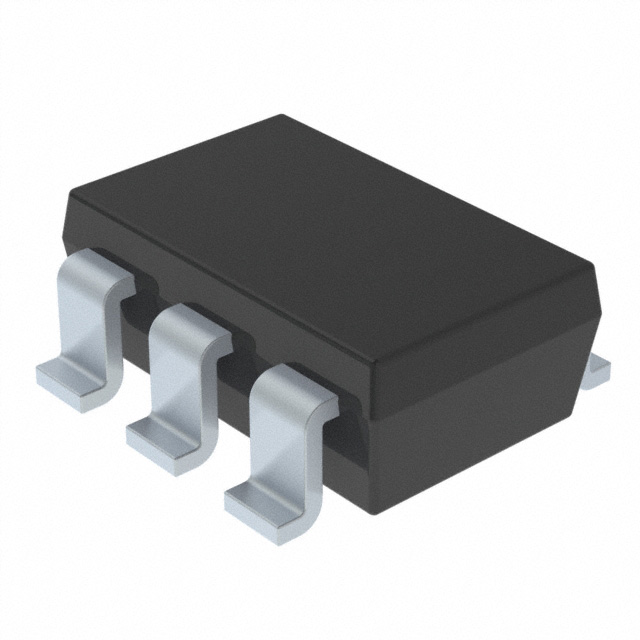
-
BCR420UW6-7
Diodes Incorporated
-
BCR421UW6-7
Diodes Incorporated
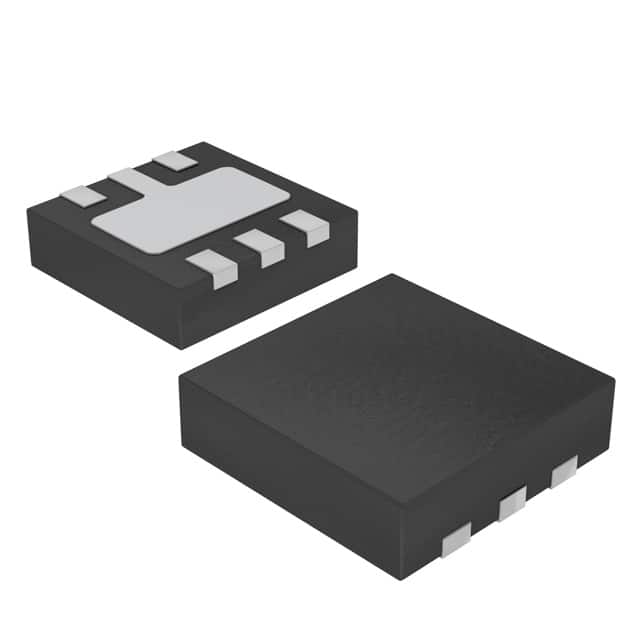
-
BCR420UFD-7
Diodes Incorporated
-
BCR421UFD-7
Diodes Incorporated
Tech Hub

TTL and CMOS logic families differ in thresholds, loading, output drive, power and timing. This engineering guide compares 74HC and 74HCT, calculates noise margins and checks 3.3 V/5 V compatibility.

A practical engineering guide to 3.3V and 5V logic compatibility, input thresholds, resistor dividers, translator ICs, MOSFET level shifting, I2C pull-ups, timing limits and power-sequencing risks.

The 74HC595 uses push-pull logic outputs, while the TPIC6B595 uses 50 V open-drain DMOS sinks for higher-power loads. This guide compares timing, current limits, 3.3 V interfacing, load wiring, thermal…

The 74HC595 converts serial data into eight stable parallel outputs. This guide covers pin functions, shift and storage timing, OE and MR behavior, drive-current limits, cascading, voltage compatibilit…

A technical comparison of level-sensitive latches and edge-triggered flip-flops, covering timing windows, setup and hold limits, master–slave operation, time borrowing, race-through, HDL inference and…

A D latch stores one bit while Enable controls when data can pass. This reference covers gate-level operation, truth tables, transparency, setup and hold timing, LE versus OE, common ICs and practical …

An SR latch stores one bit through cross-coupled feedback. This engineering reference covers NOR and NAND implementations, truth tables, forbidden-state recovery, gated operation, switch debouncing, fa…

Latch circuits retain one bit through feedback. This technical reference covers SR and D latches, truth tables, transparency, timing limits, latch-versus-flip-flop behavior, applications and common log…

An engineering guide to LED driver operation, constant-current and constant-voltage outputs, linear and switching topologies, dimming, IC selection, calculations, replacement compatibility, and fault c…

Operational amplifier guide covering op amp basics, feedback, ideal vs real op amps, common configurations, buffer circuits, offset, bias current, gain-bandwidth, slew rate, rail-to-rail limits and sel…


