
 My Inquiry
 My Account


Microchip Technology MSL2023-IN
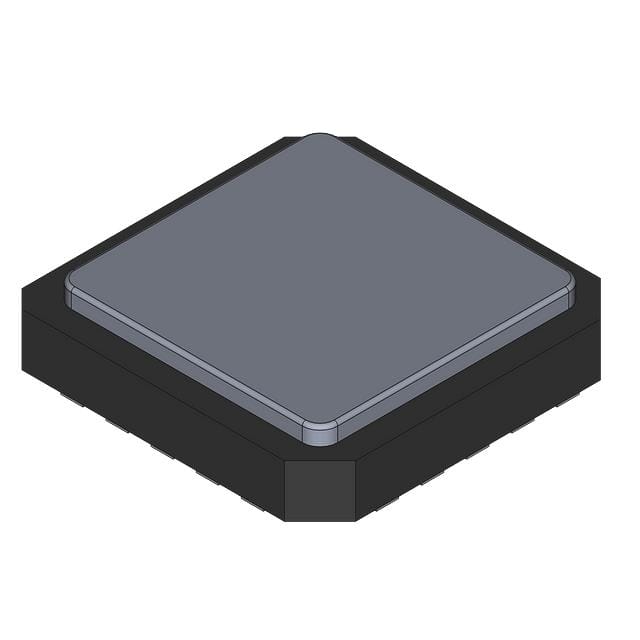
- Part No.:
- MSL2023-IN
- Manufacturer:
- Microchip Technology
- Category:
- LED Drivers
- Package:
- 24-VFQFN Exposed Pad
- Datasheet:
-
 MSL2023-IN.pdf
- Description:
- IC LED DRIVER OFFL PWM 24VQFN
- Quantity:
- Payment:

- Shipping:

Inventory:273
Please send an inquiry. Send us your inquiry, and we will respond immediately.
Product details
Overview
MSL2023-IN from Microchip Technology is a dual-string LED driver IC designed for high-CRI, two-color LED luminaires. It integrates a precision linear current controller for the main (white) LED string and a floating buck controller for the color-adjust (e.g., amber/red) string, delivering ±3% current accuracy, 100:1 dimming range, and adaptive headroom control via FBO feedback. It operates from 9.5V–15V AVIN, supports register-controlled 400Hz phase-shifted PWM dimming, and targets architectural downlights and PAR lamps.
For engineers reviewing the MSL2023-IN datasheet, MSL2023-IN pinout, MSL2023-IN application, or MSL2023-IN equivalent, this page delivers verified technical context-including I²C-accessible 8-bit DACs for peak current control, open/short LED fault detection, thermal shutdown at 133°C, and QFN-24 package compatibility-enabling rapid evaluation against high-CRI lighting design requirements.
Technical Context
The MSL2023-IN implements a hybrid topology: a ripple-free linear current sink drives the main LED string using external N-channel MOSFETs (G/D/S pins), while a constant off-time floating buck regulator-controlled via TOFF resistor and DRV output-regulates the color-adjust string independently. Its proprietary Efficiency Optimizer algorithm dynamically adjusts the LED supply voltage via FBO to minimize power loss across the linear controller.
All critical settings-including main string current reference (MREF = 0x64 → 200 mV), color-adjust reference (CAREF), PWM duty registers (MDUTYHIGH/LOW, CADUTYHIGH/LOW), and fault masking-are accessible and persistent via I²C interface and on-chip EEPROM. The device features dual ground domains (AGND/PGND), dedicated current sense inputs (S and CS), and open-drain FLTB fault signaling with register-based status readback (FAULTSTAT @ 0x23).
Key Specifications
| Parameter | Value and Actual Design Meaning |
|---|---|
| Supply Voltage Range | 9.5 V to 15 V AVIN - powers analog core and logic; requires local 1 µF bypass to AGND. |
| Main String Current Accuracy | ±3 % - achieved via 200 mV S-pin regulation voltage and 1 % external sense resistor RS. |
| Dimming Frequency & Phase | 400 Hz, 180° out-of-phase - fixed internal oscillator enables flicker-free, synchronized dual-string dimming without external timing components. |
| Fault Detection | Open/short LED detection on color-adjust string - triggers FLTB low and sets FAULTSTAT bits; cleared via EN toggle or I²C register write. |
| Operating Temperature | −40 °C to +105 °C - qualified for enclosed high-power LED fixtures with extended thermal cycling requirements. |
| Package | 24-pin 4 mm × 4 mm QFN - exposed pad (EP) must connect to PGND/AGND copper for thermal and electrical integrity. |
| I²C Interface | Standard-mode (100 kHz) and fast-mode (up to 1 MHz) compatible - supports full register access, EEPROM programming, and real-time fault monitoring. |
Pinout & Package
MSL2023-IN is housed in a thermally enhanced 24-pin 4 mm × 4 mm QFN package with exposed thermal pad (EP). Pin functions are electrically isolated between analog (AGND) and power (PGND) domains; CGND pins (3, 8, 12) must be tied to system ground with low-inductance routing.
| Pin/Terminal | Circuit Role | Design Meaning |
|---|---|---|
| FBO (Pin 1) | Efficiency Optimizer Feedback Output | Current-source output that pulls down AC/DC or DC/DC converter feedback node to dynamically adjust VLED and minimize linear regulator overhead. |
| EN (Pin 2) | Enable Input (Active High) | Initiates 250 ms startup sequence; must reach nominal input voltage within this window for stable EO convergence. |
| S (Pin 18) | Main String Source Sense | Connects to source of main-string N-MOSFET and current-sense resistor; regulates current via 200 mV threshold (adjustable via MREF register). |
| G (Pin 19) | Main String Gate Driver Output | Drives gate of external N-MOSFET up to AVIN − 2.0 V; supports high-side switching in linear sink configuration. |
| D (Pin 20) | Main String Drain Connection | Connects to drain of main-string N-MOSFET; handles full LED string current with minimal voltage drop. |
| CS (Pin 13) | Color-Adjust String Current Sense | Inputs to floating buck controller; default 200 mV threshold (adjustable via CAREF) sets color-adjust LED current. |
| DRV (Pin 15) | Color-Adjust Buck Gate Driver | Drives gate of external N-MOSFET in floating buck stage; referenced to PGND, not AGND. |
| TOFF (Pin 10) | Constant Off-Time Set Input | Resistor-to-ground (e.g., 45.3 kΩ) sets buck off-time (0.5 µs typical); determines switching frequency inversely with VLED and VBUCK. |
Key Features
| Feature | Design Value |
|---|---|
| Dual independent current regulation | Linear sink (main string) + floating buck (color-adjust string) enable precise white intensity + CCT tuning without shared voltage constraints. |
| Adaptive headroom control | FBO-driven efficiency optimizer reduces linear regulator power dissipation by dynamically minimizing VLED overhead across line/load variations. |
| Register-controlled 400 Hz PWM | 12-bit duty cycle resolution (0.024 % step) with 180° inter-string phase shift eliminates beat frequencies and improves perceived light uniformity. |
| Integrated 8-bit DACs | MREF and CAREF registers allow digital fine-tuning of both string currents (2 mV/LSB) without hardware changes or external DACs. |
| Comprehensive fault protection | Dedicated open/short detection on color-adjust string, thermal shutdown (133 °C trip), and I²C-accessible FAULTSTAT register enable robust field diagnostics. |
Applications
| Architectural Downlights | High-CRI PAR Lamps |
|---|---|
|
Use Scenario: Recessed ceiling fixtures requiring tunable warm-white output (2700K–4000K) with >90 CRI for retail and hospitality environments. IC Role / Device Role / Timing Role: MSL2023-IN acts as dual-string current controller and adaptive voltage optimizer, synchronizing white and amber LED dimming to maintain chromaticity across intensity levels. Use Value: Enables smooth CCT adjustment without color shift or efficiency loss, leveraging ±3% current matching and 100:1 dimming range. |
Use Scenario: Directional outdoor lighting where thermal stability and long-term lumen maintenance are critical under variable ambient temperatures. IC Role / Device Role / Timing Role: MSL2023-IN provides temperature-compensated current regulation (−40°C to +105°C) and open-circuit fault detection to prevent single-LED failure from disabling entire lamp. Use Value: Ensures consistent light quality and reliability over lifetime, supported by EEPROM-persistent register defaults and thermal shutdown recovery. |
| General LED Luminaires | Color-Tunable Spotlights |
|
Use Scenario: Commercial office troffers needing high-efficiency, low-flicker illumination with programmable dimming curves via I²C. IC Role / Device Role / Timing Role: MSL2023-IN serves as digitally configurable LED driver with integrated PWM generator, eliminating need for external microcontroller dimming signals. Use Value: Reduces BOM count and layout complexity while supporting DALI- or 0–10 V–compatible control via MCU-hosted I²C translation. |
Use Scenario: Museum-grade spotlighting where precise color rendering and dynamic CCT adjustment are required for artifact display. IC Role / Device Role / Timing Role: MSL2023-IN functions as dual-channel current source with independent 12-bit duty control, enabling real-time RGBW or warm-cool white blending. Use Value: Delivers sub-1% current matching between strings and flicker-free operation at 400 Hz, meeting stringent visual comfort standards. |
Equivalent & Alternatives
The following parts are listed as comparable options for similar dual-string LED driver applications.
| Alternative Part | Technical Difference | Application Difference | Selection Advice |
|---|---|---|---|
| MSL2024-IN | Replaces register-controlled PWM with external PWM1/PWM2 inputs; supports wider PWM1 frequency range (60 Hz–22 kHz) and independent string timing. | Preferred when MCU or external controller provides dedicated PWM signals; lacks built-in 400 Hz oscillator and phase-shift logic. | Select MSL2024-IN if system already generates PWM signals; choose MSL2023-IN for self-contained, oscillator-based dimming with guaranteed phase relationship. |
| IS31FL3731-QFLS4-TR | 18-channel LED matrix driver with I²C interface and auto-breathing; no adaptive headroom control, floating buck, or FBO feedback capability. | Targets low-voltage, low-current indicator/matrix applications-not high-power, high-CRI luminaires requiring voltage optimization. | Use IS31FL3731 only for decorative or signage LEDs; MSL2023-IN remains necessary for mains-powered, thermally demanding architectural lighting. |
Compared with MSL2024-IN, MSL2023-IN offers deterministic 400 Hz phase-shifted dimming without external signal sources, while differing from IS31FL3731 in fundamental architecture-MSL2023-IN is a purpose-built, high-voltage, adaptive two-string driver with integrated efficiency optimization, not a general-purpose LED matrix controller.
Availability
MSL2023-IN is available at Aetrix Electronics and suitable for architectural downlights, high-CRI PAR lamps, and color-tunable spotlights requiring stable component supply, long-lifecycle support, and RoHS-compliant packaging.
Supply support for MSL2023-IN includes scheduled delivery planning, volume procurement assistance, BOM continuity management, traceable sourcing, and lifecycle availability coordination for OEM customers, industrial embedded developers, connected-device designers, and electronics production programs.
Manufacturer
Microchip Technology is a global semiconductor company specializing in microcontrollers, analog devices, and LED driver solutions for industrial, automotive, and lighting applications.
The MSL2023-IN belongs to Microchip's Atmel LED Drivers product line, engineered specifically for high-CRI, two-color LED luminaires requiring adaptive voltage optimization, precise current matching, and robust fault handling in thermally constrained enclosures.
FAQ
What is the primary function of the FBO pin on the MSL2023-IN?
The FBO (Feedback Output) pin on the MSL2023-IN is a current-source output that connects to the feedback node of an external AC/DC or DC/DC converter. It dynamically adjusts the LED string supply voltage (VLED) to minimize voltage overhead across the linear current controller, thereby maximizing efficiency. In normal operation, FBO sinks current to raise VLED; its full-scale range is 170–340 µA, and it is essential for adaptive headroom control in the MSL2023-IN.
How does the MSL2023-IN achieve 100:1 dimming range without visible flicker?
The MSL2023-IN achieves 100:1 dimming range using a fixed 400 Hz internal PWM generator with 12-bit resolution (0.024 % duty step) and 180° phase shift between main and color-adjust strings. This eliminates beat frequencies and ensures smooth, flicker-free intensity control across the full range. Unlike analog dimming, this method maintains ±3% current accuracy and avoids color shift, making it ideal for high-CRI applications where the MSL2023-IN is deployed.
Can the MSL2023-IN drive both LED strings independently in terms of current and dimming?
Yes-the MSL2023-IN provides fully independent control of both strings. The main string uses a linear current sink regulated via the S pin (200 mV default, adjustable via MREF register), while the color-adjust string uses a floating buck controller regulated via the CS pin (200 mV default, adjustable via CAREF register). Dimming is controlled separately through MDUTYHIGH/LOW and CADUTYHIGH/LOW registers, enabling precise white intensity and CCT tuning without cross-coupling-core to the MSL2023-IN's architecture.
What fault conditions does the MSL2023-IN detect, and how is fault status accessed?
The MSL2023-IN detects open-circuit and short-circuit faults on the color-adjust LED string, plus thermal overload (>133 °C). Faults trigger the open-drain FLTB pin to pull low and set corresponding bits in the read-only FAULTSTAT register (address 0x23). Faults can be cleared either by toggling EN or via I²C write to the FAULT register (0x22). This dual-clear mechanism ensures reliable diagnostics and recovery in systems using the MSL2023-IN.
Is the MSL2023-IN pin-compatible with the MSL2024-IN, and what are the key functional trade-offs?
The MSL2023-IN and MSL2024-IN share identical 24-pin QFN packaging and most pin functions, but differ critically at Pins 3 and 8: MSL2023-IN leaves them NC, while MSL2024-IN assigns PWM1 and PWM2. Functionally, MSL2023-IN uses internal 400 Hz PWM with phase shift; MSL2024-IN accepts external PWM signals. Thus, MSL2023-IN offers simpler, self-contained dimming, whereas MSL2024-IN provides greater timing flexibility-choice depends on system-level signal generation capability for the MSL2023-IN or MSL2024-IN.
MSL2023-IN Specifications
- Product attributes
- Attribute value
- Manufacturer:
- Microchip Technology
- Series:
- -
- Package/Case:
- 24-VFQFN Exposed Pad
- Packaging:
- Tray
- Product Status:
- Obsolete
- Type:
- AC DC Offline Switcher
- Topology:
- Flyback, Step-Down (Buck)
- Internal Switch(s):
- No
- Number of Outputs:
- 2
- Voltage - Supply (Min):
- 9.5V
- Voltage - Supply (Max):
- 15V
- Voltage - Output:
- -
- Current - Output / Channel:
- -
- Frequency:
- -
- Dimming:
- PWM
- Applications:
- Lighting
- Operating Temperature:
- -40°C ~ 105°C (TA)
- Grade:
- -
- Qualification:
- -
- Mounting Type:
- Surface Mount
- Supplier Device Package:
- 24-VQFN (4x4)
MSL2023-IN FAQ
1.How can I place an order for MSL2023-IN through Aetrix?
Please submit a Request for Quotation (RFQ) for MSL2023-IN on Aetrix. Our sales agent will provide a competitive quotation and guide you through the order confirmation once you accept the terms.
2.Are the price and stock information for MSL2023-IN reliable?
The price and inventory of MSL2023-IN are updated periodically and may fluctuate due to market conditions. Stock and pricing data are typically refreshed every 24 hours. Quotation validity for MSL2023-IN is usually 5 days.
3.What payment methods are accepted for MSL2023-IN?
We accept Wire Transfer, PayPal, Credit Card, Western Union, MoneyGram, and Escrow for MSL2023-IN transactions.
Note: Certain payment methods may incur a processing fee.
4.How is shipping managed for MSL2023-IN?
MSL2023-IN orders can be shipped via leading logistics carriers, including DHL, UPS, FedEx, TNT, or Registered Mail.
Once your MSL2023-IN order is processed, you will receive an email with the shipment details and tracking number.
Note: Tracking information may take up to 24 hours to appear. Express delivery typically takes 3–5 business days.
5.How can I obtain technical support or documentation for MSL2023-IN?
For technical support, including MSL2023-IN datasheets, pinout diagrams, or application guidance, please contact our engineering support team. They can provide detailed documentation and assistance for your MSL2023-IN requirements.
6.How does Aetrix verify that MSL2023-IN is sourced from the original manufacturer or authorized distributors?
All MSL2023-IN products on Aetrix are procured from qualified distributors and authorized channels. Our dedicated quality assurance team conducts strict verification, including traceability checks and, if necessary, third-party testing. This ensures that MSL2023-IN meets industry standards.
7.What is the process for return or replacement of MSL2023-IN?
All MSL2023-IN units undergo pre-shipment inspection (PSI). If there is an issue with MSL2023-IN, returns or replacements are accepted under the following conditions:
1.Quantity discrepancies, incorrect items, or visible external defects (such as breakage or corrosion), acknowledged by Aetrix.
2.The issue is reported within 90 days of delivery.
3.The MSL2023-IN part is unused and in its original packaging.
Return procedure for MSL2023-IN:
1.Submit a request within 90 days.
2.Obtain a Return Material Authorization (RMA) from Aetrix.
MSL2023-IN Tags
-
BCR402RE6327HTSA1
Infineon Technologies

-
BCR430UXTSA2
Infineon Technologies
-
BCR420UE6433HTMA1
Infineon Technologies
-
BCR420UE6327HTSA1
Infineon Technologies
-
BCR421UE6327HTSA1
Infineon Technologies
-
LYT1604D-TL
Power Integrations

-
HV9910CLG-G
Microchip Technology

-
CL2N8-G
Microchip Technology
-
BCR420UW6-7
Diodes Incorporated
-
BCR421UW6-7
Diodes Incorporated
-
BCR420UFD-7
Diodes Incorporated
-
BCR421UFD-7
Diodes Incorporated
Tech Hub

TTL and CMOS logic families differ in thresholds, loading, output drive, power and timing. This engineering guide compares 74HC and 74HCT, calculates noise margins and checks 3.3 V/5 V compatibility.

A practical engineering guide to 3.3V and 5V logic compatibility, input thresholds, resistor dividers, translator ICs, MOSFET level shifting, I2C pull-ups, timing limits and power-sequencing risks.

The 74HC595 uses push-pull logic outputs, while the TPIC6B595 uses 50 V open-drain DMOS sinks for higher-power loads. This guide compares timing, current limits, 3.3 V interfacing, load wiring, thermal…

The 74HC595 converts serial data into eight stable parallel outputs. This guide covers pin functions, shift and storage timing, OE and MR behavior, drive-current limits, cascading, voltage compatibilit…

A technical comparison of level-sensitive latches and edge-triggered flip-flops, covering timing windows, setup and hold limits, master–slave operation, time borrowing, race-through, HDL inference and…

A D latch stores one bit while Enable controls when data can pass. This reference covers gate-level operation, truth tables, transparency, setup and hold timing, LE versus OE, common ICs and practical …

An SR latch stores one bit through cross-coupled feedback. This engineering reference covers NOR and NAND implementations, truth tables, forbidden-state recovery, gated operation, switch debouncing, fa…

Latch circuits retain one bit through feedback. This technical reference covers SR and D latches, truth tables, transparency, timing limits, latch-versus-flip-flop behavior, applications and common log…

An engineering guide to LED driver operation, constant-current and constant-voltage outputs, linear and switching topologies, dimming, IC selection, calculations, replacement compatibility, and fault c…

Operational amplifier guide covering op amp basics, feedback, ideal vs real op amps, common configurations, buffer circuits, offset, bias current, gain-bandwidth, slew rate, rail-to-rail limits and sel…


