
 My Inquiry
 My Account


Microchip Technology MSL2162DQ
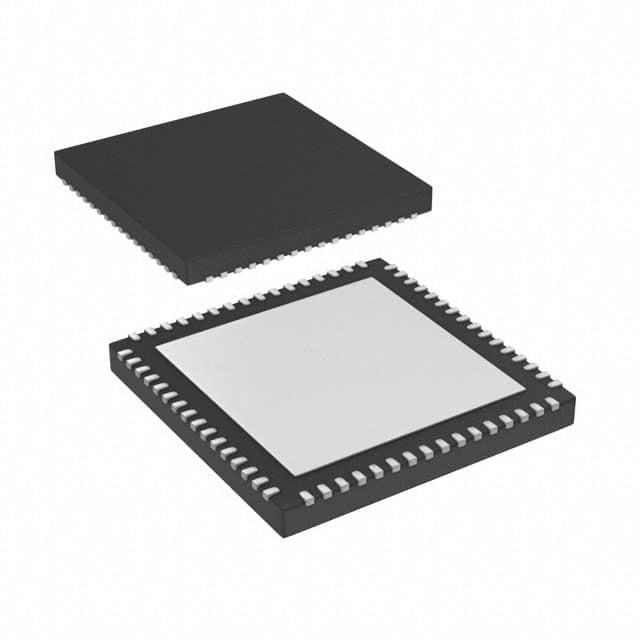
- Part No.:
- MSL2162DQ
- Manufacturer:
- Microchip Technology
- Category:
- LED Drivers
- Package:
- 64-VFQFN Exposed Pad
- Datasheet:
-
 MSL2162DQ.pdf
- Description:
- IC LED DRIVER LINEAR PWM 64TQFN
- Quantity:
- Payment:

- Shipping:

Inventory:3,054
Please send an inquiry. Send us your inquiry, and we will respond immediately.
Product details
Overview
MSL2162DQ from Microchip Technology (formerly Atmel) is a 16-channel white/RGB LED string driver IC that sinks up to 350mA per string using external MOSFETs, delivers ±1.5% current accuracy and matching, integrates EEPROM for power-up defaults, and supports frame-synchronized 12-bit per-string PWM dimming via 20 MHz SPI. It is used in high-dynamic-range LCD TV backlights requiring adaptive area dimming and motion blur reduction.
For engineers reviewing the MSL2162DQ datasheet, MSL2162DQ pinout, MSL2162DQ application, or MSL2162DQ equivalent, key selection criteria include its dual-efficiency optimizer control of external DC-DC supplies, per-string open/short fault detection with hardware FLTB output, 64-pin TQFN package with exposed thermal pad, -40°C to +105°C operation, and support for up to eight daisy-chained devices on one SPI bus.
Technical Context
The MSL2162DQ implements a hybrid LED drive architecture: external N-channel MOSFETs handle high-current sinking per string (up to 350mA), while internal regulation monitors 500mV current-sense voltage across external resistors and synchronizes 12-bit PWM timing to video signals (PHI/VSYNC and GSC/HSYNC). Its two Efficiency Optimizer (EO) outputs dynamically adjust up to two external power supplies to minimum required voltage, reducing system power loss.
It features a dedicated 20 MHz SPI interface with chip-select daisy-chaining for up to eight devices, broadcast write capability, and on-chip EEPROM accessible via SPI to store startup register values. Fault management includes per-string open-circuit and short-circuit detection, loss-of-sync monitoring, over-temperature shutdown at 135°C, and active-low FLTB output assertion until fault registers are read.
Key Specifications
| Parameter | Value and Actual Design Meaning |
|---|---|
| LED strings | 16 parallel strings, each driven by external MOSFET with independent current sense (S0–S15) and gate drive (G0–G15). |
| Max sink current per string | 350mA - enables high-brightness backlighting for large-panel TVs and medical displays. |
| Current accuracy & matching | ±1.5% - ensures consistent brightness and stable white point across all 16 strings without manual calibration. |
| PWM resolution | 12-bit per string - provides 4096-step intensity control for precise local dimming and contrast enhancement. |
| SPI interface speed | 20 MHz - supports real-time frame-by-frame configuration updates across up to eight daisy-chained MSL2162DQ devices. |
| Operating temperature | -40°C to +105°C - qualified for automotive display, industrial instrumentation, and enclosed signage environments. |
| Package | 64-pin TQFN (9 mm × 9 mm × 0.85 mm, 0.5 mm pitch) with exposed thermal pad - enables high-power dissipation and compact PCB layout. |
Pinout & Package
MSL2162DQ is housed in a thermally enhanced 64-lead TQFN package (9 mm × 9 mm × 0.85 mm, 0.5 mm lead pitch) with an exposed pad (EP) connected to power ground for thermal and electrical integrity. Bypass capacitors required: 10 µF on VIN, 4.7 µF on VCC and VDD.
| Pin/Terminal | Circuit Role | Design Meaning |
|---|---|---|
| S0–S15 | Current sense inputs | Connect to source of external MOSFET + current sense resistor; full-scale threshold = 500 mV for accurate per-string current regulation. |
| G0–G15 | Gate drive outputs | Drive gates of external N-MOSFETs; rated for ≤10 nC gate charge, supporting fast switching and low conduction loss. |
| D0–D15 | Drain sense inputs | Monitor MOSFET drain via 10 MΩ resistor to detect open-circuit faults (threshold = 8 V) and short-circuit conditions. |
| MOSI/MISO/SCK/CSB | SPI interface | 20 MHz SPI bus with daisy-chain support; CSB active-low enables serial communication; MISO is open-drain capable. |
| PHI/GSC | Video sync inputs | PHI accepts 40 Hz–10 kHz VSYNC for frame synchronization; GSC accepts 0–10 MHz HSYNC for pixel-level timing alignment. |
| FBO1/FBO2 | Efficiency Optimizer outputs | Analog feedback outputs (0–360 µA, 1.2 µA step) that dynamically adjust external DC-DC supply voltages to minimize headroom loss. |
| FLTB | Fault indication output | Active-low open-drain output asserting on verified open/short/over-temp/loss-of-sync faults; remains low until fault registers are read. |
| EN | Enable input | Active-high enable; drives device into ultra-low-power sleep mode (<500 µA) when low, disabling all functions including SPI interface. |
Key Features
| Feature | Design Value |
|---|---|
| 12-bit per-string PWM control | Enables precise local dimming zones in direct-lit LCD backlights, improving contrast ratio >100,000:1 and reducing motion blur via programmable phasing. |
| Dual Efficiency Optimizer (EO) outputs | Reduces total system power consumption by dynamically lowering two external LED supply voltages to minimum required for regulation-no fixed overhead voltage. |
| EEPROM-based power-up defaults | Stores user-configured register settings (PWM, EO, fault masks); auto-loads at boot, eliminating MCU initialization code for repeat deployments. |
| Per-string fault detection & reporting | Detects open/short circuits on each of 16 strings independently; reports status via SPI and asserts FLTB pin for immediate system-level response. |
| Video-sync PWM engine | Synchronizes LED on-times to VSYNC/HSYNC signals-eliminates beat artifacts and enables phase-shifted PWM for reduced EMI and input capacitor stress. |
Applications
| TV Backlight Control | Medical Display Backlighting |
|---|---|
|
Use Scenario: High-end 4K/8K LCD TVs with local dimming zones for HDR content playback. IC Role / Device Role / Timing Role: Primary LED string controller synchronizing 16-zone PWM dimming to VSYNC/HSYNC with per-string phase delay to match LCD update timing. Use Value: Achieves >100,000:1 contrast ratio and eliminates waterfall noise by aligning LED off-times with pixel refresh cycles. |
Use Scenario: Diagnostic imaging monitors requiring flicker-free, color-stable illumination under continuous operation. IC Role / Device Role / Timing Role: Constant-current LED driver with ±1.5% matching and EEPROM-stored factory calibration for long-term luminance consistency. Use Value: Maintains DICOM-compliant grayscale rendering across 16 LED strings without drift over 50,000-hour lifetime. |
| Automotive Infotainment Displays | Architectural LED Signage |
|
Use Scenario: In-vehicle center-stack displays operating in wide ambient temperature (-40°C to +105°C). IC Role / Device Role / Timing Role: Robust LED driver with integrated over-temperature shutdown (135°C), fault-tolerant SPI, and EN-controlled cold-start sequencing. Use Value: Ensures uninterrupted backlight operation during thermal transients and meets AEC-Q100-relevant reliability requirements. |
Use Scenario: Large-format channel letters and façade lighting with remote brightness scheduling and fault logging. IC Role / Device Role / Timing Role: Networked LED controller using daisy-chained SPI (up to 8 devices) and broadcast writes for synchronized global dimming. Use Value: Reduces firmware complexity by enabling single-command updates across multi-device installations with EEPROM persistence. |
Equivalent & Alternatives
The following parts are listed as comparable options for similar LED string driver applications.
| Alternative Part | Technical Difference | Application Difference | Selection Advice |
|---|---|---|---|
| TLC6983RTQR | 16-channel, 12-bit PWM, but no built-in Efficiency Optimizer outputs or video sync inputs (PHI/GSC); uses I²C not SPI. | Lacks frame-synchronized dimming and adaptive power supply control-suitable only for static or non-video lighting. | Select TLC6983RTQR only if video timing integration and dynamic supply optimization are unnecessary. |
| ISL97693IRTZ-T7A | 16-channel, ±1.5% current matching, supports 20 MHz SPI, but no EEPROM, no per-string fault detection, and no FLTB pin. | No persistent power-up defaults or hardware fault signaling-requires MCU polling and configuration on every boot. | Choose ISL97693IRTZ-T7A where cost sensitivity outweighs need for autonomous fault handling and EEPROM retention. |
Compared with MSL2162DQ, TLC6983RTQR lacks video synchronization and efficiency optimization, limiting it to non-HDR lighting; ISL97693IRTZ-T7A omits EEPROM and hardware fault signaling, increasing MCU firmware burden and reducing system robustness in unattended operation.
Availability
MSL2162DQ is available at Aetrix Electronics and suitable for LCD TV backlighting, medical imaging displays, and automotive infotainment systems requiring stable component supply, long-term lifecycle support, and automotive-grade thermal performance.
Supply support for MSL2162DQ includes scheduled delivery planning, volume procurement assistance, BOM continuity management, traceable sourcing, and lifecycle availability coordination for OEM customers, industrial embedded developers, connected-device designers, and electronics production programs.
Manufacturer
Microchip Technology acquired Atmel in 2016 and maintains full technical and manufacturing continuity for legacy Atmel analog and LED driver products.
The MSL2162DQ belongs to Microchip's high-performance LED backlight controller family, designed specifically for adaptive local dimming in LCD TVs, medical monitors, and automotive displays demanding precision current regulation and video-synchronized PWM.
FAQ
What is the maximum number of MSL2162DQ devices that can be daisy-chained on a single SPI bus?
The MSL2162DQ supports up to eight devices per SPI chip-select line using daisy-chained CSB routing. Each device uses a unique ADDR pin configuration to assign individual slave IDs, enabling broadcast writes or targeted register access without additional GPIO lines. This scalability allows driving up to 128 LED strings (16 × 8) from one microcontroller SPI port in large-panel or multi-zone backlight systems.
How does the MSL2162DQ achieve ±1.5% current accuracy across all 16 LED strings?
The MSL2162DQ achieves ±1.5% current accuracy by regulating each string against a precision 500 mV reference applied to S0–S15 sense inputs, combined with matched internal current-sense amplifier offsets and gain. External current-sense resistors must be 1% tolerance or better, and layout symmetry (especially for Sx/Gx/Dx routing) is critical. The datasheet confirms this matching holds across -40°C to +105°C and full load range when design guidelines are followed.
Can the MSL2162DQ operate without external video timing signals like PHI and GSC?
Yes, the MSL2162DQ can operate standalone without PHI or GSC inputs. Its internal 20 MHz oscillator generates PWM timing, and the PWM input pin accepts an external 0–5 kHz signal for global brightness control. In this mode, phase spreading remains available to reduce input ripple, but advanced features like motion blur reduction and beat artifact elimination require PHI/GSC synchronization.
What fault conditions trigger the FLTB pin on the MSL2162DQ, and how is it cleared?
The FLTB pin on the MSL2162DQ asserts low for confirmed open-circuit, short-circuit, loss-of-video-sync (PHI/GSC timeout), or over-temperature (>135°C) faults. FLTB remains latched low until the corresponding fault status register is read via SPI. Persistent faults reassert FLTB after read; clearing requires both fault removal and register access. No hardware reset is needed-only SPI communication restores normal operation.
Does the MSL2162DQ support RGB LED strings, and how is color balance maintained?
Yes, the MSL2162DQ supports RGB LED strings via independent 12-bit PWM control per string and 8-bit global current scaling. Color balance is maintained through ±1.5% current matching across all strings and programmable per-string PWM duty cycles-enabling white point tuning, gamut expansion, and dynamic color correction. The device does not include integrated color sensor feedback; closed-loop color control requires external MCU coordination.
MSL2162DQ Specifications
- Product attributes
- Attribute value
- Manufacturer:
- Microchip Technology
- Series:
- -
- Package/Case:
- 64-VFQFN Exposed Pad
- Packaging:
- Tube
- Product Status:
- Obsolete
- Type:
- Linear
- Topology:
- -
- Internal Switch(s):
- No
- Number of Outputs:
- 16
- Voltage - Supply (Min):
- 10.8V
- Voltage - Supply (Max):
- 13.2V
- Voltage - Output:
- -
- Current - Output / Channel:
- -
- Frequency:
- 20MHz
- Dimming:
- PWM
- Applications:
- Backlight, Lighting
- Operating Temperature:
- -40°C ~ 105°C (TA)
- Grade:
- -
- Qualification:
- -
- Mounting Type:
- Surface Mount
- Supplier Device Package:
- 64-TQFN (9x9)
MSL2162DQ FAQ
1.How can I place an order for MSL2162DQ through Aetrix?
Please submit a Request for Quotation (RFQ) for MSL2162DQ on Aetrix. Our sales agent will provide a competitive quotation and guide you through the order confirmation once you accept the terms.
2.Are the price and stock information for MSL2162DQ reliable?
The price and inventory of MSL2162DQ are updated periodically and may fluctuate due to market conditions. Stock and pricing data are typically refreshed every 24 hours. Quotation validity for MSL2162DQ is usually 5 days.
3.What payment methods are accepted for MSL2162DQ?
We accept Wire Transfer, PayPal, Credit Card, Western Union, MoneyGram, and Escrow for MSL2162DQ transactions.
Note: Certain payment methods may incur a processing fee.
4.How is shipping managed for MSL2162DQ?
MSL2162DQ orders can be shipped via leading logistics carriers, including DHL, UPS, FedEx, TNT, or Registered Mail.
Once your MSL2162DQ order is processed, you will receive an email with the shipment details and tracking number.
Note: Tracking information may take up to 24 hours to appear. Express delivery typically takes 3–5 business days.
5.How can I obtain technical support or documentation for MSL2162DQ?
For technical support, including MSL2162DQ datasheets, pinout diagrams, or application guidance, please contact our engineering support team. They can provide detailed documentation and assistance for your MSL2162DQ requirements.
6.How does Aetrix verify that MSL2162DQ is sourced from the original manufacturer or authorized distributors?
All MSL2162DQ products on Aetrix are procured from qualified distributors and authorized channels. Our dedicated quality assurance team conducts strict verification, including traceability checks and, if necessary, third-party testing. This ensures that MSL2162DQ meets industry standards.
7.What is the process for return or replacement of MSL2162DQ?
All MSL2162DQ units undergo pre-shipment inspection (PSI). If there is an issue with MSL2162DQ, returns or replacements are accepted under the following conditions:
1.Quantity discrepancies, incorrect items, or visible external defects (such as breakage or corrosion), acknowledged by Aetrix.
2.The issue is reported within 90 days of delivery.
3.The MSL2162DQ part is unused and in its original packaging.
Return procedure for MSL2162DQ:
1.Submit a request within 90 days.
2.Obtain a Return Material Authorization (RMA) from Aetrix.
MSL2162DQ Tags
-
BCR402RE6327HTSA1
Infineon Technologies

-
BCR430UXTSA2
Infineon Technologies
-
BCR420UE6433HTMA1
Infineon Technologies
-
BCR420UE6327HTSA1
Infineon Technologies
-
BCR421UE6327HTSA1
Infineon Technologies
-
LYT1604D-TL
Power Integrations

-
HV9910CLG-G
Microchip Technology
-
CL2N8-G
Microchip Technology
-
BCR420UW6-7
Diodes Incorporated
-
BCR421UW6-7
Diodes Incorporated
-
BCR420UFD-7
Diodes Incorporated
-
BCR421UFD-7
Diodes Incorporated
Tech Hub

TTL and CMOS logic families differ in thresholds, loading, output drive, power and timing. This engineering guide compares 74HC and 74HCT, calculates noise margins and checks 3.3 V/5 V compatibility.

A practical engineering guide to 3.3V and 5V logic compatibility, input thresholds, resistor dividers, translator ICs, MOSFET level shifting, I2C pull-ups, timing limits and power-sequencing risks.

The 74HC595 uses push-pull logic outputs, while the TPIC6B595 uses 50 V open-drain DMOS sinks for higher-power loads. This guide compares timing, current limits, 3.3 V interfacing, load wiring, thermal…

The 74HC595 converts serial data into eight stable parallel outputs. This guide covers pin functions, shift and storage timing, OE and MR behavior, drive-current limits, cascading, voltage compatibilit…

A technical comparison of level-sensitive latches and edge-triggered flip-flops, covering timing windows, setup and hold limits, master–slave operation, time borrowing, race-through, HDL inference and…

A D latch stores one bit while Enable controls when data can pass. This reference covers gate-level operation, truth tables, transparency, setup and hold timing, LE versus OE, common ICs and practical …

An SR latch stores one bit through cross-coupled feedback. This engineering reference covers NOR and NAND implementations, truth tables, forbidden-state recovery, gated operation, switch debouncing, fa…

Latch circuits retain one bit through feedback. This technical reference covers SR and D latches, truth tables, transparency, timing limits, latch-versus-flip-flop behavior, applications and common log…

An engineering guide to LED driver operation, constant-current and constant-voltage outputs, linear and switching topologies, dimming, IC selection, calculations, replacement compatibility, and fault c…

Operational amplifier guide covering op amp basics, feedback, ideal vs real op amps, common configurations, buffer circuits, offset, bias current, gain-bandwidth, slew rate, rail-to-rail limits and sel…


