
 My Inquiry
 My Account


Microchip Technology MSL3163BT-R
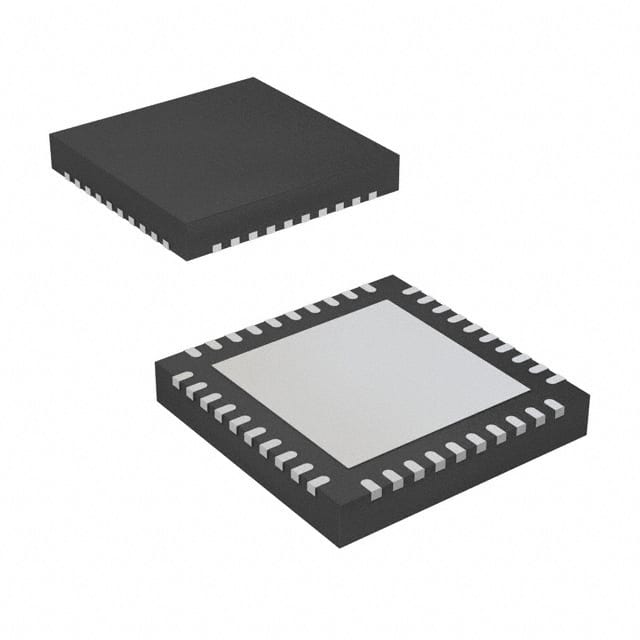
- Part No.:
- MSL3163BT-R
- Manufacturer:
- Microchip Technology
- Category:
- LED Drivers
- Package:
- 40-WFQFN Exposed Pad
- Datasheet:
-
 MSL3163BT-R.pdf
- Description:
- IC LED DRVR LIN PWM 100MA 40TQFN
- Quantity:
- Payment:

- Shipping:

Inventory:2,228
Please send an inquiry. Send us your inquiry, and we will respond immediately.
Product details
Overview
MSL3163BT-R from Microchip Technology (formerly Atmel) is a 16-string white/RGB LED driver IC with I²C interface, adaptive DC-DC power control, on-chip E²PROM, and 12-bit per-string PWM dimming. It sinks up to 60mA average / 100mA peak per string, achieves ±3% current accuracy and matching, and operates from -40°C to +85°C in LCD TV backlight systems driving 160 white LEDs (10 per string).
For engineers reviewing the MSL3163BT-R datasheet, MSL3163BT-R pinout, MSL3163BT-R application, or MSL3163BT-R equivalent, key selection criteria include its 1 MHz I²C interface, 40-pin 6×6 mm TQFN package, global + per-string intensity control, adaptive source power optimization for multi-supply systems, and integrated fault monitoring for open/short circuits and thermal events.
Technical Context
The MSL3163BT-R implements a dual-loop LED drive architecture: a precision current-sink array (16 channels, 100mA max) synchronized to video timing via PHI (VSYNC) and GSC (HSYNC) inputs, coupled with three independent Efficiency Optimizer feedback outputs (FBO1–FBO3) that dynamically adjust external DC-DC converter output voltages. Its internal 12-bit PWM engine supports frame-by-frame dimming across up to 16 daisy-chained devices.
Control is executed through a dedicated 96-register map accessible via I²C, including configurable fault masks, string enable/disable, global intensity (8-bit), per-string pulse width (12-bit), phase offset, and E²PROM-programmable power-up defaults. The device integrates a 2.5V LDO (VDD), supports direct external PWM gating, and features broadcast write for system-level configuration.
Key Specifications
| Parameter | Value and Actual Design Meaning |
|---|---|
| Interface | 1 MHz I²C serial interface - enables robust multi-device bus communication with up to 16 MSL3163BT-R units sharing one bus. |
| LED String Drive | 16-channel current sink, 60mA avg / 100mA peak per string - supports 10-white-LED strings with <0.5V headroom at full load. |
| Current Accuracy | ±3% matching and regulation - ensures consistent brightness and white point across all 16 strings without external calibration. |
| PWM Resolution | 12-bit per-string + 8-bit global intensity - delivers >4096-step dimming granularity and fine-grained area dimming for high-dynamic-range displays. |
| Adaptive Power Control | 3× FBO outputs with 0–255 µA programmable current injection - dynamically optimizes up to three external LED power supplies to minimize dissipation. |
| Operating Temp | -40°C to +85°C ambient - qualified for industrial and automotive display applications requiring extended thermal reliability. |
| Package | 40-pin TQFN, 6 mm × 6 mm × 0.75 mm with exposed pad - provides low thermal resistance and compact layout for high-density backlight modules. |
Pinout & Package
MSL3163BT-R is housed in a 40-pin, 6 mm × 6 mm × 0.75 mm TQFN package with an exposed thermal pad (EP). Pin pitch is 0.5 mm. The package supports reflow soldering per JEDEC J-STD-020 and requires proper thermal land design connecting EP to ground plane for optimal power dissipation and EMI control.
| Pin/Terminal | Circuit Role | Design Meaning |
|---|---|---|
| STR0–STR15 | LED string current sink outputs | 16 dedicated cathode-side sinks; each drives one LED string with programmable 12-bit PWM and phase delay to reduce motion blur. |
| ILED | Global peak current reference input | Single resistor (e.g., 12.7 kΩ) sets full-scale current for all strings; supports 55–67 mA typical at 60 mA target. |
| SCL / SDA | I²C clock and bidirectional data | 1 MHz compliant interface; supports standard-mode addressing with AD0/AD1 slave ID selection (up to 4 unique addresses). |
| PHI / GSC | Video sync inputs | PHI accepts VSYNC (40 Hz–10 kHz); GSC accepts HSYNC (0–10 MHz); used to lock PWM timing to video frame/line boundaries. |
| FBO1–FBO3 / FBI1–FBI3 | Efficiency Optimizer feedback I/O | Three independent feedback loops; FBOn injects current into external DC-DC voltage dividers to minimize supply voltage while maintaining regulation. |
| FLTB | Open-drain fault indicator | Active-low output signals open/short circuit, sync loss, or overtemperature; cleared by toggling EN or reading fault registers. |
| EN | Enable input (active high) | Power-on reset and cold-start trigger; bootloads E²PROM defaults into registers when driven high after power-up. |
Key Features
| Feature | Design Value |
|---|---|
| 12-bit per-string PWM dimming | Enables precise active-area dimming with frame-synchronized timing to eliminate LCD motion artifacts like blur and flicker. |
| Adaptive SourcePower technology | Reduces total system power consumption by dynamically lowering LED supply voltage to the minimum required for regulation across varying LED Vf. |
| On-chip E²PROM | Stores customizable power-up defaults (registers 0x00–0x5F), eliminating boot-time host initialization and enabling plug-and-play operation. |
| Multi-device synchronization | Supports up to 16 MSL3163BT-R units on one I²C bus with broadcast writes and shared PHI/GSC timing for unified video frame control. |
| Comprehensive fault detection | Monitors per-string open/short circuits, sync loss, and die temperature; reports status via FLTB pin and readable fault registers (0x03–0x09). |
Applications
| Television Backlighting | Medical Display Illumination |
|---|---|
Use Scenario: High-brightness, high-contrast LCD backlight for 4K/8K UHD televisions with local dimming zones. IC Role / Device Role / Timing Role: Primary LED string driver coordinating with video processor via PHI/VSYNC and GSC/HSYNC to synchronize per-zone dimming with frame rendering. Use Value: Delivers >1000:1 dynamic contrast ratio using 12-bit per-string PWM and adaptive power control, reducing power by up to 30% versus fixed-voltage supplies. | Use Scenario: Critical illumination for surgical monitors and diagnostic imaging displays requiring stable color temperature and zero flicker. IC Role / Device Role / Timing Role: Precision current-regulated LED driver ensuring consistent luminance and chromaticity across 160 LEDs under variable thermal conditions. Use Value: ±3% current matching and <1 µA off-leakage maintain calibrated brightness and prevent image retention during long-duration static displays. |
| Automotive Infotainment Displays | Architectural Signage Lighting |
Use Scenario: Wide-temperature dashboard and center-stack displays in EVs and premium vehicles. IC Role / Device Role / Timing Role: Robust LED driver operating across -40°C to +85°C with integrated thermal shutdown and fault reporting to vehicle controller via I²C. Use Value: Over-temperature shutoff at 135°C and fault register access allow fail-safe dimming reduction or graceful shutdown without display blackout. | Use Scenario: Large-format channel letters and façade lighting with programmable zoning and smooth intensity transitions. IC Role / Device Role / Timing Role: Centralized LED driver managing multiple 10-LED strings per zone, configured via E²PROM for persistent startup behavior. Use Value: Broadcast write capability simplifies firmware updates across dozens of daisy-chained units; 8-bit global intensity enables seamless scene transitions. |
Equivalent & Alternatives
The following parts are listed as comparable options for similar LED string driver applications.
| Alternative Part | Technical Difference | Application Difference | Selection Advice |
|---|---|---|---|
| TLC6983RTQR | 16-channel, 100mA sink; SPI interface (25 MHz); no built-in E²PROM; requires external config memory. | Lacks adaptive power control and integrated fault reporting; relies on host MCU for voltage optimization logic. | Choose when higher-speed SPI control is prioritized over autonomous power optimization and EEPROM persistence. |
| ISL97693IRZ-T7A | 16-channel, 60mA sink; I²C interface (1 MHz); includes boost controller; no FBO feedback outputs. | Integrates DC-DC boost but lacks multi-supply adaptive control; limited to single-power-rail architectures. | Prefer when board space is constrained and a self-contained boost+drive solution is needed instead of discrete DC-DC + adaptive control. |
Compared with TLC6983RTQR and ISL97693IRZ-T7A, the MSL3163BT-R uniquely combines I²C simplicity, on-chip E²PROM for state retention, and three independent Efficiency Optimizer outputs-enabling true multi-supply adaptive voltage control without host intervention, critical for large-area, high-efficiency backlight systems.
Availability
MSL3163BT-R is available at Aetrix Electronics and suitable for television backlighting, medical instrumentation displays, automotive infotainment systems, and architectural signage requiring stable component supply, long-term lifecycle support, and guaranteed traceability.
Supply support for MSL3163BT-R includes scheduled delivery planning, volume procurement assistance, BOM continuity management, traceable sourcing, and lifecycle availability coordination for OEM customers, industrial embedded developers, connected-device designers, and electronics production programs.
Manufacturer
Microchip Technology acquired Atmel in 2016 and maintains full product support, documentation, and manufacturing continuity for the former Atmel LED driver portfolio.
The MSL3163BT-R belongs to Microchip's high-performance LED backlight driver family, engineered specifically for LCD and OLED display systems demanding precise per-zone dimming, adaptive power efficiency, and video-synchronized timing control.
FAQ
What is the maximum LED string current supported by the MSL3163BT-R?
The MSL3163BT-R supports up to 100mA peak current per string, with a typical average current of 60mA when using standard PCB copper as the primary heat sink. Current is set globally via the ILED pin resistor (e.g., 12.7 kΩ for 60mA) and fine-tuned using the 8-bit ISTR register. Exceeding 60mA average requires enhanced thermal design due to power dissipation limits in the 6×6 mm TQFN package.
Does the MSL3163BT-R support daisy-chaining with other LED drivers?
Yes, the MSL3163BT-R supports daisy-chaining via its FBI/FBO pins (FBI1–FBI3 and FBO1–FBO3) to coordinate adaptive power control across up to 16 devices sharing common LED power supplies. Each device's FBO output connects to the next device's FBI input, enabling real-time negotiation of optimal supply voltage. The I²C bus also supports up to 16 units with unique AD0/AD1 address settings.
How does the MSL3163BT-R handle fault conditions such as LED open or short circuits?
The MSL3163BT-R continuously monitors each STR0–STR15 output for open-circuit (>3.5V) and short-circuit conditions, reporting status via the FLTB pin (active-low) and dedicated fault registers (0x03–0x09). Individual string fault detection can be enabled/disabled per channel using FLTMASK0/FLTMASK1. Faults persist until cleared by toggling the EN pin low then high or by reading the fault status registers.
Can the MSL3163BT-R operate without connection to a video timing source?
Yes, the MSL3163BT-R can operate standalone using its internal oscillator (18.15–21.88 MHz, configurable via OSCCTRL register) instead of external PHI/GSC signals. In this mode, PWM timing is internally generated, and global intensity control remains fully functional. However, advanced features like frame-synchronized dimming, phase spreading, and motion artifact reduction require PHI and GSC inputs.
What is the role of the E²PROM in the MSL3163BT-R?
The on-chip E²PROM in the MSL3163BT-R stores power-up default values for all 96 control registers (0x00–0x5F). At startup, these values are automatically loaded into active registers, enabling immediate operation without host initialization. Users can reprogram the E²PROM via the I²C interface to customize behavior-including string enables, intensity levels, fault masks, and Efficiency Optimizer settings-for application-specific persistence.
MSL3163BT-R Specifications
- Product attributes
- Attribute value
- Manufacturer:
- Microchip Technology
- Series:
- Adaptive SourcePower™
- Package/Case:
- 40-WFQFN Exposed Pad
- Packaging:
- Tape & Reel (TR)
- Product Status:
- Obsolete
- Type:
- Linear
- Topology:
- -
- Internal Switch(s):
- Yes
- Number of Outputs:
- 16
- Voltage - Supply (Min):
- 4.75V
- Voltage - Supply (Max):
- 5.5V
- Voltage - Output:
- -
- Current - Output / Channel:
- 100mA
- Frequency:
- 20MHz
- Dimming:
- PWM
- Applications:
- Backlight
- Operating Temperature:
- -40°C ~ 85°C (TA)
- Grade:
- Automotive
- Qualification:
- -
- Mounting Type:
- Surface Mount
- Supplier Device Package:
- 40-TQFN (6x6)
MSL3163BT-R FAQ
1.How can I place an order for MSL3163BT-R through Aetrix?
Please submit a Request for Quotation (RFQ) for MSL3163BT-R on Aetrix. Our sales agent will provide a competitive quotation and guide you through the order confirmation once you accept the terms.
2.Are the price and stock information for MSL3163BT-R reliable?
The price and inventory of MSL3163BT-R are updated periodically and may fluctuate due to market conditions. Stock and pricing data are typically refreshed every 24 hours. Quotation validity for MSL3163BT-R is usually 5 days.
3.What payment methods are accepted for MSL3163BT-R?
We accept Wire Transfer, PayPal, Credit Card, Western Union, MoneyGram, and Escrow for MSL3163BT-R transactions.
Note: Certain payment methods may incur a processing fee.
4.How is shipping managed for MSL3163BT-R?
MSL3163BT-R orders can be shipped via leading logistics carriers, including DHL, UPS, FedEx, TNT, or Registered Mail.
Once your MSL3163BT-R order is processed, you will receive an email with the shipment details and tracking number.
Note: Tracking information may take up to 24 hours to appear. Express delivery typically takes 3–5 business days.
5.How can I obtain technical support or documentation for MSL3163BT-R?
For technical support, including MSL3163BT-R datasheets, pinout diagrams, or application guidance, please contact our engineering support team. They can provide detailed documentation and assistance for your MSL3163BT-R requirements.
6.How does Aetrix verify that MSL3163BT-R is sourced from the original manufacturer or authorized distributors?
All MSL3163BT-R products on Aetrix are procured from qualified distributors and authorized channels. Our dedicated quality assurance team conducts strict verification, including traceability checks and, if necessary, third-party testing. This ensures that MSL3163BT-R meets industry standards.
7.What is the process for return or replacement of MSL3163BT-R?
All MSL3163BT-R units undergo pre-shipment inspection (PSI). If there is an issue with MSL3163BT-R, returns or replacements are accepted under the following conditions:
1.Quantity discrepancies, incorrect items, or visible external defects (such as breakage or corrosion), acknowledged by Aetrix.
2.The issue is reported within 90 days of delivery.
3.The MSL3163BT-R part is unused and in its original packaging.
Return procedure for MSL3163BT-R:
1.Submit a request within 90 days.
2.Obtain a Return Material Authorization (RMA) from Aetrix.
MSL3163BT-R Tags
-
BCR402RE6327HTSA1
Infineon Technologies

-
BCR430UXTSA2
Infineon Technologies
-
BCR420UE6433HTMA1
Infineon Technologies
-
BCR420UE6327HTSA1
Infineon Technologies
-
BCR421UE6327HTSA1
Infineon Technologies
-
LYT1604D-TL
Power Integrations

-
HV9910CLG-G
Microchip Technology

-
CL2N8-G
Microchip Technology
-
BCR420UW6-7
Diodes Incorporated
-
BCR421UW6-7
Diodes Incorporated
-
BCR420UFD-7
Diodes Incorporated
-
BCR421UFD-7
Diodes Incorporated
Tech Hub

TTL and CMOS logic families differ in thresholds, loading, output drive, power and timing. This engineering guide compares 74HC and 74HCT, calculates noise margins and checks 3.3 V/5 V compatibility.

A practical engineering guide to 3.3V and 5V logic compatibility, input thresholds, resistor dividers, translator ICs, MOSFET level shifting, I2C pull-ups, timing limits and power-sequencing risks.

The 74HC595 uses push-pull logic outputs, while the TPIC6B595 uses 50 V open-drain DMOS sinks for higher-power loads. This guide compares timing, current limits, 3.3 V interfacing, load wiring, thermal…

The 74HC595 converts serial data into eight stable parallel outputs. This guide covers pin functions, shift and storage timing, OE and MR behavior, drive-current limits, cascading, voltage compatibilit…

A technical comparison of level-sensitive latches and edge-triggered flip-flops, covering timing windows, setup and hold limits, master–slave operation, time borrowing, race-through, HDL inference and…

A D latch stores one bit while Enable controls when data can pass. This reference covers gate-level operation, truth tables, transparency, setup and hold timing, LE versus OE, common ICs and practical …

An SR latch stores one bit through cross-coupled feedback. This engineering reference covers NOR and NAND implementations, truth tables, forbidden-state recovery, gated operation, switch debouncing, fa…

Latch circuits retain one bit through feedback. This technical reference covers SR and D latches, truth tables, transparency, timing limits, latch-versus-flip-flop behavior, applications and common log…

An engineering guide to LED driver operation, constant-current and constant-voltage outputs, linear and switching topologies, dimming, IC selection, calculations, replacement compatibility, and fault c…

Operational amplifier guide covering op amp basics, feedback, ideal vs real op amps, common configurations, buffer circuits, offset, bias current, gain-bandwidth, slew rate, rail-to-rail limits and sel…


