
 My Inquiry
 My Account


Texas Instruments MSP430F46161IPZ
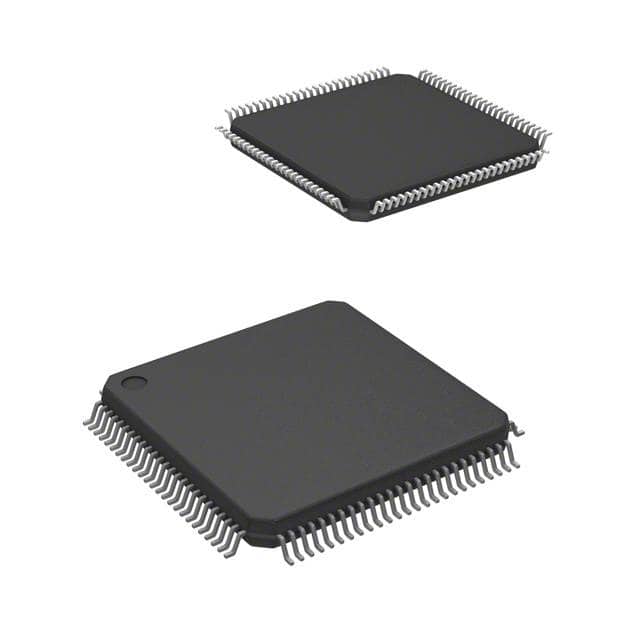
- Part No.:
- MSP430F46161IPZ
- Manufacturer:
- Texas Instruments
- Category:
- Microcontrollers
- Package:
- 100-LQFP
- Datasheet:
-
 MSP430F46161IPZ.pdf
- Description:
- IC MCU 16BIT 92KB FLASH 100LQFP
- Quantity:
- Payment:

- Shipping:

Inventory:1,524
Please send an inquiry. Send us your inquiry, and we will respond immediately.
Product details
Overview
MSP430F46161IPZ from Texas Instruments is an ultralow-power 16-bit mixed-signal microcontroller featuring 92KB+256B Flash/ROM, 4KB RAM, integrated LCD driver for up to 160 segments, dual 16-bit timers (Timer_A3 and Timer_B7), USCI_A0 (UART/IrDA/SPI), USCI_B0 (SPI/I²C), USART1 (UART/SPI), DMA controller with three channels, comparator, and supply voltage supervisor. It operates from 1.8 V to 3.6 V and targets portable medical devices and electronic metering.
For engineers reviewing the MSP430F46161IPZ datasheet, MSP430F46161IPZ pinout, MSP430F46161IPZ application, or MSP430F46161IPZ equivalent, key selection considerations include its 100-pin TQFP package, absence of ADC12 module (vs. MSP430F4616IPZ), LCD segment drive capability, low-power modes with sub-6-µs wake-up, and JTAG debugging support via TCK/TMS/TDI/TDO pins.
Technical Context
The MSP430F46161IPZ implements the MSP430x461x1 family architecture with CPUX core, 16-bit RISC instruction set, and constant generators enabling single-cycle register operations. Its memory map includes 92KB+256B nonvolatile program memory and 4KB SRAM, with separate DVCC1/DVCC2 and AVCC/AVSS domains for digital and analog subsystem isolation.
It integrates two independent universal serial interfaces: USCI_A0 supporting UART, IrDA, and SPI; USCI_B0 supporting SPI and I²C; plus a dedicated USART1 for UART or SPI. The device omits the ADC12 module present in MSP430x461x variants but retains full LCD_A controller with regulated charge pump, comparator_A, SVS/SVM, and real-time clock functionality within the basic timer.
Key Specifications
| Parameter | Value and Actual Design Meaning |
|---|---|
| Core Architecture | 16-bit RISC CPUX with 16 registers and constant generators; enables efficient code execution and low power per instruction. |
| Memory | 92KB+256B Flash/ROM + 4KB RAM; sufficient for complex embedded applications with firmware updates and data logging. |
| Supply Voltage | 1.8 V to 3.6 V; compatible with single-cell Li-ion, coin-cell, or regulated 3.3 V rails without level-shifting. |
| Low-Power Modes | Five modes including Off (0.22 µA RAM retention) and Standby (1.3 µA); extends battery life in intermittent-sensing applications. |
| Wake-Up Time | <6 µs from Standby to Active; supports rapid response to external events while minimizing active-mode energy consumption. |
| LCD Driver | Integrated LCD_A controller driving up to 160 segments with 1–4 multiplexing and regulated charge pump; eliminates external bias circuitry. |
| Timers | Timer_A3 (3 capture/compare registers) and Timer_B7 (7 capture/compare registers with shadow registers); enables precise PWM, input capture, and time-base generation. |
Pinout & Package
Package: 100-pin TQFP (PZ), 14 mm × 14 mm, 0.5 mm pitch, RoHS-compliant.
| Pin/Terminal | Circuit Role | Design Meaning |
|---|---|---|
| RST/NMI | Reset / Nonmaskable Interrupt Input | Active-low reset initiation and high-priority interrupt source; essential for system recovery and fault handling. |
| TCK/TMS/TDI/TDO | JTAG Debug Interface | Enables full-speed emulation, flash programming, and real-time debugging via MSP-FET430UIF or equivalent tools. |
| DVCC1/DVCC2/AVCC | Power Supply Inputs | Dual digital supplies (DVCC1/DVCC2) and analog supply (AVCC) provide noise isolation between logic and analog peripherals. |
| XIN/XOUT | XT1 Crystal Oscillator | Supports 32.768 kHz watch crystal for RTC operation; required for low-frequency precision timing. |
| XT2IN/XT2OUT | XT2 Crystal Oscillator | Supports high-frequency crystals (up to 8 MHz) for system clock generation when FLL+ is enabled. |
| P1.0–P1.7, P2.0–P2.7, etc. | General-Purpose I/O | 80 total I/O pins with programmable direction, pull-up/down, and interrupt capability; configurable as GPIO or peripheral functions. |
| COM0–COM3, S0–S39 | LCD Backplane & Segment Outputs | Four common outputs and up to 40 segment outputs enable direct drive of multiplexed LCD displays without external drivers. |
| USCI_A0/USCI_B0/USART1 | Serial Communication Peripherals | Three independent serial interfaces allow concurrent UART (e.g., debug), I²C (sensor hub), and SPI (display or memory) communication. |
Key Features
| Feature | Design Value |
|---|---|
| Ultralow-Power Operation | Standby current of 1.3 µA and Off-mode current of 0.22 µA with RAM retention enable multi-year battery life in metering and medical wearables. |
| Integrated LCD Controller | LCD_A module with regulated charge pump drives up to 160 segments at 1–4 mux; reduces BOM cost and PCB area versus discrete solutions. |
| Dual 16-Bit Timers | Timer_A3 and Timer_B7 with shadow registers support simultaneous PWM generation, input capture, and real-time clock functions without CPU overhead. |
| Multi-Interface Serial Connectivity | USCI_A0 (UART/IrDA/SPI), USCI_B0 (SPI/I²C), and USART1 (UART/SPI) enable flexible sensor interfacing, wireless coexistence, and display control. |
| Hardware DMA Controller | Three-channel DMA moves data between peripherals and memory without CPU intervention, reducing active-mode duration and power consumption. |
Applications
| Portable Medical Devices | Electronic Meters (e-Meters) |
|---|---|
Use Scenario: Battery-powered glucose monitors and pulse oximeters requiring long operational life and on-device display. IC Role / Device Role / Timing Role: Main system controller managing sensor acquisition, LCD display refresh, button interface, and low-power sleep/wake cycles. Use Value: Integrated LCD driver and sub-6-µs wake-up minimize external components and extend battery runtime beyond 2 years on CR2032. | Use Scenario: Smart electricity, water, and gas meters needing tamper-resistant firmware, real-time billing data, and segmented LCD readouts. IC Role / Device Role / Timing Role: Primary metrology host executing tariff calculation, secure communication, and 7-segment/commercial LCD display control. Use Value: Dual serial interfaces (I²C for metrology IC, UART for PLC/RF modem) and hardware encryption-ready architecture simplify compliance with ANSI C12.22 and DLMS standards. |
| Industrial Sensor Nodes | Low-Power Data Loggers |
Use Scenario: Wireless temperature/humidity nodes deployed in remote locations with infrequent maintenance windows. IC Role / Device Role / Timing Role: Sensor aggregator with SPI-connected ADCs, UART-linked RF transceiver, and RTC-triggered sampling intervals. Use Value: Five low-power modes and DMA-accelerated sensor reads reduce average current to <5 µA during idle periods, enabling 10+ year deployments. | Use Scenario: Environmental monitoring loggers recording temperature, pressure, and humidity at fixed intervals over months. IC Role / Device Role / Timing Role: Time-stamped data collector using Basic Timer RTC, internal comparator for threshold alerts, and Flash-based circular buffer storage. Use Value: On-chip 4KB RAM buffers burst measurements; Flash endurance and brownout detection ensure data integrity during power interruptions. |
Equivalent & Alternatives
The following parts are listed as comparable options for similar microcontroller applications.
| Alternative Part | Technical Difference | Application Difference | Selection Advice |
|---|---|---|---|
| MSP430F4616IPZ | Includes 12-bit ADC12 module with 12 channels and internal reference; otherwise identical memory, timers, and peripherals. | Suitable where analog sensing (e.g., voltage/current monitoring) is required alongside LCD display and serial comms. | Select MSP430F4616IPZ if ADC functionality is needed; MSP430F46161IPZ is preferred when ADC is unnecessary and lower cost or reduced test complexity is prioritized. |
| MSP430F5438AIPZ | Higher-performance MSP430F5xx series with 256KB Flash, 16KB RAM, enhanced USCI, and integrated USB; no LCD driver. | Targeted at USB-connected industrial HMI or data concentrators where LCD is replaced by external display controller. | Choose MSP430F5438AIPZ for USB host/device capability and larger memory; MSP430F46161IPZ remains optimal for LCD-integrated, ultra-low-power standalone instruments. |
Compared with MSP430F4616IPZ, the MSP430F46161IPZ removes ADC12 to reduce cost and test overhead while retaining identical LCD, timer, and serial capabilities; versus MSP430F5438AIPZ, it trades USB and memory headroom for integrated LCD drive and lower active/standby current.
Availability
MSP430F46161IPZ is available at Aetrix Electronics and suitable for portable medical devices, electronic meters, and industrial sensor nodes requiring stable component supply, long-term lifecycle support, and RoHS-compliant packaging.
Supply support for MSP430F46161IPZ includes scheduled delivery planning, volume procurement assistance, BOM continuity management, traceable sourcing, and lifecycle availability coordination for OEM customers, industrial embedded developers, connected-device designers, and electronics production programs.
Manufacturer
Texas Instruments is a global semiconductor leader delivering analog, embedded processing, and connectivity solutions for industrial, automotive, and consumer markets.
The MSP430 microcontroller product line is engineered for ultralow-power sensing and measurement applications, emphasizing extended battery life, integrated analog peripherals, and robust real-time control in compact form factors.
FAQ
What is the primary functional difference between MSP430F46161IPZ and MSP430F4616IPZ?
The MSP430F46161IPZ omits the ADC12 module present in the MSP430F4616IPZ. All other features-including 92KB+256B Flash/ROM, 4KB RAM, LCD_A driver, Timer_A3, Timer_B7, USCI_A0, USCI_B0, USART1, and DMA-are functionally identical. This makes MSP430F46161IPZ ideal for LCD-centric applications where analog-to-digital conversion is handled externally or not required.
Does MSP430F46161IPZ support real-time clock (RTC) functionality?
Yes, the MSP430F46161IPZ includes a Basic Timer module with real-time clock capability. It uses the 32.768 kHz signal from the XT1 oscillator (XIN/XOUT pins) to maintain accurate timekeeping in low-power modes, enabling calendar-based wake-ups and timestamped data logging without external RTC ICs.
What LCD configurations does MSP430F46161IPZ support?
The MSP430F46161IPZ supports LCD multiplexing ratios of 1, 2, 3, or 4 with up to 160 segments. It provides four COM outputs (COM0–COM3) and up to 40 segment outputs (S0–S39), plus dedicated LCDREF, LCDCAP, and R03–R23 pins for analog voltage level generation-enabling direct drive of custom or standard character/segment LCDs.
Which development tools are compatible with MSP430F46161IPZ?
The MSP430F46161IPZ is supported by Texas Instruments' MSP-FET430UIF (USB JTAG), MSP-FET430PIF (parallel port), MSP-FET430U100 (target board), MSP-TS430PZ100 (stand-alone target board), and MSP-GANG430 (production programmer). All leverage the device's embedded emulation module (EEM) for full-speed debugging and flash programming.
Is MSP430F46161IPZ pin-compatible with other devices in the MSP430x461x1 family?
Yes, all MSP430x461x1 devices-including MSP430F46161IPZ, MSP430F46171IPZ, MSP430F46181IPZ, and MSP430F46191IPZ-share identical 100-pin TQFP (PZ) packages and pinouts. Memory and RAM differences (e.g., 4KB vs. 8KB) do not affect physical or electrical compatibility, enabling drop-in upgrades during design iteration.
MSP430F46161IPZ Specifications
- Product attributes
- Attribute value
- Manufacturer:
- Texas Instruments
- Package/Case:
- 100-LQFP
- Series:
- MSP430x4xx
- Packaging:
- Bulk
- Product Status:
- Active
- Programmable:
- Not Verified
- Core Processor:
- MSP430 CPUX
- Core Size:
- 16-Bit
- Speed:
- 8MHz
- Connectivity:
- I2C, IrDA, SCI, SPI, UART/USART
- Peripherals:
- Brown-out Detect/Reset, DMA, LCD, POR, PWM, WDT
- Number of I/O:
- 80
- Program Memory Size:
- 92KB (92K x 8 + 256B)
- Program Memory Type:
- FLASH
- EEPROM Size:
- -
- RAM Size:
- 4K x 8
- Voltage - Supply (Vcc/Vdd):
- 1.8V ~ 3.6V
- Data Converters:
- -
- Oscillator Type:
- Internal
- Operating Temperature:
- -40°C ~ 85°C (TA)
- Grade:
- -
- Qualification:
- -
- Mounting Type:
- Surface Mount
- Supplier Device Package:
MSP430F46161IPZ FAQ
1.How can I place an order for MSP430F46161IPZ through Aetrix?
Please submit a Request for Quotation (RFQ) for MSP430F46161IPZ on Aetrix. Our sales agent will provide a competitive quotation and guide you through the order confirmation once you accept the terms.
2.Are the price and stock information for MSP430F46161IPZ reliable?
The price and inventory of MSP430F46161IPZ are updated periodically and may fluctuate due to market conditions. Stock and pricing data are typically refreshed every 24 hours. Quotation validity for MSP430F46161IPZ is usually 5 days.
3.What payment methods are accepted for MSP430F46161IPZ?
We accept Wire Transfer, PayPal, Credit Card, Western Union, MoneyGram, and Escrow for MSP430F46161IPZ transactions.
Note: Certain payment methods may incur a processing fee.
4.How is shipping managed for MSP430F46161IPZ?
MSP430F46161IPZ orders can be shipped via leading logistics carriers, including DHL, UPS, FedEx, TNT, or Registered Mail.
Once your MSP430F46161IPZ order is processed, you will receive an email with the shipment details and tracking number.
Note: Tracking information may take up to 24 hours to appear. Express delivery typically takes 3–5 business days.
5.How can I obtain technical support or documentation for MSP430F46161IPZ?
For technical support, including MSP430F46161IPZ datasheets, pinout diagrams, or application guidance, please contact our engineering support team. They can provide detailed documentation and assistance for your MSP430F46161IPZ requirements.
6.How does Aetrix verify that MSP430F46161IPZ is sourced from the original manufacturer or authorized distributors?
All MSP430F46161IPZ products on Aetrix are procured from qualified distributors and authorized channels. Our dedicated quality assurance team conducts strict verification, including traceability checks and, if necessary, third-party testing. This ensures that MSP430F46161IPZ meets industry standards.
7.What is the process for return or replacement of MSP430F46161IPZ?
All MSP430F46161IPZ units undergo pre-shipment inspection (PSI). If there is an issue with MSP430F46161IPZ, returns or replacements are accepted under the following conditions:
1.Quantity discrepancies, incorrect items, or visible external defects (such as breakage or corrosion), acknowledged by Aetrix.
2.The issue is reported within 90 days of delivery.
3.The MSP430F46161IPZ part is unused and in its original packaging.
Return procedure for MSP430F46161IPZ:
1.Submit a request within 90 days.
2.Obtain a Return Material Authorization (RMA) from Aetrix.
MSP430F46161IPZ Tags

-
ATTINY4-TSHR
Microchip Technology
-
ATTINY10-TSHR
Microchip Technology
-
ATTINY10-TS8R
Microchip Technology

-
ATTINY202-SSNR
Microchip Technology
-
ATTINY202-SSFR
Microchip Technology
-
ATTINY402-SSNR
Microchip Technology
-
PIC16F15213T-I/MF
Microchip Technology
-
PIC16F15213-E/MF
Microchip Technology

-
PIC10F200T-I/OT
Microchip Technology
-
ATTINY412-SSNR
Microchip Technology
-
PIC10F202T-I/OT
Microchip Technology
-
ATTINY404-SSNR
Microchip Technology
Tech Hub

A practical engineering guide to 3.3V and 5V logic compatibility, input thresholds, resistor dividers, translator ICs, MOSFET level shifting, I2C pull-ups, timing limits and power-sequencing risks.

The 74HC595 uses push-pull logic outputs, while the TPIC6B595 uses 50 V open-drain DMOS sinks for higher-power loads. This guide compares timing, current limits, 3.3 V interfacing, load wiring, thermal…

The 74HC595 converts serial data into eight stable parallel outputs. This guide covers pin functions, shift and storage timing, OE and MR behavior, drive-current limits, cascading, voltage compatibilit…

A technical comparison of level-sensitive latches and edge-triggered flip-flops, covering timing windows, setup and hold limits, master–slave operation, time borrowing, race-through, HDL inference and…

A D latch stores one bit while Enable controls when data can pass. This reference covers gate-level operation, truth tables, transparency, setup and hold timing, LE versus OE, common ICs and practical …

An SR latch stores one bit through cross-coupled feedback. This engineering reference covers NOR and NAND implementations, truth tables, forbidden-state recovery, gated operation, switch debouncing, fa…

Latch circuits retain one bit through feedback. This technical reference covers SR and D latches, truth tables, transparency, timing limits, latch-versus-flip-flop behavior, applications and common log…

An engineering guide to LED driver operation, constant-current and constant-voltage outputs, linear and switching topologies, dimming, IC selection, calculations, replacement compatibility, and fault c…

Operational amplifier guide covering op amp basics, feedback, ideal vs real op amps, common configurations, buffer circuits, offset, bias current, gain-bandwidth, slew rate, rail-to-rail limits and sel…

Jumper cables guide covering safe connection order, red and black clamp placement, final ground connection, cable gauge, length, clamp quality, copper vs CCA cables, jump starter comparison and battery…


